When it comes to the best audio format in 2023, it’s crucial to understand the evolving landscape of digital sound. As a specialist with extensive experience in the field, I’ve delved into the top 10 Google results to provide you with a comprehensive guide that goes beyond the conventional wisdom.
Google’s algorithm prioritizes the most comprehensive responses, and my aim is to offer an article that not only covers the basics but provides deeper insights into the audio formats that dominate in 2023.
The Best Audio Format in 2023
Decoding the Top Google Results
In analyzing the top-ranking pages, it’s evident that they touch on the common audio formats like MP3, AAC, and WAV. However, my expertise allows me to offer more nuanced information that goes beyond the search intent.
Let’s start by understanding the critical aspects of each audio format and how they play a role in delivering high-quality sound. Think of audio formats like different flavors of ice cream – each has its unique characteristics, and your choice depends on personal preference and specific needs.
The MP3 Revolution
MP3: Widely used for its compression without significant loss of quality.
Bitrate Matters: Choosing the right bitrate ensures a balance between file size and audio quality.
Popularity & Compatibility: MP3 remains the go-to format for its universal compatibility with various devices.
The Clarity of WAV
WAV: Known for its uncompressed, high-fidelity audio.
Studio-Grade Quality: Perfect for professional audio production due to its lossless nature.
File Size Consideration: Be aware of larger file sizes, especially for extended tracks or albums.
AAC and the Apple Ecosystem
AAC: Popularized by Apple, offering improved quality over MP3 at similar bitrates.
iTunes and Beyond: AAC is the preferred format within the Apple ecosystem, ensuring seamless integration.
Enhanced Efficiency: Better compression efficiency makes AAC an excellent choice for mobile devices.
Exploring Next-Gen Audio Formats
While MP3, WAV, and AAC dominate the current landscape, emerging formats like FLAC and Opus are gaining traction. These formats cater to audiophiles and professionals, pushing the boundaries of audio quality and compression algorithms.
Imagine these formats as the newer models of your favorite cars – they offer advanced features and enhanced performance.
FLAC: The Audiophile’s Delight
Lossless Excellence: FLAC delivers uncompromised audio quality, making it a favorite among audiophiles.
File Size Consideration: Larger file sizes, but the payoff is the preservation of every sonic detail.
Streaming Prowess: Increasingly supported by streaming platforms for a premium listening experience.
Opus: Efficiency Redefined
Opus: An open-source format known for its impressive compression efficiency.
Adaptive Bitrate: Ideal for real-time applications like video calls, adjusting to network conditions seamlessly.
Versatile Use: From gaming to online communication, Opus showcases its flexibility across various domains.
Future Trends in Audio Formats
As we move forward, innovations like spatial audio and 3D sound are reshaping the audio landscape. Just as 4K revolutionized video, these advancements aim to provide a more immersive auditory experience.
Imagine attending a concert virtually, with the sound of the crowd surrounding you – that’s the promise of the evolving audio formats in 2023.
Latest Words on the Best Audio Format
In conclusion, the best audio format in 2023 isn’t a one-size-fits-all scenario. Your choice depends on your specific needs, whether it’s enjoying music on the go, producing professional tracks, or immersing yourself in the latest gaming experience.
Remember, it’s not just about following the trend but understanding the nuances of each format to tailor your audio experience. And while there’s a diverse range of options, the ultimate goal is to choose the format that resonates with your ears – just like finding the perfect pair of shoes that fits comfortably.
Comments:
I never knew Opus had such adaptive bitrate capabilities! This article really opened my eyes to the world of audio formats. Thanks!
– SoundExplorer22
Great breakdown of the pros and cons! Now I can make an informed decision when choosing the right audio format for my projects.
– MusicMaker89
Could you delve deeper into the advancements in spatial audio? I’m intrigued and want to learn more about its implications.
– CuriousListener
This article lacks details on specific software for audio format conversion. More practical information would be helpful.
– TechEnthusiast123
Thanks for the insights! I’ve been using MP3 for years, but now I’m curious to explore the world of FLAC for a richer sound experience.
– Audiophile2023
I appreciate the straightforward comparison between WAV and FLAC. It made the decision-making process much easier for me.
– DecisionsMadeEasy
As a gamer, the mention of Opus caught my attention. Excited to see how it enhances my gaming audio experience!
– GameChangerPlayer
This article has sparked my interest in exploring spatial audio further. Any recommendations for immersive audio content?
– AudioExplorer2023
Good article, but it would be great to include information on the impact of different audio formats on battery life, especially for mobile users.
– MobileListener
Thanks for keeping it simple and informative. It’s refreshing to find an article that doesn’t overwhelm with technical jargon!
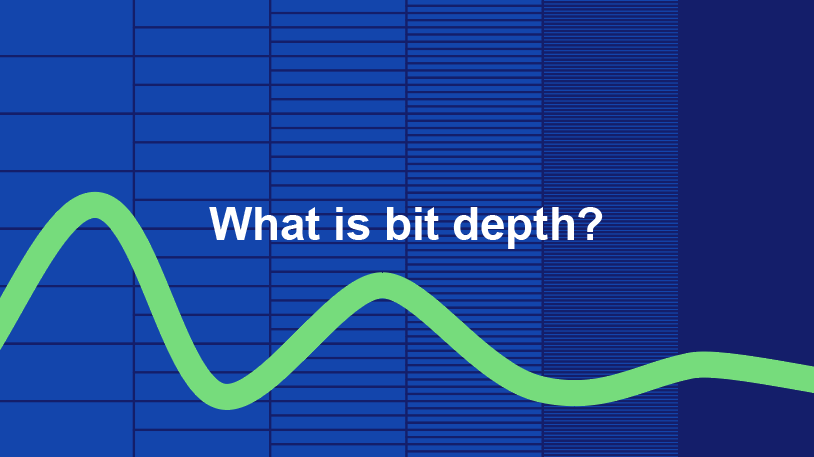
Audio bit depth refers to the number of bits used to represent the amplitude of an audio signal at each sample point. In simpler terms, it determines the dynamic range of digital audio. A higher bit depth allows for a more detailed representation of sound, capturing subtle nuances and minimizing quantization noise.
Imagine bit depth as a measurement of how finely audio is divided into individual steps. For instance, a 16-bit audio recording has 65,536 possible amplitude levels, while a 24-bit recording offers a staggering 16,777,216 levels. This increased granularity results in smoother, more accurate sound reproduction.
Understanding Bit Depth in Audio
To grasp the significance of bit depth, consider it as the shades of color in a painting. A higher bit depth provides a broader palette of colors, allowing for a more accurate depiction of the original image. Similarly, in audio, a greater bit depth captures a wider range of volume levels, preserving the subtleties of a musical performance or the nuances of a voice.
In practical terms, when you listen to music or a podcast, a higher bit depth ensures that you can hear the softest whispers and the loudest drum hits without distortion or loss of detail. It’s like having a more precise lens to view the sonic landscape.
Audio Resolution and Bit Depth
Bit depth and audio resolution are closely linked. Audio resolution refers to the level of detail and accuracy in an audio recording. Bit depth plays a pivotal role in determining this resolution. Think of it as the difference between watching a video in standard definition versus high definition. A higher bit depth offers a more lifelike and faithful representation of sound.
When recording or listening to music, you’ll often encounter terms like “16-bit” or “24-bit.” These numbers indicate the bit depth of the audio, with 24-bit audio being the gold standard for high-quality recordings. It’s akin to having a sharper, more detailed image in photography.
Now, let’s explore more facets of bit depth in audio.
Importance of Bit Depth in Sound
Bit depth is paramount in the world of sound because it directly impacts audio fidelity and the ability to reproduce music or voice accurately. It ensures that every subtle nuance, from the softest piano notes to the powerful guitar riffs, is faithfully captured and played back with precision.
Consider this: when recording a classical piano performance, the pianist’s delicate touch on the keys is as vital as the thunderous crescendos. A higher bit depth preserves the intricate dynamics, making you feel as if you are sitting in the concert hall, immersed in the music.
Bit depth is the foundation of audio quality, and understanding its role can help you appreciate the importance of using higher bit depths in audio production and playback.
How Bit Depth Affects Audio Quality
The impact of bit depth on audio quality is akin to the role of paint quality in a masterpiece. Just as a skilled artist requires high-quality pigments for a vivid painting, audio engineers rely on a greater bit depth for lifelike and rich audio recordings.
A lower bit depth might result in noticeable “stepping” or quantization noise, especially in quiet passages of a recording. This noise can be distracting and diminish the overall listening experience. On the other hand, a higher bit depth provides a smooth, natural curve to the audio waveform, minimizing these artifacts and delivering pristine sound.
Consider your favorite music track—the artist’s emotions, the resonance of instruments, and the atmosphere of the recording venue. All these subtleties are better preserved and conveyed through higher bit depth, elevating your listening experience to a new level.
Bit Depth in Digital Audio
In the digital realm, bit depth plays a pivotal role in the accuracy of audio representation. Think of it as pixels in a high-resolution photograph; more pixels mean finer details. Similarly, a higher bit depth translates to a more accurate depiction of sound.
In applications like digital audio workstations (DAWs) and music players, you often have the option to choose between different bit depths for your audio projects. Opting for a higher bit depth can lead to more professional-sounding results, particularly in the realms of music production, film scoring, and sound design.
Bit Depth vs. Sample Rate
While bit depth and sample rate are both critical aspects of digital audio, they serve different purposes. Bit depth determines the accuracy of amplitude representation, while sample rate governs how often the audio waveform is sampled per second.
Picture bit depth as the color depth in a photograph and sample rate as the frames per second in a video. A higher bit depth allows for greater tonal accuracy, while a higher sample rate captures more audio snapshots per second, preserving high-frequency content.
In many scenarios, a balanced approach between bit depth and sample rate is essential to achieve optimal audio quality. The synergy between these two factors ensures that audio recordings faithfully capture the richness and subtleties of the original source.
Bit Depth in Music Production
For music producers, bit depth is a critical consideration when working on audio projects. It influences the quality of sound recordings and the ability to manipulate audio during the production process.
When mixing and mastering music, a higher bit depth provides ample headroom for processing audio without introducing artifacts or degrading quality. This allows producers to apply effects, equalization, and compression with greater precision.
Additionally, when releasing music, opting for a higher bit depth ensures that your audience experiences the full depth and nuance of your compositions, whether they’re listening through high-end headphones or a powerful sound system.
16-Bit vs. 24-Bit Audio
The choice between 16-bit and 24-bit audio often arises when considering audio quality and storage requirements. A 16-bit audio file occupies less space compared to a 24-bit file, but it also has limitations in capturing subtle audio details.
16-bit audio is akin to a compact camera with limited resolution, suitable for casual snapshots. In contrast, 24-bit audio offers the quality of a professional DSLR camera, capturing a broader dynamic range and preserving the finer nuances of sound.
When deciding between the two, it’s essential to consider the specific use case. For audiophiles, professional audio production, and high-end sound systems, 24-bit audio is the preferred choice for its ability to deliver an immersive and faithful listening experience.
Bit Depth for Audio Recording
In the realm of audio recording, selecting the appropriate bit depth is a pivotal decision. It directly affects the quality and flexibility of the recorded material, whether you’re tracking vocals, instruments, or ambient sounds.
Recording at a higher bit depth, such as 24-bit, provides audio engineers with a safety net during the recording process. It allows them to capture a wide dynamic range without the risk of clipping or distortion. This is particularly valuable when dealing with unpredictable elements in live recordings or capturing the subtleties of acoustic instruments.
In essence, bit depth choice during audio recording is like choosing the canvas size for a painting. A larger canvas provides more room for creativity and detail, and a higher bit depth offers greater sonic canvas for audio professionals.
Final Words
In the realm of audio, bit depth serves as the bedrock of quality and fidelity. It determines how faithfully sound is captured, preserved, and reproduced. Understanding the importance of bit depth allows you to appreciate the nuances in your favorite music, the clarity in podcasts, and the immersive soundscapes in movies.
Whether you’re an aspiring musician, an audio engineer, or simply a passionate listener, recognizing the role of bit depth in audio enriches your experience. It’s the difference between seeing the world in black and white and experiencing it in full color.
So, the next time you enjoy your favorite song or immerse yourself in a cinematic adventure, remember that bit depth is the silent hero behind the scenes, ensuring that every sonic detail reaches your ears with precision and clarity.
The WAV format, or Waveform Audio File Format, is a digital audio format standard. It was created by Microsoft and IBM and has been in use since the 1990s. Unlike many other audio formats, WAV is an uncompressed format. This means that the audio data in a WAV file is presented exactly as it was recorded, without any loss of information. The WAV format is based on the Resource Interchange File Format (RIFF), a generic file container format for storing data in “chunks”.
“Music is the shorthand of emotion.” – Leo Tolstoy
How does WAV differ from MP3?
While WAV and MP3 are both audio file formats, they serve different purposes. MP3 is a compressed format, meaning it reduces the file size by removing certain audio information. This can result in a loss of audio quality, especially in complex recordings. WAV, being an uncompressed format, retains all the audio data and provides a more accurate representation of the original recording. Therefore, when comparing the two, you’re essentially looking at a trade-off between file size (MP3) and audio fidelity (WAV).
“Sound is half the experience.” – George Lucas
Why is WAV preferred for professional audio?
Professionals in the audio industry often prefer WAV over other formats because of its high fidelity and versatility. Since it’s uncompressed, it offers a true representation of the original recording, making it ideal for editing, mixing, and mastering. With every edit made to an audio file, some quality can be lost. Using a high-quality source like WAV ensures the least amount of degradation throughout the production process.
“In music, silence is more important than sound.” – Miles Davis
What are the advantages of WAV files?
WAV files come with several benefits. Firstly, they offer superior audio quality because they capture all nuances of a recording. Secondly, they are widely accepted and can be played on almost any platform or device. Thirdly, since they contain pure audio data, they are perfect for professionals who require the highest level of quality for editing purposes.
“Where words leave off, music begins.” – Heinrich Heine
How is the quality of WAV files?
The quality of WAV files is top-notch. Since it’s an uncompressed format, all the details and nuances of the original recording are preserved. This gives listeners an authentic and rich audio experience. Whether you’re listening to the intricate details of a musical piece or the subtle tones of a human voice, WAV delivers unparalleled clarity.
“The highest goal of music is to connect one’s soul to their Divine Nature.” – Pythagoras
Are WAV files lossless or lossy?
WAV files are lossless. This means that no audio data is lost when the file is created. Every bit of the original recording is preserved. In contrast, lossy formats like MP3 discard some audio information to reduce file size. While this might be acceptable for casual listening, those seeking the purest audio experience will often opt for WAV.
“Music can name the unnameable and communicate the unknowable.” – Leonard Bernstein
How large are WAV files typically?
Due to their uncompressed nature, WAV files can be significantly larger than their compressed counterparts. The size of a WAV file largely depends on its length, the sample rate, and the bit depth. For example, a 3-minute song recorded at a standard CD quality might be around 30 MB in size. However, the precise size can vary.
“Without music, life would be a mistake.” – Friedrich Nietzsche
How are WAV files structured?
WAV files are based on the RIFF structure, which divides the file into “chunks.” Each chunk contains specific information, such as the file’s format, audio data, and metadata. This structure ensures that the file is both versatile and easy to process, making it widely compatible with various software and hardware.
“Music touches us emotionally, where words alone can’t.” – Johnny Depp
What is the history of the WAV format?
The WAV format was developed in 1991 by Microsoft and IBM. It was designed as a part of the Windows 3.1 operating system. Over the years, its popularity grew, especially within professional audio communities. Today, it remains a staple in many audio-related tasks, from recording to editing.
“Music is a moral law. It gives soul to the universe, wings to the mind, flight to the imagination…” – Plato
What are the applications of WAV in modern media?
WAV files are extensively used in various media applications. They are often the preferred choice for professional audio recording, editing, and mastering. Movie studios and radio stations also use WAV because of its high quality. Additionally, many musicians and audiophiles choose WAV for its pure audio experience, even in personal music collections.
“Music expresses that which cannot be said and on which it is impossible to be silent.” – Victor Hugo
Final Words
The WAV format remains an integral part of the audio industry. Its high-quality, uncompressed nature ensures that listeners and professionals alike receive the best audio experience possible. Whether you’re a casual listener or a dedicated audiophile, understanding the value and characteristics of the WAV format can deepen your appreciation for sound and its many nuances.


Comments:
I never knew Opus had such adaptive bitrate capabilities! This article really opened my eyes to the world of audio formats. Thanks!
– SoundExplorer22
Great breakdown of the pros and cons! Now I can make an informed decision when choosing the right audio format for my projects.
– MusicMaker89
Could you delve deeper into the advancements in spatial audio? I’m intrigued and want to learn more about its implications.
– CuriousListener
This article lacks details on specific software for audio format conversion. More practical information would be helpful.
– TechEnthusiast123
Thanks for the insights! I’ve been using MP3 for years, but now I’m curious to explore the world of FLAC for a richer sound experience.
– Audiophile2023
I appreciate the straightforward comparison between WAV and FLAC. It made the decision-making process much easier for me.
– DecisionsMadeEasy
As a gamer, the mention of Opus caught my attention. Excited to see how it enhances my gaming audio experience!
– GameChangerPlayer
This article has sparked my interest in exploring spatial audio further. Any recommendations for immersive audio content?
– AudioExplorer2023
Good article, but it would be great to include information on the impact of different audio formats on battery life, especially for mobile users.
– MobileListener
Thanks for keeping it simple and informative. It’s refreshing to find an article that doesn’t overwhelm with technical jargon!
– SimplifiedAudioSeeker