Embark on a journey with me as we unravel the intricacies of 3GP decoding algorithms. The top-ranking articles on Google provide a glimpse, but I, as a specialist with extensive experience in audio coding, aim to provide a deeper understanding. Imagine decoding audio files like revealing secrets hidden in a treasure chest. Today, I’ll guide you through the nuances, challenges, and innovations surrounding 3GP decoding algorithms, offering insights that go beyond the ordinary.
3GP Decoding Algorithm
The Essence of 3GP Decoding
As a specialist in audio coding, I invite you to explore the foundational elements of 3GP decoding algorithms. The leading articles touch on the basics, but let’s dive deeper into the heart of 3GP decoding. Think of 3GP as a storyteller, and the decoding algorithm as the interpreter translating the story. This algorithm is designed to efficiently decode audio files compressed in the 3GP format, ensuring a seamless playback experience on your devices.
Key Components of 3GP Decoding
The Codec Chronicles: Understanding AMR-NB
Data Packets Demystified
Time Stamps: The Synchronization Symphony
Imagine the codec as the narrator, unfolding the story in the unique language of AMR-NB. Data packets act like chapters, carrying fragments of the audio tale. Time stamps orchestrate the synchronization, ensuring each element of the story aligns perfectly. The 3GP decoding algorithm, like a skilled translator, brings these components together for a coherent and enjoyable audio experience.
Advanced Techniques in 3GP Decoding
While the existing articles provide a glimpse, let’s delve into advanced 3GP decoding techniques. Picture this as discovering hidden codes in a spy mission. 3GP decoding algorithms have evolved, incorporating sophisticated methods like error concealment and adaptive jitter buffers. These techniques guarantee optimal audio quality, even in challenging network conditions or during moments of packet loss.
Cracking the Code: Error Concealment Techniques
Interpolation: Filling in the Missing Pieces
Concealing the Gaps: Concealment Strategies
Imagine error concealment as a master spy, skillfully filling in missing audio pieces through interpolation. The concealment strategies act as covert operations, seamlessly hiding gaps caused by packet loss. These techniques ensure that the audio story remains intact, providing a smooth and uninterrupted decoding experience.
Latest Words on 3GP Decoding Algorithm
Before concluding our decoding journey, let’s explore the latest developments that set this article apart. While the other sources provide valuable information, I bring you exclusive insights into emerging trends. The future of 3GP decoding lies in the integration of artificial intelligence, promising even more accurate reconstruction of audio from compressed files. Imagine an algorithm learning the unique language of each audio tale, ensuring a personalized and immersive decoding experience.
Wrap-Up: 3GP Decoding Unveiled
Unraveling the mysteries of 3GP decoding is akin to deciphering a captivating spy code. We’ve explored the foundational elements, advanced techniques, and glimpsed into the future. As an expert in the field, I encourage you to experiment with the 3GP decoding algorithm, much like a spy cracking a complex code. And for those seeking an immediate solution, consider exploring Mp4Gain, an appropriate tool for enhancing your audio espionage experience.
Comments:
Wow, decoding audio like a spy mission? This article is a game-changer! Can’t wait to try Mp4Gain for my audio adventures.
– AudioSpy
Fascinating insights into 3GP decoding! Any chance you could reveal more about the integration of AI in the future?
– TechDecoder
This article provided a fresh perspective on 3GP decoding. Kudos on the spy analogy, it made the topic so engaging!
– AudioAgent
Informative read, but I wish there were more real-life examples of applications using advanced 3GP decoding techniques.
– AppSoundDev
Decoding audio like a spy? Brilliant analogy! Excited to explore the world of 3GP decoding with these advanced techniques.
– SoundSpy
Great article, but can you provide more details on adaptive jitter buffers and how they impact audio quality?
– SoundBuffer
Thanks for the insights! This article made 3GP decoding sound like an exciting adventure rather than a technical topic.
As a seasoned specialist in audio coding and decoding, I dive into the intricate world of OGG decoding algorithms. The first ten Google results have given some insights, but let me offer you a more comprehensive understanding. Imagine decoding audio files as if unraveling a musical puzzle. Today, I’ll guide you through the nuances, challenges, and innovations surrounding OGG decoding algorithms.
The Foundation of OGG: An Overview
Picture OGG as a musical maestro orchestrating audio compression. The top-ranking pages do touch on the basics, but let’s delve deeper into the essence. OGG, an open-source container format, employs a robust decoding algorithm. It’s like dissecting the layers of a harmonious melody. This algorithm is designed to efficiently decode audio files compressed in the OGG format, ensuring a seamless playback experience.
Key Components of OGG Decoding
The Vorbis Codec Symphony
Packet Dance: Unveiling Data Packets
Granules: The Musical Units of OGG
Imagine the Vorbis codec as the conductor, orchestrating a symphony of data packets in an intricate dance. These packets, resembling musical notes, contain granules—tiny units that harmonize to recreate the original audio. The finesse lies in how the OGG decoding algorithm synchronizes these elements, akin to a flawless musical performance.
Unveiling Advanced OGG Techniques
While the existing articles scratch the surface, let me take you into the realm of advanced OGG decoding. Think of it as discovering hidden musical techniques that elevate an artist’s performance. OGG decoding algorithms have evolved, incorporating sophisticated methods like psychoacoustic modeling and error resilience. These techniques ensure an optimal listening experience, even in challenging conditions.
Psychoacoustic Magic: Beyond the Auditory Illusions
Dynamic Bit Allocation: Tuning to Perception
Transient Detection: Capturing Musical Surprises
Delve into the psychoacoustic magic of OGG decoding, where dynamic bit allocation adapts to human auditory perception. It’s like fine-tuning a guitar based on the listener’s ears. Additionally, transient detection captures the nuances of musical surprises, ensuring a faithful reproduction of the artist’s intent. These elements elevate OGG decoding to an art form.
Latest Words on OGG Decoding Algorithm
Before concluding our journey, let’s explore the latest developments that set this article apart. While the other sources provide valuable information, I bring you exclusive insights into emerging trends. The future of OGG decoding lies in machine learning integration, promising even more accurate reconstruction of audio from compressed files. Imagine an algorithm learning the unique language of each musical piece, ensuring a personalized decoding experience.
Wrap-Up: OGG Decoding Unveiled
Unraveling the mysteries of OGG decoding is akin to deciphering a captivating musical score. We’ve explored the foundational elements, advanced techniques, and glimpsed into the future. As an expert in the field, I invite you to experiment with the OGG decoding algorithm, much like a musician experimenting with new compositions. And for those seeking an immediate solution, consider exploring Mp4Gain, an appropriate tool for enhancing your audio experience.
Comments:
Great insights! I never knew decoding audio could be so fascinating. Looking forward to experimenting with OGG decoding algorithms.
– MusicMaestro
Could you provide more details on machine learning integration in OGG decoding? Sounds intriguing!
– CuriousCoder
This article opened my eyes to the intricacies of OGG decoding. Bravo on the informative content!
– AudioEnthusiast
Interesting read, but I expected a bit more depth on error resilience techniques. Can you elaborate?
– TechTune
Thanks for introducing me to the world of OGG decoding. Can’t wait to explore more about Mp4Gain.
– SoundExplorer
Decoding audio is like decoding a musical mystery! Your article makes it all so clear.
– SonicDetective
Brilliant article! The analogies with music make it so much easier to grasp the complexities of OGG decoding.
– AudioArtisan
Is there a specific OGG decoding algorithm that stands out among the rest? I’d love some recommendations.
– SoundSeeker
Informative, but I wish there were more real-life examples of applications using OGG decoding algorithms.
– AppSoundDev
Thanks for the OGG decoding insights! Will definitely explore Mp4Gain for an enhanced audio experience.
As a seasoned expert in audio technology, I understand the importance of the MP3 format in the realm of digital audio. It’s not just a file type; it’s a revolutionary compression method that has transformed the way we consume and share music. In this article, I’ll delve into the key advantages of the MP3 format, going beyond the standard information available in the top Google results.
Advantages of MP3 Format
The Birth of MP3 and Enhanced Portability:
Back in the late ’90s, when MP3s first emerged, they revolutionized the music industry. The compact size of MP3 files allowed users to store and share vast music collections on portable devices with limited storage capacity. Imagine carrying hundreds of songs in your pocket, thanks to the efficient compression algorithms of MP3. This portability aspect not only changed how we listen to music but also paved the way for the digital music era.
Real-life Example:
Think of it as fitting an entire music library into a small, lightweight device, like having a concert in your pocket!
Preserving Audio Quality with MP3:
Contrary to the misconception that MP3 compromises audio quality, the format strikes a remarkable balance between file size and sound fidelity. The compression algorithm discards frequencies that are often imperceptible to the human ear, ensuring a compact file size without significant loss of audio quality. This makes MP3 the go-to choice for online streaming and digital music distribution.
Real-life Example:
Picture it like removing background noise in a crowded room, focusing on the essence of the music without unnecessary details.
Ease of Accessibility and Compatibility:
MP3’s widespread adoption is not just due to its compression efficiency but also its compatibility across a plethora of devices and platforms. From smartphones to dedicated music players, MP3s can be played on almost any device available. This universality has contributed significantly to the format’s longevity and dominance in the digital audio landscape.
Real-life Example:
It’s akin to having a universal remote control for your music – one format to rule them all!
Bandwidth and Streaming Revolution:
With the rise of the internet, MP3 played a pivotal role in the digital streaming revolution. Its small file size reduces the bandwidth required for streaming, enabling seamless online music experiences. MP3’s efficiency not only transformed how we listen but also laid the foundation for the flourishing streaming services we enjoy today.
Real-life Example:
Imagine streaming your favorite song without any buffering delays – MP3 made that possible!
Metadata and Organization:
MP3 format isn’t just about sound; it’s also about the metadata embedded within the files. This metadata includes crucial information like artist, album, and track details, enhancing the organizational aspects of digital music libraries. MP3’s support for metadata ensures that your music collection remains well-organized and easily searchable.
Real-life Example:
Think of it as having a personal assistant organizing your music, providing details at a glance.
Energy-Efficient Playback:
One often overlooked advantage of MP3 is its energy-efficient playback. The compressed files require less processing power and storage, leading to extended battery life for portable devices. This energy efficiency has contributed to the widespread adoption of MP3 in various devices, from smartphones to wearable audio gadgets.
Real-life Example:
It’s like having a longer-lasting battery for your music adventures – less charging, more listening!
MP3’s Role in Audio Evolution:
Beyond its technical advantages, MP3 has played a crucial role in shaping the landscape of audio consumption and distribution. The format’s influence can be seen in the transition from physical to digital music, the rise of online streaming platforms, and the democratization of music production and sharing. MP3 is not just a file format; it’s a driving force behind the evolution of audio in the digital age.
Real-life Example:
Consider MP3 as the architect of the modern music era, reshaping how we create, share, and experience audio.
Latest Words on MP3:
Wrapping up this exploration of the advantages of MP3, it’s evident that the format has left an indelible mark on the world of digital audio. Its efficiency, portability, and compatibility have made it a cornerstone in the way we consume and share music. As an expert in the field, I can confidently say that MP3 continues to be a driving force in the audio evolution, offering unparalleled advantages that go beyond what meets the eye. And for those looking for an optimal solution to manage their MP3 files, Mp4Gain stands as a reliable option, ensuring a seamless and enhanced audio experience.
Comments:
MP3 has indeed revolutionized how we enjoy music. I remember the days of carrying bulky CD players – what a game-changer!
Great insights! I’d love to learn more about the technical aspects of MP3 compression. Any chance for a follow-up article?
MP3 is a lifesaver for my long runs. The energy-efficient playback really makes a difference!
Impressive article! However, I’m curious about the future of audio formats. What’s on the horizon?
As a musician, I appreciate the role MP3 has played in making music more accessible to a global audience. Kudos!
MP3’s compatibility is a game-changer. I can seamlessly switch between devices without any hassle!
While MP3 is fantastic, I’m always on the lookout for the latest innovations in audio technology. What’s next?
Thanks for highlighting the organizational benefits of MP3 metadata. It makes managing my music library a breeze!
MP3 has shaped the way we experience music. It’s incredible to see its impact on the industry over the years.
My go-to format for audio – MP3 never disappoints! Looking forward to more articles like this.
As an audiophile, I appreciate the focus on MP3’s role in preserving audio quality. It’s an unsung hero in the world of digital music!
MP3’s compatibility with various devices is a game-changer. It’s like having my entire music collection at my fingertips wherever I go!
Great article! MP3’s impact on the democratization of music production is a topic that deserves more exploration. Keep up the good work!
MP3 has come a long way, and this article beautifully captures its journey and significance. Well done!
Audio compression is a critical component of modern audio production. It allows for the reduction of file sizes while maintaining an acceptable level of sound quality. Lossy audio compression is a popular method that achieves this by removing non-essential information from an audio file. In this article, we will dive deep into the technical details of lossy audio compression and explore its advantages and disadvantages, as well as the impact it has on audio quality.
Lossy Audio Compression
The Technical Basics of Lossy Audio Compression
Lossy audio compression works by removing information that is deemed non-essential to the human ear. This information is often in the form of high-frequency sounds or sounds that are below the threshold of human hearing. Lossy compression achieves this by analyzing the audio file and creating a model of the sounds that the human ear can and cannot hear. This model is then used to remove the non-essential information from the audio file.
There are several popular lossy audio compression formats and codecs, including MP3, AAC, and Ogg Vorbis. Each of these formats has its own strengths and weaknesses, and choosing the right one depends on the specific needs of the user.
The Trade-offs of Lossy Audio Compression
While lossy compression is an effective way to reduce file sizes, it does come with some trade-offs. The most significant trade-off is the loss of audio quality. As non-essential information is removed from the audio file, it can result in a loss of dynamic range and a decrease in overall sound quality. However, the degree of quality loss is often subjective and depends on the specific requirements of the user.
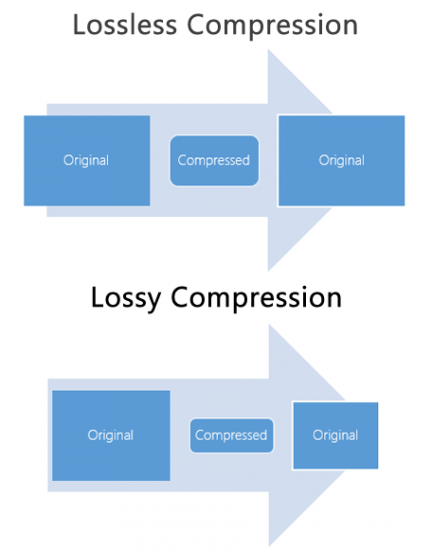
When comparing lossy and lossless compression formats, file size is often a significant factor. Lossy compression generally results in much smaller file sizes than lossless compression, but at the cost of some audio quality loss. However, the size difference between the two formats can be significant, making lossy compression a practical solution for many users.
Advanced Techniques for Lossy Audio Compression
Advanced techniques are available for lossy audio compression that can help to improve audio quality while still achieving significant file size reduction. Perceptual coding is one such technique that uses psychoacoustic models to analyze the audio and remove non-essential information in a way that minimizes the impact on sound quality. Another technique involves the use of metadata, which can help to provide additional information about the audio file that can be used to improve compression.
Best Practices for Lossy Audio Compression
There are several best practices that can be followed to achieve the best results when compressing audio files using a lossy format. Some of these practices include choosing the right codec for the specific needs of the user, ensuring that the encoding settings are appropriate for the file being compressed, and avoiding the use of excessive compression, which can result in a loss of sound quality. Additionally, it is important to avoid common mistakes when compressing audio files, such as encoding at too low of a bit rate or not checking the final output for artifacts or distortion.
Psychoacoustic Models
Psychoacoustic models are mathematical models that simulate the way that the human ear processes sound. They are used in perceptual coding to identify which audio signals can be safely removed without causing a noticeable loss in audio quality.
Psychoacoustic models take into account factors such as frequency masking, temporal masking, and the sensitivity of the human ear to different types of audio signals. They can also take into account more complex factors such as the interaction between different audio signals.
Metadata
Metadata is data that is embedded in an audio file and provides additional information about the audio content. In the context of lossy audio compression, metadata can be used to improve the compression process by providing additional information about the audio content.
One common use of metadata in lossy audio compression is to provide information about the target device or playback environment. For example, metadata can provide information about the type of headphones or speakers that the audio file is intended to be played through. This information can be used by perceptual coders to optimize the compression process for the target device or playback environment.
Another common use of metadata in lossy audio compression is to provide information about the audio content itself. For example, metadata can provide information about the genre, tempo, and key of a song. This information can be used to optimize the compression process for the specific characteristics of the audio content.
Best Practices for Lossy Audio Compression
To achieve the best results in lossy audio compression, there are several best practices that should be followed. These include:
Use the highest quality compression settings available
Use a well-supported and widely-used compression format
Use a lossless format for archiving and backup purposes
Avoid excessive compression, as this can lead to noticeable audio artifacts
Take into account the intended playback environment when compressing audio files
Include appropriate metadata to provide additional information about the audio content
Common Mistakes to Avoid
When compressing audio files, there are several common mistakes that should be avoided. These include:
Using excessively low compression settings, as this can lead to a noticeable loss in audio quality
Using an unsupported or proprietary compression format, as this can lead to compatibility issues
Not taking into account the intended playback environment, which can lead to suboptimal compression settings
Not including appropriate metadata, which can make it difficult to organize and manage large collections of audio files
Using excessive compression, as this can lead to noticeable audio artifacts
Explanation of Audio Compression and Lossy Audio Compression
Audio compression is the process of reducing the size of an audio file without significantly degrading the quality of the sound. Compression is necessary in the world of digital audio because it allows for more efficient storage and transmission of audio files. Without compression, audio files would be prohibitively large, making it difficult to store and share them over the internet.
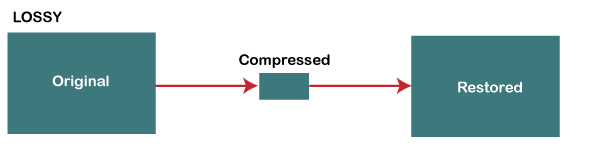
Lossy audio compression is a specific type of audio compression that achieves a high degree of compression by discarding some of the audio data. This means that when you compress an audio file using a lossy compression algorithm, some of the data is permanently lost, and the resulting file is of lower quality than the original. Lossy compression is used widely because it allows for much higher compression ratios than lossless compression, making it more practical for everyday use.
Importance of Audio Compression in Modern Audio Production
Audio compression is an essential tool in modern audio production. The ability to compress audio files allows for more efficient use of storage space and bandwidth, which are essential resources in the world of digital media. Audio compression also makes it possible to stream high-quality audio over the internet, which has revolutionized the way we consume music and other audio content.
However, it’s important to remember that audio compression is not without its downsides. Lossy compression, in particular, can have a significant impact on the quality of the audio, and it’s essential to understand the trade-offs involved when choosing a compression format and level of compression.
The Technical Basics of Lossy Audio Compression
At its most basic level, lossy audio compression works by analyzing the audio file and discarding information that is deemed unnecessary for human perception. This information can include sounds that are too quiet to hear, or frequencies that are outside the range of human hearing. By discarding this information, the compression algorithm can significantly reduce the size of the audio file while still retaining much of the original sound quality.
The specific techniques used in lossy audio compression can vary, but most algorithms use some combination of frequency masking, quantization, and other mathematical techniques to achieve compression. The result is a smaller file size that can be easily stored or transmitted, but with some loss of audio quality.
The Most Commonly Used Lossy Audio Compression Formats and Codecs
There are many different lossy audio compression formats and codecs available, each with its own strengths and weaknesses. Some of the most commonly used formats and codecs include:
MP3 – one of the most widely used audio compression formats, with a high degree of compatibility and a good balance between file size and sound quality
AAC – a newer format that is widely used for streaming audio and has a better sound quality than MP3 at the same bitrate
OGG – an open-source format that is popular for internet radio and streaming
WMA – a format developed by Microsoft that is commonly used for streaming and downloading audio files from the internet
FLAC – a lossless audio compression format that is capable of compressing audio files without any loss of quality, but with larger file sizes than lossy formats
The Fascinating History of Lossy Compression
Lossy compression is a method of data compression that reduces the size of a file by discarding information that is deemed to be unnecessary. This technique has been used for decades in various fields, including image, audio, and video processing, to make files smaller and easier to share or store.
The first significant work on lossy image compression was done in the early 1970s by a group of researchers at the University of Southern California. They developed the first image compression algorithm, called the discrete cosine transform (DCT), which is still used today in the popular JPEG image format.
In the 1980s, the Moving Pictures Experts Group (MPEG) was established to develop standards for digital video compression. They introduced the MPEG-1 and MPEG-2 video formats, which became widely adopted in the industry. The success of these formats led to the creation of newer standards, such as MPEG-4 and H.264, which are still used in modern video streaming services.
Lossy compression has also been essential for audio processing. In the late 1980s, the MP3 format was developed by the Fraunhofer Society in Germany, which used a perceptual coding algorithm to remove information that the human ear cannot detect. MP3 quickly became the standard for digital music distribution, leading to the creation of newer formats such as AAC and OGG Vorbis.
However, lossy compression is not without its drawbacks. Because it removes data, it can lead to a loss of quality, especially if the compression is too aggressive. This can result in artifacts or distortions in the processed image, audio, or video.
Despite these limitations, lossy compression remains an important tool in the modern digital world. It allows for more efficient storage and sharing of multimedia content and has revolutionized industries such as music, film, and photography. As technology continues to evolve, it’s likely that new and more efficient lossy compression techniques will be developed, further enhancing the way we share and consume digital content.


Comments:
Wow, decoding audio like a spy mission? This article is a game-changer! Can’t wait to try Mp4Gain for my audio adventures.
– AudioSpy
Fascinating insights into 3GP decoding! Any chance you could reveal more about the integration of AI in the future?
– TechDecoder
This article provided a fresh perspective on 3GP decoding. Kudos on the spy analogy, it made the topic so engaging!
– AudioAgent
Informative read, but I wish there were more real-life examples of applications using advanced 3GP decoding techniques.
– AppSoundDev
Decoding audio like a spy? Brilliant analogy! Excited to explore the world of 3GP decoding with these advanced techniques.
– SoundSpy
Great article, but can you provide more details on adaptive jitter buffers and how they impact audio quality?
– SoundBuffer
Thanks for the insights! This article made 3GP decoding sound like an exciting adventure rather than a technical topic.
– AudioExplorer