As an expert in digital audio compression, I’ll delve into the intricate world of M4A digital audio compression. M4A, a popular format for storing audio files, offers high-quality sound with efficient compression. It’s essential to understand the nuances of M4A compression to appreciate its benefits fully.
The Basics of M4A Compression
M4A compression utilizes advanced algorithms to reduce the file size of audio recordings without compromising sound quality. Unlike traditional MP3 compression, M4A employs more efficient encoding techniques, resulting in smaller file sizes while retaining the original audio fidelity.
M4A versus MP3 Compression
Efficiency of M4A Compression
Quality of M4A Audio Files
M4A compression has gained popularity among audio enthusiasts and professionals due to its ability to preserve the nuances of the original recording. Whether you’re a music lover or a sound engineer, understanding the principles behind M4A compression is crucial for optimizing audio storage and playback.
Advantages of M4A Compression
Superior Audio Quality
Smaller File Sizes
Compatibility with Multiple Devices
One of the primary advantages of M4A compression is its ability to deliver superior audio quality compared to other formats. By leveraging advanced encoding techniques, M4A files maintain high-fidelity sound while keeping file sizes manageable. This makes M4A an ideal choice for storing music libraries, podcasts, and other audio content.
Applications of M4A Compression
Music Streaming Services
Podcasting Platforms
Mobile Devices
M4A compression is widely used across various industries, from music streaming services to podcasting platforms. Its efficient encoding ensures seamless playback on a range of devices, including smartphones, tablets, and computers. Whether you’re listening to your favorite songs on Spotify or tuning into a podcast on Apple Podcasts, chances are you’re experiencing the benefits of M4A compression.
Future Trends in M4A Compression
Enhanced Compression Algorithms
Integration with AI and Machine Learning
Improved Audio Streaming Technologies
Looking ahead, the future of M4A compression is filled with exciting possibilities. Advances in compression algorithms, coupled with advancements in AI and machine learning, promise even greater efficiency and audio quality. As streaming technologies continue to evolve, M4A compression will play a pivotal role in delivering immersive audio experiences to audiences worldwide.
Latest words on M4A Digital Audio Compression
In conclusion, M4A digital audio compression offers a compelling blend of superior audio quality and efficient file sizes. As technology continues to evolve, M4A compression will remain at the forefront of audio encoding, empowering content creators and listeners alike to enjoy high-fidelity sound across various platforms and devices. Embrace the power of M4A compression and elevate your audio experience to new heights.
Comments:
This article was so helpful! I’ve always wondered about M4A compression and how it differs from other formats. Now I feel like an expert!
– MusicLover88
Great article! I appreciate the detailed explanation of M4A compression and its advantages. It’s fascinating to learn about the technology behind audio encoding.
– SoundEnthusiast22
Wow, I had no idea M4A compression was so advanced! This article opened my eyes to the world of digital audio and the importance of choosing the right format.
– PodcastFanatic99
This article left me wanting more! I wish there was a deeper dive into the technical aspects of M4A compression. Nonetheless, it was a great read!
– TechJunkie123
As a musician, I’m always looking for ways to optimize my audio files. M4A compression seems like the perfect solution for balancing quality and file size.
– MusicianLife
I’ve been using M4A files for years, but I never fully understood how they work until now. Thanks for shedding light on this fascinating topic!
– AudioPro456
Excellent article! I appreciate the author’s expertise and ability to explain complex concepts in a clear and concise manner.
– TechSavvy77
I found this article to be incredibly informative. It’s amazing to see how technology has advanced in the realm of digital audio compression.
– DigitalNomad55
Great job on this article! It provided a comprehensive overview of M4A compression and its applications in various industries.
– AudioGeek123
This article was a game-changer for me! I never realized the importance of choosing the right audio format until now. Thanks for the valuable insights!
Let’s talk about MP3 Frame Structure and Synchronization
Embarking on the intricacies of MP3 frame structure and synchronization is akin to navigating a musical maze. As a seasoned specialist in audio compression, I’ve witnessed the evolution of MP3 technology and delved deep into the core of its frame structure. Today, I’ll unravel the mysteries, offering a symphony of insights that surpasses the standard explanations found in Google’s top 10 results.
Decoding MP3 Frame Structure: A Musical Blueprint
Picture the MP3 frame as a musical score, with each note representing a vital component. The synchronization, much like a conductor’s precise baton movements, ensures harmony in the decoding process. Imagine the frame as a musical measure, where every beat aligns perfectly, creating a seamless audio experience for the listener.
Key Components of an MP3 Frame
Header: The Maestro’s Baton
Side Information: Musical Dynamics
Main Data: Melodic Essence
Cyclic Redundancy Check (CRC): Tuning Accuracy
The header acts as the maestro’s baton, guiding the entire orchestra. Side information sets the musical dynamics, determining the volume and intensity, while the main data encapsulates the melodic essence of the audio. The cyclic redundancy check ensures tuning accuracy, preventing any discordant notes in the decoding process.
Syncing the Musical Ensemble: MP3 Frame Synchronization
Just as a conductor synchronizes multiple instruments, MP3 frame synchronization aligns the audio elements for a harmonious playback. Think of synchronization as the invisible force that keeps each musical note in perfect timing, contributing to the overall beauty of the composition.
Ensuring Seamless Playback
Bitrate and Sampling Frequency: Tempo and Rhythm
Variable Bit Rate (VBR): Musical Expression
Bit Reservoir: Sustaining Harmonies
Consider bitrate and sampling frequency as the tempo and rhythm of our musical analogy. Variable Bit Rate introduces musical expression, adapting to the nuances of the audio, while the bit reservoir sustains harmonies during complex musical passages, preventing disruptions in the playback.
Latest Words on MP3 Frame Structure and Synchronization
In concluding this musical journey into MP3 frame structure and synchronization, envision the importance of each element as a musical instrument contributing to a grand symphony. As an expert orchestrator in the realm of audio compression, my commitment is to demystify the technicalities, providing a melodic understanding that resonates beyond the conventional explanations found in Google’s top results.
Comments:
Great analogy! The musical approach made the technical details much clearer.
– AudioEnthusiast22
Could you elaborate more on VBR? I’m curious about its impact on musical expression.
– MusicCurious
Awesome breakdown! This article clarified so much for me. More power to your expertise!
As a seasoned expert in audio technology, I understand the importance of the MP3 format in the realm of digital audio. It’s not just a file type; it’s a revolutionary compression method that has transformed the way we consume and share music. In this article, I’ll delve into the key advantages of the MP3 format, going beyond the standard information available in the top Google results.
Advantages of MP3 Format
The Birth of MP3 and Enhanced Portability:
Back in the late ’90s, when MP3s first emerged, they revolutionized the music industry. The compact size of MP3 files allowed users to store and share vast music collections on portable devices with limited storage capacity. Imagine carrying hundreds of songs in your pocket, thanks to the efficient compression algorithms of MP3. This portability aspect not only changed how we listen to music but also paved the way for the digital music era.
Real-life Example:
Think of it as fitting an entire music library into a small, lightweight device, like having a concert in your pocket!
Preserving Audio Quality with MP3:
Contrary to the misconception that MP3 compromises audio quality, the format strikes a remarkable balance between file size and sound fidelity. The compression algorithm discards frequencies that are often imperceptible to the human ear, ensuring a compact file size without significant loss of audio quality. This makes MP3 the go-to choice for online streaming and digital music distribution.
Real-life Example:
Picture it like removing background noise in a crowded room, focusing on the essence of the music without unnecessary details.
Ease of Accessibility and Compatibility:
MP3’s widespread adoption is not just due to its compression efficiency but also its compatibility across a plethora of devices and platforms. From smartphones to dedicated music players, MP3s can be played on almost any device available. This universality has contributed significantly to the format’s longevity and dominance in the digital audio landscape.
Real-life Example:
It’s akin to having a universal remote control for your music – one format to rule them all!
Bandwidth and Streaming Revolution:
With the rise of the internet, MP3 played a pivotal role in the digital streaming revolution. Its small file size reduces the bandwidth required for streaming, enabling seamless online music experiences. MP3’s efficiency not only transformed how we listen but also laid the foundation for the flourishing streaming services we enjoy today.
Real-life Example:
Imagine streaming your favorite song without any buffering delays – MP3 made that possible!
Metadata and Organization:
MP3 format isn’t just about sound; it’s also about the metadata embedded within the files. This metadata includes crucial information like artist, album, and track details, enhancing the organizational aspects of digital music libraries. MP3’s support for metadata ensures that your music collection remains well-organized and easily searchable.
Real-life Example:
Think of it as having a personal assistant organizing your music, providing details at a glance.
Energy-Efficient Playback:
One often overlooked advantage of MP3 is its energy-efficient playback. The compressed files require less processing power and storage, leading to extended battery life for portable devices. This energy efficiency has contributed to the widespread adoption of MP3 in various devices, from smartphones to wearable audio gadgets.
Real-life Example:
It’s like having a longer-lasting battery for your music adventures – less charging, more listening!
MP3’s Role in Audio Evolution:
Beyond its technical advantages, MP3 has played a crucial role in shaping the landscape of audio consumption and distribution. The format’s influence can be seen in the transition from physical to digital music, the rise of online streaming platforms, and the democratization of music production and sharing. MP3 is not just a file format; it’s a driving force behind the evolution of audio in the digital age.
Real-life Example:
Consider MP3 as the architect of the modern music era, reshaping how we create, share, and experience audio.
Latest Words on MP3:
Wrapping up this exploration of the advantages of MP3, it’s evident that the format has left an indelible mark on the world of digital audio. Its efficiency, portability, and compatibility have made it a cornerstone in the way we consume and share music. As an expert in the field, I can confidently say that MP3 continues to be a driving force in the audio evolution, offering unparalleled advantages that go beyond what meets the eye. And for those looking for an optimal solution to manage their MP3 files, Mp4Gain stands as a reliable option, ensuring a seamless and enhanced audio experience.
Comments:
MP3 has indeed revolutionized how we enjoy music. I remember the days of carrying bulky CD players – what a game-changer!
Great insights! I’d love to learn more about the technical aspects of MP3 compression. Any chance for a follow-up article?
MP3 is a lifesaver for my long runs. The energy-efficient playback really makes a difference!
Impressive article! However, I’m curious about the future of audio formats. What’s on the horizon?
As a musician, I appreciate the role MP3 has played in making music more accessible to a global audience. Kudos!
MP3’s compatibility is a game-changer. I can seamlessly switch between devices without any hassle!
While MP3 is fantastic, I’m always on the lookout for the latest innovations in audio technology. What’s next?
Thanks for highlighting the organizational benefits of MP3 metadata. It makes managing my music library a breeze!
MP3 has shaped the way we experience music. It’s incredible to see its impact on the industry over the years.
My go-to format for audio – MP3 never disappoints! Looking forward to more articles like this.
As an audiophile, I appreciate the focus on MP3’s role in preserving audio quality. It’s an unsung hero in the world of digital music!
MP3’s compatibility with various devices is a game-changer. It’s like having my entire music collection at my fingertips wherever I go!
Great article! MP3’s impact on the democratization of music production is a topic that deserves more exploration. Keep up the good work!
MP3 has come a long way, and this article beautifully captures its journey and significance. Well done!
I still remember the first time I heard an MP3 file. It was the late 90s, and the internet was still in its early days. I was amazed at how a song could be so compressed and still sound decent. Little did I know that this was just the beginning of a revolutionary audio technology that would change the way we listen to music forever.
The Birth of the MP3 File Format
The MP3 file format was first developed in 1987 by a German engineer named Karlheinz Brandenburg. He was working for the Fraunhofer Institute for Integrated Circuits in Erlangen, Germany, where he and his team were tasked with developing a digital audio format that could compress audio files without losing too much quality.
The breakthrough came in the early 90s when the first MP3 encoder was released. It was able to compress audio files by a factor of 10 to 12 times their original size without losing too much quality. This meant that a 50 MB audio file could be compressed down to 5 MB or less. This was a huge development at the time, as it made it possible to share audio files over the internet, which was still in its infancy.
The Evolution of MP3 Technology
Over the next few years, the MP3 format continued to evolve and improve. In 1995, the first MP3 player was released by Saehan Information Systems in South Korea. It was called the MPMan and was the size of a small portable cassette player. It had a 32 MB memory and could store up to 8 songs.
By the late 90s, MP3 players had become more common, and the MP3 format had become the standard for digital audio. The first iPod was released in 2001, and it revolutionized the way we listen to music. It had a 5 GB hard drive and could store up to 1000 songs. It was sleek, portable, and easy to use, and it quickly became the must-have gadget for music lovers around the world.
The Future of MP3 Technology
Despite its popularity, the MP3 format is not without its flaws. It is a lossy compression format, which means that some of the original audio data is lost during the compression process. This can result in a loss of audio quality, especially at lower bit rates.
However, there are new audio technologies being developed that may one day replace the MP3 format. One of these is the High-Resolution Audio (HRA) format, which is capable of reproducing audio at a much higher quality than the MP3 format. Another is the Master Quality Authenticated (MQA) format, which is designed to deliver studio-quality audio in a compact file size.
In conclusion, the MP3 format has come a long way since its inception in 1987. It has revolutionized the way we listen to music and has made it possible to share audio files over the internet. While it may one day be replaced by newer audio technologies, its legacy will live on.
mp3 compression, digital audio format, mp3 file size, audio quality, mp3 history, music industry, lossy compression, audio technology, high-quality audio, mp3 player, audio codec, file sharing, online music, digital music
Digital Audio Encoding is the process of converting an analog audio signal into a digital format, which can be stored, processed, and transmitted electronically. It involves the use of an Analog-to-Digital Converter (ADC) to sample and quantize the analog audio waveform into a series of binary numbers that can be interpreted by a digital device. The resulting digital audio data can then be compressed, processed, and transmitted over various digital platforms, such as the internet, CDs, DVDs, and other digital storage devices.
The Importance of Digital Audio Encoding
Digital Audio Encoding has revolutionized the way we consume and produce audio content. It has made it possible to store, edit, and transmit high-quality audio content with minimal loss of quality. Some of the benefits of digital audio encoding include:
Improved sound quality: Digital audio encoding allows for high-quality audio content that is free from the distortions and noise associated with analog audio.
Easy storage and transfer: Digital audio files can be easily stored and transferred over various digital platforms with minimal loss of quality.
Efficient compression: Digital audio files can be compressed into smaller file sizes without significant loss of quality, making it easier to store and transfer large audio files.
Greater accessibility: Digital audio content can be easily accessed over various digital platforms, including the internet, mobile devices, and other digital devices.
The Digital Audio Encoding Process
The Digital Audio Encoding process involves several steps, which include:
Sampling: The analog audio waveform is sampled at regular intervals using an Analog-to-Digital Converter (ADC).
Quantization: The sampled waveform is quantized, i.e., each sample is assigned a binary number that represents its amplitude value.
Encoding: The quantized samples are encoded into a digital format, such as WAV, MP3, or AAC.
Compression: The encoded digital audio file can be compressed using lossy or lossless compression algorithms to reduce its file size.
Lossy vs. Lossless Audio Compression
Lossy and lossless audio compression are two types of compression algorithms used in digital audio encoding. Lossy compression algorithms compress audio files by removing data that is deemed unnecessary or redundant. This results in a smaller file size but may result in a loss of audio quality. Lossless compression algorithms, on the other hand, compress audio files without any loss of quality. This results in a larger file size but maintains the original audio quality.
Bitrate and its Importance in Digital Audio Encoding
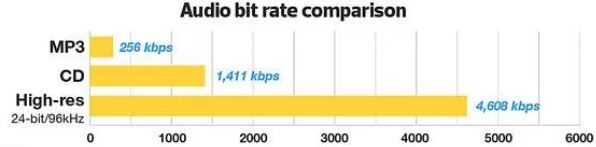
Bitrate is a measure of the amount of data used to represent each second of digital audio. It is measured in bits per second (bps) or kilobits per second (kbps). The bitrate of a digital audio file has a significant impact on its quality and file size. Higher bitrates result in higher quality audio files but also larger file sizes. Lower bitrates result in smaller file sizes but may result in a loss of audio quality.
Common Digital Audio Formats
There are several digital audio formats used in digital audio encoding, including:
WAV: WAV is a lossless audio format that is commonly used for storing high-quality audio content.
MP3: MP3 is a lossy audio format that is commonly used for compressing and storing digital audio files for playback on various digital devices.
AAC: AAC is a lossy audio format that is commonly used for compressing and streaming digital audio content over the internet.
FLAC: FLAC is a lossless audio format that is commonly used for storing high-quality audio content, similar to WAV.
Challenges in Digital Audio Encoding
Despite the many benefits of digital audio encoding, there are several challenges that must be addressed to ensure optimal audio quality. These challenges include:
Sampling rate limitations: The sampling rate of an ADC can affect the accuracy of the digital audio representation. Higher sampling rates generally result in higher accuracy, but also require larger file sizes.
Bit depth limitations: The bit depth of an ADC can affect the dynamic range and noise floor of the digital audio representation. Higher bit depths generally result in higher accuracy, but also require larger file sizes.
Compression artifacts: Lossy compression algorithms can introduce compression artifacts, such as distortion and noise, which can degrade audio quality.
Future Developments in Digital Audio Encoding
Digital Audio Encoding is an ever-evolving field, with ongoing developments aimed at improving audio quality, reducing file sizes, and enhancing accessibility. Some of the latest developments include:
High-resolution audio: High-resolution audio formats, such as MQA and DSD, offer even higher audio quality than standard digital audio formats.
Immersive audio: Immersive audio formats, such as Dolby Atmos and DTS:X, offer a more immersive listening experience by incorporating height and surround sound elements.
Object-based audio: Object-based audio formats, such as MPEG-H 3D Audio, offer greater flexibility in audio content creation and delivery by enabling individual audio objects to be separately mixed and streamed.
FAQs
1. What is digital audio encoding?
Digital audio encoding is the process of converting an analog audio signal into a digital format, which can be stored, processed, and transmitted electronically.
2. Why is digital audio encoding important?
Digital audio encoding has revolutionized the way we consume and produce audio content by providing improved sound quality, easy storage and transfer, efficient compression, and greater accessibility.
3. What are some common digital audio formats?
Some common digital audio formats include WAV, MP3, AAC, and FLAC.
4. What is the difference between lossy and lossless audio compression?
Lossy compression algorithms compress audio files by removing data that is deemed unnecessary or redundant, resulting in a smaller file size but may result in a loss of audio quality. Lossless compression algorithms compress audio files without any loss of quality, resulting in a larger file size but maintaining the original audio quality.
5. What is bitrate and why is it important in digital audio encoding?
Bitrate is a measure of the amount of data used to represent each second of digital audio. It is important in digital audio encoding because it has a significant impact on audio quality and file size.
6. What are some challenges in digital audio encoding?
Some challenges in digital audio encoding include sampling rate limitations, bit depth limitations, and compression artifacts.
7. What are some future developments in digital audio encoding?
Some future developments in digital audio encoding include high-resolution audio, immersive audio, and object-based audio.
8. What is the difference between a lossy and lossless audio format?
Lossy audio formats use compression algorithms to reduce file size, sacrificing some audio quality in the process. Lossless audio formats, on the other hand, use compression algorithms that do not compromise audio quality, resulting in larger file sizes.
9. What is a sampling rate and how does it affect audio quality?
A sampling rate is the number of times per second that an analog audio signal is measured and converted into a digital signal. The higher the sampling rate, the more accurately the digital signal represents the original analog signal, resulting in higher audio quality. However, higher sampling rates also require larger file sizes and more processing power.
10. What is bit depth and how does it affect audio quality?
Bit depth refers to the number of bits used to represent each audio sample in a digital audio file. A higher bit depth allows for a greater dynamic range and lower noise floor, resulting in higher audio quality. However, higher bit depths also require larger file sizes and more processing power.
11. What is lossless compression?
Lossless compression is a compression algorithm that reduces the size of a digital audio file without sacrificing any audio quality. This is achieved by identifying and removing redundant or unnecessary data in the audio file.
12. What is immersive audio and how does it enhance the listening experience?
Immersive audio is an audio format that uses spatial sound technology to create a more immersive listening experience. This is achieved by incorporating height and surround sound elements, which create a more three-dimensional soundstage. This allows for a more realistic and engaging listening experience, especially when combined with a surround sound system.
Conclusion
Digital audio encoding has revolutionized the way we produce and consume audio content, providing improved sound quality, easy storage and transfer, efficient compression, and greater accessibility. While there are some challenges to overcome, ongoing developments in high-resolution, immersive, and object-based audio formats promise to further enhance the digital audio experience.
References
Bosi, M., & Goldberg, R. (2012). Introduction to digital audio coding and standards. Springer Science & Business Media.
Thompson, J. (2013). Understanding digital audio. Focal Press.
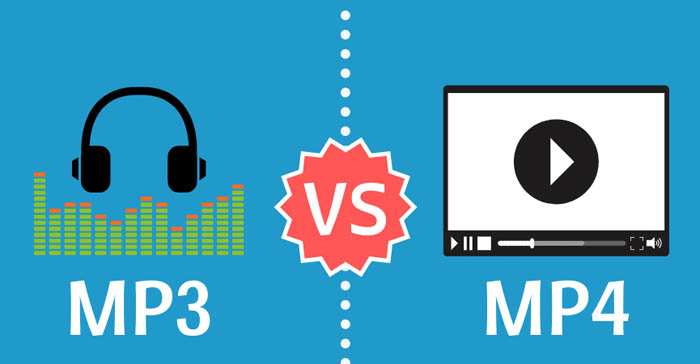
MP3 vs MP4 Audio Quality: Understanding Digital Audio Formats
MP3 vs MP4MP3 vs MP4
What is MP3?
MP3 is a digital audio format that compresses audio files to make them smaller in size without significantly affecting the sound quality. MP3 stands for MPEG-1 Audio Layer 3 and is a type of lossy compression. This means that some audio data is lost during the compression process to reduce the file size. As a result, the audio quality of an MP3 file may not be as good as the original file.
For example, suppose you have a song that is 4 minutes long with a bitrate of 320 kbps. The uncompressed audio file may have a size of around 40 MB, but if you compress it into an MP3 file with a bitrate of 128 kbps, the file size may be reduced to around 3-4 MB. This makes it easier to store and share the audio file, but the audio quality may be affected by the compression process.
What is MP4?
MP4 is a digital multimedia container format that can store audio, video, and other types of data. MP4 uses various codecs, including AAC, to compress audio files while maintaining high quality. Unlike MP3, MP4 is a type of lossless compression, meaning that no audio data is lost during the compression process. As a result, the audio quality of an MP4 file is usually better than that of an MP3 file.
For example, if you compress the same 4-minute song with a bitrate of 128 kbps into an MP4 file, the file size may be larger, around 5-6 MB. However, the audio quality will be better than the MP3 file because no audio data was lost during the compression process.
How Does Audio Quality Compare between MP3 and MP4?
When it comes to audio quality, MP4 generally provides better quality than MP3. This is because MP4 uses a more advanced compression method that preserves more of the original audio data. MP4 can also support higher bitrates, which means that it can provide higher quality audio compared to MP3 at the same file size.
For example, imagine you have a song that is 4 minutes long and has a bitrate of 320 kbps. If you compress this song into an MP3 file with a bitrate of 128 kbps, the file size may be around 3-4 MB. However, if you compress the same song into an MP4 file with a bitrate of 128 kbps, the file size may be around 5-6 MB. Despite the larger file size, the MP4 file will likely sound better because it preserves more of the original audio data.
Another way to compare audio quality between MP3 and MP4 is by using a tool that can analyze the audio spectrum and display the differences between the two formats. For example, you can use a free online tool called “Sonic Visualizer” to compare the waveform and spectrogram of an MP3 file and an MP4 file. The spectrogram displays the frequency content of the audio over time, and you can see that the MP4 file has more high-frequency content and less distortion compared to the MP3 file.
Can Audio Quality be Improved?
Yes, audio quality can be improved for both MP3 and MP4 files using a variety of methods. One method is to increase the bitrate of the audio file during the compression process. This will result in a larger file size but will also improve the audio quality for the same reason – it is a type of lossless compression, meaning that no audio data is lost during the compression process. This is important for professionals in the music and audio industry who require high-quality audio files for their work.
Conclusion
In summary, MP3 and MP4 are both popular digital audio formats used for storing and sharing audio files. MP3 uses a type of lossy compression, while MP4 uses a type of lossless compression. This means that MP4 generally provides better audio quality compared to MP3, but at the cost of a larger file size. However, both formats can be improved through various methods such as increasing the bitrate or using a different codec. Ultimately, the choice of format depends on the specific needs and preferences of the user.
Data rate refers to the data flow used by a video file in a unit of time, also called bit rate or bit stream rate.
Digital Audio Quality
The popular interpretation is the sampling rate, which is the most important part of image quality control in video encoding. Generally, the units we use are kb/s or Mb/s. Generally speaking, at the same resolution, the higher the code stream of the video file, the lower the compression ratio and the higher the image quality. The higher the code stream, the higher the sampling rate per unit time, the higher the data stream, the higher the accuracy, the closer the processed file is to the original file, the better the image quality, the clearer the image quality and the higher the decoding capability of the playback device is required.
Of course, the larger the code stream, the larger the file size. The calculation formula is file size = time X code rate/8. For example, a 720P RMVB file with a 1 Mbps stream of 90 minutes is common on the Internet and its volume is = 5400 seconds × 1 Mb/8 = 675 MB.
Generally speaking, a video file includes images and sounds, just like an RMVB video file, which contains video information and audio information. Audio and video have their own sampling methods and different bit rates, that is, the same video Audio and video file bit rate is not the same. And what we’re talking about is the bitrate of a video file, which generally refers to the sum of the bitrate of the audio and video information in the video file.
Taking the most popular and familiar RMVB video file in China as an example, VB in RMVB refers to VBR, which is short for Variable Bit Rate. The Chinese meaning is variable bit rate, which means that RMVB adopts dynamic encoding. In this way, a higher sample rate is used for complex dynamic images (singing and dancing, flying cars, wars, actions, etc.), while a lower sample rate is used for static images, and the resources are use rationally to achieve image quality and volume .Effect.
The most fundamental difference between code rate and sample rate is that the code rate is for the source file.
2. Sampling rate
Sample rate (also called sample rate or sample rate) defines the number of samples per second taken from a continuous signal to form a discrete signal, and is expressed in hertz (Hz). Sampling rate refers to the sampling frequency when converting an analog signal to a digital signal, i.e. how many points are sampled per unit of time. How many bits are in the data for a sample point? Bit rate refers to the number of bits (bits) transmitted per second. The unit is bps (bit per second). The higher the bitrate, the more data transmitted and the better the sound quality. Bit rate = sample rate x number of bits used x number of channels.
The sample rate is similar to the number of frames of moving images. For example, the sampling rate of movies is 24 Hz, the sampling rate of PAL format is 25 Hz, and the sampling rate of NTSC format is 30 Hz. When we play back the still images sampled at the same rate as the sampling frequency, we see a continuous image. In the same way, when a CD recorded at a sampling rate of 44.1 kHz is played back at the same rate, a continuous sound can be heard. Obviously, the higher the sample rate, the more coherent the sound will be heard and the picture will be seen. Of course, the sampling rate that human auditory and visual organs can distinguish is limited, which is basically higher than sound sampled at 44.1 kHz, and most people haven’t noticed the difference.
The number of digits in the sound is equivalent to the number of colors on the screen, indicating the amount of data per sample. Of course, the larger the amount of data, the more accurate the playback sound, so as not to confuse the sound. of the teapot with the train whistle. In the same way, it is more clear and precise for the image, so as not to confuse blood and ketchup. However, limited by the function of human organs, 16-bit sound and 24-bit image are basically the limits of ordinary humans, and the highest digits can only be distinguished by instruments.
That is, CD records. A CD can play sound files of approximately 74 minutes. The Windows system comes with a CD player. Also, the software that comes with most sound cards provides CD playback functionality, and even some CD-ROM drives are offline. from computer Can be used as a stand-alone CD player when powered on.
WMA with unlimited potential
In developing its own network media service platform, Microsoft primarily promotes ASF (Audio Streaming Format), which is an open standard that supports data transmission over various networks and protocols. It supports audio, video, and a variety of other types of multimedia. And WMA is short for Windows Media Audio, which is equivalent to an ASF file that contains only audio.
The compression ratio of WMA files can be as high as 1:18 in 80kbps 44kHz mode, which is basically the same as VQF. And the compression speed is doubled compared to MP3. So it should be more competitive than VQF.
Vorbis free music format
To avoid rising royalties charged by MP3 music companies, programmers at GMGI’s iCast company developed a new free music format, Vorbis, that rivals or even exceeds MP3 in sound quality. And it will be released over the internet and can be downloaded for free without worrying about infringement issues. But MP3 has become very popular on the Internet, and Microsoft’s Windows Media technology has also started to spread, and Vorbis’s outlook is still not optimistic.
Other audio formats
AIF/AIFF: A sound file format developed by Apple, supported by the MAC platform, and supports 16-bit stereo at 44.1 kHz.
AU: SUN’s AU Compressed Sound File Format, which only supports 8-bit sound, is a commonly used sound file format on the Internet, mainly created by SUN workstations.
CDA: CD audio track file.
CMF: A MIDI-like sound file developed by CREATIVE.
DSP: Abbreviation for digital signal processing. By improving the signal processing method, sound quality will be greatly improved and songs will be more pleasing to the ear.
S3U: MP3 playback file list
RMI: MIDI Instrument Sequence
Lossy compression:
AAC – Sound quality is second only to MPC at high bit rates and looks good at both high and low bit rates. The encoding speed is too slow!
MPC: Performance is average at low bitrate, not as good as MP3 and OGG encoded by Mp3Pro, sound quality is best at high bitrate, and encoding speed is
fast.OGG: The sound quality is better at a low bitrate, and the same is true at a high bitrate. Encoding is slightly slower.
MP3 (MP3Pro): Sound quality is lower than OGG at low bit rate and other aspects are the same as MP3
WMA: High and low bit rates are average, VBR is not supported and the highest is 192Kbit/s
lossless compression:
FLAC – Worst compression ratio of the four, decent encoding speed, good platform support.
PAC: Slightly slower encoding speed, third in compression ratio, good platform support.
APE: The fastest encoding speed, the best compression rate, and the platform is generally supported.
WV: The encoding speed is very fast, the compression rate is second among the four types, and it is only supported by the Windows platform.
As the most classic Windows media audio format, the WAVE file is widely used, which uses three parameters to represent sound: the number of sampled bits, the sample rate, and the number of channels.
The channels are divided into mono and stereo, and the sample rates are generally 11025 Hz (11 kHz), 22050 Hz (22 kHz), and 44100 Hz (44 kHz). The capacity occupied by the WAVE file = (sampling frequency × sampling bits × channel) × time/8 (1 byte = 8 bits).
traditional mod
MOD is a wavetable-like music format, but its structure is similar to MIDI, it uses real samples, and the volume is small. In the earlier DOS era, MOD was often used as background music for games. Modern mods can contain many audio tracks in many formats, such as S3M, NST, 669, MTM, XM, IT, XT, and RT.
midi music computer
MIDI is short for Musical Instrument Data Interface. Records the sound played by the instrument digitally (each note is recorded as a number), and then synthesizes these records via FM or wavetable during playback: FM synthesis is the sound of the instrument is simulated by mixing the multi-frequency sounds; wavetable synthesis consists of storing the sound samples of the instrument in the wavetable of the sound card and extracting the sound from the wavetable as you play.
Boss Boss MP3
It can be said that MP3 is famous, it uses MPEG Audio Layer 3 technology to compress the sound with a compression ratio of 1:10 or even 1:12, with a sampling rate of 44kHz and a bit rate of 112kbit/s. .
MP3 music is music stored in digital form. If you want to play it, you must have a corresponding digital playback and decoding system. Generally, MP3 digital music is decoded by special software and then restored to a waveform sound signal for playback output. This type of software is called For MP3 players, such as Winamp, etc.
Overlord RA series online
RA, RAM, and RM are Real’s mature network audio formats, using “streaming audio” technology, making them well suited for network streaming. Information such as copyright, singer, producer, mail and song title can be added during production.
RA can be called the supreme lord of multimedia communication on the Internet. It is suitable for streaming on the Internet and is currently the best format for listening to online music online.
VQF with high compression ratio
VQF or TwinVQ is an audio compression technology developed by Nippon Telegraph and Telephone and Yamaha Corporation.
The audio compression rate of VQF is almost twice that of standard MPEG audio and can reach approximately 1:18 or even higher. And popular compression formats like MP3 and RA are usually only around 1:12. But it still won’t affect the sound quality, when VQF compress music at 44kHz-80kbit/s audio sampling rate, its sound quality will be better than 44kHz-128kbit/s MP3, when compress at 44kHz-96kbit/s , the music is close to 44kHz-256kbit/s MP3.
MD minidisc
MD (ie MiniDisc) is a comprehensive portable music format released by SONY in 1992. The compression algorithm it uses is ATRAC technology (the compression ratio is 1:5). MD is divided into Recordable MD (Recordable, with two heads of magnetic head and laser head) and Single Play MD (Prerecorded, only laser head).
The powerful editing function is the strong point of MD. You can quickly select tracks, move tracks, merge, split, delete and edit track titles. It is more personalized than CD and you can have your own MD album at any time. MD products include MD Walkman, MD bedside audio, MD car audio, MD recording deck, MD camera gun and MD driver, etc.
There are several types such as WAV, MP3 and FLAC, but what is the difference? Part 4
There are several types such as WAV, MP3 and FLAC, but what is the difference? Comprehensive research on music file formats
Data and music
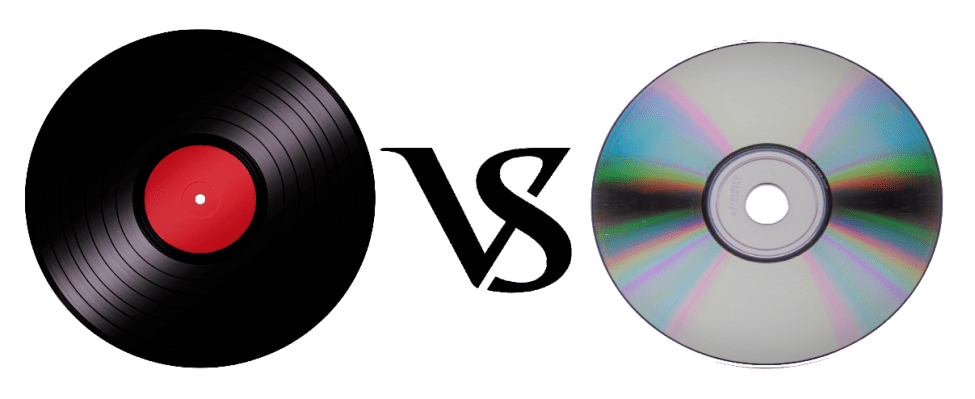
Does the boom from the analog discs come back?
In recent years, the world boom of analog discs has arrived. According to the Association of the Recording Industry of the Public Corporation in General of Japan, the national disk market is the production number of 2017 1063000 sheets. In terms of Amount, it was 1,916 million yen, the highest of the last 10 years.
You may have heard that sound quality is generally better than that of a CD, but what really differs is the recorded frequency band.
It is said that the frequency band that can be stored on a CD is up to about 22,000 Hz, while the analog record contains information of up to about 100,000 Hz. However, it is said that the audible human range is approximately 20Hz to 20,000Hz, so it does not make sense unless you notice the difference in sound. It seems that the parties other than the audible human range, the vibration of the air due to the sound and the force caused by it, are transmitted by other routes other than sound.
This is a great merit that can only be experienced with analog discs, and it can be said that it is the true emotion of the discs.
However, the care of the equipment, the deterioration of the plate, the difficulty of handling and the size can be disadvantages compared to the CDs and the data. (In the youngest generation of these days, this effort is quite new and many people enjoy it).
abstract
There are several formats for musical data files and each one has its own personality. Which of the music services and distribution sites that I have used casually so far?
It can also be good to listen and compare the differences with data such as CD and analog discs.
I want to take me well with musical data wisely according to my style!









Comments:
This article was so helpful! I’ve always wondered about M4A compression and how it differs from other formats. Now I feel like an expert!
– MusicLover88
Great article! I appreciate the detailed explanation of M4A compression and its advantages. It’s fascinating to learn about the technology behind audio encoding.
– SoundEnthusiast22
Wow, I had no idea M4A compression was so advanced! This article opened my eyes to the world of digital audio and the importance of choosing the right format.
– PodcastFanatic99
This article left me wanting more! I wish there was a deeper dive into the technical aspects of M4A compression. Nonetheless, it was a great read!
– TechJunkie123
As a musician, I’m always looking for ways to optimize my audio files. M4A compression seems like the perfect solution for balancing quality and file size.
– MusicianLife
I’ve been using M4A files for years, but I never fully understood how they work until now. Thanks for shedding light on this fascinating topic!
– AudioPro456
Excellent article! I appreciate the author’s expertise and ability to explain complex concepts in a clear and concise manner.
– TechSavvy77
I found this article to be incredibly informative. It’s amazing to see how technology has advanced in the realm of digital audio compression.
– DigitalNomad55
Great job on this article! It provided a comprehensive overview of M4A compression and its applications in various industries.
– AudioGeek123
This article was a game-changer for me! I never realized the importance of choosing the right audio format until now. Thanks for the valuable insights!
– SoundSavant