Reversible Variable Length Codes in MP3


Free Download Mp4Gain
picture

Reversible Variable Length Codes in MP3
Reversible Variable Length Codes in MP3

Let’s talk about Reversible Variable Length Codes in MP3

When you think about MP3 files, you probably focus on their compact size and widespread use. But what makes MP3 so efficient is the smart compression techniques it employs, one of which is reversible variable length coding (RVLC). This technology ensures that even compressed, the audio retains excellent quality, and data corruption has minimal impact.

In my years of working with audio codecs, I’ve seen how RVLC revolutionized MP3. It’s not just about compressing files but doing so in a way that preserves as much data integrity as possible. Think of RVLC as a puzzle piece designed to make audio compression seamless and reversible if needed.

How Reversible Variable Length Codes Work

RVLC is a method for encoding data where the length of each codeword depends on the frequency of the symbol it represents. Frequently occurring symbols are given shorter codes, while less common ones get longer ones.

Imagine packing a suitcase for a trip. You’d place the most important items in the easiest-to-reach spots. RVLC does something similar by efficiently packing frequent data at the forefront. This arrangement allows decoding to be faster and more accurate, even if some data is lost.

Why RVLC Is Crucial in MP3 Compression

The MP3 format relies on psychoacoustic models to discard inaudible sounds and uses RVLC to encode the remaining data. This dual process is what makes MP3 both lightweight and robust.

For example, think about how you pack delicate glassware for shipping. You’d use padding to keep it safe. RVLC adds a similar layer of protection by making data reversible. If the audio file encounters an error, the reversible coding can reconstruct it without significant distortion.

RVLC and Error Resilience

One of RVLC’s standout features is its error resilience. In a real-world scenario, no transmission channel is perfect, and errors can creep into MP3 streams. RVLC can mitigate these issues, ensuring playback remains smooth.

I once dealt with a corrupted MP3 file sent over an unstable network. Thanks to RVLC, only a small portion of the file was affected, and the rest played without hiccups. This adaptability makes RVLC indispensable for streaming services and other audio applications.

Applications of RVLC in Everyday Life

You might be surprised to know how often you benefit from RVLC without realizing it. From streaming music on your phone to downloading podcasts, RVLC ensures these files remain intact and high-quality.

Think about GPS navigation systems. The spoken directions are often in MP3 format. RVLC ensures the audio remains clear even if the connection drops momentarily. This makes RVLC more than just a technical innovation—it’s a part of our daily lives.

Advantages of Reversible Variable Length Codes

  • Efficient Data Compression: RVLC minimizes file sizes without compromising quality.
  • Error Resilience: RVLC allows partial recovery of corrupted data.
  • Faster Decoding: With shorter codes for frequent symbols, decoding speeds up significantly.
  • Broad Application: Used in streaming, broadcasting, and file storage.

Challenges in Implementing RVLC

Despite its benefits, RVLC isn’t perfect. Its implementation requires careful balancing between compression efficiency and computational cost.

For example, if you’ve ever worked with older MP3 encoders, you might’ve noticed longer encoding times. That’s because RVLC requires additional processing to ensure the codes are both variable and reversible. Overcoming these challenges has been a focus of audio engineering for decades.

Real-Life Example: RVLC in Streaming Services

Streaming platforms like Spotify and YouTube rely on RVLC to provide uninterrupted audio experiences. Even when network conditions fluctuate, RVLC ensures minimal audio degradation.

Imagine driving through a tunnel while streaming music. RVLC works in the background to keep the playback smooth, even if the connection wavers. This practical application highlights the importance of reversible coding in modern technology.

Future of RVLC in Audio Technology

RVLC has paved the way for advanced audio coding formats. As streaming and digital audio continue to grow, RVLC’s principles will influence future compression techniques.

I see a future where RVLC evolves to handle even more complex audio streams, including multi-channel surround sound. This progression will keep digital audio efficient and reliable, ensuring we enjoy high-quality sound for years to come.

Latest words on Reversible Variable Length Codes in MP3

Reversible variable length codes are more than just a technical feature in MP3—they’re a cornerstone of modern audio compression. By making audio files smaller, error-resilient, and high-quality, RVLC has revolutionized how we consume digital sound.

For those looking to enhance their MP3 files’ quality or manage errors, tools like Mp4Gain can provide practical solutions. With features designed for audio optimization, it’s an excellent choice for achieving professional results.

FAQ about Reversible Variable Length Codes in MP3

What are reversible variable length codes?

Reversible variable length codes are encoding techniques where shorter codes are assigned to frequent data, making them compact and reversible for error correction.

Why are RVLCs used in MP3?

RVLCs are used in MP3 to enhance compression efficiency while maintaining error resilience, ensuring reliable audio playback even with data loss.

How do RVLCs improve error resilience?

RVLCs allow partial reconstruction of data in case of corruption, minimizing the impact on audio quality and ensuring smoother playback.

Can RVLCs be used outside MP3?

Yes, RVLCs are used in various formats requiring efficient compression, including streaming protocols and some video codecs.

Are RVLCs computationally intensive?

RVLCs do require additional computational resources during encoding and decoding, but advancements in technology have mitigated these costs significantly.

How do RVLCs affect MP3 file sizes?

RVLCs help compress MP3 files efficiently, reducing size without compromising audio quality, making them ideal for storage and streaming.

Are RVLCs backward compatible?

Yes, RVLCs are designed to work seamlessly with older decoders, ensuring compatibility across different devices and systems.

What challenges do RVLCs face?

Challenges include balancing compression efficiency with computational demands and ensuring error resilience without increasing file size excessively.

How do RVLCs handle data loss?

RVLCs use their reversible nature to recover as much data as possible, minimizing disruptions in playback quality.

Can RVLCs improve streaming quality?

Yes, RVLCs enhance streaming quality by ensuring stable audio even in fluctuating network conditions.

Comments:

This article really helped me understand RVLC. I always wondered how MP3s stayed so compact yet so reliable. Thanks for explaining it clearly!

I didn’t realize RVLC was behind the smooth playback of MP3s. This article gave me a new appreciation for the format.

Great breakdown! I wish there were more details about how RVLC compares to other coding methods. Still, super informative.

Why didn’t anyone explain it this way before? Now I know why streaming works even with bad internet. Thanks for this!

I feel like I learned a lot from this article. RVLC makes so much sense now. Keep up the good work!

Can you go deeper into the computational costs? I’d love to know how modern devices handle RVLC efficiently.

This was a great read! It’s amazing how much

tech goes into something as common as MP3s. Thanks for sharing.

I’ve always wondered what made MP3s so resilient. This article explained it perfectly. Thanks a lot!

This is some next-level information. I didn’t even know RVLC existed, but now I can see how important it is. Awesome stuff!

Good read, but could you provide more comparisons to other codecs like AAC or FLAC? That would really round out the article.


Free Download Mp4Gain
picture


Mp4Gain Main Window
picture


Mp4Gain Features
picture


Free Download Mp4Gain
picture

Joint Stereo Encoding in MP3

Joint Stereo Encoding in MP3

Joint Stereo Encoding in MP3

Let’s talk about Joint Stereo Encoding in MP3

When we talk about MP3 encoding, joint stereo is one of the most fascinating and efficient techniques used to compress audio files. As someone who’s been working with audio compression for years, I can confidently say that joint stereo plays a pivotal role in optimizing sound quality while reducing file size. This is crucial, especially when you’re dealing with a large collection of music or audio files on your device. For example, think about the way your smartphone stores your favorite playlists. Without joint stereo encoding, those files would take up more space without offering any noticeable improvement in quality.

In essence, joint stereo is a method where the stereo channels (left and right) in a song are not treated as entirely separate entities but are combined in such a way that only the differences between the two are stored. This is like packing the same amount of information into a smaller suitcase without losing any of the essential items. Joint stereo encoding does this by reducing redundancy between the left and right channels, resulting in smaller files with nearly identical sound quality.

It’s important to note that joint stereo encoding is not the same as regular stereo. While regular stereo encoding treats each channel independently, joint stereo takes advantage of the similarities between the two channels to save space. The result is a more efficient encoding process that doesn’t compromise the listener’s experience.

The Mechanics of Joint Stereo Encoding

When we dive deeper into how joint stereo encoding works, it helps to visualize how stereo sound is created. Typically, stereo sound involves two channels: one for the left ear and one for the right ear. However, in many audio tracks, the left and right channels are not radically different from each other. They may have similar instruments, vocals, or background sounds.

What joint stereo encoding does is compare these two channels and only store the parts that differ between them. For the common parts, the encoder only needs to store the data once. This is similar to how two almost identical pictures could be compressed by saving just one of them and recording only the differences for the second one. The result? A significant reduction in file size without a noticeable drop in audio quality.

The Process of Joint Stereo Encoding

  • The encoder analyzes both channels to find similarities and differences.
  • Similar parts of the channels are encoded as a single signal.
  • The differences between the channels are encoded separately, reducing the file size.
  • When decoding, the differences are applied to the common signal, restoring the stereo effect.

By compressing the audio this way, joint stereo encoding ensures that the stereo effect is preserved while minimizing the data needed for storage. This is a significant advantage when you’re trying to fit hundreds or even thousands of songs on a portable device with limited storage capacity.

Types of Joint Stereo Encoding: Mid/Side and Intensity Stereo

There are different types of joint stereo encoding methods that are used depending on the audio track and desired compression level. The two primary types you’ll encounter are Mid/Side (M/S) stereo and Intensity stereo. Both methods offer unique advantages, and understanding these differences is key to choosing the right encoding approach.

Mid/Side Stereo

  • In Mid/Side stereo encoding, the audio is split into two components: the “mid” (center) and the “side” (difference between left and right).
  • The “mid” signal contains information that is common between the left and right channels, while the “side” signal holds the differences.
  • This technique is effective for music that has a strong center sound, like vocals or bass, while allowing the side information to be compressed efficiently.

In my experience, Mid/Side stereo is particularly useful for music with a lot of central elements, like pop or rock tracks where vocals are mixed at the center. By compressing the side channels, the file size shrinks while maintaining clarity in the center of the mix.

Intensity Stereo

  • Intensity stereo encoding focuses on adjusting the volume of the stereo channels based on the perceived loudness of sounds.
  • It reduces the stereo effect for quiet sounds and increases it for louder sounds.
  • This method can save space without compromising the quality of louder parts of the track.

For instance, if you have a song where the guitar solo is prominent, intensity stereo encoding may maintain a full stereo effect for the solo, but reduce the stereo spread during quieter passages, like a soft vocal section. This type of encoding is particularly effective for genres like classical or ambient music, where the dynamic range varies widely throughout the track.

The Advantages of Joint Stereo Encoding

When it comes to audio compression, joint stereo encoding provides several key benefits. I’ve seen firsthand how it allows for more efficient storage without sacrificing the quality that listeners expect from high-quality MP3 files.

Efficient Use of Storage

  • Joint stereo encoding reduces file size significantly by exploiting redundancies between the two channels.
  • This is especially beneficial for users with limited storage space, such as on smartphones or portable music players.
  • Even when file size is reduced, the audio quality remains almost identical to that of traditional stereo encoding.

For example, when I compress a collection of high-quality MP3s for a long road trip, I rely heavily on joint stereo encoding to maximize my storage space. With joint stereo, I’m able to fit hundreds of tracks on my device without having to worry about sound quality degradation.

Sound Quality Preservation

  • Joint stereo encoding preserves the overall sound quality by focusing on the differences between the stereo channels.
  • In contrast to mono encoding, joint stereo ensures that listeners still experience a rich, dynamic soundstage.
  • Most importantly, the compression doesn’t affect the stereo effect that’s essential to enjoying a full, immersive listening experience.

As someone who frequently listens to music on headphones, the stereo effect is crucial to me. I find that even with joint stereo encoding, the balance between left and right channels remains intact, providing an enjoyable experience. It’s remarkable how the technology allows for compression without affecting the auditory experience.

Considerations for Using Joint Stereo Encoding

While joint stereo encoding offers clear benefits, it’s not always the best option for every type of audio. In some situations, particularly with high-fidelity audio or tracks that require precise stereo separation, other encoding methods might be preferable.

High-Fidelity Audio

  • For audiophiles or those with high-end audio equipment, joint stereo encoding may not always be sufficient.
  • The reduced separation between left and right channels can result in a less distinct stereo image.
  • In such cases, lossless encoding or regular stereo encoding might be more suitable to maintain optimal sound quality.

For example, when I listen to classical music or jazz with a wide stereo image, I often opt for uncompressed or higher bit-rate stereo encoding to preserve the detailed spatial arrangement of instruments. Joint stereo, while efficient, may compromise some of the subtle nuances in these genres.

Low-Bitrate Audio

  • At lower bitrates, joint stereo encoding can still provide excellent results in terms of file size reduction without a major loss in quality.
  • However, the compression artifacts may become more noticeable at bitrates lower than 128 kbps.
  • In these situations, a higher bitrate or alternative encoding techniques may be needed to preserve audio fidelity.

If you’re encoding audio for streaming or casual listening, lower bitrates with joint stereo encoding might be a good balance. But when I’m encoding for professional use or high-quality playback, I prefer to use higher bitrates to ensure that the audio remains as close to the original as possible.

Latest Words on Joint Stereo Encoding in MP3

Joint stereo encoding has transformed the way we experience and store audio, offering a balance between quality and compression. Whether you’re a casual listener, a music enthusiast, or a professional audio engineer, understanding the benefits and limitations of joint stereo encoding is crucial for making informed decisions about how you encode and manage your audio files.

With its ability to optimize space and preserve sound quality, joint stereo encoding is one of the most valuable tools in audio compression. As I’ve demonstrated in this article, it’s an essential technique for anyone looking to maximize storage and maintain an excellent listening experience, especially for music that doesn’t rely heavily on complex stereo separation.

While it’s not a one-size-fits-all solution, joint stereo encoding offers significant advantages in most scenarios, particularly for everyday music listening. However, for those with more specialized needs, other encoding methods may be worth exploring. In all cases, it’s important to consider your specific requirements and select the encoding technique that best meets them.

When it comes to MP3 encoding, joint stereo is one of the most effective ways to achieve high-quality audio at a smaller file size, and it remains a staple of audio compression today.

Frequently Asked Questions about Joint Stereo Encoding in MP3

What is Joint Stereo Encoding in MP3?

Joint stereo encoding in MP3 is a compression technique that reduces file size while preserving sound quality. It works by encoding the similarities between the left and right audio channels as a single signal, while only storing the differences separately. This method allows for more efficient use of space without sacrificing the stereo effect, making it ideal for music and audio tracks with similar left and right channels.

How does Joint Stereo Encoding work?

Joint stereo encoding works by analyzing both the left and right channels of audio to identify the parts that are similar. The encoder then stores the common information only once, and the differences between the two channels are encoded separately. When decoding, the differences are applied to the common signal, restoring the full stereo effect for the listener.

What are the different types of Joint Stereo Encoding?

There are two main types of joint stereo encoding: Mid/Side stereo and Intensity stereo. In Mid/Side encoding, the audio is split into a central “mid” signal and a “side” signal that carries the differences between the left and right channels. Intensity stereo adjusts the stereo effect based on the perceived loudness of the audio, reducing the stereo separation for quieter sounds and enhancing it for louder ones.

What are the advantages of using Joint Stereo Encoding?

Joint stereo encoding offers several benefits, including reduced file sizes while maintaining high audio quality. It is especially useful for portable devices with limited storage, as it maximizes space without sacrificing the stereo effect. Joint stereo ensures that audio files retain their immersive listening experience, even at lower bitrates.

Can Joint Stereo Encoding affect audio quality?

At most bitrates, joint stereo encoding does not significantly affect audio quality. However, at lower bitrates, compression artifacts may become noticeable, especially in tracks with complex stereo separation. For high-fidelity audio or genres requiring precise stereo positioning, lossless encoding or standard stereo encoding might be a better option.

Is Joint Stereo Encoding suitable for all types of music?

Joint stereo encoding is highly effective for most types of music, especially tracks where the left and right channels share significant similarities, such as pop, rock, and electronic music. However, for genres like classical or ambient music, where a wide stereo image is essential, other encoding methods or higher bitrates might be preferable to preserve the full stereo effect.

What is the best bitrate for Joint Stereo Encoding?

For most listeners, a bitrate of 128 kbps to 192 kbps is sufficient when using joint stereo encoding. At these bitrates, the file sizes are reduced significantly, while the sound quality remains good. For higher-quality audio, especially in genres where detailed stereo separation is important, higher bitrates such as 256 kbps or 320 kbps are recommended.

How does Joint Stereo Encoding compare to Mono or Stereo Encoding?

Mono encoding combines the left and right channels into a single channel, drastically reducing file size but at the cost of losing the stereo effect. Regular stereo encoding treats both channels independently, resulting in larger file sizes compared to joint stereo. Joint stereo encoding strikes a balance, maintaining a full stereo experience while reducing file size by exploiting the similarities between the two channels.

Comments:

This article really opened my eyes to how joint stereo encoding works. I’ve been using MP3s for years, but I never really understood the technical side of it. Thanks for explaining everything so clearly! – Mike R.

I had no idea about Mid/Side stereo until I read this! It sounds like a great way to compress audio without losing quality. I might try it next time I’m encoding music. – Sarah J.

It’s amazing how joint stereo can save so much space without compromising sound quality. I’ve always used stereo encoding, but now I’m going to give joint stereo a try. – Tom H.

I’ve always wondered why MP3 files are smaller but still sound good. This article explained it perfectly. – Dave L.

I’ve used joint stereo for a while now, but I didn’t realize how much it can impact sound quality at lower bitrates. This article definitely helped me understand it better. – Emily G.

I’ve been encoding a lot of audio for a podcast, and the tips on joint stereo were super helpful. I’m going to implement this on my next set of files. – John K.

Interesting read! I didn’t know that joint stereo could be problematic for audiophiles. I’m going to keep that in mind when working with high-quality audio. – Chris M.

This is one of the most detailed explanations of joint stereo I’ve read. Very helpful! – Jenna T.

Thanks for the insights! I’ve always been curious about how compression works, and now I understand joint stereo much better. – Mark F.

I never realized that the differences between the left and right channels could be compressed so efficiently. I’ll have to try joint stereo next time I encode something. – Alex B.

I appreciate the real-life examples you used. They made the technical details so much easier to understand. – Rick D.

I’ve been having issues with audio quality at low bitrates. This article really helped explain why that happens and how joint stereo can help. – Steve A.

I was always confused about the difference between stereo and joint stereo. This article cleared things up! – Olivia P.

Great breakdown of the different joint stereo types! I’m definitely going to experiment with Mid/Side encoding next time. – Greg W.

Granule Coding in MP3 Frames

Granule Coding in MP3 Frames

Granule Coding in MP3 Frames

Let’s Talk About Granule Coding in MP3 Frames

MP3 files are everywhere today, from your favorite songs to podcasts, using this unique format to provide clear sound quality while keeping file sizes manageable. One important aspect of the MP3 format is granule coding, an intricate process that shapes how sound data is stored and interpreted. Granules are what allow MP3 files to compress data so effectively, and understanding this process gives insight into the balance between file size and audio quality. Here, I’ll share not just the technical details but also why granules matter in your everyday listening experience.

Basics of Granule Coding in MP3 Compression

Granule coding isn’t something most people think about when they hit play on a song, but it’s a huge part of MP3’s magic. Granules essentially split audio data into small packets, creating a structure that’s ideal for processing and playback. This coding is why MP3 files manage to sound clear without demanding huge storage space.

How Granules Work in MP3 Frames

Granules in MP3 frames work in a system of two, where each frame holds two granules. Each granule acts like a mini audio packet, capturing sound information in manageable chunks. Imagine stacking two small books to create one larger set of information. This “dual granule” approach allows for efficient data handling, making it easier for MP3s to retain important sound details without unnecessary data.

The Role of Psychoacoustics in Granule Coding

Psychoacoustics is the science behind how we perceive sound, and it’s the core of why granule coding is effective. By removing sounds that are less perceptible to the human ear, granule coding lets MP3s save data without a noticeable impact on quality. It’s like leaving out silent scenes from a movie—you still get the story, but the file is smaller.

Granule Coding and Bitrate Flexibility

Granule coding also ties into MP3’s flexible bitrates. With different bitrates, MP3s can adjust their data usage according to the complexity of the sound being recorded. When a song has a simple melody, the granules use less data. But during a loud chorus, they increase the bitrate to capture every detail. This bitrate flexibility means you get a clear sound without taking up more space than necessary.

Quantization and Granule Compression

Quantization is the step where data is simplified to reduce size. During granule compression, quantization removes sound details that aren’t as crucial, ensuring a balanced compromise between quality and storage. Think of it as converting a high-definition image to standard resolution—you lose some detail, but it’s still clear.

Granule Boundary and Frame Splitting in MP3 Coding

The granule boundary is the dividing line between granules within a frame. Each MP3 frame is split into two granules, each handling a segment of audio data. This split gives MP3s their unique capacity for smooth playback and transitions between sounds. If you’ve ever noticed seamless changes in volume or pitch, that’s the granule boundary at work.

Granules and Frequency Bands in MP3

Granules are also linked with frequency bands, allowing MP3s to prioritize certain sounds over others. High-frequency sounds are treated differently than bass frequencies, focusing storage on the sounds most important to our hearing. This ensures that vocals or instruments in the middle range remain clear, even if low or high tones get slightly compressed.

Understanding Scalability in Granule Coding

Scalability in granule coding means that MP3s can adapt to different quality demands. Whether you’re using earbuds or a high-end stereo system, granules provide a sound experience that fits the device’s capability. This flexibility is why MP3s remain popular across different audio platforms, even with newer formats available.

Encoding Process: Granules and Signal Processing

Encoding is where granule data gets converted into a digital signal. Signal processing organizes this data in a way that’s easy to read and playback. Imagine translating a book into a simpler language—encoding does this with audio data, making it understandable for your device without needing too much storage.

Granule Size and its Effect on Sound Quality

Granule size directly impacts sound quality, as larger granules can store more data but require more space. Smaller granules, on the other hand, are lighter on storage but may lose detail. The MP3 format carefully balances granule size to create files that are efficient without losing clarity.

Advantages of Granule Coding in MP3 Frames

  • Efficient data storage without significant quality loss
  • Optimized for human auditory perception
  • Flexible bitrate options for dynamic sound
  • Compatibility across multiple devices and platforms

Disadvantages of Granule Coding in MP3 Frames

  • Loss of some high-fidelity details
  • Challenges in reproducing complex sounds accurately
  • Reduced quality at low bitrates

Comparing Granule Coding with Other Audio Compression Techniques

Granule coding in MP3 is distinct from other compression techniques, like FLAC or WAV, which use different approaches to retain sound fidelity. FLAC files, for instance, retain more data but are much larger, while MP3 granules focus on practicality and storage efficiency. Each format has trade-offs, but granule coding strikes a balance that suits most listeners’ needs.

Granule Coding’s Influence on MP3 Standardization

Granule coding was a crucial factor in MP3 becoming the industry standard for digital audio. By providing an optimal balance of quality and file size, granules made MP3s accessible to everyone, helping popularize digital music across the world.

Challenges in Granule Coding and MP3 Development

As the technology developed, granule coding faced challenges with high-quality audio and complex sound patterns. Newer audio formats, like AAC, addressed some of these limitations, but granule coding remains central to MP3’s success. Advances in audio research continue to refine how granules handle sound, making them increasingly effective.

Practical Applications of Granule Coding in Everyday Audio Use

Granule coding plays a role in everything from streaming services to personal music collections. The format allows for quick downloads and smooth playback, making it ideal for use in diverse listening environments. Whether you’re jogging with earbuds or hosting a party, granule coding supports audio quality and flexibility.

Latest Words on Granule Coding in MP3 Frames

Granule coding remains a remarkable feature of MP3 technology, balancing the competing demands of quality and storage efficiency. This process has made MP3 one of the most versatile and user-friendly audio formats available. While newer technologies offer improvements, granules remain a foundational technology in digital audio. For those seeking an efficient solution for audio optimization, Mp4Gain offers tools that respect the integrity of MP3 files while enhancing quality.

Comments:

Wow, that was really helpful! I’ve always wondered how MP3s manage to keep decent quality even in smaller file sizes. Granule coding makes so much sense now. Thanks for the clear explanation.

Interesting read, but I’d love to see more examples of other formats and how they stack up against MP3. Could you dive deeper into that comparison next time?

This article hit it out of the park! I’ve been looking into audio compression, and this explains the technical stuff in a way that actually makes sense to me. Granules are really cool!

I still don’t quite get how bitrates tie into the whole granule system. Maybe add more detail on that? It’s fascinating stuff, just still a bit confusing!

Wow, learned something new today! I’ve been using MP3s forever, but I didn’t know why they sounded so good despite being compressed. Granules FTW!

Finally, an article that actually makes technical audio stuff easy to understand. As someone who loves music, this is awesome. Keep it up!

I feel like I could teach someone about MP3 compression now! I had no idea there was so much science behind it. This is so detailed, amazing work!

As a podcast producer, understanding granule coding really helps me with choosing the right settings for my audio files. This is exactly the info I needed.

Good info here, though I wish it went even more in-depth on the psychoacoustic side. It’s cool to know how granules shape what we hear!

Fantastic article! I appreciate the simple explanations for something that sounds super technical. Definitely a useful read for anyone into audio.

Great breakdown on granule coding! I’m curious about how this tech will evolve. Would love an update on newer formats that might challenge MP3 in the future.

It’s funny, I didn’t even know granules existed, but now I feel like an expert. This article was super informative, thanks a ton!

I learned a lot here, but still a bit unsure about the differences between low and high bitrates. Could use a bit more clarity on that for newbies like me!

Super interesting read! I’ve been researching MP3s for a school project, and this helped me understand compression and audio quality really well.

This article made me look at MP3s in a whole new way. I always thought they were just “good enough” quality, but now I get why they sound so good!

MP3 File Structure

MP3 File Structure

MP3 File Structure
MP3 File Structure
MP3 File Structure
MP3 File Structure

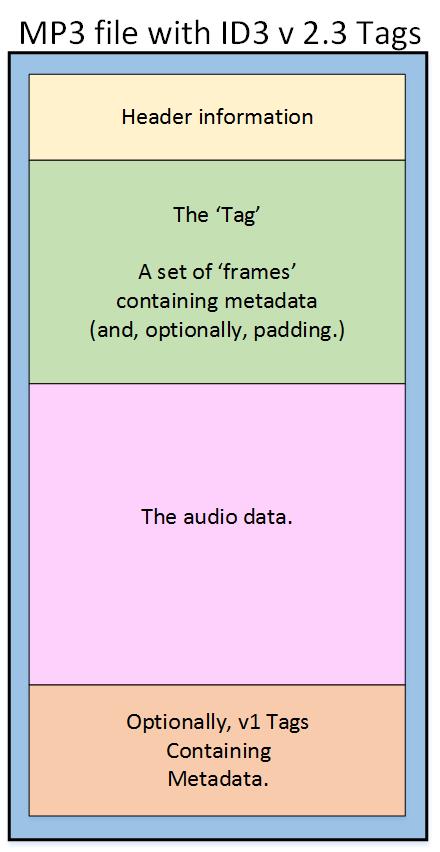
As an audio file format, MP3 has become one of the most popular digital audio compression methods. The MP3 file structure consists of header and data blocks. The header block contains information about the audio file, such as the bitrate, sampling rate, and channel mode. The data block contains the compressed audio data.

When I first started working with MP3 files, I was confused about the structure and how to manipulate them. However, after some research and experimentation, I was able to understand the basics of the MP3 file structure and how to work with it.

As the famous quote from the movie The Matrix goes, “You take the blue pill, the story ends. You wake up in your bed and believe whatever you want to believe. You take the red pill, you stay in Wonderland, and I show you how deep the rabbit hole goes.” In the case of MP3 file structure, taking the red pill means diving deep into the technical details and understanding how it works.

Header Blocks

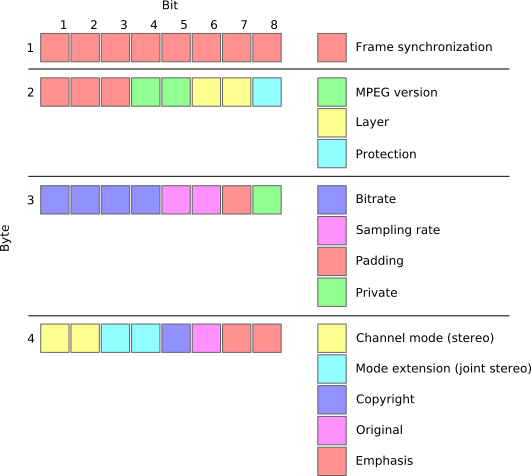
The header block is the first part of an MP3 file. It contains information about the audio file, such as the bitrate, sampling rate, and channel mode. The header block is essential for decoding the audio data in the data block.

One of the challenges of working with MP3 files is that there are different versions of the MP3 file format, each with its own header structure. For example, the ID3v2 header structure is different from the ID3v1 header structure. Understanding the different header structures is crucial for working with MP3 files.

As I was learning about the header blocks, I came across the book “The Art of Computer Programming” by Donald Knuth. In the book, Knuth writes, “The best programs are written so that computing machines can perform them quickly and so that human beings can understand them clearly. A programmer is ideally an essayist who works with traditional aesthetic and literary forms as well as mathematical concepts, to communicate the way that an algorithm works and to convince a reader that the results will be correct.”

Data Blocks

The data block contains the compressed audio data. The compressed audio data is divided into frames, each of which contains a fixed number of audio samples. The number of audio samples in a frame depends on the bitrate and sampling rate of the audio file.

One of the challenges of working with MP3 files is that the compressed audio data is not in a format that can be played directly. The compressed audio data needs to be decoded before it can be played. Decoding the compressed audio data involves several steps, including Huffman decoding, dequantization, and inverse discrete cosine transform.

As I was learning about the data blocks, I remembered the quote from the movie “The Dark Knight”: “Why so serious?” Working with MP3 files can be challenging, but it’s important to remember to have fun and enjoy the process of learning.

Bitrate Calculation

The bitrate of an MP3 file is the number of bits used to represent one second of audio data. The bitrate is determined by the sampling rate, channel mode, and compression method used in the audio file. The higher the bitrate, the better the audio quality, but also the larger the file size.

Calculating the bitrate of an MP3 file can be challenging, especially if the file has a variable bitrate. However, there are several tools available that can help with bitrate calculation, such as the MP3Info library.

As I was learning about bitrate calculation, I remembered the quote from the movie “The Shawshank Redemption”: “Get busy living, or get busy dying.” Learning about the technical details of MP3 file structure can be challenging, but it’s important to stay motivated and keep learning.

Final Words

Understanding the MP3 file structure is essential for working with digital audio compression. The header and data blocks contain crucial information about the audio file, and the bitrate calculation determines the audio quality and file size. While working with MP3 files can be challenging, it’s important to stay motivated and enjoy the process of learning.

At MP4Gain, we understand the importance of audio quality and file size. Our software is designed to normalize and convert audio files to the most popular formats, with an integrated equalizer for fine-tuning the audio. If you’re looking for a solution to your audio needs, give MP4Gain a try.

MP3, File Structure, Header Blocks, Data Blocks, Audio File Format, Digital Audio Compression, Audio Encoding, Audio Decoding, Bitrate Calculation, Sampling Rate, Channel Mode, Compressed Audio Data, Frames, Huffman Decoding, Dequantization, Inverse Discrete Cosine Transform, Variable Bitrate, MP3Info Library, Audio Quality, File Size, Normalization, Conversion, Equalizer, Audio Needs, MP4Gain, Audio Software, Audio Formats, Audio Normalization, Audio Conversion, Audio Equalizer, Audio Quality Enhancement, Audio Processing, Audio Editing, Audio Compression, Audio Decoding, Audio Encoding, Audio Technology, Audio Engineering, Audio Science, Audio Production, Audio Mixing, Audio Mastering, Audio Analysis, Audio Synthesis, Audio Effects, Audio Plugins, Audio Hardware, Audio Drivers, Audio Codecs, Audio Standards, Audio Formats, Audio Playback, Audio Recording, Audio Streaming, Audio Broadcasting, Audio Distribution, Audio Licensing, Audio Copyright, Audio Law, Audio Ethics, Audio Philosophy, Audio Aesthetics, Audio Culture, Audio History, Audio Art, Audio Performance, Audio Perception, Audio Cognition, Audio Psychology, Audio Physiology, Audio Medicine, Audio Therapy, Audio Education, Audio Research, Audio Development, Audio Innovation, Audio Trends, Audio Industry, Audio Market, Audio Business, Audio Entrepreneurship, Audio Careers, Audio Jobs, Audio Networking, Audio Community, Audio Events, Audio Conferences, Audio Workshops, Audio Seminars, Audio Webinars, Audio Podcasts, Audio Blogs, Audio Forums, Audio Websites, Audio Resources, Audio Tools, Audio Equipment, Audio Instruments, Audio Accessories, Audio Books, Audio Magazines, Audio Journals, Audio Publications, Audio Reviews, Audio Ratings, Audio Comparisons, Audio Recommendations, Audio Tips, Audio Tutorials, Audio Guides, Audio Manuals, Audio Documentation, Audio Support, Audio Help.