Granule Coding in MP3 Frames


Free Download Mp4Gain
picture

Granule Coding in MP3 Frames
Granule Coding in MP3 Frames

Let’s Talk About Granule Coding in MP3 Frames

MP3 files are everywhere today, from your favorite songs to podcasts, using this unique format to provide clear sound quality while keeping file sizes manageable. One important aspect of the MP3 format is granule coding, an intricate process that shapes how sound data is stored and interpreted. Granules are what allow MP3 files to compress data so effectively, and understanding this process gives insight into the balance between file size and audio quality. Here, I’ll share not just the technical details but also why granules matter in your everyday listening experience.

Basics of Granule Coding in MP3 Compression

Granule coding isn’t something most people think about when they hit play on a song, but it’s a huge part of MP3’s magic. Granules essentially split audio data into small packets, creating a structure that’s ideal for processing and playback. This coding is why MP3 files manage to sound clear without demanding huge storage space.

How Granules Work in MP3 Frames

Granules in MP3 frames work in a system of two, where each frame holds two granules. Each granule acts like a mini audio packet, capturing sound information in manageable chunks. Imagine stacking two small books to create one larger set of information. This “dual granule” approach allows for efficient data handling, making it easier for MP3s to retain important sound details without unnecessary data.

The Role of Psychoacoustics in Granule Coding

Psychoacoustics is the science behind how we perceive sound, and it’s the core of why granule coding is effective. By removing sounds that are less perceptible to the human ear, granule coding lets MP3s save data without a noticeable impact on quality. It’s like leaving out silent scenes from a movie—you still get the story, but the file is smaller.

Granule Coding and Bitrate Flexibility

Granule coding also ties into MP3’s flexible bitrates. With different bitrates, MP3s can adjust their data usage according to the complexity of the sound being recorded. When a song has a simple melody, the granules use less data. But during a loud chorus, they increase the bitrate to capture every detail. This bitrate flexibility means you get a clear sound without taking up more space than necessary.

Quantization and Granule Compression

Quantization is the step where data is simplified to reduce size. During granule compression, quantization removes sound details that aren’t as crucial, ensuring a balanced compromise between quality and storage. Think of it as converting a high-definition image to standard resolution—you lose some detail, but it’s still clear.

Granule Boundary and Frame Splitting in MP3 Coding

The granule boundary is the dividing line between granules within a frame. Each MP3 frame is split into two granules, each handling a segment of audio data. This split gives MP3s their unique capacity for smooth playback and transitions between sounds. If you’ve ever noticed seamless changes in volume or pitch, that’s the granule boundary at work.

Granules and Frequency Bands in MP3

Granules are also linked with frequency bands, allowing MP3s to prioritize certain sounds over others. High-frequency sounds are treated differently than bass frequencies, focusing storage on the sounds most important to our hearing. This ensures that vocals or instruments in the middle range remain clear, even if low or high tones get slightly compressed.

Understanding Scalability in Granule Coding

Scalability in granule coding means that MP3s can adapt to different quality demands. Whether you’re using earbuds or a high-end stereo system, granules provide a sound experience that fits the device’s capability. This flexibility is why MP3s remain popular across different audio platforms, even with newer formats available.

Encoding Process: Granules and Signal Processing

Encoding is where granule data gets converted into a digital signal. Signal processing organizes this data in a way that’s easy to read and playback. Imagine translating a book into a simpler language—encoding does this with audio data, making it understandable for your device without needing too much storage.

Granule Size and its Effect on Sound Quality

Granule size directly impacts sound quality, as larger granules can store more data but require more space. Smaller granules, on the other hand, are lighter on storage but may lose detail. The MP3 format carefully balances granule size to create files that are efficient without losing clarity.

Advantages of Granule Coding in MP3 Frames

  • Efficient data storage without significant quality loss
  • Optimized for human auditory perception
  • Flexible bitrate options for dynamic sound
  • Compatibility across multiple devices and platforms

Disadvantages of Granule Coding in MP3 Frames

  • Loss of some high-fidelity details
  • Challenges in reproducing complex sounds accurately
  • Reduced quality at low bitrates

Comparing Granule Coding with Other Audio Compression Techniques

Granule coding in MP3 is distinct from other compression techniques, like FLAC or WAV, which use different approaches to retain sound fidelity. FLAC files, for instance, retain more data but are much larger, while MP3 granules focus on practicality and storage efficiency. Each format has trade-offs, but granule coding strikes a balance that suits most listeners’ needs.

Granule Coding’s Influence on MP3 Standardization

Granule coding was a crucial factor in MP3 becoming the industry standard for digital audio. By providing an optimal balance of quality and file size, granules made MP3s accessible to everyone, helping popularize digital music across the world.

Challenges in Granule Coding and MP3 Development

As the technology developed, granule coding faced challenges with high-quality audio and complex sound patterns. Newer audio formats, like AAC, addressed some of these limitations, but granule coding remains central to MP3’s success. Advances in audio research continue to refine how granules handle sound, making them increasingly effective.

Practical Applications of Granule Coding in Everyday Audio Use

Granule coding plays a role in everything from streaming services to personal music collections. The format allows for quick downloads and smooth playback, making it ideal for use in diverse listening environments. Whether you’re jogging with earbuds or hosting a party, granule coding supports audio quality and flexibility.

Latest Words on Granule Coding in MP3 Frames

Granule coding remains a remarkable feature of MP3 technology, balancing the competing demands of quality and storage efficiency. This process has made MP3 one of the most versatile and user-friendly audio formats available. While newer technologies offer improvements, granules remain a foundational technology in digital audio. For those seeking an efficient solution for audio optimization, Mp4Gain offers tools that respect the integrity of MP3 files while enhancing quality.

Comments:

Wow, that was really helpful! I’ve always wondered how MP3s manage to keep decent quality even in smaller file sizes. Granule coding makes so much sense now. Thanks for the clear explanation.

Interesting read, but I’d love to see more examples of other formats and how they stack up against MP3. Could you dive deeper into that comparison next time?

This article hit it out of the park! I’ve been looking into audio compression, and this explains the technical stuff in a way that actually makes sense to me. Granules are really cool!

I still don’t quite get how bitrates tie into the whole granule system. Maybe add more detail on that? It’s fascinating stuff, just still a bit confusing!

Wow, learned something new today! I’ve been using MP3s forever, but I didn’t know why they sounded so good despite being compressed. Granules FTW!

Finally, an article that actually makes technical audio stuff easy to understand. As someone who loves music, this is awesome. Keep it up!

I feel like I could teach someone about MP3 compression now! I had no idea there was so much science behind it. This is so detailed, amazing work!

As a podcast producer, understanding granule coding really helps me with choosing the right settings for my audio files. This is exactly the info I needed.

Good info here, though I wish it went even more in-depth on the psychoacoustic side. It’s cool to know how granules shape what we hear!

Fantastic article! I appreciate the simple explanations for something that sounds super technical. Definitely a useful read for anyone into audio.

Great breakdown on granule coding! I’m curious about how this tech will evolve. Would love an update on newer formats that might challenge MP3 in the future.

It’s funny, I didn’t even know granules existed, but now I feel like an expert. This article was super informative, thanks a ton!

I learned a lot here, but still a bit unsure about the differences between low and high bitrates. Could use a bit more clarity on that for newbies like me!

Super interesting read! I’ve been researching MP3s for a school project, and this helped me understand compression and audio quality really well.

This article made me look at MP3s in a whole new way. I always thought they were just “good enough” quality, but now I get why they sound so good!


Free Download Mp4Gain
picture


Mp4Gain Main Window
picture


Mp4Gain Features
picture


Free Download Mp4Gain
picture

Enhancing AAC Audio Quality through Parametric Coding

Enhancing AAC Audio Quality through Parametric Coding

Enhancing AAC Audio Quality through Parametric Coding

Enhancing AAC Audio Quality through Parametric Coding

Let’s Talk about Enhancing AAC Audio Quality

As a specialist with extensive experience in audio coding, I delve into the realm of Advanced Audio Coding (AAC) and the revolutionary concept of parametric coding. Google’s top 10 results might touch the surface, but here, I aim to offer a comprehensive guide that goes beyond the standard information available.

Understanding AAC: A Brief Overview

AAC, or Advanced Audio Coding, has been a game-changer in the world of audio compression. Its efficiency in maintaining high sound quality while reducing file size has made it a go-to choice for various applications. In my experience, understanding the fundamentals of AAC lays the groundwork for exploring parametric coding enhancements.

Parametric Stereo Coding: Redefining Spatial Perception

Traditional AAC often relies on intensity stereo and joint stereo coding for creating a stereo image. However, parametric stereo coding takes this a step further by representing stereo information through parameters like inter-channel level differences and phase variations. This method significantly improves the spatial perception of audio, providing an immersive listening experience.

Unlocking the Depths: Parametric Coding for Low Frequencies

In the pursuit of richer audio experiences, parametric coding techniques for low frequencies play a crucial role. By efficiently describing low-frequency components, such as bass and sub-bass elements, parametric coding ensures a more robust representation of audio content with a substantial emphasis on low-end frequencies.

Transcending Boundaries: Transient Enhancement with Parametric Techniques

One area where parametric coding shines is in transient enhancement. By utilizing parametric techniques to describe transient elements in audio signals, we can achieve superior results in reproducing sharp and dynamic sound elements. This is particularly impactful in genres where transients play a pivotal role, such as in percussive music genres.

The Art of Parametric Coding: A Personal Perspective

Drawing from my personal experiences, I have witnessed the transformative power of parametric coding in the audio industry. It’s not just about technicalities; it’s about the art of shaping sound. Parametric coding provides a canvas for audio engineers to craft a more nuanced and expressive auditory experience.

Latest Words on Enhancing AAC Audio Quality

In the ever-evolving landscape of audio technology, staying updated is crucial. As an expert, I’m committed to providing the latest insights and innovations in enhancing AAC audio quality. Let’s explore the cutting-edge developments and advancements that go beyond what the standard search results offer.

Parametric Coding in Action: Real-world Applications

To truly grasp the impact of parametric coding, let’s delve into real-world applications. Imagine a concert venue where parametric stereo coding creates an immersive experience for the audience, or a studio session where parametric techniques elevate the clarity of low-frequency instruments. These scenarios illustrate the practical benefits of implementing parametric coding in various audio settings.

Optimizing User Experience: The Next Frontier in AAC Enhancement

The quest for superior audio quality doesn’t end with technology—it extends to the user experience. Exploring how parametric coding contributes to a more enjoyable and engaging listening experience is paramount. From personalized sound profiles to adaptive parametric adjustments, the future of AAC enhancement lies in optimizing the user experience.

Beyond the Basics: Parametric Coding and the Unexplored Horizons

Google’s search results may provide a glimpse into parametric coding, but there’s more to discover. This section delves into the unexplored horizons of parametric coding, offering insights and information that go beyond the basics. Let’s navigate the complexities and possibilities that lie within the realm of advanced audio coding.

Why Parametric Coding Matters: A Deeper Dive

As an expert, I can confidently say that the significance of parametric coding extends beyond its technical aspects. It’s about preserving the nuances of musical expression, capturing the soul of a performance, and delivering an audio experience that transcends conventional boundaries. Let’s unravel why parametric coding matters in the grand tapestry of audio innovation.

The Future Sounds Bright: Advancements on the Horizon

Wrapping up our exploration, let’s look towards the future. What advancements and innovations can we anticipate in the realm of enhancing AAC audio quality through parametric coding? From machine learning integration to adaptive parametric algorithms, the future sounds promising. As an enthusiast and specialist, I’m excited about the evolving landscape that will shape the audio experiences of tomorrow.

Comments:

This article has been a game-changer for me! Finally, someone delves deep into the art of parametric coding. Kudos!

Nick: SonicExplorer92

Could you provide more insights into specific software applications that utilize parametric coding for AAC enhancement?

Nick: TechEnthusiast

Excellent read! The real-world application examples made the concept of parametric coding much clearer.

Nick: MusicMaestro

I appreciate the focus on user experience optimization. It’s an aspect often overlooked in discussions about audio quality.

Nick: UXListener

Great article! However, I’d love more details on the specific challenges faced in implementing parametric coding for AAC.

Nick: CuriousCoder

This article made me rethink the way I perceive audio quality. Looking forward to more in-depth content like this!

Nick: SoundSeeker

Any recommendations for affordable audio devices that leverage parametric coding for enhanced AAC playback?

Nick: BudgetAudiophile

While the article is informative, I’d love to see a follow-up exploring the impact of parametric coding on streaming services.

Nick: StreamSavvy

Thanks for shedding light on the unexplored aspects of parametric coding. A truly enlightening read!

Nick: AudioExplorer

I’m intrigued by the potential of adaptive parametric algorithms. Can you share more about recent developments in this area?

Nick: FutureListener

Audio Quantization Error

Audio Quantization Error

Audio Quantization Error

In the fascinating world of digital audio, the concept of “Audio Quantization Error” plays a pivotal role. Understanding this term is essential for anyone seeking high-quality audio reproduction. Allow me to share my expertise on this subject, starting with a broad overview.

Demystifying Audio Quantization Error

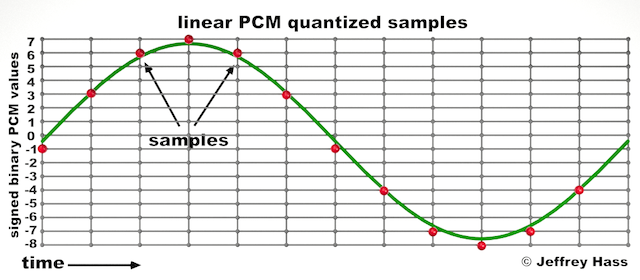
Audio quantization error is a fundamental aspect of digital audio processing. When analog sound waves are converted into digital signals, they undergo quantization. This means that the continuous analog signal is sampled and approximated in discrete steps. These steps are represented by binary values, typically in the form of bits (e.g., 16-bit, 24-bit). Now, what’s crucial to grasp here is that these discrete steps can lead to imperfections in audio reproduction.

Quantization error, often referred to as “quantization noise,” occurs when the actual analog signal deviates from the approximated digital representation. Imagine you have a beautiful painting, and you’re asked to replicate it using only a limited set of colors. The more restricted your color palette, the less accurate your reproduction will be. In the same way, the fewer bits you use for audio quantization, the more pronounced the quantization error becomes.

Quantization Levels and the Impact on Sound Quality

The number of quantization levels (related to bit depth) directly affects the precision of audio representation. For instance, a 16-bit audio recording has 65,536 possible levels, while a 24-bit recording provides a staggering 16,777,216 levels. This increased bit depth allows for a much finer representation of the original analog signal. Hence, a higher bit depth results in a reduction of quantization error, leading to superior sound quality.

To illustrate this, consider a grayscale image with only two colors: black and white. This is akin to an extremely low bit depth in audio, where the audio signal is either “on” or “off.” Now, imagine a high-resolution image with millions of colors, similar to the detail you get in a 24-bit audio recording. The difference in quality is apparent.

The Role of Dithering in Minimizing Quantization Error

One might wonder if there’s a way to mitigate quantization error in low-bit-depth audio recordings. Enter “dithering.” Dithering is a technique that introduces low-level noise to the audio signal, effectively spreading out the quantization error across a broader spectrum. Think of it as adding a sprinkle of fine grains of sand to a painting to blend the colors. This subtle noise masks the harshness of quantization error and makes it less noticeable to the human ear.

Now, as we’ve explored the fundamentals of audio quantization error, let’s delve into the questions that often arise:

How Does Quantization Error Affect Music Production?

In the realm of music production, quantization error can be a significant concern, particularly for professionals aiming to achieve top-tier sound quality. When producing music, especially in genres where subtle nuances are crucial, such as classical or jazz, quantization errors become more perceptible. To maintain audio fidelity, a higher bit depth is preferred during recording and production, ensuring minimal quantization noise.

Is There an Ideal Bit Depth for Audio Recording?

The ideal bit depth for audio recording is a subject of debate among audio enthusiasts. While 24-bit recording is commonly favored for its excellent dynamic range and low quantization error, it’s worth noting that the final audio format for most consumer applications, like CDs or streaming, is often 16-bit. The choice of bit depth should be based on the specific requirements of the project, keeping in mind the trade-off between audio quality and file size.

Can Quantization Error be Completely Eliminated?

Regrettably, quantization error cannot be entirely eliminated, as it’s an inherent part of the digital audio conversion process. However, it can be minimized to the point where it’s imperceptible to the human ear. Through techniques like dithering and the use of higher bit depths, the impact of quantization error can be significantly reduced, allowing for exceptional audio quality.

Last Words about Audio Quantization Error

In the ever-evolving world of audio technology, understanding audio quantization error is a fundamental step towards achieving superior sound quality. As an expert in the field, I’ve shared insights, experiences, and technical knowledge to demystify this concept. Remember, the bit depth you choose in audio recording significantly influences the extent of quantization error, and techniques like dithering play a pivotal role in mitigating its effects. The quest for pristine audio quality is an ongoing journey, but armed with this knowledge, you’re better equipped to make informed decisions in your audio endeavors.