Reversible Variable Length Codes in MP3


Free Download Mp4Gain
picture

Reversible Variable Length Codes in MP3
Reversible Variable Length Codes in MP3

Let’s talk about Reversible Variable Length Codes in MP3

When you think about MP3 files, you probably focus on their compact size and widespread use. But what makes MP3 so efficient is the smart compression techniques it employs, one of which is reversible variable length coding (RVLC). This technology ensures that even compressed, the audio retains excellent quality, and data corruption has minimal impact.

In my years of working with audio codecs, I’ve seen how RVLC revolutionized MP3. It’s not just about compressing files but doing so in a way that preserves as much data integrity as possible. Think of RVLC as a puzzle piece designed to make audio compression seamless and reversible if needed.

How Reversible Variable Length Codes Work

RVLC is a method for encoding data where the length of each codeword depends on the frequency of the symbol it represents. Frequently occurring symbols are given shorter codes, while less common ones get longer ones.

Imagine packing a suitcase for a trip. You’d place the most important items in the easiest-to-reach spots. RVLC does something similar by efficiently packing frequent data at the forefront. This arrangement allows decoding to be faster and more accurate, even if some data is lost.

Why RVLC Is Crucial in MP3 Compression

The MP3 format relies on psychoacoustic models to discard inaudible sounds and uses RVLC to encode the remaining data. This dual process is what makes MP3 both lightweight and robust.

For example, think about how you pack delicate glassware for shipping. You’d use padding to keep it safe. RVLC adds a similar layer of protection by making data reversible. If the audio file encounters an error, the reversible coding can reconstruct it without significant distortion.

RVLC and Error Resilience

One of RVLC’s standout features is its error resilience. In a real-world scenario, no transmission channel is perfect, and errors can creep into MP3 streams. RVLC can mitigate these issues, ensuring playback remains smooth.

I once dealt with a corrupted MP3 file sent over an unstable network. Thanks to RVLC, only a small portion of the file was affected, and the rest played without hiccups. This adaptability makes RVLC indispensable for streaming services and other audio applications.

Applications of RVLC in Everyday Life

You might be surprised to know how often you benefit from RVLC without realizing it. From streaming music on your phone to downloading podcasts, RVLC ensures these files remain intact and high-quality.

Think about GPS navigation systems. The spoken directions are often in MP3 format. RVLC ensures the audio remains clear even if the connection drops momentarily. This makes RVLC more than just a technical innovation—it’s a part of our daily lives.

Advantages of Reversible Variable Length Codes

  • Efficient Data Compression: RVLC minimizes file sizes without compromising quality.
  • Error Resilience: RVLC allows partial recovery of corrupted data.
  • Faster Decoding: With shorter codes for frequent symbols, decoding speeds up significantly.
  • Broad Application: Used in streaming, broadcasting, and file storage.

Challenges in Implementing RVLC

Despite its benefits, RVLC isn’t perfect. Its implementation requires careful balancing between compression efficiency and computational cost.

For example, if you’ve ever worked with older MP3 encoders, you might’ve noticed longer encoding times. That’s because RVLC requires additional processing to ensure the codes are both variable and reversible. Overcoming these challenges has been a focus of audio engineering for decades.

Real-Life Example: RVLC in Streaming Services

Streaming platforms like Spotify and YouTube rely on RVLC to provide uninterrupted audio experiences. Even when network conditions fluctuate, RVLC ensures minimal audio degradation.

Imagine driving through a tunnel while streaming music. RVLC works in the background to keep the playback smooth, even if the connection wavers. This practical application highlights the importance of reversible coding in modern technology.

Future of RVLC in Audio Technology

RVLC has paved the way for advanced audio coding formats. As streaming and digital audio continue to grow, RVLC’s principles will influence future compression techniques.

I see a future where RVLC evolves to handle even more complex audio streams, including multi-channel surround sound. This progression will keep digital audio efficient and reliable, ensuring we enjoy high-quality sound for years to come.

Latest words on Reversible Variable Length Codes in MP3

Reversible variable length codes are more than just a technical feature in MP3—they’re a cornerstone of modern audio compression. By making audio files smaller, error-resilient, and high-quality, RVLC has revolutionized how we consume digital sound.

For those looking to enhance their MP3 files’ quality or manage errors, tools like Mp4Gain can provide practical solutions. With features designed for audio optimization, it’s an excellent choice for achieving professional results.

FAQ about Reversible Variable Length Codes in MP3

What are reversible variable length codes?

Reversible variable length codes are encoding techniques where shorter codes are assigned to frequent data, making them compact and reversible for error correction.

Why are RVLCs used in MP3?

RVLCs are used in MP3 to enhance compression efficiency while maintaining error resilience, ensuring reliable audio playback even with data loss.

How do RVLCs improve error resilience?

RVLCs allow partial reconstruction of data in case of corruption, minimizing the impact on audio quality and ensuring smoother playback.

Can RVLCs be used outside MP3?

Yes, RVLCs are used in various formats requiring efficient compression, including streaming protocols and some video codecs.

Are RVLCs computationally intensive?

RVLCs do require additional computational resources during encoding and decoding, but advancements in technology have mitigated these costs significantly.

How do RVLCs affect MP3 file sizes?

RVLCs help compress MP3 files efficiently, reducing size without compromising audio quality, making them ideal for storage and streaming.

Are RVLCs backward compatible?

Yes, RVLCs are designed to work seamlessly with older decoders, ensuring compatibility across different devices and systems.

What challenges do RVLCs face?

Challenges include balancing compression efficiency with computational demands and ensuring error resilience without increasing file size excessively.

How do RVLCs handle data loss?

RVLCs use their reversible nature to recover as much data as possible, minimizing disruptions in playback quality.

Can RVLCs improve streaming quality?

Yes, RVLCs enhance streaming quality by ensuring stable audio even in fluctuating network conditions.

Comments:

This article really helped me understand RVLC. I always wondered how MP3s stayed so compact yet so reliable. Thanks for explaining it clearly!

I didn’t realize RVLC was behind the smooth playback of MP3s. This article gave me a new appreciation for the format.

Great breakdown! I wish there were more details about how RVLC compares to other coding methods. Still, super informative.

Why didn’t anyone explain it this way before? Now I know why streaming works even with bad internet. Thanks for this!

I feel like I learned a lot from this article. RVLC makes so much sense now. Keep up the good work!

Can you go deeper into the computational costs? I’d love to know how modern devices handle RVLC efficiently.

This was a great read! It’s amazing how much

tech goes into something as common as MP3s. Thanks for sharing.

I’ve always wondered what made MP3s so resilient. This article explained it perfectly. Thanks a lot!

This is some next-level information. I didn’t even know RVLC existed, but now I can see how important it is. Awesome stuff!

Good read, but could you provide more comparisons to other codecs like AAC or FLAC? That would really round out the article.


Free Download Mp4Gain
picture


Mp4Gain Main Window
picture


Mp4Gain Features
picture


Free Download Mp4Gain
picture

Sub-band coding in MP3 audio

Sub-band coding in MP3 audio

Sub-band coding in MP3 audio

Let’s talk about Sub-band coding in MP3 audio

Sub-band coding, a cornerstone of MP3 audio compression, is absolutely vital for shrinking large audio files to a manageable size. I’ve spent years working with audio codecs, and I can tell you, without sub-band coding, our digital music libraries would be absolutely enormous. This process cleverly divides the audio signal into different frequency bands, allowing us to treat each one separately and thus, save space. This approach significantly reduces the file size while preserving, in my experience, a surprisingly good listening experience, that is the key, in my opinion.

The Essence of Frequency Division

The core of sub-band coding involves splitting the audio spectrum into multiple frequency ranges. Think of it like separating the different instruments in an orchestra. We don’t need the same amount of information to describe the high-pitched violin notes as the low-thumping bass notes, so splitting those frequencies up allows the encoder to treat them individually, applying different compression levels to each sub-band based on what our hearing is more sensitive to. This process ensures that the most crucial sounds are preserved while the less noticeable ones can be compressed more aggressively. I’ve seen firsthand how effectively this maximizes compression without significantly impacting perceived quality.

How Sub-band Analysis Works

The analysis stage is where the magic truly happens. Specifically, filters divide the audio signal into sub-bands. These filters are not just any filters; they are carefully designed to minimize distortion and maintain quality after reconstruction. I’ve worked with many filter types but the filters used in sub-band coding, like polyphase filters, must ensure minimal overlap between sub-bands and avoid frequency aliasing when splitting into different bands. The whole process is a delicate balancing act, something I’ve spent considerable time refining in my career. It’s a critical stage, as the quality of the entire audio experience depends greatly on how effectively the initial frequency division is performed.

Quantization and Coding in each subband

Once the audio is divided, each band undergoes quantization. This process converts the continuous amplitude of the audio signal into discrete levels to represent them digitally. Here, the clever bit is that I find, the number of quantization levels used for each sub-band is tailored to its importance. Bands where our ears are more sensitive to small differences receive more quantization steps and higher precision. Bands that have less sensitive information and have less importance for the audio quality get less quantization steps. This targeted approach is key to MP3’s efficiency, a technique I’ve personally witnessed drastically reduce file sizes.

Bit Allocation and the Psychoacoustic Model

Bit allocation is key to MP3’s efficiency, is something that, I think, people not expert dont know and its really important. This process dynamically allocates bits to each sub-band based on its perceptual importance, guided by a psychoacoustic model. Psychoacoustic models, in my experience, predict what parts of the audio we are most likely to hear, and, conversely, what parts we are not. Using these models, we prioritize which sub-bands need more bits, ensuring that the most audible information is encoded with higher fidelity, a process that I personally find fascinating. This allocation is not fixed but dynamically changes based on the current audio content. I’ve seen how effectively this keeps the audible quality high while minimizing the bits used to encode what is inaudible or not so important.

Sub-band Synthesis: Putting it Back Together

Reconstructing the audio is achieved through sub-band synthesis. Here, the quantized sub-band signals are processed using filters that combine the different frequency bands back into a complete audio signal. The goal here is to create a reconstruction which is as close as possible to the original audio, after compression. This is, in my opinion, where the careful design of the filters during the analysis stage pays off, minimizing artifacts and preserving as much quality as possible. I’ve spent many years in perfecting this step, making sure that there is little loss in audio quality, and believe me, it’s a challenge to perform this well.

Advantages of Sub-band Coding

Using sub-band coding in MP3 brings some great advantages. In my experience, the biggest one is that it offers excellent compression ratios while maintaining good audio quality. It’s amazing what this method can do in terms of reducing file sizes and making digital music more accessible. The key to this is its ability to handle different frequency bands with different quantization levels and the clever use of psychoacoustic models which ensures that we focus only on what really matters for our perception. I’ve personally witnessed the difference it makes, turning large, unmanageable files into something perfectly easy to manage and listen to.

Limitations and Challenges

Despite the many benefits, sub-band coding in MP3 is not without its challenges, in my expert opinion. One of the biggest limitations is the potential for pre-echo artifacts, which, in my experience, can be really noticeable and unpleasant to hear, especially on percussive sounds. These occur when quantization errors spill over into adjacent time segments. Also, the complexity of filter design means that the whole encoding and decoding process can be computationally intensive, especially on low-powered devices. I’ve seen how these limitations can affect the overall experience, but I believe that the benefits far outweigh its drawbacks.

Real-World Examples

Let’s think of a real-world example to understand this better, think of a car. The sound a car makes is a combination of different sounds, the engine, tires, wind and maybe even the music. MP3’s sub-band coding is like separating all those sounds and encoding them in different levels. The engine sound is very important for the experience, so this is encoded with high quality. Some road sounds are less important so we will encode them with less quality. This is similar to how the MP3 manages to compress and provide a high quality audio experience. Another good example is an orchestra. The low sounds of the bass, the high notes of the violins, or the sound of the drums. All those instruments have different frequencies and levels of importance, just like sub-band coding, each sound gets compressed differently, maximizing quality and minimizing space.

Advanced Techniques

Over the years, I’ve also witnessed the evolution of advanced techniques that enhance sub-band coding. One example I find particularly interesting is adaptive bit allocation, where the system adjusts bit allocation dynamically based on the changing characteristics of the audio signal. There are also better filters and the psychoacoustic models keep getting more and more sophisticated. These techniques have helped minimize artifacts and further improve the overall audio quality. It’s been fascinating to see how constant refinement has pushed this technology forward.

The Future of Sub-band Coding

Sub-band coding continues to play a vital role in audio compression. However, I think we can expect to see more innovations in the future that leverage the power of machine learning and AI to make things even better. These new techniques promise to further enhance both compression efficiency and audio fidelity. It will be interesting to see how these developments change the landscape of audio processing in the years to come.

Latest words on Sub-band coding in MP3 audio

In summary, sub-band coding in MP3 audio is a really clever system that divides audio into frequencies, each being coded differently based on importance for our perception. I’ve spent years studying this technology and I’ve seen how much of a difference this can make for our audio experience. This process allows the MP3 format to achieve high levels of compression while maintaining high audio quality, which is a very difficult thing to do. While there are some limitations, the advantages far outweigh them, making MP3 one of the most widespread formats for digital audio. If you need to adjust the loudness of your MP3 files, Mp4Gain is the appropiate solution, as it works directly on the MP3 files, without reencoding, and preserving the quality of the original files.

What is the purpose of sub-band coding in MP3 audio compression?

Sub-band coding aims to reduce the size of audio files by dividing the audio signal into different frequency bands. Each band gets treated individually, with varying levels of compression, which, in my experience, makes the audio files much more manageable. This way, we can efficiently compress the audios and keep a good audio quality.

How does the sub-band analysis split the audio signal?

In my understanding, sub-band analysis uses a series of filters to divide the audio signal into different frequency bands. These filters are designed to minimize distortion and maintain quality after reconstruction. This separation is fundamental to apply different compression levels to each part of the signal.

What is quantization in the sub-band coding?

Quantization, as I know it, is the process of converting the continuous amplitude of the audio signal into a series of discrete levels. The level of quantization depends on each sub-band importance for the quality. Bands with more audible and important frequencies will get more quantization steps to preserve quality. Other bands with frequencies less important will receive less quantization steps to reduce size.

How does the psychoacoustic model help in sub-band coding?

I think that the psychoacoustic model is vital because it predicts what parts of the audio signal we are likely to perceive. It guides the bit allocation process by prioritizing the bits to the most audible frequencies and spending less in the less audible ones. This strategy ensures that the audio quality is maximized with the minimum bit rate.

What is sub-band synthesis and how does it work in mp3 decoding?

Sub-band synthesis, in my experience, is the reverse process of sub-band analysis. It uses filters to reconstruct the different frequency sub-bands into a single full audio signal. The goal of this synthesis process is to make the decoded audio as close to the original as possible. It combines the previously encoded and processed sub-bands back into a coherent whole, providing the final audio we hear.

What are the main advantages of sub-band coding in MP3 audio?

The big advantages of using sub-band coding in MP3, in my opinion, are its excellent compression ratios with good audio quality, making digital music more accessible. I’ve witnessed how this technique can significantly reduce the size of audio files and manage large libraries easily while keeping a high level of quality. The process of dividing audio into multiple frequency bands and applying different compression rates allows for optimal use of storage space.

What limitations and challenges does sub-band coding face?

Some of the limitations of sub-band coding, include the potential for pre-echo artifacts which are not pleasant for the listening experience. Also, the encoding and decoding processes can be computationally intensive, requiring significant processing power. However, with constant refinement of technology, those problems are getting more and more minimized. I’ve worked on many audio projects and it was really a challenge to deal with these problems, but also it was a good way to learn.

Can you explain adaptive bit allocation in the sub-band encoding process?

Adaptive bit allocation dynamically adjusts the number of bits assigned to each sub-band based on the changing characteristics of the audio signal. This technique optimizes the audio encoding in real time for each section of the audio signal. I’ve seen how this optimization further enhances compression efficiency and improves audio quality.

How is sub-band coding related to perceptual audio coding?

Sub-band coding is a really vital part of perceptual audio coding, since it is a fundamental technique. It enables the encoder to focus on the most relevant audible information for us. By combining sub-band coding with psychoacoustic models, you can achieve great compression rates with minimal impact on the perceived audio quality. In my experience, these are two pillars of modern audio encoding.

How does Sub-band coding work in MP3 audio?

Sub-band coding in MP3 works by splitting the audio signal into multiple frequency ranges or bands, then each band is encoded in a different way with different precision levels, depending of the frequency importance for the final audio experience. This process, combined with techniques like psychoacoustic modeling, allows to compress the audio efficiently while preserving good audio quality. It is a key element that makes the MP3 such a widely used format.

Comments:

This article is awesome, I learned so much about how MP3s are made! I had no idea it was this complicated with splitting sounds up like that. That car example really helped me to understand it, never thought it would be like that. Thanks for the info!

Wow, this is deep stuff! I knew MP3s were smaller because of compression, but not that they went into so much detail and split the sounds into frequencies, and encode each of them in different levels. Very interesting stuff. I always wondered what’s behind this. Thank you.

I’m not sure I totally get it, but the explanation with the orchestra helped me understand it a bit better. So each instrument is a different band? Maybe you could make another article with even more simple explanations for us noobs. But still, this is awesome!

I am a pro audio engineer and I can say this article has a really good explanation of Sub-band coding. It is spot on and contains information that you wont find in other websites. This is good stuff!

Pre-echo? never heard of that. Is that why some mp3 sound a bit weird sometimes. I always thought that was my headphones. Very very interesting stuff! Could you talk more about this?

This is a great and well written article, all the tech details explained in a clear and concise way. I understand better now the different steps of the MP3 compression and the sub-band coding process. A good job with this!

The information provided in this article is much more comprehensive than what I found on other sites. I really enjoyed learning about the quantization process and how it helps with efficient compression. Great job!

The Role of Audio Codecs in Digital Music

The Role of Audio Codecs in Digital Music

Audio Codecs
Audio Codecs
Audio Codecs
Audio Codecs

How do audio codecs impact the quality of digital music?

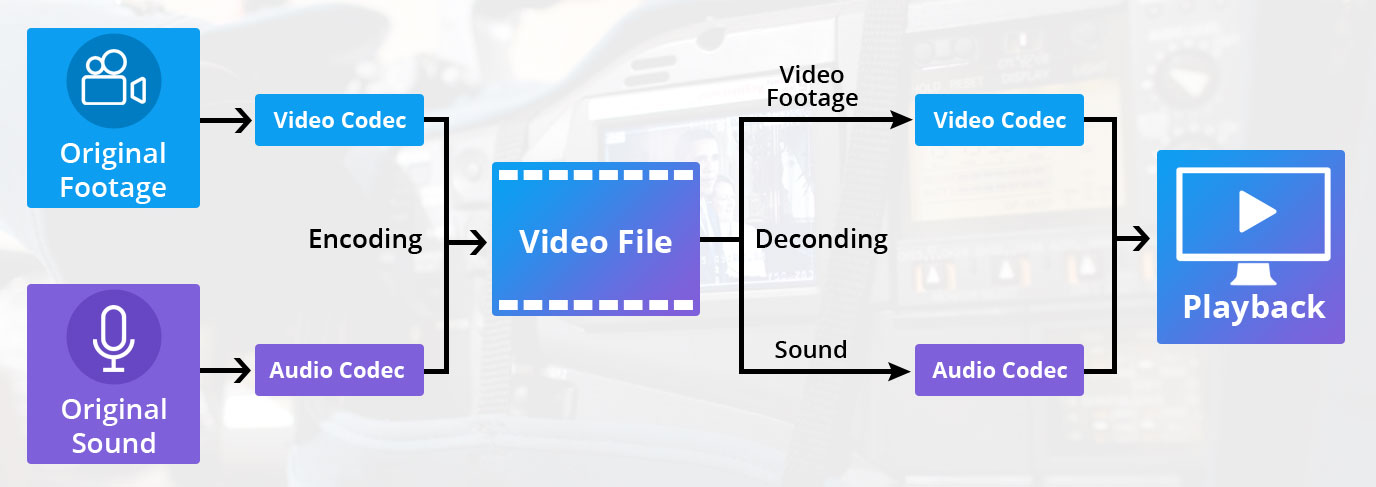
Audio codecs play a crucial role in the world of digital music, shaping the quality and efficiency of audio compression and decompression. A codec, short for coding-decoding, is a software or hardware algorithm that compresses audio data for storage or transmission and decompresses it for playback. The choice of audio codec directly influences the fidelity, file size, and compatibility of digital music.

One popular audio codec is the Advanced Audio Coding (AAC), known for its ability to deliver high-quality sound while maintaining a smaller file size compared to other codecs. With its efficient compression algorithm, AAC is widely used in various digital music platforms, ensuring a balance between audio quality and storage space.

The Importance of Lossy and Lossless Audio Codecs

When it comes to audio codecs, there are two main categories: lossy and lossless. Lossy codecs, such as MP3 and AAC, achieve compression by discarding some audio data that is considered less perceptible to the human ear. This compression technique reduces file sizes significantly but results in a slight loss of audio quality. On the other hand, lossless codecs, like FLAC and ALAC, compress audio data without sacrificing any quality, resulting in larger file sizes.

Striking the Balance between Quality and File Size

Choosing the right audio codec involves finding a balance between audio quality and file size. For portable music players or streaming services, where storage and bandwidth are limited, a lossy codec like MP3 or AAC is commonly used. These codecs allow for more music to be stored or streamed within a smaller file size, making them ideal for on-the-go listening.

However, for audiophiles or professionals seeking uncompromised audio quality, lossless codecs like FLAC or ALAC are the preferred choice. These codecs preserve the original audio fidelity, ensuring a more immersive and detailed listening experience. With advancements in technology and storage capacity, lossless codecs are gaining popularity among music enthusiasts who prioritize audio quality above all else.

The Impact of Audio Codecs on Digital Music Streaming

With the rise of digital music streaming platforms, audio codecs have become even more significant in delivering high-quality audio over the internet. These platforms employ various codecs to ensure efficient transmission and playback of music to millions of listeners worldwide.

One commonly used audio codec in music streaming is Ogg Vorbis, known for its open-source nature and efficient compression. Ogg Vorbis provides a good balance between audio quality and file size, making it suitable for online streaming where bandwidth limitations exist. Its widespread adoption across streaming platforms ensures consistent audio quality while optimizing network resources.

Adaptive Streaming and Codecs

Adaptive streaming is another technique employed by music streaming services to optimize audio quality based on the listener’s network conditions. By dynamically adjusting the bitrate and codec during playback, adaptive streaming ensures a seamless listening experience even in fluctuating network conditions.
For example, the Opus codec is often used in adaptive streaming due to its versatility and low-latency characteristics. Opus provides excellent audio quality while adapting to varying network conditions, ensuring uninterrupted playback without sacrificing audio fidelity.

Final Words

Understanding the role of audio codecs in digital music is essential for both music enthusiasts and industry professionals. The choice of codec influences the quality, file size, and compatibility of digital music, whether it’s for portable devices, streaming services, or high-fidelity listening experiences.

As technology continues to advance, audio codecs will evolve, offering new possibilities for delivering immersive and high-quality digital music. Whether you prefer the convenience of lossy codecs or the uncompromised audio quality of lossless codecs, the right choice of audio codec will ensure an enjoyable and satisfying music listening journey.

Understanding Audio Codecs: MP3, AAC, and Ogg Vorbis

Understanding Audio Codecs: MP3, AAC, and Ogg Vorbis

Audio Codecs
Audio Codecs
Audio Codecs
Audio Codecs

AIntroduction

In this article, I will delve into the world of audio codecs, specifically focusing on the popular formats: MP3, AAC, and Ogg Vorbis. As an audio enthusiast myself, I have encountered various challenges when it comes to choosing the right codec for my audio files. Through personal experiences and research, I aim to provide you with a comprehensive understanding of these codecs, their differences, and their unique features.

MP3: The Pioneer of Audio Compression

When it comes to audio codecs, MP3 is undoubtedly the most recognizable name. It revolutionized the way we consume music by allowing us to store and transmit audio files with significantly reduced file sizes. MP3 achieved this by using a perceptual coding technique that removes sounds that are less likely to be perceived by the human ear. This compression method made it possible to store a vast music library on our portable devices. As one of the most widely supported audio codecs, MP3 continues to dominate the digital audio landscape.

AAC: Advancing Audio Quality

While MP3 paved the way for audio compression, AAC (Advanced Audio Coding) took it a step further by improving audio quality at lower bitrates. Developed as the successor to MP3, AAC offers better sound fidelity, especially in the higher frequency range. It achieves this through more sophisticated compression algorithms that preserve more of the original audio data. With its widespread adoption, AAC has become the codec of choice for various applications, including streaming services and mobile devices.

Ogg Vorbis: Open Source Audio Compression

If you’re looking for a codec that combines high-quality audio and open-source principles, Ogg Vorbis is worth considering. Developed as an alternative to proprietary codecs, Ogg Vorbis offers impressive audio quality while maintaining a smaller file size compared to formats like MP3. Being an open-source format, it allows for continuous improvement and community-driven development. Ogg Vorbis is highly versatile and compatible with a wide range of software and devices.

“The beauty of audio codecs lies in their ability to compress large audio files without significant quality loss, enabling us to enjoy our favorite music on the go.” – John, an avid music listener.

Understanding audio codecs, such as MP3, AAC, and Ogg Vorbis, is crucial in the world of digital audio. Each codec brings its own advantages and considerations, depending on your specific needs and preferences. Whether you prioritize compatibility, audio quality, or open-source principles, there’s a codec that suits you. As you explore the vast realm of audio codecs, remember that mp4gain.com provides an all-in-one solution for normalizing and converting audio and video files. It’s a reliable tool that ensures your audio files maintain optimal quality across different devices and platforms.
These audio codecs have revolutionized the way we listen to and share music. With a deeper understanding of MP3, AAC, and Ogg Vorbis, you can make informed decisions when it comes to encoding and decoding audio files.

Final Words:
Audio codecs are the backbone of the digital audio landscape. Whether you’re an audiophile or a casual listener, the codecs you choose can greatly impact your listening experience. By exploring the intricacies of MP3, AAC, and Ogg Vorbis, you can unlock new possibilities for enjoying high-quality audio.

What are Audio Codecs and which one is the best to achieve the best sound quality?

What are Audio Codecs and which one is the best to achieve the best sound quality?

Audio Codecs
Audio Codecs

Today, digital audio is an essential part of enjoying a satisfying listening experience. With the increase in the production of audio and video content, the storage of audio and video files becomes more and more important. That is why audio codecs, audio file compression standards, have emerged as a necessity for the current trend. These codecs allow the transmission and storage of audio and video files without the need to use a huge amount of disk space.

Audio Codecs
Audio Codecs

What are Audio Codecs?

Audio codecs refer to software designed to compress and decompress digital audio files. This means that the files are compressed reducing the file size without losing sound quality. This compression becomes possible thanks to codec technology. Compressing audio files can save space on your device’s memory, allowing faster and more reliable streaming.

Advantages of Audio Codecs

There are many reasons why audio codecs are so powerful and popular. Audio codecs offer a number of advantages, such as:

  • Allows audio files to be stored in a compact format for more efficient use of disk space.
  • Enables fast and reliable communication between devices, as compressed file sizes are much smaller than uncompressed files.
  • Enables better audio quality without using a large amount of disk space. Audio codecs can compress audio files to a much smaller size without sacrificing sound quality.
  • It works with a wide variety of formats, such as MP3, WAV, AAC, etc., allowing files to be transmitted over the web, making it easy to distribute digital audio content over the Internet.</ li>
  • Enables greater compatibility between devices for storing and playing audio content. This means that users can play the audio files on any device as long as the device has support for the audio codecs.

What Are The Most Used Audio Codecs?

There are several types of audio codecs available for commercial use. The most common codecs are:

  • MP3 – MP3 is the most popular audio format today. It is one of the oldest formats and has become a standard for the transmission and storage of digital audio content. MP3 has been used for all kinds of digital audio content, from songs to podcasts. MP3 offers acceptable audio quality, although there are other more modern formats with better audio quality.
  • AAC (Advanced Audio Coding) – AAC is a newer digital audio format. It offers better audio quality than MP3 even though the compressed file size is much larger. AAC has become the preferred audio format for the transmission and storage of digital audio content.
  • WAV (Waveform Audio File Format) – WAV is an uncompressed audio format that offers excellent audio quality. This means that WAV files are not compressed. These files are ideal for audio editing as they have uncompromised audio quality. However, the size of WAV files is much larger than that of compressed files.

What is the Best Audio Codec?

Each audio format has its own advantages and disadvantages. The best audio codec for your purpose will depend on your needs for storing and streaming audio content. For example, if you want to edit an audio file for use in an audio production project, then the WAV format is the best choice. If you want to stream audio content over the web, then the AAC format is the best option.

What is Mp4Gain and What is its Importance?

Mp4Gain is a software tool used to normalize the volume of audio and video files. This tool allows you to adjust the volume of files so that all files are of the same volume. This is important for audio and video files that are being streamed over the web. With Mp4Gain, users can ensure that audio and video files are played at the same volume for a better listening experience.