The Role of Audio Codecs in Digital Music


Free Download Mp4Gain
picture

The Role of Audio Codecs in Digital Music

Audio Codecs
Audio Codecs
Audio Codecs
Audio Codecs

How do audio codecs impact the quality of digital music?

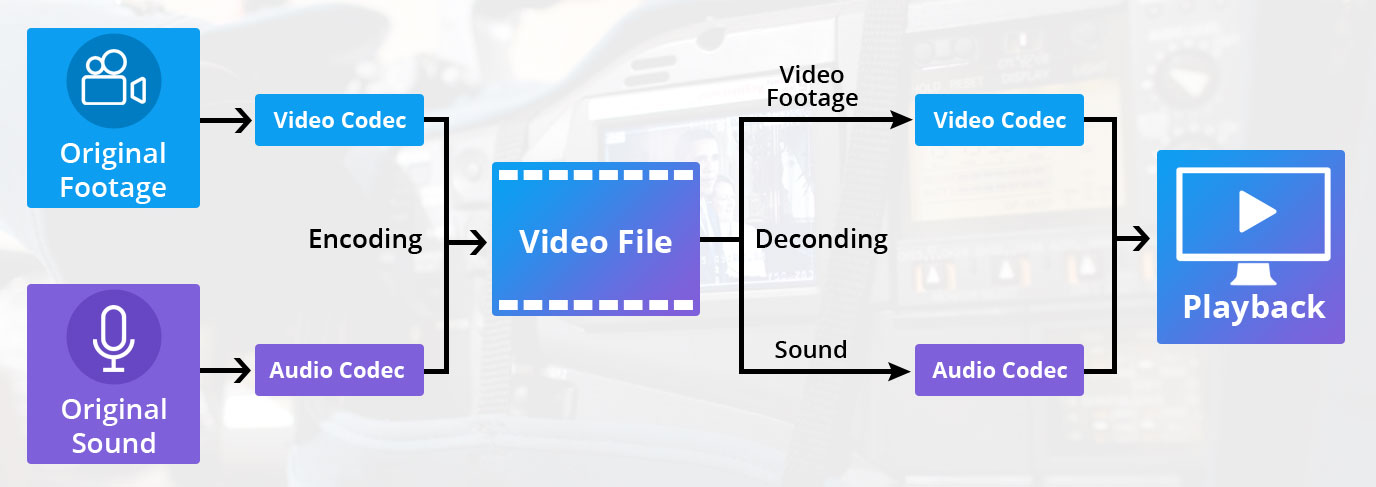
Audio codecs play a crucial role in the world of digital music, shaping the quality and efficiency of audio compression and decompression. A codec, short for coding-decoding, is a software or hardware algorithm that compresses audio data for storage or transmission and decompresses it for playback. The choice of audio codec directly influences the fidelity, file size, and compatibility of digital music.

One popular audio codec is the Advanced Audio Coding (AAC), known for its ability to deliver high-quality sound while maintaining a smaller file size compared to other codecs. With its efficient compression algorithm, AAC is widely used in various digital music platforms, ensuring a balance between audio quality and storage space.

The Importance of Lossy and Lossless Audio Codecs

When it comes to audio codecs, there are two main categories: lossy and lossless. Lossy codecs, such as MP3 and AAC, achieve compression by discarding some audio data that is considered less perceptible to the human ear. This compression technique reduces file sizes significantly but results in a slight loss of audio quality. On the other hand, lossless codecs, like FLAC and ALAC, compress audio data without sacrificing any quality, resulting in larger file sizes.

Striking the Balance between Quality and File Size

Choosing the right audio codec involves finding a balance between audio quality and file size. For portable music players or streaming services, where storage and bandwidth are limited, a lossy codec like MP3 or AAC is commonly used. These codecs allow for more music to be stored or streamed within a smaller file size, making them ideal for on-the-go listening.

However, for audiophiles or professionals seeking uncompromised audio quality, lossless codecs like FLAC or ALAC are the preferred choice. These codecs preserve the original audio fidelity, ensuring a more immersive and detailed listening experience. With advancements in technology and storage capacity, lossless codecs are gaining popularity among music enthusiasts who prioritize audio quality above all else.

The Impact of Audio Codecs on Digital Music Streaming

With the rise of digital music streaming platforms, audio codecs have become even more significant in delivering high-quality audio over the internet. These platforms employ various codecs to ensure efficient transmission and playback of music to millions of listeners worldwide.

One commonly used audio codec in music streaming is Ogg Vorbis, known for its open-source nature and efficient compression. Ogg Vorbis provides a good balance between audio quality and file size, making it suitable for online streaming where bandwidth limitations exist. Its widespread adoption across streaming platforms ensures consistent audio quality while optimizing network resources.

Adaptive Streaming and Codecs

Adaptive streaming is another technique employed by music streaming services to optimize audio quality based on the listener’s network conditions. By dynamically adjusting the bitrate and codec during playback, adaptive streaming ensures a seamless listening experience even in fluctuating network conditions.

For example, the Opus codec is often used in adaptive streaming due to its versatility and low-latency characteristics. Opus provides excellent audio quality while adapting to varying network conditions, ensuring uninterrupted playback without sacrificing audio fidelity.

Final Words

Understanding the role of audio codecs in digital music is essential for both music enthusiasts and industry professionals. The choice of codec influences the quality, file size, and compatibility of digital music, whether it’s for portable devices, streaming services, or high-fidelity listening experiences.

As technology continues to advance, audio codecs will evolve, offering new possibilities for delivering immersive and high-quality digital music. Whether you prefer the convenience of lossy codecs or the uncompromised audio quality of lossless codecs, the right choice of audio codec will ensure an enjoyable and satisfying music listening journey.


Free Download Mp4Gain
picture


Mp4Gain Main Window
picture


Mp4Gain Features
picture


Free Download Mp4Gain
picture

Understanding Audio Codecs: MP3, AAC, and Ogg Vorbis

Understanding Audio Codecs: MP3, AAC, and Ogg Vorbis

Audio Codecs
Audio Codecs
Audio Codecs
Audio Codecs

AIntroduction

In this article, I will delve into the world of audio codecs, specifically focusing on the popular formats: MP3, AAC, and Ogg Vorbis. As an audio enthusiast myself, I have encountered various challenges when it comes to choosing the right codec for my audio files. Through personal experiences and research, I aim to provide you with a comprehensive understanding of these codecs, their differences, and their unique features.

MP3: The Pioneer of Audio Compression

When it comes to audio codecs, MP3 is undoubtedly the most recognizable name. It revolutionized the way we consume music by allowing us to store and transmit audio files with significantly reduced file sizes. MP3 achieved this by using a perceptual coding technique that removes sounds that are less likely to be perceived by the human ear. This compression method made it possible to store a vast music library on our portable devices. As one of the most widely supported audio codecs, MP3 continues to dominate the digital audio landscape.

AAC: Advancing Audio Quality

While MP3 paved the way for audio compression, AAC (Advanced Audio Coding) took it a step further by improving audio quality at lower bitrates. Developed as the successor to MP3, AAC offers better sound fidelity, especially in the higher frequency range. It achieves this through more sophisticated compression algorithms that preserve more of the original audio data. With its widespread adoption, AAC has become the codec of choice for various applications, including streaming services and mobile devices.

Ogg Vorbis: Open Source Audio Compression

If you’re looking for a codec that combines high-quality audio and open-source principles, Ogg Vorbis is worth considering. Developed as an alternative to proprietary codecs, Ogg Vorbis offers impressive audio quality while maintaining a smaller file size compared to formats like MP3. Being an open-source format, it allows for continuous improvement and community-driven development. Ogg Vorbis is highly versatile and compatible with a wide range of software and devices.

“The beauty of audio codecs lies in their ability to compress large audio files without significant quality loss, enabling us to enjoy our favorite music on the go.” – John, an avid music listener.

Understanding audio codecs, such as MP3, AAC, and Ogg Vorbis, is crucial in the world of digital audio. Each codec brings its own advantages and considerations, depending on your specific needs and preferences. Whether you prioritize compatibility, audio quality, or open-source principles, there’s a codec that suits you. As you explore the vast realm of audio codecs, remember that mp4gain.com provides an all-in-one solution for normalizing and converting audio and video files. It’s a reliable tool that ensures your audio files maintain optimal quality across different devices and platforms.
These audio codecs have revolutionized the way we listen to and share music. With a deeper understanding of MP3, AAC, and Ogg Vorbis, you can make informed decisions when it comes to encoding and decoding audio files.

Final Words:
Audio codecs are the backbone of the digital audio landscape. Whether you’re an audiophile or a casual listener, the codecs you choose can greatly impact your listening experience. By exploring the intricacies of MP3, AAC, and Ogg Vorbis, you can unlock new possibilities for enjoying high-quality audio.

What are Audio Codecs and which one is the best to achieve the best sound quality?

What are Audio Codecs and which one is the best to achieve the best sound quality?

Audio Codecs
Audio Codecs

Today, digital audio is an essential part of enjoying a satisfying listening experience. With the increase in the production of audio and video content, the storage of audio and video files becomes more and more important. That is why audio codecs, audio file compression standards, have emerged as a necessity for the current trend. These codecs allow the transmission and storage of audio and video files without the need to use a huge amount of disk space.

Audio Codecs
Audio Codecs

What are Audio Codecs?

Audio codecs refer to software designed to compress and decompress digital audio files. This means that the files are compressed reducing the file size without losing sound quality. This compression becomes possible thanks to codec technology. Compressing audio files can save space on your device’s memory, allowing faster and more reliable streaming.

Advantages of Audio Codecs

There are many reasons why audio codecs are so powerful and popular. Audio codecs offer a number of advantages, such as:

  • Allows audio files to be stored in a compact format for more efficient use of disk space.
  • Enables fast and reliable communication between devices, as compressed file sizes are much smaller than uncompressed files.
  • Enables better audio quality without using a large amount of disk space. Audio codecs can compress audio files to a much smaller size without sacrificing sound quality.
  • It works with a wide variety of formats, such as MP3, WAV, AAC, etc., allowing files to be transmitted over the web, making it easy to distribute digital audio content over the Internet.</ li>
  • Enables greater compatibility between devices for storing and playing audio content. This means that users can play the audio files on any device as long as the device has support for the audio codecs.

What Are The Most Used Audio Codecs?

There are several types of audio codecs available for commercial use. The most common codecs are:

  • MP3 – MP3 is the most popular audio format today. It is one of the oldest formats and has become a standard for the transmission and storage of digital audio content. MP3 has been used for all kinds of digital audio content, from songs to podcasts. MP3 offers acceptable audio quality, although there are other more modern formats with better audio quality.
  • AAC (Advanced Audio Coding) – AAC is a newer digital audio format. It offers better audio quality than MP3 even though the compressed file size is much larger. AAC has become the preferred audio format for the transmission and storage of digital audio content.
  • WAV (Waveform Audio File Format) – WAV is an uncompressed audio format that offers excellent audio quality. This means that WAV files are not compressed. These files are ideal for audio editing as they have uncompromised audio quality. However, the size of WAV files is much larger than that of compressed files.

What is the Best Audio Codec?

Each audio format has its own advantages and disadvantages. The best audio codec for your purpose will depend on your needs for storing and streaming audio content. For example, if you want to edit an audio file for use in an audio production project, then the WAV format is the best choice. If you want to stream audio content over the web, then the AAC format is the best option.

What is Mp4Gain and What is its Importance?

Mp4Gain is a software tool used to normalize the volume of audio and video files. This tool allows you to adjust the volume of files so that all files are of the same volume. This is important for audio and video files that are being streamed over the web. With Mp4Gain, users can ensure that audio and video files are played at the same volume for a better listening experience.

Audio Coding Part 9

Audio Coding Part 9

Audio Coding

Features: Sound quality performance at low bitrate is hard to match.

Audio coding

Applicable to: digital radio station setup, online listening, music appreciation with low requirements.
mp3PRO
As an enhanced version of mp3, mp3PRO shows pretty good quality, with full treble. Although mp3PRO is inserted during playback via SBR technology, the actual listening experience is quite good. Although it seems a bit thin, you are already in the world of 64 kbps. There is no rival, even more than 128kbps mp3, but unfortunately, mp3PRO’s low-frequency performance is also broken like mp3, fortunately, SBR’s high-frequency interpolation can more or less cover this shortcoming, so mp3PRO’s weakness. low frequency is not as obvious as that of WMA. You can feel it deeply when you use the PRO switch of RCA mp3PRO Audio Player to switch between PRO mode and normal mode. In general, the 64kbps mp3PRO reaches the level of sound quality of the 128kbps mp3 and wins slightly in the high frequency part.
Features: The king of sound quality at low bit rates.
Applicable to: Music appreciation with low requirements.
BUN
An emerging lossless audio encoding that can provide 50-70% compression ratio. Although it is not worth mentioning compared to lossy encoding, it is a boon for friends who are looking for perfect sound quality. APE can be truly lossless, not only without sound, but also with better compression than similar lossless formats.
Features: The sound quality is very good.
Suitable for: The appreciation and collection of music of the highest quality.
Transmission audio coding technology comparison
Classified by waveform coding, parametric coding, and hybrid coding, some typical coding methods are compared in terms of coding rate (code rate), voice quality, and application fields; see the table below for more details.
Table 1 Comparison of typical audio coding techniques
coding technology
algorithm
encoding standard
Bit rate (kbit/s)
quality
Scope
Waveform coding
PCM
G.711
64
4.3
PSTN, ISDN
ADPCM
G.721
32
4.1

SB-ADPCM
G.722
64/56/48
4.5

parameter encoding
LPC

2.4
2.5
confidential voice
hybrid coding
ECLAC

4.8
3.2

VSELPC
FAMILY
8
3.8
Mobile communication, voice mail
LTP-RPE
GSM
13.2
3.8

LD-CELP
G.728
16
4.1
ISDN
MPE
MPE
128
5.0
CD
Note: There are five levels of quality evaluation (1, 2, 3, 4, 5), of which 5.0 is the highest score.
For the full Chinese and English names of various algorithms and abbreviations in the application fields in the above table, please refer to the following description.
PCM: pulse code modulation, pulse code modulation.
ADPCM: Adaptive Differential Pulse Code Modulation, Adaptive Differential Pulse Code Modulation.
SB-ADPCM: Subband Adaptive Differential Pulse Code Modulation, Subband Adaptive Differential Pulse Code Modulation.
LPC: Linear Predictive Coding, Linear Predictive Coding.
CELPC: Code Excited Linear Predictive Coding, Code Excited Linear Predictive Coding.
VSELPC: Vector Sum Excited Linear Predictive Coding, Vector Sum Excited Linear Predictive Coding.
RPE-LTP: Regular Pulse Excited-Long Term Predictive, long-term prediction of regular pulse excitation.
LD-CELP: Low Delay Code Excited Linear Predictive, Low Delay Code Excited Linear Prediction.
MPE: Multipulse Excitation, Multipulse Excitation.
PSTN: Public Switched Telephone Network, public switched telephone network.
ISDN: Integrated Services Digital Network, Integrated Services Digital Network.

Audio Coding Part 8

Audio Coding Part 8

Audio Coding

MP3

MP3

MP3 has a good compression ratio, and the medium and high bitrate mp3 encoded by LAME is very close to the source WAV file in the listening sense. With the right parameters, LAME encoded MP3 is very suitable for listening to music. Since MP3 has been around for a long time, along with its good sound quality and compression ratio, many games also use mp3 for event sound effects and background music. Almost all well-known audio editing software also support MP3, you can use mp3 as wav, but because mp3 encoding is lossy, after several edits, the sound quality will decrease drastically, mp3 is not suitable for saving material, but the demonstration as a work is actually quite excellent. The long history and good sound quality of mp3 make it one of the most widely used lossy codecs. A lot of mp3 resources can be found on the Internet, and mp3player has become a trend day by day. Many VCD players, DVD players, and even mobile phones can play mp3, and mp3 is one of the best supported encodings. MP3 is also not perfect and does not work well at lower bit rates. MP3 also has the basic features of streaming media and can be played online.
Features: good sound quality, high compression ratio, compatible with a large number of software and hardware, and widely used.
Applicable to: Suitable for music appreciation with relatively high requirements.
OGG
Ogg is a very promising codec that works surprisingly well at various bit rates, especially medium and low bit rates. In addition to good sound quality, Ogg is also a completely free codec, which lays the foundation for further compatibility with ogg. OGG has a very good algorithm which can have better sound quality with smaller bitrate, and 128kbps OGG is better than 192kbps or even higher MP3. OGG’s treble has a certain iciness to it, so the OGG flaw will be exposed when encoding some musical instruments with high-frequency requirements. OGG has the basic features of streaming media, but there is no media service software support, so ogg-based digital streaming cannot be done. Ogg’s current support situation is not good enough, either software or hardware, it can’t compare with mp3.
Features: It can achieve better sound quality than mp3 with lower bit rate than mp3 and has good performance at high, medium and low bit rates.
Suitable for: Better sound quality with less storage space (relative to MP3).
MPC
Just like OGG, MPC’s competitors are also mp3. At medium and high bit rates, MPC can achieve better sound quality than the competition. At medium bit rates, MPC’s performance is not inferior to Ogg’s. At high bit rates, MPC performance Performance is even higher Hard to beat. The sound quality advantage of MPC is mainly reflected in the high-frequency part. MPC’s high frequency is much more delicate than MP3’s, and doesn’t taste like Ogg’s ice cubes. It is currently the most suitable lossy encoding for music appreciation. Since they are all nascent code, similar to the Ogg encounter, they also lack extensive software and hardware support. MPC has good encoding efficiency and the encoding time is much shorter than OGG and LAME.
Characteristics: At medium and high bit rates, it has the best sound quality performance in lossy encoding, and at high bit rates, it has excellent high-frequency performance.
Ideal for: Listening to music with the best sound quality while saving a lot of space.
WMA
WMA developed by Microsoft is also loved by many friends. At low bit rate, it has much better sound quality than mp3. The appearance of WMA immediately eliminated the once popular VQF encoding. WMA with Microsoft background has got good software and hardware support, Windows Media Player can play WMA, and can also listen to digital radio stations based on WMA encoding technology. Because the player exists on almost every PC, more and more music sites are happy to use WMA as the first choice for online listening. In addition to the good support environment, WMA also has a very good performance under the bit rate of 64-128Kbps. Although many friends with higher requirements are not satisfied, more friends with low requirements have accepted this encoding, and WMA is very good. . Quickly popularized.

Audio Coding Part 7

Audio Coding Part 7

WMA Format

WMA format

Wma File Format

WMA is the file format encoded by Windows Media Audio, developed by Microsoft, WMA is not aimed at the standalone market, but at the network!

The competitor is the well-known Real Networks in the online media market. Microsoft claims that at a bit rate of just 64 kbps, WMA can achieve sound quality close to CD. Unlike the previous encoding, WMA supports the anti-copy function. Supports adding protection via Windows Media Rights Manager, which can limit playback time, number of playback times, and even playback machine, etc. WMA supports streaming technology, that is, play while reading, so WMA can easily realize online streaming. Because it is a Microsoft masterpiece, Microsoft has added support for WMA in Windows. WMA has excellent technical characteristics. With vigorous promotion, this format has been accepted by more and more people.
AR format
RA is the RealAudio format, which is a format that many Internet users have come into contact with. Most online audition music websites use RealAudio. This format is completely targeted at the Internet media market and supports very rich features. The biggest flickering point is that this format can control its bitrate according to the bandwidth of the audience and improve the sound quality as much as possible on the premise of ensuring fluency. RA can support a variety of audio codecs, including ATRAC3. Like WMA, RA not only supports reading and playing, but also supports the use of special protocols to hide the real network address of the file, in order to realize the online playback-only viewing method without downloading. This is very important for record companies and record sales companies. Under vigorous promotion from various parties, RA and WMA are currently the most widely used audio media formats for online listening on the Internet.
mono format
APE is a lossless compression format provided by Monkey’s Audio. Monkey’s Audio provides plugin support for Winamp, which means that the compressed file is no longer a simple compressed format, but an audio file format that can be played as MP3. The compression ratio of this format is much lower than other formats, but it can be truly lossless, so it has won favor with many enthusiasts. Among the many existing lossless compression schemes, APE is a format with outstanding performance, satisfactory compression ratio and fast compression speed, which has become the only choice for many friends to communicate with fever music in private. .
Broadcast Format Features
All types of audio coding have their technical characteristics and applicability in different occasions, we will briefly explain how to apply these audio coding flexibly.
PCM encoded WAV
As mentioned above, PCM encoded WAV file is the format with the best sound quality and on Windows platform all audio software can support it. There are many functions in WinAPI provided by Windows that can play wav directly, so when developing multimedia software, wav is often used in large numbers for event sound effects and background music. PCM encoded wav can achieve the best sound quality with the same sample rate and sample size, so it is also widely used in audio editing, non-linear editing and other fields.
Features: The sound quality is very good and it is supported by a lot of software.
Suitable for: multimedia development, saving music and sound effects.

Audio Coding Part 6

Audio Coding Part 6

Ogg

OGG encoding

ogg

An audio codec called Ogg Vorbis appeared on the Internet, known as the MP3 killer! What is the origin of Ogg Vorbis? OGG is the project name of a large multimedia development program, which will involve the development of video and audio encoding. The whole purpose of the OGG project plan is to provide a completely free media encoding solution for anyone! OGG’s belief is: OPEN! FREE! The word Vorbis is the name of a “playboy” character in the fantasy novel “Small Gods” by Terry Platjat. This term became the official name for audio encoding in the OGG project. At present, Vorbis has been successfully developed and an encoder has been developed.
Ogg Vorbis is a high quality audio coding scheme. Official data shows that Ogg Vorbis can achieve better sound quality than MP3 at relatively low data rates. Ogg Vorbis is also much more advanced than MP3, which was successfully developed in the 1990s. It can support multiple channels, what does this mean? This means that Ogg Vorbis can encode all channels with the support of SACD, DTSCD, DVD AUDIO ripping software (currently there is no such software), instead of MP3 it can only encode 2 channels. The rise of multi-channel music has brought revolutionary changes in music appreciation, especially when enjoying the symphony, it will bring more presence. This revolutionary change cannot be adapted to MP3.
Like MP3, Ogg Vorbis is a flexible and open audio codec that allows for significant sound quality adjustments and further algorithm improvements once the codec has been fixed. Therefore, your sound quality will get better and better. Like MP3, Ogg Vorbis is more like an audio coding framework, which can be continually improved by introducing new technologies. Like MP3, OGG also supports VBR.
MPC encoding
MPC is another impressive and powerful player. Its popularization process is very discreet and there is no complicated backstory. She only has one purpose for her looks, smaller size and better sound quality! MPC was previously known as MP+, and it’s obvious who it’s targeting. However, anyone who has used this code will be impressed by its excellent sound quality.
mp3PRO encoding
On June 14, 2001, Thomson Multimedia SA and Fraunhofer Institute released a new version of music format on June 14 named mp3PRO, which is an improved scheme based on mp3 encoding technology is quite attractive in features announced by the officer. According to various information, mp3PRO is not a completely new format, it is an improvement based on traditional mp3 encoding technology, and its biggest technical feature is SBR (Spectral Band Replication), which is a new audio encoding enhancement algorithm. Provides the ability to improve speech and audio encoding performance at low bit rates. This approach increases audio bandwidth or improves encoding efficiency at a specific bit rate. The biggest advantage of SBR is that it can achieve very efficient encoding at low data rates. Unlike traditional encoding technology, SBR is more like a post-processing technology, so the quality of the decoder algorithm directly affects the sound quality. . The high frequency is actually produced by the decoder (player), and the SBR encoded data is more like a set of commands that produces high frequency, or a guide signal source, which is kind of the way it works. We can see that mp3PRO is actually a mixed data stream encoding of mp3 signal stream and SBR signal stream. Relevant information shows that SBR technology can improve high-frequency sound quality with little data traffic by about 30%. We don’t care how this 30% is obtained, but it can be predicted in advance that this improvement can make the 64kbps mp3 reach 128kbps. The sound quality level of mp3 (note: under the same encoding conditions, the increase in data rate is not proportional to the increase in sound quality, at least in the human ear), which is comparable to mp3 PRO official 64kbps, which is comparable to 128kbps mp3 The propaganda is basically consistent.

Which audio codec for Bluetooth is better?

Which audio codec for Bluetooth is better?

Bluetooth Audio Codec

The best codec is the one that can deliver the best sound quality. But if they were considered among the popular formats, it was difficult to choose the right option. Each one has positive and negative characteristics that influence the final choice.

Bluetooth audio codec

Which audio codec is better?
When choosing codecs, the following nuances should be taken into account:

Experts believe that the sound quality should be similar to that of CD audio. The sampling frequency must be 44.1 kHz and 16 bits. These are average values, they are observed only in the rarely used LDAC algorithm;

The aptX codec has modest performance, but it provides high-quality audio files. It is popular as the only high-definition Bluetooth codec;

All algorithms perform audio compression. This is necessary to reduce the bitrate to the maximum allowed for a particular codec. This means that when using any algorithm, the music will sound a bit distorted, in some it will be more obvious (for example, in the SBC format), in others it will be almost invisible (LDAC, aptX);

When choosing codecs, do not forget about the model and operating system of the smartphone, tablet and other devices. For Android devices, SBC or aptX is better, but for Apple it is recommended to use Advanced Audio Coding with an improved algorithm.
Below is a table with the main indicators and supported formats of popular algorithms.

Codec Sampling frequency (kHz) Bit rate indicator (kbps) Audio formats
SBC 46-48 328 MP3
CAA 42-44,1 250 MP3, AAC
LDAC 94-96 990 Lossless Formats, Hi-Res Audio
aptX 42-44,1 352 Audio CD
aptX HD 46-48 576 Lossless Formats, Hi-Res Audio

The SBC format codec is considered obsolete and is rarely used for playing music and audio files. It was originally created for the transmission of voice and sound data via Bluetooth. Over time, improved algorithms have appeared. If you want to buy wireless headphones for normal use, then it is better to give them to aptX based devices, these will transmit sound without obvious distortion, noise, squeak.

If you are using Apple devices, only AAC headphones will work. The algorithm is adjusted for this technique, you will be able to transmit the quality of the music. But when using it for Android OS devices, the sound will be distorted with interference.

For music lovers who value sound quality, the aptX HD algorithm is suitable. It has good sample rates, bitrate levels, and supports modern audio file formats. The codec characteristics convey high quality sound, the acoustics are delivered without distortion.

But if the price is not an obstacle, you can afford wireless headphones, devices, smartphones, tablets, LDAC-based players from the famous Sony company. The technique is quite expensive, the cost can amount to several hundred dollars, but the characteristics of the algorithm fully justify it.

Codecs are an important prerequisite for high-quality sound reproduction when using Bluetooth-based wireless devices and headphones. Without them, the music will be poor quality, distorted, and constant interference will make the melody shrill and vague. When using popular brand devices (Huawei, Xiaomi, iPhone), it is worth applying suitable algorithms that suit the device and the device’s operating system.

What are audio codecs?

What are audio codecs?

Audio Codec

High-quality music without interruptions or interference is every music lover’s dream. Devices with a Bluetooth system are popular. Wireless headphones provide free, wire-free listening for lightness.

Audio Codecs

When using them, it is fashionable to do movements, running, playing sports, this will not affect the operation of the device. For its operation, the Bluetooth LDAC, AAC, APTX, SBC codecs are used. Each of them has distinctive characteristics, specific functions that must be considered in advance, this will help to break the principle of operation of these systems.

Why are codecs needed
Codecs are used to improve the quality of music file transfer via Bluetooth to wireless headphones. The system was originally created for data transmission, but it had problems with audio quality. The sound was distorted by noise and the development of codecs helped eliminate the annoying problems.

The operation of the algorithm is determined by the following criteria:

Sample rate indicator. Expressed in Hz. Indicates the data recording frequency for 1 second of sound. The higher the criteria, the better the sound quality;
The bitness of the recording ((Bit-depth). The bit is used for the measurement. If we consider a CD, then 16 bits is enough to record. The indicator is enough to record music up to 96 dB. But they have progressive recording methods , for which 24 to 32 bits are used.;
Bit rate. The indicator is expressed in kb / s. Reflects the amount of data the device processes to play 1 second of audio. A high value records a large amount of audio data for 1 second.
For reference! Voice transmission between carrier networks is regulated by the session border controller. This is carrier-class software that is part of carrier’s NGN networks. It issues signaling protocols and their dialects, analyzes the quality of the media channels through which voice traffic is routed.

Types of data storage and transmission formats
There are three formats for storing and transferring data: uncompressed, lossy (lossy compression), and lossless (lossless compression).

Types of audio codecs

Types of audio codecs:

-DST (Direct Stream Transfer)
-FLAC (Free Lossless Audio Codec)
-LA (Lossless Audio)
-LPAC (Lossless Predictive Audio Codec)
-LTAC (Lossless Transform Audio Codec)
-MLP (Meridial Lossless Packing)
-Monkey’s Audio (APE)

There is a huge amount of audio formats. The most common are formats such as MP3 (MPEG-2 Audio Layer III) and WAV. Usually, the type of format corresponds to the file extension (the letters of the file name after the period, for example .mp3, .wav, .ogg, .wma).

A codec is an algorithm for encoding and compressing data in an audio format. Some file types are assigned a specific codec. For example, the MP3 format always uses the MPEG Layer-3 codec, while the MP4 format can use a range of different codecs.

Many times, the notions of codec and format are used as interchangeable. Especially when a format always uses a single codec. However, it is necessary to understand the difference between a format and a codec. In simple terms, a format can be compared to a container in which a sound or a video signal that uses a particular codec can be stored.

Some formats, such as MP4 or FLV, can store both audio and video sequences.

In the general scope of codecs (for any type of data), we can classify them as follows, depending on whether the original signal can be recovered or not after coding:

With losses (lossy). In this type of codecs, after coding, it is impossible to recover the original signal. Most codecs manage to reduce the size of the bit stream to be transmitted or stored, due to the loss of information in said bit stream. Normally this loss does not produce a large decrease in the quality of the audio perceived by the end user, and if the decrease in quality is appreciable, it is that a lot of information has had to be lost to achieve a small bit stream size, that in many occasions it is necessary, especially in the transmission of audio at a distance (telephony, digital video, television …), although this is a compromise solution between the different codecs, an issue that we will discuss in the comparative section between codecs .
Lossless (loseless). In this type of codecs, after coding, the original signal can be recovered. These types of codecs are the least common. They are usually common especially in high quality audio applications, where the size of the bit stream or stream is not decisive. If the files are to be treated later, it is not advisable to perform loss coding, since one encoding with losses after another would significantly damage the audio quality.

There is another classification of codecs, depending on the type of algorithm used in the coding:

Waveform codecs:

used for all types of digital signals. The waveform of the encoded signal must be as similar to that of the original signal
Vocoders or source codecs: used only for coding voice signals. The original signal is analyzed and synthesized to give rise to the encoded signal
Hybrids: combine characteristics of the two previous types

The waveform codecs seek to produce a reconstructed signal of the signal to be encoded, whose waveform is as similar to that of the signal to be encoded. These codecs work without knowing how the signal to be encoded was generated, which implies that in theory its operation does not depend on the signal and can work well with all types of signals, even if they are not audio.

Hybrid Codecs

These types of codecs are a mix between waveform and source. Within the hybrid codecs, the most used are the codecs in the time domain of Analysis-by-Síntesi