Codecs and media containers.


Free Download Mp4Gain
picture

Codecs and media containers.
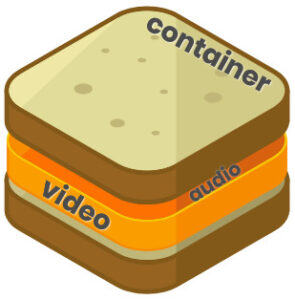
Codecs and Containers

Bitrate. Recommendations for video encoding.
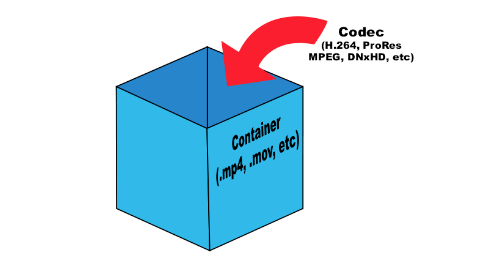
Video Container and Video Codecs

To compress digital media files, special programs are used – codecs (encoders). This is a kind of “formula” that determines how audio and video content can be packaged. Codecs also perform the reverse decoding operation, in this case they are called decoders.

Encoder (encoder, encoder in English): a program and / or device used to convert information from one type to another (encoding).
A decoder is essentially the same as an encoder, but it converts in the opposite direction.

Codec (English codec): encoder and decoder in one block.
Compression ratio is the ratio of the size of the input file (not encoded) to the size of the output file (encoded). For example, a compression ratio of 11: 1 means that the encoded file is 12 times smaller than the original.
Bit rate: the number of bits allocated to record a unit of time of audio information. They are generally measured in kb / s, that is, kilobits per second (kb / s or kbps in English).
Most codecs for audio and visual data use lossy compression to obtain an acceptable final (compressed) file size. There are also lossless codecs. But for most applications, lossy codecs are more beneficial, as the subtle degradation in quality is justified by a significant reduction in data volume. Almost the only exception is when the data will undergo post-processing: in this case, repeated encoding / decoding losses will have a serious impact on quality.

The most popular are the following codecs:

psd, bmp, rle, dib, gif, eps, jpg, pcx, raw, png, tif, etc. – images.
flag, ogg, opus, wav, pcm, wma, mp3, aac, as3, dts, flac, etc. – Audio;
ffdshow, indeo, mjpeg, mpeg-1, mpeg-2, mpeg-4 (h.261, h.263, h.264), wmv – video.

Any operating system initially contains a certain set of codecs, but these are generally not sufficient to play certain video file formats. The codecs convert the data into a special file called a container. A container is a special shell that stores information encrypted by codecs. Basically, media containers are video file formats that contain data about their internal structure. The container can store various information, in particular, images, audio, video and subtitles. Different types of containers determine the quantity and quality of information that can be stored in them, but they do not affect the way the data is encoded.

The most popular are the following containers:

ogg, mp3, mka, wav, wma, mp3, aac, dts, flac, etc. – Audio;
DivX, XviD, AVI, MP4, MPEG, WMV, MOV, VOB, MKV, FLV, MPG, dv, flv, ts, m2ts, mp4, etc. – video.
To determine which format to convert a video into, you must proceed from the task set. Imagine this situation: you have a beautiful video clip of the wedding photos and you want to play it on your TV screen (without HD). To do this, you can burn video in DVD format (as3 – audio, vob – video).

Next, let’s look at the most famous video file formats:
AVI (Audio-Video Interleaved) is one of the most common media containers for Windows operating systems. This format can contain four types of information: video, audio, text and midi. This container can contain video of various formats from MPEG-1 to MPEG-4. AVI has a large number of varieties in terms of internal structure and can be played on smartphones, communicators and other devices. The AVI media container does not impose any restrictions on the type of codec used.
WMV (Windows Media Video) is a digital video format created and controlled by Microsoft. WMV files can contain audio and video data packed with Windows Media Audio (WMA) and Windows Media Video (WMV) codecs.
MOV is a format developed by Apple for the QuickTime media player. To play such files, you must have a QuickTime player or players with MOV codecs already installed. The format can contain video, animation, graphics, 3D. This format supports any audio and video codecs.
ASF (Advanced Streaming Format) is a Microsoft streaming format. Based on MPEG-4 and used to transfer low and medium bit rate videos to the Internet. ASF is a multimedia container that supports almost all video codecs.
MPG or MPEG (Moving Picture Experts Group) – A video file containing video encoded with codecs:
mpeg1 – The standard was developed in 1992 with the capabilities of 2-speed CD-ROMs and 486 computers in mind
The mpeg2 standard was adopted in


Free Download Mp4Gain
picture


Mp4Gain Main Window
picture


Mp4Gain Features
picture


Free Download Mp4Gain
picture

Which audio codec for Bluetooth is better?

Which audio codec for Bluetooth is better?

Bluetooth Audio Codec

The best codec is the one that can deliver the best sound quality. But if they were considered among the popular formats, it was difficult to choose the right option. Each one has positive and negative characteristics that influence the final choice.

Bluetooth audio codec

Which audio codec is better?
When choosing codecs, the following nuances should be taken into account:

Experts believe that the sound quality should be similar to that of CD audio. The sampling frequency must be 44.1 kHz and 16 bits. These are average values, they are observed only in the rarely used LDAC algorithm;

The aptX codec has modest performance, but it provides high-quality audio files. It is popular as the only high-definition Bluetooth codec;

All algorithms perform audio compression. This is necessary to reduce the bitrate to the maximum allowed for a particular codec. This means that when using any algorithm, the music will sound a bit distorted, in some it will be more obvious (for example, in the SBC format), in others it will be almost invisible (LDAC, aptX);

When choosing codecs, do not forget about the model and operating system of the smartphone, tablet and other devices. For Android devices, SBC or aptX is better, but for Apple it is recommended to use Advanced Audio Coding with an improved algorithm.
Below is a table with the main indicators and supported formats of popular algorithms.

Codec Sampling frequency (kHz) Bit rate indicator (kbps) Audio formats
SBC 46-48 328 MP3
CAA 42-44,1 250 MP3, AAC
LDAC 94-96 990 Lossless Formats, Hi-Res Audio
aptX 42-44,1 352 Audio CD
aptX HD 46-48 576 Lossless Formats, Hi-Res Audio

The SBC format codec is considered obsolete and is rarely used for playing music and audio files. It was originally created for the transmission of voice and sound data via Bluetooth. Over time, improved algorithms have appeared. If you want to buy wireless headphones for normal use, then it is better to give them to aptX based devices, these will transmit sound without obvious distortion, noise, squeak.

If you are using Apple devices, only AAC headphones will work. The algorithm is adjusted for this technique, you will be able to transmit the quality of the music. But when using it for Android OS devices, the sound will be distorted with interference.

For music lovers who value sound quality, the aptX HD algorithm is suitable. It has good sample rates, bitrate levels, and supports modern audio file formats. The codec characteristics convey high quality sound, the acoustics are delivered without distortion.

But if the price is not an obstacle, you can afford wireless headphones, devices, smartphones, tablets, LDAC-based players from the famous Sony company. The technique is quite expensive, the cost can amount to several hundred dollars, but the characteristics of the algorithm fully justify it.

Codecs are an important prerequisite for high-quality sound reproduction when using Bluetooth-based wireless devices and headphones. Without them, the music will be poor quality, distorted, and constant interference will make the melody shrill and vague. When using popular brand devices (Huawei, Xiaomi, iPhone), it is worth applying suitable algorithms that suit the device and the device’s operating system.

What are audio codecs?

What are audio codecs?

Audio Codec

High-quality music without interruptions or interference is every music lover’s dream. Devices with a Bluetooth system are popular. Wireless headphones provide free, wire-free listening for lightness.

Audio Codecs

When using them, it is fashionable to do movements, running, playing sports, this will not affect the operation of the device. For its operation, the Bluetooth LDAC, AAC, APTX, SBC codecs are used. Each of them has distinctive characteristics, specific functions that must be considered in advance, this will help to break the principle of operation of these systems.

Why are codecs needed
Codecs are used to improve the quality of music file transfer via Bluetooth to wireless headphones. The system was originally created for data transmission, but it had problems with audio quality. The sound was distorted by noise and the development of codecs helped eliminate the annoying problems.

The operation of the algorithm is determined by the following criteria:

Sample rate indicator. Expressed in Hz. Indicates the data recording frequency for 1 second of sound. The higher the criteria, the better the sound quality;
The bitness of the recording ((Bit-depth). The bit is used for the measurement. If we consider a CD, then 16 bits is enough to record. The indicator is enough to record music up to 96 dB. But they have progressive recording methods , for which 24 to 32 bits are used.;
Bit rate. The indicator is expressed in kb / s. Reflects the amount of data the device processes to play 1 second of audio. A high value records a large amount of audio data for 1 second.
For reference! Voice transmission between carrier networks is regulated by the session border controller. This is carrier-class software that is part of carrier’s NGN networks. It issues signaling protocols and their dialects, analyzes the quality of the media channels through which voice traffic is routed.

Types of data storage and transmission formats
There are three formats for storing and transferring data: uncompressed, lossy (lossy compression), and lossless (lossless compression).