Understanding Audio Codecs: MP3, AAC, and Ogg Vorbis


Free Download Mp4Gain
picture

Understanding Audio Codecs: MP3, AAC, and Ogg Vorbis

Audio Codecs
Audio Codecs
Audio Codecs
Audio Codecs

AIntroduction

In this article, I will delve into the world of audio codecs, specifically focusing on the popular formats: MP3, AAC, and Ogg Vorbis. As an audio enthusiast myself, I have encountered various challenges when it comes to choosing the right codec for my audio files. Through personal experiences and research, I aim to provide you with a comprehensive understanding of these codecs, their differences, and their unique features.

MP3: The Pioneer of Audio Compression

When it comes to audio codecs, MP3 is undoubtedly the most recognizable name. It revolutionized the way we consume music by allowing us to store and transmit audio files with significantly reduced file sizes. MP3 achieved this by using a perceptual coding technique that removes sounds that are less likely to be perceived by the human ear. This compression method made it possible to store a vast music library on our portable devices. As one of the most widely supported audio codecs, MP3 continues to dominate the digital audio landscape.

AAC: Advancing Audio Quality

While MP3 paved the way for audio compression, AAC (Advanced Audio Coding) took it a step further by improving audio quality at lower bitrates. Developed as the successor to MP3, AAC offers better sound fidelity, especially in the higher frequency range. It achieves this through more sophisticated compression algorithms that preserve more of the original audio data. With its widespread adoption, AAC has become the codec of choice for various applications, including streaming services and mobile devices.

Ogg Vorbis: Open Source Audio Compression

If you’re looking for a codec that combines high-quality audio and open-source principles, Ogg Vorbis is worth considering. Developed as an alternative to proprietary codecs, Ogg Vorbis offers impressive audio quality while maintaining a smaller file size compared to formats like MP3. Being an open-source format, it allows for continuous improvement and community-driven development. Ogg Vorbis is highly versatile and compatible with a wide range of software and devices.

“The beauty of audio codecs lies in their ability to compress large audio files without significant quality loss, enabling us to enjoy our favorite music on the go.” – John, an avid music listener.

Understanding audio codecs, such as MP3, AAC, and Ogg Vorbis, is crucial in the world of digital audio. Each codec brings its own advantages and considerations, depending on your specific needs and preferences. Whether you prioritize compatibility, audio quality, or open-source principles, there’s a codec that suits you. As you explore the vast realm of audio codecs, remember that mp4gain.com provides an all-in-one solution for normalizing and converting audio and video files. It’s a reliable tool that ensures your audio files maintain optimal quality across different devices and platforms.
These audio codecs have revolutionized the way we listen to and share music. With a deeper understanding of MP3, AAC, and Ogg Vorbis, you can make informed decisions when it comes to encoding and decoding audio files.

Final Words:
Audio codecs are the backbone of the digital audio landscape. Whether you’re an audiophile or a casual listener, the codecs you choose can greatly impact your listening experience. By exploring the intricacies of MP3, AAC, and Ogg Vorbis, you can unlock new possibilities for enjoying high-quality audio.


Free Download Mp4Gain
picture


Mp4Gain Main Window
picture


Mp4Gain Features
picture


Free Download Mp4Gain
picture

What is a codec exactly

What is a codec exactly

Has it happened to you that you download a video file and then you cannot use it in your player? Or that you finally finish editing your video clip and it takes years to upload to the Internet? You might think it is a problem with your file. You are not wrong, only the question is more specific: it is about the codec and container you are using.

Maybe they are somewhat strange terms, but they are gaining more and more popularity due to the growing community in online video and audiovisual production. So if you plan to start your career as a youtuber, take into account the information, because if you end up with a final video with a weight of 1 GB it will not be fun waiting for it to go up …

What is a codec?

Those who do video editing know full well that storage space can be a problem. It is better to have the material you record in its original format, but most of the time this involves a considerable amount of GB of space. For example, if you record an hour of content with an HD camera, you may need … up to 410 GB! This is difficult to keep it, much more if you want to transmit it to other media. This is where the topic gets interesting.

The term codec refers to the video or audio compression and decompression process. It is a tool that encodes video using algorithms and converts it into information. This way you can decrease the file size.

The choice of the codec depends on different factors. You must mainly take into account the means of reproduction for the final product. However, encoding is not enough for its reproduction, it is also required to “pack” the information in order to present it. We are talking about containers.
What are those containers?

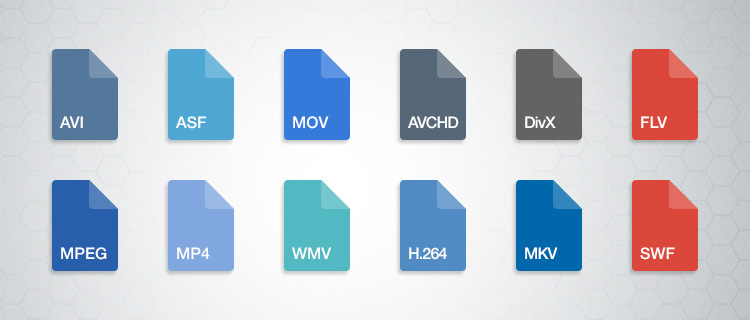
Suppose you just finished editing a video. The final file contains both images and audio, so you require a way to display it just as you prepared it. This “package” is basically what many refer to when they talk about the format of a file. So a container can accept different codecs, while players can use certain containers. For example, the VLC player accepts almost all containers.

Lossy and lossless codecs (lossy and lossless)

There are different types of compression, as we will see later. However, all of them can be divided into two categories: with or without loss. Loss of what? Quality. For example, in the case of audio files, it is not the same to listen to a song in FLAC (Free Lossless Audio Codec) format to one in MP3 (MPEG Audio Layer III). The first is coded in such a way that almost no information is lost when compressing, that is, fidelity is maintained.

The same goes for the video. Wanting to save storage space, lossy files, ie lossy, are compressed. This makes them much easier to manage. However, it is unavoidable to deal with data loss and therefore image or audio fidelity. On the other hand, when you want to maintain the highest possible quality and have no space problem, lossless or lossless compressors are used. Again, it all depends on the purpose of your file. Will it be a web video? A projection? Film contest?

Video codecs

Below you will find a list of the most popular codecs. We will not go too far into others, since an average consumer rarely requires those who are specialized.

DV and HDV

Do you remember the tapes or cassettes to record video? This type of capture uses the DV codec, the standard defined by various electronic sales companies. Over time, HDV emerged, as they had to adjust to the demand for high-definition video.

H.264 / MPEG-4 AVC

Platforms like YouTube have made the popularity of this codec grow quite a bit, as it is their recommendation to upload your videos. It is one of the most suggested thanks to the fact that it considerably reduces the file size without sacrificing much image fidelity. Multiple cameras use the codec, as do web video and Blu-ray.

Microsoft VC-1

Microsoft has its encoding mode for Blu-ray content. It also works in your Microsoft Silverlight tool.

MJPEG (Motion JPEG)

Many video cameras used to capture material with this codec. Its name comes from the group that created it, the Joint Picture Experts Group. If the name seems familiar to you, it is because they are the same ones that created the JPEG still image compression codec.

MPEG-1

Before H.264 there was MPEG-1. This used to be the standard for online video, although the emergence of new formats has left it behind.

MPEG-2

This format is merely for compressing information to DVD video.

WMV (Windows Media Video)

This is another codec that has practically disappeared. It focuses on the Microsoft family.


Audio codecs

As we mentioned before, codecs can be used with or without data loss. As for audio, there is a huge difference not only in quality (especially with good headphones), but also in the file size. Do you prefer an entire album in MP3 or a few songs in FLAC?

ACC (Advanced Audio Coding)

YouTube, Android, iOS, iTunes and more have adopted this compression method as their standard. AAC was devised as the next step for MP3, although it still has a long way to go. However, AAC tends to be of better quality. It is a lossy codec.

FLAC (Free Lossless Audio Codec)

Recommended for true audiophiles. Its development is open source and is considered a great alternative to MP3 or CD if you want to get the best possible quality. It is also recommended because it can compress a file by up to 60% without loss of information.

MP3 (MPEG-1 Audio Layer 3)

It is currently the best known format for audio. It is not of the best quality, but its compression quality is what has made it so successful. It ignores the information that corresponds to the sounds that we do not hear in our hearing range, thus eliminating “irrelevant” space. It can be reduced between 75 and 95% of the original size.

Windows Media Audio (WMA)

This is another of Microsoft’s products. It never really took off, the MP3 format took care of it. It has two versions, one with and without loss of information, although the same extension (WMA) is used for both.

Containers

You have finished editing your video. You have already chosen the codec and now you must choose the means by which you can transport and reproduce the information you have assembled. We leave you the best known. Define which one is indicated according to the purpose of your product.

ASF (Advanced Systems Format)

This is a format that belongs to the Microsoft family. Its supported file types include .asf, .wma, and .wmv. The container works well if your devices are Microsoft, but it is not well received by other systems, not to mention the loss of popularity with other containers.

AVI (Audio Video Interleave)

We have all come across this one in one or the other download. It is still in multiple instances, but don’t consider it your first (or second) option if you’re creating content.

AVCHD

This format works with the content captured with video cameras.

Flash

Adobe has its own container, which was originally created by Macromedia. Many have made it clear that it is a limited container. For example, Mozilla Firefox no longer supports such files.

MKV (Matroska Multimedia Container)

This format increasingly gains more ground thanks to its versatility. It accepts almost any audio and video codec. It also has the ability to have multiple video, audio and text channels. It is open source, so it has a generous community.

MP4

It is one of the most popular containers. It works with the H.264 codec, making it ideal for working with online audiovisual content. As for audio, it usually uses AAC or AC3 codecs. It was created by the Motion Pictures Expert Group.

MPEG and BDAV MPEG-2

Both are used for discs, the first for DVD and the second for Blu-ray. Generally the file extensions with this codec are TS, VOB, MPG and SVCD.

Quicktime

Now we see the turn of the Apple family. Part of its appeal is the separation of information into different channels (video, audio and text). It also allows for better editing of the metadata. It compares a lot with the MP4 container.

All about installing audio and video codecs

Nowadays, with the massification of computer tools and the expansion of the Internet, almost all computer users use their equipment not only for simple office tasks, but also for fun and personal enjoyment, so multimedia tasks are They have become a more than common activity on any home PC.

While most users know that to play a video, listen to a song and view an image, it is not enough to play the file, but also the system must have the necessary codecs for it, the truth is that a large percentage of Users are completely unaware of what codecs are and what they are used for.

It should be noted that the term codec comes from an abbreviation of the set of words encoder and decoder, and as the name implies, they consist of a software specification that allows compressing and decompressing files.

What are codecs? What are codecs for?

In general, the different existing codecs are currently used to compress video, audio and image files, in order to make them smaller than their original source, to allow them to be easier to handle and Work on a computer.

Therefore, when trying to play for example a video file in an AVI container, which has been encoded with the Xvid codec, it will be necessary to have the same codec on the computer, since otherwise the reproduction will be impossible.

It is worth mentioning that codecs are also commonly used to compress data streams and signals, that is, to stream Internet radio and television, or allow a quality videoconference.

Most of the multimedia files contain video, audio and references data for the synchronization of both, so it must be necessary to apply the appropriate codecs to play a movie on our PC.

Compression of audio and video files

When using codecs to compress a multimedia file, in general a result will be obtained with some loss of quality, since in order to reduce the size of the original source, a loss of information will occur during the process.

However, there are also some types of codecs that do not report losses, such as FLAC and MSU, that allow the reproduction of a lossless audio or video file when the file is re-encoded.

However, in general codecs that compress with some loss of information are used, since the fundamental function of the use of codecs is to significantly reduce the size of the files to facilitate their manipulation.

Usually, when a video file is transformed with codecs, an automatic process is carried out that causes the codec to cut some of the information regarding the original image or sound, and then readjust it to a smaller space, and Finally codify it.

Most used audio and video codecs

In order to reproduce a file that has been compressed with some codec, it is essential that our system has the necessary codecs for decompression, for which codec packages can be installed, which generally contain the most used types of codecs. The most recommended codec packages are the ELISOFT Codec Pack and the K-Lite Codec Pack.

Although there are many codecs to reduce the size of multimedia files, the truth is that at present some are usually the most popular, as is the case of mp3 for audio and mp4 for video.

Next we tell you which ones with the audio and video codecs most used by users.

Most used audio codecs

Currently, audio codecs have been widely disseminated, as they are used by users to compress for example full music albums, so that they take up less space.

Keep in mind that a common audio disc can occupy up to 700 Mb, that is, a complete CD, while albums transformed to MP3 give rise to a huge storage capacity, allowing you to save between 7 and 8 discs on a single CD , because an MP3 compressed disk usually occupies between 80 and 90 Mb. depending on the bitrate rate at which they were worked.

At present, the most popular audio codecs are the MP3 format, the Ogg Vorbis, which is characterized by being a codec belonging to free software, and the AC3 that is usually used in DVD compressions as it is a multichannel codec (5.1).

Due to its great popularity obtained in recent years thanks to its massive dissemination on the Internet, especially in sites that allow the purchase and download of audio files, the leading audio compression format is undoubtedly the MP3.

WebM: everything you need to know about the Google format


What is the WebM?

WebM is a container format (with extension * .webm) for multimedia files, that is, for videos and audio files. In the same container the video codecs VP8 and VP9 are used, as well as the Vorbis and Opus audio codecs. At the Google I / 0 2010 conference, the company announced its plan for WebM to be an alternative to the existing MP4 format with its H.264 codec from the beginning. The consumer can use the latter at no cost when watching a video, but developers who want to work with the codec must pay the license fees. On the contrary, WebM is an open source project with which anyone can work without paying rights for it.

WebM is designed for use with HTML5. The VP8 and VP9 codecs are designed so that in those cases where considerable compression must be carried out, the extraction can still occur with little computing power. The objective of this design is to allow the reproduction of Internet videos on virtually any device (regardless of whether it is a desktop computer, a tablet, a smartphone or a multimedia device such as a Smart TV). It is not surprising that YouTube, being a subsidiary of Google, converts all its videos to the WebM format, regardless of the format of the original file. Despite everything, YouTube still supports H.264 for those who cannot play WebM.

WebM has become a political issue within the Internet community. While Google tries hard to consolidate this audio and video format, other important market players such as Apple or Microsoft cling to formats like MP4. The main reason is, above all, the patent system: both software companies use a group of MPEG-LA patents, since it is responsible for maintaining the patents of the used codecs and charging royalties for them. Google is trying to circumvent these patents with WebM.

This situation has already led to legal problems in the past, the VP8 codec being the point of contention. Several companies have criticized that their codec patent has been ignored. Google would have reached an agreement with MPEG LA, however, Nokia is not part of this patent pool and believes its rights have been ignored. A first lawsuit, in which the company faced its competitor HTC before the courts, whose devices support V8, was dismissed by the Mannheim regional court.

WebM vs. MP4: advantages and disadvantages

While WebM is relatively young, MP4 (MPEG-4 Part 14) and H.264 have been used for many years. Due to its age, this format and the codec have become a standard: you will find few applications that do not support MP4. In addition to Internet services and PC and MAC software, many other devices (such as camcorders) can also use MP4. The high degree of acceptance makes the format interesting for both manufacturers and users.

But Google has been marked somewhat with the open source character of WebM: using the format is no cost to manufacturers, developers or end users. In addition, the software is distributed under an open BSD license.

The fabric behind the MP4 or H.264 license is opaque: most users, even those who create videos in a professional way, do not know if they have a valid license with the purchase of hardware or software or if any video violates The license right. WebM eliminates this confusion. The MPEG LA already announced in 2010 that the use of the H.264 codec would also be free in the future, provided that the videos created were already free for users.

For many users, the performance of both formats is more important than the controversies surrounding their patents: it is for some reason that H.264 has positioned itself as the leader of the codecs in recent years. The quality of MP4 videos of this encoding is generally considered very good. H.265 exceeds it in some aspects. WebM also convinces with the image and audio quality, but VP8 does not reach the level of H.264. To what extent the image quality of VP9 approaches H.265 (also known as HEVC) is a controversial issue; some believe that both are equal, while others say that the quality of VP9 does not reach that of H.264.

Two other determining characteristics when comparing codecs are the file size and the speed of encoding and decoding. Both directly influence the utility: for fast data transmission over the Internet, the size should be kept as small as possible. This is especially relevant in the mobile Internet field. H.264 has a bad reputation for creating, in comparison, large files. At the same time, decoding on the user’s site