Detailed music format


Free Download Mp4Gain
picture

Detailed music format
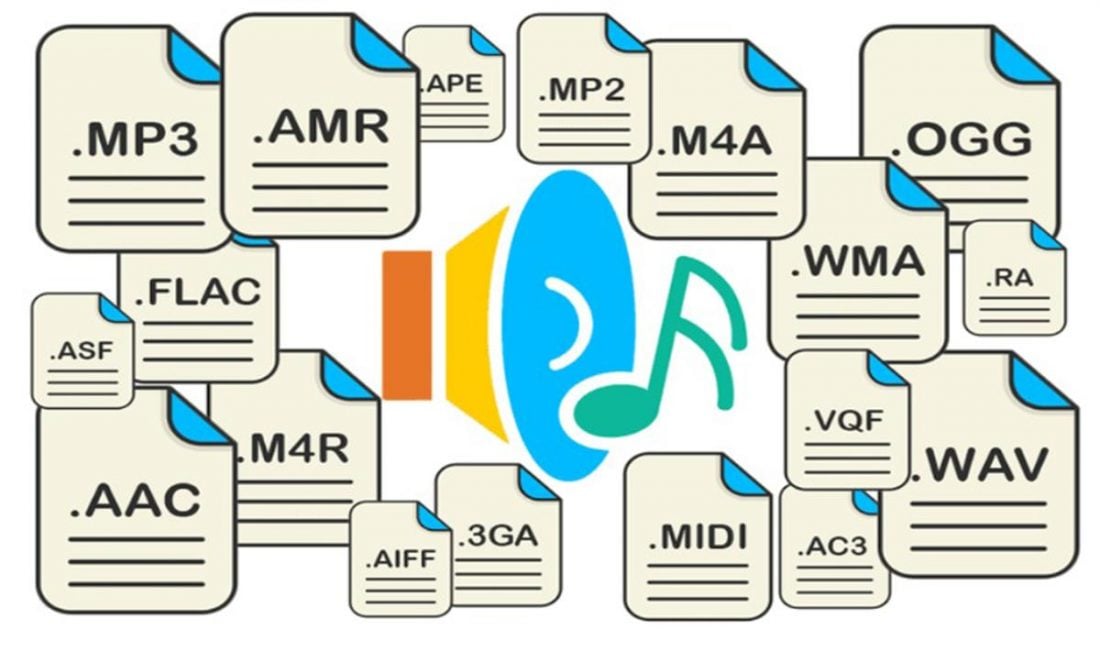
Audio File Formats
Audio File Formats

classic wave

Audio File Formats
Audio File Formats

As the most classic Windows media audio format, the WAVE file is widely used, which uses three parameters to represent sound: the number of sampled bits, the sample rate, and the number of channels.
The channels are divided into mono and stereo, and the sample rates are generally 11025 Hz (11 kHz), 22050 Hz (22 kHz), and 44100 Hz (44 kHz). The capacity occupied by the WAVE file = (sampling frequency × sampling bits × channel) × time/8 (1 byte = 8 bits).

traditional mod

MOD is a wavetable-like music format, but its structure is similar to MIDI, it uses real samples, and the volume is small. In the earlier DOS era, MOD was often used as background music for games. Modern mods can contain many audio tracks in many formats, such as S3M, NST, 669, MTM, XM, IT, XT, and RT.

midi music computer

MIDI is short for Musical Instrument Data Interface. Records the sound played by the instrument digitally (each note is recorded as a number), and then synthesizes these records via FM or wavetable during playback: FM synthesis is the sound of the instrument is simulated by mixing the multi-frequency sounds; wavetable synthesis consists of storing the sound samples of the instrument in the wavetable of the sound card and extracting the sound from the wavetable as you play.

Boss Boss MP3

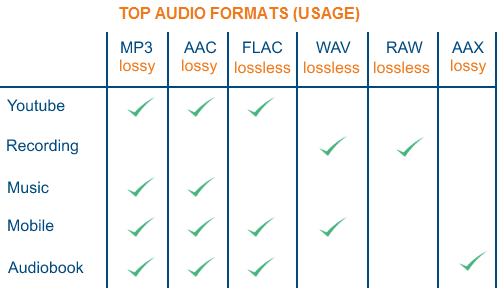
It can be said that MP3 is famous, it uses MPEG Audio Layer 3 technology to compress the sound with a compression ratio of 1:10 or even 1:12, with a sampling rate of 44kHz and a bit rate of 112kbit/s. .
MP3 music is music stored in digital form. If you want to play it, you must have a corresponding digital playback and decoding system. Generally, MP3 digital music is decoded by special software and then restored to a waveform sound signal for playback output. This type of software is called For MP3 players, such as Winamp, etc.

Overlord RA series online

RA, RAM, and RM are Real’s mature network audio formats, using “streaming audio” technology, making them well suited for network streaming. Information such as copyright, singer, producer, mail and song title can be added during production.
RA can be called the supreme lord of multimedia communication on the Internet. It is suitable for streaming on the Internet and is currently the best format for listening to online music online.

VQF with high compression ratio

VQF or TwinVQ is an audio compression technology developed by Nippon Telegraph and Telephone and Yamaha Corporation.
The audio compression rate of VQF is almost twice that of standard MPEG audio and can reach approximately 1:18 or even higher. And popular compression formats like MP3 and RA are usually only around 1:12. But it still won’t affect the sound quality, when VQF compress music at 44kHz-80kbit/s audio sampling rate, its sound quality will be better than 44kHz-128kbit/s MP3, when compress at 44kHz-96kbit/s , the music is close to 44kHz-256kbit/s MP3.

MD minidisc

MD (ie MiniDisc) is a comprehensive portable music format released by SONY in 1992. The compression algorithm it uses is ATRAC technology (the compression ratio is 1:5). MD is divided into Recordable MD (Recordable, with two heads of magnetic head and laser head) and Single Play MD (Prerecorded, only laser head).
The powerful editing function is the strong point of MD. You can quickly select tracks, move tracks, merge, split, delete and edit track titles. It is more personalized than CD and you can have your own MD album at any time. MD products include MD Walkman, MD bedside audio, MD car audio, MD recording deck, MD camera gun and MD driver, etc.


Free Download Mp4Gain
picture


Mp4Gain Main Window
picture


Mp4Gain Features
picture


Free Download Mp4Gain
picture

What is MQA? And why do we need another digital format?

What is MQA? And why do we need another digital format?

MQA

More and more people ask us about MQA: what is it, good or bad, is it necessary or not? Although for most Russian music lovers, these three letters probably say nothing. How is that and what is hidden behind them? We will try to tell you.

MQA

MP3, AAC, ALAC, FLAC, WAV, DSD are just some of the most common digital audio formats today, why do we need another one: MQA?

At the moment, MQA is still quite a niche thing, still a far cry from the status of a generally accepted format, which was (and for many, we admit, is still morally out of date) MP3, but the people and companies behind MQA they have serious ambitions and prospects for the future. they think that MQA is changing the way most of us get digital music right now. For one thing, the technology works right now, it’s backward compatible with existing audio devices, and it can deliver quality that was previously unattainable. But not everything is so simple in the history of MQA. Today we will talk about the main points to understand this topic.

What is MQA?
MQA stands for Master Quality Authenticated – “Confirmed Master Quality”. This is the name of the technology and the codec behind which many patents, licensed technologies and its own philosophy lie. It is also the name of the company that develops and licenses these technologies. MQA was invented within the legendary American company Meridian Audio under the leadership of Bob Stewart, but it was later decided to separate the technology into a separate division, which has such ambitious plans.

Stewart and UK Meridian’s trajectory includes the first digital active loudspeaker, the first audiophile CD player and the first digital surround sound processor. Meridian also invented the MLP (Meridian Lossless Packing) algorithm, which is used for lossless audio compression for DVD-Audio / HD-DVD / Blu-ray.

Meridian announced MQA technology in 2014, with the first public demonstration in Las Vegas at CES 2015. Various digital music providers, hi-fi developers and record companies announced support, including: Pioneer Corporation, Onkyo, Meridian Audio, 7digital, Lindberg Lyd (2L) Mytek and others. Warner Music Group announced that it signed a “long-term license agreement” with MQA at the High End in Munich in May 2016.

In May 2016, the Recording Industry Association of America (RIAA), in partnership with the Recording Academy’s Producers and Engineers Branch, the American Independent Music Association (A2IM), and DEG: The Digital Entertainment Group, announced that the services of MQA music are eligible to use the official logo. “Hi-Res MUSIC” industry.

In January 2017, MQA’s recordings were made available to Tidal “HiFi” subscribers.

In March 2018, MQA launched “Live”, a virtual concert service designed to preserve the original sound quality of live performances.

Why do we need MQA?
Most of the digital music you listen to online or download was not produced by the artist. Of course, we are not referring to the songs and works themselves, but to MP3, AAC or FLAC files. Most of the time they are created by third parties, for example Apple Music or Yandex. Music from studio-quality master files provided by record labels.

It would be nice if all these digital versions were produced according to a certain set of standards, so that each of them is the most accurate representation of the original recording, but the reality is not that simple. It would be nice if artists could listen and approve these versions before they are released. But this doesn’t always happen either.