The Evolution of Digital Audio: From CDs to Streaming Platforms
Digital AudioDigital Audio
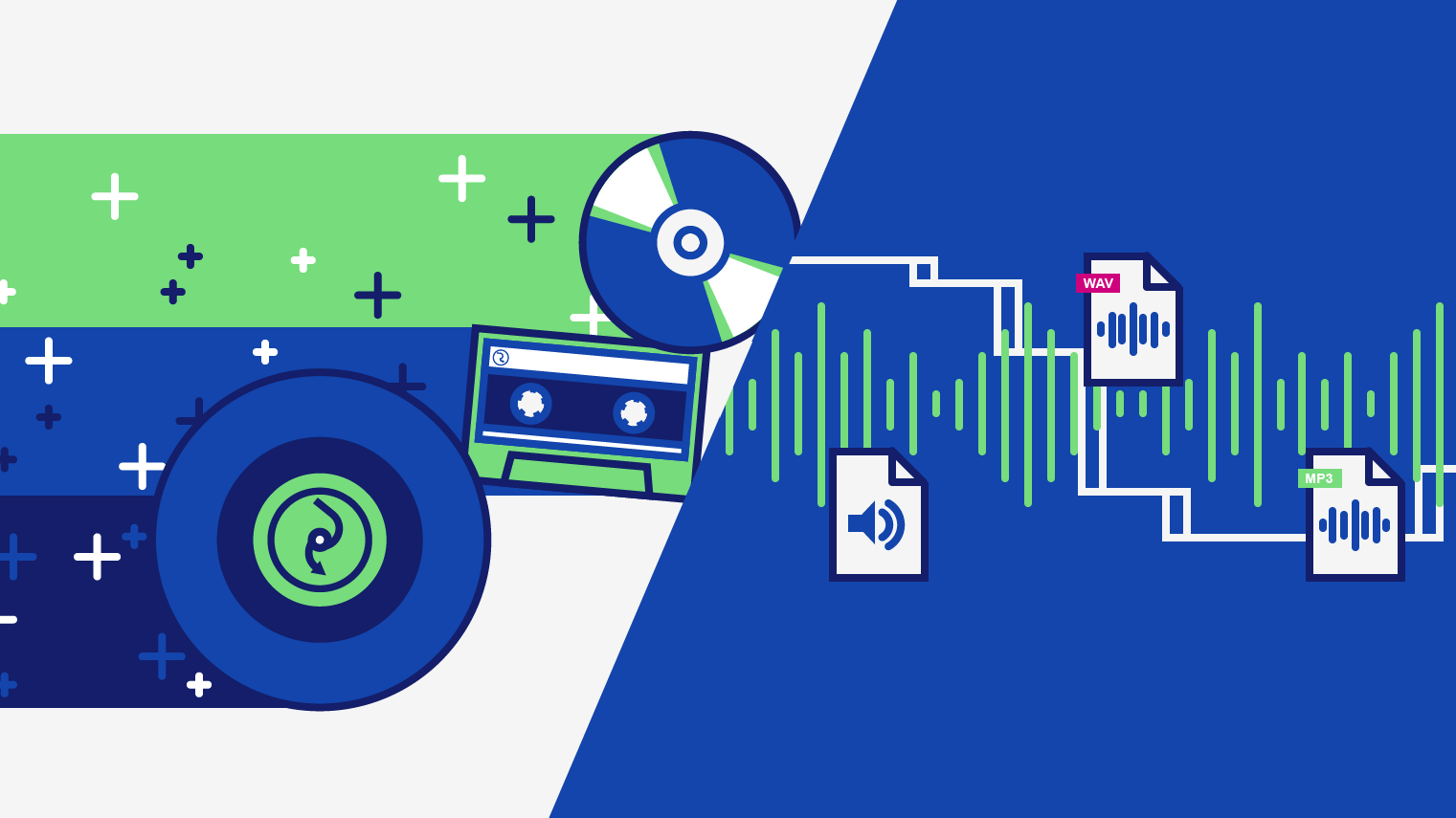
Digital audio has come a long way since its humble beginnings. In the early days, digital audio was stored on cassette tapes and floppy disks, which were both bulky and inconvenient. However, the development of compact discs (CDs) in the 1980s revolutionized the way we listen to music. CDs offered superior sound quality to cassette tapes and were much more durable.
**
The Rise of CDs
The CD quickly became the dominant format for music distribution, and by the early 1990s, it had all but replaced vinyl records. CDs were not only more convenient than cassette tapes, but they also offered better sound quality. This was due to the fact that CDs use a digital format, which means that the sound is stored as a series of numbers. This is in contrast to analog formats, such as vinyl records, which store sound as a continuous wave.
The digital format of CDs also made it possible to create special features, such as bonus tracks and enhanced albums. These features helped to make CDs more appealing to consumers, and they also helped to drive sales.
**
The Rise of Streaming
In the early 2000s, a new technology began to challenge the dominance of CDs: streaming. Streaming allows users to listen to music online, without having to download or purchase any files. This made music more accessible than ever before, and it also helped to drive down the cost of music.
The rise of streaming has had a major impact on the music industry. CD sales have plummeted, and many record labels have been forced to adapt to the new reality. However, streaming has also created new opportunities for artists, as it has made it easier for them to reach a wider audience.
**
The Future of Digital Audio
It is still too early to say what the future of digital audio will hold. However, it is clear that streaming is here to stay. As streaming technology continues to improve, it is likely that it will become even more popular in the years to come.
In addition to streaming, there are also a number of other digital audio formats that are gaining popularity. These include lossless formats, such as FLAC and ALAC, which offer better sound quality than CDs. There are also a number of new technologies that are being developed, such as 3D audio, which could revolutionize the way we experience music.
**
Final words about the evolution of digital audio
The evolution of digital audio has been a fascinating journey. From the humble beginnings of cassette tapes to the cutting-edge technology of today, digital audio has changed the way we listen to music forever. It will be interesting to see what the future holds for this ever-evolving technology.
I hope this article has given you a better understanding of the evolution of digital audio.
Digital audio is a type of audio recording that uses digital signals to represent sound. This is in contrast to analog audio, which uses continuous waveforms to represent sound.
The Benefits of Digital Audio
Higher Fidelity
Digital audio can be recorded and reproduced with a higher degree of fidelity than analog audio. This means that digital audio can sound more realistic and accurate.
For example, a CD-quality audio file has a sample rate of 44,100 samples per second. This means that the sound is sampled 44,100 times every second. The higher the sample rate, the more accurate the representation of the sound wave.
Efficiency
Digital audio files are more efficient than analog audio files. This means that they take up less space and can be stored and transmitted more easily.
For example, a CD-quality audio file takes up about 650MB of space. This is a relatively small amount of space, especially considering the high quality of the audio.
Durability
Digital audio files are more durable than analog audio recordings. They are less susceptible to damage from scratches, dust, and other factors.
This is because digital audio files are stored as a series of numbers. These numbers are not affected by physical damage to the media on which they are stored.
Flexibility
Digital audio files can be easily edited and manipulated. This makes them ideal for a variety of applications, such as music production, sound design, and video editing.
For example, digital audio files can be easily trimmed, edited, and mixed. This makes it possible to create new and innovative sounds.
The Future of Digital Audio
The future of digital audio is bright. Digital audio is becoming increasingly popular, and it is being used in a wider range of applications.
As digital audio technology continues to develop, we can expect to see even higher quality audio with even greater flexibility. Digital audio is the future of audio, and it is sure to play an important role in our lives for many years to come.
Final Words about the Advantages of Digital Audio
Digital audio offers a number of advantages over analog audio. These advantages include higher fidelity, efficiency, durability, and flexibility. As digital audio technology continues to develop, we can expect to see even greater advantages in the future.
If you are looking for the best possible audio quality, then digital audio is the way to go. Digital audio files are also more efficient and durable than analog audio recordings. And, digital audio files can be easily edited and manipulated, making them ideal for a variety of applications.
So, if you are looking for the best possible audio experience, then digital audio is the way to go.
The World of Digital Audio: Codecs, Formats, and Bitrates
Digital audioDigital audio
Digital audio is a broad term that encompasses a wide variety of audio formats, codecs, and bitrates. In this article, we will take a closer look at these three key concepts and how they impact the quality of digital audio.
Codecs
A codec is a device or program that compresses and decompresses digital data. In the context of digital audio, a codec is used to reduce the size of an audio file without sacrificing too much quality. There are many different codecs available, each with its own strengths and weaknesses. Some of the most popular codecs for digital audio include:
MP3: MP3 is a lossy codec, which means that some of the original audio data is removed during the compression process. This results in a smaller file size, but it also means that the quality of the audio may be slightly reduced.
AAC: AAC is another lossy codec that is similar to MP3. However, AAC is generally considered to be a higher quality codec than MP3.
FLAC: FLAC is a lossless codec, which means that no audio data is removed during the compression process. This results in a larger file size, but it also means that the quality of the audio is preserved.
Formats
A format is a specific way of storing digital audio data. There are many different audio formats available, each with its own advantages and disadvantages. Some of the most popular audio formats include:
WAV: WAV is a lossless format that is commonly used for storing uncompressed audio data. WAV files are typically very large, but they offer the highest possible audio quality.
MP3: MP3 is a lossy format that is commonly used for storing compressed audio data. MP3 files are much smaller than WAV files, but they may not offer the same level of audio quality.
AAC: AAC is another lossy format that is commonly used for storing compressed audio data. AAC files are typically smaller than MP3 files, and they may offer better audio quality.
FLAC: FLAC is a lossless format that is commonly used for storing compressed audio data. FLAC files are typically smaller than WAV files, but they offer the same level of audio quality.
Bitrates
A bitrate is a measure of the amount of data that is used to represent a digital audio signal. The higher the bitrate, the more data is used, and the higher the quality of the audio. However, higher bitrates also result in larger file sizes.
The optimal bitrate for a digital audio file depends on a number of factors, including the type of audio, the intended use of the file, and the capabilities of the playback device. For example, a high-quality audio file that is intended to be played on a high-end audio system may require a bitrate of 320 kbps or higher. However, an audio file that is intended to be played on a mobile device may only require a bitrate of 128 kbps or lower.
Conclusion
Digital audio is a complex topic, but it is important to understand the basics if you want to get the most out of your digital audio files. By understanding codecs, formats, and bitrates, you can choose the right audio files for your needs and ensure that you are always getting the best possible audio quality.
Here are some additional tips for choosing and using digital audio files:
Choose the right codec for your needs. If you need the highest possible audio quality, choose a lossless codec such as FLAC. If you are looking for a smaller file size, choose a lossy codec such as MP3 or AAC.
Choose the right format for your needs. If you need to store uncompressed audio data, choose a lossless format such as WAV. If you are looking for a smaller file size, choose a lossy format such as MP3 or AAC.
Choose the right bitrate for your needs. The higher the bitrate, the higher the quality of the audio. However, higher bitrates also result in larger file sizes.
Use a high-quality audio player. A good audio player will be able to reproduce the full range of frequencies and dynamics in your digital audio files.
Listen to your audio files in a quiet environment. This will help you to appreciate the full quality of the audio.
Audio signal processing is the process of manipulating digital audio signals. This can be done for a variety of purposes, such as noise reduction, equalization, and compression.
Here are some of the most common digital audio signal processing techniques:
Noise reduction: This technique is used to remove unwanted noise from an audio signal. This can be done using a variety of methods, such as averaging, filtering, and time-domain adaptive filtering.
Equalization: This technique is used to adjust the frequency response of an audio signal. This can be done to improve the sound quality of an audio signal, or to match the frequency response of a speaker system.
Compression: This technique is used to reduce the dynamic range of an audio signal. This can be done to make an audio signal louder, or to save space when storing an audio file.
Digital audio signal processing is a complex and ever-evolving field. However, the basic principles are relatively simple to understand.
Here are some of the most important concepts in digital audio signal processing:
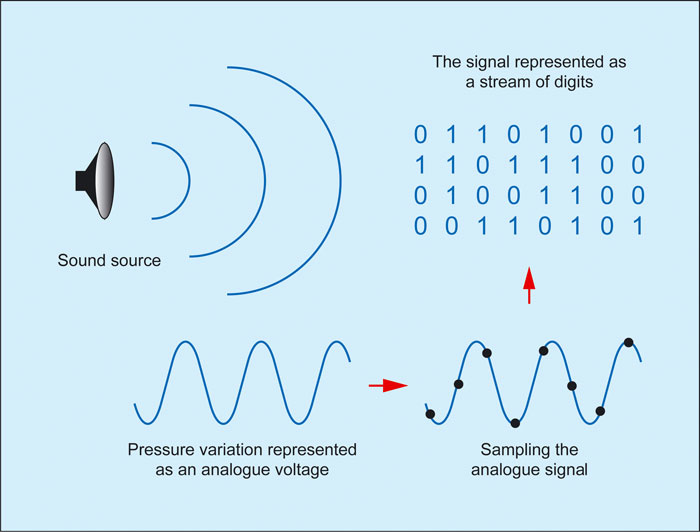
Sampling: This is the process of converting an analog audio signal into a digital signal. This is done by taking a series of measurements of the analog signal at regular intervals.
Quantization: This is the process of rounding the digital values to a finite number of bits. This is done to reduce the amount of data that needs to be stored or transmitted.
Filtering: This is the process of removing unwanted components from an audio signal. This can be done using a variety of methods, such as FIR filters, IIR filters, and wavelet transforms.
Enhancement: This is the process of improving the quality of an audio signal. This can be done using a variety of methods, such as noise reduction, equalization, and compression.
Digital audio signal processing is a powerful tool that can be used to improve the sound quality of audio recordings. It can also be used to create new and exciting sounds.
If you are interested in learning more about digital audio signal processing, there are many resources available online and in libraries.
Frequently Asked Questions
Here are some of the most frequently asked questions about digital audio signal processing:
What is the difference between analog and digital audio?
Analog audio is a continuous signal, while digital audio is a discrete signal. This means that analog audio values can take on any value within a given range, while digital audio values can only take on a finite number of values.
Why is digital audio better than analog audio?
Digital audio is not necessarily better than analog audio. However, digital audio has some advantages over analog audio, such as:
It is less susceptible to noise.
It can be easily stored and transmitted.
It can be easily manipulated using digital audio signal processing techniques.
What are the different types of digital audio formats?
There are many different types of digital audio formats. Some of the most common formats include:
WAV: This is a lossless format that is commonly used for storing uncompressed audio.
MP3: This is a lossy format that is commonly used for storing compressed audio.
AAC: This is another lossy format that is commonly used for storing compressed audio.
FLAC: This is a lossless format that is commonly used for storing high-quality audio.
What are the different types of digital audio signal processing techniques?
There are many different types of digital audio signal processing techniques. Some of the most common techniques include:
Noise reduction: This technique is used to remove unwanted noise from an audio signal.
Equalization: This technique is used to adjust the frequency response of an audio signal.
Compression: This technique is used to reduce the dynamic range of an audio signal.
Enhancement: This is the process of improving the quality of an audio signal.
Conclusion
Digital audio signal processing is a powerful tool that can be used to improve the sound quality of audio recordings. It can also be used to create new and exciting sounds.
If you are interested in learning more about digital audio signal processing, there are many resources available online and in libraries.
Have you ever wondered how digital audio works? How can a computer store and play back sound, which is a continuous wave? The answer lies in digital audio, which is a way of representing sound as data.
In digital audio, sound is sampled at regular intervals. This means that the computer takes a snapshot of the sound wave at a certain point in time, and then stores that snapshot as data. The more frequently the sound is sampled, the more accurate the digital representation of the sound will be.
Once the sound has been sampled, it can be stored on a computer or other digital device. When the sound is played back, the computer reads the data and uses it to recreate the original sound wave.
Digital audio has many advantages over analog audio, which is the traditional way of storing and playing back sound. Digital audio is more accurate, it can be stored in smaller files, and it is less susceptible to noise and distortion.
Digital audio is also more versatile than analog audio. It can be easily edited, mixed, and mastered. It can also be stored and played back on a variety of devices, including computers, smartphones, and MP3 players.
How Digital Audio Works
Here is a more detailed explanation of how digital audio works:
The sound wave is first converted into an electrical signal. This is done by a microphone.
The electrical signal is then sampled at regular intervals. This is done by an analog-to-digital converter (ADC).
The samples are then stored as data. This can be done on a computer, a hard drive, or a CD.
When the sound is played back, the data is read from the storage device and converted back into an electrical signal. This is done by a digital-to-analog converter (DAC).
The electrical signal is then amplified and sent to a speaker.
The speaker converts the electrical signal back into sound waves, which are then audible to the listener.
The Benefits of Digital Audio
There are many benefits to using digital audio. Some of the most important benefits include:
Accuracy: Digital audio is more accurate than analog audio. This is because the sound is sampled at regular intervals, which ensures that the data is a true representation of the original sound wave.
Size: Digital audio files are much smaller than analog audio files. This is because the data is stored in a compressed format.
Versatility: Digital audio is more versatile than analog audio. It can be easily edited, mixed, and mastered. It can also be stored and played back on a variety of devices.
The Future of Digital Audio
Digital audio is the future of sound recording and playback. It is more accurate, smaller, and more versatile than analog audio. As technology continues to evolve, digital audio will become even more popular.
Conclusion
Digital audio is a powerful technology that has revolutionized the way we listen to music. It is more accurate, smaller, and more versatile than analog audio. As technology continues to evolve, digital audio will become even more popular.
As a music producer, I have always been fascinated by the technical aspects of digital audio. The technology behind digital audio has come a long way since its inception, and it continues to evolve at a rapid pace. One of the most significant advancements in digital audio technology is the use of digital signal processing (DSP) algorithms. These algorithms allow for the manipulation of audio signals in real-time, enabling producers to create complex soundscapes and effects.
In his book, “The Art of Digital Audio,” John Watkinson writes, “DSP algorithms are the key to the power of digital audio. They allow us to do things that were previously impossible with analog audio.” I couldn’t agree more. DSP algorithms have revolutionized the way we produce and consume music, and they continue to push the boundaries of what is possible.
Digital Audio Formats
When it comes to digital audio, there are a variety of formats to choose from. Each format has its own unique characteristics, and choosing the right one can make a significant difference in the quality of your audio. Some of the most popular digital audio formats include MP3, WAV, and FLAC.
Personally, I prefer to work with WAV files. They offer the highest quality audio and are compatible with most digital audio workstations (DAWs). However, they do take up a lot of storage space, so it’s essential to have a reliable backup system in place.
Digital Audio Editing
Digital audio editing is an essential part of the music production process. It allows producers to manipulate audio files in a variety of ways, from simple cuts and fades to complex time-stretching and pitch-shifting. One of the most popular digital audio editing tools is Pro Tools, which is widely used in the music industry.
In my experience, the key to successful digital audio editing is to have a clear vision of what you want to achieve. It’s easy to get lost in the endless possibilities of digital audio editing, so it’s essential to stay focused on your goals. As the famous producer Quincy Jones once said, “The most important thing is to have a vision for your music – one that is unique and true to who you are as an artist.”
Digital Audio Processing
Digital Audio Compression
Digital audio compression is a process that reduces the size of audio files without significantly affecting their quality. Compression is essential for streaming services like Spotify and Apple Music, which need to deliver high-quality audio over the internet. However, compression can also have a negative impact on the quality of the audio, particularly if it’s overdone.
In my opinion, it’s essential to strike a balance between file size and audio quality when compressing digital audio. As the saying goes, “less is more.” It’s better to have a smaller file size with slightly lower audio quality than a massive file size with no noticeable improvement in quality.
Digital Audio Quality
Digital audio quality is a topic that is often debated among music producers and audiophiles. Some argue that digital audio can never match the warmth and depth of analog audio, while others believe that digital audio has surpassed analog in terms of quality.
In my experience, digital audio quality has come a long way in recent years. With high-resolution audio formats like FLAC and MQA, it’s now possible to achieve audio quality that rivals or even surpasses analog. However, it’s essential to have a high-quality playback system to fully appreciate the nuances of digital audio.
Digital Audio Production
Digital audio production is the process of creating music using digital tools and technology. It’s a complex and challenging process that requires a combination of technical skill and artistic vision. One of the most critical aspects of digital audio production is the ability to collaborate effectively with other musicians and producers.
In my experience, the key to successful digital audio production is to stay organized and focused. It’s easy to get lost in the endless possibilities of digital audio, so it’s essential to have a clear plan and timeline for your project. As the famous producer Rick Rubin once said, “The most important thing is to capture the essence of the song and the artist’s performance.”
Final Words:
In conclusion, the technical aspects of digital audio are complex and ever-evolving. From digital audio technology to digital audio production, there are many factors to consider when working with digital audio. However, with the right tools and techniques, it’s possible to achieve high-quality audio that rivals or even surpasses analog. As a music producer, I’m excited to see where the future of digital audio will take us.
digital audio, digital signal processing, audio compression, audio quality, audio editing, audio production, music production, digital audio technology, digital audio formats, high-resolution audio, FLAC, MP3, WAV, Pro Tools, audio playback, audio collaboration, audio mixing, audio mastering, audio plugins, audio effects, audio engineering, audio equipment, audio recording, audio software, audio hardware, audio interfaces, audio cables, audio troubleshooting, audio restoration, audio normalization, audio equalization, audio dynamics, audio synthesis
Digital audio is a technology that allows us to record, store, and reproduce sound in a digital format. Unlike analog audio, which is recorded and stored as a continuous wave, digital audio is converted into a series of numbers that represent the amplitude of the sound wave at different points in time. These numbers are then stored as digital data, which can be played back using a digital-to-analog converter (DAC).
Digital Audio Technology
One of the key technologies used in digital audio is audio encoding. This is the process of converting analog audio signals into digital data that can be stored and manipulated. There are several different audio encoding formats, including MP3, AAC, and FLAC. Each format has its own advantages and disadvantages, depending on factors such as sound quality, file size, and compatibility with different devices.
Another important technology used in digital audio is audio compression. This is the process of reducing the size of digital audio files by removing redundant or unnecessary data. There are two main types of audio compression: lossy compression and lossless compression. Lossy compression, as the name suggests, involves removing data from the audio file that is deemed to be less important, resulting in a smaller file size but also a loss of some of the original sound quality. Lossless compression, on the other hand, preserves all of the original data but still reduces the file size.
As author David Mellor explains in his book “Digital Audio Explained,” “digital audio technology has made it possible to record and manipulate sound with an unprecedented level of accuracy and precision.” This has led to a range of new applications for audio, including music production, sound design, and audio post-production for film and television.
Digital Audio File Types
There are several different types of digital audio files, each with its own file extension and format. Some of the most common file types include MP3, WAV, AIFF, and FLAC. Each format has its own strengths and weaknesses, depending on factors such as sound quality, file size, and compatibility with different devices.
For example, MP3 is a popular format for music files because it is small in size and can be played on most devices. However, it uses lossy compression, which means that some of the original audio data is lost during the encoding process. WAV, on the other hand, is a lossless format that preserves all of the original audio data, but is larger in size and may not be compatible with all devices.
Advantages of Digital Audio
One of the main advantages of digital audio is that it allows for a high level of precision and control over the sound. This makes it possible to manipulate audio in ways that were not possible with analog audio, such as applying digital effects and processing, editing audio with a high degree of precision, and adjusting the levels of different tracks in a mix.
Digital audio also allows for easy sharing and distribution of audio files, since they can be stored and transferred as digital data. This has led to the development of online music stores, streaming services, and other digital audio platforms that have transformed the way we listen to and consume music.
As author Robert A. Turnbaugh explains in his book “Introduction to Digital Audio,” “digital audio has revolutionized the way we create, produce, and distribute sound.” Whether you are a professional audio engineer or a casual listener, digital audio has opened up new possibilities for how we interact with sound.
Conclusion:
In conclusion, digital audio is a fascinating and complex topic that involves many technical aspects. Understanding the basics of digital audio, such as sampling rate, bit depth, and file formats, can help you get the most out of your digital audio experience. It can also help you troubleshoot any issues you might encounter with your digital audio files.
We hope this article has been informative and helpful in providing a basic understanding of digital audio. Remember, the key to optimizing your digital audio experience is to keep learning and experimenting with different techniques and tools.
As musician and audio engineer Steve Albini once said, “The only way to learn how to make records is to be making records.” So get out there and start exploring the world of digital audio, and don’t be afraid to try new things.
Thank you for reading this article, and we hope you found it helpful. If you have any questions or comments, feel free to leave them below. And remember, if you’re looking for a reliable and effective audio normalization and conversion tool, give MP4Gain a try.
Digital Audio Encoding is the process of converting an analog audio signal into a digital format, which can be stored, processed, and transmitted electronically. It involves the use of an Analog-to-Digital Converter (ADC) to sample and quantize the analog audio waveform into a series of binary numbers that can be interpreted by a digital device. The resulting digital audio data can then be compressed, processed, and transmitted over various digital platforms, such as the internet, CDs, DVDs, and other digital storage devices.
The Importance of Digital Audio Encoding
Digital Audio Encoding has revolutionized the way we consume and produce audio content. It has made it possible to store, edit, and transmit high-quality audio content with minimal loss of quality. Some of the benefits of digital audio encoding include:
Improved sound quality: Digital audio encoding allows for high-quality audio content that is free from the distortions and noise associated with analog audio.
Easy storage and transfer: Digital audio files can be easily stored and transferred over various digital platforms with minimal loss of quality.
Efficient compression: Digital audio files can be compressed into smaller file sizes without significant loss of quality, making it easier to store and transfer large audio files.
Greater accessibility: Digital audio content can be easily accessed over various digital platforms, including the internet, mobile devices, and other digital devices.
The Digital Audio Encoding Process
The Digital Audio Encoding process involves several steps, which include:
Sampling: The analog audio waveform is sampled at regular intervals using an Analog-to-Digital Converter (ADC).
Quantization: The sampled waveform is quantized, i.e., each sample is assigned a binary number that represents its amplitude value.
Encoding: The quantized samples are encoded into a digital format, such as WAV, MP3, or AAC.
Compression: The encoded digital audio file can be compressed using lossy or lossless compression algorithms to reduce its file size.
Lossy vs. Lossless Audio Compression
Lossy and lossless audio compression are two types of compression algorithms used in digital audio encoding. Lossy compression algorithms compress audio files by removing data that is deemed unnecessary or redundant. This results in a smaller file size but may result in a loss of audio quality. Lossless compression algorithms, on the other hand, compress audio files without any loss of quality. This results in a larger file size but maintains the original audio quality.
Bitrate and its Importance in Digital Audio Encoding
Bitrate is a measure of the amount of data used to represent each second of digital audio. It is measured in bits per second (bps) or kilobits per second (kbps). The bitrate of a digital audio file has a significant impact on its quality and file size. Higher bitrates result in higher quality audio files but also larger file sizes. Lower bitrates result in smaller file sizes but may result in a loss of audio quality.
Common Digital Audio Formats
There are several digital audio formats used in digital audio encoding, including:
WAV: WAV is a lossless audio format that is commonly used for storing high-quality audio content.
MP3: MP3 is a lossy audio format that is commonly used for compressing and storing digital audio files for playback on various digital devices.
AAC: AAC is a lossy audio format that is commonly used for compressing and streaming digital audio content over the internet.
FLAC: FLAC is a lossless audio format that is commonly used for storing high-quality audio content, similar to WAV.
Challenges in Digital Audio Encoding
Despite the many benefits of digital audio encoding, there are several challenges that must be addressed to ensure optimal audio quality. These challenges include:
Sampling rate limitations: The sampling rate of an ADC can affect the accuracy of the digital audio representation. Higher sampling rates generally result in higher accuracy, but also require larger file sizes.
Bit depth limitations: The bit depth of an ADC can affect the dynamic range and noise floor of the digital audio representation. Higher bit depths generally result in higher accuracy, but also require larger file sizes.
Compression artifacts: Lossy compression algorithms can introduce compression artifacts, such as distortion and noise, which can degrade audio quality.
Future Developments in Digital Audio Encoding
Digital Audio Encoding is an ever-evolving field, with ongoing developments aimed at improving audio quality, reducing file sizes, and enhancing accessibility. Some of the latest developments include:
High-resolution audio: High-resolution audio formats, such as MQA and DSD, offer even higher audio quality than standard digital audio formats.
Immersive audio: Immersive audio formats, such as Dolby Atmos and DTS:X, offer a more immersive listening experience by incorporating height and surround sound elements.
Object-based audio: Object-based audio formats, such as MPEG-H 3D Audio, offer greater flexibility in audio content creation and delivery by enabling individual audio objects to be separately mixed and streamed.
FAQs
1. What is digital audio encoding?
Digital audio encoding is the process of converting an analog audio signal into a digital format, which can be stored, processed, and transmitted electronically.
2. Why is digital audio encoding important?
Digital audio encoding has revolutionized the way we consume and produce audio content by providing improved sound quality, easy storage and transfer, efficient compression, and greater accessibility.
3. What are some common digital audio formats?
Some common digital audio formats include WAV, MP3, AAC, and FLAC.
4. What is the difference between lossy and lossless audio compression?
Lossy compression algorithms compress audio files by removing data that is deemed unnecessary or redundant, resulting in a smaller file size but may result in a loss of audio quality. Lossless compression algorithms compress audio files without any loss of quality, resulting in a larger file size but maintaining the original audio quality.
5. What is bitrate and why is it important in digital audio encoding?
Bitrate is a measure of the amount of data used to represent each second of digital audio. It is important in digital audio encoding because it has a significant impact on audio quality and file size.
6. What are some challenges in digital audio encoding?
Some challenges in digital audio encoding include sampling rate limitations, bit depth limitations, and compression artifacts.
7. What are some future developments in digital audio encoding?
Some future developments in digital audio encoding include high-resolution audio, immersive audio, and object-based audio.
8. What is the difference between a lossy and lossless audio format?
Lossy audio formats use compression algorithms to reduce file size, sacrificing some audio quality in the process. Lossless audio formats, on the other hand, use compression algorithms that do not compromise audio quality, resulting in larger file sizes.
9. What is a sampling rate and how does it affect audio quality?
A sampling rate is the number of times per second that an analog audio signal is measured and converted into a digital signal. The higher the sampling rate, the more accurately the digital signal represents the original analog signal, resulting in higher audio quality. However, higher sampling rates also require larger file sizes and more processing power.
10. What is bit depth and how does it affect audio quality?
Bit depth refers to the number of bits used to represent each audio sample in a digital audio file. A higher bit depth allows for a greater dynamic range and lower noise floor, resulting in higher audio quality. However, higher bit depths also require larger file sizes and more processing power.
11. What is lossless compression?
Lossless compression is a compression algorithm that reduces the size of a digital audio file without sacrificing any audio quality. This is achieved by identifying and removing redundant or unnecessary data in the audio file.
12. What is immersive audio and how does it enhance the listening experience?
Immersive audio is an audio format that uses spatial sound technology to create a more immersive listening experience. This is achieved by incorporating height and surround sound elements, which create a more three-dimensional soundstage. This allows for a more realistic and engaging listening experience, especially when combined with a surround sound system.
Conclusion
Digital audio encoding has revolutionized the way we produce and consume audio content, providing improved sound quality, easy storage and transfer, efficient compression, and greater accessibility. While there are some challenges to overcome, ongoing developments in high-resolution, immersive, and object-based audio formats promise to further enhance the digital audio experience.
References
Bosi, M., & Goldberg, R. (2012). Introduction to digital audio coding and standards. Springer Science & Business Media.
Thompson, J. (2013). Understanding digital audio. Focal Press.
Digital audio is a method of storing audio data on a computer or digital device. Audio data is essentially a collection of sound waves, and to store it digitally, we need to convert these sound waves into a series of numbers that a computer can understand.
What is Digital Audio?
To do this, we use a process called “analog-to-digital conversion”. Analog audio signals are transformed into digital data by measuring the sound wave at regular intervals and assigning each measurement a numerical value. The process of measuring sound waves is called “sampling”, and the numerical values assigned to each sample are known as “bit depth”.
In essence, the audio signal is converted into a series of binary digits (1s and 0s) that can be stored on a computer. This allows us to manipulate, edit, and reproduce audio data in various ways.
How is Audio Converted to Digital Audio?
As mentioned earlier, audio is converted to digital audio using a process called “sampling”. Sampling involves taking snapshots of the audio signal at regular intervals, known as the “sampling rate”. The more samples that are taken per second, the more accurately the original sound can be reconstructed.
Imagine taking a picture of a person running. If you take one picture per second, you’ll see the person moving, but the motion won’t be smooth. If you take 10 pictures per second, the motion will be smoother, and if you take 60 pictures per second, the motion will be very smooth.
The same principle applies to digital audio. By taking many samples per second, the original sound can be accurately reconstructed. The number of samples taken per second is called the “sampling rate”, and it’s usually measured in Hertz (Hz). For example, a typical sampling rate for CD-quality audio is 44.1kHz, which means that 44,100 samples are taken per second.
Once the audio has been sampled, each sample is converted into a digital number. The number represents the amplitude of the sound wave at that particular moment. The amplitude of a sound wave is the height of the wave, and it determines how loud or quiet the sound is.
The digital numbers obtained from each sample are stored as binary data, which can be easily stored, edited, and reproduced on a computer.
What is an MP3?
An MP3 is a type of digital audio file that uses a technique called “lossy compression”. This means that some of the data in the original audio file is removed in order to reduce the file size. The removed data is typically inaudible to the human ear, so the overall quality of the audio is not significantly affected.
MP3s achieve this compression by using a technique called “perceptual coding”. This involves analyzing the audio signal and identifying the parts that are less important to the overall sound quality. These parts are then removed, leaving only the most important parts of the audio signal intact.
For example, let’s say you have a song that is 4 minutes long and takes up 40MB of storage space on your computer. If you were to convert that song into an MP3 file, the resulting file might only be 4MB in size, while still maintaining a high level of audio quality.
MP3 files are a popular choice for digital audio because they take up less space than other audio formats, making them easier to store and share. They’re also supported by most digital audio players and software, making them a versatile and widely used format.
How are Sound Waves Converted into Digital Numbers?
As we mentioned earlier, sound waves are converted into digital numbers using a process called “analog-to-digital conversion”. This process involves several steps:
Sampling: The analog audio signal is measured at regular intervals, known as the sampling rate. Each sample is a snapshot of the audio signal at that particular moment.
Quantization: Each sample is assigned a numerical value that represents the amplitude of the sound wave at that moment. This is done using a process called quantization, which assigns a specific digital value to each sample.
Encoding: The digital values obtained from quantization are then converted into binary data. This is done using a process called encoding, which converts each digital value into a series of 1s and 0s.
Compression: Depending on the file format being used, the digital audio data may be compressed in order to reduce its file size. Lossy compression, as we discussed earlier, involves removing some of the data from the original audio file to reduce its size, while maintaining a high level of audio quality. Lossless compression, on the other hand, compresses the file size without sacrificing any data or quality.
Once the audio has been converted into digital data, it can be easily manipulated, edited, and reproduced on a computer or digital device. This allows us to do things like change the volume, apply special effects, and even create entirely new compositions using existing audio samples.
In summary, digital audio is a way of storing and manipulating audio data using a series of numbers that a computer can understand. Analog-to-digital conversion is the process of converting sound waves into digital data, which involves sampling, quantization, encoding, and compression. MP3s are a popular type of digital audio file that use lossy compression to reduce file size, while maintaining a high level of audio quality.
Digital sound is nothing more than a combination of numbers. With a certain algorithm, sound, such as air pressure, is converted into data streams and encoded for further processing and playback. Depending on the algorithm used, the music file has one format or another, one or another extension.
Remember that along with digital sound, there is analog sound, which is represented by a continuous electrical signal that reflects the change in the sound wave. The analog to digital sound conversion is a setting of the numerical value of the amplitude at a given time with a given density of values. Consequently, the more values that are recorded, the more reliable and accurate the image of the digitized sound fragment is recreated. With such digitization, very voluminous data matrices emerge that, depending on the format used, differ in the sound quality / volume ratio of the final file.
Perhaps the main advantage of digital audio over analog is the ability to store and copy data indefinitely without losing the original quality (whereas when copying from one analog medium to another, a decrease in recording quality is quite noticeable).
The most widespread and popular digital audio format today is MP3 (MPEG Layer 3). It was developed, after a series of intermediate formats and investigations, started in 1987, by the Fraunhofer Institute in Germany.
The developers of the format were faced with the task of simplifying and reducing the cost of shipping long musical fragments. As you know, one minute of a stereo signal from a CD (16 bit, 44.1 kHz sample rate) takes up about ten megabytes of memory. At the same time, unlike text or graphic files, the audio signal cannot be compressed without loss of quality. Thus, modem transmission of an uncompressed composition from an audio CD lasting 3 minutes at a data transfer rate of, say, 24 kbps will take several hours. Scientists at the Fraunhofer Institute managed to achieve multiple file size compression: on average, one minute of a compressed audio signal in MP3 format takes about 1 megabyte. The principle of compression is based on the elimination of “unnecessary” sounds from the music file, to which the human ear is immune, or that duplicate each other.
The main factor that determines the relationship between file size and sound quality within a given format is the bit rate. Bit rate is an indicator of how much information a second of sound encodes. The higher it is, the less distortion and the closer the encoded composition is to the original. The most common on the Internet are compositions with 128 and 192 Kbps bitrates. The maximum bitrate supported by programs and devices that work with MP3 is 320 Kbps. In practice, only an expert or a professional who works with sound can notice the differences between an MP3 file with a 320 bit rate.
To optimize the size of MP3 music files while maintaining decent quality, a variable bit rate (abbreviation VBR – variable bit rate) is used. In this case, the encoding program divides the file into fragments of different spectral saturation and encodes them with a suitable bit rate. Most modern MP3 players support variable bit rate playback. A significant advantage of MP3 files is that they can contain the name of the artist, the name of the track and the album, the year of its release, etc. The set of this data is called ID3 tags. Most modern gamers can read and display them on the screen.
In 2001, Swedish Coding Technologies and Thomson Multimedia developed the MP3 Pro codec. It is MP3-based and as a result is fully MP3 backward compatible and only partially forward compatible. It uses SBR (Spectral Band Replication) technology, so the codec provides good quality at low bit rates. However, the encoding quality at medium to high bit rates is inferior to that of most other codecs. For this reason, this format is mainly used for broadcasts on the Internet and demonstrations of fragments of new musical compositions.
Another type of MP3 was the development of MP3 Surround, recently introduced by the creators of MP3: the Fraunhofer Institute. This format repeats all the characteristics of multichannel sound, while still being compatible with standard stereo MP3: information describing the spatial characteristics of the sound is recorded on an additional track. By playing files of this format on special equipment capable of reading this track, you can obtain surround sound that conforms to the Surround 5.1 standard.