Digital Audio Processing

Digital Audio Processing

Digital Audio Processing

Digital Audio Processing

Digital Audio Processing

In the world of audio technology, Digital Audio Processing stands as a fundamental pillar, shaping the way we interact with sound. From music production to telecommunications, this versatile field plays a crucial role in delivering high-quality audio experiences to users worldwide. In this article, we delve into the depths of Digital Audio Processing, exploring its principles, applications, and the innovative technologies driving its evolution.

The Fundamentals of Digital Audio Processing

Digital Audio Processing, in its essence, revolves around transforming analog audio signals into digital data, enabling efficient storage, manipulation, and transmission. It involves the use of mathematical algorithms to convert continuous audio waveforms into discrete digital samples. These samples can then be processed and restored back to analog signals at the receiving end, providing a seamless auditory experience.

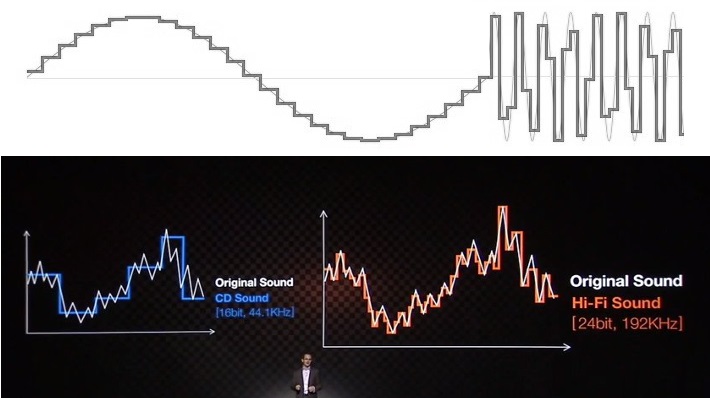
One of the essential concepts in Digital Audio Processing is the sampling rate, which determines the number of samples taken per second to represent the analog signal accurately. A higher sampling rate results in more precise audio reproduction but demands increased data storage and processing capabilities. Conversely, lower sampling rates may lead to a loss of audio fidelity.

“The science of Digital Audio Processing brings music to life, capturing its essence in a string of zeros and ones.” – Sound Engineering: A Journey into the World of Sound

Applications in Music Production

When it comes to the creation and production of music, Digital Audio Processing has revolutionized the entire landscape. In modern recording studios, analog audio equipment has largely been replaced by digital audio workstations (DAWs), allowing musicians and producers to manipulate sound with unprecedented flexibility.

Through the use of Digital Signal Processing (DSP) algorithms, artists can apply various effects, such as reverb, delay, and equalization, to their recordings. Additionally, pitch correction and time-stretching tools have become commonplace, helping achieve flawless performances. This digital revolution has democratized music production, empowering artists to bring their creative visions to life without the need for extravagant studio setups.

“In the digital realm, the possibilities are endless. Every musician now has the power to be a producer, engineer, and composer rolled into one.” – The Digital Audio Handbook

Enhancing Communication with Digital Audio Processing

Beyond music, Digital Audio Processing plays a critical role in enhancing communication across various industries. Telecommunications heavily rely on efficient audio processing techniques to ensure clear voice calls and seamless video conferences. Noise reduction algorithms help eliminate background disturbances, while echo cancellation ensures smooth and echo-free conversations.

Moreover, voice recognition systems, powered by advanced Digital Audio Processing, have become integral to virtual assistants and smart devices. These systems employ techniques like speech-to-text conversion and natural language processing to interpret and respond to user commands accurately. As a result, the way we interact with technology has evolved, making it more intuitive and user-friendly.

“The future of communication lies in harnessing the power of Digital Audio Processing, enabling crystal-clear connections across the globe.” – The Communication Revolution

Advancements and Future Prospects

As technology continues to advance, Digital Audio Processing is poised for further breakthroughs. With the rise of artificial intelligence and machine learning, audio processing algorithms can now adapt and learn from data, leading to even more precise and personalized audio experiences. The integration of 5G networks will enable real-time audio processing, opening up new possibilities for interactive applications.

Moreover, the evolution of virtual reality and augmented reality technologies demands sophisticated audio processing techniques to create immersive soundscapes that complement the visual experience. As we venture deeper into the digital age, Digital Audio Processing will undoubtedly remain at the forefront, shaping the way we perceive and interact with sound in our daily lives.

“Innovation knows no bounds, and the future of Digital Audio Processing promises to unlock a world of sonic wonders yet to be explored.” – The Audio Frontier

Final Words

From the early days of audio digitization to the cutting-edge technologies of today, Digital Audio Processing has consistently pushed the boundaries of what is possible in the world of sound. Its impact spans from music production to telecommunications, revolutionizing the way we experience audio. As we embark on a journey of continued innovation, the future of Digital Audio Processing holds exciting prospects for audio enthusiasts and technology aficionados alike.

Digital Audio Encoding

Digital Audio Encoding

Digital Audio Encoding

What is Digital Audio Encoding?

Digital Audio Encoding is the process of converting an analog audio signal into a digital format, which can be stored, processed, and transmitted electronically. It involves the use of an Analog-to-Digital Converter (ADC) to sample and quantize the analog audio waveform into a series of binary numbers that can be interpreted by a digital device. The resulting digital audio data can then be compressed, processed, and transmitted over various digital platforms, such as the internet, CDs, DVDs, and other digital storage devices.

The Importance of Digital Audio Encoding

Digital Audio Encoding has revolutionized the way we consume and produce audio content. It has made it possible to store, edit, and transmit high-quality audio content with minimal loss of quality. Some of the benefits of digital audio encoding include:

  • Improved sound quality: Digital audio encoding allows for high-quality audio content that is free from the distortions and noise associated with analog audio.
  • Easy storage and transfer: Digital audio files can be easily stored and transferred over various digital platforms with minimal loss of quality.
  • Efficient compression: Digital audio files can be compressed into smaller file sizes without significant loss of quality, making it easier to store and transfer large audio files.
  • Greater accessibility: Digital audio content can be easily accessed over various digital platforms, including the internet, mobile devices, and other digital devices.

The Digital Audio Encoding Process

The Digital Audio Encoding process involves several steps, which include:

  1. Sampling: The analog audio waveform is sampled at regular intervals using an Analog-to-Digital Converter (ADC).
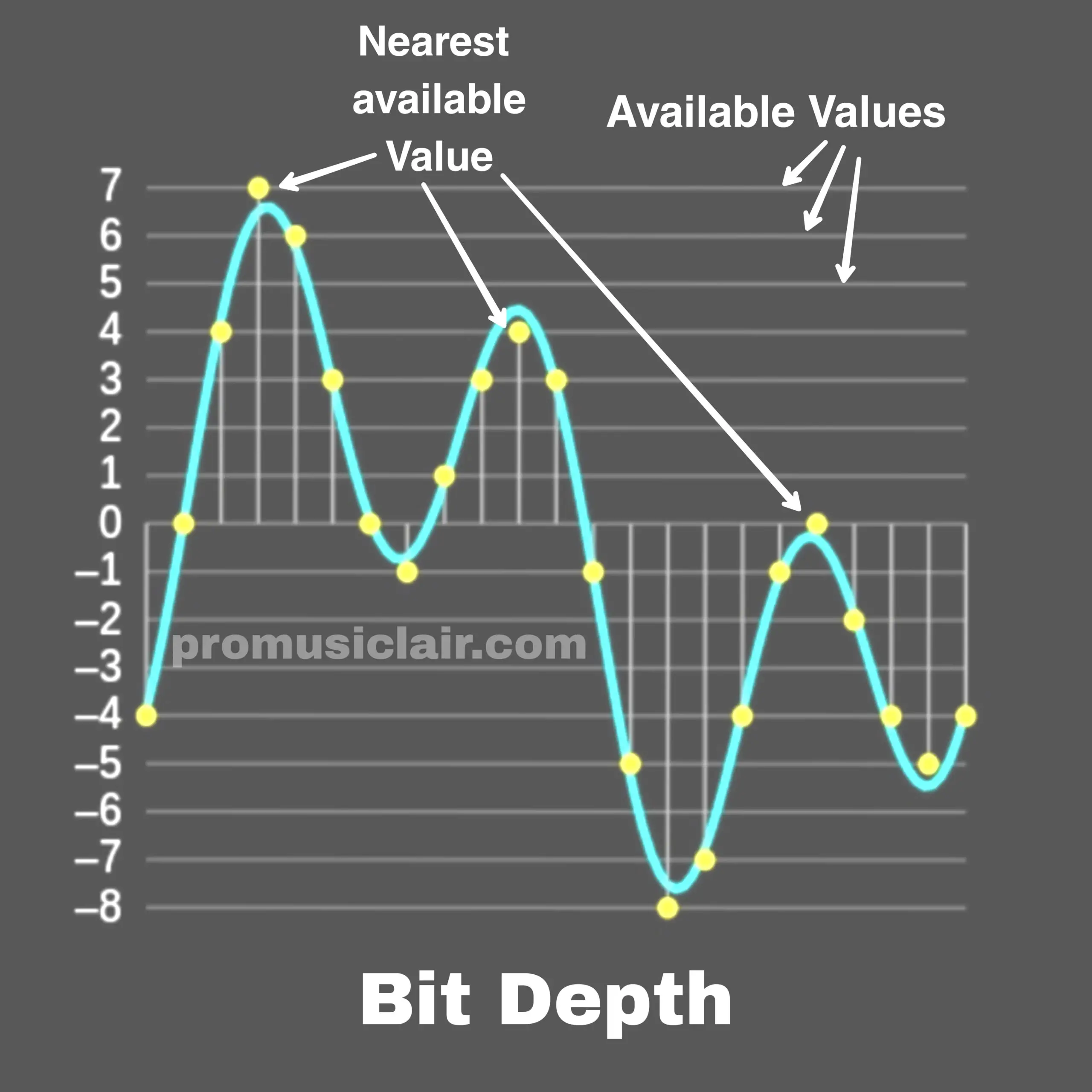
  2. Quantization: The sampled waveform is quantized, i.e., each sample is assigned a binary number that represents its amplitude value.
  3. Encoding: The quantized samples are encoded into a digital format, such as WAV, MP3, or AAC.
  4. Compression: The encoded digital audio file can be compressed using lossy or lossless compression algorithms to reduce its file size.

Lossy vs. Lossless Audio Compression

Lossy and lossless audio compression are two types of compression algorithms used in digital audio encoding. Lossy compression algorithms compress audio files by removing data that is deemed unnecessary or redundant. This results in a smaller file size but may result in a loss of audio quality. Lossless compression algorithms, on the other hand, compress audio files without any loss of quality. This results in a larger file size but maintains the original audio quality.

Bitrate and its Importance in Digital Audio Encoding

Bitrate is a measure of the amount of data used to represent each second of digital audio. It is measured in bits per second (bps) or kilobits per second (kbps). The bitrate of a digital audio file has a significant impact on its quality and file size. Higher bitrates result in higher quality audio files but also larger file sizes. Lower bitrates result in smaller file sizes but may result in a loss of audio quality.

Common Digital Audio Formats

There are several digital audio formats used in digital audio encoding, including:

  • WAV: WAV is a lossless audio format that is commonly used for storing high-quality audio content.
  • MP3: MP3 is a lossy audio format that is commonly used for compressing and storing digital audio files for playback on various digital devices.
  • AAC: AAC is a lossy audio format that is commonly used for compressing and streaming digital audio content over the internet.
  • FLAC: FLAC is a lossless audio format that is commonly used for storing high-quality audio content, similar to WAV.

Challenges in Digital Audio Encoding

Despite the many benefits of digital audio encoding, there are several challenges that must be addressed to ensure optimal audio quality. These challenges include:

  • Sampling rate limitations: The sampling rate of an ADC can affect the accuracy of the digital audio representation. Higher sampling rates generally result in higher accuracy, but also require larger file sizes.
  • Bit depth limitations: The bit depth of an ADC can affect the dynamic range and noise floor of the digital audio representation. Higher bit depths generally result in higher accuracy, but also require larger file sizes.
  • Compression artifacts: Lossy compression algorithms can introduce compression artifacts, such as distortion and noise, which can degrade audio quality.

Future Developments in Digital Audio Encoding

Digital Audio Encoding is an ever-evolving field, with ongoing developments aimed at improving audio quality, reducing file sizes, and enhancing accessibility. Some of the latest developments include:

  • High-resolution audio: High-resolution audio formats, such as MQA and DSD, offer even higher audio quality than standard digital audio formats.
  • Immersive audio: Immersive audio formats, such as Dolby Atmos and DTS:X, offer a more immersive listening experience by incorporating height and surround sound elements.
  • Object-based audio: Object-based audio formats, such as MPEG-H 3D Audio, offer greater flexibility in audio content creation and delivery by enabling individual audio objects to be separately mixed and streamed.

FAQs

1. What is digital audio encoding?

Digital audio encoding is the process of converting an analog audio signal into a digital format, which can be stored, processed, and transmitted electronically.

2. Why is digital audio encoding important?

Digital audio encoding has revolutionized the way we consume and produce audio content by providing improved sound quality, easy storage and transfer, efficient compression, and greater accessibility.

3. What are some common digital audio formats?

Some common digital audio formats include WAV, MP3, AAC, and FLAC.

4. What is the difference between lossy and lossless audio compression?

Lossy compression algorithms compress audio files by removing data that is deemed unnecessary or redundant, resulting in a smaller file size but may result in a loss of audio quality. Lossless compression algorithms compress audio files without any loss of quality, resulting in a larger file size but maintaining the original audio quality.

5. What is bitrate and why is it important in digital audio encoding?

Bitrate is a measure of the amount of data used to represent each second of digital audio. It is important in digital audio encoding because it has a significant impact on audio quality and file size.

6. What are some challenges in digital audio encoding?

Some challenges in digital audio encoding include sampling rate limitations, bit depth limitations, and compression artifacts.

7. What are some future developments in digital audio encoding?

Some future developments in digital audio encoding include high-resolution audio, immersive audio, and object-based audio.

8. What is the difference between a lossy and lossless audio format?

Lossy audio formats use compression algorithms to reduce file size, sacrificing some audio quality in the process. Lossless audio formats, on the other hand, use compression algorithms that do not compromise audio quality, resulting in larger file sizes.

9. What is a sampling rate and how does it affect audio quality?

A sampling rate is the number of times per second that an analog audio signal is measured and converted into a digital signal. The higher the sampling rate, the more accurately the digital signal represents the original analog signal, resulting in higher audio quality. However, higher sampling rates also require larger file sizes and more processing power.

10. What is bit depth and how does it affect audio quality?

Bit depth refers to the number of bits used to represent each audio sample in a digital audio file. A higher bit depth allows for a greater dynamic range and lower noise floor, resulting in higher audio quality. However, higher bit depths also require larger file sizes and more processing power.

11. What is lossless compression?

Lossless compression is a compression algorithm that reduces the size of a digital audio file without sacrificing any audio quality. This is achieved by identifying and removing redundant or unnecessary data in the audio file.

12. What is immersive audio and how does it enhance the listening experience?

Immersive audio is an audio format that uses spatial sound technology to create a more immersive listening experience. This is achieved by incorporating height and surround sound elements, which create a more three-dimensional soundstage. This allows for a more realistic and engaging listening experience, especially when combined with a surround sound system.

Conclusion

Digital audio encoding has revolutionized the way we produce and consume audio content, providing improved sound quality, easy storage and transfer, efficient compression, and greater accessibility. While there are some challenges to overcome, ongoing developments in high-resolution, immersive, and object-based audio formats promise to further enhance the digital audio experience.

References

  • Bosi, M., & Goldberg, R. (2012). Introduction to digital audio coding and standards. Springer Science & Business Media.
  • Thompson, J. (2013). Understanding digital audio. Focal Press.

Audio Digitization: How It Works Part 2

Audio Digitization: How It Works Part 2

Audio Digitization

In order for the computer to understand these numbers, let’s translate these numbers into the binary number system. For simplicity, we assume that a number occupies exactly 1 byte of memory, but in reality, the more bytes allocated to the number, the more accurate the measurement and sound quality will be. After translation, we get:

Audio Digitization

00000101

00000111

00001010

11101011

Computers can already understand and reproduce this sequence as sound.

how to play sound now
• Use speakers or headphones—anything that “pushes air” (ie, produces sound waves). There will be air vibrations in the speakers.
• Apply some power to the speaker. Depending on the strength of the current, the speaker’s voice coil moves in different ways.
• To get this variable current, a special chip called a DAC, a digital-to-analog converter, is required. It takes a number as input and produces a stream as output. All smartphones and computers have these DACs.

All:

1. The processor sends the sound file numbers to the DAC.
2. The DAC receives numbers and outputs different streams based on those numbers.
3. The current is sent to the speaker.
4. The speaker starts to move the speaker cone due to electricity.
5. The cone begins to push the air in front of it, creating sound waves.
6. Sound waves reach our ears and we perceive them as sound.

Whats Next
There is a problem with this approach: the file is too large to be convenient to use. Picture this: 44,000 numbers in one second!

To reduce file size, they propose two solutions: lossy compression and lossless compression. The next article will discuss lossy and lossless compression separately, although they have a lot in common.

Audio digitization: how it works

Audio digitization: how it works

Audio digitization


How to translate sound into 0s and 1s without soul? . Let’s take a look at familiar devices: how computer sound, video, MP3s, streaming and streaming work, various algorithms, and more.

Audio digitalization


a bit of physics
Sounds are vibrations in the air. Like waves in the water, in the air. Air pressure enters the ear, which has sensitive parts that can subtly sense vibrations in the air. These vibrations are perceived by people as sounds. There is no sound in outer space because there is no air.

frequency. The faster the vibration, the weaker the sound we perceive. A person perceives vibrations that range between 20 and 20,000 vibrations per second. In other words, this is called the oscillation frequency: Hertz. That is, the range we hear is from 20 Hz to 20 kHz.

By comparison, dogs hear frequencies from 40 Hz to 60 kHz, so humans don’t perceive a dog’s whistle, but dogs can hear it. The sound of a dog whistle is only in the 23-54 kHz range.

amplitude. The stronger the vibration, the stronger the sound and vice versa. You can think of this as the height of the waves on the surface of the pond: there may be small ripples (soft sounds) or there may be large powerful waves.
Divide the sound into segments.


Now let’s do this: We divide the second part into 4 parts and find the magnitude value for each part:


We measure the state of the quadratic wave in one second. This is called sampling.

We measured the magnitude of each of the four points and, in relative terms, we got four numbers: +30, -50, -50 and -60. In theory, if we were to pass current and apply these four voltages to the speaker, we would be able to reproduce the same sound. But there are several problems:

• Since we only measure in four places, all oscillation is lost.
• We ended up with a very distorted sound compared to the original.

Sampling at a rate of 4 is too little for the sound. To get at least intelligible speech, one second must be divided into 8,000 segments, and for music, 41,000 segments are usually sufficient.

Let’s increase the sample rate: cut the sound into smaller parts in the same unit of time:


Measurements are now more accurate and the resulting sound is more natural.

convert to number
After dividing the sound into small segments and measuring the amplitude value of each segment, we can record it in table form:

Time ⠀⠀⠀⠀⠀ Amplitude

0.01 seconds. ⠀⠀⠀⠀ 5

0.02 seconds. ⠀⠀⠀⠀ 7

0.03 seconds. ⠀⠀⠀⠀ 10

If we divide the whole sound into equal segments, then the time cannot be written, since we know how it changes, it is enough to write the amplitude value on a line:

5 7 10 … −21