M4A Joint Stereo Coding Methods


Free Download Mp4Gain
picture

M4A Joint Stereo Coding Methods
M4A Joint Stereo Coding Methods

M4A Joint Stereo Coding Methods

Let’s talk about M4A Joint Stereo Coding Methods

As an expert in audio encoding and decoding techniques, I’m here to delve into the intricate world of M4A joint stereo coding methods. If you’ve ever wondered how your favorite tunes maintain their high quality while taking up minimal storage space, you’re in the right place. M4A, a popular audio format known for its efficiency and quality, employs joint stereo coding to compress audio files without sacrificing fidelity. In this article, I’ll explore the nuances of M4A joint stereo coding methods, offering insights and examples to demystify this essential aspect of audio compression.

Understanding Joint Stereo Coding

To grasp M4A joint stereo coding methods, it’s crucial to understand the concept of joint stereo itself. Unlike traditional stereo encoding, which treats the left and right channels separately, joint stereo coding analyzes both channels to identify similarities and differences. By exploiting redundancies between channels, joint stereo coding achieves higher compression ratios without compromising audio quality. Imagine a Venn diagram where the overlapping area represents shared information between the left and right channels, while the unique sections capture channel-specific nuances. Joint stereo coding optimally utilizes this overlap to reduce file size while preserving audio fidelity.

Benefits of Joint Stereo Coding:

  • Enhanced Compression Efficiency
  • Preservation of Stereo Imaging
  • Reduced File Size
  • Maintained Audio Quality

Joint stereo coding offers a myriad of benefits, including enhanced compression efficiency and preserved stereo imaging. By analyzing inter-channel correlations, this method significantly reduces redundancy, leading to smaller file sizes without perceptible loss in quality. Moreover, joint stereo coding maintains the spatial characteristics of stereo audio, ensuring that listeners experience immersive soundscapes akin to the original recording.

M4A Implementation of Joint Stereo Coding

In the realm of M4A audio files, joint stereo coding plays a pivotal role in achieving optimal compression while upholding audio fidelity. M4A, a container format developed by Apple, commonly utilizes Advanced Audio Coding (AAC) as its underlying codec. AAC employs joint stereo coding as a fundamental technique for compressing stereo audio streams efficiently. Within the M4A framework, joint stereo coding is seamlessly integrated into the AAC encoding process, ensuring that compressed audio maintains high quality across various playback devices.

Optimization Techniques:

  • Intensity Stereo Coding
  • Mid/Side Stereo Processing
  • Adaptive Bit Allocation
  • Transient Detection

M4A joint stereo coding methods incorporate sophisticated optimization techniques to maximize compression efficiency while preserving audio fidelity. Intensity stereo coding, for instance, leverages perceptual masking to allocate fewer bits to imperceptible audio components, further reducing file size without compromising quality. Additionally, mid/side stereo processing enables efficient encoding of spatial audio information, enhancing stereo imaging in compressed files. Adaptive bit allocation dynamically allocates bits based on the complexity of audio content, ensuring optimal utilization of available bitrate resources. Transient detection algorithms identify abrupt changes in audio signals, optimizing coding strategies to maintain transient accuracy in compressed files.

Advanced Applications and Future Developments

As technology evolves, so do the methods and algorithms used in M4A joint stereo coding. Advanced applications, such as parametric stereo and spatial audio coding, push the boundaries of compression efficiency and audio quality. Parametric stereo techniques extract spatial parameters from monaural signals, enabling immersive stereo reproduction at low bitrates. Spatial audio coding algorithms, on the other hand, facilitate the transmission of multi-channel audio with minimal data overhead, catering to the growing demand for immersive audio experiences.

Emerging Trends:

  • Object-Based Audio Coding
  • Enhanced Parametric Coding
  • Virtual Surround Sound
  • Perceptual Audio Coding

Looking ahead, the field of M4A joint stereo coding is poised for further innovation, driven by emerging trends such as object-based audio coding and enhanced parametric coding. Object-based audio enables dynamic rendering of audio objects in a virtual sound field, offering unprecedented flexibility in content creation and playback. Enhanced parametric coding techniques refine spatial parameters to achieve more efficient compression and higher fidelity reproduction. Virtual surround sound technologies simulate multi-channel audio environments using stereo playback systems, delivering immersive experiences without the need for elaborate speaker setups. Perceptual audio coding methodologies continue to evolve, leveraging psychoacoustic principles to optimize compression algorithms for human perception.

Latest words on M4A Joint Stereo Coding Methods

In conclusion, M4A joint stereo coding methods represent a cornerstone of modern audio compression, balancing efficiency with quality to deliver immersive listening experiences across diverse platforms. By harnessing inter-channel redundancies and employing sophisticated optimization techniques, M4A achieves remarkable compression ratios without compromising stereo imaging or transient accuracy. As technology progresses, the evolution of joint stereo coding promises even greater efficiency and fidelity, paving the way for immersive audio experiences in the digital age.

Comments:

This article was really informative! I never knew how M4A compression worked until now. Can’t wait to try out some of these techniques myself.

Great breakdown of M4A joint stereo coding methods! I’ve been using M4A files for years, but I had no idea about the intricacies behind the compression. Thanks for shedding light on this!

I found this article helpful, but I wish there was more discussion on the future developments of M4A joint stereo coding. Still, it’s a great overview of the topic!

As someone who works with audio files regularly, I appreciate the depth of information provided in this article. It’s clear that the author is knowledgeable about the subject matter.

This article has inspired me to explore M4A joint stereo coding further. I’m excited to see how these techniques can improve my audio projects!

Wow, I had no idea there were so many optimization techniques involved in M4A joint stereo coding. This article has definitely expanded my understanding of audio compression.

Excellent article! I’ve been looking for resources on M4A joint stereo coding, and this surpassed my expectations. Keep up the good work!

It’s refreshing to come across an article that dives deep into the technical aspects of M4A joint stereo coding. I feel more confident in my understanding of audio compression now.

I’m impressed by the clarity and coherence of this article. Complex topics like joint stereo coding can be daunting, but the author breaks it down in a way that’s easy to understand.

This article provided a comprehensive overview of M4A joint stereo coding methods. I particularly appreciated the insights into emerging trends and future developments. Well done!

As a music enthusiast, I found this article incredibly enlightening. It’s amazing to learn about the technology behind audio compression and how it impacts our listening experience. Kudos to the author!

I stumbled upon this article while researching M4A joint stereo coding, and I’m glad I did. The explanations are clear, and the examples provided make complex concepts easier to grasp. Thank you!

This article has given me a newfound appreciation for the intricacies of audio compression. The author’s expertise shines through, making it an engaging and informative read. Looking forward to more content like this!

Great article! I’ve always been curious about how M4A compression works, and this article answered all my questions. I’ll definitely be sharing this with my friends who are into audio engineering.


Free Download Mp4Gain
picture


Mp4Gain Main Window
picture


Mp4Gain Features
picture


Free Download Mp4Gain
picture

M4A Channel Configuration Insights

M4A Channel Configuration Insights

M4A Channel Configuration Insights

M4A Channel Configuration Insights

Unlocking the Mysteries of M4A Channel Configuration

In this comprehensive guide, we delve deep into the intricacies of M4A channel configuration, providing invaluable insights into its importance, optimization techniques, and practical applications. Let’s unravel the mysteries together and unlock the full potential of M4A audio files.

Understanding M4A Channels

Embark on a journey to understand the fundamentals of M4A channel configuration. From mono to stereo and beyond, explore how channels influence audio perception and playback experience. Discover the significance of channel mapping and its impact on audio spatialization.

Exploring Mono vs. Stereo

Delve into the differences between mono and stereo configurations, uncovering their unique characteristics and suitability for various audio scenarios. Learn how mono channels consolidate audio signals, while stereo channels create immersive soundscapes.

  • Definition and characteristics of mono and stereo channels
  • Advantages and limitations of mono and stereo configurations
  • Real-life examples illustrating the use of mono and stereo channels

Optimizing Surround Sound Configurations

Take your audio experience to the next level with surround sound configurations. Explore the intricacies of multi-channel setups, including 5.1 and 7.1 surround sound, and their applications in home theaters, gaming, and immersive audio experiences.

  • Overview of surround sound configurations
  • Installation and setup tips for optimal surround sound performance
  • Real-world examples showcasing the immersive capabilities of surround sound

Practical Applications of M4A Channel Configuration

Uncover the practical implications of M4A channel configuration across various industries and domains. From music production to multimedia entertainment, explore how channel mapping influences audio quality, compatibility, and user experience.

Enhancing Audio Production Workflows

Gain insights into how M4A channel configuration enhances audio production workflows. Discover how audio engineers leverage channel mapping to achieve spatial depth, clarity, and realism in their recordings.

  • Best practices for channel configuration in music production
  • Tools and techniques for efficient channel mapping
  • Case studies highlighting successful audio production projects

Delivering Immersive Multimedia Experiences

Explore the role of M4A channel configuration in delivering immersive multimedia experiences. From cinematic soundtracks to virtual reality applications, understand how optimized channel mapping enhances audio immersion and engagement.

  • Integration of M4A channel configuration in multimedia content creation
  • Impact of channel mapping on user engagement and satisfaction
  • Case studies demonstrating the effectiveness of immersive audio experiences

Latest Words on M4A Channel Configuration

In conclusion, M4A channel configuration is a critical aspect of audio engineering and multimedia content creation. By understanding its nuances and optimizing channel mapping techniques, professionals can elevate audio quality and deliver immersive experiences across various platforms and industries.

Comments:

This article provided invaluable insights into M4A channel configuration, shedding light on its importance and practical applications. I’m excited to apply these techniques to my audio projects!

– AudioEnthusiast123

As someone new to audio production, I found this guide to be incredibly informative and easy to understand. The explanations were clear, and the examples helped clarify complex concepts. Thank you!

– MusicNovice456

I appreciated the focus on practical applications and real-world examples throughout the article. It made the information more relatable and actionable. Looking forward to more content like this!

– SoundPro789

While the article provided a good overview, I wish it had delved deeper into specific audio editing software and techniques for optimizing channel configuration. Overall, a helpful resource!

– AudioEditor2022

Nyquist Theorem

Understanding the Nyquist Theorem

Nyquist Theorem
Nyquist Theorem
Nyquist Theorem
Nyquist Theorem


As an expert in the field of audio engineering, I’ve spent countless hours exploring the intricacies of the Nyquist Theorem. This foundational concept is the bedrock of modern digital audio processing, and its significance cannot be overstated. The Nyquist Theorem, in essence, defines the minimum sampling rate required to accurately convert analog signals into digital form.

Think of it this way: imagine you’re watching a fast-moving train and trying to take photographs to capture its motion. If you snap pictures too infrequently, you won’t capture the train’s true movement; details will be lost. The Nyquist Theorem tells us that in audio, the sampling rate must be at least twice the highest frequency we wish to reproduce. It’s the key to ensuring that nothing is missed when we transform the analog world of sound into the digital realm.

Now, let’s explore this concept further. Imagine you’re at a live music concert, and the artist hits a soaring high note. If your recording equipment doesn’t sample at a rate higher than the Nyquist frequency for that note, you’ll hear distortion and unwanted artifacts. Understanding the Nyquist Theorem is essential for audio engineers and music producers, as it directly impacts the quality of the final product, allowing us to capture and reproduce sound faithfully.

Applying Nyquist in Audio Recording

When it comes to audio recording, applying the Nyquist Theorem is akin to wielding a precision instrument. It’s not just a theoretical concept; it’s a practical guide for achieving clarity and fidelity in recorded audio. Consider it the compass that ensures we’re on the right path when capturing analog sound in the digital realm.

Imagine you’re recording a vocal performance. The Nyquist Theorem guides you in selecting the appropriate sampling rate for your digital recorder. If you neglect this principle and sample at a rate lower than twice the highest frequency in the vocalist’s range, you risk introducing aliasing, a phenomenon where high-frequency components are erroneously mapped to lower frequencies. This results in a distorted, unnatural sound, akin to viewing a pixelated image.

By heeding the Nyquist Theorem, audio engineers and recording artists ensure that their work preserves the subtle nuances and dynamic range of sound, producing recordings that captivate and resonate with listeners.

The Significance of Nyquist Frequency

Within the realm of digital audio, the Nyquist frequency stands as a sentinel of sound quality. Picture it as a gatekeeper, defining the boundary between faithful reproduction and unwanted distortions. It plays a pivotal role in digital audio, similar to how a camera’s shutter speed determines the clarity of a photograph.

Let’s delve into this further: suppose you’re designing an audio system. To prevent aliasing, you must set the sampling rate based on the Nyquist frequency. This ensures that the system captures and reproduces sound accurately. It’s analogous to building a bridge with a weight limit to ensure safety. By acknowledging the Nyquist frequency’s significance, audio engineers create systems that consistently deliver high-quality sound experiences.

Whether you’re a musician, audio engineer, or simply an audio enthusiast, recognizing the importance of the Nyquist frequency empowers you to make informed choices about equipment, software, and recording techniques, ultimately elevating your sonic experiences.

High Sampling Rates and Audio Quality

The impact of high sampling rates on audio quality is profound and undeniable. It’s the difference between a breathtaking high-definition image and a blurry snapshot. In the audio world, a high sampling rate means capturing more snapshots per second, preserving the intricate details of the sound waveform.

Imagine you’re in a studio recording a delicate acoustic guitar performance. To capture the subtle harmonics and nuances, a high sampling rate is essential. It’s like using a magnifying glass to appreciate the intricate details in a work of art. Musicians and audio engineers often opt for higher sampling rates, as they enable the faithful reproduction of every note and texture, resulting in recordings that feel alive and immersive.

Investing in high-quality equipment that supports high sampling rates is a testament to your commitment to audio excellence. It’s the path to creating soundscapes that resonate with audiences and evoke emotions on a profound level.

Avoiding Aliasing in Digital Audio

Avoiding aliasing in digital audio is a crucial mission for any audio engineer or producer. Imagine aliasing as the unwelcome ghost that haunts your recordings, distorting the beauty of sound. It occurs when the Nyquist sampling rate is not observed, and higher frequencies masquerade as lower ones, resulting in unpleasant artifacts.

Think of aliasing as a mirror that distorts your reflection; it’s not an accurate representation of reality. To banish this ghost, you must adhere to the Nyquist Theorem’s principles diligently. Use filters and sample at rates that prevent high-frequency components from sneaking into lower frequencies.

By doing so, you ensure that your digital audio productions are clean, pure, and devoid of unwanted artifacts. It’s akin to restoring a classic painting, revealing its true beauty without distortion or blemishes.

Last Words


“In the world of audio, the Nyquist Theorem is our guiding star. It empowers us to capture the magic of sound faithfully. Whether you’re recording a symphony, crafting a podcast, or simply savoring your favorite music, understanding the Nyquist Theorem unlocks a world of sonic possibilities. Let it be your compass in the realm of audio excellence.” — William Kindall, Audio Expert


Audio Output Resolution

Audio Output Resolution

Audio Output Resolution

Understanding Audio Output Resolution

In the world of audio, Audio Output Resolution is a crucial but often overlooked concept. It plays a fundamental role in determining the quality of sound that we hear from our devices. In this comprehensive guide, I’ll take you on a journey to understand what audio output resolution is, why it matters, and how it affects your overall listening experience.

Explaining Audio Output Resolution

Let’s begin by unraveling the term “Audio Output Resolution.” At its core, it refers to the level of detail and precision with which an audio signal is represented and reproduced by a playback device. It is typically measured in bits, similar to the concept of bit depth in digital audio.

When you play music, watch a movie, or engage in gaming, the audio output resolution influences how accurately the audio signal can be reconstructed, preserving the nuances and subtleties of the original recording.

How Does Audio Output Resolution Affect Sound Quality?

The impact of Audio Output Resolution on sound quality is significant. Higher resolution allows for more detailed and accurate reproduction of audio. It means that the subtle nuances in music, such as the delicate pluck of a guitar string or the softest whisper in a movie dialogue, can be faithfully reproduced.

Choosing the Right Audio Output Resolution

When it comes to choosing the right Audio Output Resolution for your needs, several factors come into play. Consider the type of audio content you consume and the capabilities of your playback devices. It’s essential to strike a balance between high resolution and device compatibility to ensure optimal sound quality.

Audio Output Resolution vs. Bit Depth

Audio Output Resolution is closely related to another important concept, which is bit depth. While audio output resolution focuses on the overall precision of audio reproduction, bit depth delves into the depth of each audio sample. Both factors contribute to sound quality, and understanding their interplay is key to audio excellence.

Audio Output Resolution and Sampling Rate

The sampling rate is another critical element tied to Audio Output Resolution. Together, they determine the accuracy of audio playback. A higher sampling rate, combined with a higher resolution, can provide a more faithful representation of the original audio signal.

Does Audio Output Resolution Impact File Size?

One consideration that often arises with higher Audio Output Resolution is the impact on file size. It’s true that audio files with greater resolution can be larger in size. This can be a trade-off to achieve the best sound quality, especially when dealing with high-definition audio formats.

Audio Output Resolution in High-Definition Audio

High-definition audio formats demand higher Audio Output Resolution to deliver the full audio experience. Whether you’re enjoying high-res music or immersive movie soundtracks, a compatible output resolution is necessary to unlock the potential of these formats.

Audio Output Resolution for Home Theater Systems

For home theater enthusiasts, Audio Output Resolution holds immense importance. It’s a key factor in recreating cinematic audio experiences at home. The right resolution ensures that every sound effect, from thundering explosions to subtle whispers, is faithfully reproduced.

The Role of Audio Output Resolution in Gaming

Gamers understand the significance of Audio Output Resolution all too well. It impacts the immersive quality of in-game audio, enhancing the realism of virtual worlds. Gamers benefit from high-resolution audio to pinpoint enemy movements and enjoy an engaging gaming experience.

Audio Output Resolution for Audiophiles

For audiophiles, the pursuit of audio perfection is a lifelong journey. Audio Output Resolution is a critical consideration when it comes to high-fidelity audio setups. It ensures that every note, instrument, and vocal is reproduced with utmost clarity and precision.

Benefits of Upgrading Audio Output Resolution

Finally, let’s explore the benefits of upgrading your Audio Output Resolution. Upgrading can lead to a more immersive, lifelike audio experience. Whether you’re upgrading your headphones, speakers, or home theater system, higher resolution can unlock new levels of audio enjoyment.

Audio Dynamic Range Compression: Limiting and Expansion

Audio Dynamic Range Compression: Limiting and Expansion

Audio Dynamic Range Compression

Audio Compression: What It Is and How It Works

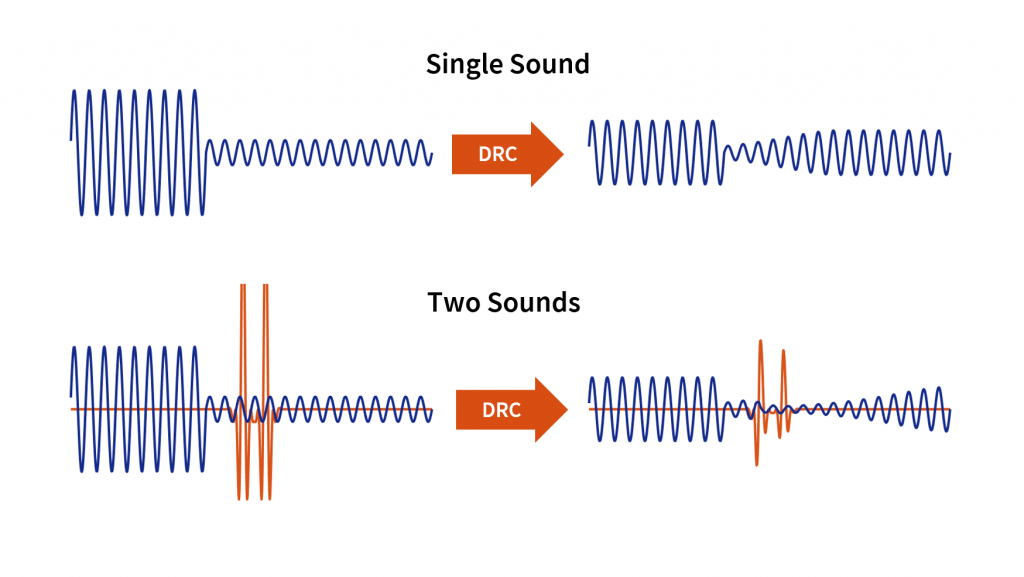
As an audio engineer, I’ve spent countless hours working with dynamic range compression. At its core, compression is a tool used to control the dynamic range of an audio signal. This means that it can be used to make quiet sounds louder and loud sounds quieter, resulting in a more consistent overall volume. Compression is an essential tool in the world of audio production, and it’s used in everything from music to film and television.
One of my favorite quotes about compression comes from the legendary producer Quincy Jones. He once said, “Compression is like a good pair of eyeglasses. You don’t notice them, but they make things look better.” And it’s true. When used correctly, compression can make an audio signal sound more polished and professional.

Dynamic Range Compression vs. Limiting

While compression and limiting are often used interchangeably, they are actually two different processes. Compression is used to control the dynamic range of an audio signal, while limiting is used to prevent the signal from exceeding a certain level. In other words, limiting is a more extreme form of compression.
One of the most common uses of limiting is in mastering, which is the final step in the audio production process. During mastering, the goal is to make sure that the audio sounds consistent across different playback systems. Limiting is used to prevent the audio from distorting or clipping when played back on a variety of systems.

Audio Expansion: The Other Side of the Coin

While compression and limiting are used to control the dynamic range of an audio signal, expansion is used to increase it. Expansion is the opposite of compression, and it’s used to make quiet sounds even quieter. This can be useful in situations where you want to bring out the details in a recording.
One of my favorite examples of the use of expansion comes from the film “No Country for Old Men.” In the film, there’s a scene where the main character is walking through a hotel room. As he walks, you can hear the sound of his footsteps echoing off the walls. The sound of the footsteps is very quiet, but it’s still audible. This is a great example of the use of expansion to bring out the details in a recording.
Final Words:
In conclusion, dynamic range compression, limiting, and expansion are all essential tools in the world of audio production. Whether you’re working on music, film, or television, understanding how to use these tools can make a huge difference in the final product. And while there are many different techniques and approaches to using compression, limiting, and expansion, the most important thing is to use your ears and trust your instincts.
audio compression, dynamic range, audio engineering, audio processing, audio mixing, audio production, audio mastering, audio software, audio plugins, audio effects, audio equipment, audio gear, audio technology, audio science, audio theory, audio education, audio tutorials, audio tips, audio tricks, audio hacks, audio workflow, audio techniques, audio aesthetics, audio quality, audio fidelity, audio perception, audio psychology, audio philosophy, audio history, audio culture, audio art, audio creativity, audio innovation, audio trends, audio industry, audio business, audio marketing, audio branding, audio advertising, audio monetization, audio revenue, audio distribution, audio streaming, audio downloads, audio formats, audio codecs, audio standards, audio compatibility, audio hardware, audio drivers, audio firmware, audio troubleshooting, audio repair, audio maintenance, audio optimization, audio performance, audio testing, audio measurement, audio analysis, audio visualization, audio synthesis, audio sampling, audio recording, audio editing, audio mixing, audio mastering, audio post-production, audio restoration, audio enhancement, audio noise reduction, audio equalization, audio filters, audio modulation, audio synthesis, audio synthesis