Understanding the Impact of Psychoacoustics in MP3


Free Download Mp4Gain
picture

Understanding the Impact of Psychoacoustics in MP3


Understanding the Impact of Psychoacoustics in MP3

Understanding the Impact of Psychoacoustics in MP3

Let’s talk about MP3:

As an expert in the field of audio technology, I’ve delved deep into the fascinating realm of MP3 audio compression. When you think about MP3, what comes to mind? Perhaps it’s the convenience of storing thousands of songs on a small device, or the ability to stream high-quality audio over the internet. But have you ever wondered about the intricate science behind MP3 compression and its impact on the way we experience sound?

The Science Behind MP3 Compression:

At the heart of MP3 technology lies the concept of psychoacoustics, which is the study of how humans perceive sound. Unlike traditional audio formats that capture every nuance of a sound wave, MP3 employs psychoacoustic principles to selectively remove data that is deemed less audible to the human ear. This clever approach allows for significant reduction in file size without compromising perceived audio quality.

Key Psychoacoustic Principles:

  • Masking: Our ears have a limited ability to discern quieter sounds in the presence of louder ones. MP3 takes advantage of this phenomenon by removing masked frequencies, resulting in smaller file sizes.
  • Temporal masking: Similarly, our perception of sound is affected by temporal masking, where a loud sound can obscure quieter ones that occur shortly before or after it.
  • Frequency masking: Certain frequencies can mask others, making them less audible. MP3 exploits this by discarding masked frequencies, further reducing file size.

The Impact on Audio Quality:

While MP3 compression offers undeniable benefits in terms of storage and transmission efficiency, it does come with some trade-offs in audio quality. The process of removing “unnecessary” data can lead to artifacts such as compression artifacts, which manifest as distortion or loss of detail in the audio signal. Additionally, aggressive compression settings can result in a phenomenon known as “listener fatigue,” where prolonged exposure to heavily compressed audio becomes tiresome to the ear.

Advancements in MP3 Technology:

Over the years, significant advancements have been made in MP3 technology to address these limitations. Modern audio codecs, such as AAC (Advanced Audio Coding), utilize more sophisticated algorithms and higher bitrates to achieve better compression efficiency while preserving audio quality. Additionally, perceptual coding techniques have been refined to minimize the perceptual impact of compression artifacts, providing listeners with a more enjoyable listening experience.

Real-World Applications:

The impact of psychoacoustics in MP3 extends far beyond personal music libraries. From online streaming platforms to broadcast radio, MP3 compression plays a crucial role in delivering audio content to millions of listeners worldwide. Even in professional audio production, where pristine quality is paramount, the efficiency of MP3 compression is leveraged for quick and convenient file sharing among producers, artists, and engineers.

Latest words on MP3:

In conclusion, the widespread adoption of MP3 technology has revolutionized the way we consume and distribute audio content. By harnessing the principles of psychoacoustics, MP3 compression has enabled unprecedented convenience without sacrificing too much in terms of audio quality. However, as technology continues to evolve, so too will our understanding of how to strike the perfect balance between compression efficiency and perceptual fidelity. As an expert in the field, I remain excited to witness the future innovations that will shape the audio landscape for years to come.

Comments:

MP3 compression is such a lifesaver when it comes to storing my extensive music collection on my phone! I never knew about the science behind it until reading this article. Really eye-opening stuff!

– MusicLover123

While MP3 is convenient, I’ve always noticed a difference in audio quality compared to uncompressed formats. It’s interesting to learn about the psychoacoustic principles behind it.

– Audiophile99

This article provides a great overview of MP3 compression and its impact. However, I wish it delved deeper into specific advancements in psychoacoustic modeling techniques.

– TechEnthusiast22

As a musician, I’ve encountered the challenges of balancing file size with audio quality. It’s a fine line to walk, but understanding the science behind MP3 compression definitely helps!

– GuitarGuy2024

Wow, I never realized how much goes into compressing audio files. This article breaks it down in a way that’s easy to understand. Kudos to the author!

– SoundSavvy

Thanks for shedding light on the topic of MP3 compression. It’s something we encounter every day but rarely stop to think about. Very informative!

– AudioNovice

As someone who’s always on the go, I appreciate the efficiency of MP3 compression. It allows me to carry my entire music library in my pocket!

– RoadWarrior

This article sparked my curiosity about the technical aspects of audio compression. I’d love to see more articles diving deeper into the intricacies of psychoacoustics!

– CuriousMind

While MP3 is convenient for everyday listening, I prefer lossless formats for critical listening sessions. It’s all about finding the right balance for your needs!

– HiFiEnthusiast

Great article! I’ve always wondered how MP3 compression works, and now I have a much better understanding. Keep up the fantastic work!

– AudioExplorer


Free Download Mp4Gain
picture


Mp4Gain Main Window
picture


Mp4Gain Features
picture


Free Download Mp4Gain
picture

Psychoacoustic in mp3

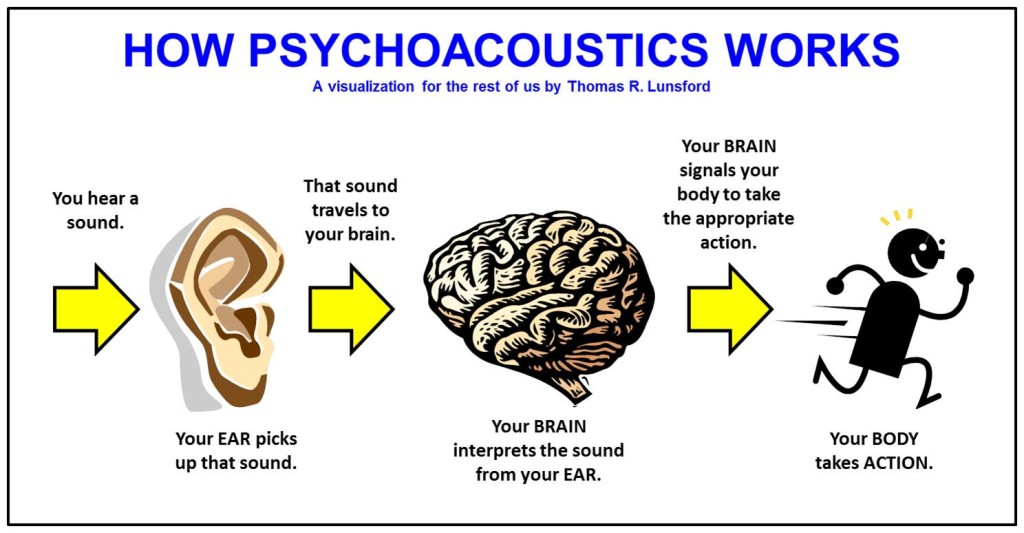
Psychoacoustics is the study of a person’s subjective perception of sounds. Today, it is used in computer engineering, acoustic engineering, education, medicine, marketing and, of course, it is used in music.

how mp3 works

Musicians try to create a new acoustic atmosphere by distancing themselves from real sound perception, while scientists and engineers emphasize the features of auditory perception and truly audible components for analyzing and designing acoustic instruments and equipment.

mp3 compression

Sound is made up of pressure waves propagating through the air, but how are these waves received and converted into thoughts in our brains? In fact, what we hear depends not only on the physiological properties associated with ear formation, but also has psychological consequences. In the psychoacoustic model, dismissal and insignificance are the two “key” concepts that describe the reasons why a certain amount of audio data is considered insignificant, that is, they can be removed without compromising sound quality.

There is a threshold beyond which the human ear does not perceive the frequency of sound, sounds exceeding this threshold create a release effect. Obviously, trained ears will tend to perceive more complex sounds and higher frequencies.

This makes the redundancy threshold a subjective point of reference within certain limits, which means that a certain redundancy effect will have to be maintained in order to guarantee quality sound, so digital information inevitably exists. Once a high-quality redundancy threshold is set, it will be possible to remove frequencies and sound waves above this threshold, and sound perception will not change. When released, a number of sound elements remain important in reproducing the complexity of the sound and are beneficial to perception and quality, but non-compliance is a more radical criterion for sound units that are completely invisible and therefore useless and completely removable.

In practice, this simplifies the process of recording and storing sound. Lost audio compression is based on redundancy and non-compliance criteria, allowing you to remove most audio signals without compromising audio quality.

Unreasonable compression is based on the fact that, depending on the context of the sound, the same sound element may become very appropriate or may be completely ignored. For example, if a cell phone rings in the church during a silent prayer, those involved will clearly perceive the sound, and at the disco the same sound will be confused with the main context of the sound.

As a result, L ‘psychoacoustic analysis makes it possible to drastically reduce a high-quality file (10 or 12 times smaller) and therefore compressions, which significantly reduce the quality. These cuts are typical of MP3s. Thus, the psychoacoustic model shows that low-frequency waves are not noticeable in high-frequency waves because they are covered by higher-intensity waves.

This effect, called masking, tends to focus more on certain sounds depending on the context, and is based on the ear’s ability to adapt to background noise. In addition, there is a special masking associated with the reception time of low and high frequency sounds. Although a low-frequency sound is obtained, if it is immediately followed by a high-frequency sound, the first sound will be canceled by the second sound, so this effect is called reverse masking.

In contrast, masking forward features the elimination of low-frequency sound after high-frequency sound. The difference between the first two MPEG formats (Moving Picture Esperts Group: International Audio and Video Coding Code) and the MP3 format is based on these two masking effects.

In fact, in early MPEG formats, only frequency masking (1 audio and 2 audio layers) was taken into account, while MP3 also takes into account the third level of forward and backward masking (3 audio levels). The peculiarity of the MP3 model there is that it is the most perfect way to remove sound. From the initial recording, it extracts sounds and frequencies, extracting tones and time to eliminate unnecessary.

Do you know what is the psychoacoustic model in MP3 format?

Easy tutorial: how to normalize the volume of an audio track.

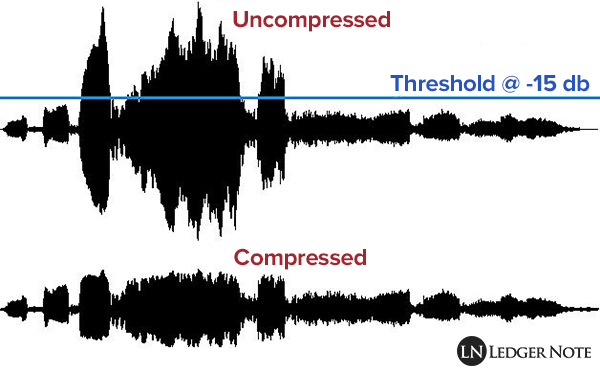
The MP3 was developed by the Moving Picture Experts Group (MPEG) to be part of the MPEG-1 standard and the newer and more widespread MPEG-2. An MP3 created using 128 kbit / s compression will be about 11 times smaller than its namesake CD. An MP3 can also be compressed using a higher or lower bit rate per second, directly resulting in lower final audio quality and the resulting file size.

psychoacoustic model

Compression is based on the reduction of the irrelevant dynamic range, i.e. the inability of the auditory system to detect quantization errors under masking conditions. This standard divides the signal into frequency bands which approach the critical bands, on the basis of wp, then quantifies each sub-band according to the noise detection threshold in this band. The psychoacoustic model is a modification of that used in Scheme II and uses a method called polynomial prediction. It analyzes the audio signal and calculates the amount of noise that can be introduced as a function of the frequency, that is to say calculates the “masking amount” or the masking threshold as a function of the frequency.

psychoacoustic model

The encoder uses this information to decide how best to spend the available bits. This standard proposes two psychoacoustic models of different complexity: model I is less complex than psychoacoustic model II and considerably simplifies the calculations. Studies show that the distortion generated is imperceptible to the experienced ear in an optimal environment from 192 kbps and under normal conditions. “Good” (unless you have high quality audio equipment where the lack of bass is excessively noticeable and the “fry” sound in the treble is highlighted). People experienced in the audio part of digital audio files, especially music, from 192 to 256 kbps are enough to hear well, but compression at 320 kbps is optimal for any listener. [appointment required]. Most of the music circulating on the Internet is encoded between 128 and 192 kbps, although today due to the increase in bandwidth, it is more and more common to share files with high quality. maximum compression.