MP3 vs. AAC


Free Download Mp4Gain
picture

MP3 vs. AAC: Audio Quality Comparison
MP3 vs. AAC
MP3 vs. AAC
MP3 vs. AAC
MP3 vs. AAC

MP3 Audio Compression

MP3, or MPEG Audio Layer-3, is a widely-used audio format known for its efficient compression. It uses perceptual coding techniques to discard certain audio frequencies that are less perceptible to the human ear. This compression allows for smaller file sizes while maintaining an acceptable level of audio quality.

AAC Audio Codec

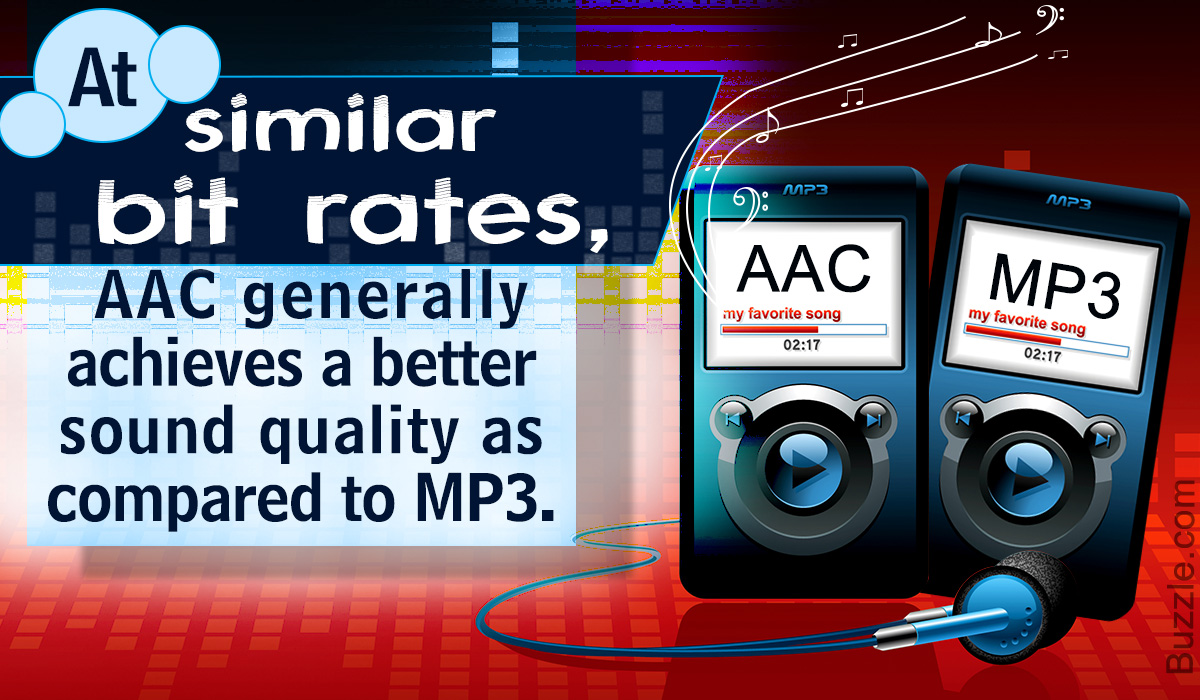
AAC, or Advanced Audio Coding, is a successor to MP3 and offers improved audio quality at similar bitrates. AAC utilizes more advanced compression algorithms, including perceptual noise shaping and temporal noise shaping, resulting in better sound reproduction and higher fidelity compared to MP3.

Differences in Audio Quality

When comparing MP3 and AAC in terms of audio quality, there are several factors to consider. AAC generally provides better sound quality than MP3 at similar bitrates. This is because AAC is capable of preserving more audio details and nuances, resulting in a more accurate reproduction of the original sound.

Bitrate Efficiency

One advantage of MP3 over AAC is its superior bitrate efficiency. MP3 achieves good audio quality while keeping file sizes relatively small. This makes it suitable for applications with limited storage or low bandwidth, such as online music streaming or portable audio players.

Transparent Compression

AAC is often considered a “transparent” audio codec, meaning it can achieve audio quality indistinguishable from the original source, even at lower bitrates. This makes AAC a preferred choice for high-quality audio applications, such as digital music distribution and professional audio production.

Compatibility and Support

MP3 enjoys broad compatibility across various devices and platforms due to its widespread adoption. It is supported by virtually all audio players, software, and hardware devices. AAC, on the other hand, may require specific codecs or software support, although it has gained significant popularity and compatibility in recent years.

Application Considerations

Choosing between MP3 and AAC depends on the specific application and user preferences. If file size and compatibility are the primary concerns, MP3 may be the preferred choice. However, for applications where audio quality is paramount, such as music production or high-fidelity audio playback, AAC offers a superior option.

Transcoding and Conversion

Transcoding or converting audio files from one format to another may result in some loss of audio quality. If transcoding from MP3 to AAC, the original MP3 compression artifacts may be retained or exacerbated. It is generally recommended to use the highest-quality source file available to maintain audio fidelity.

Subjective Listening Tests

Subjective listening tests involving trained listeners have consistently shown that AAC often provides better audio quality compared to MP3 at similar bitrates. However, individual preferences can vary, and some listeners may not perceive significant differences between the two formats in certain scenarios.

Choosing the Right Format

Ultimately, the choice between MP3 and AAC depends on factors such as the intended use, available storage or bandwidth, desired audio quality, and compatibility requirements. Evaluating these factors and conducting listening tests can help determine the most suitable audio format for a specific application or use case.

Optimizing Audio Quality

To optimize audio quality, it is important to consider not only the choice of audio format but also factors such as the source recording quality, mastering techniques, and the playback equipment used. Additionally, using higher bitrates


Free Download Mp4Gain
picture


Mp4Gain Main Window
picture


Mp4Gain Features
picture


Free Download Mp4Gain
picture

AAC vs. MP3

Understanding Audio Codecs: AAC vs. MP3

AAC vs. MP3
AAC vs. MP3
AAC vs. MP3
AAC vs. MP3


Audio codecs are a type of data compression algorithm that is used to reduce the size of digital audio files. This makes it possible to store and transfer audio files more efficiently, and to play them back on devices with limited storage space.

There are two main types of audio codecs: lossy and lossless. Lossy codecs reduce the size of audio files by removing some of the data from the original audio signal. This can result in a loss of quality, but it can also result in a significant reduction in file size. Lossless codecs, on the other hand, do not remove any data from the original audio signal. This means that the quality of the audio is preserved, but the file size is not reduced as much.

In this article, we will compare two of the most popular audio codecs: AAC and MP3. We will discuss the advantages and disadvantages of each codec, and we will help you decide which codec is right for you.

AAC

AAC stands for Advanced Audio Coding. It is a lossy audio codec that was developed by the Moving Picture Experts Group (MPEG). AAC is designed to provide better sound quality than MP3 at the same file size. AAC is also more efficient than MP3, which means that it can achieve even better sound quality at lower file sizes.

AAC is supported by a wide range of devices, including smartphones, tablets, computers, and home audio systems. It is also the default audio format for many streaming services, such as Spotify and Apple Music.

MP3

MP3 stands for MPEG-1 Audio Layer 3. It is a lossy audio codec that was developed by the Moving Picture Experts Group (MPEG). MP3 is the most popular audio codec in the world. It is supported by a wide range of devices, and it is the default audio format for many music file sharing services.

MP3 is not as efficient as AAC, which means that it cannot achieve the same sound quality at lower file sizes. However, MP3 is still a good choice for most people. It is a reliable and widely supported codec that offers good sound quality at a reasonable file size.

Which Audio Codec is Right for You?

The best audio codec for you depends on your needs. If you want the best possible sound quality, then AAC is the better choice. However, if you are looking for a codec that is widely supported and that offers good sound quality at a reasonable file size, then MP3 is a good option.

Conclusion

AAC and MP3 are two of the most popular audio codecs in the world. Both codecs offer good sound quality, but AAC is generally considered to be the better choice for people who want the best possible sound quality. MP3 is a good option for people who are looking for a codec that is widely supported and that offers good sound quality at a reasonable file size.

Is the compressed sound bad?

Is the compressed sound bad?

Audio Compression

Recently, there are more and more opportunities to reproduce audio and music from compressed sound sources, such as digital televisions and iPods.

Compressed Audio

I think many audiophiles naturally hate “The sound of compressed sound sources is ridiculous,” but is that true? Here, I will try to discover the truth based on the data.

Types of compression with loss
The principle and format of audio compression will be left in the hands of Wikipedia, but here we will focus on the most used MP3 and AAC (Advanced Audio Coding) methods. It is said that AAC is a newcomer and has a high sound quality. Here is a relatively easy explanation of understanding of AAC compression. The source is a lighting book on digital technology that I wrote before, but I forgot the title of the book.

It should be noted that a high sound quality here means that the theoretical fidelity to the original sound is high, and does not mean that sound is good to listen. If the same compression method is used, the higher the number of bits sent per second, that is, the bit rate (unit: kbps), the greater the sound quality. However, since the bit rate can be a variable bit rate that fluctuates according to the amount of information, comprise that the values ​​on this page indicate the average value or the lower limit value.

The sound quality of the compressed sound source is always confirmed by a blind test.
As I wrote on the page of the Ptolemaic theory to the Copernican theory, in Japan, the blind evaluation of audio equipment is considered taboo and never realized. The reason is evident, because if you do this, the audio industry will not be possible in the first place. However, audio compression technology is different. This is an essential technology for the most recent audio equipment, such as digital television, music distribution and portable audio equipment, which is expected to have a great demand in the future, instead of aiming the world of narrow audio and narrow where they are not similar. -The science is very widespread. It is extremely important to evaluate through a blind test how much data can be compressed without feeling the deterioration of sound quality, and is a first-line engineer who has dominated the last psychoacoustic and the theory of digital information. It has been introduced and developed.

At this time, unlike the evaluation of other audio equipment, it is easy to change the difference between the compressed sound source and the original sound source so that the operation is not understood, only with computer software, so a Perfect double double test is easy. I am also happy to be able to do it.

“About the sound quality of audio compression technology” is very useful. I also agree with the claim of this site.

Evaluation of the bit rate and sound quality
This site contains the results of a blind test to see if there is a difference in sound quality between a compressed sound source with a different bit rate and a PCM WAV file (same as the sound of a CD). However, it does not say what the format is.

The subjects were 220 sound professionals, and the results were such that the difference was barely noticed if it was above 100 kbps, or even if it was known, I would not bother me. The stereo bits speed in BS digital mode and the default iPod speed is 128 kbps or more, so it is a subtle point and can be said that a young and deaf person can notice the difference.
What is the difference reflected in the bit rate?
Why does the sound differ when the bit rate is different? To answer the question with precision, it is necessary to understand the compression principle, which is quite difficult without the basics of psychoacoustics and the theory of information. The most significant reflection is the frequency characteristics of the reproduced sound, which appears as a difference in the cutoff frequency in the high frequency range. The following sites show the frequency features of the sounds played with different bit rates.