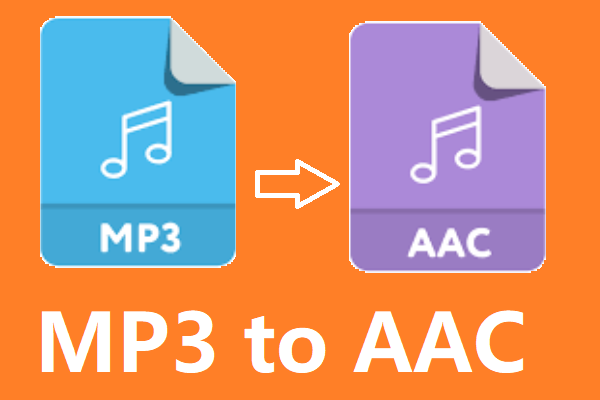
MP3 to AAC


Free Download Mp4Gain
picture

MP3 to AAC

MP3 to AAC
MP3 to AAC
MP3 to AAC
MP3 to AAC

MP3 to AAC – Introduction

If you’re looking to convert your MP3 files to AAC, there are a few things you need to know. AAC (Advanced Audio Coding) is a lossy compression format that offers better sound quality than MP3 at the same bit rate. It is also the default audio format for iOS devices and iTunes.

In this article, we’ll cover everything you need to know about converting MP3 to AAC, including why you might want to do it, the technical differences between the two formats, and how to convert your files using the mp4gain tool.

Why Convert MP3 to AAC?

There are several reasons why you might want to convert your MP3 files to AAC. First, as we mentioned earlier, AAC offers better sound quality than MP3 at the same bit rate. This means that if you’re looking to improve the sound quality of your music library, converting your MP3 files to AAC is a good option.

Second, if you’re an iOS user, you might want to convert your files to AAC because it is the default audio format for iOS devices and iTunes. This means that if you want to play your music on your iPhone, iPad, or iPod, converting your files to AAC will ensure the best possible sound quality.

Technical Differences Between MP3 and AAC

MP3 and AAC are both lossy compression formats, which means that they compress audio files by discarding some of the original data. However, there are some technical differences between the two formats that are worth noting.

One of the main differences is that AAC is capable of producing better sound quality than MP3 at the same bit rate. This is because AAC uses more advanced compression algorithms that are able to preserve more of the original audio data.

Another difference is that AAC is able to support higher sampling rates than MP3. This means that if you’re working with high-quality audio files, converting them to AAC will allow you to preserve more of the original audio data.

How to Convert MP3 to AAC Using mp4gain

Now that you understand why you might want to convert your MP3 files to AAC and the technical differences between the two formats, let’s talk about how to actually do the conversion using the mp4gain tool.

Mp4gain is a simple and effective tool for converting audio files from one format to another. It supports a wide range of audio formats, including MP3 and AAC, and is available for both Windows and Mac.

To convert your MP3 files to AAC using mp4gain, follow these simple steps:

  1. Download and install mp4gain on your computer.
  2. Launch mp4gain and click on the “Add Files” button to select the MP3 files you want to convert.
  3. Click on the “Format” dropdown menu and select “AAC” as the output format.
  4. Adjust the audio settings if necessary, such as the bit rate or sampling rate.
  5. Click on the “Convert” button to start the conversion process.

Once the conversion is complete, you’ll have AAC versions of your original MP3 files that you can use on your iOS devices or anywhere else that supports the AAC format.

FAQ

Is it legal to convert MP3 to AAC?

Yes, it is legal to convert your own personal MP3 files to AAC or any other audio format for personal use. However, it is illegal to distribute copyrighted music files, even if you have converted them to a different


Free Download Mp4Gain
picture


Mp4Gain Main Window
picture


Mp4Gain Features
picture


Free Download Mp4Gain
picture

Is the compressed sound bad?

Is the compressed sound bad?

Audio Compression

Recently, there are more and more opportunities to reproduce audio and music from compressed sound sources, such as digital televisions and iPods.

Compressed Audio

I think many audiophiles naturally hate “The sound of compressed sound sources is ridiculous,” but is that true? Here, I will try to discover the truth based on the data.

Types of compression with loss
The principle and format of audio compression will be left in the hands of Wikipedia, but here we will focus on the most used MP3 and AAC (Advanced Audio Coding) methods. It is said that AAC is a newcomer and has a high sound quality. Here is a relatively easy explanation of understanding of AAC compression. The source is a lighting book on digital technology that I wrote before, but I forgot the title of the book.

It should be noted that a high sound quality here means that the theoretical fidelity to the original sound is high, and does not mean that sound is good to listen. If the same compression method is used, the higher the number of bits sent per second, that is, the bit rate (unit: kbps), the greater the sound quality. However, since the bit rate can be a variable bit rate that fluctuates according to the amount of information, comprise that the values ​​on this page indicate the average value or the lower limit value.

The sound quality of the compressed sound source is always confirmed by a blind test.
As I wrote on the page of the Ptolemaic theory to the Copernican theory, in Japan, the blind evaluation of audio equipment is considered taboo and never realized. The reason is evident, because if you do this, the audio industry will not be possible in the first place. However, audio compression technology is different. This is an essential technology for the most recent audio equipment, such as digital television, music distribution and portable audio equipment, which is expected to have a great demand in the future, instead of aiming the world of narrow audio and narrow where they are not similar. -The science is very widespread. It is extremely important to evaluate through a blind test how much data can be compressed without feeling the deterioration of sound quality, and is a first-line engineer who has dominated the last psychoacoustic and the theory of digital information. It has been introduced and developed.

At this time, unlike the evaluation of other audio equipment, it is easy to change the difference between the compressed sound source and the original sound source so that the operation is not understood, only with computer software, so a Perfect double double test is easy. I am also happy to be able to do it.

“About the sound quality of audio compression technology” is very useful. I also agree with the claim of this site.

Evaluation of the bit rate and sound quality
This site contains the results of a blind test to see if there is a difference in sound quality between a compressed sound source with a different bit rate and a PCM WAV file (same as the sound of a CD). However, it does not say what the format is.

The subjects were 220 sound professionals, and the results were such that the difference was barely noticed if it was above 100 kbps, or even if it was known, I would not bother me. The stereo bits speed in BS digital mode and the default iPod speed is 128 kbps or more, so it is a subtle point and can be said that a young and deaf person can notice the difference.
What is the difference reflected in the bit rate?
Why does the sound differ when the bit rate is different? To answer the question with precision, it is necessary to understand the compression principle, which is quite difficult without the basics of psychoacoustics and the theory of information. The most significant reflection is the frequency characteristics of the reproduced sound, which appears as a difference in the cutoff frequency in the high frequency range. The following sites show the frequency features of the sounds played with different bit rates.