Audio codecs are a type of data compression algorithm that is used to reduce the size of digital audio files. This makes it possible to store and transfer audio files more efficiently, and to play them back on devices with limited storage space.
There are two main types of audio codecs: lossy and lossless. Lossy codecs reduce the size of audio files by removing some of the data from the original audio signal. This can result in a loss of quality, but it can also result in a significant reduction in file size. Lossless codecs, on the other hand, do not remove any data from the original audio signal. This means that the quality of the audio is preserved, but the file size is not reduced as much.
In this article, we will compare two of the most popular audio codecs: AAC and MP3. We will discuss the advantages and disadvantages of each codec, and we will help you decide which codec is right for you.
AAC
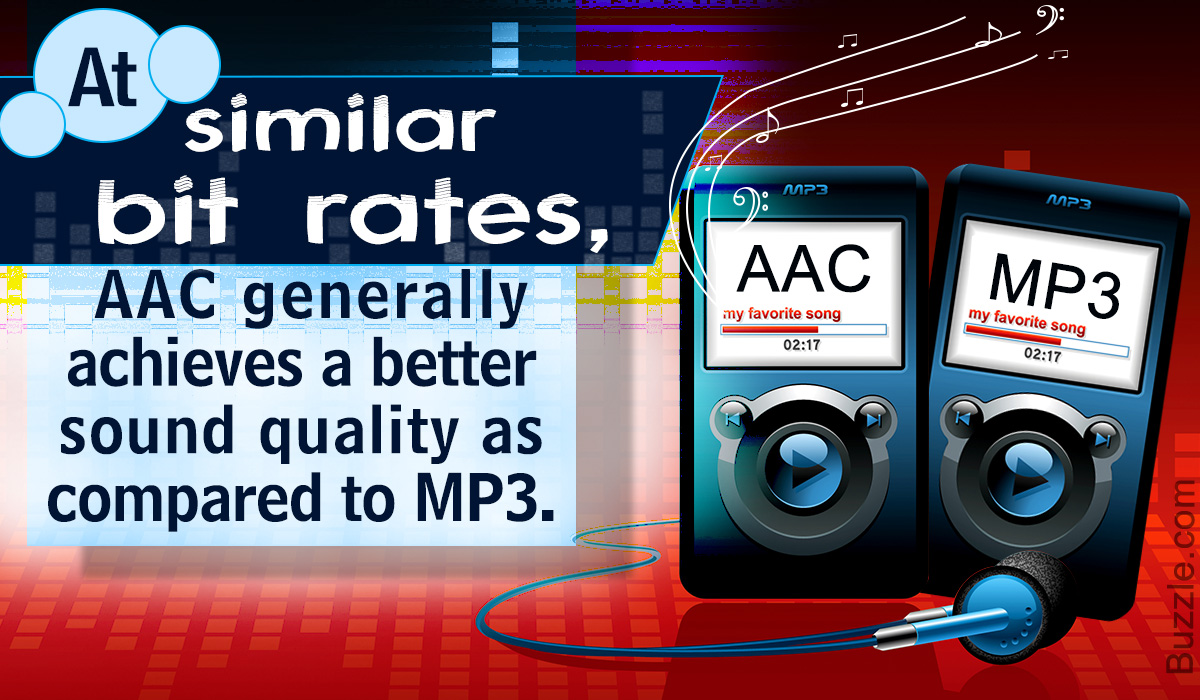
AAC stands for Advanced Audio Coding. It is a lossy audio codec that was developed by the Moving Picture Experts Group (MPEG). AAC is designed to provide better sound quality than MP3 at the same file size. AAC is also more efficient than MP3, which means that it can achieve even better sound quality at lower file sizes.
AAC is supported by a wide range of devices, including smartphones, tablets, computers, and home audio systems. It is also the default audio format for many streaming services, such as Spotify and Apple Music.
MP3
MP3 stands for MPEG-1 Audio Layer 3. It is a lossy audio codec that was developed by the Moving Picture Experts Group (MPEG). MP3 is the most popular audio codec in the world. It is supported by a wide range of devices, and it is the default audio format for many music file sharing services.
MP3 is not as efficient as AAC, which means that it cannot achieve the same sound quality at lower file sizes. However, MP3 is still a good choice for most people. It is a reliable and widely supported codec that offers good sound quality at a reasonable file size.
Which Audio Codec is Right for You?
The best audio codec for you depends on your needs. If you want the best possible sound quality, then AAC is the better choice. However, if you are looking for a codec that is widely supported and that offers good sound quality at a reasonable file size, then MP3 is a good option.
Conclusion
AAC and MP3 are two of the most popular audio codecs in the world. Both codecs offer good sound quality, but AAC is generally considered to be the better choice for people who want the best possible sound quality. MP3 is a good option for people who are looking for a codec that is widely supported and that offers good sound quality at a reasonable file size.
Recently, there are more and more opportunities to reproduce audio and music from compressed sound sources, such as digital televisions and iPods.
I think many audiophiles naturally hate “The sound of compressed sound sources is ridiculous,” but is that true? Here, I will try to discover the truth based on the data.
Types of compression with loss
The principle and format of audio compression will be left in the hands of Wikipedia, but here we will focus on the most used MP3 and AAC (Advanced Audio Coding) methods. It is said that AAC is a newcomer and has a high sound quality. Here is a relatively easy explanation of understanding of AAC compression. The source is a lighting book on digital technology that I wrote before, but I forgot the title of the book.
It should be noted that a high sound quality here means that the theoretical fidelity to the original sound is high, and does not mean that sound is good to listen. If the same compression method is used, the higher the number of bits sent per second, that is, the bit rate (unit: kbps), the greater the sound quality. However, since the bit rate can be a variable bit rate that fluctuates according to the amount of information, comprise that the values on this page indicate the average value or the lower limit value.
The sound quality of the compressed sound source is always confirmed by a blind test.
As I wrote on the page of the Ptolemaic theory to the Copernican theory, in Japan, the blind evaluation of audio equipment is considered taboo and never realized. The reason is evident, because if you do this, the audio industry will not be possible in the first place. However, audio compression technology is different. This is an essential technology for the most recent audio equipment, such as digital television, music distribution and portable audio equipment, which is expected to have a great demand in the future, instead of aiming the world of narrow audio and narrow where they are not similar. -The science is very widespread. It is extremely important to evaluate through a blind test how much data can be compressed without feeling the deterioration of sound quality, and is a first-line engineer who has dominated the last psychoacoustic and the theory of digital information. It has been introduced and developed.
At this time, unlike the evaluation of other audio equipment, it is easy to change the difference between the compressed sound source and the original sound source so that the operation is not understood, only with computer software, so a Perfect double double test is easy. I am also happy to be able to do it.
“About the sound quality of audio compression technology” is very useful. I also agree with the claim of this site.
Evaluation of the bit rate and sound quality
This site contains the results of a blind test to see if there is a difference in sound quality between a compressed sound source with a different bit rate and a PCM WAV file (same as the sound of a CD). However, it does not say what the format is.
The subjects were 220 sound professionals, and the results were such that the difference was barely noticed if it was above 100 kbps, or even if it was known, I would not bother me. The stereo bits speed in BS digital mode and the default iPod speed is 128 kbps or more, so it is a subtle point and can be said that a young and deaf person can notice the difference.
What is the difference reflected in the bit rate?
Why does the sound differ when the bit rate is different? To answer the question with precision, it is necessary to understand the compression principle, which is quite difficult without the basics of psychoacoustics and the theory of information. The most significant reflection is the frequency characteristics of the reproduced sound, which appears as a difference in the cutoff frequency in the high frequency range. The following sites show the frequency features of the sounds played with different bit rates.
I know that the lossless sound source is of the highest quality, but the file size is too large.
I want to hear it in the smallest possible size with the best possible sound quality!
I think there are many such people. I am the same.
This time, I would like to roughly examine the differences between mp3 and AAC.
I don’t know because it’s a bit of a snob for a hobbyist.
Table of Contents
Effect
Frequency analysis
Let’s listen and compare
conclusion
Effect
Since this is a compressed sound source, casual listening is an important premise.
First, let’s abandon the stereotype that “AAC is better.”
Looking at the net, there are people who write that “AAC is better because it came out later” or “AAC is better because it is an improved version of mp3”, but the compression efficiency is good and the sound you can really hear I don’t think always be the same to improve.
This study then only confirms the “objectively understandable difference” for each format and does not determine the superiority or inferiority of sound quality.
Personally, assuming 320 kbps, even if it is a compressed sound source, be it mp3 or AAC, the audible range is perfectly suppressed, so I think the sound you hear is the same, and I only listen casually. I don’t even have to hear the slightest difference.
Honestly, 128 kbps is fine for portable use (although the audible range changes significantly compared to 320 kbps), but if you’re looking for a premium music experience with home audio, you should use a compressed sound source first. use time.
Frequency analysis
There are many other people who do the same, but I’ll check it out myself.
Note that the vertical and horizontal widths differ for each graphic.
All encoding to mp3 / AAC is done with iTunes.
First, I prepared a FLAC sound source sample. The genre is rock.
The characteristics of 4608 kbps bit rate / 96 kHz sampling rate / 24 bit bit depth of
frequency are as follows. This is the original way.
Generally, the human audible range is said to be around 20Hz to 20kHz *, but with FLAC, you can see that information is also included in the ultra-high range above 20kHz.
* Actually, it seems that most people have a hard time distinguishing between 15 kHz and higher.
Then AAC / 320 kbps
* Sampling frequency 44.1 kHz / Bit depth 16 bit
AAC vs AC3 is a common comparison in the realm of audio codecs, with both formats vying for dominance in digital audio compression. Advanced Audio Codec (AAC) is renowned for its superior sound quality and efficient compression, making it the preferred choice for various applications like online streaming, mobile devices, and digital radio. It has gained popularity due to its ability to deliver high-quality audio at lower bit rates, resulting in smaller file sizes while maintaining impressive sound fidelity. On the other hand, AC3, also known as Dolby Digital, has long been used in home theater systems and DVDs. While it may not match AAC in terms of compression efficiency, AC3 offers compatibility with a wide range of devices and audio systems, making it a reliable option for surround sound setups and media distribution.
The debate over AAC vs AC3
The debate over AAC vs AC3 often centers on audio quality and device support. AAC boasts better audio quality at similar bit rates compared to AC3, making it ideal for audiophiles and those seeking a more immersive listening experience. Its widespread support across platforms like iOS, Android, and major media players ensures seamless playback on various devices. Additionally, AAC’s integration in popular streaming services further solidifies its position as the go-to choice for digital content distribution. Conversely, AC3 remains prevalent in the entertainment industry, particularly for DVDs, Blu-rays, and older home theater systems. Its legacy support and compatibility with a vast array of multimedia players ensure that AC3-encoded content remains accessible and relevant.
Choosing between AAC and AC3
When choosing between AAC and AC3, several factors come into play, depending on the intended application. For creators and content distributors looking to deliver high-quality audio over bandwidth-constrained networks, AAC emerges as the frontrunner. Its efficient compression and exceptional sound reproduction make it a top pick for streaming platforms and online media consumption. Conversely, AC3 finds favor in scenarios where backward compatibility and compatibility with legacy systems are critical, such as DVD and Blu-ray distribution. Ultimately, the decision between AAC and AC3 hinges on the specific requirements of the project, the target audience, and the ecosystem of devices where the audio content will be played, making it essential for content creators to carefully evaluate their needs before settling on the ideal audio codec.
How to convert to AAC / AC3
“What is the difference between AC3 and AAC? I want to compress PCM and convert it to AAC / AC3 to save free space, but I don’t know which is better. AAC is more efficient and sound quality than AC3. I heard that it is OK. For example, I’m compressing from the same source, but which is better compared to a 256 kbit AAC file or a 384 kbit AC3 file? ”
Many people would like to ask. When I want to extract audio files from video files or Blu-ray / DVD, I don’t know which one to choose, AC3 or AAC. In this article, we will explain the difference between AAC and AAC, compare the advantages and disadvantages of each, and how to convert DVD to AC3 / AAC.
AC3, also known as Dolby Digital (audio code number 3), is an audio format developed by Dolby Laboratories, Inc. Originally, AC3 was widely used in 5.1 channels and is similar to Dolby Pro Logic. AC3 is often used for 384 kbps and 448 kbps DVD or laser discs. It is also used in 640 kbps movies.
AAC, also known as advanced audio coding, is an irreversible audio format standardized as part of the MPEG-4 specification. Developed as a successor to MPEG Layer III (MP3). AAC can transfer any bit rate from AC3 and compress data better, but it is considerably more complex than AC3. However, AAC excels with an output of 400 Kbps on 5.1 channels and 180 Kbps on dual channels.
aac-vs-ac3
Besides Movie / DVD / Blu-Ray projects, I rarely use AC3. The AC3 Dolby Digital format is mainly used for videos only. Generally, you cannot encode or decode without the use of specially licensed software or hardware.
In general, AC3 appears to be an irreversible format, but not all encoded AC3 files are irreversible. It can be encoded in lossless AC3 format. Of course, this is better than using the irreversible AAC format.
When asked which codec produces the best sound, assuming AAC or AC3 is used to encode the audio at similar bit rates, the results may be similar. However, the AAC can be a bit better. The main reason is that AAC appeared a few years after AC3, and is recognized as an excellent codec in many respects compared to MP3 (very similar to AC3).
Part 2: Advantages and disadvantages of AC3 and AAC
What are the advantages and disadvantages of AC3 and AAC? The following detailed comparison table will explain it clearly and easily.
merit demerit
CAA
1. As part of the ISO standardized MPEG-4 specification, AAC supports multiple sample rates (8000-96000 Hz), bit depth, and multi-channel (up to 48 channels).
2. Various implementations are available, such as free and high-quality implementations. Therefore, anyone can implement it.
3. AAC audio files are compatible with more devices and players.
4. AAC audio files create small digital audio files.
AAC comes in a variety of formats, including AAC LC, AAC HE, and AAC PS. Therefore, it is not possible to play valid AAC files with multiple players (LC compatible only).
AC3
1. AC3 only supports full-range channels, but the sound quality is much better. It can also be backward compatible.
2. AC3 has now become the industry standard for DTV and DVD media, so almost all the latest DVD movies come with a DVD soundtrack program.
3. For high quality audio, AC3 is widely used for HDTV, DVD and Blu-ray.
Supports up to 5.1 channel audio CDs.
Dolby digital is limited to a maximum of 448 kbps.
AAC is the default audio format for iPhone, iPod, iPad, Nintendo DSi / 3DS, iTunes, DivX Plus web player, and PS3. It is also compatible with PS Vita, Wii (Photo Channel Update), Sony Walkman MP3 series and later Sony Ericsson. And mobile phones based on Nokia, Android, BlackBerry and webOS. Most car audio manufacturers also use AAC.
AC3 (Dolby Digital) is widely used in broadcasting HDTVs, DVDs, Blu-ray discs, and game consoles.
As part of the standardized MPEG-4 specification, AAC Codex creates small digital audio files, so you can store audio files in less space while maintaining high-quality sound.

:max_bytes(150000):strip_icc()/AAC-vs-MP3-861dbce7e28045dda598a9c5cd2a6b65.jpg)