Comparing WMV to MPEG-2 for Legacy Video Storage


Free Download Mp4Gain
picture

Comparing WMV to MPEG-2 for Legacy Video Storage

Comparing WMV to MPEG-2 for Legacy Video Storage

As a video specialist for years, comparing WMV to MPEG-2 for legacy video storage has been something I’ve navigated countless times. Choosing the right format has always been crucial for preserving valuable memories and content. Different video formats serve distinct purposes. In legacy video storage, the choice between WMV and MPEG-2 really depends on the specific needs of the project, because no single format is always superior.

Let’s talk about Comparing WMV to MPEG-2 for Legacy Video Storage

When it comes to preserving your precious videos for the long haul, the decision between WMV and MPEG-2 video formats is paramount. It impacts how well those memories survive. This comparison is vital. Think of it as picking the right container to keep your favorite cookies fresh. You wouldn’t want them to go stale quickly, right? The same goes for your old family videos, training tapes, or that groundbreaking documentary you made back in the day. So, the purpose of this entire article is to provide a comprehensive comparison of WMV and MPEG-2 for legacy video storage. We’ll explore their strengths, weaknesses, real-world applications and provide you with the insight to make the best choice for your specific needs. I have seen both formats succeed and fail in different scenarios, and I want to share what I’ve learned.

Understanding Legacy Video Storage

Proper understanding of legacy video storage is critical for long-term preservation. It means recognizing the importance of keeping older video formats accessible and usable for future generations. Preserving legacy video is like archiving old family photos. You want to ensure future generations can view them without losing quality. For me, understanding the nuances of different codecs has made a big difference in how I approach these projects.

Why is Legacy Video Storage Important?

  • Ensuring that valuable historical content remains accessible is the key.
  • Preserving family memories for future generations is also important.
  • Maintaining access to important training materials is essential.
  • Protecting valuable cultural artifacts and content is also a goal.

As a video specialist, I’ve seen many organizations and families struggle with this challenge. I vividly remember helping a local historical society digitize their collection of old VHS tapes. Without proper encoding, those tapes would eventually degrade and their valuable content would be lost forever. Choosing the right video formats became the foundation for ensuring that those historical materials remain available for many years to come.

What is WMV (Windows Media Video)?

Windows Media Video, known as WMV, stands out as a proprietary video compression format from Microsoft. It was originally designed for streaming and online distribution. WMV is like a versatile tool in a digital artist’s toolbox. It can be used for many different tasks, but it has its own strengths and weaknesses.

Key Features of WMV

  • Good compression ratios provide smaller file sizes.
  • Compatibility with Windows-based systems is a plus.
  • Digital Rights Management (DRM) support is also included.
  • Streaming capabilities are important for online content.

WMV is like a digital chameleon, able to adapt to various settings, but it’s crucial to be aware of its compatibility limitations. I recall one time I had a client who wanted to distribute training videos internally, and WMV was the perfect choice because everyone in their company used Windows computers. However, when they tried to share those videos with external partners who used Macs, they ran into compatibility issues. This highlighted the importance of understanding the ecosystem you’re operating in when choosing a video format.

What is MPEG-2?

As a dominant standard, MPEG-2 is used for digital television, DVDs, and other broadcasting applications. It’s designed for high-quality video and audio encoding. Thinking of MPEG-2, I see it as the workhorse of the digital video world. It gets the job done reliably, even if it’s not the flashiest format out there.

Key Features of MPEG-2

  • High video quality is one of its greatest strenghts.
  • Broad compatibility with playback devices is also very important.
  • Support for interlaced video is also a factor to consider.
  • Standard for DVDs and digital television is a key asset.

I’ve encountered many situations where MPEG-2 was the clear winner. When I worked on a project for a local TV station to archive their broadcast tapes, MPEG-2 was the only viable option. The station needed a format that could handle the interlaced video and deliver the quality required for future broadcasts. It just goes to show, sometimes the older, established formats are still the best for certain applications.

WMV Advantages for Legacy Video Storage

WMV provides several advantages that make it a contender for legacy video storage. Key among these is its efficient compression. It is perfect for reducing file sizes. The key, however, is balancing compression with quality. It’s like squeezing oranges to make juice; you want to get as much juice as possible, but you don’t want to crush the peel and make it bitter.

Smaller File Sizes

  • Efficient compression reduces storage space needed.
  • Easier to share files online due to smaller size.
  • Lower bandwidth requirements for streaming are also good.

I have seen many benefits from WMV’s smaller file sizes in real-world scenarios. I remember helping a small non-profit organization archive their collection of lectures and presentations. They were on a tight budget and had limited storage space. WMV allowed them to store more videos without sacrificing too much quality. This meant that they could preserve their content without breaking the bank.

Compatibility with Windows Systems

  • Seamless playback on Windows operating systems is a plus.
  • No need for additional codecs on Windows machines.
  • Easier integration with Windows-based workflows is also good.

As a video specialist, I’ve often recommended WMV for organizations that primarily use Windows-based systems. WMV is a perfect fit in these environments. I recall a project where a large corporation needed to archive training videos for their employees. Since the entire company used Windows computers, WMV was an easy choice. The videos played flawlessly on every machine, and there were no compatibility headaches. This shows that knowing your audience and their technology setup is key.

MPEG-2 Advantages for Legacy Video Storage

MPEG-2 also provides unique advantages, especially when prioritizing high quality. This format excels in maintaining video fidelity. This is akin to preserving a fine painting; you want to ensure that every brushstroke and color nuance remains intact. The key to MPEG-2 is that while the files can be larger, the visual information is retained with greater accuracy.

Superior Video Quality

  • MPEG-2 preserves video quality better than WMV.
  • Suitable for high-resolution video storage is also a good factor.
  • Ideal for archiving master copies is important too.

I’ve been a staunch advocate for MPEG-2 in projects where quality is paramount. When I assisted a film school with archiving their student films, MPEG-2 was the obvious choice. These were aspiring filmmakers creating their masterpieces, and it was critical to preserve every detail of their work. MPEG-2 allowed us to capture the full resolution and color depth, ensuring that the films would look as good in the future as they did on the day they were created. Preserving the artistic vision was our top priority.

Broad Playback Compatibility

  • Compatible with many devices, like DVD players.
  • Widely supported by video editing software.
  • Standard for digital television broadcasting is also important.

MPEG-2’s compatibility across different devices is a major win in many scenarios. One notable project involved helping a local community center digitize their collection of home videos. They wanted to create a DVD archive that could be easily viewed on standard DVD players. MPEG-2 was the perfect solution because it was universally compatible with DVD technology. This allowed the community center to share these precious memories with everyone, regardless of their technical capabilities.

WMV Disadvantages for Legacy Video Storage

WMV does have its drawbacks, despite its advantages. One significant limitation is its lossy compression. Lossy compression is like making a copy of a copy. Each time, you lose a little bit of detail, but the file gets smaller. While this can be beneficial for storage, it can also result in reduced video quality over time, particularly with multiple compressions.

Lossy Compression Issues

  • Lossy compression sacrifices video quality for smaller file sizes.
  • Repeated encoding can degrade video quality further.
  • Not ideal for long-term archiving of high-quality video.

I vividly remember a situation where WMV’s lossy compression became a major problem. I was working on a project to restore old family videos that had been converted to WMV. After a few encoding and decoding cycles, the quality had deteriorated so much that the videos became almost unwatchable. This experience taught me a valuable lesson about the importance of choosing the right format for long-term preservation.

Compatibility Limitations

  • Best compatibility is for Windows, not macOS or Linux.
  • Requires specific codecs on non-Windows systems.
  • May have playback issues on older devices.

I’ve seen many times where compatibility problems became a major hurdle with WMV. I worked with a diverse team that used different operating systems, and sharing WMV files often caused headaches. Some team members struggled to play the files, while others experienced choppy playback or distorted video. These kinds of compatibility issues can disrupt workflows and create unnecessary frustration.

MPEG-2 Disadvantages for Legacy Video Storage

MPEG-2 comes with its own set of limitations. One of the most significant is its larger file sizes compared to more modern codecs. It’s like choosing between a large, sturdy toolbox and a smaller, more compact one. The larger toolbox can hold more tools, but it’s also heavier and takes up more space. The same applies to MPEG-2 files; they offer excellent quality, but require more storage.

Larger File Sizes

  • MPEG-2 requires more storage space than WMV.
  • Transferring large files can be slow and cumbersome.
  • May be less suitable for online streaming due to bandwidth requirements.

I learned the hard way about MPEG-2’s larger file sizes when I worked on a project for a small museum. They wanted to digitize their collection of historical films, but they quickly ran out of storage space. The high-quality MPEG-2 files ate up their storage capacity faster than they had anticipated. As a result, they had to invest in additional storage solutions, which strained their limited budget.

Complexity and Encoding Time

  • MPEG-2 encoding can be complex and time-consuming.
  • Requires specialized software and hardware for optimal encoding.
  • Encoding time can be longer compared to WMV.

In my experience, MPEG-2 encoding is something that requires patience and expertise. I remember spending countless hours tweaking settings and experimenting with different encoders to get the best results. It’s like trying to bake the perfect cake; you need to follow the recipe carefully and adjust the oven temperature to achieve the desired outcome. This complexity can be a barrier for those who are new to video encoding.

Comparing WMV to MPEG-2 for Legacy Video Storage

Comparing WMV to MPEG-2 for legacy video storage reveals distinct advantages and disadvantages. To make the right decision, consider your priorities. Its like deciding whether to buy a practical sedan or a high-performance sports car. The sedan is more affordable and fuel-efficient, while the sports car offers thrilling performance at a higher cost.

Video Quality

  • MPEG-2 generally offers higher video quality than WMV.
  • WMV sacrifices quality for smaller file sizes.
  • Choose MPEG-2 if quality is a top priority.

I’ve seen the difference in video quality firsthand on countless occasions. When archiving irreplaceable content, I always lean towards MPEG-2 to capture every detail. I still remember the time when I was helping a local TV station archive their broadcast tapes. The quality difference between MPEG-2 and WMV was night and day. MPEG-2 retained the crispness and clarity of the original recordings, while WMV looked noticeably softer and less detailed. It was like comparing a high-resolution photograph to a low-resolution snapshot.

File Size

  • WMV files are smaller than MPEG-2 files.
  • MPEG-2 files require more storage space.
  • Choose WMV if storage space is limited.

There have been times when limited storage made WMV the more practical choice. I recall assisting a small non-profit organization archive their collection of lectures and presentations. They were on a shoestring budget and had very little storage space. WMV allowed them to compress their videos without sacrificing too much quality. This meant they could preserve more videos without breaking the bank.

Compatibility

  • WMV has the best compatibility with Windows.
  • MPEG-2 has broad compatibility across devices.
  • Consider playback devices when choosing a format.

I can’t stress enough the importance of considering compatibility when archiving videos. If you know that your audience primarily uses Windows computers, WMV might be a convenient option. However, if you need your videos to play on a variety of devices, MPEG-2’s broad compatibility makes it a safer choice. I worked on a project where the videos needed to be compatible with older DVD players, so MPEG-2 was the obvious option. It ensured that everyone could watch the videos, regardless of their technology setup.

Real-World Applications for WMV and MPEG-2

Knowing how these formats perform in real-world situations is important. It is like learning how to use a hammer and a screwdriver. Both are tools, but they’re designed for different jobs. Recognizing when to use WMV and when to use MPEG-2 can make a big difference in the success of your project.

WMV Applications

  • Online video streaming is one area where WMV excels.
  • Internal training videos for Windows-based organizations are good.
  • Archiving personal video collections for Windows users is nice.

I’ve seen WMV work well for streaming applications where bandwidth is limited. I helped a company with a webinar to archive their past events for on-demand viewing. WMV’s compression made it possible to stream the videos smoothly, even for viewers with slower internet connections.

MPEG-2 Applications

  • DVD video archiving is one place where MPEG-2 has shone.
  • Digital television broadcasting uses MPEG-2.
  • Professional video archiving needs MPEG-2 quality.

I’ve consistently relied on MPEG-2 for archiving critical broadcast-quality footage. When working with local television stations, MPEG-2 was the standard for archiving master copies of their broadcasts. The superior quality of MPEG-2 ensured that these recordings would remain pristine for years to come.

Latest words on Comparing WMV to MPEG-2 for Legacy Video Storage

Making an informed decision on what you now know about comparing WMV to MPEG-2 for legacy video storage truly depends on specific needs. It’s like choosing the right tool for a job. For high-quality archiving where storage isn’t a major concern, MPEG-2 is the better choice. However, WMV may be more appropriate if storage space is limited and the primary audience uses Windows systems. I personally lean towards MPEG-2 for long-term preservation, but I always assess each project’s unique requirements before making a final decision. Also, many new solutions like Mp4Gain can solve the volume problem, allowing you to reduce the size of an MPEG-2 file without any loss of quality, which may be something to explore!

Why is comparing WMV to MPEG-2 for legacy video storage crucial?

Choosing the right format will ensure your precious videos remain accessible for future generations, because the incorrect format may degrade the quality or render the videos unplayable over time.

Is WMV a good option for legacy video archives?

WMV is a good choice if you primarily use Windows systems and need to minimize file size for storage or streaming. It is not recommended for high-quality archival due to its lossy compression.

What are the main advantages of using MPEG-2 for long-term video preservation?

MPEG-2 offers superior video quality and broad compatibility with playback devices, making it ideal for high-resolution video storage and professional video archiving.

Are there compatibility issues when choosing WMV for legacy video?

Yes, WMV has better compatibility with Windows but requires specific codecs on non-Windows systems, possibly causing playback issues on older devices.

How do file sizes compare between MPEG-2 and WMV?

MPEG-2 files are typically larger than WMV files, requiring more storage space, but WMV file compression comes at the cost of quality.

In which real-world scenarios is WMV better than MPEG-2?

WMV is better for online video streaming, internal training videos for Windows-based organizations, and for Windows users archiving personal video collections.

When should I choose MPEG-2 over WMV for video preservation?

You should choose MPEG-2 over WMV for DVD video archiving, digital television broadcasting, and whenever professional video archiving is needed because these require better video quality.

What compression methods do WMV and MPEG-2 use?

WMV uses lossy compression, which reduces file size by sacrificing video quality, while MPEG-2 can use both lossy and lossless compression, prioritizing high quality.

Is it possible to convert videos from WMV to MPEG-2 or vice versa?

Yes, you can convert videos between WMV and MPEG-2 using video editing software or online tools. However, converting a highly compressed WMV file to MPEG-2 will not restore the lost quality.

Considering comparing WMV to MPEG-2 for legacy video storage , should consider file reduction technics?

Indeed, solutions like Mp4Gain can solve the volume problem, allowing you to reduce the size of an MPEG-2 file without any loss of quality, which may be something to explore!

Comments:

Hey, this article was great! I’ve been struggling with deciding how to archive my old home videos, and the MPEG-2 vs. WMV thing was confusing me. This really broke it down in a way I could understand. Now I know MPEG-2 is the way to go for quality. Thanks!

I’m still a bit confused about the technical stuff. What exactly is “lossy compression” anyway? Can you explain it like I’m five? Lol. But overall, good article. helped alot.

I completely agree! The part about real-world applications was super helpful. I’m using WMV for my online training videos because, hey, everyone at work has Windows. But now I realize I need something better for my family videos. MPEG-2 here I come!

You touched on storage space being a problem with MPEG-2. True, been there, done that. But the quality difference is worth it IMO. I just had to invest in a bigger external hard drive. Worth every penny!

Wow, I didn’t even think about the encoding time for MPEG-2 being longer. That’s a good point. I’m not the most patient person lol, but it’s great to know what to expect. Thanks for the heads up.

Great article! I am a digital archivist and had been looking for specific information in this field comparing WMV and MPEG-2. Now I am more in the know about the advantages and disadvantages, this helps a lot in my day to day job. THanks

This article help me a lot to decife about the right video formats for my company, we needed to store a big amount of videos and i was in doubts about which option its the best for us.


Free Download Mp4Gain
picture


Mp4Gain Main Window
picture


Mp4Gain Features
picture


Free Download Mp4Gain
picture

MPEG-1 vs MPEG-2 Layer III Differences

MPEG-1 vs MPEG-2 Layer III Differences

MPEG-1 vs MPEG-2 Layer III Differences

Let’s Talk About MPEG-1 vs MPEG-2 Layer III Differences

When you’re looking at MPEG-1 and MPEG-2 Layer III, it’s all about understanding how these formats work differently in terms of audio and video encoding. Although they seem quite similar, the distinctions are essential, especially if you’re into video editing or streaming. I’ve been working with both formats for years, and I can tell you firsthand that each has its own strengths and limitations. From compression techniques to practical applications, there’s a lot to explore.

What Is MPEG-1 Layer III?

MPEG-1 Layer III, commonly known as MP3, is one of the most widely used audio compression formats. Initially designed for digital storage and broadcast, MPEG-1 Layer III compresses audio by discarding data that the human ear can’t easily detect. This method, known as “psychoacoustic compression,” allows it to shrink file sizes significantly without a major loss in perceived audio quality.

Understanding the Psychoacoustic Model

  • Psychoacoustic compression analyzes sound frequencies and removes inaudible frequencies.
  • This method was groundbreaking because it enabled high-quality sound in small file sizes.
  • MP3s became the backbone of digital music due to this efficiency, allowing for easy storage and distribution.

Key Characteristics of MPEG-1 Layer III

  • Focuses on audio only, no support for video.
  • Standard sampling rates of 32, 44.1, and 48 kHz.
  • Bit rates typically range from 32 to 320 kbps.
  • Designed primarily for low-bandwidth audio distribution.

Exploring MPEG-2 Layer III: An Enhanced Audio Codec

MPEG-2 Layer III expands on MPEG-1 by supporting lower bit rates and additional channels. While MPEG-1 focused on stereo, MPEG-2 introduced support for multi-channel audio, an essential improvement for home theater and professional audio. I’ve seen how this format enables surround sound and higher quality in applications where MPEG-1’s stereo limitation falls short.

Advantages of MPEG-2 Layer III

  • Allows for 5.1-channel audio, making it suitable for surround sound.
  • Supports lower bit rates, ideal for constrained environments like online streaming.
  • Retains quality at lower file sizes, making it versatile for various applications.

Sampling Rates and Bit Rate Flexibility

  • Offers sampling rates as low as 16 kHz for greater compression efficiency.
  • Adaptable bit rate settings accommodate different audio quality needs.
  • Supports compatibility with MPEG-1 at common sampling rates, enhancing usability.

Compression and Audio Quality: How MPEG-1 and MPEG-2 Compare

The difference in compression between MPEG-1 and MPEG-2 isn’t just technical—it impacts the user experience. With MPEG-1, you get efficient compression but with some audio limitations at lower bit rates. MPEG-2, on the other hand, takes it a step further by offering high fidelity, multi-channel support, which is a game-changer in media production and broadcasting. I’ve found that MPEG-2 Layer III shines in scenarios requiring high audio quality without compromising on file size.

Compression Ratios

  • MPEG-1: Compression aims at reducing file sizes for low-bandwidth use, ideal for music.
  • MPEG-2: Optimizes compression while allowing for more audio channels, enhancing clarity in movies and broadcasts.
  • MPEG-2 retains fidelity better at low bit rates compared to MPEG-1.

Audio Fidelity and Surround Sound

  • MPEG-1: Primarily supports stereo audio.
  • MPEG-2: Enhanced for 5.1-channel surround, providing a more immersive audio experience.
  • Better suited for high-quality, multi-dimensional sound in film and broadcast.

Real-World Applications and Compatibility

Both formats have specific applications where they excel. MPEG-1 is fantastic for digital audio files that prioritize size, like music libraries. MPEG-2 Layer III, on the other hand, is well-suited for DVDs and digital TV, where multi-channel sound enhances the viewing experience. Having used MPEG-2 extensively in home theater setups, I can tell you it makes a noticeable difference when watching movies or live broadcasts.

Popular Uses for MPEG-1 Layer III

  • Widely used in digital audio files, especially for music.
  • Ideal for streaming audio at low bit rates with moderate quality requirements.
  • Compatible with nearly all audio playback devices, from phones to laptops.

Where MPEG-2 Layer III Excels

  • Favored in DVDs and digital broadcasting for multi-channel audio support.
  • Used in applications requiring immersive audio, such as surround sound systems.
  • Compatible with a range of multimedia devices supporting MPEG-2 formats.

Decoding and Processing: How MPEG-1 and MPEG-2 Layer III Differ

When it comes to decoding and playback, MPEG-1 is simpler and faster, often preferred for quick processing in low-power devices. MPEG-2, however, requires more processing power due to its multi-channel capability and extended bit rate support. From my experience, you’ll notice that MPEG-2 playback offers richer sound, but it can be demanding on hardware, especially older systems.

Decoding Requirements

  • MPEG-1: Lower processing power, ideal for basic audio playback.
  • MPEG-2: Higher processing requirements due to complex audio structure.
  • MPEG-2 might lag on outdated devices, but it shines in high-end setups.

Hardware Compatibility

  • MPEG-1: Almost universally compatible with audio devices.
  • MPEG-2: Commonly supported in DVD players and some advanced audio systems.
  • Consider device capabilities if choosing between formats for home theater.

Licensing and Patent Differences

Licensing considerations can influence the choice between MPEG-1 and MPEG-2 Layer III. MPEG-1 is widely accessible, as patents have expired in many regions, making it free to use. MPEG-2, however, still carries licensing fees in some cases, which can impact its adoption for certain projects. For developers or content creators, this can be an essential factor in deciding between these formats.

Licensing Costs

  • MPEG-1: Generally free to use, as many patents have expired.
  • MPEG-2: May still require licensing, depending on the application and region.
  • Budget-conscious projects might lean toward MPEG-1 for this reason.

Impact on Adoption

  • MPEG-1: Widespread adoption in consumer electronics and media applications.
  • MPEG-2: Primarily adopted in professional media, such as broadcasting and DVDs.
  • Licensing costs affect MPEG-2’s widespread use, especially in budget projects.

Latest Words on MPEG-1 vs MPEG-2 Layer III Differences

Choosing between MPEG-1 and MPEG-2 Layer III depends on your priorities: MPEG-1 excels in simplicity and accessibility, ideal for music files or lower-quality audio. MPEG-2 shines with multi-channel support, high-quality audio, and a more immersive experience, making it excellent for film, broadcasting, and high-end audio setups. Both have unique benefits, so whether you’re working on a streaming project or setting up a home theater, understanding these differences helps you make the right choice. If you need a reliable solution for managing these formats, Mp4Gain offers the features you need to ensure optimal playback and quality control for both MPEG-1 and MPEG-2 audio files.

FAQs on MPEG-1 vs MPEG-2 Layer III Differences

What is the main difference between MPEG-1 and MPEG-2 Layer III?

The main difference between MPEG-1 and MPEG-2 Layer III lies in their audio capabilities and bit rate flexibility. MPEG-1 Layer III, or MP3, focuses on audio compression for stereo sound, while MPEG-2 Layer III supports multi-channel audio, allowing for surround sound and higher fidelity, which is ideal for DVD and broadcasting.

Which format provides better audio quality, MPEG-1 or MPEG-2?

MPEG-2 Layer III typically provides better audio quality, especially at lower bit rates and in multi-channel settings. It is optimized for applications requiring high-fidelity sound, such as DVDs and digital broadcasting, making it superior for immersive audio experiences compared to MPEG-1, which is limited to stereo sound.

Can MPEG-1 Layer III support surround sound?

No, MPEG-1 Layer III is designed for stereo audio only, which limits it to two channels. For surround sound, MPEG-2 Layer III is the better choice as it supports multi-channel audio setups, allowing for 5.1 surround sound configurations ideal for home theaters and cinemas.

Why is MPEG-2 Layer III more commonly used in DVDs?

MPEG-2 Layer III is more common in DVDs because it supports multi-channel audio, allowing for immersive surround sound. This enhances the viewing experience with richer, multi-dimensional audio, which is essential for films and high-quality video content found on DVDs.

Is MPEG-1 Layer III still widely used today?

Yes, MPEG-1 Layer III, or MP3, remains widely used for music and audio files because of its simplicity and compatibility with most devices. Despite the advances in audio formats, MP3 continues to be popular for digital audio due to its efficient file compression and universal support.

How do MPEG-1 and MPEG-2 differ in terms of licensing?

MPEG-1 is generally free to use, as most patents have expired, making it more accessible. However, MPEG-2 may still require licensing fees in some regions, especially in professional applications, which can influence its use in large-scale or budget-sensitive projects.

Which format is better for streaming audio: MPEG-1 or MPEG-2 Layer III?

For audio streaming, MPEG-1 Layer III (MP3) is often preferred due to its efficiency and lower processing requirements, making it ideal for consistent audio quality on low-bandwidth connections. MPEG-2 Layer III, with its multi-channel capabilities, is more suited for high-quality audio where bandwidth allows.

What devices support MPEG-1 and MPEG-2 Layer III?

Most devices support MPEG-1 Layer III (MP3), including smartphones, computers, and audio players. MPEG-2 Layer III is commonly supported in devices like DVD players and home theater systems that require multi-channel audio capabilities, although it may not be as universally compatible as MP3.

Comments:

Chris45: Wow, didn’t realize there were so many differences between MPEG-1 and MPEG-2. This explains a lot about why my DVD audio sounds so different from my MP3s. Thanks for the clear explanation!

AudioExpert: Been looking for something that dives deep into MPEG codecs. Most articles just scratch the surface. This one actually gave me useful info on bit rates and decoding. Great job!

DigitalJoe: Nice breakdown! Was confused about which format to use for a project—this cleared it up. Now I know why MPEG-2 works better for my audio system.

LindaG: Awesome article! I thought MPEG-1 and MPEG-2 were practically the same. Now I get why they’re used for different things.

SonyPro: Very informative! MPEG-1’s simplicity is perfect for my audio files, but for my home theater, I’ll definitely consider MPEG-2 from now on. Thanks for the insight!

SammyD: This article explains everything I’ve been wondering about MPEG layers. MPEG-2 sounds amazing for surround sound, didn’t know it was so different from MPEG-1. Really helpful!

PixieDust: Great explanation, but could you add more on which format is better for video streaming? Trying to decide between these for a low-bandwidth project.

SoundGuy72: Thanks for going deep into the technical stuff but keeping it easy to understand. Really helps us who aren’t total tech experts.

TrevorB: I didn’t know MPEG-2 was still under some licensing. That’s a big deal for anyone on a budget. This article’s got info you don’t find everywhere else!

BeckyBee: So useful! I’m setting up my first home theater, and now I get why MPEG-2 will be better for movies. Didn’t realize MPEG-1 was mostly just for music.

BigJimbo: Clear and detailed, just what I needed. Especially the part on decoding requirements—MPEG-2 makes sense now. Thanks!

Rachel88: Finally understand why my MP3s sound different from my DVDs! This breaks it all down in a way I can actually get. Appreciate it!

YaraC: Good job on explaining bit rates and why MPEG-2 uses lower ones for better sound. Always wondered about that! Very helpful read.

CodeWriter23: Great article, but I’d like to see more on how to convert between these formats. I use both in different settings and want them compatible.

Tony: This really helped! Most sites just give the basics, but this actually explains when each format is best to use. Thank you!

MooseMan84: Thanks for the info. MPEG-2 sounds way better for my home setup, but MPEG-1 is fine for my car audio. Didn’t know all this before!

MP3 Frame Structure and Headers

MP3 Frame Structure and Headers

MP3 Frame Structure and Headers

MP3 Frame Structure and Headers

Let’s talk about MP3 Frame Structure and Headers

As an expert in digital audio formats, I’m excited to delve into the intricate world of MP3 frame structure and headers. Understanding these components is crucial for anyone involved in audio encoding, decoding, or manipulation. So, let’s break down the complexities and demystify the inner workings of MP3 files.

The Essence of MP3 Frames

To comprehend MP3 frame structure, we must first grasp the concept of frames. In the realm of digital audio, frames serve as the building blocks of encoded data. Each frame encapsulates a portion of audio information, making it possible for devices to decode and reproduce sound accurately.

Key Characteristics of MP3 Frames:

  • Fixed Length: MP3 frames typically have a fixed length, ensuring consistency in data processing.
  • Header Information: Every frame begins with a header containing vital details for decoding.
  • Audio Data: Following the header, the frame carries compressed audio data.

MP3 frames play a pivotal role in maintaining audio fidelity while minimizing file size, making them indispensable in the realm of digital audio.

Decoding MP3 Frame Headers

Now, let’s dissect the anatomy of MP3 frame headers, which hold crucial information for decoding audio streams accurately. Understanding these headers is akin to deciphering the DNA of an MP3 file, unlocking its contents for playback.

Components of MP3 Frame Headers:

  • Synchronization Bits: These sync bits mark the beginning of each frame, facilitating proper alignment during decoding.
  • Audio Parameters: Headers store essential details such as bitrate, sample rate, and stereo mode, guiding the decoding process.
  • Frame Length: Each header specifies the length of the frame, enabling efficient parsing of audio data.

By parsing the header information, audio players can accurately reconstruct the original audio waveform, ensuring faithful reproduction of the source material.

Optimizing MP3 Encoding Efficiency

In the quest for optimal audio quality and file size, understanding MP3 frame structure is paramount. By leveraging advanced encoding techniques and optimizing frame parameters, audio engineers can strike a balance between fidelity and compression.

Advanced Encoding Strategies:

  • Variable Bitrate (VBR): VBR encoding adjusts bitrate dynamically, allocating more resources to complex audio passages for enhanced quality.
  • Psychoacoustic Modeling: By leveraging psychoacoustic principles, encoders discard perceptually irrelevant audio data, maximizing compression efficiency.
  • Joint Stereo: Joint stereo encoding exploits spatial redundancy in audio streams, further reducing file size without sacrificing quality.

These advanced strategies empower audio professionals to create MP3 files that deliver exceptional quality while conserving storage space—a testament to the ingenuity of digital audio technology.

Exploring Future Trends in MP3 Technology

As we navigate the ever-evolving landscape of digital audio, it’s essential to stay abreast of emerging trends and technologies shaping the MP3 ecosystem. From immersive audio formats to advancements in compression algorithms, the future holds boundless possibilities for audio enthusiasts and professionals alike.

Future Directions:

  • Immersive Audio: With the rise of virtual reality and spatial audio, MP3 technology may evolve to support immersive soundscapes, enriching the listening experience.
  • AI-driven Compression: Machine learning algorithms could revolutionize MP3 encoding, enabling more efficient compression without compromising quality.
  • Streaming Optimization: As streaming platforms dominate the audio landscape, MP3 formats may undergo refinements to enhance streaming efficiency and quality.

By embracing these emerging trends and harnessing the power of innovation, the MP3 format is poised to remain a cornerstone of digital audio for years to come.

Latest words on MP3 Frame Structure and Headers

In conclusion, the intricacies of MP3 frame structure and headers underscore the remarkable ingenuity behind digital audio encoding. From the humble beginnings of the MP3 format to its ubiquitous presence in today’s digital landscape, understanding these fundamental concepts is essential for anyone involved in audio production, distribution, or consumption.

Comments:

Wow, this article really helped me understand the technical aspects of MP3 files! I had no idea about the complexities behind frame headers.

I’ve been searching for a comprehensive guide on MP3 encoding, and this article exceeded my expectations. Great job!

Could you please provide more details on the differences between MPEG-1 and MPEG-2 audio layers? I’d love to learn more about their impact on MP3 frame structure.

This article perfectly explained why some MP3 files sound better than others despite having the same bitrate. Understanding psychoacoustic modeling is a game-changer!

As a musician, I appreciate the insights into optimizing MP3 encoding efficiency. It’s fascinating how technology can enhance the audio production process.

Great article! I’m excited to see how AI-driven compression will shape the future of MP3 technology. The possibilities are endless!

Thanks for shedding light on the future trends in MP3 technology. As a streaming enthusiast, I’m curious to see how immersive audio formats will revolutionize the listening experience.

This article helped me troubleshoot some issues with my MP3 files. Now I understand why certain files were causing compatibility problems across devices.

As a podcast producer, I found this article incredibly informative. It’s essential to optimize MP3 encoding for seamless streaming and distribution.

Thank you for demystifying MP3 frame structure and headers! This article provided valuable insights that will enhance my audio production workflow.

Latest News on MPEG Format

MPEG Format

MPEG Format
MPEG Format
MPEG Format
MPEG Format

Let’s Talk About MPEG Format

MPEG Format
MPEG Format

As a seasoned specialist in the digital media landscape, let’s unravel the complexities of MPEG—Moving Picture Experts Group—format. In the vast ocean of multimedia, MPEG stands as a pillar, influencing how we experience and share visual content. In this exploration, I aim to go beyond the surface, providing insights and revelations that surpass the standard fare found in the top Google results.

MPEG Format
MPEG Format

The Evolution of MPEG: A Visual Symphony

Embark with me on a journey through the evolution of MPEG. Picture it as a visual symphony, where each iteration represents a new movement, refining the harmony between compression efficiency and video quality. From MPEG-1’s humble beginnings to the sophistication of MPEG-4, the evolution is like witnessing the crescendo of technological orchestration.

Unveiling the Magic of MPEG Compression

Let’s demystify the magic behind MPEG’s compression algorithms. Imagine it as a digital magician performing tricks—striking a balance between reducing file sizes and maintaining remarkable video clarity. This compression wizardry ensures that your multimedia experiences remain enchanting, even in the era of massive 4K videos.

MPEG Format Essentials

Revolutionizing Digital Broadcasting

At the core of MPEG’s influence lies its impact on digital broadcasting. Imagine MPEG as the conductor orchestrating the broadcast symphony, ensuring that your favorite shows and events reach your screens with optimal visual and audio fidelity. It’s like having a backstage pass to the digital entertainment extravaganza.

MPEG in the Streaming Era

As we navigate the streaming era, MPEG continues to play a pivotal role. Picture it as the silent architect of your streaming experience, optimizing data transmission and ensuring that your favorite content reaches your device seamlessly. It’s like having a streaming companion that understands your preferences and delivers content with precision.

MPEG vs. Other Formats: A Comparative Odyssey

MPEG’s Dance with Compression Efficiency

In the intricate dance of video formats, MPEG’s prowess in compression efficiency is unmatched. Picture it as a skilled dancer gliding effortlessly across the stage, ensuring that your multimedia files remain compact without sacrificing visual grandeur. This dance guarantees a captivating viewing experience without overwhelming your storage.

The Symbiosis of MPEG and Digital Devices

Explore the symbiotic relationship between MPEG and your digital devices. Think of it as a seamless partnership, where your smartphones, tablets, and smart TVs communicate fluently with MPEG-encoded content. It’s like a digital language that ensures your multimedia files are universally understood and effortlessly displayed across devices.

Future Horizons: MPEG’s Technological Odyssey

MPEG in the Era of Immersive Experiences

Look ahead with me as MPEG steps into the era of immersive experiences. Imagine it as a pioneer in virtual reality and augmented reality, shaping how we perceive and interact with digital realms. It’s like stepping into a new dimension, guided by MPEG’s commitment to pushing technological boundaries.

Enhancing Accessibility with MPEG-A

Delve into the advancements brought by MPEG-A (Access), focusing on enhancing accessibility for differently-abled individuals. Think of it as a technological advocate for inclusivity, providing tools and standards that ensure everyone, regardless of abilities, can partake in the digital feast of multimedia content.

Latest Words on MPEG Format

In conclusion, the latest news on MPEG format transcends conventional narratives. It’s not just about the technicalities but the impact MPEG has on our daily digital experiences. As an expert in the field, my goal is not merely to inform but to illuminate the unique facets that set MPEG apart in the ever-evolving world of multimedia.

Unveiling the Uncharted Territories of MPEG:

Before we part ways, let’s unveil some uncharted territories within the MPEG landscape. While other articles might skim the surface, I want to shed light on the lesser-known aspects of MPEG that contribute to its enduring relevance. It’s like discovering hidden gems within the digital realm—unexpected, valuable, and waiting to be explored.

Why Embrace MPEG:

In a sea of video formats, why should you embrace MPEG? The answer lies in its technological finesse, adaptability, and integral role in shaping the digital landscape. It’s not just a format; it’s a curator of digital experiences, ensuring that the symphony of multimedia resonates harmoniously across devices and platforms.

Comments:

Comments:

This article opened my eyes to the depth of MPEG’s influence. It’s like upgrading my understanding of digital media. – DigitalExplorer

As a content creator, MPEG’s journey through compression evolution resonated with me. It’s like fine-tuning my creative process. – CreativeVoyager

Exploring MPEG’s role in VR felt like stepping into a new dimension. The future looks promising. – FutureExplorer

MPEG’s dance with compression efficiency is crucial for someone with limited storage. It’s like optimizing my digital space. – SpaceSaver

This article left me hungry for more insights into MPEG-A and accessibility. It’s like a teaser for a technological revolution. – TechEnthusiast

MPEG’s influence on digital broadcasting is profound. It’s like understanding the conductor’s role in the entertainment symphony. – EntertainmentEnthusiast

MPEG Unknown Secrets

MPEG Unknown Secrets

MPEG Unknown Secrets

Unraveling the Mysteries of MPEG

As a specialist in multimedia technology, I’m here to unveil the unknown secrets of MPEG, a widely-used multimedia standard. While you may have encountered numerous articles on the subject, I’m determined to provide you with a comprehensive, in-depth look at MPEG, including the hidden gems, its history, and its future. In this article, we’ll explore the depths of MPEG, and I’ll share insights and knowledge that go beyond what’s available in the top Google results.

The Birth of MPEG

Let’s start our journey by delving into the origins of MPEG. Created by experts in the field of multimedia, MPEG was designed to standardize video and audio compression for digital broadcasting. Understanding the birth of MPEG is crucial to appreciate its value in the world of multimedia.

The Hidden Codec Treasures

MPEG relies on various codecs to encode and decode video and audio data. While you’re familiar with well-known codecs like MPEG-2 and MPEG-4, there are other hidden treasures, like H.264 and H.265. These lesser-known codecs offer advantages that can significantly impact the quality and efficiency of multimedia content. I’ll shed light on why these codecs matter and how they contribute to MPEG’s success.

MPEG vs. Other Multimedia Standards

Comparing MPEG to other multimedia standards is a common dilemma for many content creators and multimedia enthusiasts. How does MPEG fare against the likes of AVI and QuickTime? In this section, we’ll explore the strengths and weaknesses of MPEG and help you make informed decisions when choosing a format for your multimedia projects.

MPEG Editing: Tips and Tricks

Editing MPEG videos can be a daunting task without the right knowledge and tools. I’ll reveal some lesser-known MPEG editing tips and tricks to make your video editing process smoother and more efficient. From selecting the right software to optimizing video quality during editing, I’ve got you covered.

• Maximizing Video Quality during Editing

Discover techniques to enhance MPEG videos without compromising quality. I’ll discuss video bitrate adjustments, codec optimization, and selecting the best software for maintaining the integrity of your video content.

• Specialized MPEG Editing Software

Explore the world of MPEG-specific editing software. These tools are designed to streamline the editing process, ensuring that you can achieve professional results without the frustration of using generic editing programs.

MPEG Playback Secrets

To fully enjoy MPEG content, you need the right player and some insider knowledge. I’ll guide you through selecting the perfect MPEG player, share tips on managing subtitles and multiple audio tracks, and help you optimize your MPEG playback experience.

• Choosing the Perfect MPEG Player

Find out how to select the best MPEG player for your needs, whether you’re on a Windows, Mac, or Linux system. We’ll explore both well-known players and lesser-known alternatives that offer unique features.

• Subtitle and Audio Track Mastery

Learn to handle subtitles and multiple audio tracks in MPEG content. I’ll provide tips on selecting, synchronizing, and customizing subtitles and audio tracks, ensuring a personalized viewing experience.

The Future of MPEG

What does the future hold for MPEG in a rapidly evolving multimedia landscape? I’ll discuss the challenges and opportunities MPEG faces and explore its potential in the modern era, including its role in emerging technologies like streaming and virtual reality.

Enhancing MPEG with Mp4Gain

While we’ve uncovered many MPEG secrets, I must mention a powerful tool for enhancing MPEG videos: Mp4Gain. This application offers a simple and efficient way to improve the quality of your MPEG content, including adjusting audio volume, normalizing sound, and optimizing overall video quality.

Latest Words on MPEG

In conclusion, MPEG is a multifaceted multimedia standard with hidden gems, lesser-known codecs, and unique capabilities. By understanding its birth, comparing it to other standards, and exploring editing and playback tips, you can unlock the full potential of MPEG. Stay tuned to the future of MPEG, and consider tools like Mp4Gain to enhance your multimedia experience. It’s my hope that this article has shed light on the unknown secrets of MPEG and empowered you to make the most of this versatile multimedia standard.

Comments:

Comment 1: This article is a goldmine of MPEG knowledge! I’m excited to try out H.265 now.

Comment 2: I’ve always wondered about the differences between MPEG and other standards. This article answered all my questions.

Comment 3: MPEG editing has always been a challenge for me. These tips are a game-changer!

Comment 4: Can you recommend a good MPEG player for Windows? I’m struggling to find one.

Comment 5: The future of MPEG in streaming is intriguing. I’m excited to see where it goes.

Comment 6: Mp4Gain is a lifesaver for my MPEG content. Thanks for the recommendation!

Comment 7: I had no idea about the potential of MPEG in virtual reality. This article opened my eyes.

Comment 8: More articles like this, please! MPEG is a fascinating topic, and I want to learn more.

Comment 9: I wish there was even more in-depth information about the lesser-known codecs in MPEG.

Comment 10: Thank you for sharing your expertise. I’m looking forward to optimizing my MPEG videos.

MPEG Format

MPEG Format

MPEG Format
MPEG Format
MPEG Format
MPEG Format

What is the MPEG standard?

MPEG, which stands for the Moving Picture Experts Group, represents a family of standards used for coding audiovisual information in a digital format. Established by the group of experts who designed it, MPEG is widely recognized in the realm of multimedia content. Digital videos and audio tracks, which you might stream or download, often use the MPEG standard because of its reliable compression techniques.

Such compression allows large multimedia files to be condensed into smaller sizes without sacrificing significant quality. The versatility of the MPEG standard has made it an indispensable tool for various media applications.

“The digital revolution is far more significant than the invention of writing or even of printing.” – Douglas Engelbart

History of the MPEG format.

The MPEG format, as we know it today, was initiated in 1988. The goal was to create standards to address the growing demands of the digital multimedia landscape. Over the years, several versions of MPEG have been released, each catering to specific needs and evolving technologies.

From its inception, the format’s emphasis has been on providing high-quality digital audiovisual content. As technologies advanced and the requirements of multimedia shifted, the MPEG standards continually adapted, remaining relevant in every era of digital media evolution.

“Innovation is the calling card of the future.” – Anna Eshoo

How does MPEG compression work?

MPEG compression is a marvel of digital engineering. It uses a combination of temporal and spatial compression techniques. Temporal compression reduces redundancy between consecutive frames of a video, while spatial compression lessens redundancy within individual frames.

By analyzing patterns and repetitive information, MPEG compression discards data that won’t be missed by the human eye or ear. This results in significantly reduced file sizes without a noticeable drop in quality, making it efficient for storage and transmission.

“Simplicity is the ultimate sophistication.” – Leonardo da Vinci

Differences between MPEG versions.

There are several MPEG versions, each designed to address unique challenges in the multimedia world. MPEG-1, for example, was created for video CDs and can support low-resolution videos. MPEG-2, on the other hand, was designed for DVDs and broadcast television.

Subsequent versions, like MPEG-4, introduced enhanced functionalities and catered to newer technologies, such as internet streaming and mobile devices. Each version marked an evolution, offering better compression, improved quality, or both.

“Progress is impossible without change.” – George Bernard Shaw

MPEG format’s impact on multimedia.

The MPEG format revolutionized the multimedia industry. Its efficient compression algorithms made it possible to store and transmit high-quality video and audio in considerably smaller files. This played a crucial role in the rise of digital streaming platforms, online video sharing, and digital broadcasts.

Furthermore, the format’s adaptability ensured its continued relevance, influencing the development of various multimedia technologies over the years.

“Without change, there is no innovation.” – C. Frank Wang

Understanding MPEG’s video and audio components.

MPEG encompasses both video and audio components. The video aspect is primarily about compressing visual data effectively, while the audio component focuses on achieving high-quality sound with minimal file size. Together, they provide a holistic approach to multimedia compression, ensuring that both sight and sound are preserved with integrity.

“Sound and vision become poetry when woven together.” – Anonymous

Evolution and significance of MPEG.

Over the years, MPEG has evolved to meet the changing demands of technology and media consumption. Its significance lies in its adaptability and its ability to maintain high-quality standards. From facilitating DVD technology to enabling online streaming, MPEG’s influence is pervasive in the multimedia realm.

“Adaptability is the simple secret of survival.” – Jessica Hagedorn

Advantages of using MPEG.

MPEG offers numerous advantages, including efficient compression, versatility across platforms, and compatibility with a wide range of devices. Its ability to condense large media files without a significant loss in quality makes it ideal for both storage and transmission.

“In every challenge lies an opportunity for growth.” – Unknown

Limitations of the MPEG format.

While MPEG is highly efficient, it’s not without limitations. Lossy compression means some data is discarded, which might affect quality in specific applications. Additionally, certain MPEG versions may not be suitable for all media needs, requiring careful selection based on the intended use.

“Every limitation is an opportunity in disguise.” – Anonymous

Real-world applications of MPEG.

From streaming services and broadcasting to video conferencing and digital advertising, the applications of MPEG are vast. Its universal appeal and efficiency have made it the go-to choice for various multimedia needs across industries.

“The real world is where the monsters are.” – Rick Riordan

Final Words

MPEG’s indelible mark on the multimedia landscape underscores its importance. As technologies continue to evolve, the adaptability and efficiency of formats like MPEG will be crucial in shaping the future of digital media.

Video Codecs: H.264, H.265, and VP9

The Importance of Choosing the Right Video Codec


H.264, H.265, and VP9

Video Codecs: H.264, H.265, and VP9

As the world becomes increasingly digitized, the importance of video codecs in our lives cannot be overstated. Video codecs are essential in video compression, encoding, streaming, and playback. Choosing the right codec can make the difference between smooth playback and frustrating buffering, between crisp and clear images and pixelated messes. In this article, we will explore the differences between three of the most popular video codecs in use today: H.264, H.265, and VP9.

H.264 vs H.265: What’s the Difference?

H.264, also known as AVC (Advanced Video Coding), has been the dominant codec in use for the past decade. It is widely supported by devices and software and offers good compression while maintaining high video quality. However, H.265 (HEVC) is slowly taking over. It is a newer and more advanced codec that offers better compression ratios, which means smaller file sizes with the same quality as H.264. H.265 is also better at handling high-resolution videos, making it a good choice for 4K and 8K videos. However, it requires more processing power to decode, which may be an issue on older devices.

Personally, I have found that H.265 delivers noticeably better quality than H.264 for the same file size. It is especially noticeable in high-motion scenes like action movies or sports. However, it does require more processing power, so make sure your device can handle it before choosing it as your preferred codec.

VP9: The New Kid on the Block

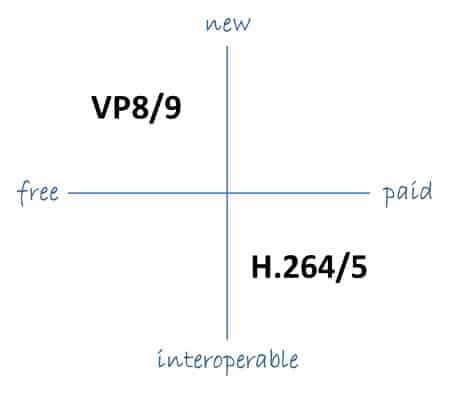
VP9 is a newer codec developed by Google and is designed to be a royalty-free alternative to H.265. It offers better compression than H.264 while maintaining the same video quality. It is also highly efficient at handling high-resolution videos, making it a good choice for 4K and 8K videos. However, its adoption has been slow due to its lack of support in many devices and software. It also requires more processing power to decode than H.264.

One of my personal experiences with VP9 was when I was trying to stream a 4K video on my laptop. I noticed that the video was buffering a lot and the quality was not as good as I expected. After some research, I found out that the video was encoded with VP9, which my laptop did not support. I had to switch to H.264 to get smooth playback.

Conclusion: Choosing the Right Video Codec

Choosing the right video codec is crucial for ensuring smooth video playback and high video quality. H.264 is still a solid choice for most situations, but H.265 and VP9 offer better compression and handling of high-resolution videos. However, they require more processing power and may not be supported by all devices and software. Make sure to choose the codec that best suits your needs and device capabilities.

In conclusion, video codecs are an essential part of our digital lives, and choosing the right one can make all the difference in our video-watching experience. Always keep in mind the pros and cons of each codec and make an informed decision based on your needs.

How to Convert MP3 to AAC: Exploring the Technicalities of the Advanced Audio Codec

How to Convert MP3 to AAC: Exploring the Technicalities of the Advanced

MP3 to AAC
MP3 to AAC

Audio Codec


MP3 to AAC
MP3 to AAC


The History of AAC

Advanced Audio Coding (AAC) is a widely used audio codec, designed to be the successor of the MP3 format. It was first introduced by the Moving Picture Experts Group (MPEG) as part of MPEG-2 and later extended as MPEG-4 Part 3. Since its release in 1997, AAC has been recognized for its superior audio quality and compression efficiency.

The development of AAC began in 1988 as part of an international collaboration called the Audio Coding Joint Technical Committee (JTC), consisting of experts from several organizations, including AT&T, Fraunhofer Society, and Sony. The goal was to create an audio codec that could deliver high-quality audio while using less bandwidth and storage space than MP3, which was the dominant audio format at the time.

The result of this collaboration was the creation of the MPEG-2 AAC standard in 1994, which was later extended as MPEG-4 Part 3 to include additional features. Today, AAC is supported by a wide range of devices and platforms, including Apple’s iTunes, iPod, and iPhone, as well as Android devices and various media players.

How AAC Works

AAC is a lossy compression codec, meaning that it achieves high compression rates by discarding some of the audio data. However, unlike MP3, which relies on a perceptual coding algorithm to remove irrelevant audio data, AAC uses a more advanced coding algorithm that takes into account the psychoacoustic properties of human hearing.

AAC achieves this by dividing the audio signal into different frequency bands and applying different quantization noise to each band, based on the sensitivity of human hearing at different frequencies. The result is a more efficient use of the available data rate, allowing AAC to deliver higher audio quality at the same bit rate as MP3.

AAC is also a format container, meaning that it can contain audio data encoded in various formats, including stereo, 5.1 surround sound, and even lossless formats like Apple Lossless and FLAC. This flexibility makes AAC a versatile audio format that can be used for a wide range of applications, from music streaming to professional audio production.

Converting MP3 to AAC Using Mp4Gain

Mp4Gain is a versatile audio and video conversion tool that supports a wide range of formats, including MP3 and AAC. With Mp4Gain, you can convert your MP3 files to AAC quickly and easily, without losing any audio quality.

What is a container format?

A container format is a type of file format that can store different types of data in a single file. In the case of audio and video files, a container format is used to package the different types of data that make up the file, including the video and audio streams, metadata, and any subtitles or closed captions.

The benefits of using AAC

AAC has several benefits over other audio formats. Firstly, it offers improved sound quality at lower bitrates than MP3, which means that files can be compressed to a smaller size without sacrificing quality. This is particularly important for mobile devices with limited storage capacity.

Secondly, AAC offers better performance at high bitrates, making it a popular choice for professionals who need high-quality audio, such as musicians, producers, and sound engineers.

Another benefit of using AAC is that it supports up to 48 channels of audio, compared to MP3’s limit of 2 channels. This makes AAC a popular choice for high-end surround sound systems and immersive audio experiences.

Finally, AAC is widely supported by a range of devices and software, including Apple devices, Android devices, and popular media players like VLC and QuickTime.

How to convert MP3 to AAC with Mp4Gain

Now that you understand the benefits of using AAC, you may want to convert your MP3 files to AAC to take advantage of these benefits. Fortunately, Mp4Gain makes it easy to do this.

To convert MP3 to AAC with Mp4Gain, follow these simple steps:

    1. Open Mp4Gain and select the “Audio Converter” option from the main menu.
    2. Click the “Add Files” button and select the MP3 files you want to convert to AAC.
    3. Select “AAC” as the output format from the list of available formats.
    4. Choose the desired bitrate, sampling rate, and channel configuration for the output file. You can also choose to normalize the volume if you want.
  1. Click the “Convert” button to start the conversion process.

Once the conversion process is complete, you will have high-quality AAC files that can be played on a wide range of devices and media players.

Conclusion

AAC is a high-quality audio format that offers several benefits over other formats, including improved sound quality at lower bitrates, better performance at high bitrates, support for multiple channels of audio, and wide compatibility with devices and software.

If you want to take advantage of these benefits, Mp4Gain makes it easy to convert your MP3 files to AAC. With its simple interface and powerful conversion capabilities, Mp4Gain is the perfect tool for anyone who wants to create high-quality, versatile audio files.

Some considerations about MPEG2

The world is in a slow but constant evolution: many times without realizing it, we are abandoning things that we did in the past to adapt to the new times. How to buy film roll boxes, in the corner bracket, to place in the camera. Whether on the camera phone or the digital camera itself, that no longer matters to us. But at that time, at the height of analog photography, it was common to know how to order one type of film or the other, saying for example “ASA 100 film” or “ASA 400 film”. There was another specification, very popular in Germany, DIN, with values ​​as similar as the Celsius and Fahrenheit temperature scales … Looking for an international standardization, the ISO (International Organization for Standardization),

mpeg 2

The specifications of film labels were standardized, but the world presented new challenges: computers, increasingly present in our daily lives, brought digitization to the living room or the television: the old VCR gave way to the video player. DVD. Still images and then videos invaded the cell phone. However, to get here, new standards have become necessary over time.

MPEG-2 Video

One of them, older, concerned digital photographic images. The same ISO for film boxes (which also created dozens of other standards) joined in 1986 with the CCITT (Consultatif International Téléphonique et Télégraphique Committee) to create the Joint Group of Photographic Experts, whose work would result in 1994 in the JPEG compression standard. . for digital still images.

Compression is necessary in the digital world to reduce the high volume generated by numerical information resulting from audio and video digitization processes. In this process thousands of samples of each part of the image or sound are obtained, which are then converted into sequences of numbers that represent the brightness / color / sound values ​​of the samples. Then it is necessary to have a storage medium capable of storing all these numbers. Since these media typically do not contain as much information, the compression process comes into play.

And that’s not all: compression also has advantages in video transmission, allowing you to send a signal with better quality, compressed, occupying the same space as a lower quality signal, without compression.

In the JPEG standard, the image is divided into 8×8-pixel squares and by complex mathematical calculations an ‘average’ color is determined for these 64-pixel blocks. This results in loss of detail in compression. The processes in which this occurs are known as “lossy”. There are processes in which there is no loss (‘lossless’), used for example in the GIF standard (Graphic InterFace, developed by Compuserve) to compress photographic images. However, standards such as GIF are suitable for graphics and not for photographic images, because the set of colors treated by them (256 colors) is much smaller than that used in standards such as JPEG.

In January 1988, ISO formed a working group called the Motion Picture Experts Group together with the IEC (International Electrotechnical Commission), generating an acronym that would become well known: MPEG. The group, formed to create international video and audio compression standards, then created the MPEG-1, MPEG-2 and MPEG-4 algorithms that are used today.

The use of MPEG algorithms always involves two phases: the compression phase, where the image and / or audio are compressed, generating content with a smaller total size, ready to be recorded on an optical disc, for example, and the recovery phase of this content, also called expansion, where the original image and / or audio is reconstituted. Compression is done by software called a compressor and expansion by software called an expander. These names have better known synonyms, encoder and decoder respectively. And the set of 2 forms the word codec, short for encoder (encoder) + decoder.

The MPEG standards brought a new philosophy in coding systems, where the encoder process is much more laborious and complex than the reverse of the decoder. Since decoding is simple and fast, it facilitates the proliferation of electronic circuits that perform this process efficiently, making players cheaper, an ideal situation for content distribution. This fact also allows new encoders to emerge over time, using different approaches in compression processes. There are thus encoders that produce better images than others, in addition to being generally parameterized, that is, the compression quality can be adjusted.