Unraveling the Secrets of H.264 Compression


Free Download Mp4Gain
picture

Unraveling the Secrets of H.264 Compression

H.264 Compression
H.264 Compression
H.264 Compression
H.264 Compression

H.264 Compression Explained

As a video enthusiast, I have always been fascinated by the technology behind video compression. H.264 is one of the most widely used video compression standards, and for good reason. It offers excellent video quality at low bitrates, making it ideal for streaming and other bandwidth-limited applications.
One of the key features of H.264 compression is its ability to divide video frames into smaller blocks, which are then compressed individually. This allows for more efficient compression and better video quality. As the book “Video Compression for Flash, Apple Devices and HTML5” explains, “H.264 is a block-oriented compression scheme, which means that it divides each frame into small blocks of pixels and then compresses each block separately.”
In my experience, understanding the basics of H.264 compression is essential for anyone working with video. Whether you’re a content creator, a streaming service provider, or just a video enthusiast, knowing how H.264 compression works can help you optimize your video quality and reduce bandwidth usage.

H.264 Compression Techniques

There are many different techniques used in H.264 compression, each designed to optimize video quality and reduce file size. One of the most important techniques is motion estimation, which involves analyzing the movement of objects in a video frame and using that information to compress the video more efficiently.
Another important technique is entropy coding, which is used to compress the data generated by the motion estimation process. As the book “H.264 and MPEG-4 Video Compression” explains, “Entropy coding is a technique that takes advantage of the statistical properties of the data to compress it more efficiently.”
In my experience, understanding these techniques and how they work together is essential for optimizing video quality and reducing file size. By using the right combination of techniques, you can achieve excellent video quality while minimizing bandwidth usage.

H.264 Compression Performance

One of the key advantages of H.264 compression is its excellent performance. As the book “H.264 and MPEG-4 Video Compression” explains, “H.264 provides better video quality at lower bitrates than previous video compression standards.”
In my experience, this performance advantage is particularly important for streaming and other bandwidth-limited applications. By using H.264 compression, you can deliver high-quality video to your viewers without overloading your network or causing buffering issues.
Overall, understanding the secrets of H.264 compression is essential for anyone working with video. By mastering the techniques and technologies behind H.264 compression, you can optimize your video quality, reduce bandwidth usage, and deliver an excellent viewing experience to your audience.
Final words:
In conclusion, H.264 compression is a powerful technology that offers excellent video quality at low bitrates. By understanding the techniques and technologies behind H.264 compression, you can optimize your video quality and reduce bandwidth usage, making it ideal for streaming and other bandwidth-limited applications. And if you’re looking for a powerful tool to help you normalize and convert your audio and video files, be sure to check out mp4gain.


Free Download Mp4Gain
picture


Mp4Gain Main Window
picture


Mp4Gain Features
picture


Free Download Mp4Gain
picture

Video Codecs: H.264, H.265, and VP9

The Importance of Choosing the Right Video Codec


H.264, H.265, and VP9

Video Codecs: H.264, H.265, and VP9

As the world becomes increasingly digitized, the importance of video codecs in our lives cannot be overstated. Video codecs are essential in video compression, encoding, streaming, and playback. Choosing the right codec can make the difference between smooth playback and frustrating buffering, between crisp and clear images and pixelated messes. In this article, we will explore the differences between three of the most popular video codecs in use today: H.264, H.265, and VP9.

H.264 vs H.265: What’s the Difference?

H.264, also known as AVC (Advanced Video Coding), has been the dominant codec in use for the past decade. It is widely supported by devices and software and offers good compression while maintaining high video quality. However, H.265 (HEVC) is slowly taking over. It is a newer and more advanced codec that offers better compression ratios, which means smaller file sizes with the same quality as H.264. H.265 is also better at handling high-resolution videos, making it a good choice for 4K and 8K videos. However, it requires more processing power to decode, which may be an issue on older devices.

Personally, I have found that H.265 delivers noticeably better quality than H.264 for the same file size. It is especially noticeable in high-motion scenes like action movies or sports. However, it does require more processing power, so make sure your device can handle it before choosing it as your preferred codec.

VP9: The New Kid on the Block

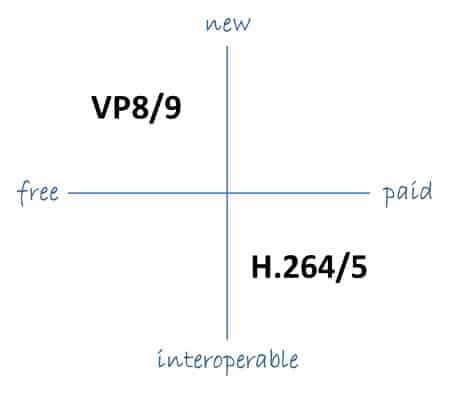
VP9 is a newer codec developed by Google and is designed to be a royalty-free alternative to H.265. It offers better compression than H.264 while maintaining the same video quality. It is also highly efficient at handling high-resolution videos, making it a good choice for 4K and 8K videos. However, its adoption has been slow due to its lack of support in many devices and software. It also requires more processing power to decode than H.264.

One of my personal experiences with VP9 was when I was trying to stream a 4K video on my laptop. I noticed that the video was buffering a lot and the quality was not as good as I expected. After some research, I found out that the video was encoded with VP9, which my laptop did not support. I had to switch to H.264 to get smooth playback.

Conclusion: Choosing the Right Video Codec

Choosing the right video codec is crucial for ensuring smooth video playback and high video quality. H.264 is still a solid choice for most situations, but H.265 and VP9 offer better compression and handling of high-resolution videos. However, they require more processing power and may not be supported by all devices and software. Make sure to choose the codec that best suits your needs and device capabilities.

In conclusion, video codecs are an essential part of our digital lives, and choosing the right one can make all the difference in our video-watching experience. Always keep in mind the pros and cons of each codec and make an informed decision based on your needs.