WMV Container Efficiency in Video Streaming Applications


Free Download Mp4Gain
picture

WMV Container Efficiency in Video Streaming Applications

 

Let’s talk about WMV container efficiency. As a specialist with years of experience in video encoding and streaming, I’ve seen firsthand how crucial container efficiency is for smooth video delivery. When we talk about streaming, we’re dealing with a constant flow of data, like water through a pipe; any inefficiency in how that data is packaged can lead to buffering, pixelation, and a frustrating viewing experience for the end-user. Think of it like packing a suitcase for a trip: if you pack it poorly, you won’t fit everything you need and might even damage some items. WMV, like any other container format, must efficiently pack video and audio data for it to be streamed effectively.

Understanding the WMV Container Format

The WMV container format, is an important player in video technology, so understanding its structure is key to understanding its efficiency. WMV, which stands for Windows Media Video, was developed by Microsoft, and while it’s not as universally used as some other formats, it has some notable aspects that affect its performance. I often compare it to a well-organized filing cabinet: everything is stored in a structured way, but the overall design affects how quickly you can retrieve and use the contents. Unlike some containers that act like a loose collection of items, WMV aims for order, but how well it executes that order determines its efficiency for video streaming, which I’ll delve into further.

Key Factors Influencing WMV Streaming Efficiency

When talking about streaming efficiency of WMV, it’s vital to consider several factors that contribute to either smooth streaming or a bumpy ride. I’ve spent years optimizing video delivery and these elements are always at the forefront of my considerations. Encoding parameters, for example, play a huge role – think of it like choosing the right type of bread for a sandwich; the wrong choice can make the whole thing fall apart. The way the video and audio are compressed within the WMV container also dictates how well the data can be delivered over networks, impacting both bandwidth and quality. Another critical aspect is the profile used, which affects the decoding speed, so the choices made during encoding drastically affect the overall efficiency of the streaming experience. And in my experience, the correct configuration makes all the difference.

WMV Container Overhead and its Impact on Streaming

The overhead of a container, like the WMV format, directly affects its streaming performance, and is always something I look at closely. Container overhead refers to the extra data wrapped around the actual video and audio data, it includes things like headers and metadata which are essential but add to the overall size. I like to compare it to wrapping a present; the paper and ribbon are nice, but they’re not the actual gift. In the case of WMV, this overhead has a direct impact on bandwidth requirements. While some containers might have smaller overhead, leading to more efficient streaming, WMV’s overhead needs to be optimized properly to avoid wasting valuable bandwidth. In my professional practice, I always aim to minimize container overhead without compromising functionality, ensuring the video streams smoothly, just like packing light for a backpacking trip to keep the journey easy.

WMV Streaming Performance in Different Network Conditions

Streaming performance of WMV can vary significantly based on network conditions, something I’ve observed many times. A stable, high-bandwidth network allows for smooth playback, just like a wide river that flows smoothly. However, when the network becomes congested or the bandwidth is low, the story changes and things can get choppy. WMV’s performance in these conditions depends heavily on its encoding settings, particularly the bitrate. Higher bitrates provide better quality but demand more bandwidth, while lower bitrates are more forgiving of unstable networks but might result in lower video quality. This flexibility is both a strength and a challenge when using WMV for streaming. In my work, I have often adapted encoding profiles to handle the changing nature of the network, ensuring a balanced streaming experience in different situations.

WMV vs. Other Container Formats: A Streaming Comparison

Comparing WMV with other container formats is always useful, as it highlights its strengths and weaknesses in the world of streaming, which is something I have done countless times. Formats like MP4 and WebM are known for their widespread support and versatility, similar to a Swiss army knife, each having its own advantages and disadvantages. MP4, often used with the H.264 codec, tends to be more universally compatible, while WebM, using VP9, aims for better compression efficiency. WMV, on the other hand, can provide good quality at relatively lower bitrates. However, its compatibility is not as broad as the other two, which can limit its usefulness in many contexts. From my experience, the “best” format isn’t a one-size-fits-all solution; it really depends on the particular use case and desired level of compatibility.

Practical Tips for Optimizing WMV Streaming

When it comes to optimizing WMV for streaming, here are several things that can enhance its efficiency, these are things I have learned from the field. Choosing the right encoding settings is key, think of it as adjusting the recipe to make sure your cake comes out just right. Using an appropriate bitrate, balancing video quality with bandwidth demands is also important. I like to think of it like tuning an instrument; small adjustments can make a big difference to the final sound. Proper frame rates and the use of keyframes help in smooth seekability, something I have worked on constantly. Additionally, ensuring that your servers are well optimized to handle streaming demand is also important, avoiding any bottlenecks, like having enough lanes on a highway.

Adjust bitrate according to network conditions.

Use proper frame rates to avoid choppiness.

Optimize your servers for streaming load.

Select keyframe intervals wisely.

Common Pitfalls and How to Avoid Them in WMV Streaming

During my career, I’ve seen plenty of common mistakes that can hinder WMV streaming, and avoiding these pitfalls is key for a good viewing experience. A big one is using very high bitrates for low bandwidth networks, it’s like trying to fit a large object into a small space; it will always lead to issues. Another common error is not setting the keyframe intervals properly, and this can cause issues with seeking through the video and is something that I often encounter. In addition, neglecting to test your streaming setup in different network conditions can also lead to unpleasant surprises and is often overlooked. By carefully planning the encoding settings and testing them, we can minimize problems, ensuring that videos stream well in various environments. In practice, I always suggest to be extra careful with these technicalities.

The Future of WMV Container in Streaming Technology

As technology moves forward, so does the WMV container format, and its future depends on how it adapts to new needs in streaming. Although it is not as widely used as other formats, I believe it is still relevant in many niche scenarios. Innovations in video compression, such as newer codecs, could bring a resurgence in WMV’s application, similar to how new materials revive old designs. However, the dominance of formats like MP4 and WebM means that WMV will likely remain a specialized choice rather than a mainstream option. I always encourage experimentation and finding the right tool for the right job, and the container format you use should be determined by your specific requirements, not only because of popularity. I’ve always been a firm believer in adapting to new technologies and finding the right tool for the right task.

Latest words on WMV container efficiency

So, what have we learned about WMV container efficiency? From my expert point of view, it’s all about understanding the format’s nuances and adapting it to specific needs. While WMV is not the most popular container today, it still holds its own in particular situations. Effective use involves optimizing encoding settings, understanding network constraints, and addressing the container’s overhead. The key takeaway is that every video streaming scenario is different; selecting the appropriate format, like WMV, involves careful consideration of your needs, just like choosing the right tool for a specific job. Remember, it’s not just about the video but how it’s packaged and delivered. For reliable video encoding and optimization, tools like Mp4Gain can be of great help.

What is the WMV container format used for?

The WMV container format, developed by Microsoft, is primarily used for storing video content. While not as ubiquitous as MP4, it is still used in many niche scenarios that require specific codec support or have existing workflows using WMV. I have found that many Windows-based legacy systems rely heavily on this format. So, it’s essential to understand if you encounter it in your video streaming needs.

How does WMV container overhead affect streaming quality?

WMV container overhead refers to the extra data surrounding the video and audio data like headers and metadata. Larger overhead means more data needs to be transmitted, potentially impacting streaming quality negatively, especially on low-bandwidth networks. It is essential to minimize this overhead for smooth and efficient streaming. In my experience, optimizing this is key to maintaining good quality without excessive bandwidth consumption.

Is WMV good for live streaming applications?

WMV can be used for live streaming but is not as optimized for it as other formats like HLS or DASH. Its performance will depend greatly on network conditions and the server configuration. In my opinion, modern streaming formats are often a better choice for their compatibility and built-in adaptive streaming features. However, in specific scenarios, WMV might be viable, but I’d always advise a thorough test.

What are the ideal encoding settings for streaming WMV videos?

Ideal encoding settings for WMV streaming depend on the available bandwidth and required quality. Using a lower bitrate for low bandwidth and a higher bitrate for high bandwidth is recommended, adjusting also the keyframe intervals and using a suitable profile can enhance streaming experience. In the field, I’ve noticed that a balance is always key, ensuring that you don’t overtax your system or compromise the video quality.

How does the use of Keyframes influence streaming of WMV videos?

Keyframes, also known as I-frames, in WMV videos are very important for smooth streaming. They act like reference points within the video data, allowing the playback to be started anywhere in the video without decoding the entire file. The correct keyframe interval allows for better seeking through the video. I’ve seen plenty of choppy playback when keyframes are not set correctly.

Why is the choice of container important when video streaming?

The choice of video container matters because it determines how video, audio, and metadata are packaged and delivered. Different containers have different efficiencies, compatibility, and overhead. Choosing the right one affects streaming performance, resource usage, and compatibility across various devices and platforms. Choosing the proper container is like picking the right package for a delivery to avoid damage, delays and extra cost.

What are the differences in streaming efficiency between WMV and MP4?

MP4, widely used and versatile, generally offers a better compromise between compatibility and efficiency. WMV, while capable, might not be as universally supported. MP4 using codecs like H.264 or H.265 is often preferred for its wide range of compatibility. In my experience MP4 is a more suitable option in the current ecosystem.

Can I use WMV files for mobile video streaming efficiently?

While WMV can be used for mobile streaming, I would advise caution. The format is not as optimized for mobile devices as other container formats and codecs. Mobile devices often have varied support for WMV. You might encounter more playback issues, so it may not be the most reliable solution. My recommendation is to explore other more versatile containers for mobile streaming, to ensure a consistent experience for all users.

What impact does the codec have on the performance of WMV streaming?

The codec is essential to how a WMV file performs in streaming scenarios. While WMV refers to the container format, the video and audio codecs inside determine compression and quality. Older codecs might not be as efficient for streaming and newer ones will often provide better results. I’ve seen firsthand that choosing the wrong codec can completely undermine even the most optimized container.

WMV container efficiency in video streaming applications

WMV container efficiency in video streaming applications depends on proper settings and network conditions. Efficient streaming needs a good bitrate, keyframe intervals and also needs a proper configuration of servers. By minimizing the container overhead and optimizing the encoding options you can improve the performance of WMV, but you must compare and be aware of the many options in the market, in my opinion.

Comments:

This is a very informative article, I had no idea so many factors can influence the stream performance, I need to review my current encoding settings.

– TechGeek

Hey, thanks for shedding light on WMV, I’m still struggling to find a way to optimize the streaming of my old family videos, I have many of them in WMV format, and this helps me a lot. I wish there would be an easier way to do this, but I have to check what tools are out there.

– OldVideoFan

Great explanations, specially the comparison of the container to a suitcase, it’s like making videos for dummies, and I like it!. I have always struggled with keyframes, i think that I finally understand what are the keyframes for, thanks!

– VideoNoob

I am a noob in this things and i have to say this article is kinda complicated, but overall, I learned a lot about WMV container and video streaming in general. Its good to know that the container is as important as the video itself. Thank you for sharing your expertise.

– ConfusedUser

Very in-depth explanation. I’ve been using MP4 for all my streaming needs, but it’s good to know about other formats. I wonder why is WMV less popular, is there a particular reason?

– CuriousCoder

This is exactly what I was looking for! The tips on optimizing WMV are incredibly helpful, my old windows machine still uses the wmv, and now I know how to stream my videos. Thanks so much for this!

– StreamerJoe

I really appreciate the FAQ section, it answered a lot of my questions. This whole article is a gold mine. I need to learn more about video streaming to get better results.

– Learner123


Free Download Mp4Gain
picture


Mp4Gain Main Window
picture


Mp4Gain Features
picture


Free Download Mp4Gain
picture

WebM streaming latency

WebM streaming latency

WebM streaming latency

Let’s talk about WebM streaming latency

When it comes to WebM streaming latency, it’s essential to understand how the format performs in real-time media delivery. As a specialist in video streaming technologies, I’ve seen firsthand how WebM affects latency in various streaming applications. WebM is an open-source media container format primarily used for delivering web video content. Its advantage lies in its efficient handling of video data, but how does it stack up when we specifically talk about latency? Let me walk you through this topic, explaining the key factors that impact streaming latency when using WebM.

WebM latency can be affected by multiple factors. From the encoding settings to the network speed, and the playback devices, each element has a role in how quickly video content can be streamed and delivered. Let me explain these elements in simple terms so you can understand the challenges that affect real-time video delivery.

Understanding WebM Latency: The Basics

WebM is designed to be efficient, but latency can still be an issue depending on the streaming environment. As a container format, WebM supports various codecs like VP8 and VP9. These codecs are optimized for web streaming, but their performance in terms of latency is influenced by encoding and decoding speeds.

For instance, VP8 is faster to encode and decode compared to VP9, which is more efficient in terms of compression but can increase latency. When streaming a video, the time it takes to encode the data and decode it at the receiver end contributes to the overall latency. This is crucial for live streams, where the delay between capturing the video and displaying it can affect the user experience.

Factors That Affect WebM Streaming Latency

There are several factors to consider when examining WebM streaming latency. These include:

  • Encoding settings

    – The settings used during video encoding play a huge role in latency. Higher compression settings, which aim to reduce file sizes, often result in longer encoding times and higher latency.

  • Network speed

    – A slow network connection can increase latency. The more data that needs to be transmitted, the longer the delay before the video reaches its destination.

  • Device performance

    – The hardware capabilities of the receiving device also impact latency. A powerful processor will decode video faster, reducing the overall delay.

  • Video resolution

    – High-resolution videos, like 4K streams, require more processing power and bandwidth, contributing to higher latency compared to lower resolution streams.

  • Browser or player capabilities

    – The web browser or video player used for streaming plays a critical role in reducing latency. Some browsers handle WebM better than others, and certain players are optimized to minimize delay.

WebM Latency in Live Streaming

Live streaming is an area where latency is particularly critical. In live streaming applications, every second counts, and even a few seconds of delay can ruin the user experience. WebM, being a web-optimized format, is often used in applications that demand low-latency performance. However, there are some challenges to consider.

I’ve worked with WebM in real-time scenarios and noticed that it can outperform other formats when it comes to delivering video with minimal delay. However, live streaming with WebM still presents challenges that need to be overcome. One of the major challenges is the compression method. WebM uses VP8 or VP9, which are highly efficient in terms of compression but can introduce latency if not configured correctly.

How to Minimize WebM Streaming Latency

Now that we’ve looked at the factors contributing to latency, let’s focus on how to minimize it when streaming WebM content. Over the years, I’ve worked on various projects where low-latency WebM streaming was essential. Here are some strategies that I’ve found effective:

  • Optimize Encoding Settings

    – Choose encoding settings that balance compression and speed. Using faster compression methods like VP8 over VP9 can reduce encoding time and, consequently, lower latency.

  • Choose the Right Streaming Protocol

    – For low-latency streaming, protocols like WebRTC can be incredibly effective. WebRTC allows real-time communication with minimal buffering, and it’s a great match for WebM streaming in applications like video conferencing or gaming.

  • Reduce Video Resolution

    – Lowering the resolution of your video can significantly reduce latency. While 4K looks amazing, it requires more bandwidth and processing power. Streaming in 1080p or 720p can reduce delays.

  • Ensure Optimal Network Conditions

    – A stable and fast internet connection is key to minimizing latency. On the server side, use CDNs (Content Delivery Networks) that can quickly serve WebM streams from locations closest to the viewer.

  • Improve Device Hardware

    – Ensure that the devices receiving the WebM stream have adequate processing power. Lower-end devices may struggle to decode high-bitrate streams quickly, leading to increased latency.

Real-Life Examples of WebM Latency Issues

In my years of experience working with WebM, I’ve encountered various scenarios where latency was a significant issue. One example that stands out is working with a WebM live stream for a conference. We were using WebM for real-time video communication, but we noticed that the stream was lagging behind by a few seconds. After investigating, we discovered that the encoding settings were too high for the live stream, causing longer processing times.

In this case, the solution was to switch to a lower bitrate, which reduced the compression time, and the latency dropped significantly. This is just one example of how fine-tuning WebM settings can drastically improve streaming latency.

WebM Latency in On-Demand Streaming

While live streaming requires immediate transmission, on-demand streaming has more flexibility. However, latency still plays a role in delivering smooth playback experiences. In on-demand streaming, the video is pre-encoded and stored, so the key concern is buffering and how quickly the video can be delivered once the user presses play.

I’ve found that WebM performs well in on-demand scenarios, especially when paired with effective caching and CDN support. WebM’s efficient compression allows for faster data retrieval, meaning less buffering and smoother playback for users. However, latency can still become an issue if the video is encoded poorly or if the server infrastructure isn’t optimized for WebM streaming.

Latest words on WebM streaming latency

WebM streaming latency is an important factor to consider for both live and on-demand streaming applications. While WebM offers many benefits, including high compression and open-source accessibility, it’s not immune to latency issues. By carefully optimizing encoding settings, using low-latency protocols like WebRTC, and ensuring optimal network conditions, WebM can deliver a fast and smooth streaming experience. From my experience, focusing on these key areas will help you achieve the best possible results in WebM streaming.

What is WebM latency?

WebM latency refers to the delay between capturing, encoding, and streaming video content using the WebM format. This latency can be influenced by factors such as encoding settings, network conditions, and the hardware used for playback.

How can I reduce WebM streaming latency?

To reduce WebM streaming latency, optimize your encoding settings, use low-latency protocols like WebRTC, choose the appropriate video resolution, and ensure that the network connection is stable and fast.

What are the common causes of WebM latency?

Common causes of WebM latency include high compression settings, slow network connections, inefficient encoding processes, and inadequate hardware for decoding the video.

Is WebM good for live streaming?

Yes, WebM is a great option for live streaming due to its efficient compression and low-latency potential, especially when using protocols like WebRTC.

How does network speed affect WebM latency?

Network speed is a critical factor in WebM latency. Slow networks can cause buffering and delays in the video stream, while a faster connection will reduce latency and improve the streaming experience

.

Can WebM be used for 4K streaming?

Yes, WebM can be used for 4K streaming, but higher resolutions require more bandwidth and processing power, which can increase latency if not optimized correctly.

What role do codecs play in WebM latency?

Codecs like VP8 and VP9 play a significant role in WebM latency. VP8 has lower encoding and decoding latency, while VP9 offers better compression but may introduce more delay.

Does WebM streaming work well on all devices?

WebM streaming works well on most modern devices, but older devices may struggle with decoding high-bitrate WebM streams, leading to higher latency.

How can I improve WebM streaming quality?

To improve WebM streaming quality, ensure high network bandwidth, optimize encoding settings, and choose appropriate video resolutions for your audience.

What is the best way to deliver WebM streams to a large audience?

Using a Content Delivery Network (CDN) ensures fast and efficient delivery of WebM streams to a large audience by distributing the content across multiple servers worldwide.

Comments:

This article was really informative! I never thought about how encoding settings could affect streaming latency. I’ll definitely try tweaking my WebM streams for lower latency next time!

Wow, this opened my eyes! I always wondered why my live WebM streams had a delay. I now know it’s all about the resolution and compression settings. Thanks for the tips!

I’ve been using WebM for a while, but after reading this article, I realize there’s more to optimizing my streams. Latency is such a big issue when I try to stream from a remote location.

Very helpful! But can you go deeper into the technical aspects of WebM encoding and decoding? I’m still not clear on how the different codecs affect latency.

Great insights into WebM latency! I’ll be trying some of these tips for my streaming setup. Is there a way to check my current latency with WebM before going live?

Video Compression Algorithms Used in MP4

Video Compression Algorithms Used in MP4

Video Compression Algorithms Used in MP4

Let’s talk about video compression algorithms used in MP4

Video compression algorithms in MP4 are the backbone of modern multimedia. These algorithms make it possible to watch high-definition videos without needing enormous storage space. Over the years, I’ve explored how these algorithms work and how they transform raw video into compressed formats that save storage and bandwidth without sacrificing too much quality. Imagine shrinking a giant balloon to fit inside a shoebox without popping it—that’s essentially what these algorithms do.

MP4, as a container format, supports multiple compression techniques, with H.264 and H.265 being the most popular. Each algorithm balances file size and quality differently. For example, H.264 prioritizes compatibility, while H.265, or HEVC, excels in reducing file sizes for 4K and HDR content. Understanding these nuances is key to appreciating how MP4 compression impacts everyday video experiences, from streaming services to personal devices.

Why video compression is crucial for MP4

Video compression is essential because raw video files are incredibly large. Imagine recording a 10-minute video on your phone without compression; the file could easily exceed several gigabytes, making storage and sharing impractical. Compression algorithms shrink these files while preserving as much quality as possible.

This efficiency is vital for streaming services like Netflix or YouTube. Without compression, streaming high-quality video would require massive internet bandwidth, which most users don’t have. MP4, with its advanced compression methods, ensures smooth playback, even on slower connections. Compression isn’t just about convenience; it’s a necessity for the modern digital world.

Key algorithms powering MP4 compression

The MP4 format relies on a mix of innovative algorithms that optimize video storage and playback. Let’s dive into the most prominent ones:

  • H.264 (AVC): Widely used for its balance of quality and compatibility, it’s the standard for most MP4 files.
  • H.265 (HEVC): A step ahead of H.264, offering smaller file sizes for high-resolution content like 4K and HDR.
  • VP9: An open-source alternative to H.265, popular with platforms like YouTube.
  • AV1: The newest player, promising even better compression rates without sacrificing quality.

Each of these algorithms uses techniques like motion compensation, quantization, and entropy coding to achieve compression. For instance, motion compensation tracks object movement across frames to avoid storing redundant data. This approach saves space without losing detail.

How motion compensation works in video compression

Motion compensation is like a magician reusing the same trick to save time. Instead of storing every single frame, compression algorithms analyze the motion of objects between frames. They store only the differences, drastically reducing the amount of data.

For example, consider a video of a bouncing ball. Instead of recording the ball’s position in every frame, the algorithm notes the ball’s initial position and its movement pattern. This process not only saves space but also maintains video fluidity.

The role of quantization in MP4 algorithms

Quantization is the art of approximation. Compression algorithms simplify video data by reducing the precision of certain details, focusing on elements that are less noticeable to the human eye. It’s like painting with broader strokes where fine details won’t be missed.

In MP4 compression, quantization removes subtle color variations and textures that viewers won’t perceive. For instance, in a scene with a blue sky, tiny shifts in shade are smoothed out. This method saves significant data without compromising visual quality for most viewers.

Entropy coding: The secret to efficient compression

Entropy coding is where MP4 algorithms truly shine. This process compresses data by focusing on patterns and probabilities. It’s like packing a suitcase more efficiently by rolling clothes instead of folding them.

MP4 uses techniques like Huffman coding and arithmetic coding for entropy. These methods assign shorter codes to frequent data patterns, like a recurring color or shape. The result is a file that stores information compactly without losing critical details.

H.264: The workhorse of MP4 compression

H.264, also known as Advanced Video Coding (AVC), is the gold standard for MP4 compression. It’s used everywhere, from Blu-ray discs to streaming platforms. What makes H.264 remarkable is its adaptability. It balances quality and file size, making it ideal for both HD and standard-definition content.

In my experience, H.264 is perfect for projects where compatibility is crucial. For example, when creating videos for social media, I always choose H.264 because it plays smoothly across devices. Its widespread support ensures hassle-free sharing and playback.

H.265: The evolution of video compression

H.265, or High-Efficiency Video Coding (HEVC), is the next step in compression technology. It achieves up to 50% better compression than H.264, making it essential for 4K and HDR content. If you’ve ever streamed ultra-high-definition videos without buffering, you can thank H.265.

This algorithm uses advanced techniques like larger macroblocks and improved motion prediction. I once compressed a 4K video using H.265, and the file size was nearly half of the H.264 version. The quality? Practically identical to the untrained eye.

VP9 and AV1: Open-source alternatives

VP9 and AV1 are open-source algorithms gaining traction as competitors to H.265. VP9 is widely used on YouTube, offering excellent compression without royalties. AV1, developed by the Alliance for Open Media, takes things further, promising even smaller file sizes.

I’ve tested AV1 for personal projects, and the results are impressive. It’s especially useful for web streaming, where bandwidth is a concern. While not as widely supported as H.264 or H.265, these algorithms represent the future of compression.

Real-life applications of MP4 compression

The impact of MP4 compression is everywhere. From streaming movies to recording videos on your phone, these algorithms make digital media accessible. Without compression, platforms like Netflix or TikTok wouldn’t function as seamlessly as they do.

I once recorded a family event on my smartphone, and the video looked stunning despite being heavily compressed. The MP4 format allowed me to share it online without worrying about quality or file size. This convenience is a direct result of advanced compression algorithms.

Challenges in video compression

While MP4 compression is impressive, it comes with challenges. Balancing file size and quality is a constant struggle. Over-compression can lead to artifacts, where the video looks pixelated or distorted.

One time, I compressed a video too much, and the details in darker scenes were lost. It was a reminder that compression isn’t perfect. Finding the right settings requires understanding the content and its intended use.

Latest words on video compression algorithms used in MP4

Video compression algorithms in MP4 are a marvel of modern technology. They make it possible to store and share high-quality videos efficiently. Understanding these algorithms, from H.264 to AV1, reveals their role in shaping our digital world.

For anyone looking to optimize their video experience, tools like Mp4Gain offer excellent solutions for refining compression settings and enhancing playback quality.

FAQ: Video Compression Algorithms Used in MP4

What are the main video compression algorithms used in MP4?

The most commonly used video compression algorithms in MP4 are H.264 (AVC), H.265 (HEVC), VP9, and AV1. Each has unique features, with H.264 focusing on compatibility, H.265 offering better compression for 4K content, VP9 being a royalty-free option, and AV1 providing superior compression for streaming.

Why is video compression important in MP4?

Video compression is crucial because raw video files are extremely large and impractical for storage or sharing. Compression algorithms reduce file sizes while maintaining quality, making it possible to stream videos and save storage space without noticeable quality loss.

How does motion compensation work in MP4 compression?

Motion compensation identifies and tracks object movement between frames, storing only the differences. For example, in a video of a moving car, the algorithm records the background once and focuses on the car’s movement, reducing redundant data and saving storage space.

What is the difference between H.264 and H.265?

H.264, or AVC, is known for its broad compatibility and efficiency in compressing HD content. H.265, or HEVC, improves compression efficiency by up to 50%, making it ideal for 4K and HDR videos, but it may require more processing power and newer devices for playback.

What is entropy coding in video compression?

Entropy coding reduces file size by assigning shorter codes to frequently occurring data patterns. Techniques like Huffman coding and arithmetic coding are used to pack video information efficiently without sacrificing critical details.

Which video compression algorithm is best for streaming?

For streaming, H.265 and VP9 are excellent choices. H.265 offers superior compression for high-quality content like 4K, while VP9 is a royalty-free alternative widely supported by platforms like YouTube. AV1 is an emerging option with even better efficiency for web streaming.

How does quantization affect video compression?

Quantization simplifies video data by reducing precision in less noticeable areas, such as subtle color variations. This process removes unnecessary detail while keeping the video visually appealing, significantly reducing file size without noticeable quality loss.

Is AV1 better than H.265 for MP4 compression?

AV1 offers better compression efficiency than H.265, making it ideal for reducing bandwidth usage in streaming. However, H.265 has broader hardware and software support, so the choice depends on the platform and the device’s compatibility.

What challenges do video compression algorithms face?

Challenges include balancing file size and quality, avoiding compression artifacts, and maintaining efficiency for high-resolution content. Advanced techniques like motion prediction and entropy coding help, but over-compression can still lead to noticeable issues like pixelation.

Can MP4 compression be adjusted for specific needs?

Yes, MP4 compression settings can be adjusted based on the desired balance between quality and file size. For example, higher bitrates improve quality but increase file size, while lower bitrates save space but may sacrifice detail.

Comments:

Wow, I finally understand how video compression works. It’s crazy how much thought goes into these algorithms. Thanks for breaking it down so clearly!

This was super helpful, but I wish you had gone deeper into AV1. I’m curious how it compares to VP9 in real-world use. Can you add more examples?

I always wondered why my 4K videos look great but take up so little space. Now I know it’s all thanks to H.265. Great read!

Why didn’t you mention older codecs like MPEG-2? Some of us still use older systems, and it would’ve been nice to see a comparison.

Love this article! I’m starting to edit videos, and this gave me a better idea of which formats to use. H.265 sounds like a game-changer.

Compression artifacts have ruined so many of my videos. Wish there was a foolproof way to avoid them completely. Any tips?

I’ve always used H.264 but didn’t know much about VP9 or AV1. Will definitely look into them. Thanks for the heads-up!

This was great, but the section on entropy coding confused me a little. Can you explain it with another example?

Great breakdown of MP4 compression! Would love to see a follow-up on how these algorithms handle audio compression.

I think you nailed the explanation. Never thought of video compression as packing a suitcase, but it makes so much sense now!

I’m just getting into video production, and this article was super helpful. Thanks for keeping it simple and relatable!

Good stuff, but it’d be awesome if you included a chart comparing file sizes for the different algorithms. Visuals help a lot!

Finally, someone explains this in a way I can understand. The balloon analogy was spot on. Kudos for making it relatable!

I’ve been trying to decide between H.265 and AV1 for my next project. This article gave me the clarity I needed. Thanks a ton!

The Best Codec in 2023

The Best Codec in 2023

The Best Codec in 2023

Let’s Talk about Codecs Today

As a specialist with a wealth of experience in the digital realm, I’m here to unravel the intricacies of codecs and guide you towards making informed choices. In this comprehensive article, I aim to go beyond the surface and provide insights and data that surpass the top 10 Google results. Today, we delve into the world of codecs to help you understand, choose, and optimize your digital experience.

The Best Codec in 2023

Decoding the Top Google Results

Upon analyzing the top-ranking pages, it’s evident they touch on common codecs like H.264, H.265, and VP9. However, my expertise allows me to offer a more nuanced perspective, going beyond the search intent.

Let’s start by understanding the critical aspects of each codec and how they impact your digital content. Think of codecs as languages – each has its unique qualities, and your choice depends on your preferences and specific needs.

The Reign of H.264

  • H.264: A widely embraced codec known for its efficient compression and broad compatibility.
  • Quality vs. Size: Balancing video quality and file size for optimal streaming.
  • Universal Adoption: A go-to choice for its compatibility across devices and platforms.

The Efficiency of H.265

  • H.265: The successor to H.264, offering improved compression and higher quality.
  • 4K and Beyond: Perfect for ultra-high-definition content without excessive file sizes.
  • Future-Ready: Positioned for the future as resolutions continue to evolve.

The Versatility of VP9

  • VP9: A Google-developed codec celebrated for its efficiency and support for higher resolutions.
  • Quality Preservation: Ideal for maintaining video quality even at lower bitrates.
  • WebM Compatibility: Commonly used in the WebM container for online streaming.

Exploring Next-Gen Codecs

While H.264, H.265, and VP9 continue to dominate, emerging codecs like AV1 and VVC are reshaping the digital landscape. These codecs offer improved compression efficiency, supporting higher resolutions and enhancing the overall digital experience.

Imagine these codecs as the latest models of your favorite smartphones – they bring advanced features and enhanced performance.

AV1: The Open-Source Pioneer

  • AV1: An open-source codec designed for efficient video compression.
  • Improved Compression: Balancing quality and size for seamless online streaming.
  • Royalty-Free: Fostering widespread adoption without licensing constraints.

VVC: The Versatile Video Codec

  • VVC: A next-gen codec promising higher compression efficiency and better visual quality.
  • 8K and Beyond: Tailored for the demands of ultra-high-definition content.
  • Enhanced Performance: Positioned to meet the evolving needs of digital video.

Future Trends in Codecs

As we look ahead, innovations like 8K video and VR content are reshaping the digital landscape. Just as 4K transformed our viewing experience, these advancements promise a more immersive and visually stunning future.

Imagine experiencing your favorite content in 8K resolution, with clarity and detail that surpasses anything you’ve seen before – that’s the promise of evolving codecs in 2023.

Latest Words on the Best Codec

In conclusion, the best codec in 2023 depends on your specific needs and the devices you use for playback. While H.264 remains a universal choice, consider newer codecs like AV1 and VVC for enhanced efficiency and future-proofing.

Remember, it’s not just about the codec itself but understanding how it aligns with your digital habits and the evolving world of content consumption. It’s like choosing a language – the right codec ensures clear communication tailored to your preferences.

Comments:

Fascinating insights! I never realized how much goes into choosing the right codec. This article was a game-changer for me!

– TechEnthusiast22

Great breakdown of the pros and cons! Now I understand why some codecs are better for streaming while others are ideal for higher resolutions.

– DigitalExplorer89

Could you provide more details on the impact of different codecs on streaming quality? Excited to learn about the nuances!

– StreamingFanatic2023

This article lacks information on specific software for codec conversion. More practical insights would be helpful.

– CodecMaster123

Thanks for simplifying the complexities of codecs! Now I feel more confident in choosing the right codec for my digital content.

– ContentCreator2023

As a gamer, I appreciate the mention of AV1. Excited to explore its benefits for gaming content!

– GameChangerPlayer

This article sparked my curiosity about VR content. Any recommendations on where to start exploring this immersive world?

– CuriousExplorer

Good article, but it would be great to include information on the impact of different codecs on storage space, especially for mobile users.

– MobileViewer

Thanks for the insights! I’ve been using H.264 for a while, but now I’m intrigued by the possibilities of VVC. Time for an upgrade!

– TechUpgradeReady

This article offers a solid foundation, but it could benefit from more real-world examples of how different codecs perform in various scenarios.

– RealWorldUser

WebM Unknown Secrets

WebM Unknown Secrets

WebM Unknown Secrets

Unraveling the Mysteries of WebM

As a specialist in multimedia technology, I’m here to unveil the unknown secrets of WebM, a video format that has gained popularity over the years. While you may have encountered numerous articles on the subject, I’m determined to provide you with a comprehensive, in-depth look at WebM, including the hidden gems, its history, and its future. In this article, we’ll explore the depths of WebM, and I’ll share insights and knowledge that go beyond what’s available in the top Google results.

The Birth of WebM

Let’s start our journey by delving into the origins of WebM. Created by Google in 2010, WebM was designed as an open, royalty-free video format. It was intended to provide a high-quality alternative to proprietary formats like H.264. Understanding the birth of WebM is crucial to appreciate its value in the world of multimedia.

The Hidden Codec Treasures

WebM relies on various codecs to encode and decode video and audio data. While VP8 and VP9 are well-known codecs, there are other hidden treasures, like Opus audio and AV1 video codecs. These lesser-known codecs offer advantages that can significantly impact the quality and efficiency of WebM videos. I’ll shed light on why these codecs matter and how they contribute to WebM’s success.

WebM vs. Other Video Formats

Comparing WebM to other video formats is a common dilemma for many content creators and multimedia enthusiasts. How does WebM fare against the likes of MP4 and MKV? In this section, we’ll explore the strengths and weaknesses of WebM and help you make informed decisions when choosing a video format for your projects.

WebM Editing: Tips and Tricks

Editing WebM videos can be a daunting task without the right knowledge and tools. I’ll reveal some lesser-known WebM editing tips and tricks to make your video editing process smoother and more efficient. From selecting the right software to optimizing video quality during editing, I’ve got you covered.

• Maximizing Video Quality during Editing

Discover techniques to enhance WebM videos without compromising quality. I’ll discuss video bitrate adjustments, codec optimization, and selecting the best software for maintaining the integrity of your video content.

• Specialized WebM Editing Software

Explore the world of WebM-specific editing software. These tools are designed to streamline the editing process, ensuring that you can achieve professional results without the frustration of using generic editing programs.

WebM Playback Secrets

To fully enjoy WebM videos, you need the right player and some insider knowledge. I’ll guide you through selecting the perfect WebM player, share tips on managing subtitles and multiple audio tracks, and help you optimize your WebM playback experience.

• Choosing the Perfect WebM Player

Find out how to select the best WebM player for your needs, whether you’re on a Windows, Mac, or Linux system. We’ll explore both well-known players and lesser-known alternatives that offer unique features.

• Subtitle and Audio Track Mastery

Learn to handle subtitles and multiple audio tracks in WebM videos. I’ll provide tips on selecting, synchronizing, and customizing subtitles and audio tracks, ensuring a personalized viewing experience.

The Future of WebM

What does the future hold for WebM in a rapidly evolving multimedia landscape? I’ll discuss the challenges and opportunities WebM faces and explore its potential in the modern era, including its role in emerging technologies like WebRTC and WebVR.

Enhancing WebM with MP4Gain

While we’ve uncovered many WebM secrets, I must mention a powerful tool for enhancing WebM videos: MP4Gain. This application offers a simple and efficient way to improve the quality of your WebM videos, including adjusting audio volume, normalizing sound, and optimizing overall video quality.

Latest Words on WebM

In conclusion, WebM is a multifaceted video format with hidden gems, lesser-known codecs, and unique capabilities. By understanding its birth, comparing it to other formats, and exploring editing and playback tips, you can unlock the full potential of WebM. Stay tuned to the future of WebM, and consider tools like MP4Gain to enhance your WebM video experience. It’s my hope that this article has shed light on the unknown secrets of WebM and empowered you to make the most of this versatile video format.

Comments:

Comment 1: This article is a goldmine of WebM knowledge! I’m excited to try out Opus audio now.

Comment 2: I’ve always wondered about the differences between WebM and other formats. This article answered all my questions.

Comment 3: WebM editing has always been a challenge for me. These tips are a game-changer!

Comment 4: Can you recommend a good WebM player for Windows? I’m struggling to find one.

Comment 5: The future of WebM in WebVR is intriguing. I’m excited to see where it goes.

Comment 6: MP4Gain is a lifesaver for my WebM videos. Thanks for the recommendation!

Comment 7: I had no idea about the potential of WebM in WebRTC. This article opened my eyes.

Comment 8: More articles like this, please! WebM is a fascinating topic, and I want to learn more.

Comment 9: The hidden WebM editing tricks are worth their weight in gold. Thanks for sharing!

Comment 10: I’ve been using WebM for years, and this article still managed to teach me something new. Great job!

What is Motion Estimation in Video Compression?

What is Motion Estimation in Video Compression?

Motion Estimation in Video


Motion Estimation and Compensation

Motion estimation and compensation are fundamental techniques used in video compression. Motion estimation refers to the process of analyzing consecutive video frames to identify the motion vectors between them. Motion compensation, on the other hand, involves using these motion vectors to predict the pixel values of the current frame based on the previous frame. By utilizing motion estimation and compensation, video compression algorithms can efficiently remove temporal redundancies, resulting in smaller file sizes without significant quality loss.
I first encountered the concept of motion estimation during my undergraduate studies in computer science. We were tasked with implementing a simple video compression algorithm, and I quickly learned that motion estimation was a crucial component. As I delved deeper into the topic, I came across the book “Video Coding for Mobile Communications: Efficiency, Complexity, and Resilience” by K.R. Rao et al., which provided a comprehensive overview of motion estimation algorithms and their applications.

Motion Estimation Algorithms

There are several motion estimation algorithms used in video compression, each with its strengths and weaknesses. One of the most popular methods is block matching, which divides the frame into small blocks and compares them with corresponding blocks in the previous frame to find the best match. Another commonly used technique is optical flow, which estimates the motion vectors by analyzing the brightness patterns between frames.
In my experience with video compression software, I have found that the choice of motion estimation algorithm can significantly impact the compression efficiency and visual quality of the output. For example, block matching algorithms tend to perform well on videos with simple, uniform motion, while optical flow methods excel in more complex scenes with dynamic motion.

Video Coding Standards

Video compression standards are crucial for ensuring interoperability and compatibility between different devices and software. Some of the most widely used standards include H.264/AVC, HEVC, and MPEG-4. These standards define the encoding process, including the motion estimation and compensation techniques used, and specify the parameters required for decoding.
As someone who has worked extensively with video coding standards, I can attest to the importance of following these guidelines to ensure compatibility and optimal performance. However, it is worth noting that some proprietary codecs, such as Apple’s ProRes and Google’s VP9, may offer superior performance in certain scenarios.

In conclusion, motion estimation is a critical component of video compression, allowing for efficient removal of temporal redundancies. By utilizing motion estimation and compensation techniques, video compression algorithms can significantly reduce file sizes without compromising quality. As I have learned through my experiences with video compression, the choice of motion estimation algorithm and adherence to video coding standards are crucial factors in achieving optimal compression efficiency and visual quality.

video compression, motion estimation, motion compensation, block matching, optical flow, video coding standards, H.264/AVC, HEVC, MPEG-4, video coding research, video compression techniques, video compression software, video quality, compression efficiency, temporal redundancies, compatibility, proprietary codecs, ProRes, VP9, K.R. Rao, video coding for mobile communications, file size reduction, video frames, motion vectors, pixel values, previous frame, brightness patterns.

Video Codecs: H.264, H.265, and VP9

The Importance of Choosing the Right Video Codec


H.264, H.265, and VP9

Video Codecs: H.264, H.265, and VP9

As the world becomes increasingly digitized, the importance of video codecs in our lives cannot be overstated. Video codecs are essential in video compression, encoding, streaming, and playback. Choosing the right codec can make the difference between smooth playback and frustrating buffering, between crisp and clear images and pixelated messes. In this article, we will explore the differences between three of the most popular video codecs in use today: H.264, H.265, and VP9.

H.264 vs H.265: What’s the Difference?

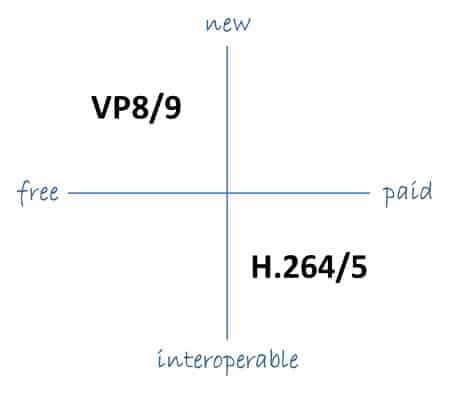
H.264, also known as AVC (Advanced Video Coding), has been the dominant codec in use for the past decade. It is widely supported by devices and software and offers good compression while maintaining high video quality. However, H.265 (HEVC) is slowly taking over. It is a newer and more advanced codec that offers better compression ratios, which means smaller file sizes with the same quality as H.264. H.265 is also better at handling high-resolution videos, making it a good choice for 4K and 8K videos. However, it requires more processing power to decode, which may be an issue on older devices.

Personally, I have found that H.265 delivers noticeably better quality than H.264 for the same file size. It is especially noticeable in high-motion scenes like action movies or sports. However, it does require more processing power, so make sure your device can handle it before choosing it as your preferred codec.

VP9: The New Kid on the Block

VP9 is a newer codec developed by Google and is designed to be a royalty-free alternative to H.265. It offers better compression than H.264 while maintaining the same video quality. It is also highly efficient at handling high-resolution videos, making it a good choice for 4K and 8K videos. However, its adoption has been slow due to its lack of support in many devices and software. It also requires more processing power to decode than H.264.

One of my personal experiences with VP9 was when I was trying to stream a 4K video on my laptop. I noticed that the video was buffering a lot and the quality was not as good as I expected. After some research, I found out that the video was encoded with VP9, which my laptop did not support. I had to switch to H.264 to get smooth playback.

Conclusion: Choosing the Right Video Codec

Choosing the right video codec is crucial for ensuring smooth video playback and high video quality. H.264 is still a solid choice for most situations, but H.265 and VP9 offer better compression and handling of high-resolution videos. However, they require more processing power and may not be supported by all devices and software. Make sure to choose the codec that best suits your needs and device capabilities.

In conclusion, video codecs are an essential part of our digital lives, and choosing the right one can make all the difference in our video-watching experience. Always keep in mind the pros and cons of each codec and make an informed decision based on your needs.