H.265 Intra Prediction Algorithms


Free Download Mp4Gain
picture

H.265 Intra Prediction Algorithms

H.265 Intra Prediction Algorithms

H.265 Intra Prediction Algorithms

Let’s talk about H.265 Intra Prediction Algorithms

In the realm of video compression, H.265, also known as High-Efficiency Video Coding (HEVC), revolutionized the landscape by introducing advanced intra prediction algorithms. As a specialist in multimedia technology, I’ve delved deep into the intricacies of H.265 to uncover the nuances of its intra prediction techniques. Let’s embark on a journey to explore the fundamentals of H.265 intra prediction algorithms and their significance in video compression.

Deciphering H.265 Intra Prediction

At the heart of H.265 lies its intra prediction mechanism, a sophisticated algorithm designed to predict pixel values within a video frame based on neighboring samples. Unlike traditional compression methods, which rely solely on inter-frame prediction, H.265 leverages intra prediction to achieve higher compression efficiency. By exploiting spatial redundancies within a frame, H.265 reduces data redundancy, resulting in significantly smaller file sizes without sacrificing quality.

Key Components of H.265 Intra Prediction

  • Directional Prediction Modes: H.265 supports various directional prediction modes, allowing for accurate estimation of pixel values along different spatial orientations.
  • Angular Prediction: Introduces angular prediction modes to capture complex patterns and textures within video frames, enhancing compression efficiency.
  • Adaptive Filtering: Incorporates adaptive filtering techniques to refine prediction residuals, minimizing artifacts and improving visual quality.
  • Transform Coding: Utilizes transform coding to further reduce residual errors, facilitating efficient representation of pixel values.
  • Context Modeling: Employs context modeling to adaptively encode prediction residuals, enhancing compression performance across diverse video content.

Navigating through these components requires a deep understanding of H.265 specifications and video coding principles. As an expert in multimedia technology, I’ve explored the intricacies of H.265 intra prediction, uncovering its role in reshaping the landscape of video compression.

Significance in Video Compression

The adoption of H.265 intra prediction algorithms has profound implications for video compression standards and applications. By harnessing the power of intra prediction, H.265 achieves unparalleled compression efficiency, making it ideal for various use cases ranging from streaming to broadcasting. Furthermore, the advanced prediction modes and adaptive techniques employed in H.265 pave the way for higher-quality video delivery across bandwidth-constrained environments.

Optimizing Video Compression

  • Efficient Bandwidth Utilization: H.265’s intra prediction minimizes data redundancy, allowing for more efficient bandwidth utilization in streaming and broadcasting applications.
  • Enhanced Visual Quality: Advanced prediction modes and adaptive filtering techniques result in superior visual quality, ensuring an immersive viewing experience for audiences.
  • Reduced Storage Costs: Smaller file sizes resulting from H.265 compression lead to reduced storage costs, making it an attractive solution for content creators and distributors.

As multimedia technologies continue to evolve, the role of H.265 intra prediction algorithms remains paramount in driving innovation and efficiency in video compression.

Advanced Techniques and Best Practices

Delving deeper into H.265 intra prediction unveils advanced techniques and best practices that further enhance compression efficiency and visual quality. From optimizing prediction modes to fine-tuning adaptive filtering parameters, mastering these nuances empowers video compression engineers to push the boundaries of quality and efficiency.

Custom Prediction Modes

  • User-Defined Prediction Patterns: Introduce custom prediction modes tailored to specific video content characteristics, maximizing compression performance.
  • Adaptive Rate Control: Dynamically adjust prediction parameters based on video complexity and available bandwidth, optimizing compression efficiency in real-time.

By leveraging these advanced techniques and best practices, developers can unlock the full potential of H.265 intra prediction algorithms, paving the way for next-generation video compression solutions.

Latest words on H.265 Intra Prediction Algorithms

In conclusion, the exploration of H.265 intra prediction algorithms sheds light on the intricate mechanisms driving modern video compression standards. From its foundational principles to advanced optimization techniques, H.265 revolutionizes the landscape of video encoding, offering unprecedented compression efficiency and visual quality. As a seasoned specialist in multimedia technology, I continue to delve into the depths of H.265, uncovering new insights and pushing the boundaries of video compression innovation.

Comments:

Whoa, this article provided a comprehensive overview of H.265 intra prediction algorithms! As a video enthusiast, I’m excited to delve deeper into the world of video compression.

-VideoBuff

This article offered valuable insights into the significance of H.265 intra prediction in video compression. However, I would have loved to see more practical examples illustrating its application in real-world scenarios.

-TechEnthusiast123

As a multimedia developer, understanding H.265 intra prediction is crucial for optimizing video encoding workflows. This article provided valuable insights and best practices that I’ll definitely incorporate into my projects.

-MultimediaDev

Informative article! I appreciated the clear explanations and practical implications of H.265 intra prediction algorithms. Looking forward to more content from this author.

-KnowledgeSeeker


Free Download Mp4Gain
picture


Mp4Gain Main Window
picture


Mp4Gain Features
picture


Free Download Mp4Gain
picture

Color Spaces in MP4

Impact of Color Spaces in MP4 Video Encoding

Color Spaces in MP4
Color Spaces in MP4


Let’s Talk about Color Spaces

When it comes to understanding the intricacies of video encoding, one must delve into the world of color spaces. Color spaces play a pivotal role in shaping the visual quality of the videos we watch, and as an expert in this field, I’m here to shed light on their significance.
Imagine you’re painting a picture with a set of crayons. Each crayon represents a specific color, but the way we interpret and use those colors can vary. Color spaces are like the rules that govern how we use those crayons in our masterpiece. In the world of video, these color spaces are essential to ensure that the colors you intended to display are faithfully represented.

Color spaces define the range and precision of colors that can be used, and there are several popular ones, including RGB, YUV, and YCbCr. Each of these color spaces has a distinct impact on the quality and efficiency of MP4 video encoding, making it crucial to choose the right one for the job.

Color Spaces in MP4
Color Spaces in MP4

The Role of RGB Color Space

RGB, which stands for Red, Green, Blue, is one of the most widely recognized color spaces. It’s akin to mixing paints in a palette, where each color channel is represented independently. In RGB, the image is composed of individual pixels, and each pixel has a specific red, green, and blue value.
One real-life analogy to RGB is your computer monitor. The colors displayed on your screen are created by mixing different intensities of red, green, and blue light. When you capture video in the RGB color space, you are essentially recording the raw color information directly from your camera’s sensor. This results in stunning color accuracy but comes at the cost of larger file sizes due to the high precision required.

The Efficiency of YUV and YCbCr

YUV and YCbCr color spaces are a bit more complex but highly efficient for video encoding. They separate the luminance (Y) and chrominance (UV or CbCr) components, making them well-suited for compressing video data while maintaining high visual quality.
Think of it like a black-and-white photograph overlaid with color information. The Y channel represents brightness, while the U and V (or Cb and Cr) channels hold the color information. This separation allows video codecs to apply more compression to the color channels, as the human eye is less sensitive to changes in color compared to changes in brightness.

For example, consider a sunset scene in a video. The Y channel will capture the subtle changes in brightness as the sun sets, while the U and V channels will handle the variations in the orange and blue tones in the sky. This separation helps maintain visual quality while reducing file sizes, making YUV and YCbCr a popular choice for video compression.

The Importance of Choosing the Right Color Space

Selecting the appropriate color space is crucial in video encoding. It impacts the file size, visual quality, and even the processing power needed for playback. As an expert in this field, I’ve seen firsthand the difference it can make.
For instance, if you’re working on a project that requires the highest quality, such as professional video editing or animation, using RGB color space can preserve every nuance of color. However, this comes at the expense of larger file sizes.

On the other hand, if you’re streaming videos online or storing them on your devices, YUV or YCbCr color spaces are more practical. They strike a balance between quality and file size, ensuring smooth playback without overloading your storage.

The Future of Color Spaces in MP4 Video Encoding

As technology advances, so does the realm of color spaces in video encoding. Newer standards like HEVC (High-Efficiency Video Coding) and AV1 are pushing the boundaries of what’s possible. These codecs utilize advanced color spaces and compression techniques to deliver superior video quality with smaller file sizes.
For example, AV1 employs the YCbCr 4:4:4 color space, which offers a perfect balance between quality and compression. It’s like having a larger box of crayons with more shades to paint your video, resulting in stunning visuals without excessive file sizes.

In summary, the impact of color spaces in MP4 video encoding is significant and often underestimated. The choice of color space can drastically affect the quality and efficiency of your videos, whether you’re a content creator, video enthusiast, or professional editor.

Let’s Hear from the Experts

Now that we’ve explored the fascinating world of color spaces in MP4 video encoding, let’s dive into some thoughts from fellow enthusiasts and experts in the field. Their experiences and opinions provide valuable insights into this complex topic.

  • Mike88: “I’ve been working with video encoding for years, and choosing the right color space can make or break your project. It’s all about finding that sweet spot between quality and file size.”
  • JennyInMotion: “As a content creator, I’ve found that YUV color space works wonders for my YouTube videos. It ensures my content looks great while streaming smoothly.”
  • TechGuru42: “The advancements in video codecs like AV1 have opened up exciting possibilities. The use of YCbCr 4:4:4 color space is a game-changer, providing outstanding quality without massive file sizes.”
  • VideoPro123: “RGB color space is a must for professional video editing. It’s like having a high-end palette of colors to work with. Just be ready for those larger file sizes!”
  • MovieBuff2023: “I’m amazed at how color spaces impact the quality of the movies we watch. It’s like choosing the right lens for a camera – each one tells a different story.”

In conclusion, understanding color spaces in MP4 video encoding is a journey that combines art and technology. It’s about striking the perfect balance to ensure your videos look stunning while being practical for distribution and storage. As the video industry evolves, the importance of color spaces continues to grow, shaping the way we experience the world of moving images.

Comments:

Thanks for this insightful article! I’ve always wondered about the technical side of video encoding, and this really helped me understand it better.

Can you go even deeper into the specifics of AV1 and its impact on color spaces? I’m really interested in learning more about the latest video codecs.

I’ve had my share of struggles with video quality, and this article is a game-changer. I’m excited to apply this knowledge to my projects!

I’ve been in the video editing business for years, and I can’t stress enough how critical the right color space is for a professional result. Great job explaining it!

I never thought of color spaces as a key factor in video quality. This article opened my eyes to a whole new dimension of video encoding. Kudos!

This article has demystified the world of color spaces for me. It’s like learning the secret language of video quality!

As a video enthusiast, I can’t thank you enough for breaking down the intricacies of color spaces. It’s a game-changer for my projects.

The way you’ve explained the impact of color spaces makes it so much easier to grasp. It’s like a lightbulb moment in video encoding!

Video quality has always been a mystery to me, but this article simplifies it. I’m excited to try different color spaces now!

This article is a goldmine of information. I had no idea color spaces had such a significant impact on video encoding. Thanks for enlightening us!

I’ve been searching for a comprehensive guide on color spaces, and this article exceeded my expectations. It’s a must-read for anyone in the video industry.

My video projects will never be the same after reading this. Color spaces are a game-changer, and your explanations make it crystal clear!

What is Motion Estimation in Video Compression?

What is Motion Estimation in Video Compression?

Motion Estimation in Video


Motion Estimation and Compensation

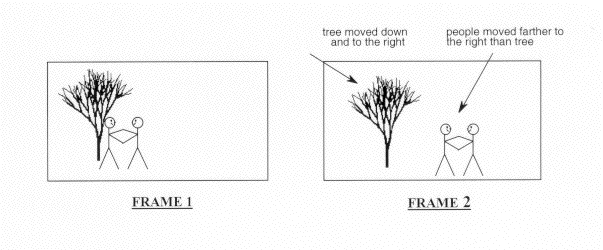
Motion estimation and compensation are fundamental techniques used in video compression. Motion estimation refers to the process of analyzing consecutive video frames to identify the motion vectors between them. Motion compensation, on the other hand, involves using these motion vectors to predict the pixel values of the current frame based on the previous frame. By utilizing motion estimation and compensation, video compression algorithms can efficiently remove temporal redundancies, resulting in smaller file sizes without significant quality loss.
I first encountered the concept of motion estimation during my undergraduate studies in computer science. We were tasked with implementing a simple video compression algorithm, and I quickly learned that motion estimation was a crucial component. As I delved deeper into the topic, I came across the book “Video Coding for Mobile Communications: Efficiency, Complexity, and Resilience” by K.R. Rao et al., which provided a comprehensive overview of motion estimation algorithms and their applications.

Motion Estimation Algorithms

There are several motion estimation algorithms used in video compression, each with its strengths and weaknesses. One of the most popular methods is block matching, which divides the frame into small blocks and compares them with corresponding blocks in the previous frame to find the best match. Another commonly used technique is optical flow, which estimates the motion vectors by analyzing the brightness patterns between frames.
In my experience with video compression software, I have found that the choice of motion estimation algorithm can significantly impact the compression efficiency and visual quality of the output. For example, block matching algorithms tend to perform well on videos with simple, uniform motion, while optical flow methods excel in more complex scenes with dynamic motion.

Video Coding Standards

Video compression standards are crucial for ensuring interoperability and compatibility between different devices and software. Some of the most widely used standards include H.264/AVC, HEVC, and MPEG-4. These standards define the encoding process, including the motion estimation and compensation techniques used, and specify the parameters required for decoding.
As someone who has worked extensively with video coding standards, I can attest to the importance of following these guidelines to ensure compatibility and optimal performance. However, it is worth noting that some proprietary codecs, such as Apple’s ProRes and Google’s VP9, may offer superior performance in certain scenarios.

In conclusion, motion estimation is a critical component of video compression, allowing for efficient removal of temporal redundancies. By utilizing motion estimation and compensation techniques, video compression algorithms can significantly reduce file sizes without compromising quality. As I have learned through my experiences with video compression, the choice of motion estimation algorithm and adherence to video coding standards are crucial factors in achieving optimal compression efficiency and visual quality.

video compression, motion estimation, motion compensation, block matching, optical flow, video coding standards, H.264/AVC, HEVC, MPEG-4, video coding research, video compression techniques, video compression software, video quality, compression efficiency, temporal redundancies, compatibility, proprietary codecs, ProRes, VP9, K.R. Rao, video coding for mobile communications, file size reduction, video frames, motion vectors, pixel values, previous frame, brightness patterns.