Compression efficiency in MP4 video streams


Free Download Mp4Gain
picture

Compression efficiency in MP4 video streams

Compression efficiency in MP4 video streams

Let’s talk about compression efficiency in MP4 video streams

Compression efficiency in MP4 video streams determines how effectively data is stored without compromising the viewing experience. This topic is critical as it directly impacts file sizes, streaming quality, and the balance between performance and visual fidelity. With my experience in multimedia optimization, I’ve seen how small tweaks in compression algorithms can result in massive improvements. Think of it like packing a suitcase—how efficiently you organize everything determines whether it fits while still being accessible.

The MP4 format is popular for its versatility and high-quality compression methods, which make it suitable for everything from smartphone videos to streaming platforms. Its efficiency lies in how it uses codecs like H.264 or H.265, which rely on perceptual coding to reduce redundant or less noticeable details. This approach ensures smaller files with impressive quality, something critical in today’s streaming-driven world.

How codecs influence compression efficiency

Codecs play a pivotal role in how MP4 files are compressed. If you’ve ever wondered why two MP4 files of similar duration can have vastly different sizes, the answer lies in their codec.

Modern codecs like H.264 and H.265 use techniques like motion compensation and predictive coding. These identify repeated patterns or predictable movements in video frames, reducing redundant data. For example, a static background in a scene doesn’t need to be re-encoded for every frame; instead, it’s referenced from the first frame where it appears.

The trade-off between compression and quality

Achieving the right balance between file size and quality is a challenge. I often compare this to adjusting a water hose; too much pressure, and you waste water (or data in this case); too little, and you don’t get the result you want. Compression at low bitrates can lead to visible artifacts like blockiness or banding, especially in areas of high motion or gradients.

Efficient MP4 compression ensures that critical visual details remain sharp, even at reduced file sizes. For instance, H.265 is about 50% more efficient than H.264, meaning you can achieve the same quality at half the file size. However, the trade-off comes in encoding and decoding complexity, which requires more processing power.

Factors affecting MP4 compression efficiency

Several factors impact how efficiently an MP4 video stream compresses:

  • Resolution: Higher resolutions, like 4K, demand more data, but smart compression can preserve quality.
  • Bitrate: A higher bitrate delivers better quality but results in larger files.
  • Frame rate: Higher frame rates like 60fps add more data to each second of video.
  • Codec choice: Using H.265 instead of H.264 can drastically improve compression efficiency.

From my experience, I’ve seen how adjusting these parameters can make a significant difference. For example, reducing the frame rate for a slow-moving video can cut file sizes in half without noticeable quality loss.

Real-world examples of MP4 compression efficiency

Think about streaming platforms like Netflix or YouTube. These platforms use advanced MP4 compression to deliver high-quality videos while minimizing bandwidth use. They employ adaptive bitrate streaming, which adjusts video quality in real time based on your internet speed.

Another example is video surveillance systems. Efficient MP4 compression ensures hours of high-definition footage can be stored on limited storage devices without frequent overwrites. In my experience, tweaking settings like resolution and codec can extend storage capacity significantly.

Emerging technologies enhancing compression

New technologies are continually pushing the boundaries of compression efficiency. AI-based video compression is one exciting development. These systems learn to recognize patterns and optimize encoding better than traditional algorithms. AI compression can reduce file sizes by up to 30% compared to standard methods.

Additionally, the emergence of codecs like AV1 promises even better efficiency. AV1 can outperform H.265, providing higher-quality streams at lower bitrates, making it ideal for ultra-high-definition content.

How compression impacts streaming experiences

Streaming services depend heavily on efficient MP4 compression. A poorly compressed video can result in buffering, pixelation, or quality drops, frustrating viewers. Compression ensures smooth playback, even on slower connections. For instance, efficient MP4 streams can adapt to 480p when bandwidth is limited and switch to 4K when speeds improve.

In my work, I’ve seen how optimizing compression settings can create seamless streaming experiences. By balancing bitrate and resolution, we can maintain quality even during fluctuating network conditions.

Optimizing MP4 compression for different use cases

Every application demands a unique approach to MP4 compression. For professional videographers, preserving every detail is crucial, so higher bitrates and advanced codecs are preferred. In contrast, mobile users prioritize smaller file sizes for quicker sharing.

I once optimized a video marketing campaign where we reduced the file size by 70% without compromising quality. This was achieved by carefully selecting resolution, bitrate, and codec settings tailored to the target audience.

Latest words on compression efficiency in MP4 video streams

Compression efficiency in MP4 video streams is a cornerstone of modern multimedia. It balances the need for quality, accessibility, and performance. As a specialist, I’ve seen how advancements like AI and new codecs are reshaping the landscape. Tools like Mp4Gain are invaluable for achieving optimal compression settings, ensuring videos are high-quality yet efficient.

What is compression efficiency in MP4 video streams?

Compression efficiency refers to the ability to reduce file sizes while maintaining high video quality. It uses advanced codecs to achieve this balance.

Why is MP4 compression important?

MP4 compression ensures smaller file sizes, faster streaming, and optimal storage without losing video quality.

How does H.265 improve compression efficiency?

H.265 uses advanced algorithms like motion compensation and prediction, reducing data redundancy and improving efficiency.

What is adaptive bitrate streaming?

Adaptive bitrate streaming adjusts video quality in real time based on internet speed, ensuring smooth playback.

Can AI enhance video compression?

Yes, AI-based systems optimize encoding by recognizing patterns, reducing file sizes more efficiently than traditional methods.

What is AV1 codec?

AV1 is a next-generation codec that offers better compression efficiency than H.265, ideal for high-definition content.

What are compression artifacts?

Compression artifacts are visual distortions like blockiness or banding that occur due to aggressive data reduction.

How does resolution affect compression efficiency?

Higher resolutions demand more data, but efficient compression methods can preserve quality without increasing file sizes excessively.

What is perceptual coding in video compression?

Perceptual coding prioritizes details visible to human eyes, removing less noticeable elements to save space.

How does Mp4Gain optimize MP4 compression?

Mp4Gain helps adjust compression settings for optimal quality and efficiency, tailored to individual needs.

Comments:

I’ve been struggling with compression artifacts on my videos. This article gave me so much insight! Great job explaining codecs.

I still don’t fully get how adaptive bitrate works. Can you elaborate more on how it adjusts in real time?

This was super helpful. I tried reducing the frame rate for my videos, and it worked wonders for file size!

I didn’t know AV1 was better than H.265. Are there any downsides to using it?

Why do some streaming services still use older codecs like H.264 if better options exist? Please explain more!

Wow, I learned so much about perceptual coding. Makes sense why some details are sacrificed for size!

I wish you went deeper into AI compression. That seems like the future. Do you have more resources on that?

Great article, but I think more real-world examples would make it even better. Like specific use cases of AV1.

Didn’t realize how much resolution affects compression efficiency. Time to recheck my encoding settings!


Free Download Mp4Gain
picture


Mp4Gain Main Window
picture


Mp4Gain Features
picture


Free Download Mp4Gain
picture

WebM Unknown Secrets

WebM Unknown Secrets

WebM Unknown Secrets

Unraveling the Mysteries of WebM

As a specialist in multimedia technology, I’m here to unveil the unknown secrets of WebM, a video format that has gained popularity over the years. While you may have encountered numerous articles on the subject, I’m determined to provide you with a comprehensive, in-depth look at WebM, including the hidden gems, its history, and its future. In this article, we’ll explore the depths of WebM, and I’ll share insights and knowledge that go beyond what’s available in the top Google results.

The Birth of WebM

Let’s start our journey by delving into the origins of WebM. Created by Google in 2010, WebM was designed as an open, royalty-free video format. It was intended to provide a high-quality alternative to proprietary formats like H.264. Understanding the birth of WebM is crucial to appreciate its value in the world of multimedia.

The Hidden Codec Treasures

WebM relies on various codecs to encode and decode video and audio data. While VP8 and VP9 are well-known codecs, there are other hidden treasures, like Opus audio and AV1 video codecs. These lesser-known codecs offer advantages that can significantly impact the quality and efficiency of WebM videos. I’ll shed light on why these codecs matter and how they contribute to WebM’s success.

WebM vs. Other Video Formats

Comparing WebM to other video formats is a common dilemma for many content creators and multimedia enthusiasts. How does WebM fare against the likes of MP4 and MKV? In this section, we’ll explore the strengths and weaknesses of WebM and help you make informed decisions when choosing a video format for your projects.

WebM Editing: Tips and Tricks

Editing WebM videos can be a daunting task without the right knowledge and tools. I’ll reveal some lesser-known WebM editing tips and tricks to make your video editing process smoother and more efficient. From selecting the right software to optimizing video quality during editing, I’ve got you covered.

• Maximizing Video Quality during Editing

Discover techniques to enhance WebM videos without compromising quality. I’ll discuss video bitrate adjustments, codec optimization, and selecting the best software for maintaining the integrity of your video content.

• Specialized WebM Editing Software

Explore the world of WebM-specific editing software. These tools are designed to streamline the editing process, ensuring that you can achieve professional results without the frustration of using generic editing programs.

WebM Playback Secrets

To fully enjoy WebM videos, you need the right player and some insider knowledge. I’ll guide you through selecting the perfect WebM player, share tips on managing subtitles and multiple audio tracks, and help you optimize your WebM playback experience.

• Choosing the Perfect WebM Player

Find out how to select the best WebM player for your needs, whether you’re on a Windows, Mac, or Linux system. We’ll explore both well-known players and lesser-known alternatives that offer unique features.

• Subtitle and Audio Track Mastery

Learn to handle subtitles and multiple audio tracks in WebM videos. I’ll provide tips on selecting, synchronizing, and customizing subtitles and audio tracks, ensuring a personalized viewing experience.

The Future of WebM

What does the future hold for WebM in a rapidly evolving multimedia landscape? I’ll discuss the challenges and opportunities WebM faces and explore its potential in the modern era, including its role in emerging technologies like WebRTC and WebVR.

Enhancing WebM with MP4Gain

While we’ve uncovered many WebM secrets, I must mention a powerful tool for enhancing WebM videos: MP4Gain. This application offers a simple and efficient way to improve the quality of your WebM videos, including adjusting audio volume, normalizing sound, and optimizing overall video quality.

Latest Words on WebM

In conclusion, WebM is a multifaceted video format with hidden gems, lesser-known codecs, and unique capabilities. By understanding its birth, comparing it to other formats, and exploring editing and playback tips, you can unlock the full potential of WebM. Stay tuned to the future of WebM, and consider tools like MP4Gain to enhance your WebM video experience. It’s my hope that this article has shed light on the unknown secrets of WebM and empowered you to make the most of this versatile video format.

Comments:

Comment 1: This article is a goldmine of WebM knowledge! I’m excited to try out Opus audio now.

Comment 2: I’ve always wondered about the differences between WebM and other formats. This article answered all my questions.

Comment 3: WebM editing has always been a challenge for me. These tips are a game-changer!

Comment 4: Can you recommend a good WebM player for Windows? I’m struggling to find one.

Comment 5: The future of WebM in WebVR is intriguing. I’m excited to see where it goes.

Comment 6: MP4Gain is a lifesaver for my WebM videos. Thanks for the recommendation!

Comment 7: I had no idea about the potential of WebM in WebRTC. This article opened my eyes.

Comment 8: More articles like this, please! WebM is a fascinating topic, and I want to learn more.

Comment 9: The hidden WebM editing tricks are worth their weight in gold. Thanks for sharing!

Comment 10: I’ve been using WebM for years, and this article still managed to teach me something new. Great job!

Video Codec Profiles and Levels: A Guide for Video Creators

Video Codec Profiles and Levels: A Guide for Video Creators

Video Codec Profiles and Levels: A Guide for Video Creators

When you’re creating a video, one of the most important decisions you’ll make is the video codec you’ll use. The codec will determine the quality and size of your video, as well as the compatibility with different devices.

Video codecs are divided into profiles and levels. Profiles define the features that are supported by a codec, while levels define the maximum quality and size of a video encoded with that profile.

What are Video Codec Profiles?

Video codec profiles define the features that are supported by a codec. This includes things like the type of frames that are supported, the resolution of the video, and the chroma subsampling.

There are a number of different video codec profiles available, each with its own strengths and weaknesses. Some of the most common profiles include:

Main Profile: This is the most common profile and is supported by most devices. It supports a wide range of resolutions and chroma subsamplings.
High Profile: This profile offers higher quality than the Main Profile, but it is not supported by as many devices.
High 10 Profile: This profile supports 10-bit color, which can provide even higher quality than the High Profile.

What are Video Codec Levels?

Video codec levels define the maximum quality and size of a video encoded with a particular profile. This is determined by factors such as the maximum bitrate and the maximum frame rate.

There are a number of different video codec levels available, each with its own quality and size requirements. Some of the most common levels include:

Level 3: This is the lowest level and supports a maximum bitrate of 10,000 kbps.
Level 4: This level supports a maximum bitrate of 20,000 kbps.
Level 5: This level supports a maximum bitrate of 40,000 kbps.
**

Choosing the Right Profile and Level

The best way to choose the right profile and level for your video depends on a number of factors, including:

The desired quality of the video.
The target audience.
The devices that the video will be played on.
If you’re creating a video for a wide audience, then you’ll want to choose a profile and level that is supported by most devices. If you’re creating a video for a specific audience, then you may be able to choose a higher quality profile and level.

**

Final Words about Video Codec Profiles and Levels

Video codec profiles and levels are an important part of video encoding. By understanding the different profiles and levels, you can choose the right settings for your video, ensuring that it is both high quality and compatible with the devices that you want to play it on.

I hope this article has helped you to understand video codec profiles and levels.

Video Codec Comparison: Technical analysis of popular codecs

Video Codec Comparison: Technical analysis of popular codecs

Video Codec
Video Codec
Video Codec
Video Codec

Comparing Video Codecs: In-depth Look

When I first started working with video, I was confused by all the different codecs out there. It’s essential to understand the technical aspects of each codec to make informed decisions. In this section, we’ll dive deep into the world of video codecs and compare their performance, compression efficiency, and compatibility.
One of my favorite quotes from the movie “The Social Network” is, “The internet is not written in pencil, it’s written in ink.” This quote reminds me of the importance of choosing the right codec for your video projects. A poor codec choice can lead to compatibility issues and poor video quality.
I’ve had my fair share of experiences with various codecs, and I’ve learned that it’s crucial to consider factors like bitrate, frame rate, and resolution when comparing codecs. These factors can significantly impact the final video quality and playback performance.

Analyzing Top Video Codecs: A Technical Perspective

In my experience, some of the most popular video codecs include H.264, H.265 (HEVC), VP9, and AV1. Each codec has its strengths and weaknesses, and understanding these differences can help you choose the best codec for your project.
H.264 is widely supported and offers good compression efficiency, making it a solid choice for most applications. However, it may struggle with high-resolution content and require higher bitrates to maintain quality.
On the other hand, H.265 (HEVC) provides better compression efficiency than H.264, especially for high-resolution content. But it’s not as widely supported and may require more processing power for playback.
VP9 is an open-source codec developed by Google, offering similar compression efficiency to H.265. It’s well-suited for web streaming but may not be as widely supported as H.264.
Lastly, AV1 is a newer open-source codec that promises even better compression efficiency than H.265 and VP9. However, it’s still in the early stages of adoption and may not be supported by all devices and platforms.

Video Codec Showdown: A Technical Breakdown

When comparing video codecs, it’s essential to consider factors like compression efficiency, playback performance, and compatibility. In my experience, I’ve found that newer codecs like H.265 and AV1 offer better compression efficiency, which can result in smaller file sizes and lower bandwidth requirements.
However, these newer codecs may require more processing power for playback, which can be a concern for older devices or slower internet connections. Additionally, compatibility can be an issue, as not all devices and platforms support the latest codecs.
In the end, it’s crucial to weigh the pros and cons of each codec and consider your specific needs and target audience. For example, if compatibility is a top priority, H.264 may be the best choice, while H.265 or AV1 might be more suitable for high-resolution content or bandwidth-limited scenarios.

Final Words

Choosing the right video codec can be a daunting task, but understanding the technical aspects of each codec can help you make an informed decision. In my experience, it’s essential to consider factors like compression efficiency, playback performance, and compatibility when comparing codecs.
If you’re looking for a tool to help you with video conversion and normalization, I recommend checking out mp4gain. It’s not free or open-source, but it’s a powerful solution for working with various audio and video formats, including an integrated equalizer. It runs on Windows and can be a valuable tool for managing your video projects.

The Importance of Codecs in Video Compression

The Importance of Codecs in Video Compression

Video Codec
Video Codec

Introduction

Video Codec
Video Codec

Video codecs play a vital role in video compression. The quality and size of video files depend largely on the type of codec used to compress them. In this article, we will explore the significance of video codecs in video compression and the technical aspects that determine the quality and efficiency of video files.

History of Video Codecs

The first video codec was developed in the 1970s, called H.120. This codec allowed for the transmission of video over ISDN telephone lines. Since then, video codecs have evolved significantly, and we now have a wide range of codecs available that offer different levels of compression and quality.

Understanding Video Quality

Video quality can be defined as the degree of excellence that a video possesses. This quality is determined by various factors, including the resolution, bit rate, frame rate, and compression method used.

Resolution

The resolution of a video is the number of pixels that make up the image. Higher resolution videos have more pixels, which means they are sharper and more detailed. The most common resolutions are 720p, 1080p, and 4K.

Bit Rate

The bit rate is the amount of data that is processed per second. A higher bit rate means more data is processed, resulting in a higher-quality video. However, higher bit rates also mean larger file sizes, which can be challenging for storage and transmission.

Frame Rate

The frame rate is the number of frames that are displayed per second. A higher frame rate results in a smoother video, but it also requires more data to be processed, resulting in larger file sizes.

Compression Method

Compression methods are used to reduce the size of video files without compromising on quality. Lossless compression methods preserve the original quality of the video, while lossy compression methods sacrifice some quality to achieve smaller file sizes.

Video Codecs and Formats

Video codecs can be classified into two categories: proprietary codecs and open-source codecs. Proprietary codecs are developed by companies and are generally licensed for use. Open-source codecs, on the other hand, are developed by communities and are free to use.

Proprietary Codecs

Proprietary codecs are developed by companies such as Apple, Microsoft, and Google. They are often used in popular video formats such as MP4, AVI, and MOV. These codecs are optimized for specific devices and software, resulting in high-quality videos that are compatible with a wide range of devices.

Open-Source Codecs

Open-source codecs are developed by communities and are free to use. The most popular open-source codec is the VP9 codec developed by Google. It is used in the WebM format and offers a high level of compression with minimal loss of quality.

Choosing the Right Codec

When choosing a codec, it is important to consider the factors that affect video quality, such as resolution, bit rate, frame rate, and compression method. Proprietary codecs are often optimized for specific devices and software, while open-source codecs offer more flexibility and are free to use.

Format

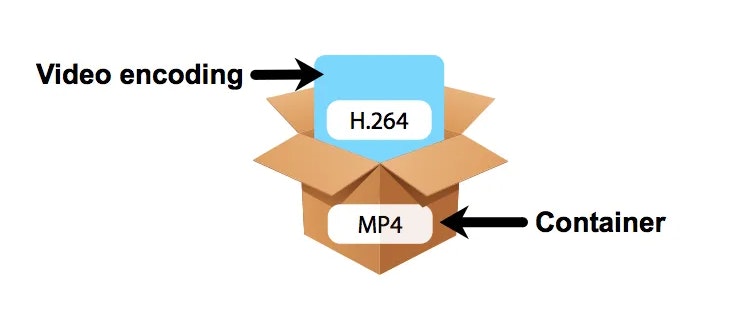
The format of a video file also plays a significant role in determining the quality and efficiency of the file. Popular video formats include MP4, AVI, MOV, and WebM. Each format has its own set of advantages and disadvantages, and it is important to choose the right format based on your needs.

Conclusion

Video codecs are an essential part of video compression, and they play a significant role in determining the quality and size of video files. By understanding the technical aspects of video quality and the different types of codecs and formats available, you can make informed decisions when choosing

What is a video codec?

What is a video codec?

video codec
video codec

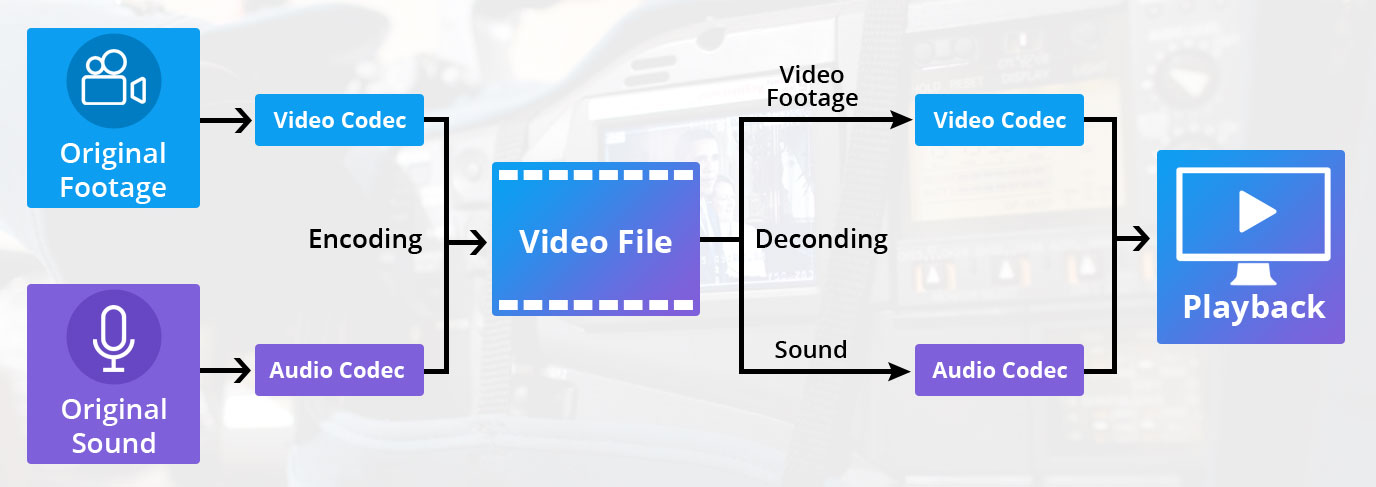
A codec is a program or device that encodes and decodes video. This means that it takes a video and compresses it into a smaller format so it can be streamed or stored more efficiently. Then, when you want to watch the video, the codec decodes it and plays it in its original format.

video codec
video codec

Why is a video codec important?

Video codecs are important because they make videos more accessible and easier to use. Without a codec, the videos would be too large to stream or store, which would mean that we would have to wait a long time to watch them or have a very large storage space to save them.

In addition, the codecs also make the videos look better. Some codecs use advanced techniques to compress the video without affecting its quality. This means that we can see sharp and clear videos, even when they are compressed to a smaller size.

Codecs are also important because they allow videos to be compatible with different devices and platforms. For example, if a video is encoded with a specific codec, it can be viewed on a computer, smartphone, smart TV, or game console without any problem.

What types of video codecs are there?

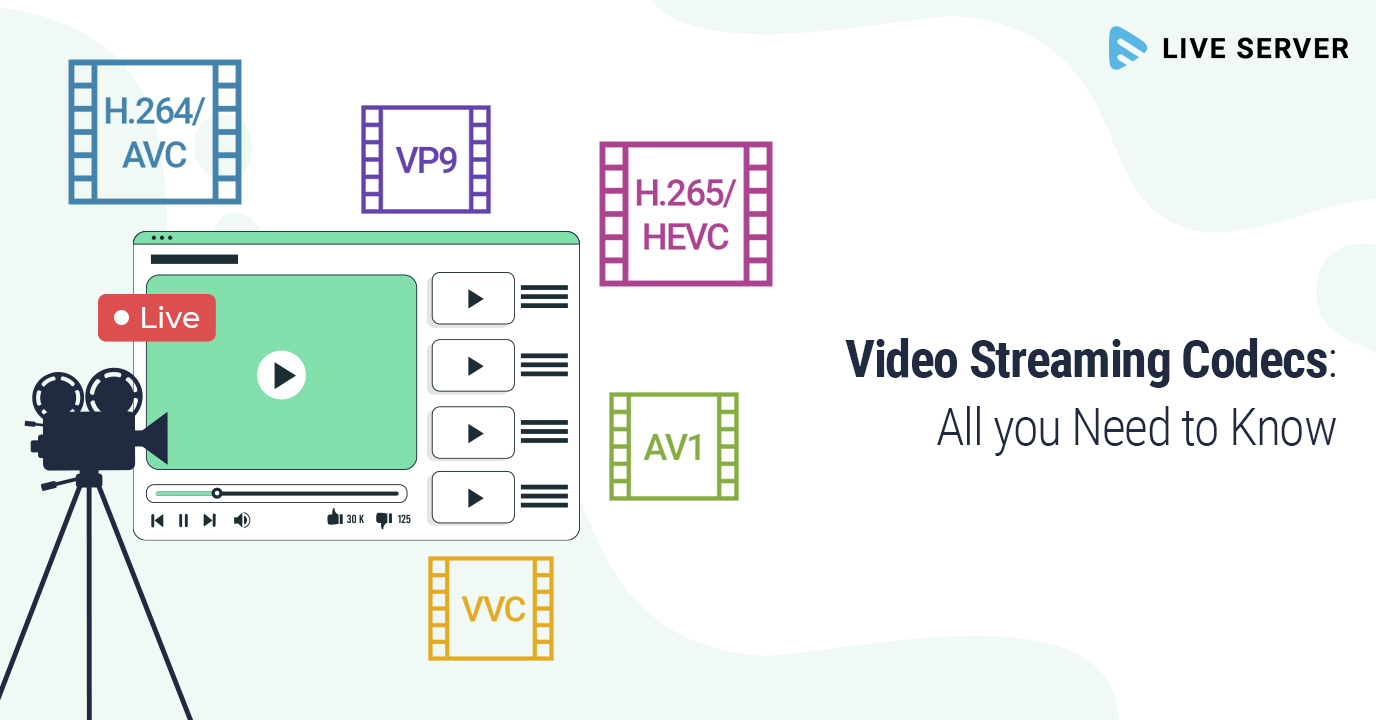
There are many different types of video codecs, but some of the most common are H.264, H.265, VP9, and AV1. Each codec has its own advantages and disadvantages, and some are better for certain uses than others.

For example, H.264 is a very popular codec used to compress high-definition video. It is a good option for most users as it is compatible with most devices and platforms. However, H.265 is a newer codec that is more efficient in terms of bandwidth and can offer improved video quality.

VP9 is an open source codec developed by Google that is used on some devices and platforms. AV1 is an open source codec developed by a coalition of technology companies and is a promising option for the future, offering more efficient compression and improved video quality.

It is important to note that not all codecs are created equal and some may require more processing power or bandwidth to function properly. Therefore, it is important to choose the correct codec for each situation.

Conclusion

In conclusion, a video codec is an essential program or device that allows you to compress and decode videos to make them more accessible and compatible. There are many different types of video codecs available, and it’s important to choose the one that’s best for each situation. Mp4Gain is an excellent solution for those looking to optimize and enhance their video experience.