H.264 Encoding Profiles and Their Impact on MP4


Free Download Mp4Gain
picture

H.264 Encoding Profiles and Their Impact on MP4
H.264 Encoding Profiles and Their Impact on MP4

Let’s talk about H.264 encoding profiles and their impact on MP4

When it comes to H.264 encoding profiles and MP4, understanding the connection is key to getting the most out of your video files. Over the years, I’ve worked extensively with H.264, and it remains the gold standard for balancing video quality with file size. The encoding profiles in H.264 determine everything from compression efficiency to playback compatibility. By diving deep into these profiles, I’ll show you how they shape your MP4 videos, making this knowledge indispensable for both creators and consumers.

Understanding H.264 Profiles and Their Purpose

H.264 encoding profiles are like recipes for compressing video. They specify what features the encoder uses to reduce file size while maintaining visual quality. Think of it like baking a cake—different recipes (profiles) give you different results, tailored to specific devices or purposes.

What Are the Main H.264 Profiles?

When working with MP4 files, you’ll often encounter three main profiles in H.264. Each has unique strengths designed for particular applications.

Baseline Profile

  • Designed for low-complexity devices like mobile phones.
  • Supports lower compression but ensures compatibility with older hardware.
  • Perfect for video calls or simple streams.

Main Profile

  • Offers better compression than Baseline, making it great for standard-definition video.
  • Balances quality and efficiency, ideal for TV broadcasts and some online platforms.
  • Supports interlaced video, unlike Baseline Profile.

High Profile

  • Provides the best quality-to-compression ratio of the three.
  • Commonly used for HD video, Blu-ray discs, and streaming services.
  • Leverages advanced features like CABAC (Context-Adaptive Binary Arithmetic Coding) for efficient compression.

Why MP4 Relies on H.264 Profiles

MP4 files use H.264 because of its universal compatibility and efficiency. Imagine wanting to share a video with someone on a smartphone or a smart TV. Without H.264 profiles, ensuring your video plays perfectly across devices would be like trying to fit a square peg into a round hole. These profiles allow MP4 files to adapt seamlessly.

How H.264 Profiles Impact Quality and Compression

The profile you choose directly affects both the quality of your video and how small the file becomes. For example, High Profile compresses more efficiently but demands more processing power during playback. It’s like packing a suitcase—some methods save space but require careful organization.

Real-World Examples of H.264 Profiles in Use

One of my favorite examples is streaming platforms like YouTube. For standard videos, Main Profile is often used to balance quality and playback smoothness. Meanwhile, 4K content relies on High Profile to deliver stunning visuals without ballooning file sizes.

Advanced Features in High Profile

High Profile is packed with cutting-edge features that make it stand out. One such feature, CABAC, significantly reduces file size without losing quality. Another, adaptive quantization, optimizes bitrate allocation for complex scenes. It’s like upgrading to a premium toolkit—you get more options to fine-tune the results.

Common Misunderstandings About H.264 Profiles

I often hear people say that higher profiles are always better. This isn’t true. Baseline Profile, for instance, remains crucial for low-power devices. Choosing the wrong profile can lead to playback issues or unnecessary strain on hardware, like using a chainsaw to cut butter.

When to Use Each H.264 Profile

Picking the right profile depends on your needs. If you’re targeting mobile users, Baseline Profile is a safe bet. For online content creators, Main Profile offers a great balance. High Profile is best for premium productions, where every detail matters.

How H.264 Enhances MP4 Compatibility

H.264 profiles ensure that MP4 files are playable across almost any device. Without them, video playback would often require additional codecs or software. This universal approach saves time and avoids compatibility headaches.

The Future of Video Encoding Beyond H.264

While H.264 dominates today, newer codecs like H.265 (HEVC) are pushing the envelope further. Still, H.264’s profiles and widespread adoption make it a staple. I often tell clients to think of H.264 as a reliable old friend—always there when you need it.

Latest words on H.264 encoding profiles and their impact on MP4

Mastering H.264 profiles is essential for anyone working with MP4. From Baseline to High Profile, each serves a purpose, shaping how videos look and perform. Whether you’re streaming, editing, or just watching, understanding these profiles unlocks the full potential of MP4. If you’re looking for a tool to optimize your videos, Mp4Gain offers a reliable solution to enhance quality and compatibility.

FAQs About H.264 Encoding Profiles and Their Impact on MP4

What are H.264 encoding profiles?

H.264 encoding profiles define the features and capabilities used during video compression. They determine how efficiently a video is compressed and how compatible it will be with different devices. The most common profiles are Baseline, Main, and High, each optimized for specific use cases like mobile playback, streaming, or high-definition video.

How do H.264 profiles impact MP4 files?

H.264 profiles determine the compression efficiency and playback compatibility of MP4 files. For example, Baseline Profile ensures older devices can play the video, while High Profile delivers superior quality and compression for HD content. The right profile ensures MP4 files work seamlessly across various platforms and devices.

Which H.264 profile is best for streaming video?

For streaming video, Main Profile is often the best choice. It balances quality and compression efficiency while maintaining compatibility with most devices. High Profile can also be used for higher-resolution streams, but it may require more processing power for playback.

Can I use High Profile for all my MP4 files?

While High Profile offers the best quality-to-compression ratio, it is not always the best choice. Devices with limited processing power, like older smartphones, may struggle to play High Profile videos. For maximum compatibility, Baseline or Main Profile might be better options.

Why is H.264 the preferred codec for MP4?

H.264 is the preferred codec for MP4 due to its exceptional balance between compression efficiency and quality. It supports a wide range of devices and platforms, ensuring compatibility without requiring additional software. Its encoding profiles make it versatile for different use cases, from mobile playback to high-definition video production.

How do I choose the right H.264 profile for my video?

Choosing the right H.264 profile depends on your video’s target audience and purpose. For mobile or low-power devices, Baseline Profile is ideal. Main Profile is suitable for standard-definition video and streaming, while High Profile is best for high-definition content or professional-grade projects.

What are the limitations of Baseline Profile?

Baseline Profile lacks advanced compression features like CABAC, which means it produces larger file sizes compared to Main or High Profile. It is optimized for compatibility with older or low-power devices, but this comes at the expense of lower compression efficiency and slightly reduced quality.

Is High Profile suitable for mobile devices?

High Profile can be used for mobile devices, but it may not perform well on older or less powerful smartphones. It requires more processing power for playback, so if compatibility with a wide range of mobile devices is a priority, Baseline or Main Profile might be a better choice.

What role does CABAC play in H.264 profiles?

CABAC, or Context-Adaptive Binary Arithmetic Coding, is an advanced compression feature used in Main and High Profiles of H.264. It significantly reduces file size while maintaining quality. However, it requires more processing power, making it unsuitable for devices that rely on Baseline Profile.

What is the future of H.264 encoding profiles?

Although newer codecs like H.265 and AV1 are emerging, H.264 remains widely used due to its established compatibility and efficiency. Its encoding profiles continue to serve as a reliable standard for MP4 files, ensuring seamless playback and quality for various applications.

Comments:

This article really helped me understand the difference between Baseline and High Profile. I’ve been encoding videos for YouTube, and now I see why my older clips played poorly on mobile devices. Thanks for the clarity!

So much detail here! I didn’t realize the impact CABAC has on compression. It’s crazy how much technology goes into something we take for granted like video streaming.

I think you should explain more about compatibility issues with older devices when using High Profile. I had trouble once with a file not playing on a 2010 smart TV. Just a thought.

Great breakdown of the profiles. This kind of info is hard to find in one place. Keep up the good work, and please do a piece on HEVC next!

I’ve been encoding all my videos using Main Profile, but now I’m wondering if I should switch to High Profile for better quality. Does it really make that much of a difference?

Honestly, this article is gold. I had no idea about adaptive quantization before reading this. Definitely bookmarking this page.

Super helpful! I’ve always been confused about why there are multiple profiles. This cleared it up perfectly. Thank you!

I encode my family videos using Baseline Profile so they’ll play on our old iPads. Reading this made me feel like I actually understand what I’m doing for once!

This is the kind of article I wish I found when I first started encoding videos. It would have saved me hours of trial and error.

Great job explaining such a technical topic in a way that’s easy to understand. More articles like this, please!

I never realized how much thought went into selecting an encoding profile. Makes me appreciate video tech even more. Thanks for the insights!

I’m just getting into video editing, and this helped me a lot. Do you think H.264 is still worth learning, or should I jump straight into HEVC?

The analogies in this article are great. Comparing encoding profiles to recipes really made it click for me. Keep writing!

I wish you’d included a section on the best settings for YouTube uploads. Otherwise, this is a fantastic guide.

Totally agree with the point about universal compatibility. That’s why I stick with H.264—it just works everywhere!


Free Download Mp4Gain
picture


Mp4Gain Main Window
picture


Mp4Gain Features
picture


Free Download Mp4Gain
picture

Video Codec Profiles and Levels: A Guide for Video Creators

Video Codec Profiles and Levels: A Guide for Video Creators

Video Codec Profiles and Levels: A Guide for Video Creators

When you’re creating a video, one of the most important decisions you’ll make is the video codec you’ll use. The codec will determine the quality and size of your video, as well as the compatibility with different devices.

Video codecs are divided into profiles and levels. Profiles define the features that are supported by a codec, while levels define the maximum quality and size of a video encoded with that profile.

What are Video Codec Profiles?

Video codec profiles define the features that are supported by a codec. This includes things like the type of frames that are supported, the resolution of the video, and the chroma subsampling.

There are a number of different video codec profiles available, each with its own strengths and weaknesses. Some of the most common profiles include:

Main Profile: This is the most common profile and is supported by most devices. It supports a wide range of resolutions and chroma subsamplings.
High Profile: This profile offers higher quality than the Main Profile, but it is not supported by as many devices.
High 10 Profile: This profile supports 10-bit color, which can provide even higher quality than the High Profile.

What are Video Codec Levels?

Video codec levels define the maximum quality and size of a video encoded with a particular profile. This is determined by factors such as the maximum bitrate and the maximum frame rate.

There are a number of different video codec levels available, each with its own quality and size requirements. Some of the most common levels include:

Level 3: This is the lowest level and supports a maximum bitrate of 10,000 kbps.
Level 4: This level supports a maximum bitrate of 20,000 kbps.
Level 5: This level supports a maximum bitrate of 40,000 kbps.
**

Choosing the Right Profile and Level

The best way to choose the right profile and level for your video depends on a number of factors, including:

The desired quality of the video.
The target audience.
The devices that the video will be played on.
If you’re creating a video for a wide audience, then you’ll want to choose a profile and level that is supported by most devices. If you’re creating a video for a specific audience, then you may be able to choose a higher quality profile and level.

**

Final Words about Video Codec Profiles and Levels

Video codec profiles and levels are an important part of video encoding. By understanding the different profiles and levels, you can choose the right settings for your video, ensuring that it is both high quality and compatible with the devices that you want to play it on.

I hope this article has helped you to understand video codec profiles and levels.

Enhancing Video Quality: Bitrate and Codec

Enhancing Video Quality: Bitrate and Codec

Enhancing Video Quality: Bitrate and Codec


When it comes to video quality, there are two main factors that you need to consider: bitrate and codec.

Bitrate

Bitrate is the amount of data that is used to encode a video file. A higher bitrate will result in a higher quality video, but it will also result in a larger file size.

The ideal bitrate for a video will depend on a number of factors, including the resolution of the video, the frame rate, and the type of content. For example, a high-resolution video with a high frame rate will require a higher bitrate than a low-resolution video with a low frame rate.

If you are concerned about file size, you can try reducing the bitrate of your video. However, keep in mind that this will also reduce the quality of the video.

Codec

A codec is a type of software that is used to encode and decode video files. There are many different codecs available, and each one has its own strengths and weaknesses.

Some of the most popular codecs include:

H.264: This is a widely used codec that offers good quality and compatibility.
MPEG-4: This is another popular codec that is known for its good quality.
VP9: This is a newer codec that offers better quality than H.264 and MPEG-4, but it is not as widely supported.
When choosing a codec, you need to consider the following factors:

The quality of the video that you want to create
The compatibility of the codec with your devices and software
The file size of the video that you want to create

Conclusion

Bitrate and codec are two important factors that you need to consider when enhancing video quality. By understanding these factors, you can create high-quality videos that are also small in file size.

Here are some additional tips for enhancing video quality:

Use a high-quality camera
Shoot in good lighting conditions
Edit your videos carefully
Optimize your videos for the web
By following these tips, you can create videos that are both high-quality and visually appealing.

Video Codec Comparison: Technical analysis of popular codecs

Video Codec Comparison: Technical analysis of popular codecs

Video Codec
Video Codec
Video Codec
Video Codec

Comparing Video Codecs: In-depth Look

When I first started working with video, I was confused by all the different codecs out there. It’s essential to understand the technical aspects of each codec to make informed decisions. In this section, we’ll dive deep into the world of video codecs and compare their performance, compression efficiency, and compatibility.
One of my favorite quotes from the movie “The Social Network” is, “The internet is not written in pencil, it’s written in ink.” This quote reminds me of the importance of choosing the right codec for your video projects. A poor codec choice can lead to compatibility issues and poor video quality.
I’ve had my fair share of experiences with various codecs, and I’ve learned that it’s crucial to consider factors like bitrate, frame rate, and resolution when comparing codecs. These factors can significantly impact the final video quality and playback performance.

Analyzing Top Video Codecs: A Technical Perspective

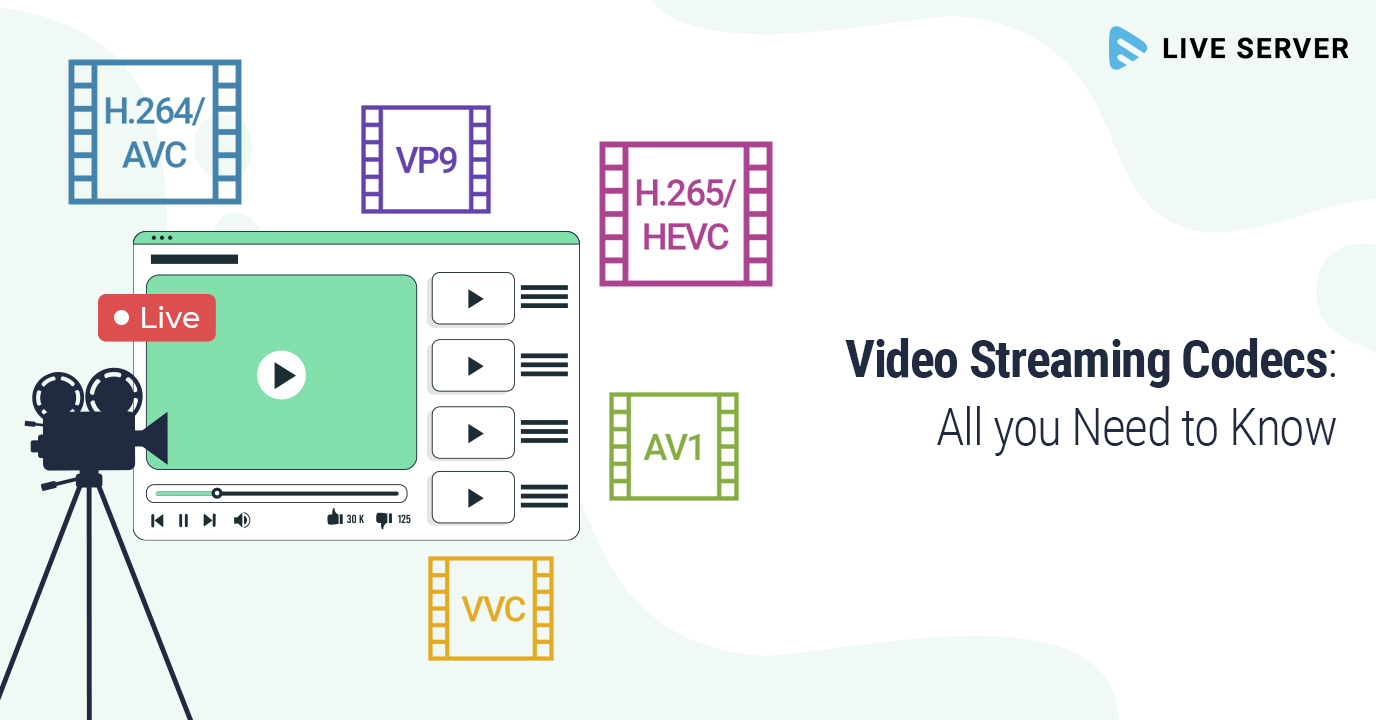
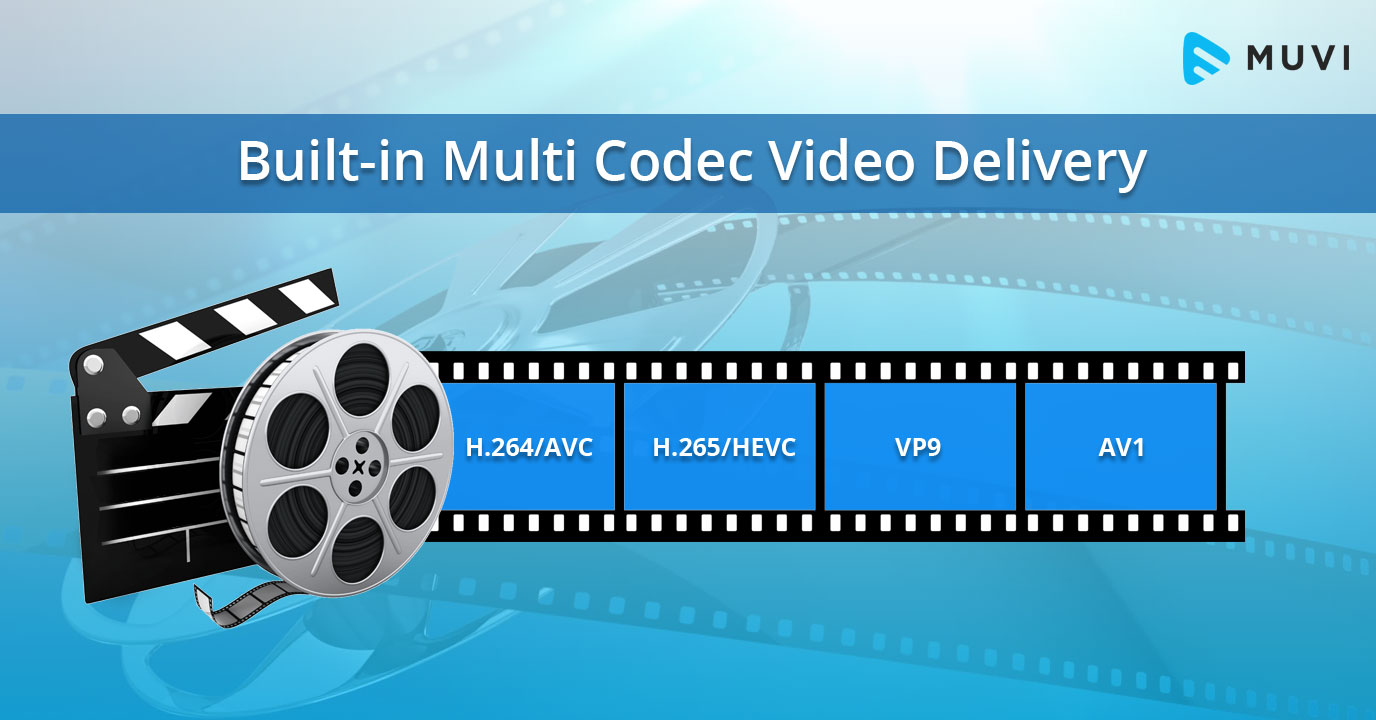
In my experience, some of the most popular video codecs include H.264, H.265 (HEVC), VP9, and AV1. Each codec has its strengths and weaknesses, and understanding these differences can help you choose the best codec for your project.
H.264 is widely supported and offers good compression efficiency, making it a solid choice for most applications. However, it may struggle with high-resolution content and require higher bitrates to maintain quality.
On the other hand, H.265 (HEVC) provides better compression efficiency than H.264, especially for high-resolution content. But it’s not as widely supported and may require more processing power for playback.
VP9 is an open-source codec developed by Google, offering similar compression efficiency to H.265. It’s well-suited for web streaming but may not be as widely supported as H.264.
Lastly, AV1 is a newer open-source codec that promises even better compression efficiency than H.265 and VP9. However, it’s still in the early stages of adoption and may not be supported by all devices and platforms.

Video Codec Showdown: A Technical Breakdown

When comparing video codecs, it’s essential to consider factors like compression efficiency, playback performance, and compatibility. In my experience, I’ve found that newer codecs like H.265 and AV1 offer better compression efficiency, which can result in smaller file sizes and lower bandwidth requirements.
However, these newer codecs may require more processing power for playback, which can be a concern for older devices or slower internet connections. Additionally, compatibility can be an issue, as not all devices and platforms support the latest codecs.
In the end, it’s crucial to weigh the pros and cons of each codec and consider your specific needs and target audience. For example, if compatibility is a top priority, H.264 may be the best choice, while H.265 or AV1 might be more suitable for high-resolution content or bandwidth-limited scenarios.

Final Words

Choosing the right video codec can be a daunting task, but understanding the technical aspects of each codec can help you make an informed decision. In my experience, it’s essential to consider factors like compression efficiency, playback performance, and compatibility when comparing codecs.
If you’re looking for a tool to help you with video conversion and normalization, I recommend checking out mp4gain. It’s not free or open-source, but it’s a powerful solution for working with various audio and video formats, including an integrated equalizer. It runs on Windows and can be a valuable tool for managing your video projects.

The Importance of Codecs in Video Compression

The Importance of Codecs in Video Compression

Video Codec
Video Codec

Introduction

Video Codec
Video Codec

Video codecs play a vital role in video compression. The quality and size of video files depend largely on the type of codec used to compress them. In this article, we will explore the significance of video codecs in video compression and the technical aspects that determine the quality and efficiency of video files.

History of Video Codecs

The first video codec was developed in the 1970s, called H.120. This codec allowed for the transmission of video over ISDN telephone lines. Since then, video codecs have evolved significantly, and we now have a wide range of codecs available that offer different levels of compression and quality.

Understanding Video Quality

Video quality can be defined as the degree of excellence that a video possesses. This quality is determined by various factors, including the resolution, bit rate, frame rate, and compression method used.

Resolution

The resolution of a video is the number of pixels that make up the image. Higher resolution videos have more pixels, which means they are sharper and more detailed. The most common resolutions are 720p, 1080p, and 4K.

Bit Rate

The bit rate is the amount of data that is processed per second. A higher bit rate means more data is processed, resulting in a higher-quality video. However, higher bit rates also mean larger file sizes, which can be challenging for storage and transmission.

Frame Rate

The frame rate is the number of frames that are displayed per second. A higher frame rate results in a smoother video, but it also requires more data to be processed, resulting in larger file sizes.

Compression Method

Compression methods are used to reduce the size of video files without compromising on quality. Lossless compression methods preserve the original quality of the video, while lossy compression methods sacrifice some quality to achieve smaller file sizes.

Video Codecs and Formats

Video codecs can be classified into two categories: proprietary codecs and open-source codecs. Proprietary codecs are developed by companies and are generally licensed for use. Open-source codecs, on the other hand, are developed by communities and are free to use.

Proprietary Codecs

Proprietary codecs are developed by companies such as Apple, Microsoft, and Google. They are often used in popular video formats such as MP4, AVI, and MOV. These codecs are optimized for specific devices and software, resulting in high-quality videos that are compatible with a wide range of devices.

Open-Source Codecs

Open-source codecs are developed by communities and are free to use. The most popular open-source codec is the VP9 codec developed by Google. It is used in the WebM format and offers a high level of compression with minimal loss of quality.

Choosing the Right Codec

When choosing a codec, it is important to consider the factors that affect video quality, such as resolution, bit rate, frame rate, and compression method. Proprietary codecs are often optimized for specific devices and software, while open-source codecs offer more flexibility and are free to use.

Format

The format of a video file also plays a significant role in determining the quality and efficiency of the file. Popular video formats include MP4, AVI, MOV, and WebM. Each format has its own set of advantages and disadvantages, and it is important to choose the right format based on your needs.

Conclusion

Video codecs are an essential part of video compression, and they play a significant role in determining the quality and size of video files. By understanding the technical aspects of video quality and the different types of codecs and formats available, you can make informed decisions when choosing

What is a video codec?

What is a video codec?

video codec
video codec

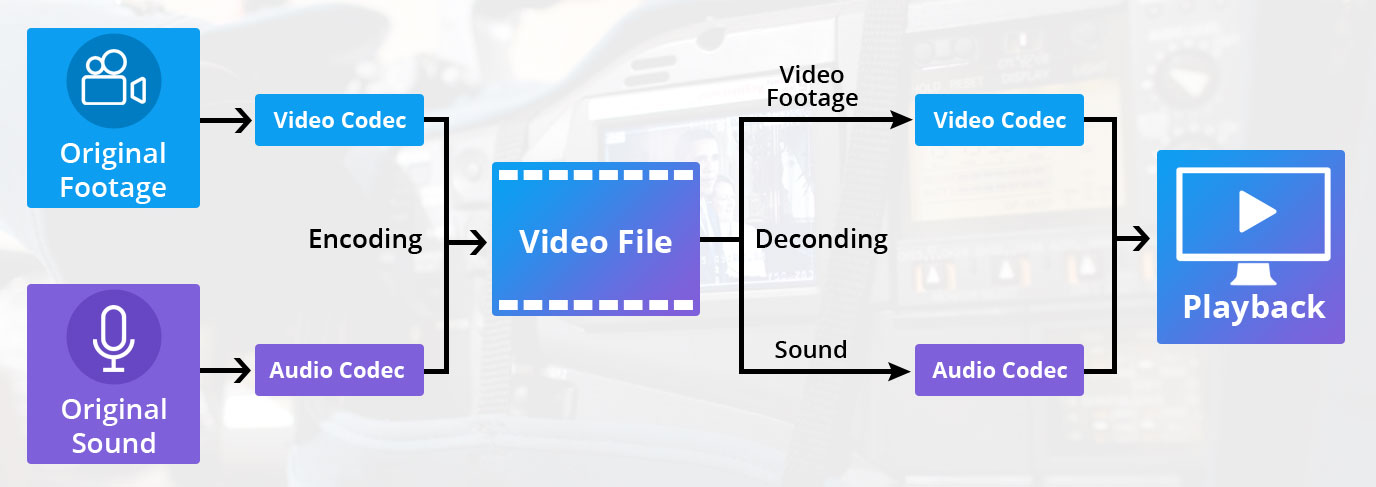
A codec is a program or device that encodes and decodes video. This means that it takes a video and compresses it into a smaller format so it can be streamed or stored more efficiently. Then, when you want to watch the video, the codec decodes it and plays it in its original format.

video codec
video codec

Why is a video codec important?

Video codecs are important because they make videos more accessible and easier to use. Without a codec, the videos would be too large to stream or store, which would mean that we would have to wait a long time to watch them or have a very large storage space to save them.

In addition, the codecs also make the videos look better. Some codecs use advanced techniques to compress the video without affecting its quality. This means that we can see sharp and clear videos, even when they are compressed to a smaller size.

Codecs are also important because they allow videos to be compatible with different devices and platforms. For example, if a video is encoded with a specific codec, it can be viewed on a computer, smartphone, smart TV, or game console without any problem.

What types of video codecs are there?

There are many different types of video codecs, but some of the most common are H.264, H.265, VP9, and AV1. Each codec has its own advantages and disadvantages, and some are better for certain uses than others.

For example, H.264 is a very popular codec used to compress high-definition video. It is a good option for most users as it is compatible with most devices and platforms. However, H.265 is a newer codec that is more efficient in terms of bandwidth and can offer improved video quality.

VP9 is an open source codec developed by Google that is used on some devices and platforms. AV1 is an open source codec developed by a coalition of technology companies and is a promising option for the future, offering more efficient compression and improved video quality.

It is important to note that not all codecs are created equal and some may require more processing power or bandwidth to function properly. Therefore, it is important to choose the correct codec for each situation.

Conclusion

In conclusion, a video codec is an essential program or device that allows you to compress and decode videos to make them more accessible and compatible. There are many different types of video codecs available, and it’s important to choose the one that’s best for each situation. Mp4Gain is an excellent solution for those looking to optimize and enhance their video experience.