Enhancing Video Quality: Bitrate and Codec


Free Download Mp4Gain
picture

Enhancing Video Quality: Bitrate and Codec

Enhancing Video Quality: Bitrate and Codec


When it comes to video quality, there are two main factors that you need to consider: bitrate and codec.

Bitrate

Bitrate is the amount of data that is used to encode a video file. A higher bitrate will result in a higher quality video, but it will also result in a larger file size.

The ideal bitrate for a video will depend on a number of factors, including the resolution of the video, the frame rate, and the type of content. For example, a high-resolution video with a high frame rate will require a higher bitrate than a low-resolution video with a low frame rate.

If you are concerned about file size, you can try reducing the bitrate of your video. However, keep in mind that this will also reduce the quality of the video.

Codec

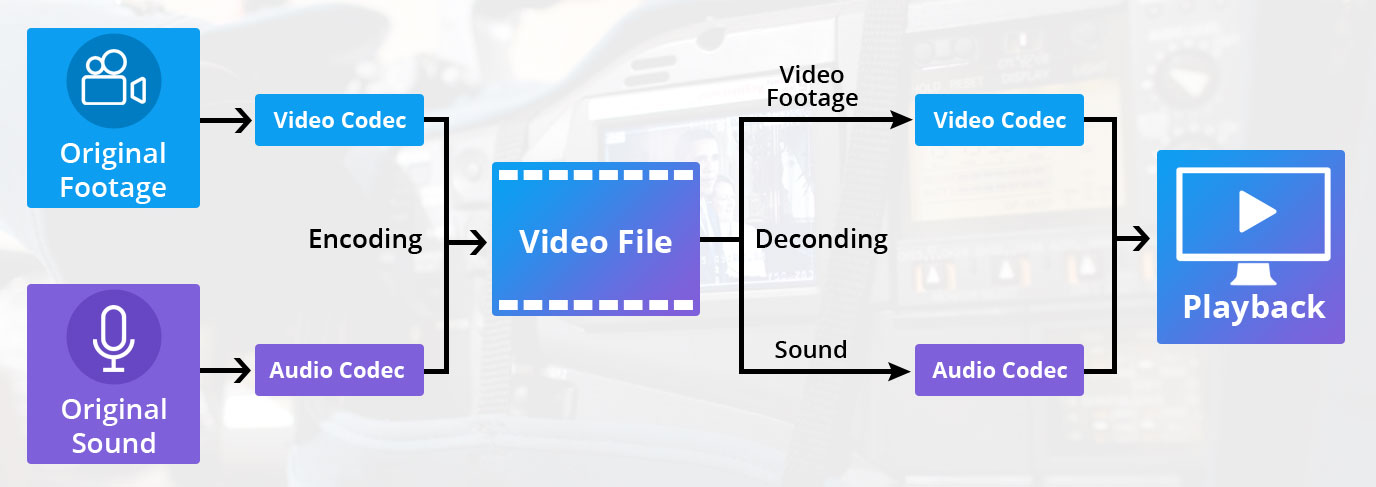
A codec is a type of software that is used to encode and decode video files. There are many different codecs available, and each one has its own strengths and weaknesses.

Some of the most popular codecs include:

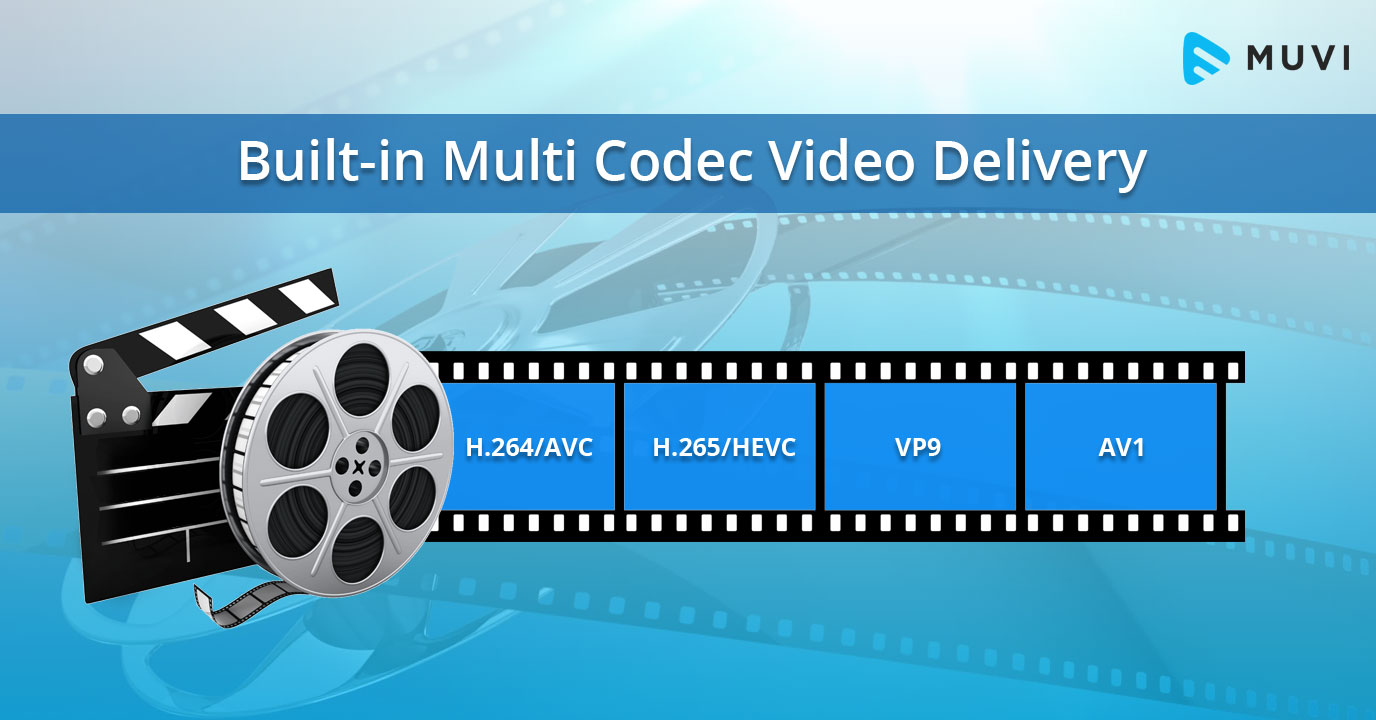
H.264: This is a widely used codec that offers good quality and compatibility.
MPEG-4: This is another popular codec that is known for its good quality.
VP9: This is a newer codec that offers better quality than H.264 and MPEG-4, but it is not as widely supported.
When choosing a codec, you need to consider the following factors:

The quality of the video that you want to create
The compatibility of the codec with your devices and software
The file size of the video that you want to create

Conclusion

Bitrate and codec are two important factors that you need to consider when enhancing video quality. By understanding these factors, you can create high-quality videos that are also small in file size.

Here are some additional tips for enhancing video quality:

Use a high-quality camera
Shoot in good lighting conditions
Edit your videos carefully
Optimize your videos for the web
By following these tips, you can create videos that are both high-quality and visually appealing.


Free Download Mp4Gain
picture


Mp4Gain Main Window
picture


Mp4Gain Features
picture


Free Download Mp4Gain
picture

Normal bit rate for 1080p. Video encoding for Youtube

Normal bit rate for 1080p. Video encoding for Youtube.

Encoding for YouTube

This is a technical article. For non-specialists, we will give you a tip right away: to export videos to Youtube, it would be best to look for a template for youtube in your editing program.

Encoding for YouTube

Since 2005, when YouTube appeared, video compression technologies have improved a lot and YouTube has changed the formats in which video is transmitted several times. Now video uploaded to youtube is recoded, stored on servers and displayed to the viewer in H.264 / AVC, WebM / VP9, ​​WebM / VP8, H.263 / Sorenson Spark, H.263 / formats Simple. It makes no sense to encode videos independently in all these formats and all resolutions, youtube does it for us automatically.

The first step is to make the project with the correct parameters
If you are making a video with the aim of publishing it on the Internet, then the first and reasonable way to start a project in your editing program with parameters corresponding to the requirements of youtube (the main thing is that the resolution of the video and the frame rate match: you need to see what vertical and horizontal dimensions of the source material, choose from the standard youtube sizes the one that best suits the parameters of the source material, and in your editing program make a new project with the selected parameters for youtube ).

For example, you have shot a FullHD video with 25 frames per second, in this case you are doing a 1920 x 1080 project, 25 fps, with progressive scan. Second, the option is to mount the project with the parameters corresponding to the source material and export with the settings on YouTube. For example, for HDV camcorder video with dimensions of 1440 x 1080 with one pixel spread, you can create an HDV project, and when exporting you can simply select Full HD 1920 x 1080 dimensions with one pixel square. The third option is to make a video with some own parameters and youtube will transform it by yourself, but if the proportions are distorted, black bars or a black frame appear, then these will be the consequences of your decision. For example, you have a project with the aspect ratio of a widescreen movie, so you edit and export it at 1920×816 or 2560×1080. Another example, you shoot a vertical video and hope that it will also be viewed on mobile devices …. YouTube is moving in this direction, but knowing that it will look different on your phone and on TV is your conscious choice.

Even if you encode the video with compliance with the recommended parameters, when uploading it to YouTube, it may look a little different from your computer. You need to understand that flash player or html5 player can work in browser, each of them can be different version, use or not use video card hardware acceleration. Also, the files played by the player can be h.264 and webm formats. For these reasons alone, the same video can be viewed differently in different browsers on the same computer, and on different computers, different operating systems, different video card drivers, different versions are added flash. Also, videos uploaded to another video hosting service, for example vimeo, will be transcoded differently and played through another player.

You can download avi, mov, mp4, mpg, webm and other formats. These formats are containers in which compressed video with very different codecs can be stored. That is, if an avi or mp4 file is played on your computer, this does not mean that youtube will accept it. Therefore, we will consider only one option: the mp4 container with the h.264 codec.

Youtube player on computer plays video only in 16×9 aspect ratio window, for videos with other aspect ratios, youtube itself adds black bars on the sides as needed. Therefore, you do not need to do it yourself. To avoid black bars, use the following frame sizes (video resolution):

4320p: 7680 x 4320;
2160p: 3840 x 2160;
1440p: 2560 x 1440;
1080p: 1920 x 1080;
720p: 1280 x 720;
480p: 854 x 480;
360p: 640 x 360;
240p: 426 x 240.

Packaging: MP4
Audio codec: AAC-LC; sampling frequency: 96 or 48 kHz; bit rate 384 kb / s for
stereo video codec: H.264, progressive scan (not interlaced; if you have 1080i video, you must convert it to 1080p so there is no “comb”); High profile; variable bit rate with no limitation on maximum size; 4: 2: 0 color subsampling; the frame rate must match the frame rate of the original video, 24, 25, 30, 48, 50 and 60 frames per second are supported, but you can make videos with other rates.

What are the most used video formats?

Choosing audio and video codecs and containers affects video quality and file size. Here we show you how to find the format that best suits your needs.

formats

Decades and decades of developments in the audiovisual field have led to a result that, in some way, can be considered curious. While in other sectors, continuous development has led to a very marked standardization (think of the .doc or .pdf format), in multimedia the situation is at least compound.

An example is the world of audio formats, animated by strong “competition” and a multitude of available options. It is no less than that of video formats, in fact. In this case, in fact, we have to deal with a division between codecs and containers (we will see in a moment what they are and what function they perform) that ends up complicating things even more. Therefore, in case you want to convert a movie, you have to be careful to choose the correct codec and the correct video format, to avoid creating files that are too large or simply unreadable. In short, the error is just around the corner.

audio formats

Differences between containers and codecs

Before analyzing the situation and seeing what are the most used video formats, it is necessary to clarify some fundamental concepts: first, what is the difference between the codec and the container. If in the audio world, the codec used to digitize the audio track matches the “final” file format, in the video, on the other hand, the codecs used are different from the file format that the video file will assume at the end of the digitization process. The reason is soon explained and lies in the multimedia nature of a video.

A movie, in fact, contains video and audio data: the conversion or playback software must be able to analyze both multimedia streams, and therefore will need different algorithms that work in one or another type of data stream. Codecs do exactly this: as the name, code, and decoding of data (audio and video) are made from movies, so you can convert them to another video format or play them back with a media player. Even with regard to containers, it is enough to resort to the literal meaning of the word: these are files that contain both the video and audio sequences within them and “make them available” to codecs for reading and playback.

What are the most used codecs?

A codec, as mentioned, is in charge of compressing and decompressing the video files and determines how they are played on the screen of the PC or smart TV. Each operating system provides the user with dozens and dozens of different codecs, each useful for encoding and decoding a specific type of file, even if a new one can be installed by downloading special software or packages from the web. Among the most used codecs we find the FFmpeg, Divx, Xvid, H.264 and its evolution H.265, VP9 and VP 10 (also known as the name of the Google codec).

-Divx and Xvid. As the name also suggests, these are two “mirror” codecs, created in the late 20th and early 21st centuries to meet the initial demand for online multimedia content. Since bandwidth and browsing speed were very limited, these are codecs that can guarantee good video quality even at high levels of image compression. In this way, it was possible to obtain files of contained dimensions even with very long movies (such as full movies)

-264 and H.265. Created by the Motion Picture Expert Group, they can be considered as industry standards. Among the most popular and used in all areas (you can find H.264 encoded movies on Blu-ray discs, for example, but also movies downloaded from the network) thanks to its versatility and ability to guarantee an excellent quality ratio / File size. The H.265 codec, in particular, can guarantee, with the same quality, a compression factor twice as high as that of its predecessor: files “treated” with this codec will therefore weigh half compared to their counterparts processed with H.264 codec

-VP9 and VP10. Also known as “Google Codec”, they are the codecs used by the giant Moutnain View to compress and decompress the movies uploaded to YouTube. These are algorithms optimized for online video playback, capable of offering excellent resolution and high quality even with small files. The VP10 in particular is the all’H.265 answer and is designed for resolutions up to 4K
Mpeg-H.