
At present, with the massification of computer tools and the expansion of the Internet, almost all computer users use their equipment not only for simple office tasks, but also for fun and personal enjoyment, so multimedia tasks are They have become a more than common activity on any home PC.
While most users know that to play a video, listen to a song and view an image it is not enough to play the file, but also the system must have the necessary codecs for it, the truth is that a large percentage of Users are completely unaware of what codecs are and what they are used for.
It should be noted that the term codec comes from an abbreviation of the set of words encoder and decoder, and as the name implies, they consist of a software specification that allows compressing and decompressing files.

What are codecs? What are codecs for?
In general, the different existing codecs are currently used to compress video, audio and image files, in order to make them smaller than their original source, to allow them to be easier to handle and Work on a computer.
Therefore, when trying to play for example a video file in an AVI container, which has been encoded with the Xvid codec, it will be necessary to have the same codec on the computer, since otherwise the reproduction will be impossible.
It is worth mentioning that codecs are also commonly used to compress data streams and signals, that is, to stream Internet radio and television, or allow a quality videoconference.
For the most part, multimedia files contain video, audio and reference data for synchronization of both, so it must be necessary to apply the appropriate codecs to play a movie on our PC.
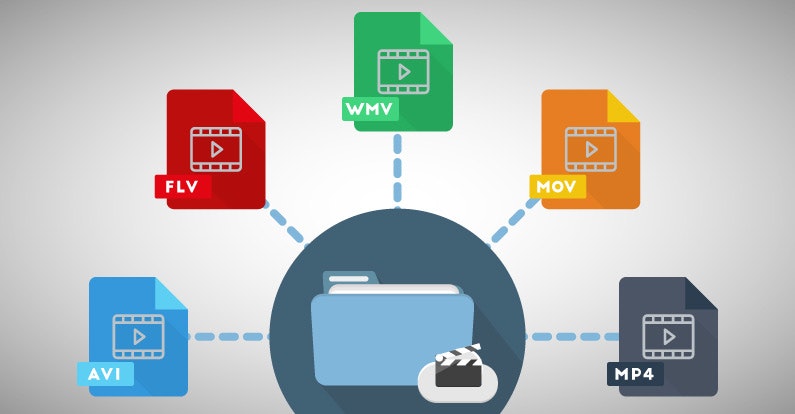
Compression of audio and video files
When using codecs to compress a multimedia file, in general a result will be obtained with some loss of quality, since in order to reduce the size of the original source, a loss of information will occur during the process.
However, there are also some types of codecs that do not report losses, such as FLAC and MSU, that allow the reproduction of a lossless audio or video file when the file is re-encoded.
However, in general codecs that compress with some loss of information are used, since the fundamental function of the use of codecs is to significantly reduce the size of the files to facilitate their manipulation.
Usually, when a video file is transformed with codecs, an automatic process is carried out that causes the codec to cut some of the information regarding the original image or sound, and then readjust it to a smaller space, and Finally codify it.

Most used audio and video codecs
In order to reproduce a file that has been compressed with some codec, it is essential that our system has the necessary codecs for decompression, for which codec packages can be installed, which generally contain the most used types of codecs. The most recommended codec packages are the ELISOFT Codec Pack and the K-Lite Codec Pack.
Although there are many codecs to reduce the size of multimedia files, the truth is that at present some are usually the most popular, as is the case of mp3 for audio and mp4 for video.
Most used audio codecs
Currently, audio codecs have been widely disseminated, as they are used by users to compress for example full music albums, so that they take up less space.
Keep in mind that a common audio disc can occupy up to 700 Mb, that is, a complete CD, while albums transformed to MP3 give rise to a huge storage capacity, allowing you to save between 7 and 8 discs on a single CD , because an MP3 compressed disk usually occupies between 80 and 90 Mb. depending on the bitrate rate at which they were worked.
At present, the most popular audio codecs are the MP3 format, the Ogg Vorbis, which is characterized by being a codec belonging to free software, and the AC3 that is usually used in DVD compressions since it is a multichannel codec (5.1).
Due to its great popularity obtained in recent years thanks to its massive dissemination on the Internet, especially in sites that allow the purchase and download of audio files, the leading audio compression format is undoubtedly the MP3.


