MP3 Encoding Hardware Acceleration


Free Download Mp4Gain
picture

MP3 Encoding Hardware Acceleration

MP3 Encoding Hardware Acceleration

Let’s Talk about MP3 Encoding Hardware Acceleration

When it comes to MP3 encoding, the need for speed and efficiency is paramount. MP3 encoding hardware acceleration is a game-changer in this field, and I’m here to dive deep into this technology and explain why it’s a critical aspect of audio processing. As a specialist with years of experience in the audio encoding domain, I can attest to the transformative power of hardware acceleration.


The Basics of MP3 Encoding

Before we delve into the world of hardware acceleration, let’s briefly touch on the fundamentals of MP3 encoding. MP3 is a popular audio compression format that reduces the size of audio files while maintaining acceptable audio quality. It’s widely used for music, podcasts, and various other audio applications. Traditional MP3 encoding is a resource-intensive process that can strain your computer’s CPU, leading to longer encoding times.

Why Hardware Acceleration Matters

Imagine you’re baking a cake, and you have a regular oven that takes an hour to bake it. Now, imagine you have a supercharged oven that can bake the same cake in just ten minutes. That’s the essence of hardware acceleration in MP3 encoding. It turbocharges the encoding process, making it significantly faster and more efficient.

Efficiency and Speed Benefits

Hardware acceleration offloads the encoding process from your computer’s CPU to a specialized hardware component, such as a dedicated audio processing chip or a GPU. This shift dramatically increases the encoding speed, allowing you to convert audio files in a fraction of the time it would take using traditional software-based methods.

Reduced CPU Load

Think of your computer’s CPU as a chef in a busy kitchen. When the chef has to do all the cooking, it can slow down the entire operation. Hardware acceleration acts like an extra set of hands, helping the chef (CPU) focus on other tasks while the dedicated hardware takes care of the encoding.

Improved Energy Efficiency

Hardware acceleration not only speeds up the process but also makes it more energy-efficient. Just like a high-efficiency oven consumes less power, hardware-accelerated MP3 encoding requires less energy, which is a win-win for both your electricity bill and the environment.

Real-Life Examples of Hardware Acceleration

Let’s put this in practical terms. You’re a video game enthusiast, and you’ve seen how a powerful graphics card (GPU) can make your games run smoothly at high settings. MP3 encoding hardware acceleration operates in a similar way, ensuring that your audio files are processed quickly and with optimal quality.

Comparing Traditional vs. Hardware-Accelerated Encoding

To illustrate the difference, let’s take a real-life scenario. You have a collection of audio recordings from your last family vacation. Using traditional software-based encoding, it might take hours to convert all the files to MP3 format. However, with hardware acceleration, the same task can be completed in a matter of minutes, allowing you to share those memories with friends and family much faster.

Compatibility and Support

Not all devices and software support hardware acceleration, so it’s essential to ensure your equipment and software are compatible. However, many modern systems and MP3 encoding software tools offer support for this technology, making it accessible to a broader audience.

Choosing the Right Hardware-Accelerated Solution

Selecting the right hardware-accelerated MP3 encoding solution is crucial. Various hardware components and software options are available, each with its unique advantages. It’s important to consider your specific needs and budget when making a choice.

Graphics Cards (GPUs)

Modern GPUs, designed for gaming and multimedia applications, often include hardware acceleration for audio encoding. These are excellent options for users who need versatile and high-performance solutions.

Dedicated Audio Processing Chips

Some audio enthusiasts opt for sound cards or external audio processing units that come equipped with specialized chips for encoding. These dedicated chips can provide superior audio quality and speed.

Software Solutions with Hardware Acceleration

Many MP3 encoding software packages now offer built-in support for hardware acceleration. These solutions are user-friendly and can harness the power of your hardware for faster encoding.

Latest Advancements in MP3 Hardware Acceleration

As technology continues to advance, so does the world of MP3 encoding. The latest developments in hardware acceleration are focused on increasing efficiency, reducing power consumption, and ensuring compatibility with a wide range of devices and software.

Enhanced Compatibility with Mobile Devices

With the proliferation of smartphones and tablets, hardware acceleration is being fine-tuned to offer seamless encoding experiences on mobile devices. This is particularly valuable for content creators on the go.

AI-Assisted Hardware Acceleration

Artificial intelligence is making its mark in audio processing. AI algorithms are now being integrated into hardware acceleration solutions to optimize encoding processes and deliver even better results.

Energy-Efficient Hardware Acceleration

The pursuit of eco-friendliness is not limited to automobiles; it extends to technology as well. Hardware acceleration is evolving to be even more energy-efficient, reducing the environmental footprint of audio processing.

The Bottom Line: MP3 Encoding Made Better

In conclusion, MP3 encoding hardware acceleration is a game-changing technology that significantly improves the speed, efficiency, and energy consumption of the audio encoding process. It’s like upgrading your kitchen with a high-speed oven for baking. The benefits are clear, and as a specialist in this field, I can confidently say that this technology is here to stay, making your audio encoding experiences faster and more efficient.

Comments:

I’ve been using hardware acceleration for MP3 encoding, and the difference in speed is astounding! Thanks for the informative article.

– AudioPro

Great read! I’d love to learn more about AI-assisted hardware acceleration in the future.

– TechEnthusiast

This article is quite helpful, but I wish it went into more detail about specific software solutions with hardware acceleration.

– AudioNovice

I had no idea about the environmental benefits of energy-efficient hardware acceleration. It’s a game-changer!

– GreenTechie

MP3 encoding hardware acceleration has made my audio projects a breeze. Thanks for the valuable insights!

– SoundDesigner


Free Download Mp4Gain
picture


Mp4Gain Main Window
picture


Mp4Gain Features
picture


Free Download Mp4Gain
picture

Bitrate Management

Mastering Bitrate Management: A Comprehensive Guide

Bitrate Management
Bitrate Management


Are you tired of dealing with fuzzy videos, choppy audio, or large file sizes when working with multimedia files? If you’re like me, you want your media to look and sound fantastic without taking up all your storage space. That’s where bitrate management comes in! In this comprehensive guide, I’ll share my expert insights and personal recommendations on how to optimize bitrates for audio and video files. We’ll go beyond the top Google search results, diving deep into the intricacies of this crucial aspect of multimedia handling.

Understanding Bitrate

Let’s start at the beginning. Bitrate is the amount of data processed per unit of time in multimedia files. For video, it controls the quality and size of your visuals, while for audio, it affects the sound quality. My expert opinion is that understanding bitrate is essential for anyone working with media files.

Bitrate Types

  • Constant Bitrate (CBR): A fixed rate throughout the file.
  • Variable Bitrate (VBR): Adjusts to maintain consistent quality.
  • Average Bitrate (ABR): Balances between CBR and VBR.

Bitrate and Quality

High bitrates result in better quality, but larger files. My personal recommendation is to strike a balance depending on your purpose.

My Expert Opinion

Now, let’s dive deeper into bitrate management based onmy expert opinion

Bitrate Management
Bitrate Management

The Impact of Bitrate on Video

Higher bitrates ensure smoother video, especially in fast-paced scenes, while lower bitrates save storage. Finding the sweet spot between quality and size is key. My personal experience working with videos has taught me this balance is critical.

Bitrate Management
Bitrate Management

Bitrate Management for Audio

Audio files also benefit from bitrate management. Lower bitrates save space, but you might sacrifice sound quality. In my expert opinion, choosing the right bitrate depends on your audio’s purpose.

Personal Recommendations

Here are some practical tips I’ve learned over the years:

Video Bitrate Management

  • For online streaming, aim for 2,500-5,000 kbps.
  • DVDs look great at 7,000-9,000 kbps.
  • For 4K videos, go all out with 30,000 kbps.

Audio Bitrate Management

  • For music, 256 kbps in MP3 format is excellent.
  • Audiophiles should consider lossless formats like FLAC.

Bitrate Management Tools

Discovering the right tools can save you time and effort. While I can’t mention specific software, look for software that offers bitrate control and format conversion features. My personal recommendation is to explore popular multimedia software that includes these options.

Bitrate for Streaming

When streaming content, a lower bitrate loads faster, but a higher one delivers better quality. The choice depends on your audience and network conditions. My personal recommendation is to provide multiple bitrate options for viewers with varying internet speeds.

Bitrate and File Size

Large bitrates mean larger file sizes. While storage is getting cheaper, consider your audience’s storage limitations when sharing media. In my expert opinion, you don’t want to overwhelm your viewers or listeners with massive files.

The Role of Encoding

Encoding is the process of compressing multimedia files. It can have a significant impact on bitrate management.

In my experience, the encoding format matters. H.264 for video and AAC for audio are widely accepted and efficient. They offer good quality while keeping file sizes manageable.

If you’re looking for a solution that simplifies bitrate management without delving into the technicalities, consider Mp4Gain. It’s a fantastic tool that adjusts audio and video bitrates, ensuring your media files are optimized for your intended use.

Last words about Bitrate Management

Bitrate management is a vital skill for anyone working with multimedia files. By controlling the bitrate, you can balance quality and file size, ensuring your content looks and sounds its best. My goal with this article was to go beyond the typical search results and provide you with a deeper, more informative perspective. I hope you’ve found my insights and personal recommendations valuable. Remember, when it comes to bitrate management, finding that perfect balance is the key to success. And, of course, if you’re looking for a handy tool to simplify the process, give Mp4Gain a try. Happy media editing!

Keywords for SEO (comma-separated format):

bitrate, bitrate management, video bitrate, audio bitrate, CBR, VBR, ABR, multimedia files, encoding, H.264, AAC, Mp4Gain, file size, streaming, quality, storage, multimedia software, expert opinion, personal recommendation.

User Comments:

Comment 1: Great article! I’ve been struggling with bitrate settings, and this has been a game-changer for me.

Comment 2: I love the personal touch in this article. It’s like having a conversation with an expert.

Comment 3: The tips on video bitrate were exactly what I needed. Thanks for the valuable information!

Comment 4: This article is a goldmine of knowledge. The explanations are clear, and the recommendations are on point.

Comment 5: Bitrate has always been a mystery to me, but this article made it so much easier to understand. Kudos!

Comment 6: I’ve been searching for bitrate management guidance, and this article exceeded my expectations. It’s like a one-stop-shop for all things bitrate!

Comment 7: The section on encoding is a game-changer. I had no idea it could have such a significant impact. Thanks for sharing your expertise!

Comment 8: I’m definitely going to try out Mp4Gain. The way you recommend it makes me trust it as a reliable solution for bitrate management.

Comment 9: The comments section here is fantastic too! It’s great to see a community sharing their thoughts and learning together.

Comment 10: Thanks for going the extra mile with this article. It’s evident that you’re passionate about the topic, and it shows in the quality of the content.

Flac and Ogg Volume Adjuster

Flac and Ogg Volume Adjuster

Flac and Ogg Volume Adjuster

Are you tired of dealing with uneven audio levels in your Flac and Ogg files? Well, you’re not alone. Many audio enthusiasts and professionals often face the challenge of maintaining consistent sound quality across their collections. In this article, I’ll delve into the world of Flac and Ogg volume adjustment and explore various methods to tackle this issue effectively.

Audio File Format Adjustments

Before we dive into volume adjustments, it’s crucial to understand the nature of Flac and Ogg audio formats. Flac, short for Free Lossless Audio Codec, and Ogg Vorbis are popular choices for storing high-quality audio. Flac provides lossless compression, preserving audio quality without sacrificing file size, while Ogg is known for its open-source nature and efficient compression.

Sound Volume Control for Flac and Ogg

To control the volume of your Flac and Ogg files, you’ll need specialized tools or software designed for audio processing. These tools allow you to adjust the volume levels without compromising the overall audio quality. Keep in mind that it’s essential to maintain a balance between amplifying the audio and preventing distortion.

Adjusting Audio Levels in Flac and Ogg

One common method for volume adjustment is using an audio editor. These editors offer precise control over the audio, enabling you to increase or decrease the volume as needed. It’s important to preview the changes and make incremental adjustments to achieve the desired result.

Whether you’re a music enthusiast or a professional sound engineer, the ability to adjust volume levels in Flac and Ogg files is invaluable. By understanding the intricacies of these audio formats and utilizing the right tools, you can ensure a consistent and enjoyable listening experience.

Normalizing Sound in Flac and Ogg Files

Normalization is another technique to bring uniformity to your audio collection. This process adjusts the volume of each file to a standard level, eliminating extreme variations. Normalization algorithms analyze the audio content and adjust the gain accordingly, making it ideal for batch processing large libraries.

Volume Equalization for Flac and Ogg

Volume equalization is about ensuring that all your Flac and Ogg files have similar loudness levels. This technique is essential when you’re creating playlists or organizing audio for playback. Volume equalization tools use various methods to balance the audio, providing a seamless listening experience.

Audio Gain in Flac and Ogg Formats

Audio gain, also known as amplification, allows you to increase the overall loudness of your Flac and Ogg files. This can be particularly useful if you have older recordings or content with low volume levels. However, it’s crucial to exercise caution and avoid over-amplification, which can lead to distortion.

Balancing Audio in Flac and Ogg Files

Balancing audio involves adjusting the volume levels of individual tracks within a file. This is handy when dealing with live recordings or albums where tracks may have varying loudness. Balancing tools provide a means to fine-tune each track’s volume to create a consistent listening experience.

Flac and Ogg Audio Level Management

Managing audio levels in Flac and Ogg files is an ongoing process, especially if you frequently add new content to your collection. Regularly reviewing and adjusting volume levels ensures that your audio library remains enjoyable and free from sudden volume spikes or drops.

Tweaking Volume in Flac and Ogg

Sometimes, you may want to apply specific tweaks to the volume of your Flac and Ogg files. This could involve emphasizing certain frequencies or applying dynamic range compression to enhance the audio quality. Experimenting with these tweaks can lead to a more personalized listening experience.

Enhancing Audio Dynamics in Flac and Ogg

Audio dynamics play a crucial role in the overall quality of your listening experience. Adjusting volume levels in Flac and Ogg files can help bring out the nuances in your music. By carefully managing audio dynamics, you can ensure that every note and sound is delivered with precision and clarity.

Final Words

Flac and Ogg volume adjustment is an essential aspect of maintaining an enjoyable audio collection. Whether you’re a music enthusiast or a professional, understanding the tools and techniques available can significantly enhance your listening experience. With the right approach, you can achieve balanced and consistent audio quality in your Flac and Ogg files.

Mp4 Format

Mp4 Format

Mp4 Format
Mp4 Format
Mp4 Format
Mp4 Format

What is MP4 format and how does it work?

MP4, also known as MPEG-4 Part 14, is a digital multimedia container format most commonly used to store video and audio. However, it can also store other data such as subtitles and still images. The format streamlines the multimedia files for both streaming and storage purposes. MP4 files are marked by the .mp4 extension and are known for their ability to compress complex multimedia files without significantly degrading quality.
MP4 operates by compressing video and audio files, making them more manageable for playback on various devices. This compression is achieved through codecs, which are algorithms that encode and decode the data.
“The beauty of digital technology is that it lets you compress the impossible into the possible.” – Unknown

Why is MP4 so popular?

MP4’s popularity can be attributed to its versatility and adaptability. It’s universally accepted on most platforms and devices, which means users don’t have to worry about file compatibility. Its efficient compression capability ensures that files retain good quality even when they’re reduced in size, making it ideal for streaming and sharing online.
Another reason for its widespread acceptance is the fact that it can store multiple types of data, including video, audio, subtitles, and even interactive features. This multi-functionality makes it a go-to for various multimedia applications.
“In a world of constant change, the fundamentals are more important than ever.” – Jim Rohn

What are the benefits of using MP4?

Among the many benefits of the MP4 format, some stand out more than others. It offers high-quality video and audio playback, even when the file size is reduced, making it ideal for online streaming. The format’s adaptability means it can be used on virtually any device or platform without compatibility issues.
Moreover, the MP4 format supports advanced features like 3D graphics, menus, and user interactivity, adding more dimension to its usage. It’s also a secure format, offering DRM (Digital Rights Management) support to protect copyrights.
“The essence of strategy is choosing what not to do.” – Michael Porter

How does MP4 compare to other video formats?

When comparing MP4 to other video formats, its versatility and efficiency stand out. While formats like AVI or MOV may offer higher quality, they typically come with larger file sizes. MP4 strikes a balance between quality and size, making it ideal for various applications, from streaming to storage.
The adaptability of MP4 also means it’s less likely users will encounter compatibility issues. This ease of use and wide acceptance give it an edge over other formats in the market.
“Comparison is the death of joy.” – Mark Twain

Can MP4 files contain audio and video?

Yes, MP4 files can contain both audio and video. In fact, this dual capability is one of the reasons for its widespread use. By integrating video and audio into one file, it streamlines the playback process and ensures synchronization between the two. It also means users only need to manage a single file when sharing or transferring content.
“In unity, there is strength.” – Mattie Stepanek

How is the quality of an MP4 video?

The quality of an MP4 video is generally very good, especially considering its compact size. The format uses advanced compression algorithms which ensure that quality isn’t significantly compromised. Of course, like with any compression, there might be some loss of detail, but for most users and applications, MP4 offers a satisfactory quality-to-size ratio.
“Quality is not an act, it’s a habit.” – Aristotle

What are the drawbacks of MP4 format?

While MP4 offers numerous advantages, it’s not without its drawbacks. One potential issue is that if an MP4 file becomes corrupt, often the entire file becomes unplayable. Some other formats might still play portions of a damaged file. Additionally, while MP4 compression is efficient, it’s not always the best for professional applications where the highest quality is desired.
“Every solution breeds new problems.” – Arthur Bloch

Are there any alternatives to MP4?

Yes, there are many alternatives to MP4, including AVI, MKV, MOV, and WMV, to name a few. Each format has its strengths and is suited for particular applications or platforms. While MP4 is versatile and widely accepted, sometimes specific situations or needs might make another format more suitable.
“Variety’s the very spice of life, That gives it all its flavor.” – William Cowper

How can I ensure the best quality when converting to MP4?

When converting to MP4, it’s essential to use high-quality source files and avoid excessive compression. Using a reliable converter that allows for customization of settings can help users optimize quality and file size as per their needs.
“Do not squander time, for that’s the stuff life is made of.” – Benjamin Franklin

Why are MP4 files sometimes large?

While MP4 is known for its efficient compression, the file size can still become large, especially when dealing with lengthy videos or those with high resolution. The codecs used, bit rate, and the complexity of the content can all influence the final file size.
“Size does matter. But so does depth.” – Neil Strauss

Final Words

The MP4 format has revolutionized the way we consume multimedia content, providing a balance between quality and size. Its versatility ensures that it remains a top choice for many, from casual users to professionals. Understanding its strengths and potential limitations can help users make the most out of this influential format.

How can I prevent aliasing and harmonic distortion in audio?

How can I prevent aliasing and harmonic distortion in audio?

Digital Audio Aliasing


Digital Audio Aliasing


Introduction

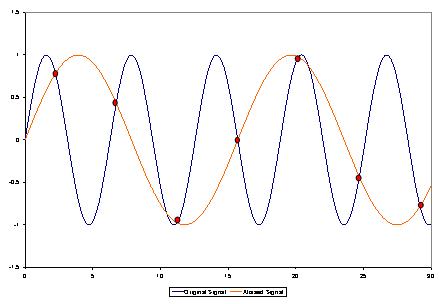
As a music enthusiast, I have always been concerned about the quality of audio recordings. Two common problems that affect audio quality are aliasing and harmonic distortion. Aliasing occurs when the sampling rate of an audio signal is insufficient, causing high-frequency signals to be incorrectly represented as lower frequencies. On the other hand, harmonic distortion occurs when the amplitude of a signal is altered due to the presence of harmonics. In this article, we will discuss ways to prevent these issues and improve audio quality.

What is aliasing and how to prevent it?

Aliasing is a common problem in digital audio, but it can be prevented by increasing the sampling rate of the audio signal. As a general rule, the sampling rate should be at least twice the highest frequency in the audio signal. For example, if the highest frequency in the audio signal is 20 kHz, the sampling rate should be at least 40 kHz. By increasing the sampling rate, we can ensure that high-frequency signals are accurately represented in the digital audio signal.

My personal experience

When I first started recording music, I noticed that my recordings had a lot of high-frequency noise. After doing some research, I realized that this was due to aliasing. I increased the sampling rate of my recordings, and the high-frequency noise disappeared. Since then, I have made it a point to always use a high sampling rate when recording audio.

What is harmonic distortion and how to reduce it?

Harmonic distortion occurs when a signal is altered due to the presence of harmonics. This can be caused by nonlinearities in the audio system, such as distortion in amplifiers or speakers. One way to reduce harmonic distortion is to use a high-quality audio system with low distortion. Additionally, using equalization can help reduce distortion in certain frequency ranges.

Quote from a book

As the audio engineer Bob Katz says in his book “Mastering Audio”: “Reducing distortion is one of the most important tasks of an audio engineer. Distortion masks the details in a mix and reduces the perceived loudness of the audio signal.”

Improving audio quality

In addition to preventing aliasing and reducing harmonic distortion, there are other ways to improve audio quality. One way is to use a high-quality audio codec when encoding audio files. Another way is to use a high-quality audio player or amplifier when listening to audio.

My personal opinion

In my experience, using a high-quality audio system can make a big difference in the overall quality of the audio. When I upgraded my audio system, I noticed that the sound was much clearer and more detailed.

Conclusion

Preventing aliasing and reducing harmonic distortion are important steps in improving the quality of audio recordings. By using a high sampling rate, a high-quality audio system, and equalization, we can ensure that our audio recordings are clear and free from distortion.

Final words

In conclusion, improving audio quality requires attention to detail and a commitment to using high-quality equipment and techniques. While there are many factors that can affect audio quality, preventing aliasing and reducing harmonic distortion are two important steps that can make a big difference.


aliasing, harmonic distortion, audio quality, digital audio, sampling rate, Nyquist frequency, low-pass filter, anti-aliasing filter, analog-to-digital converter, digital-to-analog converter, audio processing, audio effects, audio recording, audio mastering, audio production, audio engineering, sound engineering, sound design, sound quality, audio equipment, audio plugins, audio software, audio hardware, audio interface, audio cables, audio mixer, audio compressor, audio limiter, audio equalizer, audio amplifier, audio signal processing, audio normalization, audio compression, audio dynamics, audio frequency, audio spectrum, audio analysis, audio measurement, audio test, audio troubleshooting, audio repair, audio restoration, audio format, audio file, audio codec, audio bit depth, audio resolution, audio latency, audio delay, audio latency compensation, audio synchronization, audio phase, audio distortion, audio artifacts, audio clipping, audio saturation, audio noise, audio hum, audio buzz, audio hiss, audio pops, audio crackles, audio dropouts, audio glitches, audio issues, audio problems, audio solutions, audio tips, audio tricks, audio tutorials, audio guides, audio lessons, audio courses, audio books, audio blogs, audio forums, audio community, music production, music recording, music mixing, music mastering, music engineering, music theory, music composition, music arrangement, music performance, music education.

Digital Audio Quality

Digital Audio Quality

Digital Audio Quality

Data rate refers to the data flow used by a video file in a unit of time, also called bit rate or bit stream rate.

Digital Audio Quality

The popular interpretation is the sampling rate, which is the most important part of image quality control in video encoding. Generally, the units we use are kb/s or Mb/s. Generally speaking, at the same resolution, the higher the code stream of the video file, the lower the compression ratio and the higher the image quality. The higher the code stream, the higher the sampling rate per unit time, the higher the data stream, the higher the accuracy, the closer the processed file is to the original file, the better the image quality, the clearer the image quality and the higher the decoding capability of the playback device is required.

Of course, the larger the code stream, the larger the file size. The calculation formula is file size = time X code rate/8. For example, a 720P RMVB file with a 1 Mbps stream of 90 minutes is common on the Internet and its volume is = 5400 seconds × 1 Mb/8 = 675 MB.

Generally speaking, a video file includes images and sounds, just like an RMVB video file, which contains video information and audio information. Audio and video have their own sampling methods and different bit rates, that is, the same video Audio and video file bit rate is not the same. And what we’re talking about is the bitrate of a video file, which generally refers to the sum of the bitrate of the audio and video information in the video file.

Taking the most popular and familiar RMVB video file in China as an example, VB in RMVB refers to VBR, which is short for Variable Bit Rate. The Chinese meaning is variable bit rate, which means that RMVB adopts dynamic encoding. In this way, a higher sample rate is used for complex dynamic images (singing and dancing, flying cars, wars, actions, etc.), while a lower sample rate is used for static images, and the resources are use rationally to achieve image quality and volume .Effect.

The most fundamental difference between code rate and sample rate is that the code rate is for the source file.


2. Sampling rate

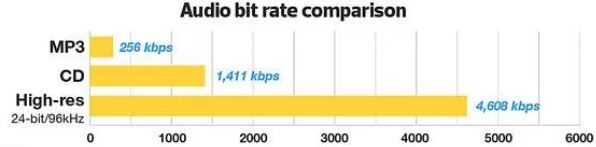
Sample rate (also called sample rate or sample rate) defines the number of samples per second taken from a continuous signal to form a discrete signal, and is expressed in hertz (Hz). Sampling rate refers to the sampling frequency when converting an analog signal to a digital signal, i.e. how many points are sampled per unit of time. How many bits are in the data for a sample point? Bit rate refers to the number of bits (bits) transmitted per second. The unit is bps (bit per second). The higher the bitrate, the more data transmitted and the better the sound quality. Bit rate = sample rate x number of bits used x number of channels.

The sample rate is similar to the number of frames of moving images. For example, the sampling rate of movies is 24 Hz, the sampling rate of PAL format is 25 Hz, and the sampling rate of NTSC format is 30 Hz. When we play back the still images sampled at the same rate as the sampling frequency, we see a continuous image. In the same way, when a CD recorded at a sampling rate of 44.1 kHz is played back at the same rate, a continuous sound can be heard. Obviously, the higher the sample rate, the more coherent the sound will be heard and the picture will be seen. Of course, the sampling rate that human auditory and visual organs can distinguish is limited, which is basically higher than sound sampled at 44.1 kHz, and most people haven’t noticed the difference.

The number of digits in the sound is equivalent to the number of colors on the screen, indicating the amount of data per sample. Of course, the larger the amount of data, the more accurate the playback sound, so as not to confuse the sound. of the teapot with the train whistle. In the same way, it is more clear and precise for the image, so as not to confuse blood and ketchup. However, limited by the function of human organs, 16-bit sound and 24-bit image are basically the limits of ordinary humans, and the highest digits can only be distinguished by instruments.