AVI Encoding


Free Download Mp4Gain
picture

Understanding AVI Encoding

}

AVI Encoding
AVI Encoding

Let’s Talk About AVI Encoding

In the world of digital media, AVI encoding is a topic that’s often shrouded in mystery for many. As a specialist with years of experience in the field, I’m here to demystify this crucial aspect of multimedia. AVI, or Audio Video Interleave, is a multimedia container format developed by Microsoft in the early ’90s. It’s been a staple in the world of video production and distribution for decades. But what does AVI encoding entail, and why is it essential? Let’s delve into this intriguing subject.

The Basics of AVI Encoding

To understand AVI encoding, it’s essential to grasp the basics. At its core, AVI is a container format that can house both video and audio data. Much like a lunchbox that holds sandwiches and snacks, AVI containers keep different multimedia elements together. The beauty of this format is its versatility, making it compatible with various codecs and video compression techniques.

Let’s break this down with a real-world analogy: think of your favorite lunchbox as the AVI container. Inside, you can pack sandwiches (video) and snacks (audio) of your choice. The lunchbox doesn’t dictate what goes inside; it merely keeps everything neatly organized. Similarly, AVI doesn’t restrict the choice of video and audio formats; it’s an open playground for multimedia.

Why AVI Encoding Matters

Now, you might wonder, “Why does AVI encoding matter?” Well, it plays a crucial role in video production and distribution. Consider this scenario: you’re a movie producer, and you’ve just finished editing your latest blockbuster. You need a format that retains the high-quality visuals and crisp audio, which your audience deserves. AVI encoding steps in as the reliable choice.

Picture a film reel in the good old days of cinema; AVI encoding is the modern equivalent. It preserves the essence of your masterpiece, ensuring that when viewers hit “play,” they experience the movie as you intended. Its compatibility with various codecs, such as DivX and Xvid, allows you to strike the perfect balance between file size and video quality.

The Intricacies of AVI Encoding

Now, let’s dig deeper into the intricacies of AVI encoding. In the digital world, every video and audio element comprises a series of 1s and 0s. Think of it like a jigsaw puzzle, where each piece (1 or 0) fits together to form the complete picture or sound. AVI encoding is the process of efficiently packing these 1s and 0s to create a cohesive multimedia file.

Here’s a simple analogy: Imagine you have a puzzle made up of many tiny pieces. When you put them together carefully, the final image is clear and sharp. AVI encoding does precisely that – it arranges the digital bits efficiently, so the resulting video and audio are of top-notch quality.

The Evolution of AVI Encoding

The world of technology is ever-changing, and AVI encoding has also evolved over the years. Newer codecs and multimedia container formats like MP4 and MKV have emerged, offering improved compression and versatility. However, AVI remains a popular choice in certain scenarios.

Think of it like classic cars – while modern vehicles have advanced features, classic cars have their charm and unique qualities. AVI encoding is the “classic car” of multimedia formats, still valued for its simplicity and compatibility, especially in older systems and applications.

The Future of AVI Encoding

As we move forward in the digital era, the future of AVI encoding is a topic of interest. While it may not be the primary choice for streaming or online video platforms, it still has a place in video archiving, editing, and certain professional settings. The key to AVI’s longevity is its ability to provide a high-quality, uncompressed option for multimedia storage.

To illustrate, let’s consider vinyl records. In the age of digital streaming, vinyl records have made a remarkable comeback. People appreciate the unique, warm sound they offer. Similarly, AVI encoding’s future lies in its ability to provide an “analog” experience in a digital world.

Why AVI Encoding Is Still Relevant

Despite the rise of newer multimedia formats, AVI encoding remains relevant for several reasons:

Legacy Compatibility: Many older devices and software still rely on AVI files, ensuring compatibility with a wide range of systems.
Lossless Quality: AVI files maintain high-quality video and audio, making them ideal for preserving the integrity of multimedia.
Editing Flexibility: Video editors often prefer AVI files for post-production work, as they offer a non-compressed canvas for editing.

The Bottom Line on AVI Encoding

In conclusion, AVI encoding is like a timeless classic in the ever-evolving world of multimedia. It may not be the primary choice for all scenarios, but it still has its place in the toolkit of video professionals and enthusiasts. Just like a classic car or a vinyl record, AVI files offer a unique and high-quality experience that endures the test of time.

As you explore the vast realm of digital media, remember that AVI encoding is a valuable tool in your arsenal. Whether you’re archiving precious memories, editing a masterpiece, or enjoying a vintage movie, AVI remains a format worth considering.

Now that we’ve delved deep into the world of AVI encoding, you have a better understanding of its significance and relevance. As a specialist in the field, my aim is to provide you with comprehensive insights, so you can make informed decisions in your multimedia endeavors. So, go ahead and explore the world of AVI encoding with confidence!


Free Download Mp4Gain
picture


Mp4Gain Main Window
picture


Mp4Gain Features
picture


Free Download Mp4Gain
picture

Mp4 Encoder

Mp4 Encoder

Mp4 Encoder
Mp4 Encoder

Let’s talk about MP4 Encoding

As a specialist with extensive experience in video encoding, I’m here to provide you with a comprehensive guide to MP4 encoding. If you’re curious about MP4, what it entails, and why it’s a dominant force in the digital video landscape, you’ve come to the right place. Let’s delve into the world of MP4 encoding and unravel its key aspects.

Demystifying MP4

What is MP4?
MP4, or MPEG-4 Part 14, is a versatile and widely used digital video format. It’s a container format that can encapsulate video, audio, and even subtitles in a single file. MP4 is celebrated for its ability to deliver high-quality video while maintaining manageable file sizes.

A Brief History
MP4 has a rich history, with its roots in the early 2000s. It was developed as a successor to earlier video formats and quickly gained popularity due to its efficient compression and broad compatibility.

The Significance of MP4 Encoding

Versatile Digital Video Format
MP4 has found applications in various domains, from online streaming and social media to professional video production. Its versatility makes it an excellent choice for a wide range of use cases.

Why MP4 Reigns Supreme
MP4’s dominance in the video format world can be attributed to its ability to strike a balance between video quality and file size. It is supported by a vast number of devices, media players, and streaming platforms.

In the following sections, we’ll explore how MP4 compares to other video formats, the MP4 encoding process, advanced techniques, and compatibility with various platforms.

MP4 vs. Other Video Formats

MP4 isn’t the only video format available, and it’s essential to understand how it stacks up against the competition.

MP4 vs. AVI

Battle of the Early Formats
MP4 and AVI are both older video formats that have been around for quite some time. They each have their strengths and limitations, but MP4 has taken the lead in recent years.

Quality and Compression Comparison
When comparing the two, MP4 typically offers superior video quality at lower bitrates. This makes it an excellent choice for online video streaming.

MP4 vs. MKV

Balancing Features and Compatibility
MKV, or Matroska, is known for its flexibility and support for multiple audio and subtitle tracks. However, MP4 often scores points for broader compatibility.

Ideal Use Cases for Each Format
While MKV may be preferable for archiving purposes or situations where flexibility is essential, MP4 shines in scenarios where compatibility and efficient streaming are priorities.

MP4 vs. WMV

Proprietary vs. Open Standards
Windows Media Video (WMV) is a proprietary format developed by Microsoft. MP4, on the other hand, is based on open standards.

Considerations for Windows Users
For Windows users, the choice between WMV and MP4 often depends on the specific use case. MP4 is preferred for its compatibility across different platforms, whereas WMV may be more suitable for certain Windows-centric applications.

In the upcoming sections, we’ll dive into the MP4 encoding process, including codec selection, encoding tools, and advanced techniques. We’ll also explore how MP4 performs on different platforms and its role in the future of digital video.

MP4 Encoding Process

Understanding how MP4 encoding works is essential for getting the best results. This section will walk you through the steps involved and the critical choices you’ll need to make.

Selecting the Right Codec

H.264 vs. H.265 (HEVC)
One of the initial decisions you’ll face is selecting the appropriate codec. H.264, also known as AVC (Advanced Video Coding), and H.265, or HEVC (High-Efficiency Video Coding), are popular choices. H.264 is widely supported and delivers excellent compression. H.265, while more efficient, may require more computational resources. Your choice will depend on your target audience and devices.

Making Informed Codec Choices
When it comes to codecs, making informed choices is crucial. You’ll need to consider factors like your target audience’s devices, storage limitations, and the desired video quality.

Essential Encoding Tools and Software

Encoders, Decoders, and Their Roles
A variety of encoding tools and software are available to facilitate MP4 encoding. Encoders, like x264 and HandBrake, are used to convert video and audio data into the MP4 format. Decoders, which are often built into media players, are responsible for playback. Some of the popular choices include VLC and MPC-HC.

Step-by-Step Encoding Procedure
The encoding process usually involves selecting your source video, customizing encoding parameters (such as bitrate and resolution), and then letting the software work its magic. For most users, default settings will suffice. However, for those with specific preferences or requirements, customization is an option.

Customizing MP4 Settings

Bitrate, Resolution, and Frame Rate
Customizing your MP4 settings allows you to control various aspects of your video, such as bitrate, resolution, and frame rate. The choice of these settings affects the trade-off between video quality and file size. Higher bitrates result in better quality but larger file sizes, while lower bitrates prioritize compression.

Enhancing Video Quality and File Size Control
Balancing video quality and file size is an art. A higher resolution, for example, is essential for 4K video, but it also increases file size. Frame rate adjustments can help with smooth playback, but it may affect the file’s overall size. It’s crucial to consider your target audience and the devices they use.

Batch Encoding for Efficiency

Time-Saving Techniques and Strategies
If you have a vast collection of videos to convert to MP4, batch encoding is a time-saving strategy. Most encoding software allows you to select multiple files for simultaneous conversion, ensuring consistency in your video library.

In the following sections, we’ll explore advanced MP4 encoding techniques, including 4K video encoding, variable bitrate vs. constant bitrate, multichannel audio in MP4, and adaptive streaming with MP4.

Advanced MP4 Encoding Techniques

As an expert in video encoding, I’m committed to helping you achieve the best video quality. Advanced MP4 encoding techniques can elevate your video quality and cater to specific requirements.

4K Video Encoding

Immersive Visual Experiences
4K video, with its ultra-high-definition resolution, offers immersive visual experiences. Whether you’re capturing breathtaking landscapes or intricate details in a product review, 4K can make your videos stand out.

Storage and Playback Considerations
It’s important to remember that 4K video files are significantly larger than lower-resolution counterparts. Ensure you have ample storage capacity and consider the playback capabilities of your target audience’s devices.

Variable Bitrate (VBR) vs. Constant Bitrate (CBR)

Adapting to Video Complexity
Variable Bitrate (VBR) encoding dynamically adjusts the bitrate based on the complexity of the video, resulting in higher quality during intricate scenes. Constant Bitrate (CBR) maintains a consistent bitrate throughout the file.

Application Scenarios for VBR and CBR
VBR is often preferred for videos with varying complexity, such as action sequences, as it optimizes video quality. CBR is more suitable for consistent video complexity, like a simple interview or talking head video.

Multichannel Audio in MP4

Elevating the Sound Experience
MP4 supports multichannel audio, allowing you to create immersive audio experiences. This feature is especially useful for videos that demand spatial audio, such as gaming, home theater setups, and virtual reality content.

Compatibility and Challenges
While multichannel audio can create stunning audio landscapes, it’s essential to consider compatibility. Not all devices and media players support multichannel audio in MP4. In some cases, you may need to downmix your audio to stereo for broader compatibility.

Adaptive Streaming with MP4

Optimizing for Different Devices and Bandwidths
Adaptive streaming involves preparing multiple versions of your video at various quality levels. This ensures smooth playback on devices with different capabilities and adapts to varying network conditions.

Preparing Video for Streaming Platforms
Many streaming platforms, like YouTube and Netflix, use adaptive streaming to provide the best possible viewing experience for their audiences. To be part of this streaming ecosystem, understanding adaptive streaming is crucial.

In the upcoming sections, we’ll discuss how MP4 functions on different platforms, from Windows and macOS to Android, and its role in the future of digital video.

x264 Encoder in Mp4 Creation

Role of the x264 Encoder in MP4 Creation

x264
x264

As an expert in video encoding, I’ll delve into the significant role played by the x264 open-source encoder in the creation of MP4 files. This versatile tool has a profound impact on the quality, settings, and optimization of your MP4 videos. In this article, I’ll share insights and experiences to answer your search intention and help you understand the x264 encoder’s key role.

How Does x264 Affect Video Quality in MP4 Files?

The x264 encoder is renowned for its ability to enhance video quality in MP4 files. It achieves this by efficiently compressing video data while preserving visual fidelity. One of its notable features is its constant rate factor (CRF) mode, which allows you to balance file size and video quality. By adjusting the CRF value, you can control the compression level, ensuring that your MP4 videos maintain excellent quality. This balance is crucial, especially when dealing with high-definition content, as it ensures a visually pleasing viewing experience without excessive file sizes.

Key Settings for x264 in MP4 Encoding

To make the most of the x264 encoder in MP4 creation, it’s essential to understand key settings. The x264 encoder provides options for controlling parameters such as bitrate, preset, and profile. For instance, choosing the “slow” preset improves video quality but results in longer encoding times. On the other hand, the “fast” preset sacrifices some quality for faster encoding. These settings are valuable tools for customizing your MP4 files to meet your specific needs.

Benefits of Using the x264 Encoder in MP4 Creation

The x264 encoder offers several advantages when it comes to MP4 video creation. Firstly, it’s an open-source tool, which means it’s free and accessible for anyone. This allows for widespread adoption and community support. Additionally, it’s known for its high compression efficiency, resulting in smaller file sizes without compromising video quality. The x264 encoder’s flexibility and adaptability make it an ideal choice for various applications, from video streaming to archiving.

Optimizing x264 for MP4 Videos

Optimizing x264 for your MP4 videos involves fine-tuning the settings to suit your specific goals. You can experiment with different presets, CRF values, and profiles to find the right balance between quality and file size. It’s essential to consider the content you’re encoding and the target audience. For example, if you’re creating content for online streaming, you may prioritize faster encoding times. On the other hand, if quality is paramount, you can opt for slower presets and higher CRF values.

Last Words about the Role of the x264 Open-Source Encoder in MP4 Creation

In conclusion, the x264 open-source encoder plays a crucial role in MP4 video creation. It empowers users to achieve excellent video quality while providing flexibility and accessibility. By understanding its impact on video quality, key settings, benefits, and optimization techniques, you can harness the full potential of the x264 encoder for your MP4 files. Whether you’re a content creator or a video enthusiast, this tool is a valuable asset in the world of video encoding.

MP4 Encoding for High Frame Rate

How to Optimize MP4 Encoding for High Frame Rate

High Frame Rate MP4 Encoding

When it comes to video encoding, achieving a high frame rate in your MP4 files can greatly enhance the viewing experience. In this article, I will share my expertise and insights on optimizing MP4 encoding for high frame rates, ensuring you have a deep understanding of the process. Let’s dive in!

Key Parameters for High Frame Rate Video Encoding

To optimize MP4 encoding for high frame rates, it’s crucial to understand key parameters. The frame rate, bitrate, and codec are the primary factors to consider. A higher frame rate, such as 60 or 120 frames per second, ensures smooth video playback, but it also requires a higher bitrate to maintain quality. H.265 is an efficient codec choice for high frame rates, offering smaller file sizes without compromising quality. Experiment with these parameters to find the perfect balance for your specific needs.

How High Frame Rate Affects Video Quality

High frame rates, like 60fps or 120fps, deliver exceptional video quality by capturing more frames per second. This creates smoother motion and reduces motion blur, making it ideal for action-packed content like gaming or sports videos. However, it’s worth noting that not all displays can take full advantage of high frame rates. To appreciate the difference, you need a monitor or TV with a high refresh rate, typically 120Hz or above. For an immersive experience, combining high frame rates with compatible hardware is key.

Ideal Frame Rate for Smooth Video Playback

The ideal frame rate for smooth video playback depends on the content and the audience’s preferences. While 30fps is considered standard for most videos, high frame rates like 60fps or 120fps are perfect for fast-paced content. Gamers and sports enthusiasts often prefer 120fps for the unparalleled smoothness it provides. However, it’s essential to ensure your audience’s devices can handle the chosen frame rate to avoid playback issues.

Last Words about How to Optimize MP4 Encoding for High Frame Rate

In conclusion, optimizing MP4 encoding for high frame rates is a powerful way to enhance video quality and viewer experience. By selecting the right software, adjusting key parameters, and understanding the impact of high frame rates on video quality, you can create outstanding content. Remember to consider your audience’s preferences and device capabilities when choosing the ideal frame rate. With the knowledge shared in this article, you’ll be well on your way to producing top-notch high frame rate MP4 videos.

Bitrate and the 4K Video Experience

Bitrate and the 4K Video Experience

4K Video
4K Video

Understanding 4K Video Bitrate

4K video, with its stunning resolution, has become a favorite for those seeking the ultimate visual experience. But what about the less-talked-about factor: bitrate? 4K video bitrate is a crucial element that influences the quality of your 4K content. In this article, I’ll explain what 4K video bitrate is, how it affects the 4K video experience, and why optimizing it is vital.

4K video bitrate is essentially the amount of data processed per second to create that beautiful, high-resolution image. It determines the level of detail and clarity you see on your screen. Think of it as the paint a talented artist uses to create a masterpiece—bitrate is the quality of that paint, and it directly affects the visual quality of your 4K video.

How Bitrate Impacts 4K Video Quality

The relationship between bitrate and 4K video quality is straightforward: the higher the bitrate, the better the quality. Higher bitrate means more data is allocated to each frame, resulting in a richer, more detailed image. If the bitrate is too low, you may notice compression artifacts, pixelation, and a loss of detail, which can be jarring in the context of 4K.

Imagine you have a high-definition painting of a scenic landscape. If you view it up close, every brushstroke and detail is clear and vivid—this is akin to high bitrate. On the other hand, if you were to stretch the same painting to cover an entire wall, you might notice pixelation and loss of detail, much like what happens with low bitrate 4K video.

Optimizing Bitrate for a Seamless 4K Experience

To enjoy a seamless 4K video experience, optimizing bitrate is key. Streaming services and platforms aim to find the right balance between image quality and efficient data transmission. As a viewer, you can help by ensuring a stable and high-speed internet connection. Additionally, when creating or encoding 4K content, it’s essential to select an appropriate bitrate setting that aligns with your content’s intended quality.

Think of bitrate optimization as finding the right balance in a recipe. Too much spice can overwhelm the dish, while too little can make it bland. In the world of 4K video, the right bitrate ensures a visually pleasing experience without unnecessary data bloat or loss of quality.

Enhancing the 4K Video Experience

In conclusion, bitrate plays a pivotal role in your 4K video experience. Understanding its importance and finding that sweet spot between quality and efficiency is the key to unlocking the full potential of 4K content. So, whether you’re a content creator or a 4K enthusiast, keep in mind that bitrate is the paintbrush that adds the final strokes to your visual masterpiece.

Last Words

Bitrate and 4K video quality go hand in hand, and with the right knowledge and adjustments, you can enjoy a truly immersive 4K experience.

Enhancing Video Format

Enhancing Video Format

Video Format
Video Format
Video Format
Video Format

Exploring Video Format Enhancement

Video format enhancement is a multifaceted process that involves improving the quality, clarity, and overall visual appeal of video content. This enhancement can significantly impact the viewing experience and is crucial for various applications, from filmmaking to online streaming. In this comprehensive guide, we’ll delve deep into the intricacies of video format enhancement, covering everything from the fundamental principles to advanced techniques.

The Importance of Video Quality

Video quality is a paramount consideration in today’s digital age, where video content is ubiquitous across platforms and industries. Whether you’re a content creator, filmmaker, or business owner, the quality of your videos plays a pivotal role in capturing and retaining your audience’s attention.

Enhancing video formats begins with an understanding of the key factors that influence quality. This includes resolution, bit rate, frame rate, and compression techniques. Each of these elements contributes to the overall clarity and visual appeal of your videos.

Resolution: A Deep Dive

Resolution, often expressed in pixels (e.g., 1080p, 4K), is a critical aspect of video format enhancement. It determines the level of detail and sharpness in your videos. Higher resolutions offer more clarity and are especially beneficial for larger screens and cinematic experiences. However, it’s essential to strike a balance between high resolution and file size, as larger files can lead to longer loading times and may not be suitable for all viewing platforms.

Bit Rate and Compression

Bit rate and compression techniques are closely tied to video quality. Bit rate refers to the amount of data transmitted per unit of time, usually measured in megabits per second (Mbps). Higher bit rates result in less compression and better image quality but can lead to larger file sizes. Compression, on the other hand, reduces file size but may sacrifice some image detail.

Finding the right balance between bit rate and compression is a delicate art in video format enhancement. Advanced video codecs like H.265 offer improved compression efficiency, allowing for high-quality videos with reduced file sizes.

Advanced Techniques in Video Enhancement

While understanding the basics of video quality is crucial, true video format enhancement goes beyond resolution and bit rate adjustments. Advanced techniques involve post-production processes that fine-tune video elements for optimal results.

Color Grading and Correction

Color grading is a sophisticated process that involves adjusting the colors and tones in a video to achieve a specific look or mood. It can make a significant difference in the visual appeal of your content. Correcting color imbalances, enhancing contrast, and applying creative color grading techniques can elevate your videos to a professional level.

High Dynamic Range (HDR)

HDR technology enhances the contrast and brightness of videos, resulting in more vivid and lifelike images. It expands the range between the darkest and brightest parts of a video, capturing a broader spectrum of colors and details. HDR is particularly beneficial for creating stunning visuals in films and high-end productions.

Delivering Enhanced Videos to Your Audience

Enhancing video formats is not just about creating stunning visuals; it’s also about ensuring that your audience can enjoy your content seamlessly. As you optimize your video formats, consider compatibility with various devices and platforms, as well as efficient streaming solutions.

Adaptive Streaming

Adaptive streaming is a technique that adjusts video quality in real-time based on the viewer’s internet connection and device capabilities. This ensures smooth playback and a consistent viewing experience, even under varying network conditions. Implementing adaptive streaming protocols like DASH or HLS can enhance the accessibility of your content.

Choosing the Right Format

Lastly, selecting the appropriate video format for your content is essential. Different formats offer various advantages and disadvantages, so it’s crucial to align your choice with your audience’s preferences and the platforms you’ll be using for distribution.

In conclusion, video format enhancement is a multifaceted journey that encompasses resolution, bit rate, compression, color grading, HDR, and delivery methods. By mastering these elements, you can create visually stunning videos that captivate your audience and deliver an exceptional viewing experience. Whether you’re a filmmaker, content creator, or business owner, the art of enhancing video formats can set you apart in today’s digital landscape.

Future Trends in Video Format Enhancement

As technology continues to evolve, the field of video format enhancement is poised for exciting advancements. Understanding these emerging trends can help you stay ahead in the world of video production and distribution.

8K Ultra High Definition (UHD)

While 4K resolution is becoming the new standard, 8K UHD is emerging as the next frontier in video quality. With four times the pixels of 4K, 8K offers unparalleled clarity and detail. Although it’s currently in its early stages of adoption, we can expect to see more 8K content in the future, especially for high-end cinematic experiences.

Immersive Technologies: VR and AR

Virtual Reality (VR) and Augmented Reality (AR) are transforming how we consume video content. These immersive technologies require specialized formats and techniques to create truly captivating experiences. Video format enhancement in VR and AR involves considerations like spatial audio, 360-degree video, and interactive elements, opening up new creative possibilities.

The Importance of Audio Enhancement

While much attention is given to video quality, audio plays an equally crucial role in the overall viewer experience. Audio enhancement techniques, such as spatial audio, surround sound, and noise reduction, complement video format enhancement efforts. These audio enhancements immerse viewers in a more engaging auditory environment.

Spatial Audio for Immersion

Spatial audio technology simulates the three-dimensional soundscapes, creating a more immersive audio experience. Viewers can perceive sounds coming from specific directions, heightening their sense of presence within the content. Incorporating spatial audio into video format enhancement can make a significant difference, especially in VR and AR applications.

Surround Sound for Cinematic Impact

Surround sound systems are a staple in cinemas and high-end home theaters. They create a multi-dimensional audio experience by placing speakers strategically around the viewer. Enhancing video formats to support surround sound can add a cinematic touch to your content, making it more engaging and impactful.

Conclusion

In the ever-evolving landscape of video production and distribution, video format enhancement remains at the forefront. Understanding the intricacies of resolution, bit rate, compression, color grading, HDR, and audio enhancement techniques is essential for creating captivating videos that leave a lasting impression on your audience.

As technology continues to advance, embracing emerging trends like 8K UHD and immersive technologies such as VR and AR will set you apart in the competitive world of multimedia. Remember that video format enhancement is not just about achieving technical excellence; it’s about creating experiences that resonate with viewers and leave a lasting impact.

In this article, we’ve delved deep into the world of video format enhancement, exploring its core principles, advanced techniques, and future trends. Whether you’re a filmmaker, content creator, or simply someone passionate about the world of multimedia, mastering the art of video format enhancement can elevate your creations to new heights.

Why color grading matters in video

The Importance of Color Grading in Video Production

Why color grading matters in video

Why color grading matters in video

Color grading is an essential part of video production that often goes overlooked. It involves adjusting the colors, contrast, and brightness of a video to create a specific look and feel. Without color grading, a video may look flat, dull, or inconsistent. As a video producer, I’ve experienced firsthand the impact of color grading on the final product. In fact, color grading is often the final step in the video production process, and it can make all the difference in the world.
According to Patrick Inhofer, author of “Color Correction Handbook: Professional Techniques for Video and Cinema,” “Color grading allows us to manipulate the visual mood and tone of a video, communicate subtext, and enhance the story’s emotional impact.” It’s not just about making a video look pretty; it’s about using color to tell a story and evoke emotion. By adjusting the colors and tones, a video can be transformed from a simple recording to a cinematic masterpiece.

The benefits of color grading in video production

Color grading is not just about aesthetics; it also has practical benefits. For example, color grading can help ensure consistency between shots, even if they were filmed at different times or locations. It can also help create a cohesive look and feel for a video, which is especially important for branding and marketing purposes.
In my experience, color grading can also help hide flaws or mistakes in a video. For example, if a shot is overexposed or underexposed, color grading can help balance out the colors and create a more natural-looking image. It can also help correct color temperature issues or fix skin tones.

The impact of color grading in filmmaking

Color grading is an integral part of filmmaking, and it has a significant impact on the final product. In fact, some filmmakers use color grading as a storytelling device, using color to convey emotion, mood, and meaning.
As David Fincher, director of “Fight Club” and “Gone Girl,” said, “Color is a powerful tool that can evoke emotion and enhance storytelling. It’s not just about making something look pretty; it’s about using color to create meaning and subtext.” In “Fight Club,” for example, Fincher used color grading to create a desaturated, gritty look that reflects the film’s themes of disillusionment and anarchy.

In conclusion, color grading is an essential part of video production and filmmaking. It can transform a simple recording into a cinematic masterpiece, create a cohesive look and feel for a video, and even serve as a storytelling device. As a video producer, I know firsthand the impact that color grading can have on the final product, and I encourage anyone involved in video production to take color grading seriously.

Video Codecs: H.264, H.265, and VP9

The Importance of Choosing the Right Video Codec


H.264, H.265, and VP9

Video Codecs: H.264, H.265, and VP9

As the world becomes increasingly digitized, the importance of video codecs in our lives cannot be overstated. Video codecs are essential in video compression, encoding, streaming, and playback. Choosing the right codec can make the difference between smooth playback and frustrating buffering, between crisp and clear images and pixelated messes. In this article, we will explore the differences between three of the most popular video codecs in use today: H.264, H.265, and VP9.

H.264 vs H.265: What’s the Difference?

H.264, also known as AVC (Advanced Video Coding), has been the dominant codec in use for the past decade. It is widely supported by devices and software and offers good compression while maintaining high video quality. However, H.265 (HEVC) is slowly taking over. It is a newer and more advanced codec that offers better compression ratios, which means smaller file sizes with the same quality as H.264. H.265 is also better at handling high-resolution videos, making it a good choice for 4K and 8K videos. However, it requires more processing power to decode, which may be an issue on older devices.

Personally, I have found that H.265 delivers noticeably better quality than H.264 for the same file size. It is especially noticeable in high-motion scenes like action movies or sports. However, it does require more processing power, so make sure your device can handle it before choosing it as your preferred codec.

VP9: The New Kid on the Block

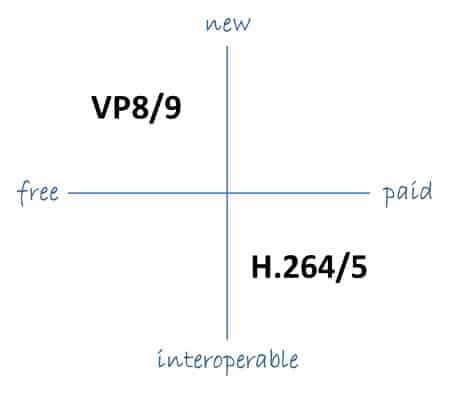
VP9 is a newer codec developed by Google and is designed to be a royalty-free alternative to H.265. It offers better compression than H.264 while maintaining the same video quality. It is also highly efficient at handling high-resolution videos, making it a good choice for 4K and 8K videos. However, its adoption has been slow due to its lack of support in many devices and software. It also requires more processing power to decode than H.264.

One of my personal experiences with VP9 was when I was trying to stream a 4K video on my laptop. I noticed that the video was buffering a lot and the quality was not as good as I expected. After some research, I found out that the video was encoded with VP9, which my laptop did not support. I had to switch to H.264 to get smooth playback.

Conclusion: Choosing the Right Video Codec

Choosing the right video codec is crucial for ensuring smooth video playback and high video quality. H.264 is still a solid choice for most situations, but H.265 and VP9 offer better compression and handling of high-resolution videos. However, they require more processing power and may not be supported by all devices and software. Make sure to choose the codec that best suits your needs and device capabilities.

In conclusion, video codecs are an essential part of our digital lives, and choosing the right one can make all the difference in our video-watching experience. Always keep in mind the pros and cons of each codec and make an informed decision based on your needs.

What is digital audio and video?

What is digital audio and video?

Digital Audio and Video

Digital audio and video are types of data that we can store on a computer or other electronic device. They are made up of a series of numbers that represent the sound or image we want to save. This means that instead of using physical materials like film or tape to record sound or video, we can use a computer to store and manipulate digital versions of that data.

Digital Audio and Video

How is sound digitized?

Sound is a type of wave that travels through the air. When we want to digitize sound, we need to find a way to measure that wave and turn it into a series of numbers. We do this by using a device called a microphone, which converts sound waves into electrical signals that can be processed by a computer.

Here’s an example: imagine you’re at a concert and you want to record a song using your phone. You turn on the voice memo app and hold your phone up to the speakers. The microphone in your phone converts the sound waves from the speakers into electrical signals that are then turned into a digital audio file that you can listen to later.

How are multiple sounds combined into a single file?

When we record sound using a microphone, we’re not just capturing one sound at a time. We’re also picking up any other sounds that might be happening in the background, like people talking or the sound of a car driving by. So how do we store all of these different sounds in a single file?

The answer is that each sound is given its own “channel” in the digital audio file. Imagine that you have a stereo system with two speakers – one on the left and one on the right. When you record a song using your phone, the sound that’s coming out of the left speaker is saved in one channel of the audio file, while the sound that’s coming out of the right speaker is saved in another channel.

How are different instruments and voices saved in a single channel?

So now we know how to store multiple sounds in a digital audio file using different channels. But what if we want to save a song that has lots of different instruments and voices playing at the same time? How can we separate out all of those different sounds and make sure they’re saved correctly in the file?

The answer is that each sound is given its own “frequency” in the digital audio file. Think of it like a rainbow: just like how a rainbow has lots of different colors, sound has lots of different frequencies. When we record a song, we’re capturing all of those different frequencies at the same time.

So let’s say we’re recording a song that has a guitar, a bass, a drum set, and a singer. Each of those instruments and the singer’s voice has a different set of frequencies that make up its sound. The guitar might have a lot of high frequencies, while the bass might have a lot of low frequencies. When we record the song, we capture all of those frequencies at the same time and save them in the digital audio file.

How are timbres saved in a digital audio file?

The “timbre” of a sound refers to its unique quality or tone. For example, if you hear a trumpet and a violin playing the same note, you can still tell the difference between the two because they have different timbres. So how do we save the timbre of each instrument or voice in a digital audio file?

To save the timbre of each sound, we use a process called “sampling”. Sampling involves taking tiny snapshots of the sound wave at regular intervals and saving those snapshots as numbers in the digital audio file. The more snapshots we take, the more accurately we can capture the unique timbre of each sound.

Here’s an example: let’s say we’re recording a piano playing a single note. We take 44,100 snapshots of the sound wave per second and save each snapshot as a number in the digital audio file. When we play back the file, the computer reads those numbers and uses them to recreate the sound of the piano note. Because we took so many snapshots per second, we’re able to capture all of the nuances of the piano’s timbre and make it sound like a real piano.

How are noises and other sounds saved in a digital audio file?

When we record sound using a microphone, we’re not just capturing the sounds we want to hear – we’re also capturing any background noise that might be happening. This can include things like people talking, cars driving by, or birds chirping. So how do we deal with all of that extra noise when we save the sound as a digital file?

One way to deal with background noise is to use a process called “noise reduction”. This involves analyzing the digital audio file and looking for parts of the sound that are consistent over time – like the sound of a fan running or the hum of a fluorescent light. The computer can then remove those consistent sounds from the file, leaving behind just the sounds we want to hear.

Another way to deal with background noise is to use a process called “EQ” (short for “equalization”). EQ allows us to boost or cut certain frequencies in the sound to make it sound better. For example, if there’s a lot of low-frequency rumble in a recording, we can use EQ to cut out some of those frequencies and make the sound clearer.

What is digital video?

Digital video is similar to digital audio, but instead of capturing sound waves, we’re capturing images. When we record a video, we’re capturing a series of still images (or frames) at regular intervals and saving them as a digital file.

How are videos saved in digital format?

To save a video in digital format, we need to capture a series of still images (or frames) and save them as a digital file. We do this using a device called a camera, which captures light from the scene we’re filming and turns it into an electrical signal that can be processed by a computer.

Here’s an example: imagine you’re filming a video of your dog playing in the park. You hold up your phone and hit the record button. The camera in your phone captures a series of still images (or frames) of your dog playing and saves them as a digital video file that you can watch later.

How are multiple images combined into a single video file?

When we capture a video, we’re capturing a series of still images (or frames) at regular intervals. To create a smooth video, we need to combine all of those frames into a single file. This is done using a process called “video compression”.

Video compression works by looking for parts of the image that are similar from frame to frame and only saving the parts that are different. For example, if you’re filming a video of a person sitting in a chair, the background behind them might not change much from frame to frame, so the computer can save that part of the image just once and only save the parts that are changing (like the person’s movements).

By only saving the parts of the image that are changing, we’re able to save space and create smaller video files that are easier to store and share. However, too much compression can make the video look blurry or pixelated. So, it’s important to find a balance between file size and video quality when compressing videos.

How do we add sound to a digital video file?

To add sound to a digital video file, we use a process called “audio syncing”. Audio syncing involves combining the digital audio file (which we learned about earlier) with the digital video file so that the sound matches up with the images.

Here’s an example: let’s say you’re filming a concert and you want to create a video of one of the songs. You record the video using your camera and the audio using a separate recording device. When you go to edit the video, you import both the digital audio file and the digital video file into your editing software. Then, you use audio syncing to line up the audio with the video so that the sound matches up with the images.

Conclusion

In conclusion, digital audio and video are complex subjects, but they can be explained in a way that a 6-year-old can understand. Digital audio involves converting sound waves into numbers that can be saved in a digital file. We use sampling to capture the unique timbre of each sound, and we use noise reduction and EQ to deal with background noise. Digital video involves capturing a series of still images (or frames) and saving them as a digital file. We use video compression to combine those frames into a single file and audio syncing to add sound to the video. By understanding these concepts, we can appreciate the technology behind the digital media that we enjoy every day.