Bitrate Can Help You Get Better Quality in MP3 and MP4


Free Download Mp4Gain
picture

Bitrate Can Help You Get Better Quality in MP3 and MP4

Bitrate Can Help You Get Better Quality in MP3 and MP4

Let’s Talk About Bitrate in MP3 and MP4

Bitrate can make or break the quality of your music or video files. I’ve spent years working with audio and video, and I can tell you that bitrate is a game-changer when it comes to getting the best sound and picture quality. Imagine a water pipe: the bitrate is like the pipe’s width. A wider pipe (higher bitrate) lets more water (data) flow through, giving you a richer sound or clearer video. Lower bitrate, on the other hand, restricts the data flow, which is like squeezing a pipe down; the result is less quality. Let’s dive into how bitrate impacts MP3 and MP4 quality and why understanding this can transform your listening and viewing experience.

What is Bitrate and Why Does It Matter?

Bitrate is the rate at which data is processed and transferred. In MP3s and MP4s, bitrate affects quality more than you might think. Higher bitrate means better quality, but also larger file sizes. Think of it like digital storage in your closet: high-bitrate files store every detail, but they take up more space. Lower bitrate compresses the details, which saves space but sacrifices some quality.

How Bitrate Affects MP3 Quality

For MP3 audio, bitrate is crucial. High-bitrate MP3s preserve more of the original recording’s sound detail, making music sound full and dynamic. I remember testing low-bitrate MP3s on different sound systems, and each time, they sounded flat and lifeless. If you want rich bass and clear vocals, go for a higher bitrate.

Common MP3 Bitrates

  • 128 kbps – Standard quality, good for most casual listeners.
  • 192 kbps – Enhanced clarity, offering decent audio for music enthusiasts.
  • 256 kbps – Higher quality with noticeable improvements in bass and vocals.
  • 320 kbps – Top-notch quality, closest to the original recording without being lossless.

How Bitrate Affects MP4 Quality

With MP4 video files, bitrate impacts both the video and audio components. When I watch a movie in high-bitrate MP4, the colors are vivid, and the sounds are rich. A low-bitrate MP4 might show pixelation and murky audio, especially on larger screens. This is why bitrate matters for video just as much as audio.

Recommended MP4 Bitrates

  • 500-1000 kbps – Suitable for low-resolution video, good for small screens.
  • 1000-2500 kbps – Ideal for standard definition video.
  • 2500-5000 kbps – Recommended for HD quality, providing clearer visuals.
  • 5000+ kbps – Best for Full HD and higher, excellent clarity on large screens.

Choosing the Right Bitrate: Balancing Quality and File Size

When selecting bitrate, it’s essential to balance quality with file size. You don’t always need the highest bitrate—sometimes, it’s more about fitting your needs. For instance, if you’re streaming on a mobile device, a lower bitrate can still provide good quality while saving data. However, if you’re playing files on high-end speakers, go for the highest bitrate possible.

Bitrate and Streaming: What You Should Know

When streaming MP3 or MP4 files, bitrate influences both quality and buffering speed. Higher bitrate streams may deliver better quality but can cause more buffering if your internet speed isn’t up to par. Personally, I recommend adjusting bitrate based on your internet connection to avoid interruptions.

How to Check and Adjust Bitrate

Checking bitrate is straightforward. On most devices, you can view the bitrate information within the file properties. Adjusting bitrate usually requires re-encoding with software that allows you to choose the bitrate. It’s like resizing a photo; changing bitrate affects file quality and size, so choose the right balance based on your needs.

Is Higher Always Better? When to Opt for Lower Bitrate

While high bitrate typically means better quality, there are cases where lower bitrate works just fine. For podcasts or spoken-word audio, for instance, a lower bitrate still delivers good clarity without taking up much space. It’s all about the type of content and how you’re consuming it.

Comparing Bitrate to Sample Rate and Resolution

Though bitrate is vital, sample rate and resolution also play roles in quality. For MP3s, sample rate affects audio fidelity, and for MP4s, resolution impacts video clarity. Together, these factors determine overall quality. I find that focusing on bitrate alone can sometimes mislead; balancing all three aspects yields the best results.

Practical Tips for Optimal Bitrate Selection

To optimize bitrate, consider both your device and personal preferences. For everyday music listening on headphones, 192 kbps MP3 might be enough. But for home theater setups, I suggest 320 kbps or lossless formats. Adjusting based on usage can save storage and still offer great sound.

Latest Words on Bitrate and Quality

Bitrate is a powerful factor in determining the quality of MP3 and MP4 files. Whether you’re listening to music or watching videos, selecting the right bitrate makes a difference. With the right tools, like Mp4Gain, you can achieve the perfect balance between quality and file size for any format or device.

Comments:

Wow, this article really explained bitrate well! I always thought higher was better but now I see it’s not that simple. Good job!

I wish there was more info on sample rates. I think that impacts quality too, right?

My friend shared this with me, and I have to say, it’s been super helpful. I feel like I finally get what bitrate is!

This article cleared up so much for me. I was struggling to understand why my audio files were so big, now I get it. Thanks!

Could you go into detail about bitrate in streaming? I think that’s a big topic too!

I’m not a tech person, but this really helped me understand why my audio files sound different at different bitrates. Nice work!

My son is a musician, and I shared this with him to help with his recordings. He said it’s super helpful, thank you!

I was looking for info on MP4 bitrate specifically, and this nailed it! I’m a video editor, so quality is everything to me.

Love the real-life examples in this! Makes something technical feel easy to understand. Keep up the great work!

I’m kinda new to this and was overwhelmed with all the info about bitrate. This is really straightforward. Appreciate it!

Thanks for explaining bitrate so clearly. I always had a hard time choosing settings, but now I know exactly what to do.

Just what I was looking for! Really needed a simple explanation of bitrate and this article delivered. Thanks!

Can you add a section on bitrate comparison? Like a chart or something. It’d be useful for quick reference!

This article was so informative! I’d been looking for something like this that’s easy to understand. Cheers!

I work in audio production, and I shared this with my team. Great explanations, especially for beginners. Thank you!

https://x.com/ricardo_mx_news/status/1850664808464474479


Free Download Mp4Gain
picture


Mp4Gain Main Window
picture


Mp4Gain Features
picture


Free Download Mp4Gain
picture

Bitrate Control Methods in MP4 Encoding

Bitrate Control Methods in MP4 Encoding

Bitrate Control Methods in MP4 Encoding

Let’s talk about bitrate control methods in MP4 encoding

When we talk about bitrate control methods in MP4 encoding, it’s crucial to understand that getting the right balance between quality and file size is key. You’ve probably noticed that when watching videos online or transferring files, you need good quality without large file sizes. Well, I’ve worked in this area for years, and I can tell you firsthand that bitrate control is the secret sauce to achieving this balance. Whether you’re encoding for streaming, playback, or storage, controlling the bitrate properly ensures that your video quality is high, while your file size remains manageable. And let me tell you, the wrong bitrate settings can ruin everything, like trying to fill a gallon jug with a firehose—chaos ensues. So, let’s dive into how bitrate control works, and how you can master it.

Understanding the role of bitrate in video quality

Bitrate essentially determines the quality of your video. It’s like comparing the resolution of an old TV to a modern 4K screen. The more data you allow (higher bitrate), the clearer and sharper your video will look. But with more data comes bigger file sizes. That’s why finding the right bitrate is so important. With too low a bitrate, the video will become pixelated, much like when you try to zoom in too far on a low-resolution image. On the other hand, too high a bitrate creates unnecessarily large files that don’t offer a proportional increase in quality. It’s a fine balance.

Constant Bitrate (CBR) vs. Variable Bitrate (VBR)

When deciding how to control bitrate, you’re typically faced with two options: Constant Bitrate (CBR) or Variable Bitrate (VBR). Both have their pros and cons.

Constant Bitrate (CBR)

With CBR, you’re essentially setting a fixed bitrate for the entire video. This is like setting the speed of a car and sticking with it, no matter whether you’re driving on a straight highway or navigating a twisty mountain road. It’s predictable and ensures compatibility, especially for streaming or broadcasting. However, the downside is that CBR doesn’t account for video complexity. A simple scene with little movement uses the same amount of data as a fast-paced action scene, which can lead to inefficiencies.

Variable Bitrate (VBR)

VBR is more like driving a car with adaptive cruise control. It changes depending on the complexity of the scene. If there’s a lot of action, it increases the bitrate to preserve quality. When the scene is simple, it decreases the bitrate to save space. VBR is generally more efficient than CBR because it adjusts to the content of the video. But it also requires more processing power and can sometimes cause playback issues on devices that expect a constant rate.

Two-pass encoding: The gold standard in VBR

If you really want to optimize your bitrate control, you’ll want to consider two-pass encoding. This method involves scanning the video once to analyze its complexity, then encoding it in the second pass to allocate the appropriate bitrate. Imagine you’re packing a suitcase—you take a look at everything you need to fit inside, then adjust the way you pack to make the most efficient use of space. The result is better quality with a smaller file size. From my experience, two-pass encoding is especially useful for longer videos, where the difference in file size really adds up.

Bitrate control in MP4 encoding: Real-life examples

In real-life applications, bitrate control is everywhere, from YouTube videos to Blu-ray discs. Take streaming services, for example. Ever notice how your video adjusts when your internet slows down? That’s bitrate control at work, using VBR to change the quality dynamically. I’ve had clients frustrated because their videos were buffering, and we had to tweak the bitrate to optimize for streaming. On the other hand, in cases like creating a video for a corporate event, where quality must be consistent, CBR might be your best option to ensure a smooth playback experience on all devices.

How to choose the best bitrate for MP4 encoding

So how do you choose the best bitrate? The answer depends on what you’re trying to achieve. When I work on projects for clients, I start by asking about their priorities. Are they looking for the best possible quality, or do they need to keep file sizes small for easy sharing? If it’s the former, I’ll push the bitrate as high as the medium allows. If it’s the latter, I find that VBR with two-pass encoding offers the best balance. However, if speed and compatibility are more important than anything else, I’ll recommend CBR.

Factors to consider when choosing a bitrate

  • Resolution: Higher resolution requires higher bitrate.
  • Frame rate: More frames per second (FPS) mean more data per second.
  • Device compatibility: Some devices handle high bitrates better than others.
  • Streaming or download: Streaming requires a lower, more consistent bitrate.
  • Storage capacity: Larger bitrates take up more space.

Advanced techniques in bitrate control

If you want to take things a step further, there are advanced techniques to fine-tune your bitrate control. One method I’ve seen growing in popularity is adaptive bitrate streaming (ABR). ABR is the technology behind services like Netflix and YouTube that automatically adjust the quality of your stream based on your internet speed. I remember working with a client who was launching a video platform, and ABR was a game-changer for them. It allowed users with slower internet connections to still enjoy smooth playback, while those with high-speed connections could experience full HD or even 4K quality.

Latest words on bitrate control methods in MP4 encoding

Bitrate control is a vital part of MP4 encoding, and understanding the different methods allows you to optimize both quality and file size. Whether you go for CBR, VBR, or advanced techniques like ABR, choosing the right method depends on your specific needs and the devices your audience will use. As someone who has worked on countless video projects, I’ve found that VBR with two-pass encoding offers the best balance between quality and file size for most cases. But remember, there’s no one-size-fits-all solution. Test different settings to find the right balance for your project. And when it comes to encoding your videos, Mp4Gain offers an excellent solution to help you control the bitrate with ease and efficiency.

Comments:

Man, this article was exactly what I needed. I’ve been having trouble with my videos coming out too big even though the quality isn’t that good. I’m definitely going to try VBR with two-pass encoding now!

– VideoDude101

Great stuff! I do a lot of streaming and was wondering why my videos always end up buffering on slower connections. This article explained everything. Would love to see more about ABR though!

– StreamMaster69

This was really helpful, thanks! I’m still a little confused about choosing the right bitrate for 4K, though. Any advice?

– TechGeek42

I’ve been using CBR for everything and didn’t even know about VBR. I can’t wait to try it on my next project!

– FilmFanatic

This is the first time I’ve read about two-pass encoding explained so clearly. Really helped me understand why my files were so big for no reason.

– SarahTheEditor

Thanks for the article! I was looking for a more detailed explanation of bitrate control and this hit the spot. I’m doing some video work for a local business and file size has been a big issue for us.

– LocalMediaPro

Nice breakdown, but I think you could’ve gone a bit deeper into device compatibility. My videos play fine on my computer, but look terrible on my phone. Any tips?

– JohnVideoMan

I’ve been using Mp4Gain for my personal projects and I gotta say it really simplifies bitrate control. This article just reinforced why I use it!

– CodecKing

I didn’t even know bitrate control was this important. No wonder my last video looked so bad. I’m going to try out your suggestions for my next upload.

– FirstTimeEditor

Good article, but what about HDR videos? Do the same bitrate rules apply there?

– HDRNerd

Related keywords: mp4 encoding, bitrate control methods, CBR vs VBR, video quality, video file size, two

Unlocking the Potential of DivX Codec for MPEG-4 Part 2

Unlocking the Potential of DivX Codec for MPEG-4 Part 2

Unlocking the Potential of DivX Codec for MPEG-4 Part 2

Unlocking the Potential of DivX Codec for MPEG-4 Part 2

Let’s delve into the DivX Codec for MPEG-4 Part 2

As an expert in digital media technologies, I’m thrilled to explore the capabilities of the DivX codec within the MPEG-4 Part 2 standard. This codec, renowned for its efficiency and quality, has reshaped the landscape of digital video compression. By understanding its intricacies, we can harness its power to optimize video distribution, enhance streaming experiences, and streamline multimedia workflows.

Understanding DivX Codec

Unlocking the potential of DivX begins with a comprehensive understanding of its functionality. Developed as an extension of the MPEG-4 Part 2 standard, DivX employs advanced compression techniques to reduce the size of video files while preserving visual quality. Its adaptive bitrate technology ensures smooth playback across a variety of devices and network conditions, making it a versatile choice for both streaming and offline viewing.

Efficient Compression

At the heart of DivX’s success lies its efficient compression algorithms. By analyzing and removing redundant information from video streams, DivX achieves significant file size reduction without compromising visual fidelity. This compression efficiency is particularly valuable in scenarios where bandwidth or storage space is limited, such as online streaming platforms or portable media devices.

Enhanced Visual Quality

Despite its impressive compression capabilities, DivX maintains a high level of visual quality. Through advanced encoding techniques and support for features like variable bitrate encoding and motion estimation, DivX ensures that videos retain clarity and detail, even at lower file sizes. This makes it an ideal choice for distributing high-definition content without sacrificing viewing experience.

Adaptive Bitrate Technology

One of DivX’s standout features is its adaptive bitrate technology, which dynamically adjusts video quality based on available bandwidth and device capabilities. This ensures smooth playback and minimizes buffering, even in challenging network conditions. Whether streaming over a congested Wi-Fi network or watching on a mobile device with limited data connectivity, users can enjoy uninterrupted viewing experiences.

Integration with MPEG-4 Part 2

DivX’s compatibility with the MPEG-4 Part 2 standard is another key aspect of its appeal. As an extension of this widely adopted standard, DivX ensures interoperability with a broad range of multimedia devices and software platforms. Whether creating content for streaming services, digital downloads, or physical media, users can rely on DivX to deliver consistent performance and compatibility.

Interoperability

By adhering to the MPEG-4 Part 2 standard, DivX ensures interoperability with a diverse ecosystem of devices and software applications. This means that videos encoded with DivX can be played back on a wide range of devices, including smartphones, tablets, smart TVs, gaming consoles, and more. This broad compatibility simplifies content distribution and ensures a seamless viewing experience for audiences worldwide.

Advanced Features

In addition to its core compression capabilities, DivX offers a range of advanced features to enhance the video encoding process. These include support for multiple audio tracks, subtitles, chapter markers, and custom encoding profiles, allowing users to tailor their encoding settings to specific content and use cases. Whether creating professional-quality video content or sharing personal memories, DivX provides the tools needed to achieve outstanding results.

Optimized Streaming

For streaming platforms and online content providers, DivX offers optimizations specifically designed to enhance the streaming experience. These include support for adaptive streaming protocols, such as HLS and MPEG-DASH, as well as integration with content delivery networks (CDNs) for efficient content distribution. By leveraging these capabilities, streaming services can deliver high-quality video to audiences worldwide while minimizing buffering and latency.

Latest words on DivX Codec for MPEG-4 Part 2

In conclusion, the DivX codec for MPEG-4 Part 2 represents a cornerstone of modern digital video compression. Its combination of efficient compression, enhanced visual quality, and broad compatibility makes it an indispensable tool for content creators, distributors, and consumers alike. By leveraging DivX’s capabilities, users can optimize video distribution, enhance streaming experiences, and unlock new possibilities in digital media. Whether you’re a filmmaker, a streaming platform, or an avid viewer, DivX offers the tools needed to take your video content to the next level.

Comments:

Wow, I never knew DivX had so many advanced features! This article was really informative.

Could you explain more about how DivX integrates with streaming platforms?

As a content creator, I’m excited to explore the possibilities of using DivX for video encoding.

This article convinced me to give DivX a try for my next video project. Thanks for the detailed explanation!

Does DivX offer any tools for optimizing video encoding for mobile devices?

I’ve been using DivX for years, and it’s been a game-changer for my video distribution workflow.

Great article! I appreciate the focus on practical applications and real-world examples.

More articles like this, please! DivX is such a powerful tool, and there’s still so much to learn.

As a streaming platform owner, I’m always looking for ways to optimize video delivery. DivX seems like a promising solution.

Could you provide some tips for optimizing video encoding settings with DivX?

This article provided valuable insights into the benefits of using DivX for video compression. Well done!

WebM vs WMV Comparison

WebM vs WMV Comparison

WebM vs WMV Comparison

As a specialist with extensive experience in the world of digital video formats, I’m here to shed light on the WebM vs WMV debate. If you’ve ever wondered about the differences between these two formats and which one is the right choice for your video needs, you’ve come to the right place. In this article, we’ll explore the intricacies of WebM and WMV, comparing their advantages, limitations, and real-life applications to help you make an informed decision.

WebM vs WMV Comparison

The World of Digital Video Formats

Imagine you’re shopping for a new car, and the market offers a wide range of options, each with its unique features. Similarly, the digital video world presents a plethora of formats, each tailored to specific needs. Choosing the right format is crucial, as it can significantly impact your video projects.

Meet WebM: The Open Source Contender

Let’s start with WebM, the open-source champion. WebM is known for its high-quality video with efficient compression, making it an excellent choice for online content. It’s like a Swiss Army knife for video, offering versatility and robust performance.

WebM Advantages

WebM boasts impressive advantages, such as high-quality video and efficient compression. This format is like having a Swiss Army knife for video, providing a versatile tool for various applications.

WebM Drawbacks

However, WebM isn’t without its limitations. While it’s widely compatible, it may not be universally adopted, much like a unique fruit that’s beloved by some but unknown to others.

Introducing WMV: The Windows Classic

Now, let’s turn our attention to WMV, the classic format synonymous with Windows. WMV is highly compatible with the Windows ecosystem, making it a preferred choice for professional settings. It’s like the dependable sedan of video formats.

WMV Advantages

WMV’s compatibility with Windows is its most significant advantage, making it the go-to format for many professionals. It’s like the reliable old car model that never lets you down.

WMV Limitations

On the flip side, WMV faces challenges outside the Windows environment. Much like a reliable car model that struggles on off-road terrain, WMV may not be the best choice for all situations.

WebM vs WMV: The Showdown

In the WebM vs WMV showdown, it’s essential to consider various factors when making your choice. Let’s break down the comparison to help you decide which format suits your needs.

Video Quality

When it comes to video quality, WebM is known for its impressive clarity and resolution. Imagine comparing two TV screens, one with crystal-clear visuals and the other with slightly pixelated images. WebM is like the former, providing top-tier video quality.

Compression Efficiency

Video compression is akin to packing a suitcase efficiently. WebM excels at this, offering smaller file sizes without compromising quality. It’s like fitting everything you need for a trip into a compact suitcase, making your journey more manageable.

Compatibility and Usage

Both WebM and WMV have their areas of compatibility and usage. Choosing between them is like deciding what ingredients to use for different dishes. WebM is versatile, while WMV is the perfect choice for certain scenarios.

Looking to the Future

As technology advances, video formats continue to evolve. Just like phone technology, we can expect exciting innovations in the digital video world. Stay tuned for the latest trends and emerging technologies.

Why I Prefer WebM

Personally, I lean towards WebM for its versatility and high-quality video. It’s like opting for organic food because it aligns with my preferences and values.

Concluding Thoughts

In summary, WebM and WMV each have their strengths and weaknesses. To make an informed decision, consider your specific needs and the environment in which your videos will be used. Much like choosing a meal from a restaurant menu, your selection should cater to your taste and requirements.

Latest Words on WebM vs WMV

Stay updated with the latest developments in the world of digital video formats. The landscape is ever-changing, and staying informed will help you make the best choices for your video projects.

Let’s Talk About WebM vs WMV

I hope this article has been informative and helpful in your journey to understand the differences between WebM and WMV. If you have any questions or would like to share your experiences with these formats, please feel free to leave a comment. Your insights and inquiries are always welcome.

Comments:

Hey, great article! I’ve always wondered about the differences between WebM and WMV. This really helped me make an informed choice for my video projects.

Thanks for breaking down the WebM vs WMV comparison. It’s like having a guidebook for navigating the digital video landscape.

I appreciate the insights on video quality and compression efficiency. It’s like understanding the secret recipe for great videos.

I’m a fan of WebM for its versatility. It’s like having a toolbox full of video options.

WMV’s compatibility with Windows is a real advantage, especially for business presentations. It’s like speaking the native language of your computer.

I’m excited about the future of video formats. It’s like being on the edge of a new era in video technology.

Can you recommend any software for converting WMV to WebM? It would be a helpful addition to the article.

I’d love to see more technical details about video codecs. It’s like delving into the inner workings of video magic.

WebM feels like the Mac of video formats – sleek, user-friendly, and reliable. I can relate to that.

Thanks for simplifying the WebM vs. WMV debate. This article feels like a friendly chat about digital video formats. Kudos!

I’ve had some issues with WMV files on non-Windows devices. Could you recommend a reliable converter for WMV to WebM?

This article is like a good conversation over a cup of coffee. It made understanding video formats much easier for a non-techie like me.

MP4 vs WMV Comparison

MP4 vs WMV Comparison

MP4 vs WMV Comparison

Let’s Talk about MP4 and WMV

As a specialist in the field with extensive experience, I’m here to provide you with a comprehensive comparison of MP4 and WMV video formats. Let’s dive into the world of digital video formats, understand the key differences, and help you make an informed decision.

The Basics of MP4

MP4 vs WMV Comparison

MP4, short for MPEG-4 Part 14, is a widely used video format. It’s like a Swiss Army knife for video because of its versatility. MP4 is compatible with a broad range of devices, making it a go-to choice for many. It uses the H.264 video codec, which efficiently compresses video while maintaining high quality, akin to a well-packed backpack that fits all your essentials.

Getting to Know WMV

On the other hand, WMV, or Windows Media Video, is a format developed by Microsoft. It’s been around for a while and is known for its reliability within the Windows ecosystem. Think of WMV as a trusted old suitcase that never lets you down.

Quality and Compression

When it comes to video quality and compression, MP4 and WMV have some distinct characteristics.

MP4’s utilization of the H.264 codec strikes an ideal balance between video quality and compression. It efficiently reduces file size while preserving sharp images and smooth playback. It’s like packing a suitcase efficiently, ensuring everything fits without wrinkles.

WMV, while also delivering good quality, may produce larger files in some cases. This is because WMV uses its own compression algorithms. Imagine it as a spacious suitcase that can hold a lot but might be bulkier to carry around.

Compatibility

Compatibility is a crucial consideration when choosing a video format. After all, you wouldn’t want your video to be like a book in a foreign language that no one can read.

MP4 is the clear winner in this category. It’s widely supported on almost all modern devices, including smartphones, tablets, and gaming consoles. Most video streaming platforms prefer MP4 due to its efficient streaming capabilities. It’s like having a book that everyone can read without any translation.

WMV, on the other hand, has more limited compatibility. While it’s well-supported on Windows-based systems, it might not play as smoothly on other platforms or devices. It’s like having a book that’s only available in one specific library.

File Size

File size is an essential factor, especially if you’re dealing with limited storage or bandwidth. Let’s compare MP4 and WMV in this aspect.

MP4’s efficient compression makes it ideal for online streaming and sharing. It’s like having a compact e-book that’s easy to send via email or upload to the cloud without taking up too much space.

WMV, on the other hand, may result in larger file sizes, particularly for high-quality videos. It’s like carrying a hefty hardcover book that takes up more shelf space and requires more effort to transport.

Editing and Post-Production

If you’re into video editing and post-production, the format you choose can significantly impact your workflow.

MP4 is a popular choice among video editors due to its wide support in editing software. It’s like working with a versatile set of tools that make editing a breeze.

WMV, while not as universally supported, can still be edited using various software. However, you might need to convert it to a more editing-friendly format, which can be a bit like translating a book before you can read it.

Let’s Talk about Audio

We’ve been focusing on video, but what about the audio component? Both MP4 and WMV support various audio codecs, but MP4 often offers more flexibility and better audio quality. It’s like enjoying a movie with surround sound in a high-end theater.

Future of Video Formats

As technology evolves, new video formats continue to emerge. HEVC (High-Efficiency Video Coding) is one such format that offers even better compression and quality than H.264. It’s like getting a futuristic backpack that’s not only compact but also incredibly lightweight.

Conclusion: The Choice Is Yours

In the battle of MP4 vs. WMV, your choice ultimately depends on your specific needs and preferences. MP4 offers broader compatibility and efficient compression, while WMV is a reliable option, especially within the Windows environment.

Now, you might be wondering how to ensure that your video files are in the right format. Well, this is where I’d like to mention Mp4Gain. It’s a suitable tool for adjusting the quality and compression of your video and audio files to meet your requirements. It’s like having a trusty tool in your video editing arsenal.

Latest Words on MP4 and WMV

In the ever-evolving world of digital media, choosing the right video format is crucial. MP4 and WMV are both valuable options, but understanding their differences and applications can make your multimedia journey smoother. Remember, it’s not just about the format; it’s about what suits your needs best.

Comments:

Hey, great article! I’ve always wondered about the differences between MP4 and WMV. This really helped me make an informed choice for my video projects.

I agree with the article, MP4 is so versatile. It’s like having a multitool for all your video needs!

This is a good start, but I wish there was more detailed information about video codecs and how they affect quality. Could you expand on that?

MP4 is my go-to choice for video sharing on social media. It’s like having a format that speaks the language of the internet.

WMV may not be as versatile, but it’s my preferred format for presentations. It’s like a reliable old friend in a professional setting.

Can you talk more about the future of video formats? I’m curious about what’s coming next in the world of video compression.

Mp4Gain is a neat tool! It’s like having a magic wand for adjusting audio in my videos. Thanks for the tip!

I’d love to hear more about the technical side of video formats. This article is informative, but I crave deeper insights into the nitty-gritty details.

As a Mac user, I lean towards MP4. It’s like the Mac of video formats – sleek, user-friendly, and reliable.

Thanks for simplifying the MP4 vs. WMV debate. This article feels like a friendly chat about digital video formats. Kudos!

I’ve had some issues with WMV files on non-Windows devices. Could you recommend a reliable converter for WMV to MP4?

This article is like a good conversation over a cup of coffee. It made understanding video formats much easier for a non-techie like me.

Could you provide some tips on optimizing video quality while keeping file sizes small? That would be a game-changer!

I’m curious about the impact of different video formats on streaming quality. Can you shed some light on that?

MP4 vs Webm Comparision

MP4 vs Webm

MP4 vs Webm
MP4 vs Webm
MP4 vs Webm
MP4 vs Webm


Let’s talk about MP4 vs Webm

  • Opening: Picture two popular video formats as cars. MP4 is like a well-known sedan – versatile, widely supported, and loved by many. Webm, on the other hand, is like a sleek sports car, known for its efficient compression and open-source nature. But which one is the right ride for your video needs? As a specialist in video formats, I’ll help you make an informed choice.
MP4 vs Webm
MP4 vs Webm

Video Formats Demystified

  • Video Compression: Let’s dive into the hood of video formats. MP4 and Webm use different compression techniques. MP4 uses H.264, offering excellent quality but at a slightly larger file size. It’s like the reliable V6 engine in your sedan. Webm relies on VP9, which sacrifices a bit of quality for smaller file sizes, making it the energy-efficient electric engine of the sports car world.
  • Browser Compatibility: When it comes to compatibility, MP4 takes the lead. It’s like a highway with smooth roads, compatible with almost all browsers and devices. Webm, on the other hand, is like a scenic route – beautiful but not as widely supported. It may require more effort for some viewers to access.

Video Quality Matters

  • Resolution and Bitrates: Just like choosing the right camera for a movie, you need to consider resolution and bitrates for your video. MP4 often delivers higher quality at the same resolution, while Webm can provide good quality but at a lower bitrate. It’s like comparing a blockbuster movie shot in IMAX with a captivating indie film.
  • Color Depth and Compression Artifacts: Let’s talk about the finer details. MP4 can handle a wider range of colors, making it suitable for professional videos. However, Webm might exhibit more compression artifacts, like pixelation, in complex scenes. It’s like the difference between a painting and a pixel art image.

Efficient File Sizes

  • Storage Considerations: Imagine your video as luggage. MP4 tends to be bulkier, occupying more space in your hard drive. Webm, with its smaller file sizes, is like packing efficiently for a long trip – you get more in with less space.
  • Loading and Streaming: Video load times can be a make-or-break factor. MP4 might take longer to load, especially for viewers with slower connections, while Webm loads faster due to its efficient compression. It’s like choosing between express and regular delivery.

Open Source vs. Proprietary

  • Freedom and Licensing: Webm is like an open-source vehicle – no licensing fees, and anyone can use it freely. MP4, however, involves licensing and royalties, making it more like a luxury car with additional costs.
  • Ecosystem and Support: MP4 has a well-established ecosystem with advanced features and support. It’s akin to a premium car with top-of-the-line accessories. Webm, while open and accessible, might not have the same level of support and features, making it more like a customizable kit car.

Mobile Devices and App Compatibility

  • Mobile Friendliness: MP4 is the go-to choice for mobile devices. It’s like a trusted GPS that guides you seamlessly. Webm, while supported on many mobile devices, might require additional apps or settings adjustments, similar to choosing an alternative route on your journey.

Latest Words on MP4 vs Webm

  • MP4’s Versatility: In the end, MP4’s versatility and widespread support make it a safe bet for most users. It’s like driving a reliable sedan for your daily commute.
  • Webm’s Efficiency: Webm’s efficient compression and open-source nature make it a contender for users looking to optimize their video delivery. It’s like the sports car that zips through traffic while conserving energy.
  • Personal Choice: Just as some prefer the comfort of a sedan, and others love the thrill of a sports car, your choice between MP4 and Webm depends on your specific video needs and priorities.

Comments:


Comments:

MP4 has been my go-to format for years. It’s like driving a reliable sedan, just as you said. But Webm’s efficiency intrigues me for certain projects.

I’m all about quality, so MP4’s higher resolution is tempting. It’s like comparing a blockbuster movie to an indie film – hard to resist the former.

Webm’s smaller file sizes are a game-changer for my storage. It’s like switching to a more fuel-efficient car to save on long trips.

Open-source is the way to go for me, so Webm’s like a free-spirited road trip in the video format world. No licensing fees are a big plus.

MP4’s compatibility with mobile devices is crucial for me, as I’m always on the go. It’s like having a reliable GPS for my video content.


Video Codecs: H.264, H.265, and VP9

The Importance of Choosing the Right Video Codec


H.264, H.265, and VP9

Video Codecs: H.264, H.265, and VP9

As the world becomes increasingly digitized, the importance of video codecs in our lives cannot be overstated. Video codecs are essential in video compression, encoding, streaming, and playback. Choosing the right codec can make the difference between smooth playback and frustrating buffering, between crisp and clear images and pixelated messes. In this article, we will explore the differences between three of the most popular video codecs in use today: H.264, H.265, and VP9.

H.264 vs H.265: What’s the Difference?

H.264, also known as AVC (Advanced Video Coding), has been the dominant codec in use for the past decade. It is widely supported by devices and software and offers good compression while maintaining high video quality. However, H.265 (HEVC) is slowly taking over. It is a newer and more advanced codec that offers better compression ratios, which means smaller file sizes with the same quality as H.264. H.265 is also better at handling high-resolution videos, making it a good choice for 4K and 8K videos. However, it requires more processing power to decode, which may be an issue on older devices.

Personally, I have found that H.265 delivers noticeably better quality than H.264 for the same file size. It is especially noticeable in high-motion scenes like action movies or sports. However, it does require more processing power, so make sure your device can handle it before choosing it as your preferred codec.

VP9: The New Kid on the Block

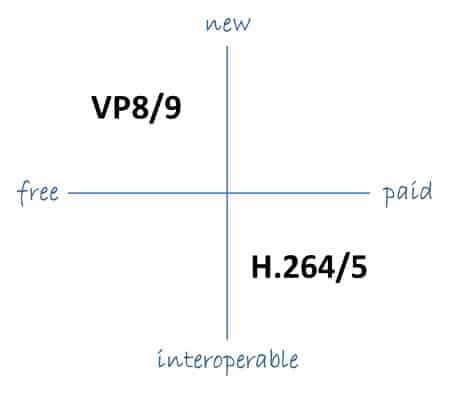
VP9 is a newer codec developed by Google and is designed to be a royalty-free alternative to H.265. It offers better compression than H.264 while maintaining the same video quality. It is also highly efficient at handling high-resolution videos, making it a good choice for 4K and 8K videos. However, its adoption has been slow due to its lack of support in many devices and software. It also requires more processing power to decode than H.264.

One of my personal experiences with VP9 was when I was trying to stream a 4K video on my laptop. I noticed that the video was buffering a lot and the quality was not as good as I expected. After some research, I found out that the video was encoded with VP9, which my laptop did not support. I had to switch to H.264 to get smooth playback.

Conclusion: Choosing the Right Video Codec

Choosing the right video codec is crucial for ensuring smooth video playback and high video quality. H.264 is still a solid choice for most situations, but H.265 and VP9 offer better compression and handling of high-resolution videos. However, they require more processing power and may not be supported by all devices and software. Make sure to choose the codec that best suits your needs and device capabilities.

In conclusion, video codecs are an essential part of our digital lives, and choosing the right one can make all the difference in our video-watching experience. Always keep in mind the pros and cons of each codec and make an informed decision based on your needs.