WebM vs H.264 encoding


Free Download Mp4Gain
picture

WebM vs H.264 encoding

WebM vs H.264 encoding

Let’s talk about WebM vs H.264 encoding

When it comes to video encoding formats, WebM and H.264 are often compared. As someone who has worked extensively with video encoding technologies, I can tell you that the differences between these two formats are crucial for both content creators and viewers. Understanding WebM and H.264 helps you make informed decisions about the quality, performance, and compatibility of your videos. Let’s dive deep into the factors that set them apart and why one might be better suited to your needs than the other.

The WebM format, developed by Google, is known for its open-source nature, making it a popular choice for web video streaming, especially in HTML5 environments. H.264, on the other hand, is a video compression standard that’s been widely adopted in a range of devices and platforms, from web browsers to Blu-ray players. Both formats have their strengths and weaknesses, but knowing when and why to use each one is essential.

Key differences in video quality

When comparing WebM to H.264, the first thing to consider is video quality. From my experience, the quality of a video can vary significantly depending on the codec used, the compression method, and the bitrate. WebM uses the VP8 and VP9 codecs, while H.264 utilizes the AVC codec. Both codecs are capable of compressing video to relatively small file sizes without sacrificing too much quality, but they handle compression differently.

– **WebM with VP8** typically provides slightly lower quality compared to H.264 at the same bitrate. This can result in some visible artifacts like blurring, especially in fast-moving scenes. However, VP8 is often seen as more efficient for real-time video streaming, especially in web applications.
– **WebM with VP9**, the more recent codec, offers better quality and compression efficiency than VP8, and in some cases, it competes closely with H.264, offering a more comparable experience in terms of visual quality. However, VP9 requires more computational power for encoding and decoding, which may be a limiting factor for lower-end devices.
– **H.264**, on the other hand, has been the gold standard for a long time and is well-known for delivering high-quality video at relatively low bitrates. It’s widely supported by hardware encoders, which makes it more efficient in real-world applications.

Benefits of WebM in video quality

  • WebM with VP9 can deliver similar or better quality than H.264 at lower bitrates, making it an attractive choice for streaming content.
  • VP9 supports 4K resolution, allowing for high-quality video playback on platforms that support it.
  • WebM has the potential for better quality on modern browsers that support hardware acceleration for VP9.

Benefits of H.264 in video quality

  • H.264 is highly optimized and efficient, ensuring excellent video quality even on low-end devices.
  • It offers a proven track record in terms of maintaining quality while keeping file sizes relatively small.
  • H.264 is compatible with nearly every device, operating system, and video player, providing seamless playback on a wide range of hardware.

Performance and efficiency

When it comes to video encoding performance, WebM and H.264 each have their own strengths. One of the key aspects I always focus on is how well a format handles compression and decoding without consuming too much processing power.

– **WebM**, especially when encoded with VP9, is known for its high compression efficiency. While this leads to smaller file sizes, it also means that the decoding process can be more demanding on the CPU, which may not be ideal for all devices. However, modern hardware accelerates VP9 decoding, meaning you can get excellent performance on more powerful systems or in browser environments.
– **H.264**, on the other hand, is better optimized for performance and efficiency across a wider range of devices. Since H.264 is supported by virtually all hardware decoders, including smartphones, tablets, and set-top boxes, it’s often a more reliable choice when it comes to performance. The format also performs well in terms of encoding speed, which makes it a favorite for streaming services and broadcasters.

WebM and performance benefits

  • WebM’s VP9 codec can provide excellent video quality at lower bitrates, making it ideal for streaming over limited bandwidth.
  • WebM is supported by modern web browsers, making it a great choice for online platforms that prioritize efficiency and open-source technology.
  • VP9 can provide better compression for videos with higher resolution and frame rates, offering a future-proof solution for higher-quality video streaming.

H.264 performance advantages

  • H.264 is optimized for both encoding and decoding, making it ideal for use in hardware devices, from smartphones to streaming boxes.
  • It is well-supported by a wide range of software, including video editing tools, media players, and streaming platforms.
  • H.264 provides a balanced trade-off between compression, quality, and computational demands, which is why it has become the default codec for video streaming platforms.

Device and browser compatibility

If you’ve ever tried playing a video on a device only to find that it doesn’t support the format, you know how crucial compatibility is. One of the biggest differences between WebM and H.264 lies in their compatibility across devices and browsers.

– **WebM** is well-supported in most modern browsers like Chrome, Firefox, and Edge. However, it is not natively supported by Apple’s Safari browser, which limits its adoption on macOS and iOS devices. This can be a significant drawback for WebM, especially for content creators who need broad compatibility.
– **H.264** has virtually universal support. It works on virtually every device, from the latest smartphones to older TVs and Blu-ray players. This wide compatibility is one reason why H.264 remains the dominant choice for video encoding.

WebM compatibility advantages

  • WebM works seamlessly in most modern browsers, particularly for video streaming platforms that focus on web-based delivery.
  • WebM is ideal for open-source projects and platforms that require a free, royalty-free format for distribution.
  • WebM’s increasing support in mobile and smart TV devices further increases its adoption in certain markets.

H.264 compatibility advantages

  • H.264 offers exceptional cross-platform compatibility, making it suitable for nearly every video-related application.
  • Most video players, editing software, and streaming platforms support H.264, ensuring a smooth experience for users and content creators alike.
  • H.264 works on virtually all devices, from smartphones to laptops, game consoles, and even older hardware.

Licensing and cost considerations

Licensing and associated costs can be a major factor when choosing between WebM and H.264, especially for commercial use. This is an aspect I’ve had to consider as a content creator multiple times.

– **WebM** is free and open-source, meaning there are no licensing fees for using it in software or distributing it in videos. This makes WebM a great choice for developers, open-source projects, and individuals looking to avoid licensing restrictions.
– **H.264** is a patented codec, and while it is free for personal use, commercial distributors often have to pay licensing fees to MPEG LA, the organization that manages the H.264 patent pool. This can add significant costs for businesses, especially if they are distributing large volumes of video.

WebM licensing advantages

  • WebM’s open-source nature makes it a cost-effective solution for businesses and developers.
  • No royalty fees are required for commercial use, which reduces barriers for content creators.
  • WebM is particularly attractive for platforms and applications looking to avoid complex licensing issues.

H.264 licensing considerations

  • H.264 can incur licensing fees for commercial distribution, especially when used in streaming services or large-scale video delivery systems.
  • Despite the licensing fees, H.264 remains a popular choice because of its ubiquity and high quality.
  • The patent licensing system for H.264 is well-established, providing clear guidelines for businesses on how to comply.

Latest words on WebM vs H.264 encoding

In conclusion, the choice between WebM and H.264 encoding largely depends on your priorities. If you’re looking for high quality, broad compatibility, and optimal performance across various devices, H.264 is likely the better choice. However, if you need a royalty-free, open-source solution with excellent video quality for web applications, WebM with VP9 is a strong contender. Both formats have their unique strengths, and the right choice depends on your specific use case.

WebM is great for modern web applications, especially those targeting a more tech-savvy audience, while H.264 remains the gold standard for compatibility and consistent performance. Both formats are important, and understanding when to use each will make you a more efficient content creator or developer.

Frequently Asked Questions

What is the difference between WebM and H.264?

WebM is an open-source video format using VP8 or VP9 codecs, while H.264 is a widely-used codec supported by almost all devices. WebM offers free, royalty-free usage, but H.264 provides better compatibility and performance across a broader range of platforms.

Which is better for streaming: WebM or H.264?

For streaming, WebM with VP9 can provide better compression and smaller file sizes for high-quality video at lower bitrates. However, H.264 is more universally compatible, ensuring smooth playback across virtually all devices, making it ideal for streaming on a wider range of platforms.

Is WebM supported by all browsers?

WebM is supported by modern browsers like Chrome, Firefox, and Edge, but it is not natively supported by Apple’s Safari. This can limit its compatibility on Apple devices, which may require alternative formats like H.264 for broader compatibility.

Can WebM and H.264 be used together?

Yes, both formats can be used together. In fact, many websites use H.264 for broader device compatibility while offering WebM as an alternative for browsers that support it. This ensures that all users get an optimal experience regardless of their device or browser choice.

Which format offers better video quality, WebM or H.264?

H.264 is known for delivering excellent video quality at lower bitrates and is generally considered more optimized for quality retention. WebM, especially with VP9, can offer competitive quality, but it may require more processing power and may not always outperform H.264 in terms of visual fidelity at the same bitrate.

Does WebM support 4K video?

Yes, WebM supports 4K resolution, especially when using the VP9 codec. VP9 is designed to handle high-definition and 4K video content efficiently, offering better quality at lower bitrates compared to older codecs like H.264, although it may require more processing power.

Is H.264 free to use?

H.264 is not entirely free to use, as it is patented and requires licensing fees for commercial use. While personal usage may be free, businesses or services that distribute content encoded with H.264 must pay licensing fees to the MPEG LA consortium, which manages the codec’s patent pool.

Can I convert videos from WebM to H.264?

Yes, you can easily convert WebM videos to H.264 using various video conversion tools. This process allows you to maintain compatibility with devices and platforms that do not support WebM, while also offering the high-quality compression benefits of the H.264 codec.

Comments:

I’ve been using WebM for my streaming site and it’s great for avoiding licensing fees. But I still need to encode everything in H.264 for

certain devices. It’s a pain sometimes but worth it.

This article really helped me understand the difference between WebM and H.264. I didn’t realize how important codec choice was for streaming efficiency. Thanks for the insights!

I think H.264 is still better for most people, especially if they want their videos to work everywhere. WebM is good, but not everyone supports it yet.

I’m starting a video-based app, and after reading this, I think WebM with VP9 might be the right choice for me. I want to avoid licensing costs and keep things smooth for my users.

The licensing thing is a huge downside of H.264. I didn’t realize how expensive it could get for larger scale distributions. WebM looks like the better option for many startups.


Free Download Mp4Gain
picture


Mp4Gain Main Window
picture


Mp4Gain Features
picture


Free Download Mp4Gain
picture

MP4 Scalable Video Coding (SVC)

MP4 Scalable Video Coding (SVC)

MP4 Scalable Video Coding (SVC)

MP4 Scalable Video Coding (SVC)

Let’s talk about MP4 Scalable Video Coding (SVC)

As a specialist in video encoding technologies, I’m excited to delve into the world of MP4 Scalable Video Coding (SVC). This innovative approach to video compression offers unparalleled flexibility and efficiency, catering to the diverse needs of content creators and consumers alike. In this article, I’ll explore the intricacies of SVC, its benefits, implementation, and future prospects, providing you with a comprehensive understanding of this groundbreaking technology.

The Evolution of Video Compression

Video compression has come a long way since the early days of analog television. With the advent of digital media, the demand for efficient compression techniques has skyrocketed. Standards like MPEG-4 Part 10 (H.264) revolutionized video delivery, paving the way for high-definition streaming and digital broadcasting. However, as the appetite for higher resolutions and immersive experiences grew, the need for more advanced compression solutions became apparent.

Introducing MP4 Scalable Video Coding

MP4 Scalable Video Coding (SVC) builds upon the foundation laid by traditional video compression standards, offering a dynamic and adaptable approach to encoding. Unlike conventional codecs that rely on fixed resolution and bitrate, SVC enables the creation of video streams with multiple layers of quality and spatial resolution. This scalability allows content providers to cater to a wide range of devices and network conditions, delivering optimal viewing experiences to every user.

  • Dynamic Quality Adjustment: With SVC, video streams can adapt in real-time to fluctuations in network bandwidth, ensuring smooth playback without buffering or stuttering.
  • Enhanced Compatibility: SVC-encoded content is compatible with a variety of devices and platforms, ranging from smartphones and tablets to smart TVs and gaming consoles.
  • Improved Error Resilience: By dividing video frames into hierarchical layers, SVC provides robust error resilience, minimizing the impact of packet loss and network congestion on video quality.

Benefits of MP4 Scalable Video Coding

The benefits of MP4 Scalable Video Coding extend beyond traditional video compression techniques, offering a wealth of advantages for content creators, distributors, and consumers alike.

Optimized Bandwidth Utilization

SVC’s scalable nature allows for efficient bandwidth utilization, enabling content providers to deliver high-quality video streams while minimizing data consumption. This is particularly beneficial in scenarios where network bandwidth is limited or fluctuates unpredictably, such as mobile networks or congested Wi-Fi environments. By dynamically adjusting the video quality based on available bandwidth, SVC ensures a seamless viewing experience for users across all devices and network conditions.

Adaptive Streaming

Adaptive streaming has become increasingly popular in today’s multimedia landscape, allowing users to enjoy uninterrupted playback regardless of their internet connection speed. MP4 Scalable Video Coding facilitates adaptive streaming by providing multiple layers of video quality, each tailored to different bandwidth constraints. This enables smooth transitions between video resolutions and bitrates, ensuring optimal playback quality without buffering or interruptions.

Implementation Considerations

While the benefits of MP4 Scalable Video Coding are undeniable, successful implementation requires careful consideration of various factors, including codec support, encoding parameters, and playback devices.

Codec Support and Compatibility

Before adopting SVC for video encoding, it’s essential to ensure compatibility with your target platforms and devices. While many modern media players and streaming services support SVC-encoded content, older devices or legacy software may lack the necessary codec support. Therefore, it’s crucial to conduct thorough compatibility testing and prioritize backward compatibility when deploying SVC-encoded content.

Encoding Parameters and Optimization

Optimizing encoding parameters is key to maximizing the benefits of MP4 Scalable Video Coding. Parameters such as spatial resolutions, bitrate settings, and encoding profiles can significantly impact video quality and file size. By carefully fine-tuning these parameters based on the target audience and distribution platforms, content creators can strike the perfect balance between quality and efficiency, ensuring optimal viewing experiences across all devices and network conditions.

Latest Words on MP4 Scalable Video Coding

In conclusion, MP4 Scalable Video Coding represents a paradigm shift in video compression technology, offering unprecedented flexibility, efficiency, and quality. By leveraging scalable encoding techniques, content creators can deliver immersive multimedia experiences to audiences worldwide, regardless of their device or network constraints. As the digital landscape continues to evolve, MP4 Scalable Video Coding will play a crucial role in shaping the future of video delivery and consumption.

Comments:

This article provided valuable insights into MP4 Scalable Video Coding, shedding light on its benefits and implementation considerations. As a video enthusiast, I’m excited to explore the possibilities of SVC for enhancing video delivery. – VideoEnthusiast

While the benefits of MP4 Scalable Video Coding are clear, I wish there was more information on the practical aspects of implementing SVC in real-world scenarios. – PracticalViewer

I’ve been experimenting with SVC for my video streaming platform, and the results have been impressive so far! This article reaffirmed my decision to adopt SVC for adaptive streaming. – StreamMaster

As a content creator, I’m always looking for ways to optimize video delivery and reach a wider audience. MP4 Scalable Video Coding seems like the perfect solution for catering to diverse devices and network conditions. – ContentCreator99

This article provided a comprehensive overview of MP4 Scalable Video Coding, covering its benefits, implementation considerations, and future prospects. It’s refreshing to see such detailed insights on this emerging technology. – TechEnthusiast

It’s fascinating to learn about the scalability and adaptability of MP4 Scalable Video Coding. This article opened my eyes to the potential of SVC for revolutionizing video delivery in the digital age. – DigitalInnovator

High Efficiency Video Coding (HEVC) in MP4

High Efficiency Video Coding (HEVC) in MP4

High Efficiency Video Coding (HEVC) in MP4

High Efficiency Video Coding (HEVC) in MP4

Let’s talk about High Efficiency Video Coding (HEVC) in MP4

When it comes to optimizing video quality while minimizing file size, High Efficiency Video Coding (HEVC) in MP4 format stands out as a game-changer. As a specialist with extensive experience in video compression technologies, I’ve witnessed firsthand the transformative impact of HEVC on the digital media landscape. Whether you’re a content creator, distributor, or consumer, understanding the ins and outs of HEVC in MP4 is crucial for staying ahead in today’s fast-paced multimedia environment. In this comprehensive article, I’ll delve deep into the intricacies of HEVC in MP4, shedding light on its benefits, implementation, and future prospects.

The Evolution of Video Compression: A Brief Overview

Before diving into HEVC, let’s take a moment to appreciate the journey of video compression technologies. From the early days of analog signals to the digital revolution, the quest for efficient video encoding has been relentless. Standards like MPEG-2 and H.264 (AVC) paved the way for high-quality video delivery, but the demand for higher resolutions and immersive experiences spurred the need for a more advanced solution. Enter HEVC, also known as H.265, which represents the next frontier in video compression.

The Birth of HEVC: Innovation in Video Compression

HEVC, developed by the Joint Collaborative Team on Video Coding (JCT-VC), was ratified as a standard by the International Telecommunication Union (ITU) and the International Organization for Standardization (ISO) in 2013. Building upon the foundation laid by its predecessors, HEVC introduces significant improvements in compression efficiency, making it possible to achieve the same visual quality at roughly half the bitrate compared to H.264.

  • Enhanced Compression Algorithms: HEVC employs advanced techniques such as more efficient intra prediction, improved motion compensation, and sophisticated entropy coding, allowing for higher compression ratios without sacrificing quality.
  • Support for High Resolutions: With support for resolutions up to 8K, HEVC is well-suited for modern display technologies, enabling breathtaking visual experiences with unparalleled clarity and detail.
  • Dynamic Range and Color Depth: HEVC offers enhanced support for wider color gamuts and increased bit depths, catering to the demands of HDR (High Dynamic Range) and UHD (Ultra High Definition) content.

HEVC in MP4: Unleashing the Power of Efficient Video Delivery

Now that we’ve explored the technological prowess of HEVC, let’s shift our focus to its integration with the ubiquitous MP4 container format. MP4, short for MPEG-4 Part 14, is a versatile multimedia container widely used for storing audio, video, and other media types. By combining the efficiency of HEVC with the flexibility of MP4, content creators and distributors can unlock a myriad of benefits.

Benefits of HEVC in MP4:

  • Reduced Bandwidth Requirements: HEVC’s superior compression efficiency translates to smaller file sizes, reducing bandwidth consumption and storage costs for both content providers and end-users.
  • Improved Streaming Quality: With HEVC-encoded MP4 files, streaming platforms can deliver higher quality video streams at lower bitrates, resulting in smoother playback and faster start times, especially in bandwidth-constrained environments.
  • Extended Battery Life: On mobile devices, HEVC-encoded MP4 videos consume less power during playback, leading to longer battery life and improved user experience, particularly for on-the-go viewing.

Implementing HEVC in MP4: Practical Considerations

While the benefits of HEVC in MP4 are undeniable, successful implementation requires careful consideration of various factors, including compatibility, encoding settings, and playback devices. As a seasoned professional in the field of video encoding, I’ve encountered and overcome numerous challenges when integrating HEVC into MP4 workflows.

Compatibility and Playback Support:

  • Device and Software Compatibility: While modern devices and software players offer robust support for HEVC-encoded MP4 files, it’s essential to consider the compatibility requirements of your target audience, especially for legacy devices and platforms.
  • Codec Licensing and Royalties: HEVC is subject to licensing fees, which can impact the cost-effectiveness of adopting this technology. Content creators and distributors must evaluate the licensing terms and potential royalties associated with HEVC usage.
  • Optimized Encoding Parameters: Achieving the optimal balance between compression efficiency and visual quality requires fine-tuning encoding parameters such as bitrate, profile, and encoding presets. Experimentation and testing are key to maximizing the benefits of HEVC in MP4.

Latest Words on HEVC in MP4

As we look to the future of video delivery, HEVC in MP4 remains at the forefront of innovation, driving efficiency and quality in multimedia experiences. While challenges such as codec licensing and compatibility persist, the transformative potential of HEVC is undeniable. By harnessing the power of HEVC in MP4, content creators, distributors, and consumers alike can unlock new possibilities in video delivery and consumption.

Comments:

I’ve been experimenting with HEVC in MP4 for my video projects, and the results are truly impressive! It’s amazing how much you can compress without sacrificing quality. Can’t wait to see what the future holds for this technology. – VideoCreator23

Great article! I’ve been wondering about the benefits of HEVC in MP4 for streaming, and this provided all the information I needed. Keep up the good work! – StreamMaster

This is interesting, but I wish there was more information about the compatibility issues with older devices. I’ve had some trouble playing HEVC-encoded MP4 files on my older smartphone. – TechEnthusiast

As a content creator, I’m always looking for ways to optimize video delivery without compromising quality. HEVC in MP4 seems like the perfect solution! Can’t wait to give it a try. – ContentCreator99

I appreciate the detailed insights into implementing HEVC in MP4. It’s reassuring to know that there are strategies for overcoming compatibility challenges and optimizing encoding settings. – VideoTechGeek

Wow, I had no idea HEVC could have such a significant impact on battery life when watching videos on mobile devices. This article opened my eyes to the benefits beyond just file size reduction. – MobileUser123

It’s frustrating that HEVC comes with licensing fees, but I suppose it’s the price we pay for cutting-edge technology. Hopefully, the costs will become more manageable over time

. – BudgetStreamer

Thanks for addressing the practical considerations of implementing HEVC in MP4. As someone relatively new to video encoding, this article provided valuable guidance on navigating compatibility issues and optimizing encoding parameters. – NoviceEncoder

HEVC in MP4 is a game-changer for streaming platforms like mine. By delivering higher quality video streams at lower bitrates, we can enhance the viewing experience for our users while reducing bandwidth costs. – StreamingServiceCEO

This article gave me a better understanding of the benefits and challenges associated with HEVC in MP4. I’m excited to explore how this technology can enhance my video production workflow. – DigitalContentCreator

Unlocking the Potential of DivX Codec for MPEG-4 Part 2

Unlocking the Potential of DivX Codec for MPEG-4 Part 2

Unlocking the Potential of DivX Codec for MPEG-4 Part 2

Unlocking the Potential of DivX Codec for MPEG-4 Part 2

Let’s delve into the DivX Codec for MPEG-4 Part 2

As an expert in digital media technologies, I’m thrilled to explore the capabilities of the DivX codec within the MPEG-4 Part 2 standard. This codec, renowned for its efficiency and quality, has reshaped the landscape of digital video compression. By understanding its intricacies, we can harness its power to optimize video distribution, enhance streaming experiences, and streamline multimedia workflows.

Understanding DivX Codec

Unlocking the potential of DivX begins with a comprehensive understanding of its functionality. Developed as an extension of the MPEG-4 Part 2 standard, DivX employs advanced compression techniques to reduce the size of video files while preserving visual quality. Its adaptive bitrate technology ensures smooth playback across a variety of devices and network conditions, making it a versatile choice for both streaming and offline viewing.

Efficient Compression

At the heart of DivX’s success lies its efficient compression algorithms. By analyzing and removing redundant information from video streams, DivX achieves significant file size reduction without compromising visual fidelity. This compression efficiency is particularly valuable in scenarios where bandwidth or storage space is limited, such as online streaming platforms or portable media devices.

Enhanced Visual Quality

Despite its impressive compression capabilities, DivX maintains a high level of visual quality. Through advanced encoding techniques and support for features like variable bitrate encoding and motion estimation, DivX ensures that videos retain clarity and detail, even at lower file sizes. This makes it an ideal choice for distributing high-definition content without sacrificing viewing experience.

Adaptive Bitrate Technology

One of DivX’s standout features is its adaptive bitrate technology, which dynamically adjusts video quality based on available bandwidth and device capabilities. This ensures smooth playback and minimizes buffering, even in challenging network conditions. Whether streaming over a congested Wi-Fi network or watching on a mobile device with limited data connectivity, users can enjoy uninterrupted viewing experiences.

Integration with MPEG-4 Part 2

DivX’s compatibility with the MPEG-4 Part 2 standard is another key aspect of its appeal. As an extension of this widely adopted standard, DivX ensures interoperability with a broad range of multimedia devices and software platforms. Whether creating content for streaming services, digital downloads, or physical media, users can rely on DivX to deliver consistent performance and compatibility.

Interoperability

By adhering to the MPEG-4 Part 2 standard, DivX ensures interoperability with a diverse ecosystem of devices and software applications. This means that videos encoded with DivX can be played back on a wide range of devices, including smartphones, tablets, smart TVs, gaming consoles, and more. This broad compatibility simplifies content distribution and ensures a seamless viewing experience for audiences worldwide.

Advanced Features

In addition to its core compression capabilities, DivX offers a range of advanced features to enhance the video encoding process. These include support for multiple audio tracks, subtitles, chapter markers, and custom encoding profiles, allowing users to tailor their encoding settings to specific content and use cases. Whether creating professional-quality video content or sharing personal memories, DivX provides the tools needed to achieve outstanding results.

Optimized Streaming

For streaming platforms and online content providers, DivX offers optimizations specifically designed to enhance the streaming experience. These include support for adaptive streaming protocols, such as HLS and MPEG-DASH, as well as integration with content delivery networks (CDNs) for efficient content distribution. By leveraging these capabilities, streaming services can deliver high-quality video to audiences worldwide while minimizing buffering and latency.

Latest words on DivX Codec for MPEG-4 Part 2

In conclusion, the DivX codec for MPEG-4 Part 2 represents a cornerstone of modern digital video compression. Its combination of efficient compression, enhanced visual quality, and broad compatibility makes it an indispensable tool for content creators, distributors, and consumers alike. By leveraging DivX’s capabilities, users can optimize video distribution, enhance streaming experiences, and unlock new possibilities in digital media. Whether you’re a filmmaker, a streaming platform, or an avid viewer, DivX offers the tools needed to take your video content to the next level.

Comments:

Wow, I never knew DivX had so many advanced features! This article was really informative.

Could you explain more about how DivX integrates with streaming platforms?

As a content creator, I’m excited to explore the possibilities of using DivX for video encoding.

This article convinced me to give DivX a try for my next video project. Thanks for the detailed explanation!

Does DivX offer any tools for optimizing video encoding for mobile devices?

I’ve been using DivX for years, and it’s been a game-changer for my video distribution workflow.

Great article! I appreciate the focus on practical applications and real-world examples.

More articles like this, please! DivX is such a powerful tool, and there’s still so much to learn.

As a streaming platform owner, I’m always looking for ways to optimize video delivery. DivX seems like a promising solution.

Could you provide some tips for optimizing video encoding settings with DivX?

This article provided valuable insights into the benefits of using DivX for video compression. Well done!

H.266/VVC: Entropy Coding for Enhanced Compression Efficiency

H.266/VVC: Entropy Coding for Enhanced Compression Efficiency

H.266/VVC: Entropy Coding for Enhanced Compression Efficiency

H.266/VVC: Entropy Coding for Enhanced Compression Efficiency

Let’s talk about H.266/VVC

When it comes to video compression technology, **H.266/VVC** stands out as a groundbreaking advancement. As a specialist in multimedia compression, I’ve witnessed firsthand the transformative impact of this cutting-edge standard. H.266/VVC, short for High Efficiency Video Coding, represents the next frontier in video compression, promising unparalleled efficiency and quality. In this article, I’ll delve deep into the intricacies of H.266/VVC, exploring its key features, benefits, and implications for the future of digital video.

Understanding H.266/VVC

**H.266/VVC** builds upon its predecessor, H.265/HEVC, with significant improvements in compression efficiency. At its core lies entropy coding, a key technique for reducing redundancy in video data. By employing advanced algorithms and predictive models, H.266/VVC achieves higher compression ratios without sacrificing visual quality. Imagine being able to stream 4K or even 8K video content with minimal bandwidth requirements – that’s the promise of H.266/VVC.

The Role of Entropy Coding

Entropy coding lies at the heart of **H.266/VVC**, enabling more efficient representation of video data. By encoding information in a more compact form, entropy coding reduces the bitrate required for transmission or storage. Think of it as compressing a file to take up less space on your hard drive – except in this case, we’re compressing video frames to reduce bandwidth consumption. With H.266/VVC, content creators can deliver high-resolution video streams to viewers around the world, even in bandwidth-constrained environments.

  • Improved compression efficiency
  • Enhanced visual quality
  • Reduced bandwidth requirements
  • Support for higher resolutions

Key Features of H.266/VVC

H.266/VVC introduces several innovative features that set it apart from previous standards. One notable enhancement is the use of block-based motion compensation, which reduces temporal redundancy in video sequences. Additionally, H.266/VVC incorporates sophisticated tools for intra-frame prediction, enabling more accurate representation of spatial detail. Combined with advanced entropy coding techniques, these features result in significant gains in compression efficiency and visual quality.

  • Block-based motion compensation
  • Intra-frame prediction
  • Adaptive quantization
  • Transform coding

Latest words on H.266/VVC

In conclusion, **H.266/VVC** represents a major milestone in the evolution of video compression technology. With its enhanced compression efficiency and support for higher resolutions, H.266/VVC is poised to revolutionize the way we consume and distribute digital video content. Whether you’re a content creator, streaming service provider, or consumer, H.266/VVC offers tangible benefits that promise to shape the future of multimedia experiences.

Comments:

This article provides a comprehensive overview of H.266/VVC and its potential impact on the future of video streaming. As a video enthusiast, I’m excited to see how this new standard will improve the quality of online video content.

I’ve been following the development of H.266/VVC for some time now, and it’s fascinating to see how far video compression technology has come. This article does an excellent job of explaining the key concepts in a clear and concise manner.

As a professional videographer, I’m always looking for ways to optimize video quality while minimizing file size. H.266/VVC seems like a promising solution, and I appreciate the insights provided in this article.

Video compression technology has come a long way since the early days of MPEG-2. H.266/VVC represents the latest evolution in this field, offering improved efficiency and quality for digital video content.

It’s amazing to think about the technological innovations that have led to the development of H.266/VVC. This article sheds light on the intricacies of video compression and its implications for the future of multimedia.

H.266/VVC has the potential to revolutionize the way we consume video content, from streaming services to virtual reality experiences. This article provides valuable insights into the benefits of this new compression standard.

As someone who works in the video streaming industry, I’m excited to see how H.266/VVC will improve the efficiency and quality of online video delivery. This article offers a thorough examination of the subject, covering both technical details and practical applications.

It’s incredible to think about the amount of data that can be compressed and transmitted using H.266/VVC. This article does a great job of explaining the technical aspects of video compression in a way that’s easy to understand.

H.266/VVC is a game-changer for the video industry, offering unprecedented levels of compression efficiency and visual quality. This article provides valuable insights into the potential impact of this new standard on the future of digital video.

As a consumer of online video content, I’m always looking for ways to improve the quality of my streaming experience. H.266/VVC seems like a promising solution, and I’m eager to see how it will be implemented by streaming platforms.

Video Compression Methods

Video Compression Methods

Video Compression
Video Compression
Video Compression
Video Compression


Introduction to Video Compression

Video compression is the process of reducing the size of digital video files without sacrificing quality. Compression is necessary for efficient storage and transmission of video over networks or on physical media. The compression process involves removing redundant and non-essential information from the video stream, while retaining as much perceptual quality as possible. There are several video compression methods available, each with its own strengths and weaknesses.

Lossy Compression

Lossy compression is the most common method of video compression. It works by discarding information that is deemed less important, based on visual perception. The discarded information cannot be recovered, which is why this method is called “lossy”. The amount of compression can be adjusted by varying the amount of information that is discarded. Popular lossy video compression codecs include H.264, MPEG-4, and VP9.

Lossless Compression

Lossless compression, on the other hand, retains all of the original information, but compresses it in a way that can be reconstructed exactly. This method is typically used for archival or master copies, where quality cannot be sacrificed. However, lossless compression does not achieve the same degree of compression as lossy methods. Examples of lossless video compression codecs include Apple ProRes and Avid DNxHD.

Hybrid Compression

Hybrid compression methods combine elements of both lossy and lossless compression. These methods use lossy compression on parts of the video that are less important, and lossless compression on parts that are more important. The result is a balance between quality and compression efficiency. One example of a hybrid compression codec is the JPEG2000 format.

Variable Bit Rate (VBR) vs. Constant Bit Rate (CBR)

Video compression can be further classified as either variable bit rate (VBR) or constant bit rate (CBR). In VBR, the bit rate varies depending on the complexity of the video content. This allows for higher quality in complex scenes, while still maintaining a reasonable file size. CBR, on the other hand, maintains a constant bit rate throughout the entire video stream. This results in predictable file sizes, but can lead to lower quality in complex scenes.

Compression Settings

The effectiveness of video compression is highly dependent on the settings used during compression. Key settings include the bitrate, resolution, frame rate, and codec. Higher bitrates and resolutions result in higher quality, but also larger file sizes. The codec used can also have a significant impact on the quality and compression efficiency. Experimenting with different settings can help achieve the desired balance between quality and file size.

Conclusion

Video compression is a necessary part of modern video production and distribution. There are several compression methods available, each with its own advantages and disadvantages. Choosing the right compression method and settings requires a balance between quality and file size.

FAQ

1. What is the difference between lossy and lossless compression?

Lossy compression discards information that is deemed less important, while lossless compression retains all of the original information. Lossy compression achieves higher compression ratios, but at the expense of quality.

2. What are some common video compression codecs?

Some common video compression codecs include H.264, MPEG-4, VP9, Apple ProRes, and Avid DNxHD.

3. What is hybrid compression?

Hybrid compression methods combine elements of both lossy and lossless compression. These methods use lossy compression on parts of the video that are less important, and lossless

The perfect video compression

We all like to enjoy great image quality in the videos and movies we watch on the computer, especially if you make your own compressed copies of DVD movies. I have always relied on the popular DivX but, now that there are other types of compression such as Xvid and some as modern as the H.264, it would be worth comparing to discover which one offers the best quality in the smallest size.


For the test I have chosen the movie Transformers, released in November 2007 and directed by Michael Bay, with Shia Labeouf and Megan Fox as protagonists. It is an action movie with a variety of scenes: static in great detail, with movement, explosions, lots of color … ideal for testing. The DVD boasts a very high image quality, as evidenced by the editors of a well-known magazine.

codecs

Choice of codecs, bitrates and encoders

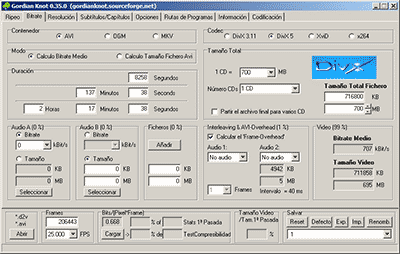
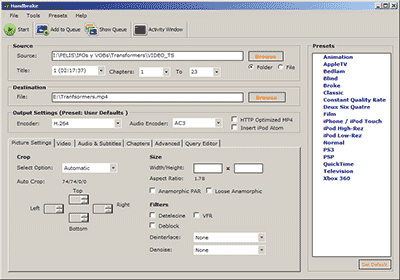
To carry out the test, you have to choose different “compression methods”, each of them to several different “qualities” and using one or several programs that allow to compress in this way.
Things have changed a lot since in 2000 I compressed my first movie in DivX 3.11 format. It took me a whole day looking for information on the Internet on how to do it and my computer at that time (an AMD K6 II of 400Mhz) took all night to compress it in only 650 MB. Since then I have been using all versions of DivX, from 3.11 to the current 6. But the Xvid codec sounds more and more and there are excellent comments from the newest H.264, so the question is on the table: what is The best way to compress to achieve sublime image quality? Well, for this you have to discover which is the best codec and use it at the optimal bitrate with the ideal encoder. But what about that “codec”, “bitrate” and “encoder”?

Codec, the type of compression

The “compression method” is what in the video world is called “codec”, which is the acronym for COmpresor-DECompresor, a program capable of compressing and decompressing the image in a certain way. It is something similar to what photography programs incorporate to allow them to read and write files in JPEG format, for example. The type of compression that incorporates the DVD is called MPEG-2 and is already considered somewhat old, being surpassed by the MPEG-4 standard, more modern and efficient.
The problem is that there are many types of MPEG-4 and it is not clear which one is the best.

On the one hand there is DivX (a variant of the MPEG-4 type called ASP; see official page), which is tremendously popular and more and more DVD lounge players admit it. The decompressor (necessary to watch the videos) is free, but the compressor (to generate them) is paid.

There is also Xvid, (which is the same type as DivX; official page) a competitor of DivX (its name is the same, but vice versa) although completely free.

codec

And finally, the very modern H.264, of the MPEG-4 AVC type, a prodigy of compression according to experts. Well, to find out which one is better, I have compared the generic MPEG-4 with these three contenders. There are several codecs to use this type of compression, but the most popular is the x264, mostly because it is free, which is what I used.

The versions that I have used for this comparison are the following: DivX Pro v6.8.2, Xvid v1.2 and x264 revision 808.

Bitrate, the amount of compression

Already with each of them, you can select the “quality” image, similar to how you choose the quality between 0 and 12 when saving a JPEG file from Photoshop. The difference is that in the world of video this is known as bitrate, which is nothing more than the bit stream per second of video, and is measured in bits per second and their multiples. Since video is a succession of frames formed of pixels (ultimately bits), this parameter measures the flow of information per second; at higher flow, higher quality and vice versa. In our case, I will use measures in “kbps” (“Kb / s” would also work), that is, kilobits per second (be careful, don’t confuse it with KB / s, which would be kiloBytes per second, an 8 times larger unit).
In order not to make the mistake of falling short, I have chosen 7 different bitrates, starting from an intermediate one. Taking the original DVD image, with a 720×304 pixel size frame