What is the best format. What is the best video format?


Free Download Mp4Gain
picture

What is the best format. What is the best video format?

Video Formats

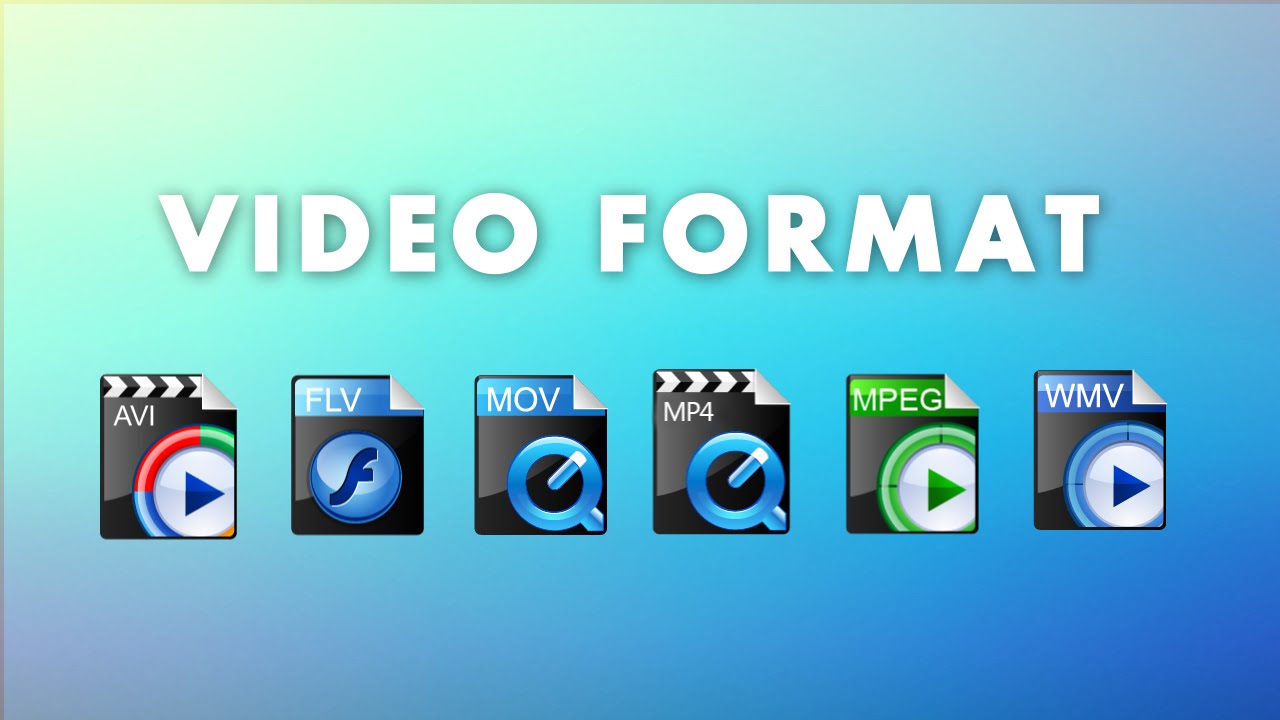
There are many different video file formats that allow you to store compressed video and audio information in a single file. Many people used to call the extension of the video file itself a video format, but in reality this extension is just a container in which videos of various formats can be stored. Some users may have faced such a situation that the downloaded video file with the familiar and familiar AVI extension did not want to play on the computer, because no suitable codec was found to play it.

Video File Formats

Generating audio compression
To clear up this fog, we are offering you an update for several destructive compressed audio formats. Obviously, with today’s internet speeds and phenomenal storage sizes, the above values ​​seem ridiculous. At the time, however, they had a real gamble: the main problem was being able to transfer and host these files with extremely slow storage capacity, bandwidth, or speeds. Thus the famous lossy compressed formats were born.

What is destructive sound compression?
Human auditory threshold. Fraunhofer Institute in Schmallenberg. However, the extension is associated with a codec, some of which even have the same name. Codecs have evolved over time, always with the aim of improving the perception of encoding quality and optimizing file weight.

Most of the video files distributed on the Internet are now created using the two most common containers, AVI and MKV. AVI container has been used for a long time and many different programs have been written to edit such video files, but with MKV things were quite different for a long time and users did not know how to cut an mkv file.

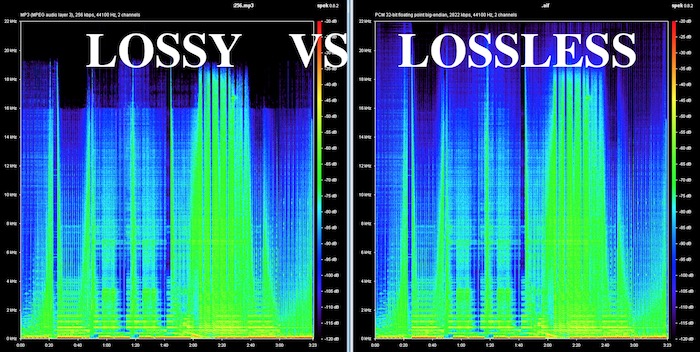
Consider another more appropriate sound analysis tool: the spectrogram. This measurement allows observing the evolution of energy as a function of frequency and time, thus highlighting certain defects created by destructive compression. Castanets, for example, a rich, accurate and fast percussion source, are particularly good at handling time-coding problems, particularly pre- and post-echo effects. But, unfortunately, the spectrogram also has its limits, not allowing to judge the full and complete transparency of the codec transparency.

The truth is that until now no measure has been able to fully define the transparency of a perceptual codec, and for good reason: everything is in the header. The final test remains, as the name suggests, a perception test.

To play or create each video format, an appropriate codec must be installed on your computer. The most popular codecs can be counted on one hand and we will consider some of their features below.

The XviD codec of the MPEG4 standard provides high definition images for dynamic scenes. It is distributed completely free of charge and is widely used by amateur video masters to encode any video.

Obviously, the different bit rates available have a direct impact on the quality and respect of the original audio file. Don’t confuse data compression with dynamic compression. Be careful, the term “compression” does not always mean to compress audio data. In fact, compression can also refer to the dynamics of the signal, such as reducing the gap between the loudest and weakest sounds, for example for music, movies, television or radio, for example, normally due to compression. of the dynamics of the pubs broadcast on television between films. , they are perceived much louder, while the listening volume does not change, since the difference between radio stations and music tracks.

DivX remains one of the most popular codecs and is compatible with all DVD players. By encoding, you get high-quality video with a high level of data compression, allowing you to get small video files. At the moment, the DivX codec pays for when used for encoding.


Free Download Mp4Gain
picture


Mp4Gain Main Window
picture


Mp4Gain Features
picture


Free Download Mp4Gain
picture

What is video format and which one is better?

What is video format and which one is better?

Video format

Digital video is increasingly included in our lives, and if a few years ago users were limited to watching movies and videos on the Internet, now these same users create video content themselves, and in quantities that not even film studios Hollywood could dream. Private video clips have filled the social networks Vkontakte, Facebook and now Instagram, YouTube video hosting is packed with newly created video channels and gigabytes of video uploaded to them.

Video Format |

Thanks to modern devices and software, working with video has become as easy as possible: editing, pasting, layering sound, as well as converting from one format to another, all of this is now done literally in a few clicks and does not require the user has extensive knowledge of the technical part of the process itself. … Maybe yes, which requires a little excursion, then these are video formats like MP4, AVI, WMV, MOV, as well as MKV (M2TS). Next, we will talk about what a video format is and take a closer look at each of them.

What is the video format?
The video format is the structure of the video data, how it is stored on the memory card, and with which video codecs it is encrypted. Depending on the format: MP4, AVI, etc., the structure of video files may differ significantly from each other. The structure is a container for the separate storage of audio, video, and text data, as well as service metadata. Some video formats, in their structure, can store several audio or video tracks, with different quality and sound. When watching, using a video player, the user can select one or another track to play (for example, in Russian or English).

video file structure

All data, both audio and video, is encoded with special audiovisual codecs, for example AAC and H.264. Depending on the quality of the sound and video, the size of the file, as well as the resource requirements of the device on which the file is played, may change.

Let’s look at various video formats and find out which video format is better, for this we will compare video formats on three parameters: quality, processing (playback) speed, and video file size. Also, before proceeding to the comparison, it is worth noting that you can always convert videos from one format to another using Movavi Video Converter.

All video formats
AVI
The oldest presented format is a Microsoft development, supports multi-stream audio and video, can contain data encoded by various video codecs. The main advantage is video playback on low-power devices, achieved due to the low compression ratio, from which the second advantage arises – good quality. But the size of the video file leaves a lot to be desired.

Video processing speed: 8 points (high);
Video file size: 1 point (low score);
Video quality: 8 points (good).
Overall score of 17 points.

MP4
It stands for MPEG-4 Part 14 and it is one of the most common formats. Today it is difficult to find a video device or video application that does not support this format.

Video processing speed: 6 points (average);
Video file size: 6 points (average);
Video quality is 7 points (above average), while viewing it, you may notice “apostrophes”, changes in shadows and contrast.
Overall rating of 19 points.

WMV
Another Microsoft development, the format that replaced AVI at the time, is proprietary and used only in the Windows operating system, but it is also quite widespread. The main advantages are the small file size and high video quality, while this format is quite demanding on device resources due to the high degree of data compression.

Video processing speed: 2 points (average);
Video file size: 8 points (average);
Video quality is 8 points (above average), during viewing, you may notice “apostrophes”, changes in shadows and contrast.
The total score is 18 points.

conclusion
We found out what video formats are, what they are and what they consist of, and we also examined some of them, comparing them in more detail based on three main criteria. In the benchmarks, the title of the best video format to date is MP4, with an overall rating of 19 points. Acceptable video processing speed, good quality and average video file size. Obviously, it is thanks to these qualities that this format has gained such popularity among users. So if you have AVI video that takes up a lot of hard drive space.

How sound is stored on a computer

How sound is stored on a computer

Digital Audio

Today there are about three dozen common digital audio formats. Why you need to create so many types of sound files to store one type of content and how to manage all this, you will learn from this material.

digital audio

Introduction
Surely many users prefer to use their home computer not only as a workhorse, but also as a multimedia center, where they can watch movies or family photos, as well as listen to their favorite music. Although compact digital players or mobile phones are certainly more suitable for listening to musical compositions, but unlike them, a computer can not only play music.

No matter how big the built-in memory of your music player is, it will most likely be difficult to store your entire music library on it. Additionally, using a PC, you can create, edit, organize, and search for music. Also, don’t forget that there are around three dozen common digital audio formats today, and most players are far from omnivorous and can only play a few of them.

So why do you need to create so many music formats to store one type of content? The point is that in the vast majority of cases the sound is stored in a “compressed” form, since one minute of uncompressed composition occupies about 10 MB on the hard disk. On the one hand, this seems not to be much, but on the other, if you are a music lover and your collection consists of several hundred or even thousands of songs, then it is clear that the sound must be compressed to reduce the space it occupies in electronic media.

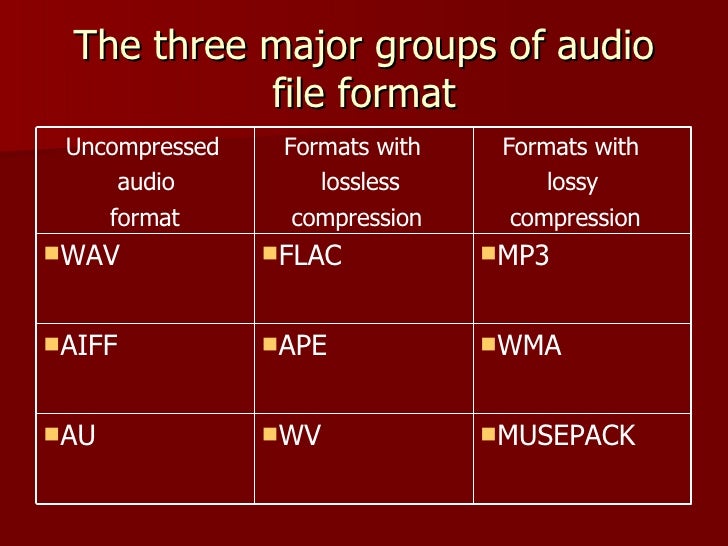
Various special algorithms are used to compress music files, which subsequently determine the structure and presentation of the audio data, or so-called digital audio file formats. All audio formats can be divided into three groups: uncompressed audio formats, lossless compression, and lossy compression.

No compression
One of the most widespread formats related to this type is the well-known WAV. The sound of files with this extension is stored without compression or changes. It is true that much more space is required to store uncompressed files and therefore WAV is more widely used only in professional audio and video applications, where the sound should not have a loss of quality before processing. Storing ordinary musical compositions in this form is an unwarranted waste.

To play WAV files, you do not need any special software, as all media players understand this format, including the standard Windows Media audio player built into the Windows system.

Another format used to store uncompressed audio that is worth mentioning is Apple’s development called AIFF (Audio Interchange File Format). As you may have guessed, it is most commonly used on Macintosh computers running Mac OS X.

Lossless compression (lossless)
Lossless compression algorithms for audio files work on the principle of conventional file cabinets. They do not provide the highest level of compression (40 to 60%), while they have virtually no effect on sound quality. It is also worth noting that in this case, the encrypted data can be fully restored to its original form. Therefore, the use of lossless compression is most often used in cases where it is important to preserve the identity of the compressed data with respect to the original.

The most popular audio formats in this group are FLAC (Free Lossless Audio Codec), APE (Monkey’s Audio), WMA (Windows Media Lossless), and ALAC (Apple Lossless Audio Codec). Each has its own pros and cons. For example, the APE codec offers slightly better compression gains, while FLAC is more common. In general, all true music lovers store their music collections in lossless formats, since they do not remove any data from the audio stream and files created with these codecs can be listened to even on high-quality stereos.

To play lossless compressed formats, as a rule, third-party players (except WMA) are used, such as MPlayer, foobar, AIMP, Winamp, VLC and others, since all the necessary codecs are already built into them. Another option is to separately install an additional codec pack (for example, K-Lite), after which you can listen to files in lossless format from almost any audio player.

Lossy compression
This is the most popular group of algorithms that provides the maximum audio compression ratio (up to 10 times or more). However, the audio file loses quality.

About audio formats

About audio formats

audio formats

Installations
Installation first. There is no perfect format. Different types of audio require different approaches.

Audio Formats

Second installation. It is impossible to do something good with poor quality.

Third installation. There are three approaches to comparing quality: the discriminating edge (heavyweights), the comforting edge (consumer audio), and the intelligibility edge.

Fourth installation. Disputes in a weight category are useless and are called “holivars”. The arguments in different weight classes are meaningless: “heavy is heavier than light” and “light is lighter than heavy.” Disputes (especially between heavyweights) can only take place with the support of the “blind method”.

A brief introduction
Bit rate is one of the most important metrics for measuring digital audio recordings. It is measured in kilobits per second (for short: kbps, just kilobits, kbps, kbps, kbps, etc.).

On the fingers: answer the question “how much memory occupies a second of audio”.

All kinds of transformations are already underway: there are eight bits in a byte, 1024 bits in a kilobit, 60 seconds in a minute, 60 minutes in an hour, and we arrive at the following empirical data:

bit rate 1400 = 1 hour takes 615 megabytes on disk
320 bitrate = 1 hour takes 141 megabytes on disk
bit rate 192 = 1 hour takes 84 megabytes on disk
bit rate 24 = 1 hour takes 11 megabytes on disk
Naturally, we all want to use disk space sparingly. This is where the format war begins. 11 MB is sixty times cheaper than 615 MB. Megabytes is the cost of storing audio recordings.

The price of storage can also be expressed in bills, dividing the cost of the disk by its capacity. For an archive of audio recordings, the storage price is far from being as critical as for an archive of video recordings.

Furthermore, the storage price can be conditionally expressed in man-hours, if the playback device has a much smaller capacity than your general archive of audio recordings. It takes time to regularly download new tracks to the device.

The storage price can also be expressed in square meters of work area. 500 audio CDs will take up a lot of space and require furniture solutions, but a small external hard drive fits in your pocket.

If there is a different price, then the question of quality arises: then we assume that the lowest bitrate has the lowest quality. So we come to the main question: where is the limit of reason, where is the ideal “price / quality” ratio.

The most approximate division of audio formats in descending order of average bitrate:

uncompressed audio
lossless compression
lossy compression

Uncompressed audio is the pure signal without conversion, “as is”, the equivalent of WAV or audio CD. Classic parameters: 1411 kbps, 44100 kHz sample rate, 16-bit audio.

Codec is an abbreviation of the words (KO der and DEC oder). An encoder is a program that packages a pure audio signal in the desired special format. A decoder is a program that converts a special format into a pure audio signal. In modern English, the two terms were transformed a bit: below code and below code, which corresponds to the direct Russian counterparts for coding and racing coding. And do not confuse encryption and encryption: these are two very different processes, although externally there is a lot of similarity.

For an ordinary person, only a player that can work with this format is required (that is, it has a decoder). The “encoder” itself is only required to “create” such files.

Lossless compression – Typically used for collectible audio material. It is generally believed that this format can be converted exactly to Audio CD.

Better is this compression:

Save disk space by about half
The file format assumes the storage of additional information (artist, album, track number, track name, etc.)
The compression formats themselves differ:

format openness and compression algorithms
player support
overhead encoding, decoding costs
compression ratio
The overhead costs are negligible for the average person and the compression ratio of the codecs differs slightly. Main actors: FLAC, APE, WAVPACK, ALAC.

Lossy Compression – Provides a much higher compression ratio by discarding unimportant audio details. The smaller the size of the file we are trying to compress, the more details we will need to discard. In addition to the disappearing details, technical artifacts also appear.

Wav compression. How Audio Compression Works

Wav compression. How Audio Compression Works

WAV

Wav is one of the containers for recording an audio stream. As a general rule of thumb, uncompressed audio is recorded in wav format, which makes the file size quite large. To reduce the size, you can convert the audio to a format with a higher degree of compression or, leaving the audio in the wav container, compress it with a codec.

WAV

Many people who work with sound have probably faced the problem of the large (just huge) size of audio files in WAV format. In fact, files of this type, while comfortable to use, are quite cumbersome in terms of size.

How to reduce wav size
The easiest way to reduce the size of a WAV file without losing quality is to simply convert it to another audio format with the same bit rate. Let’s say it could be the most popular MP3 audio format. The fact is that it is not difficult to work with these files in sound editors, since any semi-professional or professional audio editor opens MP3 files in wave form. Therefore, editing comes down to exactly the same work as with WAV files.

On the other hand, the world has adopted an unspoken standard for music files that are present on many servers. This is 16-bit audio at 44100 Hz, 128 kbps. So if you have a file recorded at a bit rate of say 320 kbps, 48000 Hz, you can simply change the bit rate. For non-professionals, the loss of quality when changing the sample rate will not particularly affect. Also, to listen to music, say, on a mobile device. Almost any audio editor allows this type of operation. These operations are provided even at the very beginning of the program and are done with just a couple of clicks on the necessary menu items. Also, if you are very afraid of losing quality, you can take advantage of the additional features after changing the bit rate or sample rate. It can be various types of filters, for example, equalizers or sound normalization. All of this will help bring the sound to its proper shape.

However, if you work with sound professionally or are used to good sound, there is no need to change the bit rate and sample rate. Here it is worth using the first method described above, which, in itself, is the most acceptable.

And finally, to reduce the size of such an audio file, you can simply use different codecs to get the same WAV file as the output, but only with a higher degree of compression. You can convert the WAV PCM format to, say, AC-3 ACM format, which will immediately reduce the size. There are quite a few programs for this type of action. And you don’t need to use an audio editor. You can use, for example, Total Audio Converter. Reducing the size will not require too much time and effort. All you have to do is select the desired filter, bit rate, and sample rate. That’s it.

Today, the amount of information we consume on the net has grown thousands of times compared to the early 2000s. And it is not surprising, because before, in addition to the much less widespread Internet coverage, the sites and services to which that we were used to looked completely different.

Every day we read articles and news that this or that company has developed a new connection standard that surpasses current analogues in terms of data transfer speed. For nearly two decades, the vendors and manufacturers of many devices have taken a big step toward high-speed Internet access. But our instant access to websites isn’t the only one with just speeds.

The development of algorithms to compress image, audio and video files played a very important role in saving our time. Walking through the vastness of the network, we often do not even think about how and what is organized, how much effort was put into developing a particular technology. In a new series of articles, we’ll cover compression techniques for popular formats like MP3 and JPEG, and we’ll take a basic look at the video encoding process.

OGG, all about ogg

OGG, all about ogg

OGG

How many MP3 files do you have on your hard drive? 100, 500, 1000? No wonder even 15,000! We all love music and we are probably all familiar with MP3. The good old format, time tested … But the light did not converge on MP3, right? It was developed as one of the first of its kind, which gave it a huge boost in popularity. Could the developers have taken into account all the nuances of lossy music encoding? Could you imagine all the options to use this format to make it the most versatile? Of course, no!

OGG

Throughout the existence of the format, there were many applicants for its replacement. But in fact, the benefits have not always been tangible enough to make the transition to new formats. But then Ogg Vorbis appeared …

Ogg Vorbis
A new breath of compressed digital audio
Ogg Vorbis is a relatively new universal audio compression format that was officially released in the summer of 2002. It belongs to the same type of format as MP3, AAC, VQF and WMA, that is, lossy compression formats. The psychoacoustic model used in Ogg Vorbis is similar in principle to MP3 and similar ones, but only that the mathematical processing and practical implementation of this model are fundamentally different, allowing the authors to declare its format completely independent of all predecessors.

The main undeniable advantage of the Ogg Vorbis format is its total openness and freedom. In addition, it uses the latest and highest quality psychoacoustic model, so the bitrate / quality ratio is significantly lower than other formats. As a result, the sound quality is better, but the file size is smaller.

The format has many advantages. For example, the Ogg Vorbis format does not restrict the user to only two channels of audio (stereo: left and right). Supports up to 225 individual channels at sample rates up to 192 kHz and up to 32 bits (which no lossy compression format does), making Ogg Vorbis ideal for encoding 6-channel DVD-Audio. Additionally, the OGG Vorbis format has sample accuracy. This ensures that the audio data before encoding and after decoding will not have offsets or extra / missing samples to each other. This is easy to appreciate when you are encoding music endlessly (where one track gradually fades into another); in the end, the integrity of the sound will be preserved.

Streaming capacity is nowhere to be found, but this format has built it from the ground up. This gives the format a rather useful side effect: multiple songs can be stored in one file with their own tags. When loading such a file into the player, all songs should be displayed as having been loaded from several different files.

We should also mention a fairly flexible labeling system. The tag header can easily be expanded to include lyrics of any length and complexity (eg song lyrics) interspersed with images (eg album cover photo). Text labels are stored in UTF-8, allowing you to type in all languages ​​at the same time and eliminating potential problems with encodings. This is much more convenient than various tricks like id3 tags.

Ogg Vorbis uses a variable bitrate by default, while the latter is not limited to hard values ​​and can vary even by 1 kbps. It should be noted that the format does not strictly limit the maximum bit rate and with the maximum encoding setting it can range from 400 kbps to 700 kbps. The sample rate has the same flexibility: users can choose between 2000 Hz and 192000 Hz.

Ogg Vorbis was developed by the Xiphophorus community to replace all paid proprietary audio formats. Even though this is the youngest format of all MP3 competitors, Ogg Vorbis has full support on all known platforms (Windows, PocketPC, Symbian, DOS, Linux, MacOS, FreeBSD, BeOS, etc.), as well as a large number of hardware implementations. … The current popularity far exceeds all alternative solutions.

It is worth noting that Ogg Vorbis is only a small part of the Ogg Squish multimedia project, which also includes free encoders: Speex – for voice compression; FLAC: for lossless audio compression; Theora: for video compression.

What are the advantages of the lossless audio format?

What are the advantages of the lossless audio format?

Lossless and Lossy Audio Files

The advantage of lossless for storing an audio collection is that the quality of the recordings is much higher than that of lossy codecs and they take up less space than uncompressed audio. It is true that lossy files are smaller than lossless music files. Most modern playback programs understand the lossless format. Programs that cannot play it can easily learn it using the lossless plugin. What are lossless audio formats?

Lossless audio

Lossless audio formats
A true music lover is unlikely to be satisfied with the sound of music recorded in Ogg Vorbis or MP3 compression formats. Of course, if you listen to audio recordings on home audio equipment, sound defects cannot be heard with your ear, but if you try to play a compressed file on high-quality Hi-Fi equipment, you will immediately find the sound defects. . Of course, creating a collection of quality music on CD or vinyl is not easy. There is a reasonable alternative to this path for lovers of high-quality sound – lossless music. It can be stored on a PC in a way that allows you to keep your music’s original settings unchanged, even if compression is applied. In this way it simultaneously solves the problems of high-quality music and its compact storage, since audio equipment for listening (headphones, speakers, amplifiers) is quite affordable.

Uncompressed lossless audio formats:

CDDA is an audio CD standard;
WAV: Microsoft Wave;
IFF-8SVX;
IFF-16SV;
AIFF;
Compressed formats:

FLAC;
APE – Monkey’s Audio;
M4A – Apple Lossless – Apple’s high-quality music format;
WV – WavPack;
WMA: Windows Media Audio 9;
TTA – True Audio.

FLAC format
The most common format is the. It differs from lossy audio codecs in that no data is removed from the audio stream when it is used. This makes it possible to use it successfully to play music on Hi-Fi and Hi-End equipment, as well as to create an archive from a collection of audio recordings.

The great advantage of the format is its free distribution. This is important for musicians who record music on their own. The format has gained a lot of popularity recently, thanks to which its support is included in the vast majority of multimedia players.

APE format
Unlike FLAC, for the APE format there are only codecs and plugins for the Windows platform. For other platforms, there are expensive third-party software solutions. The algorithm is capable of achieving lossless compression of audio information between 1.5 and 2 times. It includes three main stages of encoding, of which only one is based on the use of inherent properties of sound for compression. The rest are similar to conventional filing cabinets. Even though the compression algorithm is distributed free of charge, the licensing restrictions are such that it is practically inaccessible to amateur musicians.

Apple Lossless Format
You can listen to high-quality lossless music using the audio compression codec without sacrificing Apple quality. This format was developed by Apple for use on its own devices. The format is compatible with iPods with special dock connectors and the latest firmware. The format does not use specific rights management (DRM) tools, but the container format contains such capabilities. It also supports QuickTime and is included as a feature in iTunes.

The format is part of the free access libraries, which allows you to organize listening to files in Windows applications. In 2011, Apple released the source codes for the format, opening up broad prospects for the codec. In the future, it can seriously compete with other formats. The tests yielded good results. Compressed files vary in size between 40-60% of the originals. The decoding speed is also impressive, which justifies its use for mobile devices, whose performance is not high.

One of the disadvantages of the codec is that the extension of the audio files matches the audio codec, leading to confusion because AAC is not a high-quality music format. Therefore, it was decided to store the data in an MP4 container with the extension .m4a.

ABOUT DIGITAL AUDIO FORMATS

ABOUT DIGITAL AUDIO FORMATS

Digital Audio Formats

Today, there are several digital audio formats that are superior in quality to compact discs and are available on both physical media and the Internet. What are advanced sound lovers listening to now? Let’s find out.

Digital Audio Formats

The capabilities and quality of the CD-DA format were initially limited by the capabilities of CD as a medium. Legend has it that the standard 74-minute compact disc capacity was chosen in order to be able to record long classical pieces without splitting into two discs. And to be absolutely precise, this figure appeared thanks to Beethoven’s Ninth Symphony: it lasts exactly 74 minutes. Another default parameter was the 44.1 kHz sample rate. This figure defines the upper limit of the reproduced frequency range. For a CD that had to reproduce frequencies up to 20 kHz, this was the lowest possible carrier frequency. As a result, the only field of maneuver was the bit depth, the level of which was 16 bits. With regard to sound recording, bit depth determines its dynamic range and resolution.

The CD cannot be copied into the memory of the computer in the usual way, since we usually copy files. To save a CD-DA, you need a special program, a program that allows you to convert data recorded on an audio disc to PCM format (WAV file). A properly organized CD-DA ripping process allows you to get a completely identical digital copy on your hard drive. Audio CDs are generally saved on a computer as a large FLAC audio file (also WAV, WV, or APE) with a CUE index card or as separate tracks.

As the best digital audio format, the CD did not last that long, just over ten years. In the mid-nineties, the first format appeared that allows for better sound quality. HDCD was an improved version of CD-DA. Their difference consisted in a special recording algorithm that made it possible to save additional data on the sampling depth in a standard CD format. With an HDCD decoder, the output signal received not 16, but 20 bits, which did not give the standard of 96, but up to 120 dB of dynamic range and a very noticeable increase in recording resolution. At the same time, devices without an HDCD decoder played discs like normal CD-DAs. Interestingly, when saving such a disk on a PC in the same way,

The next leap in terms of sound quality came at the beginning of the new millennium. Two HD audio formats were introduced to the audiophile audience at once, appearing almost simultaneously. DVD-Audio, a further development of the traditional recording method and promoted by Panasonic and Toshiba. It is capable of recording 24-bit / 192 kHz in stereo mode and 24-bit / 96 kHz in multi-channel mode.

The SACD format competed with it, which, by the way, looked much less like a normal CD, although it was called “super CD”. Super Audio CD, developed by Sony, was based on the revolutionary DSD encoding algorithm. This digitizing method assumed one-bit sampling at an ultra-high frequency of 2.8224 MHz. The encoding and decoding principles of a DSD stream are much simpler than in high-bit formats and are essentially closer to the principles of analog technology. At the same time, the SACD format retains all the advantages of the advanced digital format and has output characteristics comparable to DVD-Audio in both sound quality and number of channels.

Both DVD-Audio and SACD were designed with a high level of copy protection, but inquisitive minds have already won over both formats, so if desired, the content of both disc types can be saved to a PC as images. ISO (without changing the structure and original codec) or FLAC tracks in 24-bit / 96 kHz or 24-bit / 192 kHz. Almost simultaneously with the DVD-Audio and SACD formats, another original format for publishing high-quality music was born: DAD 24/96. DAD stands for Digital Audio Disk, but it is essentially a DVD-Video with a high-quality still image and sound that can be played on any standard DVD player or PC.

Obviously, with this approach, Blu-ray media, with its HD sound formats, recorded in high quality without compression, is quite applicable for recording music in high quality. However, at the moment there are few such publications, and a special version of the BD-Audio format has every chance of not seeing the light of day, as the sale of high-quality audio material is already very active on the Internet. Anyone who does not want to convert DVD-Audio, DAD and SACD discs to the FLAC format on their own can officially buy albums already converted in 24-bit / 96 kHz or 24-bit / 192 kHz quality.

What is the best quality music format?

What is the best quality music format?

Best audio file format

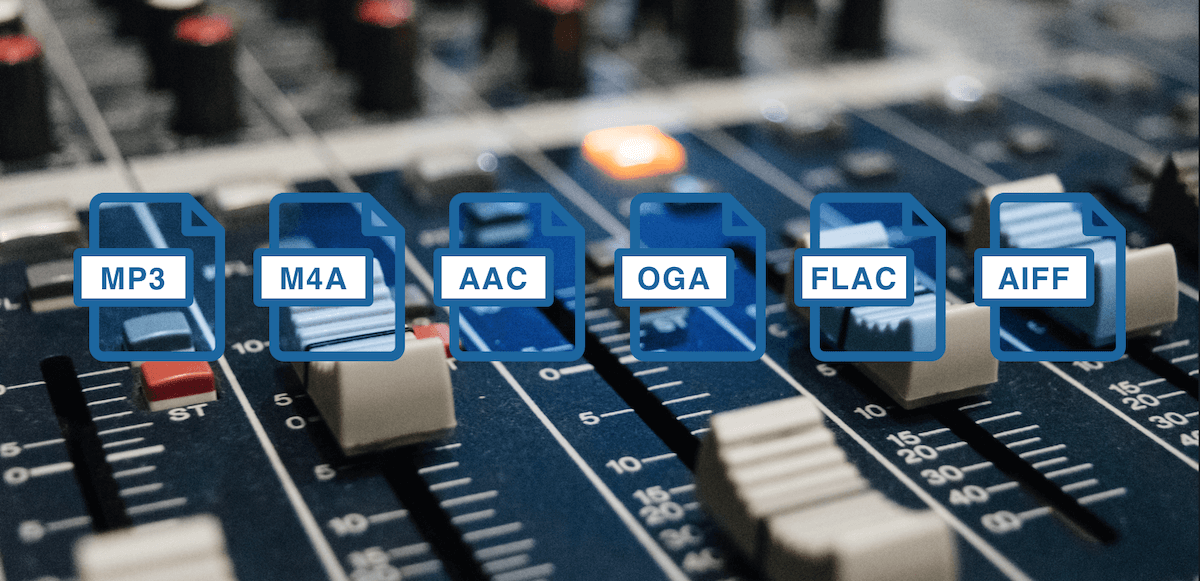
There are many different audio formats. The most widely used formats are MP3 (MPEG-2 Audio Layer III) and WAV. The type of format is usually determined by the file extension (what comes after the period in the file name .mp3, .wav, .ogg, .wma)

Best Audio Format

A codec is a specific algorithm for encoding and compressing data in an audio format. For some file types, the codec is uniquely defined. For example, the mp3 format always uses the MPEG Layer-3 codec, while the mp4 format can use different codecs.

Often the concepts of codec and format are used in the same sense. Especially when the format always uses the same codec. But sometimes it is important to distinguish between the concepts of formats and codecs. For convenience, the format can be considered to be a kind of container in which an audio or video signal can be recorded using a specific codec.

Some formats, like mp4 or flv, can contain audio and video streams.

If you don’t know which program to open a particular audio format, we recommend that you use our audio converter. Supports almost all formats.

Codecs are divided into two types, depending on the type of compression:

Lossless sound quality

This group of formats records and encodes audio in such a way that by decoding it it can be accurately restored.

The most popular lossless encoding formats are:

FLAC (Free Lossless Audio Codec)
APE (mono audio)
ALAC (Apple Lossless Audio Codec)
Loss of sound quality (lossy)

Lossy compression modifies the sound. For example, frequencies inaudible to the human ear are eliminated. The decoded file will differ from the original in terms of the information recorded on it, but it will sound almost the same.

Popular lossy formats:

Learn more about popular audio formats
WAV is one of the first audio formats. Typically used to store uncompressed audio (PCM) recordings that are identical in sound quality to CD (audio-CD) recordings. On average, a minute of sound in wav format takes about 10 megabytes. Often an audio CD is ripped and then converted to mp3 using an audio converter.

MP3 (MPEG Layer-3) is the most widely used audio format in the world. MP3, like many other lossy formats, truncates audio that the human ear cannot hear, thus reducing file size. At the moment, mp3 is not the best format in terms of the relationship between file size and sound quality, but due to its prevalence and compatibility with most devices, many people store their records in it.

WMA (Windows Media Audio) is a proprietary format of Microsoft. Initially, this format was presented as a substitute for MP3, which according to Microsoft has higher compression characteristics. But this fact has been questioned by some independent tests. The WMA format also supports DRM data protection.

OGG is an open format that supports encoding of audio with various codecs. The most widely used codec in ogg is Vorbis. In terms of compression quality, the format is comparable to MP3, but less common in terms of media player and audio player support.

AAC is a proprietary audio format that has more capabilities (number of channels, sample rates) compared to mp3 and offers slightly better sound, with the same file size. At the moment, aac is one of the highest quality lossy audio encoding algorithms. The format is compatible with most devices. A file of this format can have the extensions aac, mp4, m4a, m4b, m4p, m4r.

FLAC is a popular lossless compression format. It does not change the audio stream and the sound encoded with it is identical to the original. It is often used for listening to sound in high-end sound systems. It has limited support for devices and players, so generally for listening to flac on the player, it is pre-converted.

Why is WAV not as popular as MP3 or FLAC?

Why is WAV not as popular as MP3 or FLAC?

WAV vs. MP3

WAVE or WAV is a short form of Wave Audio File Format (less commonly known as Audio for Windows). This format is the standard for storing audio streams on a PC. It is the domain of the RIFF format for storing audio in “strings”, very similar to the 8SVX and AIFF formats used by the Amiga and Macintosh computers respectively. It is also the main format on Windows systems for storing normal uncompressed audio. Typically this is done by linear pulse code modulation.

WAV vs MP3

Both WAV and AIFF are compatible with Windows, Macintosh or Linux operating systems. The format also takes into account some of the differences in Intel processors, such as endian byte order. The RIFF format acts as a wrapper for various audio compression codecs.

Although a WAV file can contain compressed audio, its most common use is to store uncompressed audio in linear PCM format. The standard audio CD format, for example, is LPCM audio, with 2 channels, 44-100 Hz sample rate, and 16 bits per sample. Since the LPCM format stores uncompressed audio that is exactly the same as the original, it allows professional users and audio experts to use it for maximum audio quality. The WAV audio file can also be modified in almost any audio editor. The Wav format works with compressed audio on Windows systems through the Audio Compression Manager (ACM). Any ACM codec can be used to compress a WAV file. The ACM user interface can be accessed through a variety of programs, including the standard audio recording program on some versions of Windows.

Starting with Windows 2000, the WAVE_FORMAT_EXTENSIBLE header appeared, which allowed storing multichannel audio data, taking into account the location of the speakers, eliminating ambiguities in terms of sample types and container sizes in the standard WAV format. It also supported arbitrary extensions for the snippet format.

There are also many inconsistencies in the WAV format: for example, 8-bit data is unsigned, while 16-bit data is signed.

WAV files can contain embedded IFF “lists”, which can contain multiple sub-changes.

Metadata
Derived from the Resource Interchange File Format (RIFF), WAV files can have metadata (tags) in an INFO chunk. Additionally, Extensible Metadata Platform (XMP) metadata can be embedded in WAV files.

Popularity
WAV files are large enough that this format is cumbersome to share over the Internet, and this greatly undermines its popularity. However, this format, as a general rule, is most often used to preserve the original appearance of high-quality files in cases where the amount of free disk space is not limited. It is also used in audio editing programs to save time when compressing and decompressing data.

More often, data is compressed using lossy formats such as Ogg Vorbis, MP3, ATRAC, AAC, Musepack, and WMA, which are used to store and share music (for example, between Internet users). The small file size and the ability to download them quickly are also a significant advantage, while this audio data takes up much less space. But lossy formats sacrifice quality for size, so their algorithms don’t preserve the original sound quality in every detail. But there are also lossless codecs like FLAC, Shorten, Monkey’s Audio, ATRAC Advanced Lossless, Apple Lossless, WMA Lossless, TTA, WavPack, but none of these codecs can be called generally accepted.