Demystifying the OGG Audio Format

Demystifying the OGG Audio Format

Demystifying the OGG Audio Format

OGG is a free, open-source audio format that was created by the Xiph.Org Foundation. It is a popular choice for streaming and downloading music because it offers good audio quality and smaller file sizes than other formats, such as MP3.

Here are some of the key features of OGG:

  • Open-source: OGG is an open-source format, which means that it is free to use and distribute. This makes it a popular choice for developers who want to create their own music players or other software that can play OGG files.
  • Small file sizes: OGG files are typically smaller than MP3 files of the same quality. This makes them a good choice for streaming or downloading music over the internet, or for storing music on devices with limited storage space.
  • Good audio quality: OGG files offer good audio quality, comparable to MP3 files. This is because OGG uses a lossy compression algorithm that is designed to remove data from the audio file without significantly affecting the quality.

Here are some of the most common questions that people ask about OGG:

1. What is the difference between OGG and MP3?

OGG and MP3 are both lossy audio formats, which means that they use compression to reduce the size of the audio file. However, OGG uses a different compression algorithm than MP3. This means that OGG files are typically smaller than MP3 files of the same quality.

2. What software can I use to play OGG files?

There are many different software programs that can play OGG files. Some popular options include VLC Media Player, Winamp, and Audacity.

3. Where can I find OGG files?

There are many different websites where you can find OGG files. Some popular options include Jamendo, Free Music Archive, and Magnatune.

4. Is OGG a good choice for music streaming?

Yes, OGG is a good choice for music streaming. It offers good audio quality and smaller file sizes than other formats, such as MP3. This makes it a good choice for listening to music online or on mobile devices.

5. Is OGG a good choice for music downloads?

Yes, OGG is a good choice for music downloads. It offers good audio quality and smaller file sizes than other formats, such as MP3. This makes it a good choice for storing music on devices with limited storage space.

Overall, OGG is a good choice for anyone who wants to listen to music with good audio quality and smaller file sizes. It is an open-source format that is free to use and distribute, and it is supported by a wide range of software.

Ogg: Is it a Lossless Format?

Ogg: Is it a Lossless Format?

Ogg: Is it a Lossless Format?


“You can’t build a reputation on what you are going to do.” – Henry Ford

Ogg is a popular audio format that is often used for storing and streaming audio files. But is Ogg a lossless format? This is a question that has puzzled many audio enthusiasts and professionals alike. In this article, we will explore this topic in more detail and answer this question once and for all.

What is a Lossless Audio Format?

“Music is the divine way to tell beautiful, poetic things to the heart.” – Pablo Casals

Before we dive into whether Ogg is a lossless format or not, let’s first define what a lossless audio format is. A lossless audio format is a type of audio compression that preserves all of the original data of the audio file. This means that when you compress an audio file into a lossless format, you are not sacrificing any audio quality. Lossless audio formats are often preferred by audio professionals because they allow for high-quality audio recordings that maintain the fidelity of the original recording.

Is Ogg a Lossless Format?

“The only way to do great work is to love what you do.” – Steve Jobs

The short answer to this question is no, Ogg is not a lossless format. Ogg is a lossy audio format, which means that it compresses audio files by discarding some of the audio data. When you convert an audio file to Ogg format, some of the audio data is lost in the compression process, which results in a lower quality audio file.

While Ogg is not a lossless format, it still has many benefits. Ogg files are much smaller in size than lossless formats, which makes them easier to store and share. They are also supported by many different media players, making them a popular choice for streaming audio files.

Should You Use Ogg?

“Music is the strongest form of magic.” – Marilyn Manson

Whether or not you should use Ogg depends on your specific needs and preferences. If you are an audio professional who needs the highest quality audio recordings, then a lossless audio format is probably the best option for you. However, if you are just looking to share and stream audio files, then Ogg may be a good choice for you.

Ultimately, the choice of audio format comes down to personal preference and the specific use case. While Ogg may not be a lossless format, it still offers many benefits and is a popular choice for many people.

Final Words

“Without music, life would be a mistake.” – Friedrich Nietzsche

In conclusion, Ogg is not a lossless format. While lossless audio formats are preferred by audio professionals for their high fidelity, Ogg still offers many benefits such as smaller file sizes and wide support in media players. Whether or not you choose to use Ogg depends on your specific needs and preferences. But regardless of the format you choose, music is an important part of our lives and brings us joy and inspiration every day.

The Benefits of OGG: High-Quality Audio in a Compact Format

The Benefits of OGG: High-Quality Audio in a Compact Format

The Benefits of OGG
The Benefits of OGG

If you are looking for a high-quality audio format that is also compact and efficient, OGG may be the right choice for you. OGG is an open-source, free, and patent-free digital audio format that has been gaining popularity among audio enthusiasts and professionals. In this article, we will explore the benefits of OGG, its history, how it works, and its potential future.

The Benefits of OGG
The Benefits of OGG

History of OGG

OGG was first developed by Xiph.org Foundation in the late 1990s as an open-source and patent-free alternative to proprietary audio formats such as MP3. OGG is not only an audio format but also a container format that can store multiple audio and video streams in a single file. The name “OGG” is derived from “ogging,” which means “doing something forcefully,” and was chosen to reflect the format’s goal of challenging the established audio industry.

How OGG Works

OGG uses a lossy compression algorithm called Vorbis to reduce the size of audio files without sacrificing audio quality. Vorbis uses a technique called perceptual audio coding, which takes advantage of the human ear’s limited ability to detect certain sound frequencies and removes them from the audio stream. This allows the audio file to be compressed without losing much of its quality. The resulting audio files are smaller than uncompressed audio files but still retain most of the original audio quality.

Another advantage of OGG is its ability to support metadata, which is information about the audio file such as the artist, album, and genre. OGG uses a tagging system called Vorbis Comment, which allows users to add and modify metadata easily.

OGG vs Other Audio Formats

OGG has several advantages over other digital audio formats, such as MP3, AAC, and WAV.

OGG vs MP3

OGG uses a more advanced compression algorithm than MP3, which allows it to achieve better compression rates without sacrificing audio quality. OGG is also an open-source and patent-free format, while MP3 is proprietary and subject to licensing fees.

OGG vs AAC

OGG and AAC are both lossy audio formats, but OGG is an open-source and patent-free format, while AAC is proprietary and subject to licensing fees. OGG also offers better compression than AAC, which means smaller file sizes for the same audio quality.

OGG vs WAV

WAV is an uncompressed audio format that offers high audio quality but large file sizes. OGG, on the other hand, offers high audio quality and smaller file sizes. This makes OGG more suitable for digital audio distribution and storage.

The Future of OGG

OGG has been gaining popularity among audio enthusiasts and professionals, thanks to its high audio quality, compact size, and patent-free nature. OGG is also compatible with most media players and devices, making it a versatile audio format. As the demand for high-quality and efficient audio formats grows, OGG is likely to become even more popular in the future.

Conclusion

In conclusion, OGG is a high-quality and efficient digital audio format that offers several advantages over other formats. OGG is open-source, patent-free, and uses advanced compression techniques to achieve high-quality audio in a compact size. OGG is also versatile, compatible with most media players and devices, and supports metadata. As the demand for high-quality and efficient audio formats grows, OGG is likely to become an increasingly popular choice for audio enthusiasts and professionals.

OGG Vorbis: What is it and Why is it the Future of High-Quality Audio Streaming

OGG Vorbis: What is it and Why is it the Future of High-Quality Audio Streaming

OGG
OGG

Have you ever listened to a song and thought it sounded fuzzy or unclear? That’s because the audio format used to store the song may not be optimized for high-quality sound. That’s where OGG Vorbis comes in.

OGG
OGG

OGG Vorbis is a free and open-source audio format that was designed specifically to provide high-quality sound. It’s an alternative to other audio formats like MP3 or FLAC that have limitations when it comes to sound quality.

How OGG Vorbis Works

OGG Vorbis uses a type of compression called “vorbis compression” to store audio files in a smaller size while still maintaining their high-quality sound. This is different from other audio formats that use lossy compression, which can result in a decrease in sound quality.

When you listen to a song in OGG Vorbis format, you can hear the details and subtleties in the music that you might not be able to with other audio formats. It’s like the difference between seeing a painting in low resolution and seeing it in high resolution – you can see the details and nuances of the painting better in high resolution.

Why OGG Vorbis is the Future of Audio Streaming

OGG Vorbis is gaining popularity as a solution for high-quality audio streaming. With the rise of music and audio streaming services, there’s a growing demand for a format that can provide high-quality sound while also being easily accessible and compatible with a variety of devices. OGG Vorbis meets these requirements and is becoming the go-to choice for many audio streaming platforms.

Another advantage of OGG Vorbis is its open-source nature. This means that anyone can use it and develop it further, making it a constantly improving and evolving technology. This is in contrast to proprietary audio formats that are owned by a single company and can only be used with their permission.

How to Use OGG Vorbis

If you’re interested in using OGG Vorbis for your own audio projects or for streaming music and audio, the first step is to make sure your device is compatible with the format. Many modern devices, such as smartphones and laptops, already support OGG Vorbis playback. If your device doesn’t, you may need to download a compatible media player.

Once you have a compatible device, you can start using OGG Vorbis for your audio projects. You can easily convert existing audio files to the OGG Vorbis format using a variety of free and open-source software tools. And if you’re creating new audio files, you can record and save them in OGG Vorbis format for optimal sound quality.

In conclusion, OGG Vorbis is a great choice for those who want high-quality sound in their music and audio. Its free and open-source nature makes it accessible and constantly improving, and its compatibility with a variety of devices makes it easy to use. In order to have an optimized audio experience, consider using Mp4Gain for all your audio needs.

Normalize OGG loudness

Normalize OGG loudness

Normalize OGG

Long ago, it was possible to normalize the loudness level in mp3 files.

OGG normalize

This allowed them to be compressed (using much less space on the hard disk, which at that time hard disks had much less space available for storage and also, the speed to transfer files was very slow, so it was vital to have a highly compressed file ) and at the same time solve the problem of having very noticeable differences in loudness.

Over time, it allowed to have infinitely larger hard drives, of more than 1T, for example and also to have very fast download speeds … for which I no longer mean a need to count with such small files. Then other formats like flac, ogg, etc. appeared. that provide higher quality than the mp3.

But soon the issue of being able to normalize these files became a problem.

Normalize an OGG

Mp4Gain has managed to normalize the most well-known and popular formats, not just the mp3. Ogg, FLAC, etc. are some of these other formats that can already be normal, raised in mp4gain.

In addition to video files in formats such as avi, mp4, flv, mpeg, etc.

Mp4Gain is the perfect tool to improve the sound level by boosting the loudness of those audio or video files to the most optimal levels so that they sound their best.

It’s like having one of those expensive compressors that radio or television transmitters use, exciter wires and all that expensive and complicated equipment and here you can use it and buy it for just a few dollars and get the same result.

So normalizing the volume level of an ogg is so simple How to load the file and press a button and it is enough you can do the same by loading 50 or 100 or more files in batch mode to achieve that the program can normalize them in batch.

Head to Head Bet: OGG vs LAME

Head to Head Bet: OGG vs LAME

Ogg

You probably won’t surprise anyone with the sound capabilities of modern computers. Keeping a music library on a computer, along with audio cassettes and CDs, has become commonplace for many. Today, even schoolchildren know the magic password that unites many people, in one way or another connected to computers. This password consists of only three characters: “M” “P” “3”. Consider how many memories you have with them.

OGG

Many people know what audio CDs are in terms of simplicity and ease of use. “Why?” – you ask. Yes, because the CD, as they say, is “and in Africa” ​​the CD. If some characteristics of the reading are not taken into account, it is always and everywhere the same as it was created, that is, the same. It has the same rigidly defined format, and the sound quality is primarily dependent on the recording studio and is generally the best. Conveniently? I don’t argue!

What about the music on your computer? The PCM (Pulse Code Modulation) recording format used on CD-DA discs is not compact enough to store music on your computer, and completely unsuitable for sharing music over the Internet. Therefore, mathematically extremely complex algorithms for compressing audio data and its storage formats are constantly being developed and improved. These algorithms sometimes differ greatly from each other in sound quality. Many users are faced with a constant problem of choice: which program, with what algorithm and with what parameters to encode their favorite music?

Even though many different algorithms and formats have been created, only one of them is the absolute leader today. This is the MPEG 1.0 Audio Layer III compression format, popularly known as “MP3”. There are many encoding programs available to record music in this format. Each of these programs has its pros and cons; On the web you can find a large number of tests and comparisons of various MP3 encoders. The generally recognized leader today is LAME, a free open source project with no license restrictions.

We are used to thinking that MP3 is the best, MP3 is forever. However, it hasn’t been long since the prevailing audio compression format and encoder had a serious competitor: the all-new format and the Ogg Vorbis algorithm. After the beta 3 version of this encoder was released in late summer 2000, the public began to look closely at it and it became very difficult to choose the “best”. And at the beginning of 2001 two new versions were released at the same time: LAME 3.88 and Ogg Vorbis 1.0 Beta 4. Both versions differ significantly from the previous ones, so it is necessary to compare them, to make, so to speak, a “showdown” between both formats. That it was done. The result is in front of you.

OGG, all about ogg

OGG, all about ogg

OGG

How many MP3 files do you have on your hard drive? 100, 500, 1000? No wonder even 15,000! We all love music and we are probably all familiar with MP3. The good old format, time tested … But the light did not converge on MP3, right? It was developed as one of the first of its kind, which gave it a huge boost in popularity. Could the developers have taken into account all the nuances of lossy music encoding? Could you imagine all the options to use this format to make it the most versatile? Of course, no!

OGG

Throughout the existence of the format, there were many applicants for its replacement. But in fact, the benefits have not always been tangible enough to make the transition to new formats. But then Ogg Vorbis appeared …

Ogg Vorbis
A new breath of compressed digital audio
Ogg Vorbis is a relatively new universal audio compression format that was officially released in the summer of 2002. It belongs to the same type of format as MP3, AAC, VQF and WMA, that is, lossy compression formats. The psychoacoustic model used in Ogg Vorbis is similar in principle to MP3 and similar ones, but only that the mathematical processing and practical implementation of this model are fundamentally different, allowing the authors to declare its format completely independent of all predecessors.

The main undeniable advantage of the Ogg Vorbis format is its total openness and freedom. In addition, it uses the latest and highest quality psychoacoustic model, so the bitrate / quality ratio is significantly lower than other formats. As a result, the sound quality is better, but the file size is smaller.

The format has many advantages. For example, the Ogg Vorbis format does not restrict the user to only two channels of audio (stereo: left and right). Supports up to 225 individual channels at sample rates up to 192 kHz and up to 32 bits (which no lossy compression format does), making Ogg Vorbis ideal for encoding 6-channel DVD-Audio. Additionally, the OGG Vorbis format has sample accuracy. This ensures that the audio data before encoding and after decoding will not have offsets or extra / missing samples to each other. This is easy to appreciate when you are encoding music endlessly (where one track gradually fades into another); in the end, the integrity of the sound will be preserved.

Streaming capacity is nowhere to be found, but this format has built it from the ground up. This gives the format a rather useful side effect: multiple songs can be stored in one file with their own tags. When loading such a file into the player, all songs should be displayed as having been loaded from several different files.

We should also mention a fairly flexible labeling system. The tag header can easily be expanded to include lyrics of any length and complexity (eg song lyrics) interspersed with images (eg album cover photo). Text labels are stored in UTF-8, allowing you to type in all languages ​​at the same time and eliminating potential problems with encodings. This is much more convenient than various tricks like id3 tags.

Ogg Vorbis uses a variable bitrate by default, while the latter is not limited to hard values ​​and can vary even by 1 kbps. It should be noted that the format does not strictly limit the maximum bit rate and with the maximum encoding setting it can range from 400 kbps to 700 kbps. The sample rate has the same flexibility: users can choose between 2000 Hz and 192000 Hz.

Ogg Vorbis was developed by the Xiphophorus community to replace all paid proprietary audio formats. Even though this is the youngest format of all MP3 competitors, Ogg Vorbis has full support on all known platforms (Windows, PocketPC, Symbian, DOS, Linux, MacOS, FreeBSD, BeOS, etc.), as well as a large number of hardware implementations. … The current popularity far exceeds all alternative solutions.

It is worth noting that Ogg Vorbis is only a small part of the Ogg Squish multimedia project, which also includes free encoders: Speex – for voice compression; FLAC: for lossless audio compression; Theora: for video compression.

What is an OGG file?

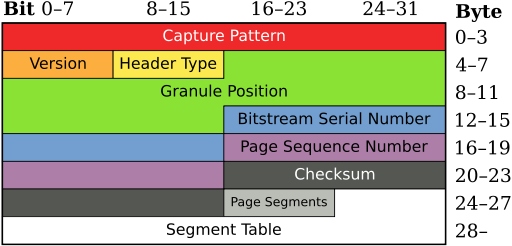
OGG was developed as a container file format for multimedia applications and can contain audio, video and text data. It is particularly characterized by its transmission capabilities, since it is not necessary to adapt the contents of a container.

Ogg audio format

Files in OGG format are container files for multimedia applications. They can be transmitted without problems since it is not necessary to adjust the contents of the container.

Ogg format, what is OGG?

OGG history

The development of OGG started in 1993 and is under the direction of the Xiph.Org Foundation, which has also contributed some codecs. The goal was to create a license-free format that could efficiently store and stream multimedia content. The term OGG comes from a computer game and means something like “to drink something very energetic.”

When Fraunhofer-Gesellschaft began charging license fees for the widely used MP3 format, development of the Vorbis codec began in 1998. Vorbis is the best-known audio codec that is responsible for compressing the contents of the OGG container. The terms Vorbis and OGG are often treated synonymously, which is incorrect, because OGG is just the container for Vorbis-encoded audio content.

The most important codecs for OGG are:

Vorbis (audio)
Opus (audio, successor to Vorbis)
FLAC (audio)
Theora (video)
Speex (voice data)
Write (text data)

OGG fields of application

The OGG format is used in the audio segment by numerous software and hardware products and has also established itself in the IT sector. The HTML 5 standard allows OGG files to be played in Chrome, Firefox and Opera browsers without a plug-in, while Safari and Internet Explorer do not support the format. Due to its license-free nature, it is used in numerous web audio players, although here and also in professional studio environments, the successor Opus is becoming increasingly popular as an audio codec compared to Vorbis.

OGG’s Theora video codec is not very popular in the professional sector, but it is very popular in the open source community. For HD videos, the Matroska format is used, which is also license-free.

The main advantages of OGG

OGG is an open source project, so unlike proprietary formats, there are no usage license fees, which encourages distribution.

Whether it is an audio, video or text file, all content in the Conatiner format can be saved and transmitted without adjustments. This streaming capability is OGG’s core design feature and sets it apart from other formats that can only stream live in certain ways (like Matroska) or can’t stream at all (like MP4). The well-known VLC Media Player is suitable for playing OGG files. There are also programs available on the Internet to convert to MP3 and burn OGG files.