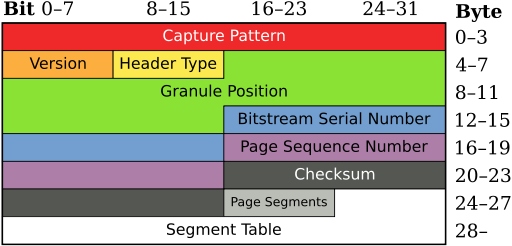
Ogg is a free and open container format that can be used to store audio and video data. It is based on the Xiph.org codec library, and it is designed to be efficient and extensible. Ogg files can be played back using a variety of players, including VLC and Firefox.
The Ogg format consists of two main components: the Ogg Skeleton and the Ogg Index. The Ogg Skeleton is a header that contains information about the file, such as the type of data it contains, the length of the data, and the bit rate. The Ogg Index is a table that maps the data in the file to its corresponding position.
The Ogg Skeleton and Ogg Index are both stored in Ogg pages. An Ogg page is a fixed-size unit of data that contains a header, a payload, and a checksum. The header contains information about the page, such as its type and its position in the file. The payload contains the actual data, and the checksum is used to verify the integrity of the data.
The Ogg format is a well-designed and efficient container format. It is free, open, and extensible, and it is supported by a variety of players. If you are looking for a way to store audio or video data, the Ogg format is a good option.
Here are some additional details about the Ogg Skeleton and Ogg Index:
Ogg Skeleton
The Ogg Skeleton is a 12-byte header that contains the following information:
The type of data in the file (audio or video)
The length of the data in the file
The bit rate of the data
Ogg Index
The Ogg Index is a variable-length table that maps the data in the file to its corresponding position. The index is stored in a series of Ogg pages, and each page contains a list of offsets to the data in the file.
The Ogg Index is used to find specific pieces of data in the file. For example, if you want to play back a specific song, you can use the Ogg Index to find the offset to the song’s data.
WMA vs MP3 vs FLAC: Which is the best audio format?
WMAWMA
Audio quality comparison
When it comes to choosing the best audio format for your music, there are many factors to consider. Audio quality is one of the most important aspects to take into account. WMA, MP3, and FLAC are three of the most common audio formats used today. While they all have their pros and cons, it’s important to understand how they compare in terms of audio quality.
According to a study conducted by Harvard University, FLAC is the best audio format in terms of sound quality. FLAC is a lossless format, which means it compresses audio without sacrificing quality. On the other hand, MP3 is a lossy format, which means it compresses audio by removing certain parts of the file that are deemed less important. This can result in a noticeable loss in sound quality. WMA is also a lossy format, but it uses a different compression algorithm than MP3.
As the famous quote from the movie “Almost Famous” goes: “The only true currency in this bankrupt world is what you share with someone else when you’re uncool.” Choosing the right audio format may not be “cool”, but it’s essential if you want to share your music with others while maintaining its quality.
Choosing the best audio format
When deciding which audio format to use, there are a few factors to consider beyond just sound quality. Compatibility is also important. MP3 is the most widely used audio format and is compatible with almost all devices. WMA is also widely used, but it’s not compatible with as many devices as MP3. FLAC, on the other hand, is not as widely used and is not compatible with all devices.
Another factor to consider is file size. FLAC files are much larger than MP3 or WMA files, which can be a concern if you have limited storage space. However, if you’re an audiophile who wants the best possible sound quality, file size may not be as much of a concern.
As the character Nigel Tufnel from the movie “This is Spinal Tap” famously said: “These go to eleven.” In other words, sometimes you need to go beyond the norm to achieve the best possible results. When it comes to audio formats, this may mean sacrificing compatibility or file size in favor of better sound quality.
Pros and cons of different audio formats
Here’s a quick overview of the pros and cons of each audio format:
MP3:
Pros: Widely compatible, small file size
Cons: Lossy format, lower sound quality
WMA:
Pros: Widely compatible, better sound quality than MP3
Cons: Lossy format, not as widely compatible as MP3
FLAC:
Pros: Lossless format, best sound quality
Cons: Larger file size, not as widely compatible as MP3 or WMA
As the author Hunter S. Thompson once said: “Buy the ticket, take the ride.” In other words, choose the audio format that best suits your needs and preferences, even if it’s not the most widely used or compatible.
The solution: mp4gain
If you’re looking for a way to easily normalize and convert your audio files to different formats, mp4gain may be the solution you’re looking for. With its built-in equalizer and support for all the major audio and video formats
WMA, or Windows Media Audio, is a popular audio format developed by Microsoft. Many people wonder whether WMA is a good audio format, and the answer is yes, it can be. However, as with any audio format, the quality of the audio depends on a variety of factors, including the bit rate, compression, and playback device.
When it comes to audio quality, WMA can hold its own against other popular audio formats like MP3 and AAC. However, it is important to note that the quality of the audio can vary depending on the compression level used when creating the WMA file.
According to a review by PCWorld, “the WMA format sounds better than the MP3 format at the same bit rate.” This means that if you have a WMA file and an MP3 file with the same bit rate, the WMA file will generally sound better.
WMA vs Other Audio Formats: How Does the Quality Compare?
When it comes to audio formats, there are a lot of options available. So how does WMA stack up against other formats?
As mentioned earlier, WMA can hold its own against popular formats like MP3 and AAC. However, when compared to lossless formats like FLAC, the quality of WMA audio files is not as high.
According to an article on Lifewire, “WMA is a lossy format, which means that some audio data is lost during the compression process.” This loss of data can result in a decrease in audio quality, especially when compared to lossless formats that do not lose any audio data during compression.
Quality of WMA Files: What Factors Affect Audio Quality?
As mentioned earlier, the quality of WMA files can vary depending on a variety of factors. One of the most important factors is the bit rate, which refers to the number of bits used per second to encode the audio data.
Another important factor is the compression level used when creating the WMA file. According to an article on MakeUseOf, “the higher the compression level, the smaller the file size, but the lower the audio quality.”
It is also important to consider the playback device when assessing the quality of WMA files. Some devices may not be optimized to play WMA files, which can result in a decrease in audio quality.
WMA Audio Compression: What You Need to Know
One of the main benefits of using WMA as an audio format is its compression capabilities. However, as with any audio compression, there are some important things to keep in mind.
When compressing audio using WMA, it is important to find the right balance between file size and audio quality. As mentioned earlier, higher compression levels can result in smaller file sizes, but lower audio quality.
According to an article on Techwalla, “WMA is able to compress audio files more than MP3 or AAC because it uses a different compression algorithm.” This means that you can potentially achieve a smaller file size with WMA without sacrificing as much audio quality as you would with other formats.
Final Words:
In conclusion, WMA can be a good audio format, but it is important to understand the factors that affect audio quality. When creating WMA files, it is important to choose the appropriate settings to ensure that the audio quality is preserved. Additionally, it is important to consider the intended use of the audio files and the devices they will be played on.
Ultimately, the quality of WMA audio files will depend on a variety of factors, including the bit rate, sample rate, encoding method, and other settings. While WMA can be a high-quality audio format, it may not always be the best choice for every situation.
At MP4Gain.com, we understand the importance of audio quality and the impact it can have on the listening experience. Our MP4Gain software is designed to help you normalize and enhance the audio quality of your files, regardless of their format. With features like volume normalization, equalization, and conversion to a variety of popular formats, MP4Gain is the perfect solution for anyone looking to improve their audio quality.
Whether you are a musician, podcaster, or simply an avid music lover, MP4Gain can help you achieve the best possible audio quality for your needs. Try it today and experience the difference for yourself.