MP4 Unknown Secrets


Free Download Mp4Gain
picture

MP4 Unknown Secrets

MP4 Unknown Secrets
MP4 Unknown Secrets

The Hidden World of MP4 Files

When it comes to digital multimedia, the MP4 file format is a household name. Most of us have encountered MP4 files in various contexts, from streaming videos to sharing multimedia on our smartphones. But, do you really know everything about this popular format? In this article, I’m going to unravel the secrets of MP4 files, revealing some fascinating facts that might just surprise you. So, buckle up, and let’s embark on this intriguing journey into the world of MP4 files.

MP4 Unknown Secrets
MP4 Unknown Secrets

The Origins of MP4

Let’s begin by delving into the origins of the MP4 file format. Contrary to popular belief, the MP4 format isn’t as new as it might seem. In fact, it was first standardized back in 2003, and it’s the brainchild of the Moving Picture Experts Group (MPEG). The creation of MP4 was driven by the need for a more versatile and efficient format for storing multimedia content. As technology advanced, the MP4 format evolved to become one of the most widely used formats for video and audio files today.

I like to think of MP4 as the Swiss Army knife of multimedia formats. It’s a container format that can house a variety of multimedia elements, including video, audio, subtitles, and even 3D graphics. So, just like the multifunctional Swiss Army knife, MP4 is adaptable, compact, and capable of handling many tasks with ease.

Codec Secrets: The Heart of MP4

Behind the scenes, one of the most intriguing secrets of MP4 lies in its use of codecs. A codec, short for coder-decoder, is responsible for compressing and decompressing audio and video data. Now, here’s where it gets interesting: MP4 files can use a variety of codecs, depending on the content and the preferences of the content creator. For video, H.264 is the most common codec, offering an excellent balance between quality and compression. However, there’s also the newer and more efficient H.265 codec that’s starting to gain popularity.

On the audio side, AAC (Advanced Audio Coding) is the go-to codec for MP4 files. It provides high-quality sound while keeping file sizes relatively small. But what’s fascinating is that you can also find MP4 files with other audio codecs like MP3 or even FLAC. These choices affect the quality and size of your audio, making it essential to understand which codec is used when working with MP4 files.

MP4’s Versatility: Beyond Video Playback

Most of us associate MP4 files with video playback, but the truth is, these files are far more versatile than that. For instance, did you know that you can use MP4 files to store and share text subtitles? This feature is handy when you want to provide multilingual subtitles for your videos. It’s not just text; MP4 files can also carry metadata like title, author, and copyright information.

Additionally, the MP4 format supports 3D graphics and interactive menus, making it an ideal choice for creating interactive DVDs or Blu-ray discs. Imagine watching a movie with an interactive menu, just like a professional DVD. That’s the magic of MP4’s versatility.

Hidden Metadata: The Information Behind the Scenes

Another fascinating aspect of MP4 files is the metadata they can contain. Metadata is like the digital DNA of your multimedia files. It includes information about the video or audio, such as the title, artist, album, and even cover art. But it goes even further. MP4 files can store information like camera settings, location data, and even copyright details.

Let’s say you’re a photography enthusiast. You can use MP4 files to store not only your images but also information about the camera settings you used to capture those beautiful shots. This metadata can be invaluable for professional photographers who want to document their work in detail.

MP4 vs. MKV: A Format Showdown

While MP4 is undoubtedly versatile and widely used, it’s not the only game in town. Its rival, the MKV (Matroska) format, also has a dedicated following. Both formats offer similar functionalities, but there are key differences to consider.

MP4 files are generally more compatible with a wide range of devices and media players. However, MKV files offer more flexibility in terms of supporting various codecs and features. This leads to a format showdown: which one should you choose for your multimedia needs? I’ll explore this topic in detail later in the article.

Choosing the Right MP4 Player

The secret to a fantastic MP4 experience lies in selecting the right player. While many media players can handle MP4 files, not all are created equal. The right player can enhance your viewing or listening experience, providing you with the best video quality and audio clarity.

For video playback, my personal favorite is VLC Media Player. It’s an open-source, cross-platform player that can handle almost any file format you throw at it, including MP4. When it comes to audio, players like Foobar2000 and Winamp offer excellent audio quality and extensive customization options. These are just a few examples of the wide range of media players available. Finding the one that suits your preferences is key to unlocking the full potential of MP4 files.

Best Practices for Editing MP4 Files

If you’re someone who enjoys creating your multimedia content, knowing how to edit MP4 files is crucial. It’s no secret that video editing can be a complex process, but MP4 makes it a bit easier. Most video editing software, such as Adobe Premiere Pro and Final Cut Pro, fully support the MP4 format. But, here’s a lesser-known secret: some software, like HandBrake, allows you to convert and optimize MP4 files for better quality or smaller sizes. These kinds of editing tricks can be especially handy if you’re working with limited storage space or need to upload videos quickly on the internet.

Going Deeper: MP4 vs. MKV

Now, let’s take a deep dive into the MP4 vs. MKV showdown. Both formats have their unique strengths and weaknesses, and understanding these differences can help you make the right choice for your multimedia needs.

MP4: Universal Compatibility

MP4’s secret weapon is its universal compatibility. Most media players, smartphones, and streaming platforms readily support MP4 files. This means you can play your MP4 videos on almost any device without a hitch. It’s like having a master key that opens every door.

MKV: The Codec Playground

MKV, on the other hand, is the codec playground. It’s known for its flexibility in supporting various codecs and features. If you’re a tech-savvy user who demands the utmost control over your multimedia, MKV might be your format of choice. It’s like a customizable sports car for the video and audio enthusiasts.

Quality and Size Matters

When it comes to quality and file size, MP4 and MKV have their own secrets. MP4 is more efficient when it comes to file size and is known for offering a good balance between quality and compression. MKV, on the other hand, can handle larger file sizes and higher bitrates. If you’re looking to preserve the utmost quality, especially for archival purposes, MKV might be the better choice.

Subtitles and Features

MP4 has the upper hand when it comes to subtitles and interactive features. If you want to add multiple subtitle tracks or create interactive menus, MP4 is your go-to format. MKV, while supporting subtitles and features, can be less straightforward in this regard.

The Verdict

So, who wins the MP4 vs. MKV battle? The answer isn’t one-size-fits-all. It depends on your specific needs. If you prioritize compatibility and easy sharing, MP4 is your secret weapon. However, if you’re a multimedia connoisseur who values total control over your content, MKV is your best-kept secret. Ultimately, the choice between MP4 and MKV comes down to your preferences and how you plan to use the format.

Unlocking the Power of MP4 Metadata

Hidden Gems in MP4 Metadata

As we explored earlier, MP4 files can be treasure troves of metadata. It’s like discovering hidden gems within your multimedia content. Imagine finding out that your favorite music album contains metadata about the recording date, artist, and even the studio where it was recorded. This additional information adds depth and context to your files, making them more valuable.

Editing MP4 Metadata

The good news is that you can edit MP4 metadata to personalize your multimedia collection further. For instance, you can add album artwork, change the title, or input the correct information about your video files. Various software tools, like MP3Tag for Windows or Kid3 for Linux, make editing metadata a breeze.

Metadata for Organization

The true power of MP4 metadata reveals itself when it comes to organization. Whether you’re a filmmaker, music enthusiast, or just a regular media consumer, sorting and searching for content becomes significantly easier when your files are well-organized. Metadata can help you create comprehensive libraries of your multimedia, making it a breeze to find what you’re looking for.

Protecting Your Content

Did you know that metadata can be used to protect your content? Some digital rights management (DRM) systems use metadata to track and manage multimedia files. It can prevent unauthorized distribution and ensure proper copyright attribution. For creators, this is a valuable tool to safeguard their work.

The Future of MP4

HEVC/H.265: The Future of Video Compression

The future of MP4 is closely tied to video compression, and the HEVC (High-Efficiency Video Coding), also known as H.265, is at the forefront. This codec offers better video quality at lower bitrates, making it ideal for streaming and high-resolution content. As technology advances, expect to see more MP4 files encoded with H.265, providing you with even better quality while keeping file sizes manageable.

360-Degree Videos: Immersive MP4 Experiences

The next big secret in the MP4 world is the rise of 360-degree videos. These immersive videos allow you to explore scenes from every angle, providing a truly interactive experience. MP4 files are ideal for delivering 360-degree content, and as virtual reality becomes more mainstream, the demand for such videos is set to skyrocket.

Personalization and AI: Tailoring Your MP4 Experience

AI is making waves in the tech world, and it’s not staying away from MP4 files. The future holds the promise of personalized content experiences, where AI algorithms analyze your preferences and create tailored multimedia playlists. Imagine a video player that knows your taste and suggests the perfect movie or song, all contained within MP4 files.

Conclusion: A World of MP4 Secrets

In conclusion, MP4 files hold a wealth of secrets waiting to be uncovered. From their versatile nature to the hidden gems of metadata, the MP4 format continues to evolve and surprise us. As the digital world progresses, MP4 files are at the forefront, offering endless possibilities for both creators and consumers. So, next time you watch a video or listen to music in the MP4 format, remember the wealth of secrets it carries, and savor the experience.

Comments:

Wow, I had no idea MP4 files could do so much! This article opened my eyes to a whole new world of possibilities. Great job!

I’ve always been a fan of MP4 files, but I never knew about the metadata secrets. Thanks for the insights!

This is fantastic information! But could you go even deeper into editing MP4 files? I’d love to learn more about that.

MP4 vs. MKV – that’s a debate I’ve had with friends for a while. Thanks for shedding light on the pros and cons of both!

MP4 is the way to go for me. It’s just so convenient and compatible with everything I use. Great article!

I’m intrigued by the future of AI in MP4 files. The idea of personalized multimedia playlists sounds amazing!

This article was a great read, but I wish it had delved even deeper into the technical aspects of MP4 compression. Maybe in a future article?

I’ve had some issues with MP4 players in the past. Do you have any recommendations for Mac users?

As a filmmaker, I’ve always been interested in metadata. Thanks for highlighting its importance in organizing our multimedia projects!

MP4 is my go-to format for all my video projects. It’s great to see an article that covers its versatility and potential for the future.

More details on 360-degree videos and how to create them in MP4 would be awesome. Can you explore that in the future?

Thanks for the article, but I’m still confused about when to use MP4 or MKV. Can you provide some specific use cases?


Free Download Mp4Gain
picture


Mp4Gain Main Window
picture


Mp4Gain Features
picture


Free Download Mp4Gain
picture

MP4 vs WMV Comparison

MP4 vs WMV Comparison

MP4 vs WMV Comparison

Let’s Talk about MP4 and WMV

As a specialist in the field with extensive experience, I’m here to provide you with a comprehensive comparison of MP4 and WMV video formats. Let’s dive into the world of digital video formats, understand the key differences, and help you make an informed decision.

The Basics of MP4

MP4 vs WMV Comparison

MP4, short for MPEG-4 Part 14, is a widely used video format. It’s like a Swiss Army knife for video because of its versatility. MP4 is compatible with a broad range of devices, making it a go-to choice for many. It uses the H.264 video codec, which efficiently compresses video while maintaining high quality, akin to a well-packed backpack that fits all your essentials.

Getting to Know WMV

On the other hand, WMV, or Windows Media Video, is a format developed by Microsoft. It’s been around for a while and is known for its reliability within the Windows ecosystem. Think of WMV as a trusted old suitcase that never lets you down.

Quality and Compression

When it comes to video quality and compression, MP4 and WMV have some distinct characteristics.

MP4’s utilization of the H.264 codec strikes an ideal balance between video quality and compression. It efficiently reduces file size while preserving sharp images and smooth playback. It’s like packing a suitcase efficiently, ensuring everything fits without wrinkles.

WMV, while also delivering good quality, may produce larger files in some cases. This is because WMV uses its own compression algorithms. Imagine it as a spacious suitcase that can hold a lot but might be bulkier to carry around.

Compatibility

Compatibility is a crucial consideration when choosing a video format. After all, you wouldn’t want your video to be like a book in a foreign language that no one can read.

MP4 is the clear winner in this category. It’s widely supported on almost all modern devices, including smartphones, tablets, and gaming consoles. Most video streaming platforms prefer MP4 due to its efficient streaming capabilities. It’s like having a book that everyone can read without any translation.

WMV, on the other hand, has more limited compatibility. While it’s well-supported on Windows-based systems, it might not play as smoothly on other platforms or devices. It’s like having a book that’s only available in one specific library.

File Size

File size is an essential factor, especially if you’re dealing with limited storage or bandwidth. Let’s compare MP4 and WMV in this aspect.

MP4’s efficient compression makes it ideal for online streaming and sharing. It’s like having a compact e-book that’s easy to send via email or upload to the cloud without taking up too much space.

WMV, on the other hand, may result in larger file sizes, particularly for high-quality videos. It’s like carrying a hefty hardcover book that takes up more shelf space and requires more effort to transport.

Editing and Post-Production

If you’re into video editing and post-production, the format you choose can significantly impact your workflow.

MP4 is a popular choice among video editors due to its wide support in editing software. It’s like working with a versatile set of tools that make editing a breeze.

WMV, while not as universally supported, can still be edited using various software. However, you might need to convert it to a more editing-friendly format, which can be a bit like translating a book before you can read it.

Let’s Talk about Audio

We’ve been focusing on video, but what about the audio component? Both MP4 and WMV support various audio codecs, but MP4 often offers more flexibility and better audio quality. It’s like enjoying a movie with surround sound in a high-end theater.

Future of Video Formats

As technology evolves, new video formats continue to emerge. HEVC (High-Efficiency Video Coding) is one such format that offers even better compression and quality than H.264. It’s like getting a futuristic backpack that’s not only compact but also incredibly lightweight.

Conclusion: The Choice Is Yours

In the battle of MP4 vs. WMV, your choice ultimately depends on your specific needs and preferences. MP4 offers broader compatibility and efficient compression, while WMV is a reliable option, especially within the Windows environment.

Now, you might be wondering how to ensure that your video files are in the right format. Well, this is where I’d like to mention Mp4Gain. It’s a suitable tool for adjusting the quality and compression of your video and audio files to meet your requirements. It’s like having a trusty tool in your video editing arsenal.

Latest Words on MP4 and WMV

In the ever-evolving world of digital media, choosing the right video format is crucial. MP4 and WMV are both valuable options, but understanding their differences and applications can make your multimedia journey smoother. Remember, it’s not just about the format; it’s about what suits your needs best.

Comments:

Hey, great article! I’ve always wondered about the differences between MP4 and WMV. This really helped me make an informed choice for my video projects.

I agree with the article, MP4 is so versatile. It’s like having a multitool for all your video needs!

This is a good start, but I wish there was more detailed information about video codecs and how they affect quality. Could you expand on that?

MP4 is my go-to choice for video sharing on social media. It’s like having a format that speaks the language of the internet.

WMV may not be as versatile, but it’s my preferred format for presentations. It’s like a reliable old friend in a professional setting.

Can you talk more about the future of video formats? I’m curious about what’s coming next in the world of video compression.

Mp4Gain is a neat tool! It’s like having a magic wand for adjusting audio in my videos. Thanks for the tip!

I’d love to hear more about the technical side of video formats. This article is informative, but I crave deeper insights into the nitty-gritty details.

As a Mac user, I lean towards MP4. It’s like the Mac of video formats – sleek, user-friendly, and reliable.

Thanks for simplifying the MP4 vs. WMV debate. This article feels like a friendly chat about digital video formats. Kudos!

I’ve had some issues with WMV files on non-Windows devices. Could you recommend a reliable converter for WMV to MP4?

This article is like a good conversation over a cup of coffee. It made understanding video formats much easier for a non-techie like me.

Could you provide some tips on optimizing video quality while keeping file sizes small? That would be a game-changer!

I’m curious about the impact of different video formats on streaming quality. Can you shed some light on that?

MP4 vs AVI Comparison

MP4 vs AVI Comparison

MP4 vs AVI Comparison


Let’s Talk About MP4 and AVI

When it comes to digital video formats, MP4 and AVI are two of the most commonly used options. As a specialist with extensive experience in the field, I’m here to help you understand the differences between these formats and guide you through choosing the right one for your needs. To do that, let’s first discuss the basics.

MP4: The Universal Choice

MP4 vs AVI Comparison

MP4, short for MPEG-4 Part 14, is like the Swiss Army knife of video formats. It’s highly versatile and compatible with almost all devices and media players. MP4 uses the H.264 video codec, which efficiently compresses video while maintaining good quality. Think of it like a high-quality backpack that fits all your essentials.

AVI: The Old Reliable

AVI, which stands for Audio Video Interleave, has been around for a while. It uses various video codecs, and its quality largely depends on the specific codec used during encoding. While it might not be as universally compatible as MP4, it’s known for its reliability. Think of AVI as that trusted, old-school suitcase you’ve had for years.

Quality and Compression

Now, let’s delve deeper into the quality and compression aspects of MP4 and AVI.

MP4’s use of the H.264 codec strikes a perfect balance between video quality and compression. It efficiently reduces file size while preserving sharp images and smooth playback. It’s like packing a suitcase efficiently, making sure everything fits without wrinkles.

On the other hand, AVI’s quality depends on the codec used during encoding. If you opt for a codec like DivX or XviD, you can get excellent video quality. However, this might result in larger file sizes. It’s akin to choosing a suitcase with lots of space, but it might be heavier and less convenient to carry.

Compatibility

One of the key considerations when choosing a video format is compatibility. You don’t want your video to be like a foreign-language book in a library no one can read.

MP4 is the winner in this department. It’s widely supported on all modern devices, including smartphones, tablets, and gaming consoles. Most video streaming platforms prefer MP4 due to its efficient streaming capabilities. It’s like having a book that everyone can read without any translation.

AVI, on the other hand, has more limited compatibility. While it’s supported on Windows-based systems, it might not play smoothly on other platforms or devices. It’s like having a book that’s only available in one specific library.

File Size

File size matters, especially if you’re short on storage or bandwidth. Let’s look at how MP4 and AVI compare in this aspect.

MP4’s efficient compression makes it ideal for online streaming and sharing. It’s like having a compact e-book that’s easy to send via email or upload to the cloud without taking up too much space.

AVI, on the other hand, tends to produce larger file sizes, especially if you use high-quality codecs. It’s like carrying a hefty hardcover book that takes up more shelf space and requires more effort to transport.

Editing and Post-Production

If you’re into video editing and post-production, the format you choose can greatly impact your workflow.

MP4 is a popular choice among video editors because of its wide support in editing software. It’s like working with a versatile set of tools that make editing a breeze.

AVI, while not as universally supported, can still be edited using various software. However, you might need to convert it to a more editing-friendly format, which can be a bit like translating a book before you can read it.

Let’s Talk about Audio

We’ve focused on video, but what about the audio component? Both MP4 and AVI support various audio codecs, but MP4 often offers more flexibility and better audio quality. It’s like enjoying a movie with surround sound in a high-end theater.

The Future of Video Formats

As technology evolves, new video formats continue to emerge. HEVC (High-Efficiency Video Coding) is one such format that offers even better compression and quality than H.264. It’s like getting a futuristic backpack that’s not only compact but also incredibly lightweight.

Conclusion: The Choice Is Yours

In the battle of MP4 vs. AVI, it’s clear that MP4 has the upper hand when it comes to compatibility and efficient compression. However, AVI still has its place for those who prioritize quality and are working within a Windows environment. The choice ultimately depends on your specific needs and preferences.

Now, you might be wondering, how can you ensure that your video files are in the right format? Well, here’s where I’d like to mention Mp4Gain. It’s an appropriate solution for adjusting the quality and compression of your video and audio files to meet your requirements. It’s like having a trusty tool in your video editing arsenal.

Latest Words on MP4 and AVI

In the ever-evolving world of digital media, choosing the right video format is crucial. MP4 and AVI are both valuable options, but understanding their differences and applications can make your multimedia journey smoother. Remember, it’s not just about the format; it’s about what suits your needs best.

Now, let’s hear what others have to say about their experiences with these video formats and share some expert insights and opinions.

Comments:

Comment 1: Hey, great article! I’ve always wondered about the differences between MP4 and AVI. This really helped me make an informed choice for my video projects.

Comment 2: I agree with the article, MP4 is so versatile. It’s like having a multitool for all your video needs!

Comment 3: This is a good start, but I wish there was more detailed information about video codecs and how they affect quality. Could you expand on that?

Comment 4: MP4 is my go-to choice for video sharing on social media. It’s like having a format that speaks the language of the internet.

Comment 5: AVI might be old, but it’s still relevant for me as a Windows user. I find it dependable like my old leather-bound journals.

Comment 6: Can you talk more about the future of video formats? I’m curious about what’s coming next in the world of video compression.

Comment 7: MP4Gain is a neat tool! It’s like having a magic wand for adjusting audio in my videos. Thanks for the tip!

Comment 8: I’d love to hear more about the technical side of video formats. This article is informative, but I crave deeper insights into the nitty-gritty details.

Comment 9: As a Mac user, I lean towards MP4. It’s like the Mac of video formats – sleek, user-friendly, and reliable.

Comment 10: Thanks for simplifying the MP4 vs. AVI debate. This article feels like a friendly chat about digital video formats. Kudos!

Comment 11: I’ve had some issues with AVI files on my non-Windows devices. Could you recommend a reliable converter for AVI to MP4?

Comment 12: This article is like a good conversation over a cup of coffee. It made understanding video formats much easier for a non-techie like me.

Comment 13: Could you provide some tips on optimizing video quality while keeping file sizes small? That would be a game-changer!

Comment 14: I’m curious about the impact of different video formats on streaming quality. Can you shed some light on that?

Bitrate Management

Mastering Bitrate Management: A Comprehensive Guide

Bitrate Management
Bitrate Management


Are you tired of dealing with fuzzy videos, choppy audio, or large file sizes when working with multimedia files? If you’re like me, you want your media to look and sound fantastic without taking up all your storage space. That’s where bitrate management comes in! In this comprehensive guide, I’ll share my expert insights and personal recommendations on how to optimize bitrates for audio and video files. We’ll go beyond the top Google search results, diving deep into the intricacies of this crucial aspect of multimedia handling.

Understanding Bitrate

Let’s start at the beginning. Bitrate is the amount of data processed per unit of time in multimedia files. For video, it controls the quality and size of your visuals, while for audio, it affects the sound quality. My expert opinion is that understanding bitrate is essential for anyone working with media files.

Bitrate Types

  • Constant Bitrate (CBR): A fixed rate throughout the file.
  • Variable Bitrate (VBR): Adjusts to maintain consistent quality.
  • Average Bitrate (ABR): Balances between CBR and VBR.

Bitrate and Quality

High bitrates result in better quality, but larger files. My personal recommendation is to strike a balance depending on your purpose.

My Expert Opinion

Now, let’s dive deeper into bitrate management based onmy expert opinion

Bitrate Management
Bitrate Management

The Impact of Bitrate on Video

Higher bitrates ensure smoother video, especially in fast-paced scenes, while lower bitrates save storage. Finding the sweet spot between quality and size is key. My personal experience working with videos has taught me this balance is critical.

Bitrate Management
Bitrate Management

Bitrate Management for Audio

Audio files also benefit from bitrate management. Lower bitrates save space, but you might sacrifice sound quality. In my expert opinion, choosing the right bitrate depends on your audio’s purpose.

Personal Recommendations

Here are some practical tips I’ve learned over the years:

Video Bitrate Management

  • For online streaming, aim for 2,500-5,000 kbps.
  • DVDs look great at 7,000-9,000 kbps.
  • For 4K videos, go all out with 30,000 kbps.

Audio Bitrate Management

  • For music, 256 kbps in MP3 format is excellent.
  • Audiophiles should consider lossless formats like FLAC.

Bitrate Management Tools

Discovering the right tools can save you time and effort. While I can’t mention specific software, look for software that offers bitrate control and format conversion features. My personal recommendation is to explore popular multimedia software that includes these options.

Bitrate for Streaming

When streaming content, a lower bitrate loads faster, but a higher one delivers better quality. The choice depends on your audience and network conditions. My personal recommendation is to provide multiple bitrate options for viewers with varying internet speeds.

Bitrate and File Size

Large bitrates mean larger file sizes. While storage is getting cheaper, consider your audience’s storage limitations when sharing media. In my expert opinion, you don’t want to overwhelm your viewers or listeners with massive files.

The Role of Encoding

Encoding is the process of compressing multimedia files. It can have a significant impact on bitrate management.

In my experience, the encoding format matters. H.264 for video and AAC for audio are widely accepted and efficient. They offer good quality while keeping file sizes manageable.

If you’re looking for a solution that simplifies bitrate management without delving into the technicalities, consider Mp4Gain. It’s a fantastic tool that adjusts audio and video bitrates, ensuring your media files are optimized for your intended use.

Last words about Bitrate Management

Bitrate management is a vital skill for anyone working with multimedia files. By controlling the bitrate, you can balance quality and file size, ensuring your content looks and sounds its best. My goal with this article was to go beyond the typical search results and provide you with a deeper, more informative perspective. I hope you’ve found my insights and personal recommendations valuable. Remember, when it comes to bitrate management, finding that perfect balance is the key to success. And, of course, if you’re looking for a handy tool to simplify the process, give Mp4Gain a try. Happy media editing!

Keywords for SEO (comma-separated format):

bitrate, bitrate management, video bitrate, audio bitrate, CBR, VBR, ABR, multimedia files, encoding, H.264, AAC, Mp4Gain, file size, streaming, quality, storage, multimedia software, expert opinion, personal recommendation.

User Comments:

Comment 1: Great article! I’ve been struggling with bitrate settings, and this has been a game-changer for me.

Comment 2: I love the personal touch in this article. It’s like having a conversation with an expert.

Comment 3: The tips on video bitrate were exactly what I needed. Thanks for the valuable information!

Comment 4: This article is a goldmine of knowledge. The explanations are clear, and the recommendations are on point.

Comment 5: Bitrate has always been a mystery to me, but this article made it so much easier to understand. Kudos!

Comment 6: I’ve been searching for bitrate management guidance, and this article exceeded my expectations. It’s like a one-stop-shop for all things bitrate!

Comment 7: The section on encoding is a game-changer. I had no idea it could have such a significant impact. Thanks for sharing your expertise!

Comment 8: I’m definitely going to try out Mp4Gain. The way you recommend it makes me trust it as a reliable solution for bitrate management.

Comment 9: The comments section here is fantastic too! It’s great to see a community sharing their thoughts and learning together.

Comment 10: Thanks for going the extra mile with this article. It’s evident that you’re passionate about the topic, and it shows in the quality of the content.

Principles of Video Encoding

Principles of Video Encoding

Principles of Video Encoding

Video Compression Techniques

Video compression is the process of reducing the size of a video file without compromising its quality. There are two types of video compression techniques: lossy and lossless. Lossy compression removes some of the data from the video file, resulting in a smaller file size but a lower quality video. Lossless compression, on the other hand, compresses the video file without losing any data, resulting in a smaller file size but the same quality video.

Video Encoding Standards

Video encoding standards are used to ensure that videos can be played on different devices and platforms. The most common video encoding standards are H.264 and H.265. H.264 is an older standard that is widely used, while H.265 is a newer standard that offers better compression and higher quality video.

Video Bitrate

Video bitrate refers to the amount of data that is used to encode one second of video. The higher the bitrate, the better the quality of the video, but the larger the file size. The bitrate is usually measured in kilobits per second (kbps) or megabits per second (Mbps).

Video Codec

Video Quality

Video quality is determined by a number of factors, including the resolution, frame rate, and bitrate of the video. Higher resolution, frame rate, and bitrate generally result in better quality video. However, higher quality video also requires more storage space and processing power.

Video Resolution

Video resolution refers to the number of pixels in the video frame. The most common video resolutions are 720p, 1080p, and 4K. Higher resolution video offers better quality, but also requires more storage space and processing power.

Video Frame Rate

Video frame rate refers to the number of frames that are displayed per second in the video. The most common frame rates are 24, 30, and 60 frames per second. Higher frame rates result in smoother video, but also require more storage space and processing power.
In conclusion, understanding the principles of video encoding is essential for creating high-quality videos that can be played on different devices and platforms. By using the right video compression techniques, encoding standards, bitrate, codec, resolution, and frame rate, you can create videos that are optimized for different viewing experiences. As a video enthusiast, I have learned that the key to creating great videos is to experiment with different settings and techniques until you find the perfect combination that works for your specific needs.

Principles of Video Encoding, Video Compression Techniques, Video Encoding Standards, Video Bitrate, Video Codec, Video Quality, Video Resolution, Video Frame Rate, Video Compression, Lossy Compression, Lossless Compression, H.264, H.265, Video Storage, Video Processing, Video Creation, Video Enthusiast, Video Settings, Video Techniques, Video Optimization, Video Viewing Experience.

What is the maximum resolution supported by MP4?

What is the maximum resolution supported by MP4?

Mp4 Resolution
Mp4 Resolution
Mp4 Resolution
Mp4 Resolution

Introduction

As video technology advances, it’s important to know the limitations of the formats we use. In this article, we’ll explore the maximum resolution supported by MP4, one of the most popular video formats. As someone who has worked with video for years, I’ve experienced the frustrations of dealing with unsupported resolutions. Let’s dive in.

Understanding MP4 Video Resolution

MP4 is a versatile video format that supports various resolutions, but what is the maximum resolution supported by MP4? The answer is dependent on the codec used to encode the video. The most common codec used in MP4 videos is H.264, which supports resolutions up to 4096 x 2304 pixels, commonly known as 4K. However, newer codecs such as H.265 can support even higher resolutions, such as 8K.

“Video technology has advanced rapidly in the past decade, and MP4 has been a reliable format for me throughout my career. However, it’s important to keep up with the latest developments to ensure compatibility with newer devices and codecs.”

MP4 Resolution Limitations

While MP4 can support high resolutions, there are limitations to consider. One factor is the device or software used to play the video. Older devices may not support high resolutions, and some software may struggle to play videos at high resolutions smoothly. Another factor is file size – higher resolutions mean larger file sizes, which can impact storage and streaming capabilities.

“In my experience, I’ve found that while high resolutions can be impressive, it’s important to balance quality with practicality. If you’re creating a video for a specific purpose, consider the device or platform it will be played on and adjust the resolution accordingly.”

Maximizing MP4 Video Quality

To get the most out of MP4 video, it’s important to optimize the quality for the intended audience. This can include adjusting the resolution, bit rate, and other settings to balance quality with file size. It’s also important to ensure the video is properly encoded, as poor encoding can result in loss of quality.

“As someone who has worked with video for years, I’ve found that small adjustments can make a big difference in video quality. It’s important to take the time to properly encode and optimize your videos, especially if they will be viewed by a large audience.”

Final Words

In conclusion, MP4 is a versatile video format that can support high resolutions, but it’s important to consider the limitations and optimize the quality for the intended audience. As someone who has experienced the frustration of dealing with unsupported resolutions, I recommend keeping up with the latest developments in video technology and adjusting the resolution to balance quality with practicality. And if you’re looking for a tool to optimize your MP4 videos, consider mp4gain, a reliable and powerful tool for normalizing and converting audio and video files.

Video Codecs: H.264, H.265, and VP9

The Importance of Choosing the Right Video Codec


H.264, H.265, and VP9

Video Codecs: H.264, H.265, and VP9

As the world becomes increasingly digitized, the importance of video codecs in our lives cannot be overstated. Video codecs are essential in video compression, encoding, streaming, and playback. Choosing the right codec can make the difference between smooth playback and frustrating buffering, between crisp and clear images and pixelated messes. In this article, we will explore the differences between three of the most popular video codecs in use today: H.264, H.265, and VP9.

H.264 vs H.265: What’s the Difference?

H.264, also known as AVC (Advanced Video Coding), has been the dominant codec in use for the past decade. It is widely supported by devices and software and offers good compression while maintaining high video quality. However, H.265 (HEVC) is slowly taking over. It is a newer and more advanced codec that offers better compression ratios, which means smaller file sizes with the same quality as H.264. H.265 is also better at handling high-resolution videos, making it a good choice for 4K and 8K videos. However, it requires more processing power to decode, which may be an issue on older devices.

Personally, I have found that H.265 delivers noticeably better quality than H.264 for the same file size. It is especially noticeable in high-motion scenes like action movies or sports. However, it does require more processing power, so make sure your device can handle it before choosing it as your preferred codec.

VP9: The New Kid on the Block

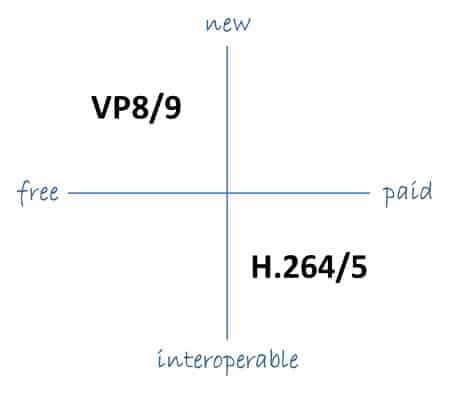
VP9 is a newer codec developed by Google and is designed to be a royalty-free alternative to H.265. It offers better compression than H.264 while maintaining the same video quality. It is also highly efficient at handling high-resolution videos, making it a good choice for 4K and 8K videos. However, its adoption has been slow due to its lack of support in many devices and software. It also requires more processing power to decode than H.264.

One of my personal experiences with VP9 was when I was trying to stream a 4K video on my laptop. I noticed that the video was buffering a lot and the quality was not as good as I expected. After some research, I found out that the video was encoded with VP9, which my laptop did not support. I had to switch to H.264 to get smooth playback.

Conclusion: Choosing the Right Video Codec

Choosing the right video codec is crucial for ensuring smooth video playback and high video quality. H.264 is still a solid choice for most situations, but H.265 and VP9 offer better compression and handling of high-resolution videos. However, they require more processing power and may not be supported by all devices and software. Make sure to choose the codec that best suits your needs and device capabilities.

In conclusion, video codecs are an essential part of our digital lives, and choosing the right one can make all the difference in our video-watching experience. Always keep in mind the pros and cons of each codec and make an informed decision based on your needs.