What is VBR MP3 Bitrate?

What is VBR MP3 Bitrate?

VBR Bitrate
VBR Bitrate
VBR Bitrate
VBR Bitrate

The Basics of VBR MP3 Bitrate

When it comes to music and audio files, bitrate is an important factor to consider. Bitrate refers to the amount of data that is transmitted per second in a digital audio file. The higher the bitrate, the more data is transmitted and the better the audio quality.
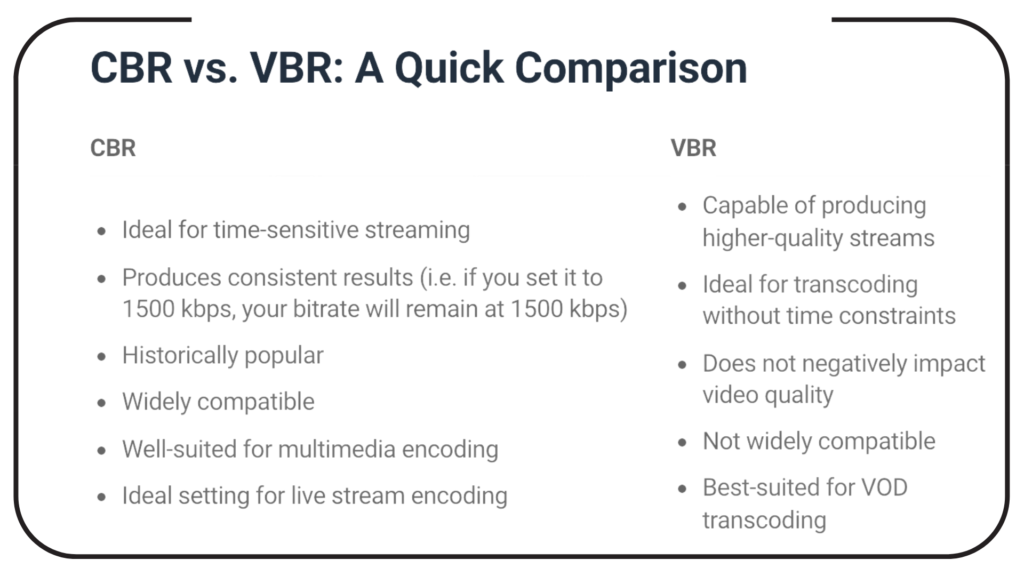
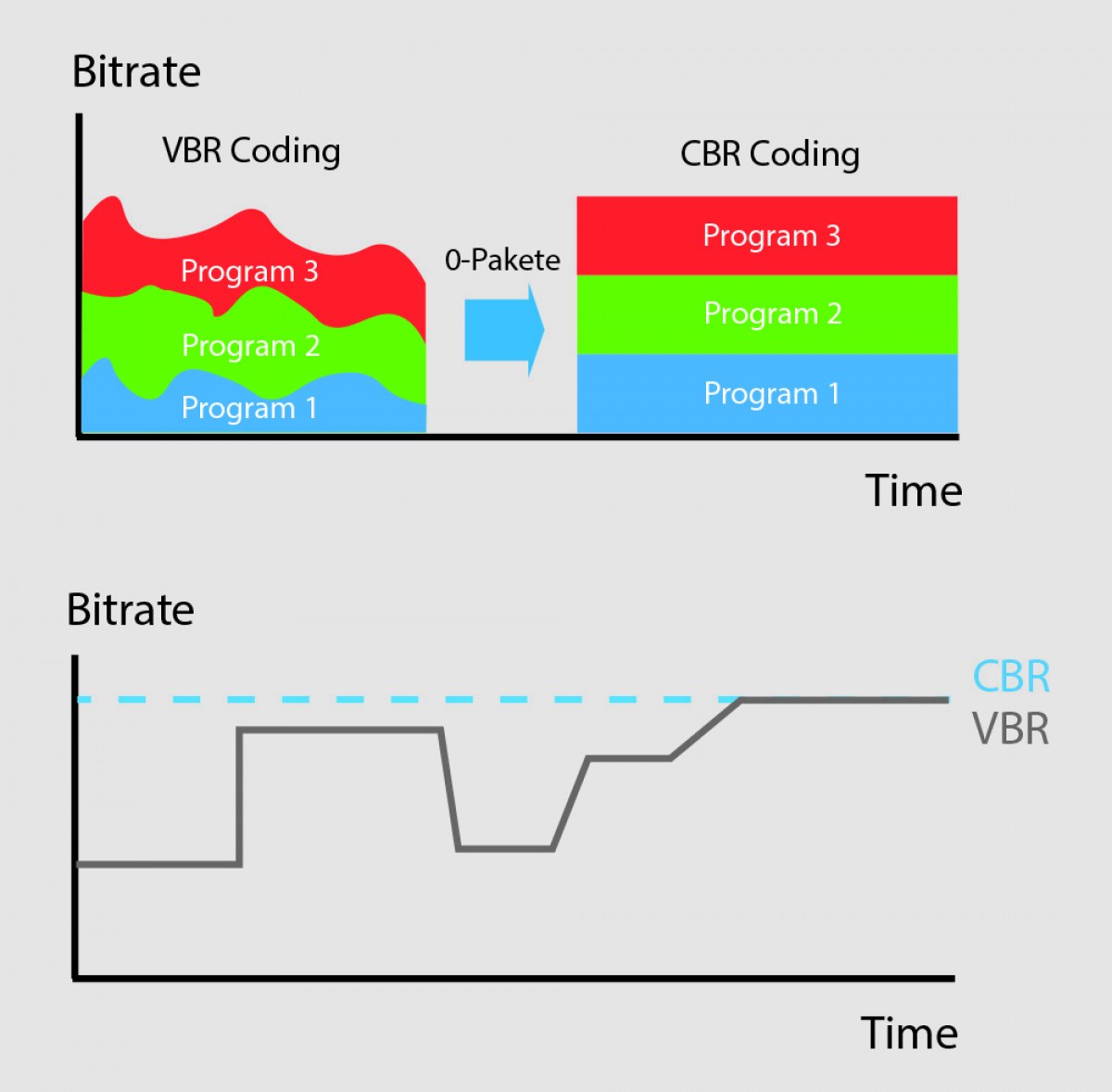
VBR, or variable bitrate, is a type of MP3 encoding that uses a variable bitrate rather than a constant bitrate. This means that the bitrate will vary depending on the complexity of the audio being encoded. For example, a simple audio passage with few instruments and no vocals may have a lower bitrate than a complex audio passage with many instruments and vocals.

VBR MP3 bitrate offers a number of advantages over constant bitrate encoding, including better audio quality, smaller file sizes, and more efficient use of storage space.

How to Choose the Right VBR MP3 Bitrate

When choosing the right VBR MP3 bitrate for your audio files, there are a number of factors to consider. These include the type of audio being encoded, the intended use of the audio, and the storage space available.
For example, if you are encoding audio for use on a mobile device with limited storage space, you may want to use a lower bitrate to minimize file size. On the other hand, if you are encoding audio for use in a high-quality home theater system, you may want to use a higher bitrate to ensure the best possible audio quality.

Ultimately, the right VBR MP3 bitrate will depend on your specific needs and preferences. Experimenting with different bitrates and listening to the resulting audio can help you determine the best option for your particular situation.

The Future of VBR MP3 Bitrate

As technology continues to advance and storage space becomes more abundant, VBR MP3 bitrate is likely to become even more popular in the future. With its ability to offer high-quality audio in a compact and efficient format, VBR MP3 encoding is sure to remain a popular choice for music lovers and audio enthusiasts alike.
In the words of music legend Bob Marley, “One good thing about music, when it hits you, you feel no pain.” With VBR MP3 bitrate, music lovers can experience high-quality audio that hits them right where it counts, without the pain of bloated file sizes or compromised sound quality.

Conclusion: The Benefits of VBR MP3 Bitrate

In conclusion, VBR MP3 bitrate is a powerful tool for encoding high-quality digital audio files. By using a variable bitrate that adapts to the complexity of the audio being encoded, VBR MP3 encoding offers superior sound quality, smaller file sizes, and more efficient use of storage space.
As technology continues to evolve and storage space becomes more abundant, VBR MP3 encoding is sure to become even more popular in the future. So the next time you’re encoding digital audio files, consider using VBR MP3 encoding to experience the benefits of variable bitrate technology for yourself.

In the words of writer Kurt Vonnegut, “The only proof he needed for the existence of God was music.” With VBR MP3 bitrate, the beauty of music can be captured in all its glory, providing an experience that is truly transcendent.

H.264 efficiency

H.264 efficiency

H.264

H.264 takes video compression technology to the next level.

High Efficiency Video Coding H.264

The H.264 standard introduces a new advanced intra prediction scheme to encode I-frames. This scheme can significantly reduce the size (in bits) of an I frame while maintaining high quality by successfully predicting small blocks of pixels within a macroblock within a frame. It does this by trying to find matching pixels between the previously encoded pixels that constrain the new 4×4 pixel block for internal encoding. By reusing already encoded pixel values, the bit size of the data can be significantly reduced. The new intra prediction is a key element of H.264 technology and has proven to be very effective. For comparison: even if only I-frames are used in H.264 streaming, the resulting file size will be much smaller than for Motion JPEG streaming.
Illustrations of how some intra-prediction modes can be used when encoding 4×4 pixels within one of the 16 blocks that make up a macroblock. Each of the 16 blocks within a macroblock can be encoded using different modes.

H.264 also improves block-based motion compensation for P and B frame encoding. The H.264 encoder can choose to search for matching blocks (up to sub-pixels

precision) of some or many sections within one or more reference frames. You can also adjust the size and shape of the blocks to improve your search for matches. In areas where matching blocks cannot be found within the frame of reference, internally coded macroblocks are used. The high degree of flexibility of block-by-block motion compensation in H.264 is effective in high-density video environments where image quality must be maintained for the application. Motion compensation is the most requested aspect of a video encoder, and the various ways and levels in which it can be implemented with an H.264 encoder help improve the efficiency of video compression.

With the H.264 standard, typical blocky objects seen in highly compressed Motion JPEG and MPEG (as opposed to H.264) videos can be reduced with the built-in unblocking filter. This filter automatically smooths the edges of the blocks to produce a nearly perfect unwrapped video image.

conclusion
H.264 represents a major step forward in video compression technology. This standard offers various technologies to achieve better compression efficiency through the use of more accurate intra prediction schemes, as well as more robustness. It opens up new possibilities to create advanced video encoders that can significantly improve image quality, increase frame rate and resolution while maintaining the same bit rate (compared to previous standards) or, conversely, provide video of the same quality at a lower bit rate.

H.264 is the first example of a collaboration between the International Telecommunication Union, the International Organization for Standardization and the International Electrotechnical Commission on International Model Video Compression Standards. Due to its flexibility, H.264 has found applications in areas as diverse as high definition DVD (such as Bluray), video streaming including HDTV streaming, online video storage (such as YouTube), 3G mobile phone. , in programs such as QuickTime, Flash, and the MacOS X operating system on Apple computers, as well as on video game consoles such as PlayStation 3. With the support of many industries and software development,

With the wider adoption of the H.264 format in network cameras, video encoders, and video management software, system designers and integrators must be confident that their chosen products and vendors are compliant with this new open standard. Today, network video equipment that supports H.264 and Motion JPEG is the ideal choice, offering the highest degree of versatility and integration.

H.264 Profiles and Levels

H.264 Profiles and Levels

H.264

The joint group involved in defining the H.264 standard has focused on creating a simple and clear solution that minimizes options and parameters.

H.264

The most important aspect of this standard, as is the case with other video standards, is the provision of various capabilities within profiles (sets of algorithmic parameters) and levels (performance classes) to optimally support popular products and common formats. .

There are seven profiles in H.264, each of which is tailored to a specific application. Each profile determines which set of parameters the encoder can use and limits the complexity of the decoder implementation.

Network cameras and video encoders are likely to use a so-called baseline profile, designed primarily for use in areas with limited computing power. The baseline profile is best suited for use in modern real-time encoders embedded in network video equipment. This profile also provides low latency, which is an important requirement for video surveillance, and is essential for real-time control of pan, tilt and zoom of network PTZ cameras.

H.264 has 11 levels or degrees of limitation in terms of functionality, bandwidth, and memory requirements. Each level defines the bit rate and encoding rate in macroblocks per second for resolutions ranging from QCIF to HDTV and beyond. The higher the resolution, the higher the required level.