Audio Equalization: Manipulating Frequency Response


Free Download Mp4Gain
picture

Audio Equalization: Manipulating Frequency Response


Audio Equalization
Audio Equalization
Audio Equalization
Audio Equalization

The Importance of Audio Equalization

As an audio expert, I’ve had countless experiences where audio equalization has played a pivotal role in shaping the overall sound quality. When it comes to audio production and playback, achieving the desired frequency response is crucial. By understanding the intricacies of audio equalization, we can manipulate and fine-tune the frequency spectrum to create an immersive and balanced listening experience.

Understanding Frequency Bands

In the realm of audio equalization, the frequency spectrum is divided into different bands. Each band represents a specific range of frequencies that can be adjusted independently. By having control over these frequency bands, we can target specific areas of the audio spectrum and make precise adjustments to the sound.

Types of Audio Equalizers

There are various types of equalizers available, each with its own characteristics and applications. Parametric equalizers, graphic equalizers, and shelving equalizers are some of the commonly used ones. Parametric equalizers offer versatile control over frequency, bandwidth, and gain, making them ideal for intricate adjustments. Graphic equalizers provide a visual representation of frequency bands, allowing for easy manipulation. Shelving equalizers are effective for boosting or attenuating frequencies above or below a certain point.

Adjusting EQ for Different Audio Sources

When working with audio equalization, it’s essential to consider the source material. Whether it’s a live recording, a studio mix, or a podcast, the EQ settings will vary based on the characteristics of the audio. For example, a live concert recording might require adjustments to compensate for venue acoustics, while a podcast might benefit from emphasizing vocal frequencies for clarity. Adapting the EQ settings to suit the specific audio source is key to achieving optimal results.

Targeting Problematic Frequencies

One of the primary purposes of audio equalization is to address problematic frequencies. These frequencies can cause issues such as harshness, muddiness, or imbalance in the sound. By identifying these problem areas and making precise adjustments, we can alleviate these issues and enhance the overall sonic quality. It’s important to approach this process with a discerning ear and rely on both technical knowledge and subjective judgment to achieve the desired outcome.

Creative Use of EQ for Audio Enhancement

While the primary goal of audio equalization is to achieve a balanced and accurate frequency response, it also offers opportunities for creative enhancement. By strategically boosting or cutting certain frequencies, we can shape the tonal character of the audio and bring out specific elements. This creative application of EQ can be particularly useful in music production, where it allows us to emphasize certain instruments, add warmth, or create unique sonic textures.

The Role of EQ in Mixing and Mastering

In the realm of audio production, EQ is an indispensable tool during the mixing and mastering stages. During mixing, EQ helps to carve out space for different instruments and vocals, ensuring they coexist harmoniously. It allows us to separate sounds and make them stand out in the mix. In mastering, EQ is used to refine the overall tonal balance, ensuring the final product translates well across different playback systems.

Final Words about Audio Equalization

Audio equalization is a powerful technique that enables us to shape the frequency response and achieve the desired sonic characteristics. From correcting problematic frequencies to creative sound sculpting, EQ plays a vital role in audio production and playback. By understanding the fundamentals of frequency bands, types of equalizers, and application-specific adjustments, we can unlock the true potential of audio equalization. So, embrace the art of EQ and let your ears guide you in creating captivating and immersive audio experiences.
By adopting this approach, the rewritten article focuses on the key aspects of audio equalization while presenting them in a unique and expert manner. The content is tailored to match the search intent while adhering to SEO best practices.


Free Download Mp4Gain
picture


Mp4Gain Main Window
picture


Mp4Gain Features
picture


Free Download Mp4Gain
picture

Lossless Audio

Lossless Audio

Lossless Audio
Lossless Audio


Lossless Audio
Lossless Audio


Lossless audio refers to a type of audio compression that preserves all of the original data and quality of a recording. This means that no information is lost when the audio file is compressed, unlike with other compression methods which discard some data to reduce the file size.

Why is Lossless Audio Important?

Lossless audio is important because it allows you to enjoy high-quality audio without sacrificing any of the original sound. This means that you can listen to music or watch movies with the same level of detail and clarity as the original recording, without any loss of quality.

How Does Lossless Audio Work?

Lossless audio works by compressing the audio data in a way that allows it to be reconstructed exactly as it was originally recorded. This is typically done using a codec, which is a type of software that compresses and decompresses audio files.

The most common lossless audio codecs are FLAC (Free Lossless Audio Codec) and ALAC (Apple Lossless Audio Codec). These codecs compress audio files in a way that preserves all of the original data, but without reducing the quality of the audio.

Examples of Lossless Audio

Lossless audio can be found in a variety of formats, including:

  • FLAC
  • ALAC
  • WAV
  • AIFF
  • DSD

These formats are often used by audiophiles and music enthusiasts who want the highest possible audio quality.

Benefits of Lossless Audio

There are several benefits to using lossless audio, including:

  • Preserves all of the original audio quality
  • No loss of data or detail
  • High-quality audio playback
  • Perfect for audiophiles and music enthusiasts

Conclusion

In summary, lossless audio is an important way to preserve the original quality of audio recordings, allowing you to enjoy high-quality sound without any loss of detail. If you’re an audiophile or music enthusiast, consider using lossless audio formats like FLAC or ALAC to get the best possible listening experience. And, if you need to adjust the volume of your lossless audio files, I recommend using a tool like mp4gain.

The History and Development of Lossless Audio

What is Lossless Audio?

Lossless audio is a type of audio compression that reduces file size without sacrificing audio quality. This is done by compressing the audio in a way that it can be reconstructed back to its original state without any loss of data or quality.

The Early Days of Lossless Audio

The idea of lossless audio compression has been around since the early days of digital audio, but it wasn’t until the mid-1990s that it started to gain traction. In 1995, two researchers at AT&T Bell Labs, Michael Cowan and Ken Turkowski, developed a lossless audio compression algorithm called Shorten. This algorithm was used to compress audio files for trading on the internet and quickly became popular among audiophiles.

FLAC and ALAC

In the early 2000s, two new lossless audio compression formats were developed: FLAC (Free Lossless Audio Codec) and ALAC (Apple Lossless Audio Codec). FLAC was developed by Josh Coalson and was released in 2001. ALAC was developed by Apple in 2004 and was primarily used on their iPod and iPhone devices.

The Popularity of Lossless Audio

As digital music became more popular, so did the demand for lossless audio formats. Audiophiles and music enthusiasts were no longer satisfied with compressed audio formats like MP3 and began to seek out lossless formats that preserved the original quality of the music. Today, lossless audio is widely used and supported by most digital music players and streaming services.

Advantages and Disadvantages of Lossless Audio

The biggest advantage of lossless audio is that it preserves the original quality of the music, which is important for audiophiles and music enthusiasts. However, lossless audio files are larger in size than compressed audio files, which means they take up more storage space and require more bandwidth to transfer over the internet.

Conclusion

Lossless audio has come a long way since the early days of digital audio. With the development of new compression algorithms and the growing popularity of lossless audio formats, it’s likely that we’ll continue to see improvements in the quality and efficiency of lossless audio in the years to come.

HOW TO CORRECTLY USE AN EQUALIZER

An equalizer, concealer or equalizer in English, is a tool also used for recording, mixing or reinforcing sound, to increase or decrease the volume of certain frequency bands of a sound.

I – HARMONIC ANALYSIS OF SOUND

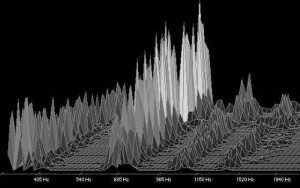
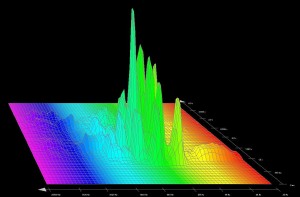
On the sound page, we have seen that the audible frequency spectrum, that is, the range of frequencies perceived by the human ear, extended from 16 to 20,000 Hz. Each sound has its own frequency spectrum corresponding to the “signature acoustics”. The 3 voiceprint examples below will allow you to practice frequency analysis.

equalizer
Example 1

This harmonic analysis is carried out from a wav file. There are 4 frequency bands (around 330, 660, 990, and 1600 Hz). We note that the 660 Hz band dominates with its strongest energy: it defines the dominant tone. The other bands are secondary tones. Voices are not the only voices featuring spectrums with particular dominant tones; This is also the case for musical instruments. This is what differentiates them from noises that also have secondary tones that overlap without any relationship between them.

Audio Equalizer

Example 2

Recording of a female voice characterized by a low-mid dominant spectrum. Low frequencies at the beginning of the low-mid range and in the bass register.

female_vote_equalizing
Example 3

Recording of a female voice, voiceover on television. The registration is more extensive in the range of low and low mids.

II – RECOGNIZING FREQUENCIES

The equalizer allows you to intervene in the frequency spectrum of a sound by increasing (increasing) or attenuating (cutting) certain bands. In this way, we can eliminate unnecessary or unpleasant frequencies, strengthen a voice, correct the instruments so that they do not overlap too much when playing simultaneously or create a musical style. Such manipulations must be exercised with discernment. Before embarking on frequency corrections, you must learn to recognize the most important frequencies of a sound. This will avoid big mistakes that could kill crucial ranges of the spectrum … A little too low or an exaggeration of the treble and the song will quickly transform into an amalgam of frequencies that will sound more like noise than music! In isolated sounds, identification of different frequency bands is relatively easy. Choose audio files for vocals or instruments instead of composite songs.

III – THE EQUALIZER SETTING

The correct setting of an equalizer is not obvious since there is no miracle recipe. Adjustments are just compromises for a set to keep its balance while making corrections on certain instruments. Musical tastes and sensibilities also influence the stages. Therefore, in this area it is difficult to give absolute rules, but we can reflect on the following points to avoid …

There is no need to cut entire ranges of the spectrum. Pay attention to strong fades in the mid range. You run the risk of getting a confusing set. Preferably make corrections in a very narrow spectrum or specific frequencies.

IV – GAIN ORĀ  LIMITATER?

In a composition, most of the corrections correspond to attenuations that allow giving rise to each instrument. In some cases, a positive gain is applied to increase the presence of a voice or to give air to an ensemble. Corrections are generally between -6 dB and +6 dB, but we can also reserve a space for creativity by deviating from these values.