Principle of mp3 and file format analysis. Part 2


Free Download Mp4Gain
picture

Principle of mp3 and file format analysis. Part 2

mp3

MP3 uses perceptual audio coding (Perceptual Audio Coding) this distortion algorithm.

mp3

The frequency range of sound perceived by the human ear is 20 Hz to 20 kHz. MP3 cuts out a lot of redundant signals and irrelevant signals. The encoder transforms the original sound into the frequency domain through a mixed filter bank and uses a psychoacoustic model. to estimate that it may be only The perceived noise level is quantized and converted to Huffman coding to form an MP3 bit stream. The decoder is much simpler, its task is to extract the sound signal from the encoded spectral line components through inverse quantization and inverse transformation. The MP3 encoding and decoding process is shown in Figure 1.
2.4 Modified Discrete Cosine Transform The cosine transform
Modified Discrete CT (MDCT) refers to converting a time-domain data set to frequency-domain data in order to know the changes in the time domain. MDCT is an enhancement of the DCT algorithm. The first fast algorithm is fast Fourier transform (FFT), but FFT has complex operations, MDCT are real operations, easy to program.
When compressing audio data, first divide the original sound data into fixed blocks, and then perform direct MDCT (direct MDCT) to convert the value of each block into MDCT 512 coefficients. The 512 coefficients are restored to the original sound data, and The original before and after sound data is inconsistent because redundant and irrelevant data is removed during the compression process. The FMDCT transformation formula is:
k=0, 1,
.
n0=(N/2+1)/2, X(n) is the time domain value, X(k) is the frequency domain value. If N takes 1024 points, it becomes 512 frequency domain values.
The IMDCT transformation formula is:

n=0, 1, …, N-1
MDCT itself does not compress data, it simply maps the signal to another domain, and quantization compresses the data. When bit allocation is done on the quantized transformed samples, the entire quantized block must be considered the smallest, which is called lossy compression.
3 File Format Analysis
MP3 MP3 file data is made up of multiple frames, and the frame is the smallest unit of the MP3 file. Each frame, in turn, consists of a frame header, additional information, and sound data. The playback time of each frame is 0.026 seconds and its duration varies with the bit rate. Some MP3 files have extra bytes at the end that contain description information for non-audio data.


Free Download Mp4Gain
picture


Mp4Gain Main Window
picture


Mp4Gain Features
picture


Free Download Mp4Gain
picture

Principle of mp3 and file format analysis.

Principle of mp3 and file format analysis.

Principle of mp3 and file format analysis

Principle of mp3 and file format analysis

Principle of mp3 and file format analysis

1. Introduction
With the rapid development of file compression technology, MP3 has become the most popular music format today. High-quality music spreads rapidly around the world with the arrangement of 0 and 1, which shakes people’s hearts. What is MP3? The full name of MP3 is MPEG Audio Layer 3, which is an efficient computer audio coding scheme. It converts audio files into smaller files with an .MP3 extension with a higher compression ratio, basically maintaining the sound quality of the original file. MP3 is part of the ISO/MPEG standard, which describes audio compression using a high-performance perceptual coding scheme. This standard has been continuously updated to meet the pursuit of “high quality and low quality”, and has now formed MPEG Layer 1, Layer 2, Layer 3 three audio encoding and decoding schemes. MPEG Layer 3 compression ratio can reach 1:10 to 1:12, 1M of MP3 file can be played for 1 minute and 1 minute of CD-quality WAV file (44100Hz, 16bit, dual channel, 60 seconds) occupies 10M space, so Calculated, the playing time of a 650M MP3 disc should be more than 10 hours, and the playing time of a CD of the same capacity is about 70 minutes. The advantage of MP3 is that the CD is incomparable.
2 Analysis of the principle of MP3
2.1 audio standard
MPEG MPEG (Moving Picture Experts Group) is a group of dynamic picture experts under ISO, the MPEG standard which makes it widely used in various multimedia. The MPEG standards include audio and video standards, of which the audio standards have been established as MPEG-1, MPEG-2, MPEG-2 AAC, and MPEG-4.
The MPEG-1 and MPEG-2 standards use the same family of audio codecs: Layer 1, 2, 3. A new feature of MPEG-2 is the use of low sample rate expansion to reduce the data stream, and another feature is multichannel expansion, which increases the number of main channels to 5. The MPEG-2 AAC (MPEG-2 Advanced Audio Coding) standard was released by Fraunhofer IIS and AT&T in 1997 to significantly reduce data traffic. The MDCT (Modified Discrete Cosine Transform) algorithm adopted by MPEG-2 AAC has a sampling frequency between 8KHz and 96KHz, the number of channels can be between 1-48.
The three layers of MPEG Audio Layer 1, 2, and 3 use the same filter bank, bitstream structure, and header information, and the sampling frequency is 32KHz, 44.1KHz, or 48KHz. Layer 1 is designed for DCC (Digital Compact Cassette) compressed digital tape, the data rate is 384kbps, Layer 2 has made a compromise between complexity and performance, and the data rate is reduced to 256kbps-192 kbps. Layer 3 is designed for low data traffic from the start, and the data traffic is 128Kbps-112Kbps. Layer 3 adds MDCT transformation to make its frequency resolution 18 times that of layer 2. Layer 3 also uses average information similar to MPEG video. Entropy Encoding reduces redundant information. The vast majority of MP3s use the MPEG-1 standard.
2.2 Purpose of audio compression
The MP3 format began in the mid-1980s, when the Fraunhofer Institute in Erlangen, Germany, dedicated itself to encoding high-quality, low-data-rate sound. Let’s look at an example: you want to sample a song you like that is about 4 minutes long, store it on a disk, sample it in CD-quality WAV format, at a sample rate of 44.1 kHz, that is, receive a value of 44100 per second, stereo, each sampled data is 16 bits (2 bytes), so the space this song occupies is:
44100 x 2 channels x 2 bytes x 60 seconds x 4 minutes = 40.4 MB
If you download this song from the Internet, assuming the transmission speed is 56 kbps, the download time is:
40.4x106x8/56x103x60=96 minutes
Even a 1M broadband network requires more than 5 minutes, it can be seen that audio compression is particularly important to reduce audio data storage space.
2.3 Encoding and decoding
MP3 MP3 audio compression consists of two parts: encoding and decoding. Encoding converts the data in a WAV file into a highly compressed bitstream, and decoding takes the bitstream and reconstructs it into a WAV file.

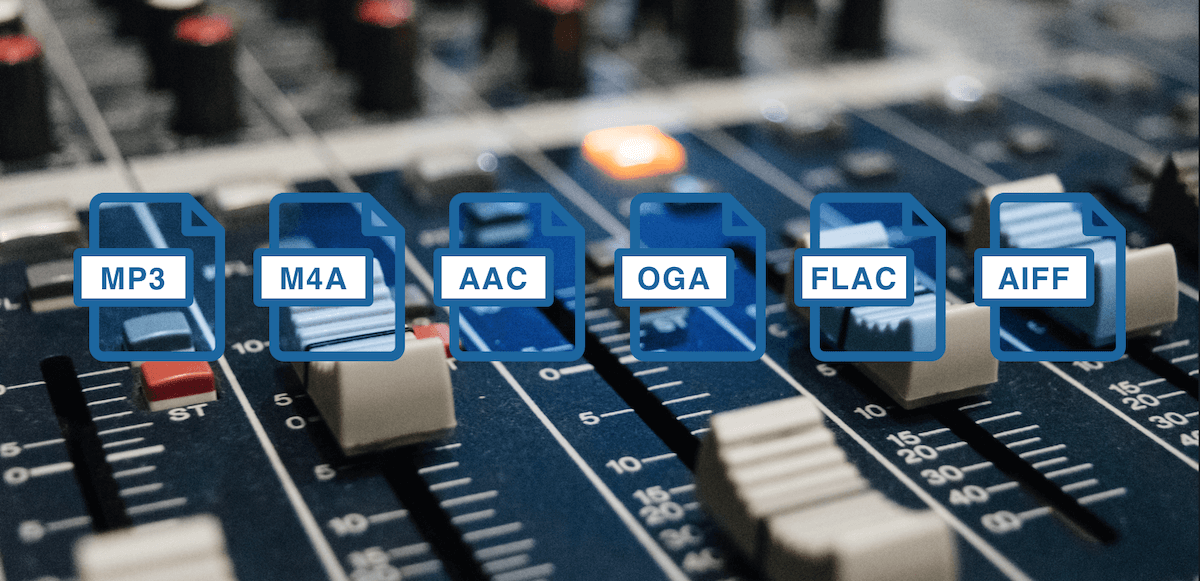
THE MOST COMMON FORMATS FOR MUSIC AND OTHER AUDIO FILES AND HOW THEY ARE RELATED TO EACH OTHER PART 2

THE MOST COMMON FORMATS FOR MUSIC AND OTHER AUDIO FILES AND HOW THEY ARE RELATED TO EACH OTHER PART 2

mUSIC fORMATS

AUDIO CONVERTER

Music Formats

With an audio converter the situation is even simpler. Programs of this type are specially designed to convert between audio formats quickly, without explicit user intervention. Unlike audio editors, converters, we can say, use batch mode, that is, they allow you to convert MP3 files in a single operation, for example, not a single copy, and make several pieces at once. Depending on the app’s function, there may be dozens or hundreds.

Audiobooks in MP3 format

Once again, the operation of such a package is simple. Just select the source material (usually it can be a completely different file type) and install the final format. Then press a special button to start the process, the output user gets all files of a certain type. Your save usually occurs in the folder set in the app’s default settings, but the save location can of course be changed by yourself. By the way, the same applies to basis functions, which will be used during the transformation. However, any program initially provides the user with a specific set of criteria to use with a specific type of audio file. They can also change.

The beauty of these apps is that they have a complete process that will automate as much as possible and do all the required processes without much time. However, if we use a music or audio editor, comparing them in terms of improving the same sound quality especially cannot be dispersed here.

MUSICAL ARRANGEMENT
This is another type of software, most of which have built-in editors for MP3, WAV, etc. In this sense, they work on a similar principle to audiorekatorami, but their abilities are slightly broader.

Convert to MP3 format

First of all, it deals with the fact that the entire composition can consist of fragments of different types (MP3, MIDI, WAV, OGG, VST-library or DX-tool, etc. D.). After recording all sound tracks, for example mixing and mastering with virtual synthesizers or prescription parties, the resulting files can be saved in the desired format. Mostly it is an MP3 or WAV, or the program’s project file. In some applications, there is also a recording function to disk. Do you want an audio CD? No problem! In addition to the audio editor, it may take a few minutes to perform the necessary operations and get the tracks on the output disc in CDA format.

If we talk about the benefits of this type of application, it is obvious that only a few formats of the same union, and then saving or exporting to some of the most common are its greatest advantages. Also, you need to pay attention to the fact that the very overlay effect or change of any track parameters happens in real time, that is, the result will not necessarily wait; can be heard immediately by turning some knobs, for example. , or another option. Of course, this is only a small part of what packages are capable of.

HOW SHOULD I USE IT?
Finally, we come to the question of choosing the software to use with the MP3 format, or any other sound to record to. As is clear, normal listening to music or audiobooks is enough and a humble player (software or “iron”), or more commonly a DVD player.

Converting files to other formats, so to speak, in a hurry, is the perfect audio converter. However, if the output needs to achieve crystal clear sound quality, or even convert one file type to another, it is indispensable without powerful dedicated software. Of course, this requires ordering more, and without any experience, time to get the same high-quality MP3 files as the first time and you can’t get. However, with at least some in-depth study from audio editors, let alone professional music studios, the results will exceed everyone’s expectations.

THE MOST COMMON FORMATS FOR MUSIC AND OTHER AUDIO FILES, AND HOW THEY ARE RELATED TO EACH OTHER

THE MOST COMMON FORMATS FOR MUSIC AND OTHER AUDIO FILES, AND HOW THEY ARE RELATED TO EACH OTHER

Music Formats


And for the direct competitors of the universal MP3 format, they can count on a lot today.

Music Formats

Due to continuing inconsistencies in home storage of the WAV format, it was eventually discontinued. But for professional studios, he says, the basics of the job. Especially when recording live vocals or instruments. Just convert the recorded material from WAV to MP3 at the final stage.

music format

However, music can be represented in some other popular formats nowadays. For example, many times (especially the Internet) they use these data types like OGG, AIFF, AMR, etc. But the real competitor of MP3 has become the newest and best audio FLAC etc. Of course, for MP3 you can convert all parameters to the maximum, but the playback quality of FLAC represents much higher. Also, it is a single file and the separation occurs directly on the track due to the player or startup software. In other words, listeners see each track individually, but can switch between playback tracks. For the MP3 format, this also seems possible to merge multiple tracks through it, thus creating a single file. But here it is in this version fast switching between tracks will not be possible (normal fast forward should be used, that’s all).

However, not everything is bad. The fact that music or audiobooks are all popular formats today allows them to be easily converted, even keeping the original parameters of the audio material. Based on this, and for sound processing and conversion and audio editors, almost all programs call converters. Any program of this type (MP3 editor or converter) detects the original and final type of audio files, is unambiguous and can produce direct and reverse transformations. Let’s explain this specific example.

WAVE THEORY AUDIO EDITOR FOR MP3 FILES
Many types of software are used in audio processing today. First, look at the narrow application of so-called audio editors. The most prominent representatives of these can be called giants Sony Audio Forge, Sintrillium Cool Editing Pro, which was later acquired by Adobe and renamed Audition, Acoustica Mixcraft, ACID Pro and many others.

mp3 editor

The principle on which they operate is that, for convenience, all MP3 audio programs have a typical waveform, as originally used for WAV files. This method determines the appearance and opportunity enough to edit any type of conventional audio material in WAV format. Other than that, the fact that you can do basic copy, cut, paste, etc. E., it’s just a matter of getting the frequency characteristics and bitrate changes, not to mention using a lot of extra effects that plug into VSTs via DirectX or a generic host bridge studio thing.

In its simplest form, the conversion can be done using the standard file menu, which contains the line “Save As…” (Save As…) or the export function present in MP3 format. Thus, all the process is reduced to just the final selection of the format (MP3 here as an example) and activation of the recording mode. In this case the conversion will be done automatically saving the current configuration parameters and the frequency characteristics. I don’t like the original version? ?Nothing is easier than changing the format to MP3, pre-specified with higher settings. However, one thing needs to be considered here: if the raw material is of such poor quality that special remediation or even professional tools will not work for audio it is necessary to use Repairs here, the intervention of various filters, etc. D. For the layman, it will cause great difficulties.

As is clear, there is absolutely no difference between the audiobooks we are dealing with: MP3, music or just recorded voice or noise. By the way, audiobooks are supposed to have a much lower sound quality by default. This is understandable, since the file has to take up minimal space and, in general, the perceived sound characteristics of speech are not that important. Finally, is this a professional recording of a particular set of albums?

However, if you use some standard operations, even without specific knowledge, it’s fine to achieve good results, especially since there are such built-in templates, based on any application for specific operations. Of course, it will be very difficult for the first time to achieve a perfect sound, but if you study the plan and understand how it works, it will work like clockwork, and as a result, it will take a lot of time.

Overview in the jungle of audio formats

Overview in the jungle of audio formats

Audio Formats

Size does not necessarily matter, especially with compressed audio files. The deciding factor here is the algorithm that is used during encoding. Meanwhile, there are quite a few, but not all of them harmonize with iTunes, iPod & Co. We provide an overview of supported formats and introduce the general working method of audio compression.

Audio File Formats

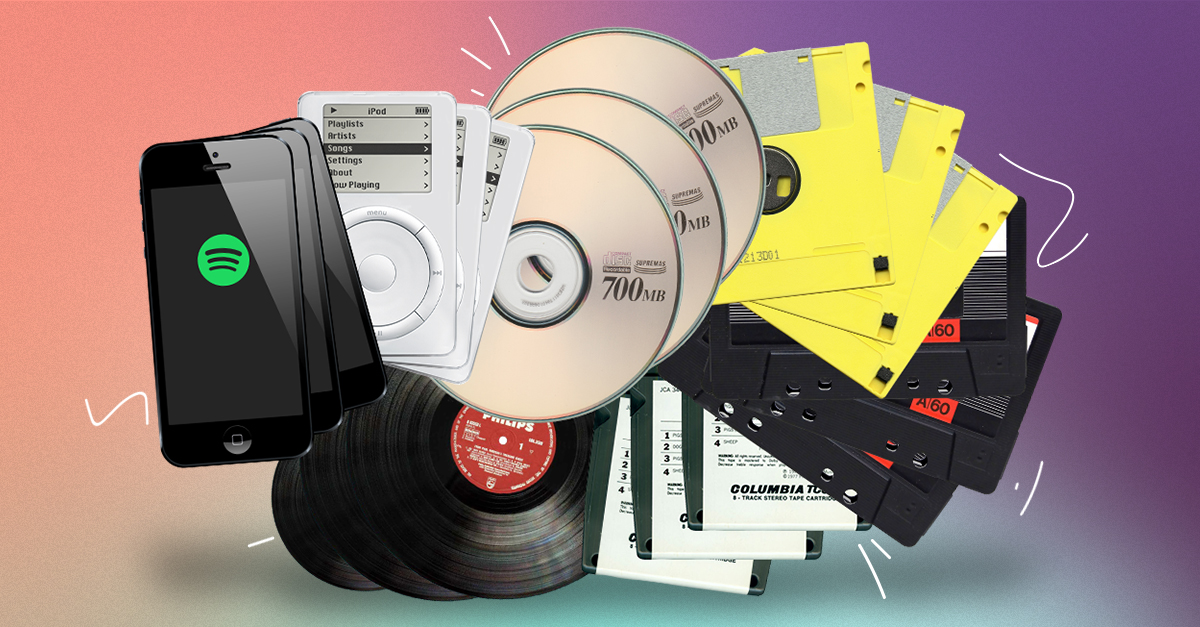
Since Philips introduced the audio CD in 1982, digitally stored music has been ubiquitous. However, since then, the number of digital data formats available has become so great that it is very easy to lose sight of things. There are basically compressed and uncompressed formats. The uncompressed WAV and AIFF formats are mainly used in audio media production due to their file size and high quality of the audio signal, and still on good old audio CDs.

Compression and reduction

Formats like Apple Lossless manage to reduce the amount of data without reducing the quality of the signal. This lossless encoder procedure is called data compression. However, you still have to live with relatively large files. This can quickly lead to difficulties, especially when gaming on mobile devices, as the battery drains very quickly. On a fourth-generation iPod, AAC-compressed music could only be played for three and a half hours in the test. However, when highly compressed audio books were used, it was more than ten hours. The other lossy processes accept a loss of quality in exchange for the advantage of a small file size. Here, the original quality of the music signal cannot be restored during playback. These compression processes make use of certain properties of human hearing to reduce data: the brain simply masks sound signals that are considerably quieter than other sounds that are perceived at the same time. Another effect that has been exploited is that there must be a minimal difference in the frequency of the tones to be able to distinguish them and to be able to perceive them consciously. Here there is also the possibility of saving. The encoder just skips everything within the specified bit rate that the brain would also leave out in its opinion. If the bit rate is set too low in relation to the complexity of the audio signal, you will inevitably notice signal interference, so-called artifacts, during decompression, that is, you will notice that the original has been compressed.

Bit rates for everyone and everything
Lossy encoders, unlike lossless encoders, can compress source material with different bit rates. The results are qualitatively very different. As a general rule, the average listener can no longer distinguish what is heard from the original signal of a bit rate of 160 kbps for MP3 and 128 kbps for AAC. However, this only applies to music; audiobooks, for example, can be compressed much more without incurring excessive losses. Bit rates of 96 kbps are sufficient for good results. Modern versions of encoders, including iTunes, can also compress the audio signal with a variable bit rate (VBR). The complexity of the source material is checked. If a passage is not very elaborately designed, the encoder automatically regulates the bit rate and saves space for more complicated parts. There it increases the bit rate again to improve the result. The option in iTunes to select the encoder settings and the encoder itself can be found in iTunes -> Settings -> Advanced -> Import. From encoder to bit rate to variable bit rate, you can choose the one that best suits your needs and needs from many options.

AIFF
This data format is not compressed and corresponds to the original data on an audio CD. Therefore, a large file size is expected. A music CD usually contains 80 minutes of music with a size of 700 MB. Therefore, this format is a bit difficult to handle. AIFF isn’t doing itself a favor, especially on mobile music players, as the battery capacity drains very quickly.

Wav
In principle, what has been said above also applies to WAV files, the two formats are very similar. This format is also usually uncompressed, but there are also variants with compression.

MP3
The MP3 data format, strictly speaking the MPEG1 Audio Layer 3 standard, was one of the first to achieve high data compression and therefore a reduced file size. In times of Internet connections via modem, it quickly found widespread use. Today’s encoders come with a variety of possible VBR and bit rates, so there is something for every purpose.

Lossless apple
This can be used to create files that have no signal loss compared to the original when played back. However, the files are quite large and the bit rate is usually over 900 kbps. Therefore, this format is less suitable for mobile devices due to the shorter battery life.

AAC and protected AAC
This encoder is a further development of MP3 and generally works better than MP3 encoders. Protected AAC files have rights management (music files purchased from the iTunes Music Store are in this format).

Audible
Audiobooks purchased from Audible.com come in a file format that is a variation of AAC. The files have the extension .m4b. This file format supports bookmarks so you can continue listening to an audiobook where you last left it.

Windows Media Audio on Mac
Since Windows Media Player no longer exists for the Mac operating system, the Flip4Mac company has been offering a QuickTime component that allows you to open Windows Media files directly in QuickTime Player. However, digital rights management files cannot be played. WMA files offered by some internet music stores (eg Musicload.de) cannot be played with this solution. iTunes is also not supported. You can find an installer for the component on our brochure CD under Software -> Mac -> WMA Components 2.2.0.49R.dmg.

OGG Vorbis Audio
The OGG format, which is free of software patents, can be added to iTunes at a later date. The required QuickTime components can be found under Software -> Win -> OGG_xiph-qt-win32-0.1.5.exe or Software -> Mac -> OGG_xiph-qt-0.1.8.dmg on our brochure CD. After installation with the supplied installation program in the respective operating system, both QuickTime and iTunes can play OGG files. However, all iPod and iPhone models still cannot play OGG.

Mp3, the winner

In the era of broadband connections, fiber optics and HD videos on YouTube, MP3 remains the reference format for audio files. We are now so used to listening to music in compressed formats, and often through poor quality playback systems, that it is difficult for us to remember what listening to music really means. The recent evolution from download to hit-and-run streaming has only made the situation worse by further devaluing the value of music. When was the last time you listened to a record from start to finish without interruption, spending those 30-40 minutes on “simple” listening activity?
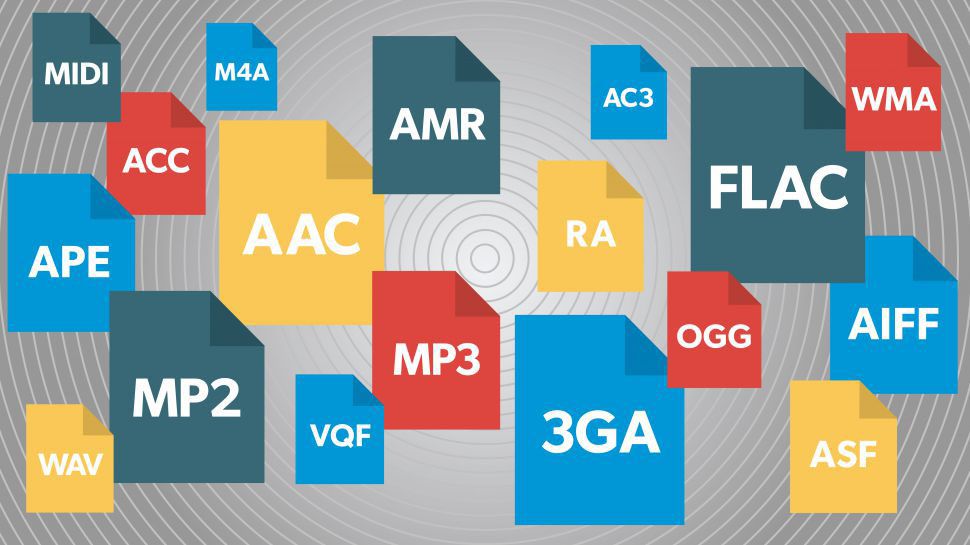
Audio formats

Premise: This post is not a crusade against Spotify because I use it myself for new releases or to have some background music at work, it is not even an analog vs. digital (or vinyl vs. CD vs. MP3) post because on this topic en Much has already been said. My goal is to make you understand what you are missing, in qualitative terms, if you listen to music in compressed formats.
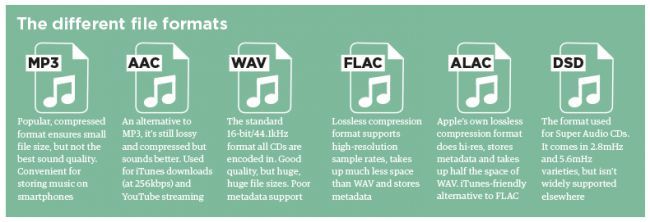
Audio formats

Sampling and theoretical aspects.

Audio recording on a computer or digital medium assumes that the signal passes through an analog> digital (AD) converter, so that the continuous electrical signal generated by microphones or musical instruments is transformed into a digital signal (series of 0 and 1) This process is called sampling. The final quality of the recording depends on several factors: converter quality, sample rate, and bit depth.

To make an easily understandable comparison: When shooting a movie, the “analog” reality perceived by our eye is stored in a movie that takes 24 frames per second. If we consider the standard of the audio CD (44.1 kHz, 16 bits), for every second of music 44100 pictures are taken from the computer to the continuous electrical signal. If with the sampling frequency we have simply established how many times in a second the waveform will be analyzed, with the bit depth we assign to each sample a numerical value: 2 ^ 16 = 65,536 possible values.

If you wonder how it got to 44,100, I refer you to the Nyquist-Shannon sampling theorem.

When we press the record button on our computer, through the PCM (pulse code modulation) sampling process described above, the files are saved in uncompressed WAV or AIFF format.

Lossless files and lossy files

PCM files take up a lot of space on our hard drives because, as we have seen, there is the data necessary to describe the analog waveform in as much detail as possible. Indicatively, a WAV or AIFF file as audio CD will occupy 10 MB for every minute of music.

To overcome this problem, remember that in the early 2000s storage space cost around $ 10 / GB, while today the price is around $ 0.03 / GB (source): Audio formats have been introduced that , through an algorithm encodes and decodes information, reduces the size of the file. These codecs fall into two categories: formats with lossless compression and formats with lossy compression.

As the name implies, lossless compression indicates a reduction in file weight (usually around 50%) without loss of information. Leaving the world of audio aside for a second, ZIP and RAR files are clear examples of this type of compression: at any time we can “unzip” such a file and have access to the original information again without this no way has changed.

The most common file formats are: FLAC (Free Lossless Audio Codec) and ALAC (Apple Lossless Audio Codec).

Lossy compression, on the other hand, implies that some of the original audio information is somehow removed to obtain a file that weighs even 90% less than the PCM.

By what criteria is information removed without “compromising” the original audio too much? Since our hearing is an imperfect instrument, codecs exploit two principles of psychoacoustics: the minimum threshold of audibility (the human ear does not perceive all frequencies in the range between 20Hz and 20kHZ equally) and masking (a weaker sound). is masked, making it inaudible, by a louder sound.)

Compression algorithms, however advanced, introduce a number of artifacts into audio files that, if played back in discrete quality audio systems, can be easily recognized or at least noticed even by an inexperienced ear. Several studies have shown that an untrained ear does not distinguish the difference between an uncompressed file and an MP3 with a bit rate equal to 256kb / s or more.

The most common lossy formats are: MP3, OGG Vorbis, AAC.

The victory of MP3

Since its introduction in the mid-1990s, MP3 has established itself as the industry-standard consumer format fueled by file-sharing through peer-to-peer channels, where, with slow connections, the heaviest file was the one it was downloaded, the longer it took to obtain it, and since the market introduction of MP3 players in which we tried to store as much music as possible and, therefore, we resorted to very compressed files.

In the transition from the era of downloading to that of small transmission files, they ensure smoother and smoother data transmission.

Despite, therefore, the evolution that has taken place in recent years in the speed of Internet connections and the reduction in the price of storage systems, only in recent years have services been created to buy files from High-quality online audio (HD tracks) or HD streaming services (Tidal).

Examples and audio files.

The main services we use to buy or listen to music use these compression levels (all information is taken from the official websites of each service at the time this publication was written).

Spotify: OGG Vorbis files at 96 kb / s (normal mobile quality), 160 kb / s (normal desktop and web player quality, high mobile quality), 320 kb / s (premium users: high desktop quality, very high quality mobile).
iTunes: By default, CDs are imported into 128 kb / s AAC files. Files in the iTunes Store are of this quality, except for “iTunes Plus” songs converted to AAC at 256 kb / s.
Pandora: 64kb / s AAC (free users), 192kb / s AAC (premium users).
YouTube: HD videos (720 or 1080p) have an audio quality equal to 384kb / s, SD videos (360, 480p) have an audio quality equal to 128kb / s.

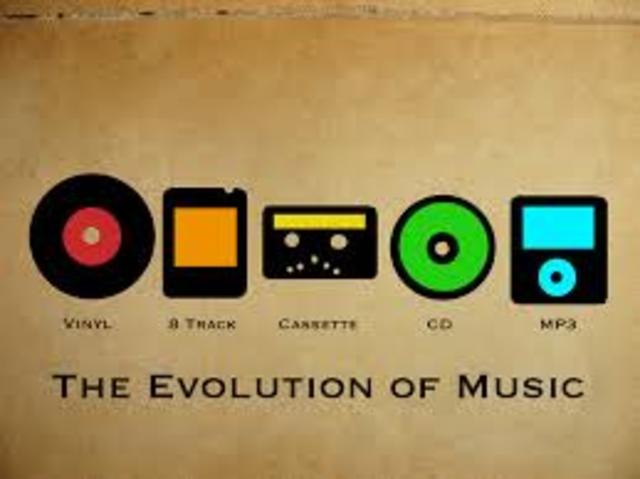
Choose the sound format well into 2020

Although many dematerialized music rhymes with MP3, it is recommended to take a tour of the owner in existing dematerialized formats to choose the audio format well when digitizing their CD / Vinyl.

What is an audio format?

An audio format is to simplify a kind of container where dematerialized music is stored: it is important to choose it carefully when ripping a CD, because its properties will directly affect the quality of the file created.

audio formats

Therefore, selecting audio format is a crucial step and it is advisable to guarantee three things with priority: the quality, functionality, and the fact that they are standard and legible on a maximum of devices, whether on a PC or MAC computer, but also on your smartphone / car radio …

It is also important to understand that in general, and although there are exceptions, the choice of audio format consists of placing the cursor in the middle between the quality on the one hand and the space occupied by the media on the other. storage.

audio format

Choose audio format: which challengers?

select aac-ogg-wma mp3 audio format
The 4 semi-amazing audio formats with destructive compression.

MP3:
Give glory where honor is due. MP3 is just as popular as it is underrated: it will have done a lot for dematerialized music by itself and has enabled millions of people around the world to discover a new way to listen to their music.

MP3 is a format of strong and destructive compression, in other words, a large part of the musical signal will be suppressed (priority, frequencies inaudible to the human ear … but not only!), And therefore offers a quality that only becomes good for from 256/320 kbps.

Is this a good opportunity today? Not being the best from a quality standpoint, choosing mp3 audio format today allows you to be sure that you can listen to it on all devices released for 10 years. MP3 is dematerialized music, what jeans should wear: versatility and the highest “acceptance rate” in the world.

Note that it is also advisable to choose mp3 audio format if you have limited storage space on a smartphone, for example because it is (in the company of AAC / WMA / OGG) the type of format that requires least space.

AAC:
This format is similar to “Apple MP3”. It has the same qualities and shortcomings as the previous one with some details: slightly better at the same speed, on the other hand it is far less standard: except for the fact that manufacturers have made explicit agreements (and pay because they require a license) , we find in Practice much fewer AAC compliant devices.

So it should be avoided unless you only have Apple products around you (even the car radio? I doubt it) and even in this case they are all perfectly mp3 compatible.

WMA
If AAC is Apple’s MP3, WMA Microsoft is MP3. Even less widespread because it doesn’t benefit from iTunes / Music Store / iPOD steamroller (who still remembers Zune’s iPod killer? Miscrosoft)

Again, forget the same qualities and shortcomings as MP3, but even less standard, therefore urgent. I even advise you to convert your existing WMA files to MP3 at a similar or slightly higher bit rate to ensure durability. Therefore, choosing WMA audio format today is not a good idea.

OGG:
We also find it under the name “vorbis”, we also have an mp3 clone here, except it is compatible with the free world (understand free) a bit in the same format as Linux.

Ogg is a completely free format unlike the previous ones, but despite this it is very confidential and is generally used only by those who take a pro-free dogmatic stance. While this position is quite respectable, selecting OGG audio format in 2014/2015 does not seem like a good idea because it is not widely distributed and above all it is like MP3, a destructive format.

WAV:
WAV is the first format on the list that does not deteriorate the quality extracted from the CD, and therefore offers an identical bit rate of 1411 kbps and therefore provides optimal quality.

However, the format shows its age and is limited in several ways: no space optimization (one second of silence = one second of noise) and no metadata or album cover management.

Therefore, choosing Wav audio format is similar to generating very heavy files and simply impossible to organize properly in a music database.

All about Audio formats (2020)

The algorithm used to compress and decompress files is called CODEC (acronym for compression / decompression). “Codec” is software that tells the computer which mathematical operations it must manipulate to compress them and which ones to perform to show them compressed.
Instead, the “format” is a kind of file that contains the codec and integrates it with the system.

Sounds are digitally recorded using a technique called “sampling”: the sound wave is divided into many pieces called samplers.

audio file formats

The quality of a digital audio track depends on:

– sampling frequency, measured Hertz (Hz, number of samples per second). A frequency at 11.025 Hz is suitable for recording voice, one at 22.050 Hz (medium quality) is suitable for recording a tape and one at 44,100 Hz for recording in CD quality. Reducing the sample rate leads to loss of quality.

– from termination, ie. the number of bits used (8.16, 24 to 32) for each ciampione (with 8 bits = 1 byte for 256 options, 16 bits = 2 bytes for 256 * 256 = 65,536 values ​​in the levels, and so on). Converting 16-bit to 8-bit samples cuts the original file in half, but also reduces the quality of the music.
– the number of channels: mono (1) or stereo (2).

bit rate: the product of these three elements: frequency, resolution, and number of channels are defined as bit rate, ie bits per second or bps. From this it can be deduced that every second there are 44,100 recorded values ​​which are then multiplied by the 2 stereo sound channels which are multiplied by 16 as the recording takes place in 16 bits (corresponding to 2 bytes). Then we get:

The bit rate for songs on audio CDs = 44,100 * 16 bit * 2 = 1,411.2 kbps (~ 10.6 MByte per minute 44,100 * 2 byte * 2 * 60)
The bit rate of an audio recording = 22,050 * 8 * 1 = 176.4 Kbps (~ 1.3 MByte per minute = 22,050 * 1 byte * 1 * 60)

Accordingly, compressing by reducing the total length of the file will reduce the average length of the subsequent ones, ie. it will reduce the average bit rate. Therefore, in these cases, the average bit rate becomes the index of the compression scope. For example, if the source file had a bit rate of 1,411 Kbit / if the compressed file had an average bit rate of 320 Kbit / s, we would have reduced by a factor of approx. 4.5.
Loss compression compromises the loss of information and the size of the final file, while a lossless compression must balance the size of the final file with the execution times of the algorithm.

losseless

The most popular lossless audio formats are:

-WAV sampling, Wave file (Waveform Extension), where wave means wave: standard format for audio files in the Windows audio sampling environment; It has large dimensions as it manages sampling frequencies of up to 44.1 kHz, 48 kHz and now also 96 and even 192 kHz, resolution of up to 32 linear bits and allows to store stereo or surround signals with a number
Unlimited in a single speaker file (equivalent to so many channels). The wave format is nothing more than digital recording of real sounds, sounds that have had
originates from a source external to the PC. In a WAV piece of music drums, piano, guitar, bass or
voice is heard in the same way, regardless of the PC to which the file is heard (to
obviously with the same acoustic quality of the hardware components).
-Aif (Apple Audio Interchange File Format or AIFF) similar to WAV format, is a format that generates good sound quality, is compatible with many browsers and does not require plugins. to Apple’s AIFF format. The Au format also manages more efficient quantization methods that allow a reduction in the amount of data by even 4 times the original value at the cost of a modest loss of quality.
-APE (Monkey Audio; .ape): Lost raw format that allows you to reduce the space occupied
our music about 50% (in some cases even more) without loss of quality. This way an album there
wav format has approx. 600 MB, has an average of 300 MB (much more than about 100 MB a
high bit rate and 60 mpc of an mp3, but the quality is identical to the original); I say, on average, because there is
certain types of music where the level of compression is even higher. To listen to songs in this format,
you can use plugins for WinAmp or, better yet, a player that integrates the native as
Foobar 2000. Right now it’s probably the best lossless codec considering a balance between
speed and compression (click here for lossless comparison table).

An overview of the main audio formats that can be found on your computer

Codec for mp3, mpc, flac, mono, ogg vorbis and more.

For convenience, audio formats can be divided into unprofitable (unprofitable) and unprofitable (or unprofitable without losing quality).

The idea of ​​loss formats (most common among ordinary users) stems from the idea that the human ear misunderstands all the sounds that are in a standard WAV file at 44,100 samples per second.

In this way (as in the JPG format of the images) we will drop the high frequencies, which are thought to be less different from our hearing. The more these frequencies are reduced, the more space is allocated to our track (for example, 3 MB instead of 6 MB for a few minutes of song or much more) … but it also degrades the quality of the result, as the cut frequencies are no longer so “inaudible”.

Converting to WAV from lossy formats does not provide any benefit (unless you have to process the track and save it several times, in which case the quality loss will be limited to the first step); There are also programs that are able to bring some of these high frequencies back into our tracks, such as Steinberg Clean Plus or others (such as the first versions of Easy CD Creator or other, even more professional ones), but by doing the job properly , more than No they can do a lot.

Unbearable (lossy) formats try to reduce the space occupied by the track without touching the sound; the degree of compression will be much less than the loss, but there will be no loss of quality. If it is converted back to WAV (possibly processed), the sound will be identical to the previous one.

wav

To listen to audio tracks in various formats, we recommend using audio players that can support different formats, such as AIMP and Foobar2000.

Lost audio formats (lossy quality)

WMA (.wma): Windows Media audio format, compressed and very similar to mp3. Microsoft audio compression format. Files compressed in this format are approximately 20% smaller than MP3 files

MP3 (.mp3) is briefly suitable for the MPEG 1 III layer and identifies audio files that use this algorithm. This is a standard that removes inaudible sounds from the human ear. This way the 128 kbps mp3 track takes up 1/11 of its space in .wav or audio CD format.
Some rate 128-bit bits as “CD quality”; In fact, the frequencies that are reduced to save hard disk space are not so “inaudible”. 192 The results are starting to get good and at only 320 kbps we can talk about the quality of CDs … Until a few years ago the quality of mp3 was considered high, but now with the advent of more modern sound cards, 24 bits: we continue to use mp3 compared to other formats like like ogg or mpc, more for its diffusion and compatibility than the quality of the result. A 600 MB album in wav format will take up about 50 MB in 128 mp3 format.

To convert an audio track to mp3, it’s a good idea to use the Lame mp3 codec (free) in all the best conversion programs (download).

AAC audio format

AAC (.aac and .mp4): A lossy format that delivers high quality (currently the highest among lossy formats), at least one step higher than mp3. A feature of this format is the ability to protect DRM from being freely copied from one platform to another (unless applications are used to protect it).

AC3 (ac3). This is the audio format used by DVDs. We usually find it at 384 kbps (and 6 channels), but it is also possible that you only have it at 2 channels and lower speeds. One of the free programs that supports it (and allows, for example, to reduce the bit rate) is BeLight (Besweet).

OGG VORBIS (.ogg) is a great open source codec. It is able to give better results than mp3, especially at low bit rates (higher quality, less space), which is less than 128 kbps (download). It is compatible with virtually all audio players (both software and audio).

MusePack (.mpc): Very large output format, especially at high bit rates (more than 192 kbps and above). The results are much better than mp3: just listen to one 192 kbps mp3 encoded track and one mpc track at the same bit rate to immediately feel the difference (in some cases without words …). Many people considered this to be the best lossy audio format, at least until mp4 was released. It is compatible with WinAmp through plug-ins and, on average, with more advanced players such as Foobar 2000.

Digital audio formats

Digital audio formats

Below is a non-exhaustive list of the most widely used digital audio formats.

AIFF – Audio Exchange File Format

Apple uses a standard audio format. This can be considered the wav equivalent of a mac environment. Audio data is organized according to PCM encoding and is not compressed. There is also a condensed option defined as AIFF-C or AIFC.

AAC – Advanced Audio Encoding

This format is based on MPEG2 and MPEG4 lossy compression standards. It was created as a successor to the mp3 format, which uses a slightly better algorithm. This allows you to get slightly better quality for the same speed.

ALAC – Apple Lossless Audio Codec

This is Apple’s lossless audio format. Also called ALE (Apple Lossless Encoder).

ATRAC (.mp3) – acoustic coding of adaptive transformation

Old Sony audio format with ATRAC compression. Files always have a .mp3 extension, but you need the ATRAC3 driver to open them. MiniDisc was a commercial advertising product that took advantage of this type of format. The codec was later improved by subsequent enhancements such as ATRAC3 (1999), ATRAC3plus (2002), and ATRAC Advanced Lossless (2006).

AS

This is the standard audio format used by Sun, Unix, and Java operating systems. Data encoding can be PCM (uncompressed) or compressed with μ-law, a-law G729 codecs. The Au audio format was introduced by Sun Microsystems. It was a format used on NeXT systems and early websites. Initially, the file did not have a header (the original data from the file) because the encoding was unique: 8 bits with µ-law compression and a sampling rate of 8000 Hz. The latest version of this format contains a header consisting of six blocks. 32 bits, an optional block of information, and finally audio data.

flac

FLAC is a free lossless audio codec

It is an audio codec with lossy compression (without losing information). Data compression can reach 50-60% without losing quality.

M4P

It is a patented version of the MP4 AAC format with a DRM (Digital Rights Management) system developed by Apple to download music from the iTunes Music Store.

MPEG-4 Part 14 or MP4 (formerly ISO / IEC 14496-14: 2003) is a storage medium for multimedia data. It is mainly used to store audio / video data, but can also be used to store other types of data, such as still images and subtitles. Like all modern formats, this format allows data to be sent over the Internet in real time: this feature is implemented by adding a data path for transmission control. The only extension for files that use this codec is .mp4.

mp3

MP3 – MPEG layer III audio recording

It is currently the most widely used audio format. The MPEG-1 or MPEG-2 III audio layer, commonly referred to as MP3, is a patented lossy format. It is used for digital music use at the user (non-professional) level.

OGG

It is an open source container that supports a variety of formats, the best known being the Vorbis audio format. This format offers MP3-like audio compression, but is less common. The big difference with mp3 is the absolute free format. In terms of performance, with the same parameters, Vorbis is slightly more efficient than MP3.

The Ogg cache can handle multiple independent streams at the same time: audio, video, text (such as subtitles), and additional data (metadata).

RA and RM

This is a format developed by Real Audio to transmit audio over the Internet. The .Ra format allows you to store all the audio files you want to transfer in one file. The codec enables transmission from very low quality to high accuracy.

RAW

A RAW file can contain any type of data, but in reality it is mainly used for PCM-encoded (uncompressed) audio data. Thus, unlike the uncompressed audio format (wav, aiff), a flat file does not contain headers with information about the data itself (usually the header contains information about: sampling rate, quantitative bits, channels, type of markup used for the ideas). A typical file extension for this type is: .raw, .pcm, without the extension.

Vox

This audio format uses Dialogic ADPCM (Adaptive Differential Pulse Code Modulation). This performs 4. compression. Vox files are similar to wave files, except that they do not have a header, so you need to specify frequency information.