THE MOST COMMON FORMATS FOR MUSIC AND OTHER AUDIO FILES, AND HOW THEY ARE RELATED TO EACH OTHER


Free Download Mp4Gain
picture

THE MOST COMMON FORMATS FOR MUSIC AND OTHER AUDIO FILES, AND HOW THEY ARE RELATED TO EACH OTHER
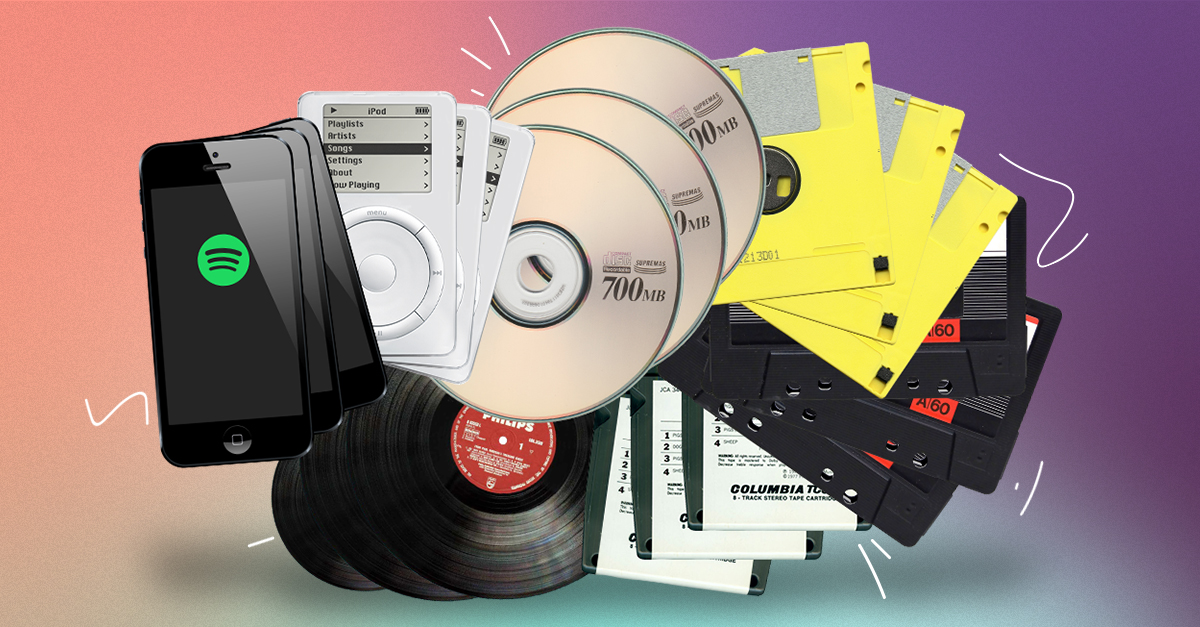
Music Formats


And for the direct competitors of the universal MP3 format, they can count on a lot today.

Music Formats

Due to continuing inconsistencies in home storage of the WAV format, it was eventually discontinued. But for professional studios, he says, the basics of the job. Especially when recording live vocals or instruments. Just convert the recorded material from WAV to MP3 at the final stage.

music format

However, music can be represented in some other popular formats nowadays. For example, many times (especially the Internet) they use these data types like OGG, AIFF, AMR, etc. But the real competitor of MP3 has become the newest and best audio FLAC etc. Of course, for MP3 you can convert all parameters to the maximum, but the playback quality of FLAC represents much higher. Also, it is a single file and the separation occurs directly on the track due to the player or startup software. In other words, listeners see each track individually, but can switch between playback tracks. For the MP3 format, this also seems possible to merge multiple tracks through it, thus creating a single file. But here it is in this version fast switching between tracks will not be possible (normal fast forward should be used, that’s all).

However, not everything is bad. The fact that music or audiobooks are all popular formats today allows them to be easily converted, even keeping the original parameters of the audio material. Based on this, and for sound processing and conversion and audio editors, almost all programs call converters. Any program of this type (MP3 editor or converter) detects the original and final type of audio files, is unambiguous and can produce direct and reverse transformations. Let’s explain this specific example.

WAVE THEORY AUDIO EDITOR FOR MP3 FILES
Many types of software are used in audio processing today. First, look at the narrow application of so-called audio editors. The most prominent representatives of these can be called giants Sony Audio Forge, Sintrillium Cool Editing Pro, which was later acquired by Adobe and renamed Audition, Acoustica Mixcraft, ACID Pro and many others.

mp3 editor

The principle on which they operate is that, for convenience, all MP3 audio programs have a typical waveform, as originally used for WAV files. This method determines the appearance and opportunity enough to edit any type of conventional audio material in WAV format. Other than that, the fact that you can do basic copy, cut, paste, etc. E., it’s just a matter of getting the frequency characteristics and bitrate changes, not to mention using a lot of extra effects that plug into VSTs via DirectX or a generic host bridge studio thing.

In its simplest form, the conversion can be done using the standard file menu, which contains the line “Save As…” (Save As…) or the export function present in MP3 format. Thus, all the process is reduced to just the final selection of the format (MP3 here as an example) and activation of the recording mode. In this case the conversion will be done automatically saving the current configuration parameters and the frequency characteristics. I don’t like the original version? ?Nothing is easier than changing the format to MP3, pre-specified with higher settings. However, one thing needs to be considered here: if the raw material is of such poor quality that special remediation or even professional tools will not work for audio it is necessary to use Repairs here, the intervention of various filters, etc. D. For the layman, it will cause great difficulties.

As is clear, there is absolutely no difference between the audiobooks we are dealing with: MP3, music or just recorded voice or noise. By the way, audiobooks are supposed to have a much lower sound quality by default. This is understandable, since the file has to take up minimal space and, in general, the perceived sound characteristics of speech are not that important. Finally, is this a professional recording of a particular set of albums?

However, if you use some standard operations, even without specific knowledge, it’s fine to achieve good results, especially since there are such built-in templates, based on any application for specific operations. Of course, it will be very difficult for the first time to achieve a perfect sound, but if you study the plan and understand how it works, it will work like clockwork, and as a result, it will take a lot of time.


Free Download Mp4Gain
picture


Mp4Gain Main Window
picture


Mp4Gain Features
picture


Free Download Mp4Gain
picture

What are the most common video formats?

The choice of audio and video codecs and containers affects video quality and file size. Here we show you how to find the format that best suits your needs.

Decades and decades of developments in the audiovisual field have led to a result that can be seen as strange in a way. While in other sectors the continuous development has led to a very pronounced standardization (think of the DOC or PDF format), the situation in multimedia is at least worse.

audio file formats

One example is the world of audio formats, which is animated by strong “competition” and a variety of available options. Indeed, it is no less than that of video formats. In this case, we actually have to deal with a separation between codecs and containers (we’ll see what they are and what role they play) that will make things even more complicated. So when converting a movie, you need to be careful to choose the right codec and video format to avoid creating files that are too large or simply unreadable. In short, the mistake is just around the corner.

Differences between containers and codecs

Before analyzing the situation and determining the most commonly used video formats, some basic concepts need to be clarified: First: What is the difference between the codec and the container? In the audio world, if the codec used to digitize the audio track matches the “final” file format, the codecs used in the video differ from the file format that the video file will adopt at the end of the digitization process. The reason will be explained soon and is in the multimedia nature of a video.

audio format

A film actually contains video and audio data: the conversion or playback software must be able to analyze both multimedia transmissions and therefore requires different algorithms that work with one or the other type of data transmission. This is exactly what codecs do: Since the name, code and decoding of data (audio and video) consist of films, you can convert them to another video format or play them back with a media player. Even with regard to containers, it is enough to use the literal meaning of the word: These are files that contain both the video and audio sequences and “provide” codecs for reading and playback.

What are the most common codecs?

As already mentioned, a codec is responsible for compressing and decompressing the video files and determines how they are played on the screen of the PC or smart TV. Each operating system provides the user with dozens and dozens of different codecs, each useful for encoding and decoding a particular type of file, even if new ones can be installed by downloading special software or packages from the Internet. Among the most commonly used codecs we find FFmpeg, Divx, Xvid, H.264 and its development H.265, VP9 and VP 10 (also known as the name of the Google codec).

What are the most commonly used containers?

Containers, on the other hand, have the task of “bundling” the audio and video stream processed by the codecs and can therefore be used for the media player software. Containers are determined, among other things, by the “final” video file format. The most common are: Avi, Wmv, Mov, Flav and Mp4.

-Avi. The AVI video format (short for Audio Video Interleave), developed by Microsoft and introduced in 1992 as part of its video for Windows technology, is one of the oldest used today. It is so widespread and used that many consider it to be the de facto industry standard. Its simple infrastructure (elementary, one would almost say) makes it easy to use on different operating systems (Windows, MacOS, Linux, Android and the most popular browsers) and enables the “storage” of streams that are processed by different codecs
Flv. This is the video format that resulted from compression by Adobe Flash software and was developed almost exclusively for playing movies on the Internet. If it could be seen as the de facto standard for video file formats on the web until a few years ago, this is no longer the case today: The spread of HTML 5 and the discovery of some bugs in the software caused it to change a bit On the one hand, however, the FLV video file format remains a favorite for those who generally create video for the network: with its compression algorithms, you can indeed get good quality small videos