Digitization and compression of audio files.


Free Download Mp4Gain
picture

The best posts are born from comments. And yes, there was talk of sound quality, digitization and more. After recently trying an in-depth study to understand what was the best optimization for an audio file, I’m ready to share my findings with you. For many, it will be hot water, I hope at least someone finds a decent explanation. I want to dispel the myths of loss-making formats, mp3 in my head and convince him that between an audio CD, a flac and an mp3 “good” nothing changes a tube. Listen to faith.

El éxito de la tecnología y la digitalización de la empresa en ...

First, let’s see what it means to digitize an analog signal.
Display the audio signal with a waveform. This is your analog signal. You don’t want to take the whole signal, but the bare minimum, so you can rebuild it later. You must select the value that the wave assumes at a specific time (sample). Therefore, the number of points it takes in a second corresponds to the sampling frequency and must satisfy a particular sentence so that there is no ambiguity (technical alias) in the waveform you would suggest again. The best picture that clarifies the concept is the following:

Aliasing

aliasing

The red signal has been sampled too low in frequency, and the stored dots (squares) are not sufficient to uniquely reconstruct the original signal. In fact, the blue line passes through the sampled points.

For each point you mark, you must now select the precision or decide how much space (bits) you want to allocate to store the data. Mathematical comparison, decide how many numbers to keep after the comma. The more you hold, of course, the better it will be. However, for some signals, it is not enough to have very accurate precision. For example, 3 numbers after commas will suffice (precision to the thousand). In other cases, you need more precision because the variation can take place on the fourth or fifth decimal. In information theory, more bits are used for the least used values, and vice versa, fewer bits are used for the most used ones (as they transmit less information).

Let’s see what the specifications of an audio CD are. The acoustic signal produced by musical instruments is digitized using a 16-bit quantization and a sampling rate of 44100 examples per second. Second: that is, 44100 examples are saved for every second of the song and each sample is saved using 16 bits of memory. The bit rate of an audio CD is 44.1 kHz * 16bit = 705.6 kbps.
An mp3 encoder reduces the number of bits used to store the individual sample. In fact, the sampling frequency is a variable that is generally not played on mp3. However, it is of vital importance as it must satisfy the Nyquist-Shannon theorem: To avoid loss of information, an analog signal with finite bandwidth must be sampled at twice its maximum frequency. This allows us to eliminate the alias problem seen earlier. Used for our example, since the upper limit of the audible frequency of the human ear is around 20 kHz, a good sampling frequency is around 40 kHz. Typically, 44.1 kHz is used.

Start a small digression – a good site for sound testing to check the frequency range you hear (or how your system plays them) is http://www.audiocheck.net/. Personally, my ears (equipped with my now famous AKG headphones) are valued from 20Hz to 19kHz, while with iPod headphones I go from 40Hz to 18kHz (and it was over that AKG paid them 130 bitches). End of digression.

However, at the same sampling rate, the “precision” with which the data is stored contributes significantly to the quality of the compressed audio signal. To summarize, I would say that the sample rate plus a high bit rate guarantees good quality. How high should the bit rate be? Well, very often it depends on the actual signal, so much so that some mp3 coding algorithms have a so-called variable bit rate (VBR), where more memory bits are used for the parts of the signal used with less frequency according to Huffman coding.

In general, the 128 kbps files have good quality, but personally I find a noticeable improvement in the 256 kbps files, while between 256 kbps and 320 kbps (always in person) I hear no difference. And much less between 320 kbps mp3 and audio CD (706 kbps) …
Try it for yourself: (I didn’t want to influence you, but by the names you can also imagine what the mp3 coding specifications are).


Free Download Mp4Gain
picture


Mp4Gain Main Window
picture


Mp4Gain Features
picture


Free Download Mp4Gain
picture

MP3: features and alternatives

The peculiarities of the MP3 format and some clues about other solutions of equal or even higher quality.

Impossible to deny, the MP3 format is the most common and most enjoyable to listen to music on the go or, as it has been for some years, streaming. We use it everywhere now and any device can play it today.

MP3 is part of the family of audio files called “lossy”, that is, the types of formats that can also reduce the amount of data that should contain a sound, in any case try to maintain at least an acceptable quality.

The peculiarities of the MP3 format and some clues about other solutions of equal or even higher quality.
The parameters that determine the quality level of an MP3 file are: the sampling rate, bit rate, encoder and of course the source. Now let’s move on to the order.
At the origin of everything is the source, that is, the support or source from which the MP3 file can be downloaded. The higher the quality of the source, the greater the end result: purchasing MP3s from particularly reliable sites or extracting them from compact discs in good condition is the basis for a successful MP3. What becomes crucial is the encoder (the most famous and free is LAME) or the software that takes care of creating the file after properly configuring its parameters.

Portada

The sampling rate is measured in Herz and expresses the number of times per second. Second, as the analog signal is measured and digitized; for MP3 it must be as faithful as possible on a CD, ie 44 100 Hz (44.1 KHz).

Bitrate is the number of binary units flowing, measured every second. The value of the bit rate is not fixed: as it increases, the similarity to the original file will also increase proportionally. The higher the bit rate, the higher the quality, the larger the file size. The bit rate range ranges from 32 kbps to 320 kbps, the maximum that can be obtained from an MP3 file.

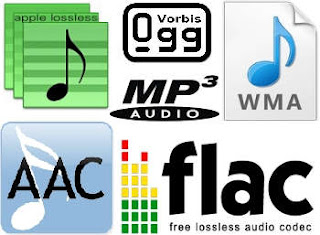
The ones we’ve just listed are an important part of the tricks that allow us to have an MP3 quality; however, be aware that a lost file is by no means faithful in all respects to the original source. The most famous lost alternatives are: AAC (the format Apple uses to sell music in the iTunes Store and since July to stream audio from the Apple Music service); WMA; MPC; OGG (excellent quality open source format).

If you are looking for maximum faith in digital audio, give up MP3 and its loss-free alternatives to switch to “loss-free” audio formats, ie loss-free quality. Overall, this file type compresses the original sound while keeping the number of bits intact. Needless to say, quality comes at a cost in terms of the space taken up: a lossless file takes about half of the original audio file, but “weighs” nearly three times as much as a 320Kbps MP3. Of these, the most famous and used are: FLAC; ALAC (Apple Lossless Format); BEE; WavPack. The “lossy” and “lossless” file distinctions are extremely applicable to images and videos as well, not just audio files.

On several occasions it has been said how absolutely difficult it is to distinguish an MP3 at 320 kbps, obtained under the best conditions, from its original version on CD or in lossless files; It is only possible to notice it with instruments at a certain level and with a good ear. When noted, the MP3 format is excellent for listening on the move, as highlighted above; On the other hand, to better preserve our music or listen to it on systems of a certain level, it is better to resort to lossless formats such as FLAC or ALAC.

Psychoacoustics in mp3 compression

Psychoacoustics is the science that deals with perceived sound rather than physical sound. In addition to its interest in pure research in the field of perception physiology and psychology, this science is especially relevant in our time where reproduction, transmission and manipulation of sounds by electronic means has become a reality. that permeate ever larger parts of our lives.

How mp3 filesd works, masking

You have to realize that audio information is extremely cumbersome. Let’s try to get an idea with an example:

Examples of how much space some information holds on the hard drive:

-A large book of 5 million characters (about the size of the Bible) in ASCII format (1 byte per character, only in text format) takes 5,000,000 bytes (about 4.8 MB)

-Great color photography, let’s say 1280×1024 pixel resolution of 16 million colors (ie 24 bits per pixel) pcupa 3932160 bytes (about 3.75 MB)

-1 minute of music In order not to suppress any audible sound, we need to test at 44.1 kHz, in stereo and with a dynamic range of at least 16 bits per minute. Sample. It has 10584000 bytes (about 10 MB)

That is, a minute of normal quality music occupies about twice the hard disk space than the Bible occupies!

mp3 masking

Of course, it is possible to compress information by losing quality, and that is exactly what happens in most cases. Here is a table with the specific guide quality parameters for some audio media. Note especially the case of the phone whose bandwidth is sufficient to transmit voice with reasonable intelligibility but completely insufficient for music transfer.

In fact, the voice remains understandable, although distorted if the range of the spectrum into which the formants fall, which is within 5 kHz, is retained.

Therefore, it is seen that it is important to develop coding techniques that allow the information to be compressed, reducing the space it occupies, but without losing the sound quality. Compression algorithms like ZIP are extremely effective at compressing text files, and they are lossless algorithms: the original file can be completely restored by inverting the algorithm. However, the zipper does not work well on audio files.

At this point, psychoacoustics intervenes.

The idea is basically that if we can identify in the audio signal the least notable components, we can simply remove them from the signal, reducing the size of the corresponding file without the signal apparently losing quality. Thus, the popular MP3 format was born.

But be careful: you have noticed that the algorithm explicitly foresees that the compressed signal will lose information this time. Once the irrelevant psychoacoustic components have been identified and removed, they disappear from the file and there is no way to recover them. This explains why it is not advisable to use MP3 compression twice in a row, or to unpack and compress again, that is why a level 6 compression does not match two level 3 compression. In this connection, however, it should be remembered that there are also lossless audio compression formats such as FLAC. However, they achieve lower compression rates than MP3.

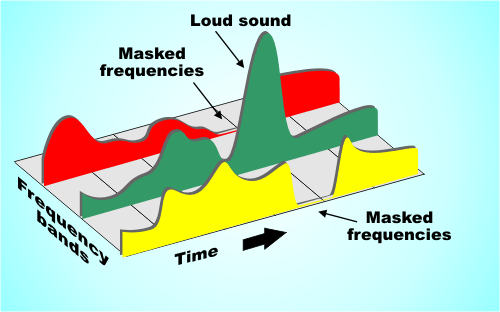
Psychoacoustics, through the concept of critical tapes, allows us to understand and utilize in our favor the principal responsible for the excellent compression efficiency of MP3: masking.

masking

On many sides of the wave physics section, we have emphasized the importance of the superposition principle and applied it to case studies. We insist that this is a very useful working hypothesis, a very important approach, both because it fits very well in many experimental situations and because its application opens the door to a wide range of results and capital mathematics techniques. significance for all physics and especially for wave physics.

In the case of sounds, we could summarize the principle as follows:

At a point in space where two simultaneous sounds arrive, the resulting sound is given by the (algebraic) sum of the two event sounds.
The principle is very intuitive, at least for not too intense sounds, because we know that the sound is nothing more than a small pressure variation, and it is therefore natural that two simultaneous pressure variations at one point determine a pressure variation given by the sum of thaw.
The beauty of the superposition principle is that it can also be used “backwards”: given a sound, it can be broken down to the sum of several elemental sounds. For example, Fourier analysis makes great use of this property.

In a way, our ear performs an analysis of the spectrum of the sounds it receives (the mechanism is illustrated in the physiology of the auditory system. Therefore, we may ask ourselves:

Given a sound that is the sum of the sounds of two components, will our ears always know how to break it down and discern its components?
The answer is negative in many cases. E.g:

-When two simultaneous sounds have very similar tones (see rhythms).
– when one of the two sounds is much louder than the other (simultaneous masking).
-When a very loud sound precedes a weaker sound (temporary forward masking)
-When a very loud sound follows a slightly weaker sound (temporary masking backwards)

In all these cases, there is a form of masking. The ear due to its structure cannot break down the general sound received into its physical components and perceives only one (as in cases 2, 3 and 4) or perceives a sound with completely different properties (as in the case of heartbeat). The origin of the phenomenon is explained by studying the physiology of the auditory system, and in particular through the concept of critical ties. Below we give more examples.

Simultaneous masking

Ordinary experience tells us that it is more difficult to hear sound clearly in the presence of background noise. This data is evident from daily experience, but if you think about it, they constitute an obvious violation of the superposition principle, that is, evidence that the principle does not apply to perceived sounds.

Here are two examples: First, a stronger pure sound masks a weaker sound included in the same critical band (between 400 and 510 Hz). In the second, white noise is much more effective at protecting pure sound. In fact, masking is achieved even if white noise is filtered so as not to contain spectral components in the same critical band of pure sound.

Data compression techniques

It is evident that coding techniques for multimedia information contain large amounts of data that require memory space for recording and high transmission speed for transfer to other digital systems.

These needs can be met by reducing the space occupied by the data with special compression techniques. Compressed data cannot be used directly for processing, viewing, or playback. Compression techniques are used by special programs immediately before data storage or transmission. During the read or receive phase, similar programs perform decompression. Compression can be done on the basis that information encoding techniques dedicate an always equal amount of memory to each information element (be it a character, a pixel or a sound sample), regardless of their statistical frequency and its significance.

The compression techniques developed so far are more than a hundred but grouped into two categories:

Compression without loss of information.

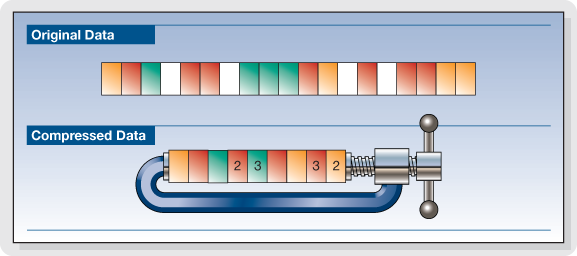
Lossless compression techniques are based on compact coding of the same data streams or coding with a small number of bits of the most statistically frequent data.

Picture
This compression is completely reversible and the decompression program returns the exact bit sequence as it originally was. For this reason, loss-free technique is applicable to any type of data, including executable texts and programs, although the achievable compression factor is not very high: values ​​usually range from 2: 1 to 4: 1. Of course, these results vary depending on the type of input data.

RLE encoding

Data Compression

The RLE (Run Length Encoding) compression technique is oriented to equal byte sequences. In the original version, it provides the introduction of a special character that indicates the beginning of a sequence, and instead of encoding the same characters in the sequence one by one, it encodes only the first one, followed by a number indicating where many times drawn and repeated. Specifies with the Sc character at the beginning of the sequence, the statement

these ******** are eight stars… these Sc * 8 are eight stars

where 8 is not encoded as an ASCII character but as a binary number.

The decompression program interprets the next byte as a counter and rebuilds the original sequence.

For image compression, RLE encoding only works well with images that contain large areas of uniform color, but are not very effective with complex images.

Compression with loss of information.

Loss-free compression techniques are not sufficient to solve the problem of the huge amount of data generated by encoding multimedia information, e.g. Video images while allowing better use of memory space on disks or data transmission lines. High resolution. , audio or video.

However, to try to solve this problem, it is necessary to remember that multimedia information, although subject to transformation, can remain understandable; This allows for compression factors that are higher in some orders of magnitude than those observed.

These interventions can be studied based on the behavior (vision and hearing) of our sensory systems to reduce the required memory without obvious changes in information content. Compression techniques that do this are called “lossy” since the least significant piece of information is irreversibly suppressed. Therefore, it appears that the bitstream after decompression is different from the original, and therefore these techniques cannot be used for other types of information, e.g. Text. Furthermore, the information thus compressed is not suitable for further processing as the loss introduced with each subsequent step becomes more and more apparent.

What are lossless file formats

Whether it is image, music or video files, it is important to understand the difference between different types of formats and when to use them. Using the wrong format can ruin the quality of a file or make the file size unnecessarily large.

file audio differenze

Some types of media file formats are “lossy” and some types “lossless”. We will explain what these terms mean for the benefits of each type of file format and why you should never convert lossy to lossless formats.

Compression explained.

We use compression to make files smaller so they can retrieve faster and take up less storage space. For example, when you take a photo, your camera captures all the light you can get and collects an image. If you save the image in RAW format, which retains all the clear data that the camera sensor receives, the image can reach 25 MB. (Depending on image resolution: A multi-megapixel camera provides a larger image.)

comprimere i-grandi-audio

If we upload these files to a social network or put them on a website, we don’t want these image files to take up so much space. A photo gallery with RAW images could take hundreds of megabytes of space. RAW formats can be used by professional photographers to maintain high image quality during the editing process, but they are not intended for the average person.

Instead, our camera or smartphone converts the image into a JPEG file. JPEG files are much, much smaller than RAW images. When you convert RAW to JPEG, some of the image data is “discarded”, which produces a much smaller file. The conversion process uses a compression algorithm that works well for photos, so they can look pretty good despite compression. You can still see compression elements, depending on the quality settings.

Note that lost formats generally have a setting that controls their loss. For example, JPEG has a variable quality setting. Low quality produces a smaller JPEG image file, but the image quality is significantly poorer. Below is a close-up example of a lost JPEG: various “compression artifacts” can be seen.

We call RAW a “lossless” format because it retains all the original data in the file, while we call JPEG a “lost” format because some data is lost when we convert an image to JPEG. However, these are not the only design and loss-free formats.

Images: RAW, BMP and PNG are all image formats without data loss. JPEG and WebP are lost image formats.
Audio: WAV is a container file that is often used to contain lossless audio, although it is also capable of containing lost sound. FLAC is a lossless audio format, while MP3 is a lossless audio format.
Video: Consumers use few lossless video formats as they involve video files taking up a large amount of space. Common formats like H.264 and H.265 are all lost. H.264 and H.265 can deliver smaller files with higher quality than previous generations of video codecs because it has a “smarter” algorithm that is better at choosing which data to discard.
Some of these lossless formats also provide compression. For example, a WAV file generally contains uncompressed audio and takes up little space. A FLAC file may contain the same lossless sound as a WAV file, but it uses compression to continue creating a smaller file. Formats like FLAC provide no data: they store all data and compress them intelligently, just like ZIP archives. However, they are still much larger in size than MP3s that throw a lot of data.

A conversion can be a loss, even between formats without data loss. For a conversion to be effectively lossless, the data in the original file must fit within the destination file. For example, loss without FLAC files only supports 24-bit audio. If you converted a WAV file containing 32-bit PCM audio to FLAC, the conversion process must generate some data. The conversion process between a WAV file containing 24-bit PCM audio in FLAC would be lossless.

Some of the most popular digital audio formats.

Main audio formats without loss of quality.


WAVE (.wav) – This is the most common uncompressed audio file format. When you rip audio from a music CD on your computer, this will be the format you get. It takes up a lot of space (1411 KB of information per second on 4400 Hz / 16 bits of stereo music), but reproduces the sounds in a quiet way. In terms of quality and amount of information, it resembles the AIFF (.aif) format, which is mainly part of the Mac world. Suitable for audio files and those that record music.

FLAC (.flac) – Free Lossless Audio Codec: It is an open source codec that is often used to store music CDs on the computer without loss of quality. While .wav offers uncompressed audio, .flacs are called “lossless c compressed”. However, compression is minimal and the vast majority of people do not notice differences between a Wave file and a FLAC file. However, they take up less space than WAV files. This is possible because they use a variable amount of compression as needed. This means that, in the case of very complex and rich music parts, it uses encodings that are equal to WAV files (1411 Kb / s data). However, in the case of the “simpler” parts, the number of bits used to represent them will be smaller. It is suitable for demanding ears who also want to save some space on their hard drives.

APE Monkey’s Audio is one of the most powerful and popular lossless multimedia compression algorithms for audio files.
The lossless format, that is without data loss, ensures that the original sound quality is maintained in smaller files than compressed sample formats (such as WAV).
The format used is “.ape”, Monkey’s Audio allows compression of a WAVin mono source and also the opposite procedure, ie mono decoding for other formats such as WAV or MP3

ALAC Apple Lossless Audio Codec: Similar to FLAC, which always uses maximum compression. The quality is good on average, but the format is not as effective as FLAC in terms of weight. Not all players support it, so if your life is not exclusively dedicated to Apple and its products, it’s not a recommended format. Other important but less popular lossless audio formats are Monkey’s Audio (.ape) and OptimFROG (.ofr).

AIFF Audio Interchange File Format is a standard file format used to store audio recordings on a personal computer. The format was developed by the Apple computer based on Electronic Arts electronic exchange format and is often used on Apple Macintosh systems, which is why it is also called Apple Interchange File Format.
The audio data in the AIFF file is not compressed, so the file tends to be much larger than other formats, both lost and lost, such as ALE or MP3. One minute sound records approx. 10 MB of data, this is because it is a format created for sharing, although it is also used for editing.
However, there are compressed formats, called AIFFC (AIFF compressed), that can reduce the file size by a third (AIFF3) or a sixth (AIFF6), but this results in a great loss of quality, so there is virtually no use.

The most important sound quality formats in loss quality.

MP3 (.mp3) or MPEG-1 or MPEG-2 Audio Layer III – is the best known compressed audio standard. It was the forerunner of the category (it was published as an international standard in 1998) and is still the most widely used. Minifying a WAV file to MP3 makes it up to 90% easier for MB. The quality varies depending on the bit rate, ranging from 32 to 320 Kbit information for every second of music. The default is 128 Kb / s. At 320 the performance is pretty good.

AAC (.aac) – Advanced audio coding. It’s an Apple standard that iTunes uses by default when importing music. It works like MP3, and with the same bit rate, it takes the same space. The difference is in the way compression is handled. In simple words, “music” sums up another way. According to many people it sounds better than MP3. Especially suitable for those who use iPhone and iPod to listen to music.

WMA (.wma) – This is a proprietary format from Microsoft and is considered Redmund’s response to MP3. Its incompatibility with the iPod makes it very uncomfortable. Incidentally, although most players support MP3, WMA does not. Basically, unless your music world starts and ends with Windows Media Player, it’s a generally discouraged format. It is not compatible with Mac and iTunes.


OGG VORBIS: It is an open source or free format, which means that it does not require any license to be implemented in an audio player (the details are irrelevant for us users). The quality is comparable to MP3, perhaps a little higher. A noble and well-made creation, but not widespread enough to justify its massive use. In light of all this, therefore, recording music in WAV and broadcasting it in MP3 or AAC is the most reasonable option. In this way, you will have quality when you need it and the guarantee of usability of music wherever you are.

What is the AC3 format?

The AC3 format, derived from Audio Coding 3, is an extension to surround sound files. It was created by Dolby Laboratories in 1987 for use on DVDs, Blu-ray players, HDTV programming and home entertainment systems. The AC3 format contains up to 6 discrete audio channels. The 5 most frequently used channels are dedicated to the normal range of speakers (from 20 to 20,000 Hz) and 1 low frequency channel (from 20 to 120 Hz) subwoofer power. In particular, the front, front right, middle, rear left, rear right and 1 ultraviolet track are called 5.1 channel, which is the common surround sound most commonly used in commercial rooms and home theaters.

ac3

AC3 format

File type name: AC3

Category: Audio Files

Popularity: Popular with home theater enthusiasts

Developer: Dolby Laboratories

AC3 format information

ac3

The AC3 format can operate below the audio frequency from 20 to 20,000 Hz, which corresponds to the frequency heard for the human ear. This means that AC3 can produce a unique, detailed and varied sound effect for humans.
Most HDTV programming today uses AC3 as the standard audio format. The combination with the television broadcast’s HD signal makes everything realistic, especially the sound.
Previously, it was not adopted as the standard format for the AC3 company, but Dolby Pro Logic 4.0. Dolby Pro Logic 4.0 can be found on many VHS tapes released in the 1980s.
The bit rate of AC3 audio on DVD reaches up to 640 Kbps and the sampling rate up to 48 kHz.
Benefits: AC3 is accepted as an industry standard for DVD and DTV media. Almost all the audio tracks for the DVD movies take place in AAC format. AC3 is very compressed and is a small file, but the sound effect is true to the sound of the original DVD. AC3 can be converted to video files such as AVI and MPEG to obtain 5.1 Dolby Digital Surround audio or for playback in media players.

Cons: AC3 is widely used on DVDs and very rarely has it appeared in other aspects. Although AC3 supports 7.1 channels when it comes to audio CDs, it only supports a maximum of 5.1 channels and a limit of 448 kbps.

AC3 VS. AAC

AAC or Advanced Audio Coding is very different from AC3. AAC is a type of lossless digital audio format that is promoted as a successor of MP3 because it generally achieves better audio quality within the same file size. The AAC format is a more advanced lossless format than the AC3 format. It will create better sound quality than AC3 with the same bitrate, especially at low bitrate. Below you will find a more in-depth comparison between AC3 and AAC.

History:

AC3 was developed by Dolby Laboratories and was originally called Dolby Digital Stereo until 1994. This format has been taken as an international standard by the Moving Picture Experts Group since 1997.
AAC was developed in collaboration with AT&T Bell Laboratories, Dolby Laboratories, Sony Cooperation, Nokia and Fraunhofer IIS.

All about Audio formats (2020)

The algorithm used to compress and decompress files is called CODEC (acronym for compression / decompression). “Codec” is software that tells the computer which mathematical operations it must manipulate to compress them and which ones to perform to show them compressed.
Instead, the “format” is a kind of file that contains the codec and integrates it with the system.

Sounds are digitally recorded using a technique called “sampling”: the sound wave is divided into many pieces called samplers.

audio file formats

The quality of a digital audio track depends on:

– sampling frequency, measured Hertz (Hz, number of samples per second). A frequency at 11.025 Hz is suitable for recording voice, one at 22.050 Hz (medium quality) is suitable for recording a tape and one at 44,100 Hz for recording in CD quality. Reducing the sample rate leads to loss of quality.

– from termination, ie. the number of bits used (8.16, 24 to 32) for each ciampione (with 8 bits = 1 byte for 256 options, 16 bits = 2 bytes for 256 * 256 = 65,536 values ​​in the levels, and so on). Converting 16-bit to 8-bit samples cuts the original file in half, but also reduces the quality of the music.
– the number of channels: mono (1) or stereo (2).

bit rate: the product of these three elements: frequency, resolution, and number of channels are defined as bit rate, ie bits per second or bps. From this it can be deduced that every second there are 44,100 recorded values ​​which are then multiplied by the 2 stereo sound channels which are multiplied by 16 as the recording takes place in 16 bits (corresponding to 2 bytes). Then we get:

The bit rate for songs on audio CDs = 44,100 * 16 bit * 2 = 1,411.2 kbps (~ 10.6 MByte per minute 44,100 * 2 byte * 2 * 60)
The bit rate of an audio recording = 22,050 * 8 * 1 = 176.4 Kbps (~ 1.3 MByte per minute = 22,050 * 1 byte * 1 * 60)

Accordingly, compressing by reducing the total length of the file will reduce the average length of the subsequent ones, ie. it will reduce the average bit rate. Therefore, in these cases, the average bit rate becomes the index of the compression scope. For example, if the source file had a bit rate of 1,411 Kbit / if the compressed file had an average bit rate of 320 Kbit / s, we would have reduced by a factor of approx. 4.5.
Loss compression compromises the loss of information and the size of the final file, while a lossless compression must balance the size of the final file with the execution times of the algorithm.

losseless

The most popular lossless audio formats are:

-WAV sampling, Wave file (Waveform Extension), where wave means wave: standard format for audio files in the Windows audio sampling environment; It has large dimensions as it manages sampling frequencies of up to 44.1 kHz, 48 kHz and now also 96 and even 192 kHz, resolution of up to 32 linear bits and allows to store stereo or surround signals with a number
Unlimited in a single speaker file (equivalent to so many channels). The wave format is nothing more than digital recording of real sounds, sounds that have had
originates from a source external to the PC. In a WAV piece of music drums, piano, guitar, bass or
voice is heard in the same way, regardless of the PC to which the file is heard (to
obviously with the same acoustic quality of the hardware components).
-Aif (Apple Audio Interchange File Format or AIFF) similar to WAV format, is a format that generates good sound quality, is compatible with many browsers and does not require plugins. to Apple’s AIFF format. The Au format also manages more efficient quantization methods that allow a reduction in the amount of data by even 4 times the original value at the cost of a modest loss of quality.
-APE (Monkey Audio; .ape): Lost raw format that allows you to reduce the space occupied
our music about 50% (in some cases even more) without loss of quality. This way an album there
wav format has approx. 600 MB, has an average of 300 MB (much more than about 100 MB a
high bit rate and 60 mpc of an mp3, but the quality is identical to the original); I say, on average, because there is
certain types of music where the level of compression is even higher. To listen to songs in this format,
you can use plugins for WinAmp or, better yet, a player that integrates the native as
Foobar 2000. Right now it’s probably the best lossless codec considering a balance between
speed and compression (click here for lossless comparison table).

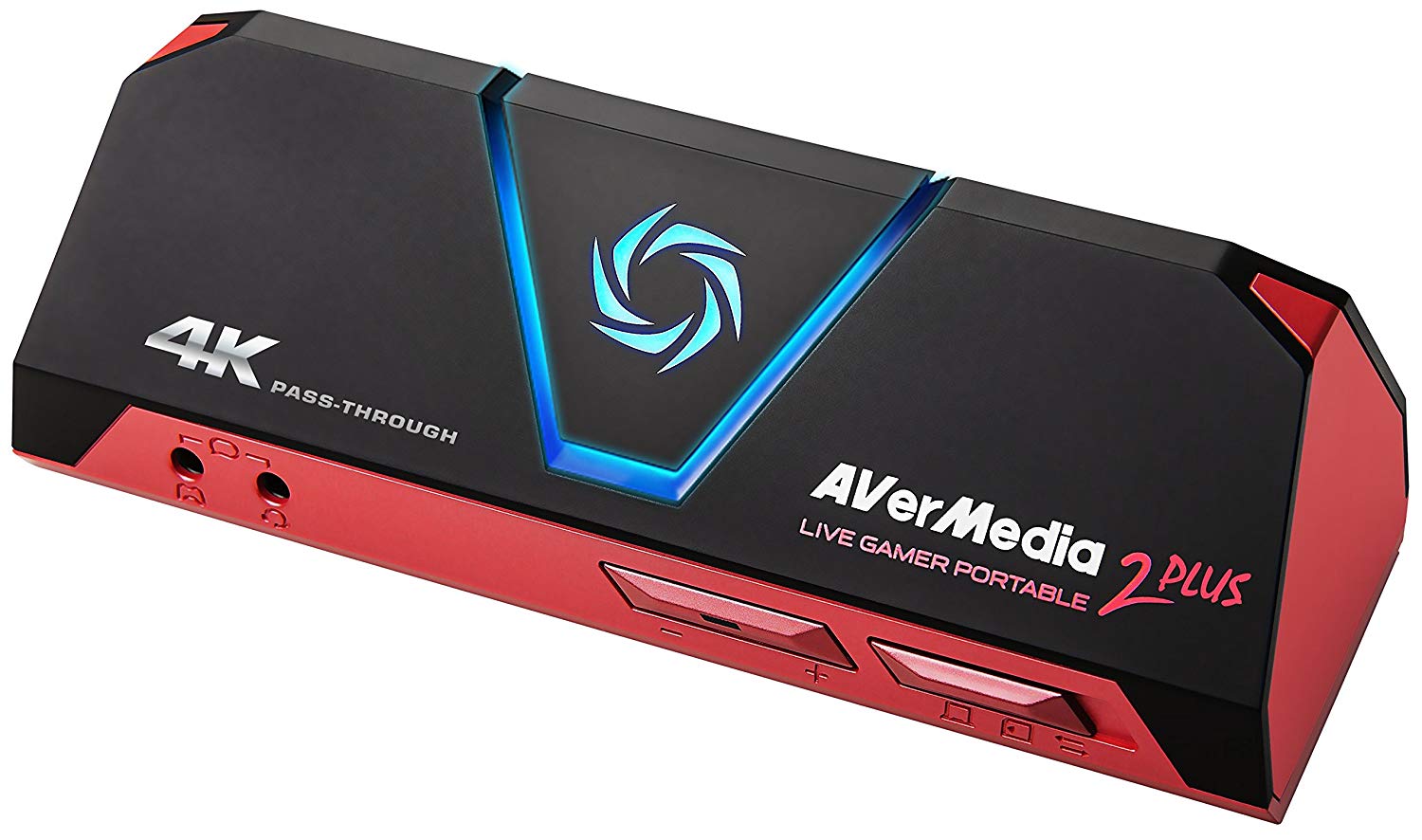
The best video capture cards of 2020

Whether used to stream online games or convert old VHS to digital format, the video capture card is a device that enables recording of videos from external sources, directly to your computer. Here is the list of the best models for sale and how to choose them.

capture card

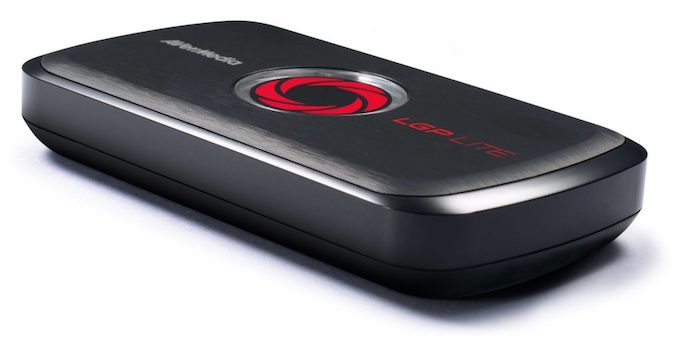
The video capture card is a particular device that over the years has become extremely easy to use, which is connected to the computer to broadcast live games or to record videos from an external source, generally connected through HDMI, even at resolutions that reach 4K Ultra HD at 60fps. These are devices currently purchased especially by gamers, who want to stream their gaming sessions on YouTube, Twitch, or other platforms.

Over the years, these devices have evolved a lot, first acquiring the HDMI input and then being able to reach very high resolutions. However, for sale, there are many video capture cards, some professional and from the best brands, others cheaper. There are also internal and external.

capture cards

For this reason, we have decided to help you choose the best video capture card for your needs, listing a series of models suitable for all needs and with the best value for money, and then point out all the most important factors to take. consider before buying.

The advantages and disadvantages of video capture cards

Video capture cards have become over time very simple devices to use and suitable for everyone, even those with less experience in the sector. The evolution of these peripherals has reached the point where it can also guarantee video recording from an external source in 4K Ultra HD at 60 fps and in HDR.

However, to get the maximum performance and recording quality, the expense you may have to do is still quite high and some sources, such as the latest generation consoles, block this type of practice by protecting the video through HDCP technology: To be successful in avoiding this problem, you may need to purchase an HDMI splitter, also useful for recording protected content.

What is the purpose of the video capture card?
In addition to being used by video games to stream game sessions, the video capture card is a much-loved device for those who have a large collection of video tapes, perhaps recorded with a previous-generation analog video camera, and They want to convert them to digital format in order to preserve them over time without the danger of their deterioration.

Thanks to these devices, in fact, it is possible to convert video tapes to mp4 files in a very short time, and with an interface so simple to use that it makes this procedure truly available to everyone: in this way, you can not only give a new life is vital for your old VHS, but you can convert the videos contained in them and, perhaps, share them on social networks. In summary, the potential and uses of a video capture card are multiple.

What are the most used video formats?

Choosing audio and video codecs and containers affects video quality and file size. Here we show you how to find the format that best suits your needs.

formats

Decades and decades of developments in the audiovisual field have led to a result that, in some way, can be considered curious. While in other sectors, continuous development has led to a very marked standardization (think of the .doc or .pdf format), in multimedia the situation is at least compound.

An example is the world of audio formats, animated by strong “competition” and a multitude of available options. It is no less than that of video formats, in fact. In this case, in fact, we have to deal with a division between codecs and containers (we will see in a moment what they are and what function they perform) that ends up complicating things even more. Therefore, in case you want to convert a movie, you have to be careful to choose the correct codec and the correct video format, to avoid creating files that are too large or simply unreadable. In short, the error is just around the corner.

audio formats

Differences between containers and codecs

Before analyzing the situation and seeing what are the most used video formats, it is necessary to clarify some fundamental concepts: first, what is the difference between the codec and the container. If in the audio world, the codec used to digitize the audio track matches the “final” file format, in the video, on the other hand, the codecs used are different from the file format that the video file will assume at the end of the digitization process. The reason is soon explained and lies in the multimedia nature of a video.

A movie, in fact, contains video and audio data: the conversion or playback software must be able to analyze both multimedia streams, and therefore will need different algorithms that work in one or another type of data stream. Codecs do exactly this: as the name, code, and decoding of data (audio and video) are made from movies, so you can convert them to another video format or play them back with a media player. Even with regard to containers, it is enough to resort to the literal meaning of the word: these are files that contain both the video and audio sequences within them and “make them available” to codecs for reading and playback.

What are the most used codecs?

A codec, as mentioned, is in charge of compressing and decompressing the video files and determines how they are played on the screen of the PC or smart TV. Each operating system provides the user with dozens and dozens of different codecs, each useful for encoding and decoding a specific type of file, even if a new one can be installed by downloading special software or packages from the web. Among the most used codecs we find the FFmpeg, Divx, Xvid, H.264 and its evolution H.265, VP9 and VP 10 (also known as the name of the Google codec).

-Divx and Xvid. As the name also suggests, these are two “mirror” codecs, created in the late 20th and early 21st centuries to meet the initial demand for online multimedia content. Since bandwidth and browsing speed were very limited, these are codecs that can guarantee good video quality even at high levels of image compression. In this way, it was possible to obtain files of contained dimensions even with very long movies (such as full movies)

-264 and H.265. Created by the Motion Picture Expert Group, they can be considered as industry standards. Among the most popular and used in all areas (you can find H.264 encoded movies on Blu-ray discs, for example, but also movies downloaded from the network) thanks to its versatility and ability to guarantee an excellent quality ratio / File size. The H.265 codec, in particular, can guarantee, with the same quality, a compression factor twice as high as that of its predecessor: files “treated” with this codec will therefore weigh half compared to their counterparts processed with H.264 codec

-VP9 and VP10. Also known as “Google Codec”, they are the codecs used by the giant Moutnain View to compress and decompress the movies uploaded to YouTube. These are algorithms optimized for online video playback, capable of offering excellent resolution and high quality even with small files. The VP10 in particular is the all’H.265 answer and is designed for resolutions up to 4K
Mpeg-H.