What does MP3 bitrate mean?
The rate at which a digital channel transmits digital signals is called the data transfer rate or bit rate.
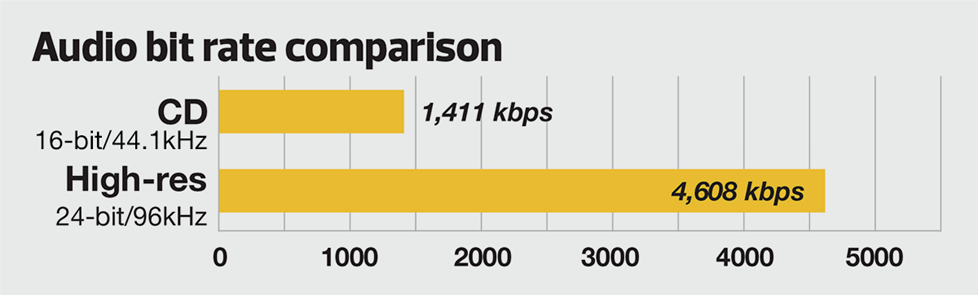
The word bitrate has many translations, such as bitrate, etc., which indicates how many bits per second the encoded (compressed) audio data should be represented, and a bit is the smallest binary unit, either 0 or 0. 1. The relationship between bitrate and audio and video compression is simply that the higher the bitrate, the better the quality of the audio and video, but the larger the encoded file; if the bitrate is lower, the situation is reversed.
For example: encode audio and video at 500 Kbps.
where bps are bits 1K = 1010 = 1024
b is little
s is the second
p is for (for)
Therefore, encoding at 500 kbps means that the encoded audio and video data must be represented at 500 K bits per second.
In the baseband transmission system, the bit rate is used to represent the code rate of transmitted information.
The bit rate Rb refers to the unit of time
The number of binary bits transmitted within the unit, the unit is b/s. For example, the transmission speed of a computer serial port is up to 115200b/s.
The symbol rate or baud rate Rs refers to the number of modulation symbols transmitted per unit of time, that is, ternary and ternary
The information transmission rate of the multivariate digital code stream in the
In M-ary modulation, the relationship between the bit rate Rb and the baud rate Rs is:
Rb=Rslog2M
The sampling rate refers to the ratio of the sampling samples to the total number of samples, and the sampling rate refers to the number of samples per unit of time. If it is an instrument, the sampling rate is 40MSa/s, which means the number of samples per second is 40M, but it cannot be represented by 40MHz.
The process of converting analog audio to digital audio is called sampling. In a nutshell, how much data is needed to record a 1 second duration of sound via waveform sampling. A sound with a sample rate of 44 KHz requires 44,000 data points to describe a 1-second sound waveform. In principle, the higher the sample rate, the better the sound quality.
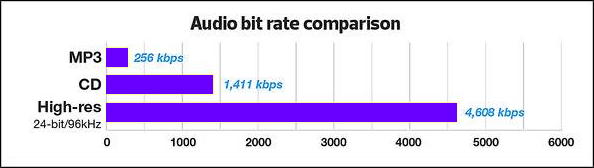
Bitrate refers to the sampling rate at which digital sound is converted from analog to digital format. The higher the sampling rate, the better the quality of the restored sound. The bit rate indicates the speed of the number of bits bps (bit per second, bits per second) transmitted per unit of time (1 second). We usually use kbps (colloquially speaking, 1000 bits per second) as the unit. 128 KBPS = tape (best setting for mobile phone stereo MP3 players, best setting for low-end MP3 players) 160 KBPS = HiFi HIFI (best setting for mid to high-end MP3 players )
192KBPS=CD (best setting for high-end MP3 players) 256KBPS=Studio Music Studio (for music enthusiasts).
The better the sound quality, the larger the file, and the worse the sound quality, the smaller the file. The MP3 on the Internet is 192KB and 128KB, so the file size is different.
The higher the bitrate, the higher the volume. The higher the bitrate, the better the sound quality.