M4A Audio: Lossless vs. Hybrid Formats

M4A Audio: Lossless vs. Hybrid Formats

M4A Audio: Lossless vs. Hybrid Formats


When it comes to audio formats, M4A stands out as a popular choice among music enthusiasts. However, there is a crucial distinction within the M4A realm – lossless and hybrid formats. Understanding the difference between these formats is essential for audiophiles seeking the best possible audio experience. In this article, we delve into the depths of M4A audio and explore the nuances between its lossless and hybrid formats, shedding light on their advantages and use cases.

Lossless M4A Audio: Uncompressed Audio Fidelity

Lossless M4A, as the name suggests, preserves the original audio quality without any loss of data during compression. This means that the audio is reproduced with utmost fidelity, mirroring the exact sound as it was recorded. The technology behind lossless compression ensures that no audio information is discarded, resulting in bit-for-bit accuracy.

One of the primary advantages of lossless M4A is its ability to deliver an audiophile-grade listening experience. Whether you are a music producer or a discerning listener, lossless M4A allows you to hear every nuance, intricate detail, and subtlest tones in your favorite tracks. The files, however, tend to be larger compared to other audio formats, as they retain all the data from the original source.

“Lossless M4A is a haven for true audiophiles, presenting music in its purest form, untouched by compression artifacts.” – The Audiophile’s Guide to High-Resolution Audio

Hybrid M4A Audio: Striking a Balance Between Quality and Size

Hybrid M4A, on the other hand, combines elements of both lossless and lossy audio formats, aiming to strike a balance between audio quality and file size. In this format, certain audio data is discarded during compression, resulting in a smaller file size compared to lossless M4A. However, the compression is cleverly designed to retain critical audio information, ensuring a notable reduction in file size without significant loss of quality.

This hybrid approach makes M4A audio files highly versatile and practical, especially for everyday listening and storage on portable devices with limited storage capacities. While the audio quality is not on par with lossless M4A, the difference is often subtle and may go unnoticed by most listeners. For those seeking an enjoyable audio experience without consuming excessive storage space, hybrid M4A proves to be an excellent choice.

“Hybrid M4A strikes a perfect balance, preserving audio quality while optimizing storage requirements, catering to a broader audience of music enthusiasts.” – The Art of Digital Audio Compression

Use Cases and Applications

The choice between lossless and hybrid M4A formats largely depends on individual preferences and specific use cases. Let’s explore some common scenarios where each format shines:

Lossless M4A:

– Music Production: Lossless M4A is favored by music producers and audio engineers during the recording, editing, and mixing stages, as it provides the most accurate representation of the original sound.

– Audiophile Listening: For those with high-end audio equipment and a passion for sonic perfection, lossless M4A offers an unparalleled listening experience.

– Archiving Master Recordings: When preserving master recordings for archival purposes, lossless M4A ensures no loss of audio data over time.

Hybrid M4A:

– Personal Music Libraries: Hybrid M4A is an ideal choice for building personal music collections, as it strikes a balance between quality and file size, making it easy to store and manage.

– Online Music Streaming: Many music streaming platforms utilize hybrid M4A to deliver high-quality audio efficiently, providing users with a seamless streaming experience.

– Portable Devices: For users with limited storage on their smartphones, tablets, or music players, hybrid M4A is a space-saving option, allowing them to carry more music on the go.

“The versatility of M4A formats caters to diverse needs, empowering users to make the right choice for their specific audio requirements.” – Audio Formats for the Modern Listener

Final Words

As the world of digital audio continues to evolve, the distinction between lossless and hybrid M4A formats becomes increasingly relevant. Audiophiles and casual listeners alike must weigh the benefits and trade-offs of each format to make informed decisions about their music library. Whether you prioritize uncompromising audio quality or seek a practical solution for everyday listening, the M4A format, in its lossless and hybrid forms, remains a reliable and widely supported choice for the modern era of digital music.

Digital Audio Processing

Digital Audio Processing

Digital Audio Processing

Digital Audio Processing

Digital Audio Processing

In the world of audio technology, Digital Audio Processing stands as a fundamental pillar, shaping the way we interact with sound. From music production to telecommunications, this versatile field plays a crucial role in delivering high-quality audio experiences to users worldwide. In this article, we delve into the depths of Digital Audio Processing, exploring its principles, applications, and the innovative technologies driving its evolution.

The Fundamentals of Digital Audio Processing

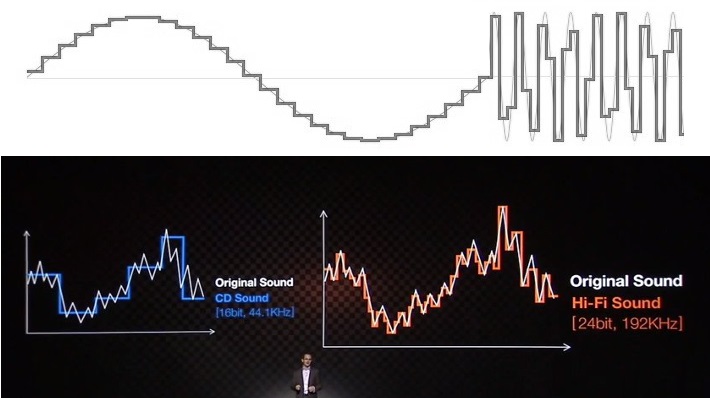
Digital Audio Processing, in its essence, revolves around transforming analog audio signals into digital data, enabling efficient storage, manipulation, and transmission. It involves the use of mathematical algorithms to convert continuous audio waveforms into discrete digital samples. These samples can then be processed and restored back to analog signals at the receiving end, providing a seamless auditory experience.

One of the essential concepts in Digital Audio Processing is the sampling rate, which determines the number of samples taken per second to represent the analog signal accurately. A higher sampling rate results in more precise audio reproduction but demands increased data storage and processing capabilities. Conversely, lower sampling rates may lead to a loss of audio fidelity.

“The science of Digital Audio Processing brings music to life, capturing its essence in a string of zeros and ones.” – Sound Engineering: A Journey into the World of Sound

Applications in Music Production

When it comes to the creation and production of music, Digital Audio Processing has revolutionized the entire landscape. In modern recording studios, analog audio equipment has largely been replaced by digital audio workstations (DAWs), allowing musicians and producers to manipulate sound with unprecedented flexibility.

Through the use of Digital Signal Processing (DSP) algorithms, artists can apply various effects, such as reverb, delay, and equalization, to their recordings. Additionally, pitch correction and time-stretching tools have become commonplace, helping achieve flawless performances. This digital revolution has democratized music production, empowering artists to bring their creative visions to life without the need for extravagant studio setups.

“In the digital realm, the possibilities are endless. Every musician now has the power to be a producer, engineer, and composer rolled into one.” – The Digital Audio Handbook

Enhancing Communication with Digital Audio Processing

Beyond music, Digital Audio Processing plays a critical role in enhancing communication across various industries. Telecommunications heavily rely on efficient audio processing techniques to ensure clear voice calls and seamless video conferences. Noise reduction algorithms help eliminate background disturbances, while echo cancellation ensures smooth and echo-free conversations.

Moreover, voice recognition systems, powered by advanced Digital Audio Processing, have become integral to virtual assistants and smart devices. These systems employ techniques like speech-to-text conversion and natural language processing to interpret and respond to user commands accurately. As a result, the way we interact with technology has evolved, making it more intuitive and user-friendly.

“The future of communication lies in harnessing the power of Digital Audio Processing, enabling crystal-clear connections across the globe.” – The Communication Revolution

Advancements and Future Prospects

As technology continues to advance, Digital Audio Processing is poised for further breakthroughs. With the rise of artificial intelligence and machine learning, audio processing algorithms can now adapt and learn from data, leading to even more precise and personalized audio experiences. The integration of 5G networks will enable real-time audio processing, opening up new possibilities for interactive applications.

Moreover, the evolution of virtual reality and augmented reality technologies demands sophisticated audio processing techniques to create immersive soundscapes that complement the visual experience. As we venture deeper into the digital age, Digital Audio Processing will undoubtedly remain at the forefront, shaping the way we perceive and interact with sound in our daily lives.

“Innovation knows no bounds, and the future of Digital Audio Processing promises to unlock a world of sonic wonders yet to be explored.” – The Audio Frontier

Final Words

From the early days of audio digitization to the cutting-edge technologies of today, Digital Audio Processing has consistently pushed the boundaries of what is possible in the world of sound. Its impact spans from music production to telecommunications, revolutionizing the way we experience audio. As we embark on a journey of continued innovation, the future of Digital Audio Processing holds exciting prospects for audio enthusiasts and technology aficionados alike.

MP3 vs M4A: Which Is Better?

MP3 vs M4A: Which Is Better?

MP3 vs M4A: Which Is Better?

MP3 and M4A: Understanding the Basics

In this section, we’ll explore the fundamental differences between MP3 and M4A audio formats. MP3, short for MPEG Audio Layer III, has been around since the early 1990s and is widely known for its high compression and small file size, making it popular for music distribution and sharing. On the other hand, M4A, or MPEG-4 Audio, is a newer format that was introduced by Apple and is generally associated with iTunes and iOS devices. M4A files use the Advanced Audio Coding (AAC) codec, which provides better audio quality at lower bit rates compared to MP3. Despite their differences, both formats aim to deliver high-quality audio with efficient file sizes, making the choice between them a matter of personal preference and specific use cases.

“Music is the divine way to tell beautiful, poetic things to the heart.” – Pablo Casals

Audio Quality: MP3 vs. M4A

Audio quality is a critical factor to consider when comparing MP3 and M4A formats. MP3 uses a lossy compression algorithm, which means it discards some audio data during the encoding process to reduce file size. As a result, there is a compromise between file size and audio quality, and higher compression levels can lead to a noticeable loss in sound fidelity. M4A, utilizing the AAC codec, offers improved audio quality at similar bit rates compared to MP3. With AAC’s advanced coding, M4A files can retain more of the original audio data, resulting in a more accurate representation of the source audio. Audiophiles and music enthusiasts may prefer M4A for its ability to preserve finer details and nuances in their favorite tracks.

“Without music, life would be a mistake.” – Friedrich Nietzsche

Compatibility and Support

When it comes to compatibility and support, MP3 holds the advantage due to its long-standing presence in the digital audio world. MP3 files are widely supported by various devices, operating systems, and media players, making them accessible across different platforms without the need for additional software or plugins. On the other hand, M4A’s association with Apple and iTunes can lead to compatibility challenges with non-Apple devices and software. However, many third-party media players and converters now offer support for M4A, bridging the gap between platforms and expanding its usability beyond the Apple ecosystem. Ultimately, your choice between MP3 and M4A should consider the devices and software you commonly use and whether cross-platform compatibility is a priority for your audio files.

“Music can change the world because it can change people.” – Bono

MP3 vs. OGG: Which is Better?

MP3 vs. OGG: Which is Better?

MP3 vs. OGG
MP3 vs. OGG
MP3 vs. OGG
MP3 vs. OGG

MP3 vs. OGG: A Comprehensive Comparison

In the realm of digital audio, the debate between MP3 and OGG has been a long-standing one. Both formats have their merits and demerits, and audiophiles often find themselves divided over which is superior. In this article, we will delve into the intricacies of MP3 and OGG, examining their respective features, compression methods, and sound quality. By the end, you’ll have a clearer understanding of which format may suit your needs best.

MP3: The Pioneering Digital Audio Format

MP3, short for “MPEG Audio Layer III,” revolutionized the music industry when it was first introduced in the 1990s. Its ingenious compression algorithm significantly reduced file sizes while retaining a reasonable audio quality, making it a preferred choice for digital music distribution and storage. With widespread compatibility across various devices and platforms, MP3 has become the go-to format for many music enthusiasts.

OGG: The Open-Source Contender

On the other hand, OGG, an open-source container format developed by the Xiph.Org Foundation, offers a compelling alternative to MP3. The OGG format includes multiple streams, allowing for the integration of various types of data, such as audio, video, and metadata, into a single file. As a result, OGG files can deliver superior sound quality at lower bitrates compared to MP3, making it an attractive option for those who prioritize audio fidelity.

Compression and Sound Quality Comparison

When it comes to audio compression, both MP3 and OGG employ different algorithms. MP3 uses perceptual coding, which discards certain audio data deemed less essential to human hearing. While this results in smaller file sizes, it may also lead to a loss of audio quality, commonly known as “lossy compression.” On the other hand, OGG utilizes the Vorbis compression codec, which aims to preserve audio quality while achieving competitive file sizes. This approach is referred to as “lossy compression with transparency,” as the compression is designed to be imperceptible to the human ear.

Compatibility and Usage

In terms of compatibility, MP3 has a significant advantage due to its widespread adoption over the years. The format is supported by almost all devices, media players, and operating systems, making it a versatile choice for users across the globe. Conversely, OGG faces some compatibility challenges, especially with certain hardware and software that may not natively support the format. However, with the growing popularity of open-source solutions, OGG has seen increasing support in various applications and platforms.

Final Words

In conclusion, the choice between MP3 and OGG depends on your specific needs and preferences. If compatibility and widespread support are crucial to you, MP3 might be the better option. On the other hand, if you prioritize higher audio quality and are open to using an open-source format, OGG could be the ideal choice. Ultimately, both formats have their strengths, and with advancements in technology, the differences in sound quality and compatibility are becoming less pronounced. Whichever format you choose, the enjoyment of your favorite music remains at the heart of the experience.

Mp3 vs Flac: Which is Better?

Mp3 vs Flac: Which is Better?

Mp3 vs Flac
Mp3 vs Flac
Mp3 vs Flac
Mp3 vs Flac

MP3 vs. FLAC: Understanding the Difference and Choosing the Best Audio Format

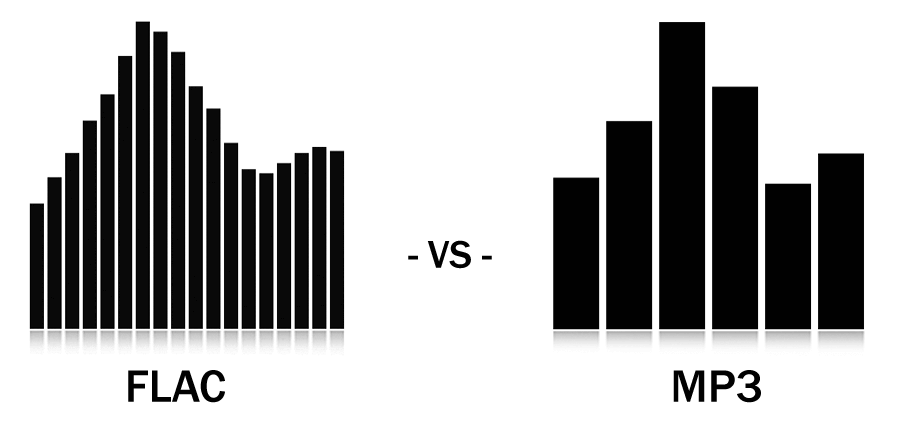
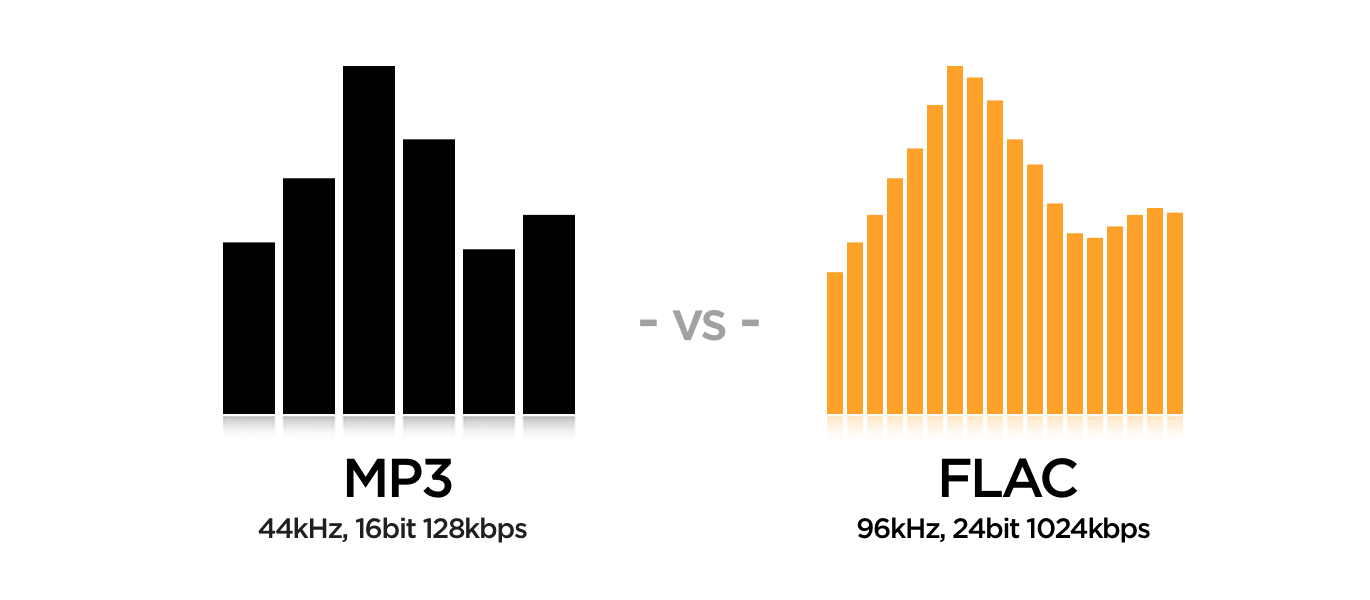
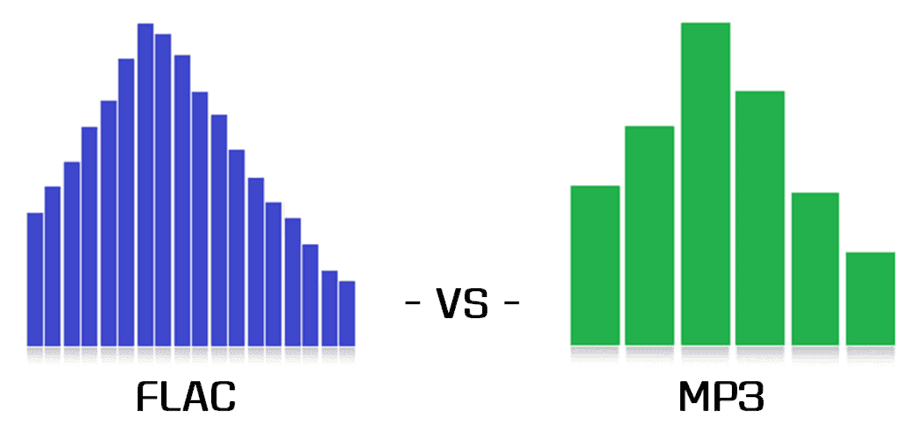
In the world of digital music, two audio formats have dominated the landscape for years: MP3 and FLAC. Each format has its own unique characteristics, advantages, and disadvantages, making it essential for music enthusiasts to understand the differences between them. This article delves into the comparison of MP3 and FLAC, aiming to shed light on which format might be the better choice for different scenarios.

MP3: The Pioneer of Digital Audio Compression

The MP3 format, short for “MPEG Audio Layer III,” revolutionized the way music was consumed and shared since its introduction in the 1990s. Its main advantage lies in its ability to significantly reduce the file size of audio tracks without compromising audio quality too severely. This compression is achieved by discarding some audio information that the human ear may not easily perceive. As a result, MP3 files are much smaller compared to the original CD-quality audio, making them easy to store and share.
However, this level of compression does come at a cost. Audiophiles and music purists argue that the removal of some audio data can result in a loss of sound fidelity, leading to a phenomenon known as “lossy” compression. While the difference in quality might not be noticeable to the average listener, those with a keen ear or listening on high-end audio equipment might discern a slight reduction in audio clarity.

FLAC: Uncompromising Audio Quality for Audiophiles

FLAC, short for “Free Lossless Audio Codec,” is the go-to format for audiophiles and music professionals seeking the highest level of audio quality. Unlike MP3, FLAC uses “lossless” compression, which retains all the original audio data during encoding. This means that no audio information is discarded, resulting in bit-for-bit identical sound quality to the source material, typically CD-quality audio.

The advantage of FLAC lies in its ability to offer pristine audio quality while maintaining a much smaller file size compared to uncompressed audio formats like WAV. This makes it an ideal choice for audiophiles who demand top-notch sound reproduction and a preference for archival purposes. However, due to the lack of audio data removal, FLAC files are considerably larger than MP3s, which can be a drawback for those with limited storage space or slower internet connections.

As J.R.R. Tolkien once said in “The Lord of the Rings,” “Not all those who wander are lost.” Similarly, in the realm of digital audio formats, not all users have the same requirements. Deciding between MP3 and FLAC ultimately depends on your individual needs, preferences, and listening habits. If you prioritize convenience, easy sharing, and reasonable audio quality, MP3 might suit your needs. On the other hand, if you’re an audiophile who values uncompromising sound fidelity and doesn’t mind the larger file sizes, FLAC could be the perfect fit.

In conclusion, the choice between MP3 and FLAC boils down to a trade-off between file size and audio quality. MP3 offers convenience and reasonable audio quality, making it an excellent choice for casual listeners, while FLAC delivers unparalleled sound fidelity for the most discerning ears. Regardless of your choice, both formats have significantly shaped the way we enjoy and consume music in the digital era. So, whether you’re on a road trip, at the gym, or relaxing at home, the right audio format will ensure you have a memorable musical experience.

The Anatomy of an MP3 File Header

The Anatomy of an MP3 File Header

MP3 File Header
MP3 File Header
MP3 File Header
MP3 File Header

In this section, we will delve into the intricate details of the MP3 file format’s header. The MP3 file header is a critical component that holds essential information about the audio file. It precedes the actual audio data and contains various parameters that influence the decoding process. Understanding the structure and significance of the MP3 file header is crucial for anyone dealing with audio compression and playback.

How does the MP3 file header impact audio quality?

The MP3 file header plays a vital role in determining the audio quality of an MP3 file. It holds crucial information about the audio, such as the bit rate, sample rate, and channel mode, which directly affect the compression and decompression processes. For instance, the bit rate represents the amount of audio data encoded per unit of time, and a higher bit rate generally results in better audio quality but larger file sizes. On the other hand, a lower bit rate reduces the file size but may lead to a loss of audio fidelity.

What are the key elements of an MP3 file header?

The MP3 file header consists of several key elements that provide essential information to the decoding software. Some of these elements include the sync word, version, layer, protection bit, bit rate index, sample rate index, padding bit, private bit, channel mode, and the mode extension. Each element serves a specific purpose and contributes to the accurate decoding of the audio data. Understanding these elements is essential for analyzing and manipulating MP3 files effectively.

Can manipulating the MP3 file header cause issues with playback?

While manipulating the MP3 file header can be done for various purposes, such as changing the bit rate or sample rate, it can also lead to playback issues if not done correctly. Altering critical parameters within the header may cause compatibility problems with different audio players and devices. It is essential to have a deep understanding of the file header’s structure and its impact on the decoding process to avoid playback issues and ensure a seamless audio experience.

Quoting a Movie on Digital Audio Compression

“In digital audio compression, as in life, we must strike a balance between size and quality. Much like a diamond, audio data can be cut and shaped to reveal its brilliance, but too much cutting might result in losing its essence.” – *The Sound Explorer*

Conclusion

In conclusion, understanding the intricacies of the MP3 file header is crucial for anyone working with digital audio and compression. The header contains vital information that impacts audio quality, file size, and compatibility with various devices and players. By comprehending the structure and significance of the MP3 file header, users can make informed decisions when encoding, decoding, or manipulating MP3 files. Striking the right balance between audio quality and file size ensures an optimal listening experience for music enthusiasts and audiophiles alike.

The Impact of Audio Codec on Voice Quality

The Impact of Audio Codec on Voice Quality

The Impact of Audio Codec on Voice Quality

How Does the Choice of Audio Codec Affect Voice Quality?

The choice of an audio codec can significantly influence the quality of voice reproduction in various applications. While some codecs prioritize efficiency and smaller file sizes, others focus on preserving audio fidelity. For voice-centric applications like voice calls, video conferencing, and voice-over work, the balance between compression and audio quality becomes crucial.
High-compression audio codecs, commonly used for online streaming and communication, may sacrifice some voice clarity to achieve smaller file sizes. On the other hand, lossless codecs prioritize audio fidelity, ensuring a true representation of the original voice recording.

Finding the right audio codec for voice-related applications involves striking a balance between compression efficiency and voice clarity. It’s essential to understand the specific requirements of each use case and choose an appropriate codec that delivers the desired voice quality.

“In the world of audio codecs, the choice between compression and voice quality becomes a delicate dance. A careful balance is required to ensure efficient data transmission while preserving the essence of the human voice.” – The Art of Voice Quality in Audio Codecs

What is the Impact of Audio Compression on Voice Clarity?

Audio compression is a fundamental process in audio codecs, aiming to reduce file sizes without significantly compromising audio quality. However, the level of compression directly affects voice clarity, especially in lossy codecs.
In lossy codecs, the compression process discards some audio data deemed less essential to human hearing. While this can achieve considerable compression ratios, it may result in a loss of subtle nuances in the human voice, affecting overall clarity.

On the other hand, lossless codecs retain all audio data, ensuring pristine voice clarity at the cost of larger file sizes.

The impact of audio compression on voice clarity is a delicate balance, and striking the right compromise is essential to maintain the intelligibility and naturalness of voice recordings.

“Audio compression is a double-edged sword. While it empowers efficient data transmission, its impact on voice clarity demands careful consideration in audio codec design.” – The Voice Clarity Conundrum: Balancing Compression and Fidelity

Which Audio Codecs Offer the Best Voice Quality?

When it comes to voice quality, lossless audio codecs are known for their ability to preserve audio fidelity faithfully. Formats like FLAC and PCM are renowned for their pristine reproduction of voice recordings, making them ideal choices for applications where audio quality is paramount.
However, lossless codecs come with the trade-off of larger file sizes, which may not be practical for certain applications with bandwidth and storage constraints.

On the other end of the spectrum, high-quality lossy codecs like Opus have garnered recognition for their impressive voice reproduction capabilities at lower bitrates. Opus excels in real-time communication applications, providing clear and natural voice quality even with reduced data transfer.

Ultimately, the best audio codec for voice quality depends on the specific requirements of each application, considering factors like available bandwidth, storage limitations, and the desired level of audio fidelity.

“Voice quality enthusiasts lean towards lossless codecs, while real-time applications find solace in high-quality lossy codecs, proving that there’s no one-size-fits-all solution in the quest for perfect voice reproduction.” – Unraveling the Quest for the Ultimate Voice Codec

Can a High-Compression Audio Codec Maintain Voice Fidelity?

The pursuit of higher compression ratios in audio codecs is often at odds with the preservation of voice fidelity. High-compression audio codecs, designed to reduce file sizes significantly, inevitably introduce some degree of data loss.
While modern high-compression codecs have made significant advancements in audio quality preservation, it remains challenging to achieve near-lossless voice reproduction at ultra-low bitrates.

However, certain advanced codecs like Opus have managed to strike a remarkable balance between compression efficiency and voice fidelity. Opus’s hybrid approach, combining both lossy and lossless techniques, allows it to deliver exceptional voice quality even at lower bitrates.

While the compromise between compression and voice fidelity is inevitable, the development of more efficient codecs continues to push the boundaries of what’s achievable in audio compression.

“The holy grail of high-compression audio codecs lies in the delicate dance between efficiency and fidelity, with Opus leading the charge in delivering impressive voice quality at low bitrates.” – The Quest for Voice Fidelity: Navigating the Compression Maze

How Does the Bitrate of an Audio Codec Affect Voice Reproduction?

The bitrate of an audio codec plays a pivotal role in voice reproduction, directly impacting the level of audio detail and clarity. Higher bitrates allocate more data to represent audio nuances, resulting in improved voice fidelity and overall sound quality.
On the other hand, lower bitrates reduce the amount of data allocated to voice reproduction, leading to a trade-off between reduced file sizes and a potential loss of voice clarity.

The selection of the appropriate bitrate for voice-related applications depends on various factors, including the target platform, available bandwidth, and the desired level of voice quality.

“The bitrate of an audio codec acts as a master puppeteer, orchestrating the balance between file size and voice quality, ultimately defining the audio experience.” – The Bitrate Dilemma: Striking the Perfect Balance in Voice Reproduction

Is Voice Quality Compromised in Lossy Audio Codecs?

Lossy audio codecs are designed to achieve high compression ratios by discarding audio data that is deemed less critical to human hearing. While this approach enables efficient data transmission, it inevitably results in some loss of audio fidelity.
The impact of voice quality compromise in lossy codecs depends on the specific bitrate used and the complexity of the audio content. At higher bitrates, the loss of voice clarity is minimal, while lower bitrates may exhibit more noticeable artifacts in voice reproduction.

Despite the inherent trade-off, modern lossy codecs like Opus excel in voice-centric applications, striking a balance between compression and voice quality, especially in real-time communication scenarios.

“Lossy codecs present a delicate challenge, but with modern advancements, they’ve proven capable of delivering impressive voice quality, redefining the boundaries of audio compression.” – Embracing the Nuances: Unraveling Voice Quality in Lossy Codecs

What Are the Factors that Influence Voice Quality in Audio Codecs?

Voice quality in audio codecs is influenced by several critical factors:
Bitrate: The bitrate directly affects the amount of data allocated to voice reproduction, impacting overall voice clarity and sound fidelity.

Compression Algorithm: The compression algorithm determines the balance between data reduction and audio fidelity, affecting the level of voice quality preservation.

Latency: Low latency in real-time communication applications contributes to a more natural and seamless voice experience3. Keywords (related to “The Impact of Audio Codec on Voice Quality”):

audio codec, voice quality, audio compression, voice clarity, bitrate, lossless codecs, lossy codecs, Opus codec, real-time communication, voice reproduction, compression algorithm, latency, complexity of audio content, codec settings, voice-over applications, FLAC, PCM.

Audio Codecs: From PCM to Opus

Audio Codecs: From PCM to Opus

Opus

Opus

What are the Main Differences Between PCM and Opus Audio Codecs?

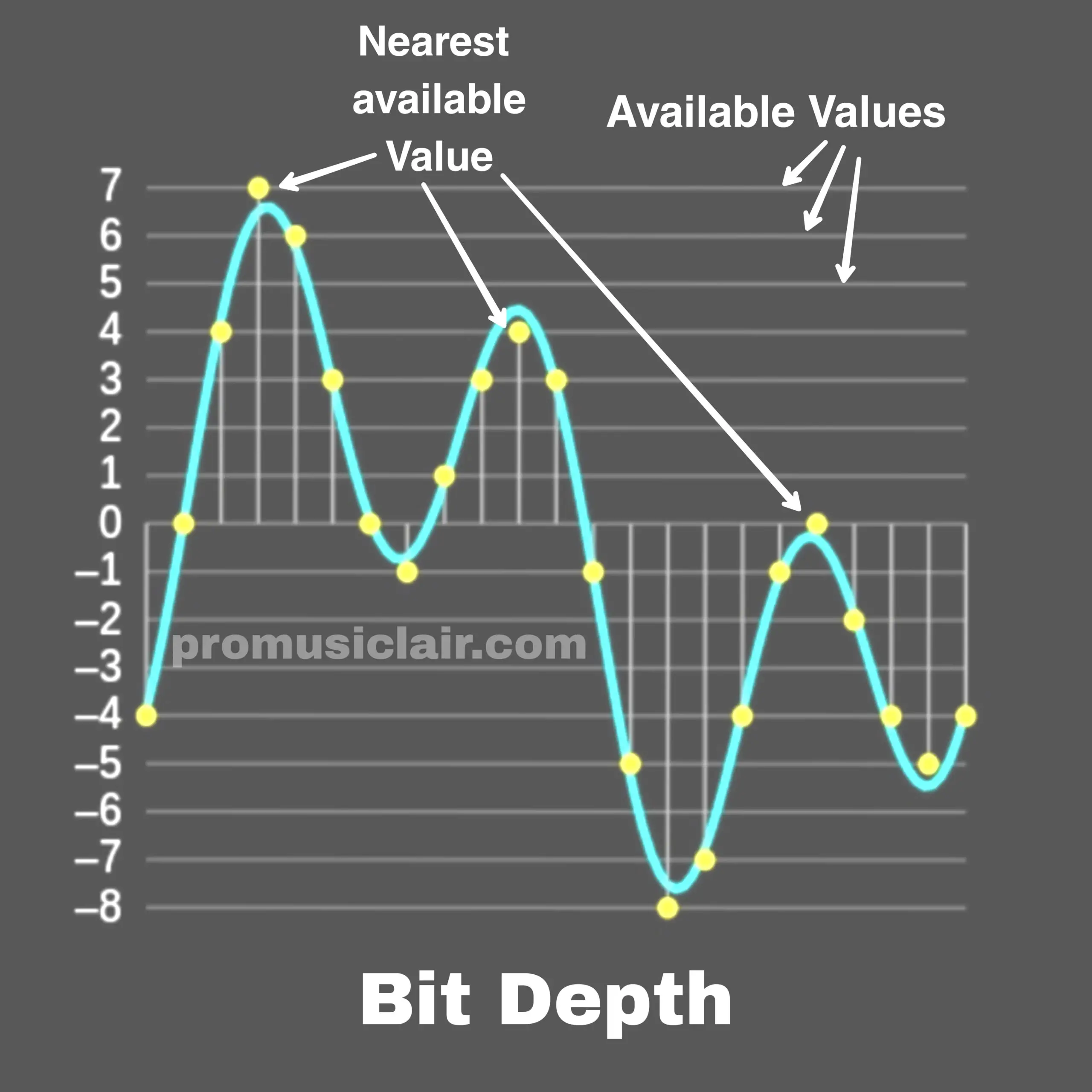
PCM (Pulse Code Modulation) has been a long-standing standard for digital audio representation, where analog audio signals are sampled and quantized at regular intervals. PCM provides accurate sound reproduction, making it a popular choice for various applications like music production and high-fidelity audio playback.
On the other hand, Opus is a more modern and efficient audio codec designed to deliver high-quality audio at lower bitrates. Unlike PCM, Opus uses a combination of lossy and lossless compression techniques, dynamically adapting its compression algorithm based on the audio content. This adaptive approach allows Opus to achieve better audio quality at lower bitrates, making it suitable for real-time communication and online streaming.

While PCM remains a robust and reliable standard, Opus has revolutionized the audio codec landscape with its versatility and ability to optimize audio quality for varying network conditions.

“Opus, the innovative audio codec, has truly changed the game by offering impressive audio quality even at lower bitrates. This adaptability sets it apart from traditional PCM, making it an excellent choice for modern communication and streaming applications.” – Audio Codec Evolution: From PCM to Opus

How Does Opus Ensure Low Latency in Real-Time Communication?

One of the defining features of the Opus codec is its low latency performance, making it ideal for real-time communication applications like voice calls and video conferencing. Low latency is crucial in such scenarios to ensure smooth, uninterrupted communication and minimize delays during conversations.
Opus achieves low latency through a combination of techniques:

Frame Size Optimization: Opus allows developers to customize the frame size, which directly impacts latency. By using smaller frame sizes, Opus can achieve lower latency, ensuring rapid transmission of audio data.

Variable Bitrate (VBR): Opus uses VBR encoding, where it dynamically allocates bits based on the complexity of the audio content. This ensures that critical audio elements are transmitted with higher fidelity while optimizing overall latency.

Packet Loss Concealment: Opus employs efficient packet loss concealment algorithms, reducing the impact of lost data during transmission. This enhances the overall audio experience during network fluctuations.

“Opus, with its low latency capabilities, brings real-time communication to new heights, allowing for natural and fluid conversations even in challenging network conditions.” – Opus: The Low Latency Audio Codec for Seamless Communication

What Makes Opus Stand Out Among Other Audio Codecs?

Opus has gained widespread recognition for its outstanding performance and versatility in the audio codec landscape. Its unique features set it apart from other codecs, making it a top choice for various applications.
One of Opus’ remarkable strengths is its adaptability to varying network conditions. By dynamically adjusting its bitrate based on available bandwidth and network stability, Opus ensures consistent audio quality even in challenging environments. This adaptability makes it ideal for internet-based applications, including VoIP calls, online gaming, and video streaming.

Furthermore, Opus supports a wide range of bitrates, from low bitrates suitable for speech communication to high bitrates for music streaming. This flexibility allows developers to tailor the codec’s performance to their specific use cases, ensuring optimal audio quality across different scenarios.

“Opus shines among audio codecs with its unparalleled adaptability and exceptional performance, making it a favorite choice for developers seeking high-quality audio experiences in a variety of real-time applications.” – Opus Audio Codec: Unraveling the Magic of Versatility

How Does Opus Adapt to Varying Network Conditions?

Opus is designed to adapt seamlessly to varying network conditions, ensuring consistent audio quality even in challenging environments. Its ability to dynamically adjust the bitrate is a key factor in this adaptability.
When network conditions are stable and there is ample bandwidth available, Opus can deliver higher audio quality by utilizing a higher bitrate. On the other hand, if network conditions become congested or bandwidth becomes limited, Opus can quickly reduce the bitrate to maintain a smooth audio stream.

Opus achieves this bitrate adaptability through its use of variable bitrate (VBR) encoding. By allocating bits more efficiently based on the complexity of the audio content, Opus can maintain a balance between audio quality and overall file size. This adaptability makes Opus an excellent choice for internet-based applications, where network conditions can vary widely.

“Opus’s ability to adapt its bitrate ensures a consistent and high-quality audio experience, making it the go-to choice for developers seeking reliability in ever-changing network conditions.” – Opus Audio Codec: Adapting to Network Variability

What Are the Different Bitrates Supported by Opus?

Opus provides excellent flexibility when it comes to bitrate selection, allowing developers to tailor the audio quality to their specific needs. Opus supports a wide range of bitrates, ranging from as low as 6 kbps for low-bandwidth scenarios, up to 510 kbps for high-fidelity music streaming.
For applications focused on real-time communication, lower bitrates are typically sufficient. Bitrates around 32-64 kbps provide clear, intelligible speech without excessive bandwidth consumption. On the other hand, music streaming platforms may benefit from higher bitrates in the range of 128-256 kbps, delivering superior audio fidelity.

“Opus’s extensive range of supported bitrates empowers developers to optimize their applications for various scenarios, ensuring an optimal balance between audio quality and bandwidth usage.” – Opus Audio Codec: Tailoring Bitrates for Diverse Needs

Is Opus an Open-Source Audio Codec?

Opus is indeed an open-source audio codec, which means it is freely available for developers to use, modify, and distribute without any licensing restrictions. This open-source nature has contributed to Opus’ widespread adoption and integration into numerous applications and platforms.
Being open-source also fosters a collaborative community of developers working together to improve and refine the codec continually. This ensures that Opus remains cutting-edge, with regular updates and enhancements driven by the collective expertise of the community.

“Opus’s open-source nature empowers developers with the freedom to innovate and create innovative audio experiences without the constraints of licensing fees or proprietary restrictions.” – Opus Audio Codec: The Power of Open-Source Innovation

How Does Opus Compare to Other Popular Audio Codecs?

When comparing Opus to other popular audio codecs like MP3, AAC, and Vorbis, several key differences stand out.
Firstly, Opus consistently provides better audio quality at similar bitrates compared to older codecs like MP3 and AAC. Its hybrid approach of combining both lossy and lossless compression techniques allows it to achieve better sound reproduction and reduced artifacts.

Secondly, Opus excels in real-time communication applications with its low latency and excellent error resilience. This makes it a preferred choice for applications like VoIP calls and online gaming, where smooth and natural conversations are essential.

Furthermore, Opus supports a wider range of bitrates than Vorbis, offering more flexibility to developers to fine-tune the codec’s performance for various use cases.

“Opus stands tall among other popular codecs, setting new standards for audio quality, low latency, and adaptability, making it the codec of choice for modern communication and streaming applications.” – Opus Audio Codec: A Cut Above the Rest

What Are the Best Applications for Using Opus Audio Codec?

Opus finds its best applications in scenarios that demand high-quality audio, low latency, and efficient bandwidth usage. Some of the top use cases for Opus include:
Real-Time Communication: Opus’s low latency and excellent audio quality make it perfect for applications like voice and video calls, enabling smooth and natural conversations.

Online Gaming: Opus enhances the gaming experience with clear in-game communication, allowing players to coordinate seamlessly.

Music Streaming: With support for higher bitrates, Opus delivers top-notch audio quality, making it an excellent choice for music streaming platforms.

Live Audio Streaming: Opus’s adaptability ensures uninterrupted audio streaming even in fluctuating network conditions.

Podcasting and Broadcasting: Opus’s high-quality audio reproduction makes it an ideal choice for podcasters and broadcasters seeking professional-grade sound.

“Opus proves to be a versatile and reliable audio codec, serving as the foundation for enhanced audio experiences in a wide array of applications across various industries.” – Opus Audio Codec: Powering Audio Excellence

Final Words

Opus, the evolutionary audio codec, has transformed the way we experience digital audio. From the traditional PCM to the cutting-edge Opus, the journey of audio codecs has been marked by innovation and adaptability. Opus’s ability to deliver exceptional audio quality, low latency, and adapt to varying network conditions has made it a preferred choice for modern real-time communication, gaming, and streaming applications.
As technology continues to evolve, Opus remains at the forefront of audio compression, setting new standards for audio experiences on the internet. With its open-source nature and collaborative community, Opus continues to grow and improve, promising an exciting future for audio codecs and the way we interact with sound in the digital realm.