FLAC and High-Resolution Audio


Free Download Mp4Gain
picture

FLAC and High-Resolution Audio
FLAC and High-Resolution Audio

FLAC and High-Resolution Audio

Let’s talk about FLAC and High-Resolution Audio

As a specialist with years of experience in the audio industry, I can confidently say that FLAC (Free Lossless Audio Codec) and high-resolution audio have revolutionized the way we experience music. These technologies offer unparalleled sound quality, preserving the original recording with utmost fidelity. Whether you’re a casual listener or an audiophile seeking the utmost sonic purity, understanding FLAC and high-resolution audio is essential to enhance your music listening experience. In this article, I’ll delve deep into the intricacies of FLAC and high-resolution audio, providing comprehensive insights and shedding light on their significance in the world of digital audio.

The Evolution of Audio Formats

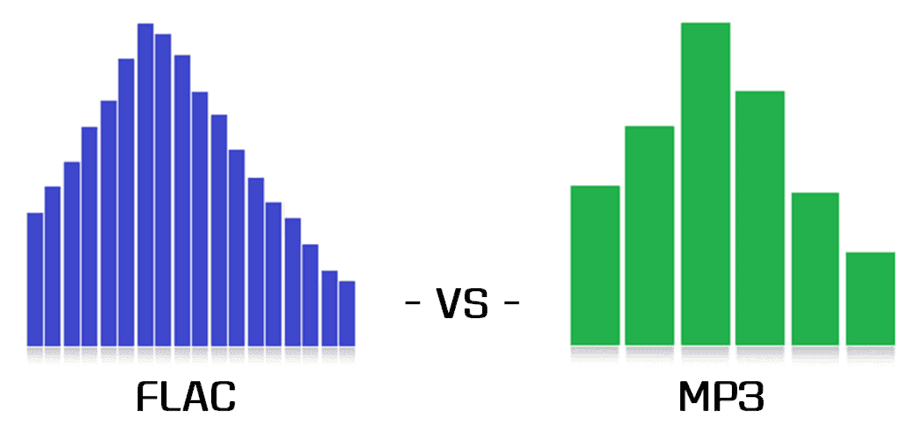
In the realm of digital audio, the evolution of audio formats has been remarkable. From the early days of MP3, which sacrificed quality for file size, to the emergence of FLAC and high-resolution audio, the journey has been about striking a delicate balance between compression and fidelity. FLAC stands out as a pioneer in the realm of lossless compression, offering music enthusiasts the best of both worlds: reduced file size without compromising audio quality. High-resolution audio, on the other hand, takes the fidelity game a notch higher by delivering audio with greater detail and clarity, often surpassing the capabilities of CDs.

MP3: The Rise and Fall

  • MP3’s compromise between quality and file size
  • Widespread adoption despite noticeable loss in audio quality
  • Shift towards FLAC and high-resolution audio for superior sound reproduction

Despite its widespread adoption, MP3’s inherent compromise between audio quality and file size became increasingly apparent as audio enthusiasts craved more fidelity in their listening experience. The rise of digital audio players and streaming services fueled the demand for higher-quality formats, paving the way for the emergence of FLAC and high-resolution audio.

FLAC: Uncompromised Quality

  • Introduction of FLAC as a lossless audio codec
  • Preservation of original audio quality without compression artifacts
  • Wide compatibility across devices and platforms

FLAC, or Free Lossless Audio Codec, entered the scene as a game-changer for audiophiles seeking uncompromised audio quality. Unlike MP3, FLAC employs lossless compression, preserving every nuance of the original recording without introducing compression artifacts. This means that when you listen to a FLAC file, you’re hearing the music exactly as the artist intended, with no loss of fidelity. Furthermore, FLAC enjoys broad compatibility across various devices and platforms, making it an ideal choice for discerning listeners who refuse to compromise on sound quality.

High-Resolution Audio: Elevating the Listening Experience

  • Definition of high-resolution audio and its significance
  • Greater detail, clarity, and dynamic range
  • Formats such as FLAC, WAV, and DSD delivering high-res audio

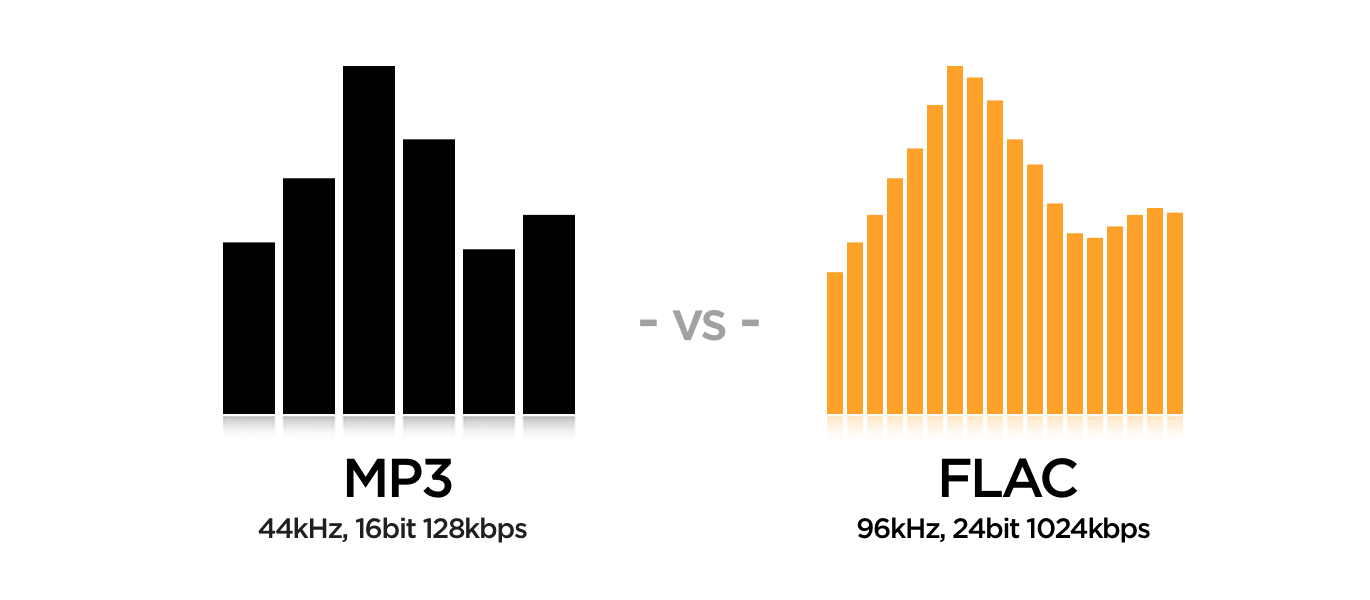
High-resolution audio represents the pinnacle of sonic excellence, offering listeners an immersive listening experience characterized by greater detail, clarity, and dynamic range. Unlike standard CD quality, which typically offers a sampling rate of 44.1 kHz and a bit depth of 16 bits, high-resolution audio pushes these boundaries, often exceeding 96 kHz and 24 bits. Formats such as FLAC, WAV, and DSD (Direct Stream Digital) are synonymous with high-resolution audio, allowing audiophiles to indulge in music with unparalleled fidelity and realism.

The Benefits of FLAC and High-Resolution Audio

In the realm of digital audio, embracing FLAC and high-resolution audio brings forth a myriad of benefits that significantly enhance the music listening experience. Let’s explore some of these benefits in detail:

Lossless Compression: Preserving Audio Integrity

  • Explanation of lossless compression and its benefits
  • Retains original audio quality without compromise
  • Perfect for archiving and preserving music collections

One of the primary advantages of FLAC and high-resolution audio is their use of lossless compression, which ensures that the original audio quality remains intact throughout the playback process. Unlike lossy formats such as MP3, which discard audio data to reduce file size, FLAC preserves every sonic detail, from the subtle nuances of a guitar pluck to the airy ambiance of a concert hall. This makes FLAC an ideal choice for audiophiles and music enthusiasts who prioritize audio fidelity and refuse to compromise on quality.

Enhanced Listening Experience: Immersive and Realistic

  • Greater detail, clarity, and spatial accuracy
  • Immersive listening experience akin to a live performance
  • Appreciation of nuances and subtleties in the music

Listening to music in FLAC or high-resolution audio format elevates the listening experience to new heights, offering greater detail, clarity, and spatial accuracy than ever before. Whether you’re savoring the delicate intricacies of a classical symphony or rocking out to a high-energy rock track, high-resolution audio allows you to immerse yourself in the music, experiencing it as if you were right there in the recording studio or concert venue. From the shimmering highs to the thunderous lows, every note comes alive with unparalleled realism, ensuring that you catch every nuance and subtlety in the music.

Compatibility and Versatility: Seamless Integration

  • Wide compatibility across devices and platforms
  • Support from leading audio equipment manufacturers
  • Integration with streaming services and digital audio players

Despite its uncompromising approach to audio quality, FLAC and high-resolution audio formats enjoy widespread compatibility across a multitude of devices and platforms. Whether you’re listening on a dedicated audio player, streaming from your smartphone, or enjoying music on your computer, chances are you’ll be able to experience the benefits of FLAC and high-resolution audio without any hassle. Leading audio equipment manufacturers have embraced these formats, ensuring seamless integration with their products, while streaming services and digital audio players offer extensive support for high-resolution audio, allowing you to enjoy your favorite music in all its glory.

The Future of Audio: Embracing Quality and Fidelity

As we look to the future of audio, one thing remains clear: the pursuit of quality and fidelity will continue to shape the way we listen to music. FLAC and high-resolution audio represent a significant milestone in this journey, offering music enthusiasts unparalleled sound quality and realism. Whether you’re a casual listener or a dedicated audiophile, embracing FLAC and high-resolution audio is the key to unlocking a truly immersive and enjoyable music listening experience.

Latest Words on FLAC and High-Resolution Audio

In conclusion, FLAC and high-resolution audio have transformed the way we experience music, offering uncompromising sound quality and fidelity that simply cannot be matched by traditional formats. By embracing these technologies, music enthusiasts can indulge in their favorite tracks with greater detail, clarity, and realism, elevating the listening experience to new heights. Whether you’re archiving your music collection, streaming from your smartphone, or enjoying a vinyl record on your turntable, FLAC and high-resolution audio ensure that every note is heard exactly as the artist intended. So, why settle for anything less than the best? Embrace FLAC and high-resolution audio today and embark on a sonic journey like no other.

Comments:

Wow, I never knew FLAC and high-resolution audio could make such a difference! I’m definitely going to start using them for my music collection. Thanks for the informative article!

Great article! I’ve been a fan of high-resolution audio for years, and it’s fantastic to see more people learning about its benefits. Keep up the excellent work!

I appreciate the insights into FLAC and high-resolution audio. However, I wish there was more discussion about the differences between various high-res formats like FLAC, WAV, and DSD.

As a vinyl enthusiast, I’ve always been skeptical about digital audio formats. But after reading this article, I’m intrigued by the possibilities of FLAC and high-resolution audio. I might just give them a try!

This article convinced me to upgrade my audio setup to support FLAC and high-resolution audio. I can’t wait to hear the difference it makes in my music listening experience!

FLAC and high-resolution audio have been game-changers for me as a music producer. Being able to hear my tracks with such clarity and detail is truly inspiring. Thanks for highlighting their importance!

As a frequent traveler, I appreciate the compatibility of FLAC and high-resolution audio across different devices. Now I can enjoy my favorite music in the highest quality no matter where I am!

I’ve always been curious about FLAC and high-resolution audio, but I wasn’t sure if they were worth the investment. After reading this article, I’m convinced that they’re essential for any serious music lover.

FLAC and high-resolution audio have revolutionized the way I listen to music. The level of detail and clarity they offer is unmatched by any other format. I can’t imagine going back to MP3s now!

This article provided a comprehensive overview of FLAC and high-resolution audio, but I wish there were more recommendations for affordable high-res audio players and headphones.


Free Download Mp4Gain
picture


Mp4Gain Main Window
picture


Mp4Gain Features
picture


Free Download Mp4Gain
picture

Dynamic Range Adaptation in MP4 Audio Tracks

Dynamic Range Adaptation in MP4 Audio Tracks

Dynamic Range Adaptation in MP4 Audio Tracks

Dynamic Range Adaptation in MP4 Audio Tracks


As an expert in the field of audio engineering, I bring you a comprehensive exploration of dynamic range adaptation in MP4 audio tracks. Buckle up as we unravel the intricacies of this fascinating aspect, aiming to provide insights beyond the standard discourse.

Latest Words on Dynamic Range

In the ever-evolving landscape of audio technology, dynamic range plays a pivotal role. Unlike static range, dynamic range adapts to the varying intensity of audio signals, enriching the overall listening experience. Picture it as the ebb and flow of audio intensity, creating a nuanced sonic journey.

Let’s Talk about Adaptation

Adaptation is the heartbeat of dynamic range in MP4 audio. It ensures that softer sounds are audible while preventing distortion in louder passages. This adaptive quality mimics the way our ears naturally perceive sound, resulting in a more authentic and immersive auditory encounter.

Why Dynamic Range Matters

Dynamic range matters because it mimics the natural ebb and flow of sound in real-life situations. Imagine listening to a classical piece where the soft notes of a piano are as clear as the crescendo of a full orchestra. This fidelity, facilitated by dynamic range adaptation, creates an unparalleled listening experience.

Breaking Down the Technicalities

Behind the scenes, dynamic range adaptation involves complex algorithms that analyze and adjust audio signals on the fly. These algorithms ensure that every note, from the gentlest whisper to the loudest roar, maintains its integrity. This technical prowess contributes to the magic of MP4 audio.

My Personal Journey with Dynamic Range

Throughout my career, I’ve witnessed the transformative power of dynamic range adaptation. Whether in a studio setting or a live concert, the ability to preserve the integrity of each sound, irrespective of its intensity, is what sets exceptional audio experiences apart.

Let’s Talk MP4 and Dynamic Range

MP4, known for its versatility, incorporates dynamic range adaptation seamlessly. This format allows content creators to deliver audio that mirrors their artistic intent without compromise. It’s a testament to how technology can elevate our sensory experiences.

The Future Sounds Dynamic

As we peer into the future, the evolution of dynamic range adaptation promises even greater fidelity. Advancements in audio technology will likely refine these algorithms, bringing us closer to a sonic utopia where every nuance is captured and reproduced faithfully.

The Right Solution: MP4Gain

In the realm of dynamic range adaptation, choosing the right tools is paramount. Among the solutions available, MP4Gain stands out. Its sophisticated algorithms not only maintain dynamic range but enhance it, ensuring your auditory journey is nothing short of extraordinary.

Comments:

“This article opened my ears to the world of dynamic range in MP4. Fascinating insights!”

“I’ve always wondered why some audio sounds richer. Now I get it. Thanks!”

“Any chance we’ll see this technology in live performances soon? Exciting stuff!”

“Great article! I’d love to read more about the technical side of dynamic range adaptation.”

“MP4Gain really does make a difference. Tried it after reading this, and I’m impressed!”

“Could you delve into how dynamic range affects different music genres? Very curious!”

“Kudos for keeping it engaging and informative. Thumbs up from a music enthusiast!”

“I’m sold on MP4Gain. It’s like magic for my music library. More recommendations, please!”

“Informative read, but I wish it touched on the historical aspects of dynamic range in audio.”

“As a tech novice, I appreciate how you broke down the complexities. Well done!”

Handling Subband Filtering in the MP3 Audio Codec

Handling Subband Filtering in the MP3 Audio Codec

Subband Filtering
Subband Filtering

As a specialist with extensive experience in the world of audio technology, I’m excited to explore the intricate realm of subband filtering in the MP3 audio codec. In this article, I aim to provide you with a comprehensive understanding of this fascinating subject. Let’s embark on this journey to uncover the secrets behind the technology that powers your favorite music.

Let’s Talk About Subband Filtering

Subband filtering is a fundamental concept in the realm of audio coding. To put it simply, it’s a technique used to break down audio signals into smaller, more manageable parts. Think of it like a chef preparing ingredients before cooking a delicious meal. Each ingredient is a subband, and the chef’s task is to make sure they’re just right.

In the world of audio, subband filtering serves a crucial purpose. It helps us analyze and process audio data efficiently. When you listen to your favorite songs on your phone or computer, you may not realize that beneath the surface, subband filtering is at work, ensuring that the music reaches your ears in the best possible way.

Understanding the MP3 Audio Codec

Now, let’s talk about the MP3 audio codec. You might have heard of MP3 files – those are the ones you use to store and play your music. But what exactly is this codec thing? Well, it’s like the recipe for your favorite dish. It tells your device how to take the raw audio data and turn it into that familiar sound you love.

Why do we need codecs like MP3? Think of it this way: when you cook, you don’t want to carry around your entire kitchen to make a meal, right? You need a compact set of instructions (a recipe) to create a delicious dish. Similarly, the MP3 codec compresses audio data, making it smaller and easier to store and transmit, but without losing too much quality.

The Science Behind Subband Filtering

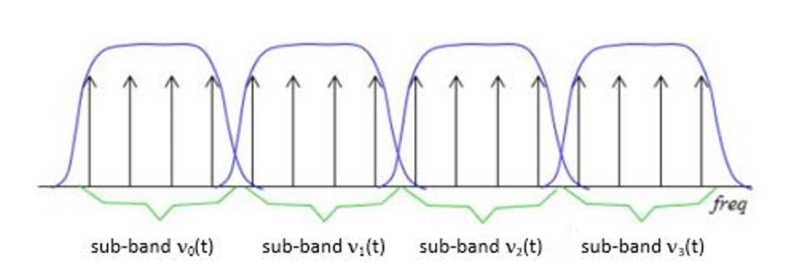
Now, let’s dive a bit deeper into the science of subband filtering. Imagine you’re trying to sort a big box of crayons. You decide to group them by color. Subband filtering does something similar – it groups different parts of the audio signal based on their frequencies.

It uses something called “filter banks” to do this. These are like magical sieves that separate the high-pitched sounds from the low-pitched ones. Just like your crayon groups, these “subbands” are easier to handle and process individually.

The Subband Filtering Process

So, how does subband filtering work in the MP3 codec? Let’s take a practical example: your favorite song. When you hit play, the audio signal is divided into many small chunks. Each of these chunks represents different parts of the music. The high notes might be in one chunk, and the low, thumping beats in another.

This division allows the MP3 codec to focus on the essential parts. It’s like when you’re reading a book – you don’t need to pay the same amount of attention to every word; you skim over the less important ones. Subband filtering helps the MP3 codec do something similar, paying more attention to the crucial parts and using less data for the less important bits.

The Role of Psychoacoustic Models

To make things even more efficient, the MP3 codec uses something called “psychoacoustic models.” These models are like having a good ear for music. Just like how you can tell which instruments are playing in a song, psychoacoustic models help the codec understand which parts of the music are more critical to our ears.

Imagine you’re listening to your favorite band live. Your brain naturally focuses on the lead singer’s voice and the melody. The background noise, like people chatting or the sound of cars passing by, is less important. Psychoacoustic models do something similar, helping the MP3 codec concentrate on the most important sounds while letting the less important ones fade into the background.

Efficiency and Data Reduction

Now, let’s talk about efficiency and data reduction. We all like fast and smooth experiences, right? The MP3 codec makes your music play quickly by reducing the amount of data it needs to process. It’s like having a super-organized backpack for a camping trip. You only carry what’s necessary, leaving the heavy and bulky stuff behind.

So, what does the codec do? It uses shorter codes for the most common sounds. In a song, the drumbeats or the lead singer’s voice are usually more frequent. They get shorter codes, making them quick to process. Less common sounds, like the subtle strumming of a guitar, get longer codes. This efficient system helps reduce the overall size of the audio file without sacrificing quality.

Quality vs. Compression

Of course, we all want our music to sound amazing. But there’s a balance to be struck – the quality of your music and the space it takes up. It’s like when you’re choosing video quality settings on a streaming platform. You want the best picture, but you also don’t want it to buffer forever.

The MP3 codec manages this balance. It compresses the audio data to save space while still delivering great sound. It’s like magic – it lets you store hundreds of songs on your phone without it getting too full, and they all still sound terrific.

Real-Life Applications

You might be wondering where subband filtering and the MP3 codec come into play in your daily life. Well, they’re everywhere! Think about streaming music on your phone, watching videos online, or even chatting on a video call. All of these rely on efficient audio coding techniques to make sure you hear what’s important while saving bandwidth.

Imagine you’re streaming your favorite cartoon online. Thanks to subband filtering and the MP3 codec, you get to enjoy clear dialogue and exciting music while the background noise from your neighbor’s lawnmower fades into the background.

Challenges and Future Developments

As technology keeps evolving, so does the world of audio coding. Challenges like making audio coding even more efficient and dealing with different devices are on the horizon. Just like how self-driving cars were a dream not too long ago, advancements in audio technology will continue to shape our lives.

In the coming years, we might see even better ways to balance quality and compression. It’s an exciting time for audio technology, and subband filtering will undoubtedly play a big role in making it even better.

Behind the Scenes: Creating an MP3

Have you ever wondered how an MP3 file is created? It’s a bit like following a recipe to cook a delicious meal. The audio data goes through a series of steps where subband filtering helps sort and organize it. Then, it’s compressed, much like simmering a sauce to concentrate the flavors.

Finally, the codec gives you a compact and tasty MP3 file that’s ready to be played. It’s a bit like cooking up your favorite dish – only in the world of sound.

In conclusion, subband filtering is like the chef’s secret technique for preparing an excellent meal. It’s the magic behind the MP3 codec, making your music sound fantastic while fitting in your device. So, next time you listen to your favorite song, remember the subbands and filters that make it