Role of predictive coding in H.265 and AAC compression


Free Download Mp4Gain
picture

Role of predictive coding in H.265 and AAC compression

Role of predictive coding in H.265 and AAC compression

Let’s talk about the role of predictive coding in H.265 and AAC compression

Predictive coding is fundamental to modern compression technologies like H.265 and AAC, enabling efficient encoding without compromising quality. At its core, predictive coding reduces redundant data by predicting the values of future data based on previous patterns. For instance, in a video, if one frame is nearly identical to the next, predictive coding eliminates the need to encode the entire frame again. It’s like predicting what the next puzzle piece looks like when assembling a jigsaw puzzle. This technique allows for smaller file sizes while preserving visual and audio quality.

In my work, I’ve seen predictive coding excel in handling complex audio and video sequences. With H.265, this process identifies similarities between frames and encodes only the differences, dramatically cutting down data requirements. Similarly, AAC uses predictive coding to analyze and predict audio waveforms, ensuring that only the necessary changes are encoded. Picture a friend trying to describe a simple drawing over the phone—they only need to tell you what changes to make to complete the image, saving time and effort.

How predictive coding optimizes H.265 compression

H.265, or HEVC, relies heavily on predictive coding to enhance video compression efficiency. By using intra-frame and inter-frame prediction, it minimizes redundant information. Intra-frame prediction looks within a single frame for patterns, while inter-frame prediction focuses on similarities between consecutive frames. For example, a static background in a video scene doesn’t need to be encoded repeatedly if predictive coding captures its unchanged nature.

The efficiency of H.265 comes from its ability to divide frames into smaller blocks and predict their content more accurately. I’ve often explained this using a mosaic analogy: instead of recreating each tile individually, H.265 identifies repeating patterns and predicts their placement, reducing the data load. This approach not only saves bandwidth but also improves streaming quality for high-definition content, even on limited internet connections.

How predictive coding works in AAC compression

In AAC, predictive coding ensures efficient audio compression by analyzing and predicting sound waveforms. It removes redundant frequencies and encodes only the essential changes. Think of it like adjusting the temperature in a room: once you set the thermostat, only small tweaks are needed to maintain comfort. Predictive coding in AAC eliminates unnecessary adjustments, focusing solely on what’s required to preserve audio fidelity.

This technique is particularly valuable for music and speech. By predicting and encoding only the differences between successive sound samples, AAC achieves high-quality audio with lower file sizes. I’ve personally worked with AAC files that maintain studio-level sound quality while being small enough to fit on older devices with limited storage. Predictive coding is the unsung hero behind this balance of quality and efficiency.

Latest words on the role of predictive coding in H.265 and AAC compression

Predictive coding is the cornerstone of H.265 and AAC compression, ensuring smaller file sizes without sacrificing quality. By predicting and encoding only the essential changes in video frames and audio waveforms, this technology maximizes efficiency. It’s like packing smarter for a trip—bringing only what you truly need while leaving unnecessary items behind.

If you’re looking to optimize your media files further, Mp4Gain offers tools that can help improve audio and video quality while leveraging these advanced compression techniques. It’s the ideal choice for those who want to enhance their media without compromising efficiency.

FAQs about the role of predictive coding in H.265 and AAC compression

What is predictive coding in H.265?

Predictive coding in H.265 reduces redundant data by predicting similarities within and between video frames, optimizing compression efficiency.

How does predictive coding work in AAC?

Predictive coding in AAC analyzes sound waveforms, encodes only changes between samples, and removes redundant frequencies to ensure high audio quality.

Why is predictive coding important in compression?

Predictive coding reduces file sizes while maintaining quality, making it essential for efficient video and audio streaming and storage.

What is inter-frame prediction in H.265?

Inter-frame prediction in H.265 analyzes similarities between consecutive frames to encode only the changes, reducing redundancy.

How does predictive coding affect video quality?

Predictive coding ensures that video compression retains high quality by focusing on encoding essential details and eliminating redundancies.

What is the role of intra-frame prediction in H.265?

Intra-frame prediction in H.265 analyzes patterns within a single frame to encode data more efficiently.

Does predictive coding improve streaming performance?

Yes, predictive coding reduces file sizes, enabling smoother streaming even on limited bandwidth connections.

Is predictive coding exclusive to H.265 and AAC?

No, predictive coding is used in other codecs as well, but it plays a critical role in H.265 and AAC for advanced compression.

How does predictive coding balance quality and compression?

By predicting and encoding only changes, predictive coding reduces data usage without compromising perceived quality.

What devices benefit from predictive coding?

Devices like smartphones, streaming platforms, and storage-constrained gadgets benefit from predictive coding’s efficiency.

Comments:

I didn’t know predictive coding worked this way! It’s amazing how it keeps file sizes so small without losing quality.

Good read, but I would have liked more examples of real-life applications of predictive coding. Still, solid info!

Wow, this article answered a lot of my questions about H.265. I’m going to bookmark this for future reference!

What a great explanation! I always wondered how AAC could be so efficient. This really cleared it up for me.

Pretty detailed article, but maybe a bit too technical in some spots. Would be nice to have even simpler analogies.

Can predictive coding be applied to older codecs too? Curious about how far back this technology goes.

I’ve been searching for an easy way to explain H.265 to a client, and this article nailed it. Thanks a ton!

Didn’t know predictive coding was the reason why my streaming is so smooth. Learned a lot from this post!

The way this was broken down into examples made it so easy to follow. Great job simplifying complex ideas!


Free Download Mp4Gain
picture


Mp4Gain Main Window
picture


Mp4Gain Features
picture


Free Download Mp4Gain
picture

Perceptual Audio Coding in MP4: Beyond AAC

Perceptual Audio Coding in MP4: Beyond AAC

Perceptual Audio Coding in MP4: Beyond AAC

Perceptual Audio Coding in MP4: Beyond AAC

Let’s delve into Perceptual Audio Coding

As an expert in audio technology, I understand the importance of perceptual audio coding, especially concerning MP4 files and their utilization beyond the AAC format. Perceptual audio coding is a fascinating aspect of digital audio processing, aiming to compress audio files while maintaining perceptual audio quality. In this article, I’ll explore the intricacies of perceptual audio coding in MP4 files, going beyond the commonly used AAC format to uncover newer and more efficient methods.

The Evolution of Audio Compression Standards

In the realm of audio compression, standards have evolved significantly over the years to meet the demands of digital media consumption. From the early days of MP3 to the widespread adoption of AAC, the goal has always been to strike a balance between compression efficiency and audio quality. However, as technology progresses, newer standards emerge, pushing the boundaries of what’s possible in perceptual audio coding.

From MP3 to AAC: A Shift in Audio Compression

The transition from MP3 to AAC marked a significant advancement in audio compression technology. AAC offered better compression efficiency and superior sound quality compared to its predecessor, making it the preferred choice for various applications, including MP4 files. This shift underscores the constant pursuit of better audio compression techniques to enhance the digital audio experience.

MP4: More Than Just Video

While initially designed as a container format for multimedia, MP4 has evolved into a versatile platform for audio as well. Its compatibility and widespread support make it an ideal choice for storing and streaming audio files. However, to fully leverage the capabilities of MP4 for audio, it’s essential to explore perceptual audio coding methods that go beyond the limitations of AAC and deliver superior performance.

Understanding Perceptual Audio Coding Principles

At the core of perceptual audio coding lies an understanding of human auditory perception and psychoacoustic principles. By leveraging insights from psychoacoustics, audio codecs can intelligently discard perceptually irrelevant audio data while preserving essential information, leading to efficient compression without significant loss in audio quality.

The Role of Psychoacoustics in Audio Compression

Psychoacoustics, the study of how humans perceive sound, plays a crucial role in perceptual audio coding. By exploiting characteristics of human hearing, such as masking effects and frequency perception, codecs can optimize compression by focusing on perceptually important audio elements while discarding redundant information. This results in more efficient use of bitrate and better overall compression performance.

  • Masking Effects: Leveraging the phenomenon of auditory masking, perceptual audio coding algorithms identify and remove audio components that are masked by louder sounds, allowing for more aggressive compression without perceptible quality loss.
  • Frequency Masking: By considering the frequency-dependent nature of masking, audio codecs can allocate fewer bits to frequencies that are less perceptible to the human ear, resulting in more efficient use of available bitrate.
  • Temporal Masking: Temporal masking effects enable codecs to exploit the temporal characteristics of audio signals, allowing for more efficient compression of transient sounds while maintaining overall audio quality.

Advancements Beyond AAC

While AAC has been a cornerstone of perceptual audio coding, ongoing research and development efforts have led to the emergence of new codecs with improved compression efficiency and audio quality. Codecs such as MPEG-H Audio and xHE-AAC incorporate innovative techniques to further enhance audio compression performance, paving the way for the next generation of audio coding standards.

Unleashing the Potential of MP4 Audio

As we continue to explore the possibilities of perceptual audio coding in MP4 files, it’s crucial to embrace advancements beyond AAC and leverage cutting-edge compression techniques. By harnessing the power of psychoacoustic principles and adaptive encoding algorithms, we can unlock the full potential of MP4 as a leading format for high-quality audio storage and distribution.

Latest words on Perceptual Audio Coding in MP4

In conclusion, the evolution of perceptual audio coding in MP4 extends far beyond traditional standards like AAC, opening up new avenues for audio compression and distribution. By embracing advancements in psychoacoustic research and codec development, we can ensure that MP4 remains at the forefront of digital audio technology, delivering immersive and high-fidelity audio experiences to users worldwide.

Comments:

This article really helped me understand the complexities of audio compression in MP4 files. I had no idea about the role of psychoacoustics in shaping modern audio codecs!

As a music enthusiast, I found this article to be incredibly insightful. The explanations were clear, and the examples made complex concepts easy to grasp.

Great job on breaking down such a technical topic into digestible information! I feel much more informed about the intricacies of audio compression in MP4 files.

I would love to see more discussion on the practical applications of perceptual audio coding in real-world scenarios. Overall, though, this was a fantastic read!

This article provided valuable insights into the advancements beyond AAC in audio compression. I’m excited to see where the future of MP4 audio takes us!

Dynamic Bit Allocation in Opus Voice Coding

Dynamic Bit Allocation in Opus Voice Coding

Dynamic Bit Allocation in Opus Voice Coding

Let’s talk about Dynamic Bit Allocation

As a specialist with years of experience in audio coding, I’m excited to delve into the intricacies of dynamic bit allocation (DBA) within Opus voice coding. At its core, DBA is a fundamental concept in audio compression where the available bits for encoding are dynamically distributed based on the complexity of the audio signal. Imagine you have a limited number of Lego blocks, and you need to construct different structures. Some structures may require more blocks than others, and DBA ensures that each part gets precisely the number of blocks it needs for optimal construction. Similarly, in audio coding, DBA ensures that critical parts of the audio signal receive more bits for accurate representation, while less critical parts receive fewer bits without compromising overall quality.

Understanding Opus Voice Coding

Opus voice coding is a state-of-the-art audio codec renowned for its efficiency and versatility. Developed by the Internet Engineering Task Force (IETF), Opus is particularly well-suited for real-time applications such as Voice over Internet Protocol (VoIP), online gaming, and interactive audio streaming. Its ability to adapt to varying network conditions and deliver high-quality audio at low bitrates makes it a preferred choice for a wide range of applications. Think of Opus as a Swiss Army knife for audio compression, capable of handling diverse audio content with remarkable efficiency and fidelity.

Optimizing Compression Efficiency

DBA in Opus works by dynamically adjusting the allocation of bits to different frequency bands based on the audio signal’s characteristics. This adaptive approach ensures that more bits are allocated to critical frequencies, such as those containing speech or musical harmonics, while fewer bits are allocated to less important frequencies.
By prioritizing critical information, Opus maximizes compression efficiency without sacrificing audio quality. This means that even at low bitrates, Opus can deliver clear and intelligible speech or high-fidelity music, depending on the application’s requirements.
Imagine you’re packing for a trip, and you have limited space in your suitcase. You’d prioritize packing essential items like clothes and toiletries while leaving less critical items behind. Similarly, Opus prioritizes the most crucial audio information while discarding redundant or less important data to achieve optimal compression.

Adaptive Bitrate Control

One of the key advantages of DBA in Opus is its adaptive bitrate control mechanism. Unlike fixed-rate codecs that allocate a predetermined number of bits per frame, Opus adjusts its bitrate dynamically based on the complexity of the audio signal and the available bandwidth.
This adaptive bitrate control allows Opus to deliver consistent audio quality across a wide range of network conditions, from high-speed broadband connections to bandwidth-constrained mobile networks. It ensures smooth audio playback without interruptions or buffering, even in challenging network environments.
Think of adaptive bitrate control as driving a car with cruise control on a hilly terrain. The car automatically adjusts its speed to maintain a steady pace regardless of uphill climbs or downhill descents. Similarly, Opus adjusts its bitrate to maintain consistent audio quality, regardless of fluctuations in network conditions.

The Role of Psychoacoustic Modeling

In addition to dynamic bit allocation, Opus leverages sophisticated psychoacoustic modeling techniques to further enhance compression efficiency. Psychoacoustics studies how humans perceive sound and identifies perceptually irrelevant audio information that can be discarded without noticeable degradation in quality. This allows Opus to achieve higher compression ratios while maintaining transparent audio quality.

Perceptual Audio Coding

Opus’s psychoacoustic model analyzes the audio signal in real-time to identify perceptually irrelevant components, such as masked frequencies or imperceptible noise. By exploiting the limitations of human auditory perception, Opus can allocate fewer bits to these components without compromising perceived audio quality.
Imagine you’re listening to a piece of music in a noisy environment, like a crowded cafe. Your brain naturally filters out background noise and focuses on the music’s melody and lyrics. Similarly, Opus’s psychoacoustic model filters out irrelevant audio information to optimize compression efficiency while preserving essential auditory cues.

Transient and Tonality Detection

Another critical aspect of Opus’s psychoacoustic model is its ability to detect transient sounds and tonal components within the audio signal. Transients are short-lived bursts of energy, such as drum hits or consonant sounds in speech, while tonal components are sustained musical tones.
By accurately detecting and preserving transient and tonal components, Opus ensures that the encoded audio maintains clarity and fidelity, even during rapid changes in the audio signal. This is essential for preserving the natural timbre of musical instruments and the articulation of speech sounds, especially in low-bitrate scenarios.

Latest words on Dynamic Bit Allocation in Opus

Dynamic bit allocation in Opus voice coding represents a paradigm shift in audio compression technology, offering unprecedented efficiency and flexibility for a wide range of applications. By dynamically adapting to the characteristics of the audio signal and leveraging advanced psychoacoustic modeling techniques, Opus sets the standard for high-quality, low-latency audio communication. Whether you’re making a VoIP call, streaming music, or engaging in online gaming, Opus ensures that every sound is faithfully reproduced, even under challenging network conditions. As a specialist in audio coding, I firmly believe that the future of audio communication lies in technologies like Opus, where quality, efficiency, and adaptability converge to create seamless auditory experiences.

Comments:

This article explained dynamic bit allocation in Opus in a way that was easy to understand. I appreciate the real-life examples used to illustrate complex concepts.

As someone who works with audio compression, I found this article to be incredibly informative. The section on adaptive bitrate control was particularly enlightening.

Could you provide more information on the specific algorithms used in Opus for psychoacoustic modeling? I’d love to learn more about the technical details behind the compression process.

Kudos to the author for shedding light on such a complex topic. Opus voice coding is indeed a game-changer in the world of audio compression.

This article helped me understand why Opus is so effective for real-time applications like VoIP. It’s fascinating to see how dynamic bit allocation optimizes audio quality.

I’ve been using Opus for streaming audio, and I must say, it delivers exceptional quality even on low-bandwidth connections. Thanks for the insights!

Opus’s adaptive bitrate control mechanism is truly remarkable. It’s like having an intelligent system that adjusts to the ever-changing demands of network conditions.

This article convinced me to explore Opus further for my audio compression needs. It’s reassuring to know that there are advanced technologies like Opus available.

Dynamic bit allocation and psychoacoustic modeling sound like cutting-edge concepts. I’m eager to see how they continue to evolve in future audio codecs.

As a musician, I’m always interested in learning about the latest advancements in audio technology. This article provided valuable insights into the inner workings of Opus.

Opus is a game-changer for online gaming. The low-latency audio compression ensures a seamless gaming experience, even in intense multiplayer battles.

Handling Subband Filtering in the MP3 Audio Codec

Handling Subband Filtering in the MP3 Audio Codec

Subband Filtering
Subband Filtering

As a specialist with extensive experience in the world of audio technology, I’m excited to explore the intricate realm of subband filtering in the MP3 audio codec. In this article, I aim to provide you with a comprehensive understanding of this fascinating subject. Let’s embark on this journey to uncover the secrets behind the technology that powers your favorite music.

Let’s Talk About Subband Filtering

Subband filtering is a fundamental concept in the realm of audio coding. To put it simply, it’s a technique used to break down audio signals into smaller, more manageable parts. Think of it like a chef preparing ingredients before cooking a delicious meal. Each ingredient is a subband, and the chef’s task is to make sure they’re just right.

In the world of audio, subband filtering serves a crucial purpose. It helps us analyze and process audio data efficiently. When you listen to your favorite songs on your phone or computer, you may not realize that beneath the surface, subband filtering is at work, ensuring that the music reaches your ears in the best possible way.

Understanding the MP3 Audio Codec

Now, let’s talk about the MP3 audio codec. You might have heard of MP3 files – those are the ones you use to store and play your music. But what exactly is this codec thing? Well, it’s like the recipe for your favorite dish. It tells your device how to take the raw audio data and turn it into that familiar sound you love.

Why do we need codecs like MP3? Think of it this way: when you cook, you don’t want to carry around your entire kitchen to make a meal, right? You need a compact set of instructions (a recipe) to create a delicious dish. Similarly, the MP3 codec compresses audio data, making it smaller and easier to store and transmit, but without losing too much quality.

The Science Behind Subband Filtering

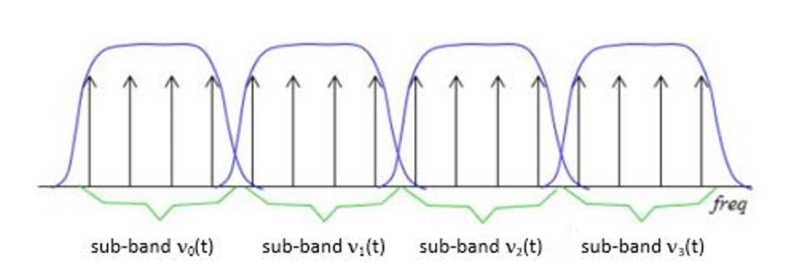
Now, let’s dive a bit deeper into the science of subband filtering. Imagine you’re trying to sort a big box of crayons. You decide to group them by color. Subband filtering does something similar – it groups different parts of the audio signal based on their frequencies.

It uses something called “filter banks” to do this. These are like magical sieves that separate the high-pitched sounds from the low-pitched ones. Just like your crayon groups, these “subbands” are easier to handle and process individually.

The Subband Filtering Process

So, how does subband filtering work in the MP3 codec? Let’s take a practical example: your favorite song. When you hit play, the audio signal is divided into many small chunks. Each of these chunks represents different parts of the music. The high notes might be in one chunk, and the low, thumping beats in another.

This division allows the MP3 codec to focus on the essential parts. It’s like when you’re reading a book – you don’t need to pay the same amount of attention to every word; you skim over the less important ones. Subband filtering helps the MP3 codec do something similar, paying more attention to the crucial parts and using less data for the less important bits.

The Role of Psychoacoustic Models

To make things even more efficient, the MP3 codec uses something called “psychoacoustic models.” These models are like having a good ear for music. Just like how you can tell which instruments are playing in a song, psychoacoustic models help the codec understand which parts of the music are more critical to our ears.

Imagine you’re listening to your favorite band live. Your brain naturally focuses on the lead singer’s voice and the melody. The background noise, like people chatting or the sound of cars passing by, is less important. Psychoacoustic models do something similar, helping the MP3 codec concentrate on the most important sounds while letting the less important ones fade into the background.

Efficiency and Data Reduction

Now, let’s talk about efficiency and data reduction. We all like fast and smooth experiences, right? The MP3 codec makes your music play quickly by reducing the amount of data it needs to process. It’s like having a super-organized backpack for a camping trip. You only carry what’s necessary, leaving the heavy and bulky stuff behind.

So, what does the codec do? It uses shorter codes for the most common sounds. In a song, the drumbeats or the lead singer’s voice are usually more frequent. They get shorter codes, making them quick to process. Less common sounds, like the subtle strumming of a guitar, get longer codes. This efficient system helps reduce the overall size of the audio file without sacrificing quality.

Quality vs. Compression

Of course, we all want our music to sound amazing. But there’s a balance to be struck – the quality of your music and the space it takes up. It’s like when you’re choosing video quality settings on a streaming platform. You want the best picture, but you also don’t want it to buffer forever.

The MP3 codec manages this balance. It compresses the audio data to save space while still delivering great sound. It’s like magic – it lets you store hundreds of songs on your phone without it getting too full, and they all still sound terrific.

Real-Life Applications

You might be wondering where subband filtering and the MP3 codec come into play in your daily life. Well, they’re everywhere! Think about streaming music on your phone, watching videos online, or even chatting on a video call. All of these rely on efficient audio coding techniques to make sure you hear what’s important while saving bandwidth.

Imagine you’re streaming your favorite cartoon online. Thanks to subband filtering and the MP3 codec, you get to enjoy clear dialogue and exciting music while the background noise from your neighbor’s lawnmower fades into the background.

Challenges and Future Developments

As technology keeps evolving, so does the world of audio coding. Challenges like making audio coding even more efficient and dealing with different devices are on the horizon. Just like how self-driving cars were a dream not too long ago, advancements in audio technology will continue to shape our lives.

In the coming years, we might see even better ways to balance quality and compression. It’s an exciting time for audio technology, and subband filtering will undoubtedly play a big role in making it even better.

Behind the Scenes: Creating an MP3

Have you ever wondered how an MP3 file is created? It’s a bit like following a recipe to cook a delicious meal. The audio data goes through a series of steps where subband filtering helps sort and organize it. Then, it’s compressed, much like simmering a sauce to concentrate the flavors.

Finally, the codec gives you a compact and tasty MP3 file that’s ready to be played. It’s a bit like cooking up your favorite dish – only in the world of sound.

In conclusion, subband filtering is like the chef’s secret technique for preparing an excellent meal. It’s the magic behind the MP3 codec, making your music sound fantastic while fitting in your device. So, next time you listen to your favorite song, remember the subbands and filters that make it