Psychoacoustic Modeling in MP3 Encoding


Free Download Mp4Gain
picture

Psychoacoustic Modeling in MP3 Encoding
Psychoacoustic Modeling in MP3 Encoding

Let’s talk about Psychoacoustic Modeling in MP3 Encoding

Psychoacoustic modeling is at the heart of how MP3 encoding achieves its impressive compression without compromising the sound quality listeners expect. As a specialist in audio processing, I often dive into the fascinating relationship between human hearing and digital encoding methods. At its core, psychoacoustic modeling is a technique that removes sounds that listeners likely won’t hear, freeing up space without noticeable loss. Picture it like filtering out background noise in a crowded room; you retain what matters, discarding the rest. Let’s break down how psychoacoustic modeling enables MP3 encoding to reduce file sizes while keeping the music enjoyable and clear.

What is Psychoacoustic Modeling in Audio Encoding?

Psychoacoustic modeling, simply put, utilizes principles of human auditory perception to create efficient digital audio files. Rather than storing every tiny sound detail, it stores only what our ears can reasonably detect. It’s like reducing a high-definition image down to a manageable size without losing the essential picture quality. This process allows MP3 files to capture and convey musical elements that matter most to our ears, without holding onto excess sound data. As someone who frequently works with audio processing, I appreciate the balance of quality and file size that psychoacoustic modeling provides in MP3 encoding.

How Human Hearing Influences MP3 Encoding

When we look at how MP3 encoding handles audio, it’s all about the way human hearing works. The ear doesn’t perceive all sounds equally; some frequencies and volumes dominate our perception, while others slip by almost unnoticed. Psychoacoustic modeling cleverly eliminates or reduces these less perceptible sounds. For example, sounds above 16,000 Hz are often inaudible to most people, especially in the presence of louder, lower frequencies. It’s much like focusing on a favorite melody while ignoring background noise at a concert.

The Role of Frequency Masking in Psychoacoustic Models

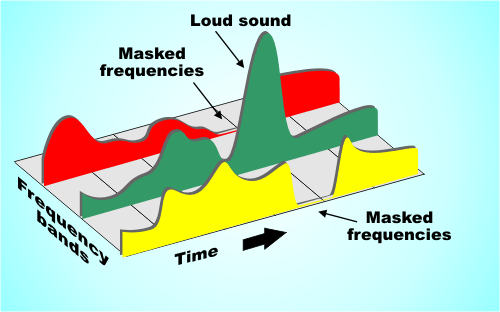
One of the main principles in psychoacoustic modeling is frequency masking, where stronger sounds can mask weaker ones, making them harder to hear. Imagine standing beside a roaring waterfall; you’re unlikely to hear someone whispering nearby. MP3 encoding leverages this concept by reducing the data assigned to “masked” sounds, which won’t be missed by the human ear. This smart approach allows MP3 files to cut down on unnecessary audio information, achieving efficient compression.

Temporal Masking and Its Impact on MP3 Quality

Temporal masking is another vital part of psychoacoustic modeling, involving how sounds can mask other sounds that occur closely in time. For instance, if a loud drum beat is immediately followed by a quieter note, the latter may go unnoticed. MP3 encoding uses this to selectively reduce details around louder, more prominent sounds, ensuring that the auditory experience remains rich without holding onto insignificant data. I find this process mirrors how we naturally overlook brief, quiet noises in a bustling environment.

Quantization and Bit Allocation in MP3 Encoding

Quantization refers to rounding off sound values to fit within a manageable range, a process that directly affects file size. In MP3 encoding, bit allocation determines how many bits are given to various sound details based on psychoacoustic analysis. High-priority sounds receive more bits for clarity, while lower-priority ones are stored with less. Think of it like budgeting for a party: spend most on the essentials, while the little things take up less. This efficient allocation keeps MP3 files both compact and high-quality.

How Psychoacoustic Models Balance Compression and Sound Quality

Achieving the right balance between compression and sound quality is a core aim of psychoacoustic models. As someone who’s seen various encoding approaches over the years, I know this balance is key to a good MP3. By retaining perceptually significant sounds and discarding what won’t be missed, MP3 encoding hits a sweet spot of clarity and efficiency. Imagine reducing the weight of a suitcase by only packing the essentials, leaving out items that don’t add real value. This is how MP3 encoding achieves such remarkable compression.

Examples of Psychoacoustic Models in Action

There are several prominent psychoacoustic models used in MP3 encoding. The most widely known is the Model I from MPEG-1 Layer III, which focuses on frequency and temporal masking. For instance, think of an orchestra: MP3 encoding gives priority to the lead violin while reducing data for background noise that listeners won’t notice. Each model is tuned to prioritize sounds based on human auditory characteristics, making MP3 an optimal format for casual listening.

Why MP3 Encoding Uses Psychoacoustic Models

MP3 encoding heavily relies on psychoacoustic models because they offer a realistic way to reduce file sizes without making music sound low-quality. Think about an artist painting a detailed portrait; they use their skills to add meaningful details while avoiding unnecessary strokes. Likewise, psychoacoustic models filter out audio “noise” we wouldn’t miss, creating manageable, shareable files that still deliver great listening experiences.

Comparing Psychoacoustic Models Across Audio Formats

MP3 isn’t the only format that uses psychoacoustic modeling; AAC and OGG also incorporate similar principles, each with its nuances. While MP3 prioritizes compatibility, AAC provides higher fidelity at similar bit rates, and OGG offers an open-source alternative. It’s like comparing various types of camera lenses, where each is suited for a particular scenario. Understanding these models helps us choose the right format for different audio needs, from streaming to high-quality recordings.

Advantages of Psychoacoustic Modeling in MP3 Files

Psychoacoustic modeling has several advantages for MP3 files. It enables significant compression without noticeable loss, makes sharing and streaming efficient, and preserves key elements of audio that listeners enjoy. For instance, it’s like packing a travel bag with only the essentials but keeping items that create a great travel experience. This streamlined, effective approach is why MP3 remains popular for digital music.

Limitations of Psychoacoustic Models in MP3 Encoding

Despite its strengths, psychoacoustic modeling in MP3 has limitations. When audio files are compressed too much, some details are inevitably lost, which audiophiles might notice. It’s similar to shrinking an image too far and losing clarity. While MP3 is excellent for everyday use, those seeking higher audio fidelity may notice subtle differences compared to lossless formats like FLAC. These limitations remind us that psychoacoustic modeling is powerful, but not perfect.

Real-World Applications of Psychoacoustic Models

From streaming music to sharing files online, psychoacoustic models make MP3 an excellent choice for many real-world uses. For instance, music streaming services rely on these models to provide clear audio without overwhelming data demands. Imagine listening to your favorite playlist on a road trip—psychoacoustic models ensure the songs sound great without consuming excessive storage or bandwidth. These models are why MP3 remains a go-to for versatile audio use.

Choosing the Right Bitrate for MP3 Compression

Selecting the right bitrate is crucial to balancing quality and file size in MP3 encoding. Higher bitrates retain more detail, but increase file size, while lower bitrates save space but may reduce quality. It’s like choosing resolution for a video; higher quality takes more data. Finding a balance, often around 128-320 kbps, ensures an optimal experience without excessive file size, especially with the efficiency of psychoacoustic modeling.

Latest Words on Psychoacoustic Modeling in MP3 Encoding

Psychoacoustic modeling plays a transformative role in MP3 encoding, allowing for efficient file compression without sacrificing the sound quality that listeners cherish. By understanding human hearing, MP3 encoding eliminates non-essential sounds, ensuring that the audio remains clear, enjoyable, and compact. This approach, with its reliance on frequency and temporal masking, bit allocation, and quantization, revolutionizes how digital audio files are shared and enjoyed. For anyone looking to manage their audio files without compromising on sound, an app like Mp4Gain can be a reliable tool to further optimize and normalize audio quality in various formats, including MP3.

Comments:

This was super helpful! I always wondered how MP3s keep the quality but shrink the file size so much.

Wish there were even more examples on bitrates. But still, great info here!

I didn’t realize that MP3 used human hearing principles to save space. Pretty cool concept!

This article is a gem. Finally, someone explains psychoacoustics in plain English. Thanks!

Could you do a similar article on FLAC? I’m curious about lossless formats too.

I use MP3s a lot and never knew about psychoacoustics. Makes me appreciate the format more.

This is the best breakdown I’ve found so far. Got a better understanding of MP3 encoding now.

I’m a bit confused about temporal masking. Would love more detail there!

Glad to finally understand why higher bitrates matter. Helpful read!

Any tips on choosing the right bitrate? I’d love a guide for that specifically.

Pretty amazing how they compress sound. Learned something new here today.

This was a solid article. Appreciate the straightforward language.

Would have liked more about psychoacoustic models in other formats like OGG, but still a great read.


Free Download Mp4Gain
picture


Mp4Gain Main Window
picture


Mp4Gain Features
picture


Free Download Mp4Gain
picture

Perceptual Audio Coding in MP4: Beyond AAC

Perceptual Audio Coding in MP4: Beyond AAC

Perceptual Audio Coding in MP4: Beyond AAC

Perceptual Audio Coding in MP4: Beyond AAC

Let’s delve into Perceptual Audio Coding

As an expert in audio technology, I understand the importance of perceptual audio coding, especially concerning MP4 files and their utilization beyond the AAC format. Perceptual audio coding is a fascinating aspect of digital audio processing, aiming to compress audio files while maintaining perceptual audio quality. In this article, I’ll explore the intricacies of perceptual audio coding in MP4 files, going beyond the commonly used AAC format to uncover newer and more efficient methods.

The Evolution of Audio Compression Standards

In the realm of audio compression, standards have evolved significantly over the years to meet the demands of digital media consumption. From the early days of MP3 to the widespread adoption of AAC, the goal has always been to strike a balance between compression efficiency and audio quality. However, as technology progresses, newer standards emerge, pushing the boundaries of what’s possible in perceptual audio coding.

From MP3 to AAC: A Shift in Audio Compression

The transition from MP3 to AAC marked a significant advancement in audio compression technology. AAC offered better compression efficiency and superior sound quality compared to its predecessor, making it the preferred choice for various applications, including MP4 files. This shift underscores the constant pursuit of better audio compression techniques to enhance the digital audio experience.

MP4: More Than Just Video

While initially designed as a container format for multimedia, MP4 has evolved into a versatile platform for audio as well. Its compatibility and widespread support make it an ideal choice for storing and streaming audio files. However, to fully leverage the capabilities of MP4 for audio, it’s essential to explore perceptual audio coding methods that go beyond the limitations of AAC and deliver superior performance.

Understanding Perceptual Audio Coding Principles

At the core of perceptual audio coding lies an understanding of human auditory perception and psychoacoustic principles. By leveraging insights from psychoacoustics, audio codecs can intelligently discard perceptually irrelevant audio data while preserving essential information, leading to efficient compression without significant loss in audio quality.

The Role of Psychoacoustics in Audio Compression

Psychoacoustics, the study of how humans perceive sound, plays a crucial role in perceptual audio coding. By exploiting characteristics of human hearing, such as masking effects and frequency perception, codecs can optimize compression by focusing on perceptually important audio elements while discarding redundant information. This results in more efficient use of bitrate and better overall compression performance.

  • Masking Effects: Leveraging the phenomenon of auditory masking, perceptual audio coding algorithms identify and remove audio components that are masked by louder sounds, allowing for more aggressive compression without perceptible quality loss.
  • Frequency Masking: By considering the frequency-dependent nature of masking, audio codecs can allocate fewer bits to frequencies that are less perceptible to the human ear, resulting in more efficient use of available bitrate.
  • Temporal Masking: Temporal masking effects enable codecs to exploit the temporal characteristics of audio signals, allowing for more efficient compression of transient sounds while maintaining overall audio quality.

Advancements Beyond AAC

While AAC has been a cornerstone of perceptual audio coding, ongoing research and development efforts have led to the emergence of new codecs with improved compression efficiency and audio quality. Codecs such as MPEG-H Audio and xHE-AAC incorporate innovative techniques to further enhance audio compression performance, paving the way for the next generation of audio coding standards.

Unleashing the Potential of MP4 Audio

As we continue to explore the possibilities of perceptual audio coding in MP4 files, it’s crucial to embrace advancements beyond AAC and leverage cutting-edge compression techniques. By harnessing the power of psychoacoustic principles and adaptive encoding algorithms, we can unlock the full potential of MP4 as a leading format for high-quality audio storage and distribution.

Latest words on Perceptual Audio Coding in MP4

In conclusion, the evolution of perceptual audio coding in MP4 extends far beyond traditional standards like AAC, opening up new avenues for audio compression and distribution. By embracing advancements in psychoacoustic research and codec development, we can ensure that MP4 remains at the forefront of digital audio technology, delivering immersive and high-fidelity audio experiences to users worldwide.

Comments:

This article really helped me understand the complexities of audio compression in MP4 files. I had no idea about the role of psychoacoustics in shaping modern audio codecs!

As a music enthusiast, I found this article to be incredibly insightful. The explanations were clear, and the examples made complex concepts easy to grasp.

Great job on breaking down such a technical topic into digestible information! I feel much more informed about the intricacies of audio compression in MP4 files.

I would love to see more discussion on the practical applications of perceptual audio coding in real-world scenarios. Overall, though, this was a fantastic read!

This article provided valuable insights into the advancements beyond AAC in audio compression. I’m excited to see where the future of MP4 audio takes us!

M4A Perceptual Coding Principles

M4A Perceptual Coding Principles

M4A Perceptual Coding Principles

M4A Perceptual Coding Principles

Let’s talk about M4A Perceptual Coding Principles

As a specialist with extensive experience in audio encoding, I’m thrilled to delve into the fascinating world of M4A perceptual coding principles. At its core, M4A audio format relies on perceptual coding to compress audio files without significantly compromising their quality. Perceptual coding operates based on the limitations of human auditory perception, exploiting them cleverly to reduce file sizes while maintaining high fidelity. Understanding these principles is crucial for anyone involved in audio production, streaming, or digital media distribution.

Human Auditory Perception: The Foundation of M4A Compression

Human auditory perception serves as the cornerstone of M4A compression techniques. Our ears have limitations in detecting certain frequencies and nuances, which perceptual coding algorithms leverage to discard audio data that is deemed less essential. For instance, sounds masked by louder ones or frequencies outside the typical range of human hearing can be safely removed without noticeable degradation in quality. Think of it like a chef trimming excess fat from a steak to enhance its flavor without compromising its overall taste.

The Role of Psychoacoustics in M4A Compression

Psychoacoustics, the study of how humans perceive sound, plays a pivotal role in M4A compression. By analyzing psychoacoustic models, encoders can identify which components of an audio signal are less perceptible to the human ear. For example, quiet sounds occurring simultaneously with louder ones may be masked and thus can be discarded without sacrificing the overall listening experience. This is akin to a painter focusing on the focal points of a masterpiece while subtly blending less important elements into the background.

Bitrate Allocation Strategies for Optimal Compression

Effective bitrate allocation is essential for achieving optimal compression in M4A audio files. Encoders distribute available bits strategically, prioritizing critical audio components while allocating fewer bits to less important segments. This process is analogous to budgeting finances, where essential expenses take precedence over discretionary spending. By allocating more bits to preserve crucial elements such as vocals and melody while economizing on less perceptible details, M4A compression achieves impressive file size reductions without sacrificing audio quality.

Advancements in Perceptual Coding Algorithms

Continual advancements in perceptual coding algorithms have propelled M4A compression to new heights of efficiency and quality. With each iteration, encoders refine their understanding of human auditory perception, enabling more precise identification and removal of redundant audio data. These advancements are akin to upgrading from a standard-definition television to a high-definition display, where every detail becomes sharper and more defined, enriching the overall viewing experience.

Compatibility and Versatility of M4A Format

One of the key strengths of M4A format lies in its compatibility and versatility across various platforms and devices. Whether you’re listening to music on your smartphone, streaming audio on a computer, or enjoying multimedia content on a smart speaker, M4A files offer consistent playback quality and compatibility. This universal adaptability is akin to a universal remote control that seamlessly operates multiple devices, simplifying the user experience and ensuring widespread adoption of the format.

The Future of M4A: Emerging Trends and Technologies

Looking ahead, the future of M4A format is ripe with exciting possibilities driven by emerging trends and technologies. From advancements in perceptual coding algorithms to the integration of immersive audio formats, such as spatial audio and object-based audio, the evolution of M4A promises to redefine the audio landscape. Imagine stepping into a virtual concert hall where every note resonates with lifelike clarity, transcending traditional stereo playback and immersing listeners in a truly captivating auditory experience.

Latest words on M4A Perceptual Coding Principles

In conclusion, understanding the perceptual coding principles behind M4A compression is essential for anyone involved in audio production, streaming, or digital media distribution. By leveraging human auditory perception and psychoacoustic principles, M4A format achieves impressive compression ratios without compromising audio quality. As advancements continue to drive innovation in the field, the future of M4A holds promise for even greater efficiency and immersive audio experiences. Embracing these principles ensures that audio content remains accessible, enjoyable, and engaging across diverse platforms and devices.

Comments:

Wow, I never knew there was so much science behind audio compression! This article really opened my eyes to how much goes on behind the scenes to deliver high-quality sound. – MusicLover23

I appreciate the detailed explanation of perceptual coding principles. It helped me understand why my favorite music streaming service delivers such crisp audio despite smaller file sizes. – TechGeek42

This article provided great insights into the future of audio technology. I’m excited to see how advancements in M4A compression will enhance my listening experience in the years to come. – SoundEnthusiast

Can you dive deeper into the specific algorithms used for perceptual coding in M4A? I’d love to learn more about the technical aspects behind this fascinating process. – AudioNerd101

As a content creator, understanding M4A compression principles is crucial for optimizing audio quality while minimizing file sizes. This article provided valuable insights that I can apply to my work. – CreativeContent

I’ve always wondered why some audio files sound so good despite being small in size. Thanks to this article, I now have a better grasp of the science behind it. – CuriousListener

This was a fantastic read! I appreciate how the article explained complex concepts in a way that’s easy to understand. Looking forward to more insightful content like this. – AudioExplorer

I wish there was more discussion on the potential drawbacks or limitations of M4A compression. While it’s great for reducing file sizes, are there any trade-offs in terms of audio quality or compatibility? – ConcernedListener

It’s fascinating to see how technology continues to shape the way we experience audio. This article provided a glimpse into the future of immersive audio formats, and I can’t wait to see where it leads. – FutureTech

Thanks for shedding light on the intricacies of M4A compression. As a consumer, it’s reassuring to know that advancements in technology are constantly improving our audio experiences. – GratefulListener

The Science of MP3 Compression and Psychoacoustics: A Comprehensive Guide

The Science of MP3 Compression and Psychoacoustics: A Comprehensive Guide

Mp3 Psychoacoustics
Mp3 Psychoacoustics

Introduction

Mp3 Psychoacoustics
Mp3 Psychoacoustics

When we listen to music, we want the best possible quality. However, in today’s digital age, most music is streamed or downloaded in the MP3 format, which is a compressed file format that significantly reduces the file size. This compression is achieved by removing parts of the audio that are deemed to be less important or less noticeable to the human ear. The science behind this process is called psychoacoustics, which is the study of how the human brain perceives and processes sound.

Unraveling the Mysteries of MP3 Compression

MP3 compression is a complex process that involves a number of different factors. One of the key factors is the bit rate, which is the amount of data used to represent each second of audio. The lower the bit rate, the more compression is applied, and the lower the quality of the resulting audio. However, research has shown that the human ear is less sensitive to certain types of sounds, such as high frequencies, and that these sounds can be removed without significantly affecting the perceived quality of the audio. This is why MP3 compression is able to achieve such a high degree of compression while still maintaining a relatively high level of audio quality.

Another factor that plays a role in MP3 compression is the use of perceptual coding. This involves analyzing the audio signal and removing parts that are deemed to be less important or less noticeable to the human ear. This can include sounds that are masked by other sounds or sounds that are outside the range of human hearing. By removing these sounds, the file size can be reduced without significantly affecting the perceived quality of the audio.

The Impact of MP3 Compression on Human Hearing Perception

While MP3 compression can significantly reduce the file size of audio files, it can also have an impact on the way we perceive sound. The removal of certain sounds can result in a loss of detail and clarity, and can also introduce artifacts such as distortion and noise. Additionally, because the compression process involves removing sounds that are less noticeable to the human ear, it can sometimes result in a loss of depth and richness in the audio.

However, the impact of MP3 compression on human hearing perception is still a subject of debate. Some studies have found that listeners are unable to distinguish between compressed and uncompressed audio files in blind listening tests, while others have found that the compression process can have a significant impact on the perceived quality of the audio.

Perception of Sound in MP3 Compression: Insights from Psychoacoustic Research

Psychoacoustic research has provided insights into how the human brain perceives sound, and has helped to inform the development of MP3 compression algorithms. One of the key findings of this research is that the human ear is less sensitive to sounds that are outside the range of human hearing, and to sounds that are masked by other sounds. This has allowed developers to remove these sounds from audio files without significantly affecting the perceived quality of the
audio.

Another important finding from psychoacoustic research is that the human brain is able to fill in missing sounds based on contextual cues. This means that if a sound is missing from an audio file due to compression, the brain can still perceive the missing sound based on the surrounding sounds and the context of the audio. This has helped to inform the development of compression algorithms that are able to remove certain sounds without significantly affecting the perceived quality of the audio.

Maximizing the Quality of MP3 Audio Files

While MP3 compression is able to achieve a high degree of compression while maintaining a relatively high level of audio quality, there are still ways to maximize the quality of MP3 audio files. One of the most important factors is the bit rate, which should be set as high as possible to maximize the quality of the audio. Additionally, it is important to use a high-quality encoder that is able to accurately analyze the audio signal and remove sounds that are less noticeable to the human ear.

Another important factor is the use of high-quality playback equipment, such as headphones or speakers. Low-quality equipment can introduce artifacts and distortions that can negatively impact the perceived quality of the audio. Additionally, it is important to ensure that the audio file is stored and transmitted in a lossless format, such as WAV or FLAC, to prevent further degradation of the audio quality.


Overall, the science of MP3 compression and psychoacoustics is a complex and fascinating field that has helped to revolutionize the way we listen to and consume music. By understanding the factors that impact the perceived quality of audio, we can make informed decisions about how to optimize the quality of our MP3 audio files, and ensure that we are getting the best possible listening experience.

For more information on this topic, we recommend checking out this comprehensive guide on MP3 compression and psychoacoustics from Sound on Sound.

The Impact of Advancing Audio Technology on MP3 Compression and Psychoacoustics

The advancement of audio technology has led to an increasing demand for high-quality audio, and as a result, many audio formats have been developed that offer superior sound quality compared to MP3s. However, MP3s remain popular due to their portability, low file size, and wide compatibility with a range of devices and software. Despite the advent of new audio formats, MP3s still have a place in the digital music landscape.

Modern audio equipment, such as high-quality headphones, speakers, and digital-to-analog converters, have the ability to reproduce sound with an incredibly high level of accuracy and detail. This can reveal flaws and imperfections in audio files that were previously undetectable. While MP3 compression algorithms have come a long way in reducing the impact of compression on perceived audio quality, the increased accuracy and detail of modern audio equipment means that even small artifacts in the audio can be more noticeable.

However, as audio technology continues to improve, it is possible that MP3 compression may become less relevant. Newer compression formats, such as AAC and FLAC, offer higher levels of compression while maintaining higher levels of audio quality. These formats are becoming increasingly popular, and as they become more widely adopted, it is possible that MP3 compression will become less common.

Ultimately, the future of audio compression and psychoacoustics is uncertain, but it is clear that advances in technology will continue to shape the way we listen to and consume music. As technology continues to evolve, it is important for audio formats to adapt and improve to meet the growing demand for high-quality audio.