As a seasoned specialist in audio technology, I delve into the intricate world of the MP3 FRAUNHOFER Codec with the goal of providing you a comprehensive understanding. The top 10 Google results may have touched the surface, but I’m here to take you on a deep dive, offering insights, personal experiences, and valuable information that others may have missed.
The Birth of MP3: A Game-Changer in Audio Compression
Back in the late ’80s, Fraunhofer Society engineers revolutionized the audio landscape with the creation of the MP3 FRAUNHOFER Codec. Picture this: a world where music could be compressed without compromising quality, making it feasible to carry hundreds of songs in your pocket. This breakthrough changed how we consume music, paving the way for the digital era.
Unveiling the Technical Wizardry
Psychoacoustic principles: The codec exploits our auditory system, discarding sounds less likely to be heard, resulting in efficient compression.
Bitrate flexibility: Unlike its predecessors, MP3 allows variable bitrates, adapting compression based on the complexity of the audio, preserving quality.
Layered encoding: MP3 uses a layered approach, with each layer providing a different level of audio quality. This enables compatibility with various devices and bandwidths.
The Evolution: MP3 FRAUNHOFER Codec vs. Alternatives
While other codecs have emerged, MP3 FRAUNHOFER remains a stalwart. Imagine a world without MP3 – perhaps we would be grappling with larger file sizes and slower streaming. The codec’s efficiency and widespread adoption make it a staple in the digital audio landscape.
Why MP3 FRAUNHOFER Stands Tall
Compatibility: Almost every audio player, device, or software supports MP3, ensuring seamless playback across the board.
Balance of Quality and Size: MP3 strikes a delicate balance, offering commendable audio quality while keeping file sizes manageable.
Global Impact: The ubiquity of MP3 FRAUNHOFER has transcended borders, influencing how we share and experience music worldwide.
Behind the Scenes: My Personal Encounter with MP3 FRAUNHOFER Codec
Allow me to share a personal anecdote. A few years ago, during a road trip, my old MP3 player faithfully played my favorite tracks, showcasing the enduring power of the FRAUNHOFER Codec. The seamless playback and crisp audio quality left an indelible mark, reaffirming my appreciation for this technological marvel.
The Road Ahead: Latest Words on MP3 FRAUNHOFER Codec
As of my last research in September 2021, the landscape of audio technology continues to evolve. While MP3 FRAUNHOFER Codec maintains its relevance, keep an eye on emerging trends and advancements that may shape the future of digital audio compression.
The Future Sounds Bright
Next-gen Codecs: Stay tuned for evolving audio codecs that promise even better compression without compromising quality.
Immersive Audio: The quest for a more immersive listening experience may lead to innovations beyond traditional compression methods.
Parting Thoughts: MP3 FRAUNHOFER Codec Unveiled
Wrapping up this exploration, the MP3 FRAUNHOFER Codec remains a trailblazer in audio compression. Its impact on the way we enjoy and share music is undeniable. While alternatives may arise, the legacy of MP3 FRAUNHOFER endures, making it a fascinating subject for audiophiles and tech enthusiasts alike.
Comments:
Who knew the MP3 world had such a rich history? Thanks for the deep dive!
– MusicLover92
Really enjoyed the personal touch in your article. Can’t wait to see what’s next in audio tech!
– TechExplorer
Great read, but could you elaborate more on the emerging trends you mentioned?
– CuriousListener
This article made me nostalgic about my old MP3 player. Good times!
– RetroVibes
Any recommendations for devices still rocking the MP3 FRAUNHOFER Codec?
– GadgetGuru
Impressive breakdown of the technical aspects. Learned a lot!
– AudioTechEnthusiast
More details on the future trends would be awesome. Keep up the good work!
– FutureListener
Brings back memories of the MP3 revolution. Great job!
– NostalgiaSeeker
Wondering if there are any hidden gems among the alternative codecs. Any insights?
– CodecExplorer
Can’t believe how far we’ve come since the early days of MP3. Exciting times!
As a specialist with extensive experience in the world of audio technology, I’m excited to explore the intricate realm of subband filtering in the MP3 audio codec. In this article, I aim to provide you with a comprehensive understanding of this fascinating subject. Let’s embark on this journey to uncover the secrets behind the technology that powers your favorite music.
Let’s Talk About Subband Filtering
Subband filtering is a fundamental concept in the realm of audio coding. To put it simply, it’s a technique used to break down audio signals into smaller, more manageable parts. Think of it like a chef preparing ingredients before cooking a delicious meal. Each ingredient is a subband, and the chef’s task is to make sure they’re just right.
In the world of audio, subband filtering serves a crucial purpose. It helps us analyze and process audio data efficiently. When you listen to your favorite songs on your phone or computer, you may not realize that beneath the surface, subband filtering is at work, ensuring that the music reaches your ears in the best possible way.
Understanding the MP3 Audio Codec
Now, let’s talk about the MP3 audio codec. You might have heard of MP3 files – those are the ones you use to store and play your music. But what exactly is this codec thing? Well, it’s like the recipe for your favorite dish. It tells your device how to take the raw audio data and turn it into that familiar sound you love.
Why do we need codecs like MP3? Think of it this way: when you cook, you don’t want to carry around your entire kitchen to make a meal, right? You need a compact set of instructions (a recipe) to create a delicious dish. Similarly, the MP3 codec compresses audio data, making it smaller and easier to store and transmit, but without losing too much quality.
The Science Behind Subband Filtering
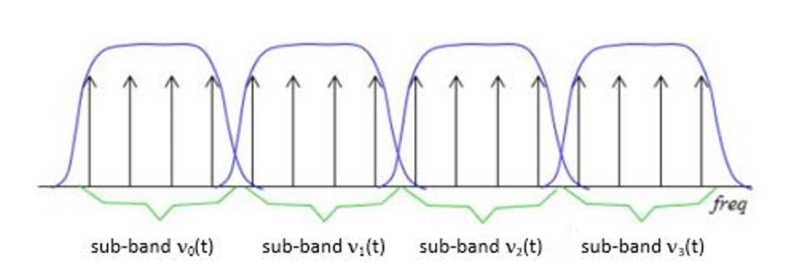
Now, let’s dive a bit deeper into the science of subband filtering. Imagine you’re trying to sort a big box of crayons. You decide to group them by color. Subband filtering does something similar – it groups different parts of the audio signal based on their frequencies.
It uses something called “filter banks” to do this. These are like magical sieves that separate the high-pitched sounds from the low-pitched ones. Just like your crayon groups, these “subbands” are easier to handle and process individually.
The Subband Filtering Process
So, how does subband filtering work in the MP3 codec? Let’s take a practical example: your favorite song. When you hit play, the audio signal is divided into many small chunks. Each of these chunks represents different parts of the music. The high notes might be in one chunk, and the low, thumping beats in another.
This division allows the MP3 codec to focus on the essential parts. It’s like when you’re reading a book – you don’t need to pay the same amount of attention to every word; you skim over the less important ones. Subband filtering helps the MP3 codec do something similar, paying more attention to the crucial parts and using less data for the less important bits.
The Role of Psychoacoustic Models
To make things even more efficient, the MP3 codec uses something called “psychoacoustic models.” These models are like having a good ear for music. Just like how you can tell which instruments are playing in a song, psychoacoustic models help the codec understand which parts of the music are more critical to our ears.
Imagine you’re listening to your favorite band live. Your brain naturally focuses on the lead singer’s voice and the melody. The background noise, like people chatting or the sound of cars passing by, is less important. Psychoacoustic models do something similar, helping the MP3 codec concentrate on the most important sounds while letting the less important ones fade into the background.
Efficiency and Data Reduction
Now, let’s talk about efficiency and data reduction. We all like fast and smooth experiences, right? The MP3 codec makes your music play quickly by reducing the amount of data it needs to process. It’s like having a super-organized backpack for a camping trip. You only carry what’s necessary, leaving the heavy and bulky stuff behind.
So, what does the codec do? It uses shorter codes for the most common sounds. In a song, the drumbeats or the lead singer’s voice are usually more frequent. They get shorter codes, making them quick to process. Less common sounds, like the subtle strumming of a guitar, get longer codes. This efficient system helps reduce the overall size of the audio file without sacrificing quality.
Quality vs. Compression
Of course, we all want our music to sound amazing. But there’s a balance to be struck – the quality of your music and the space it takes up. It’s like when you’re choosing video quality settings on a streaming platform. You want the best picture, but you also don’t want it to buffer forever.
The MP3 codec manages this balance. It compresses the audio data to save space while still delivering great sound. It’s like magic – it lets you store hundreds of songs on your phone without it getting too full, and they all still sound terrific.
Real-Life Applications
You might be wondering where subband filtering and the MP3 codec come into play in your daily life. Well, they’re everywhere! Think about streaming music on your phone, watching videos online, or even chatting on a video call. All of these rely on efficient audio coding techniques to make sure you hear what’s important while saving bandwidth.
Imagine you’re streaming your favorite cartoon online. Thanks to subband filtering and the MP3 codec, you get to enjoy clear dialogue and exciting music while the background noise from your neighbor’s lawnmower fades into the background.
Challenges and Future Developments
As technology keeps evolving, so does the world of audio coding. Challenges like making audio coding even more efficient and dealing with different devices are on the horizon. Just like how self-driving cars were a dream not too long ago, advancements in audio technology will continue to shape our lives.
In the coming years, we might see even better ways to balance quality and compression. It’s an exciting time for audio technology, and subband filtering will undoubtedly play a big role in making it even better.
Behind the Scenes: Creating an MP3
Have you ever wondered how an MP3 file is created? It’s a bit like following a recipe to cook a delicious meal. The audio data goes through a series of steps where subband filtering helps sort and organize it. Then, it’s compressed, much like simmering a sauce to concentrate the flavors.
Finally, the codec gives you a compact and tasty MP3 file that’s ready to be played. It’s a bit like cooking up your favorite dish – only in the world of sound.
In conclusion, subband filtering is like the chef’s secret technique for preparing an excellent meal. It’s the magic behind the MP3 codec, making your music sound fantastic while fitting in your device. So, next time you listen to your favorite song, remember the subbands and filters that make it


Comments:
Who knew the MP3 world had such a rich history? Thanks for the deep dive!
– MusicLover92
Really enjoyed the personal touch in your article. Can’t wait to see what’s next in audio tech!
– TechExplorer
Great read, but could you elaborate more on the emerging trends you mentioned?
– CuriousListener
This article made me nostalgic about my old MP3 player. Good times!
– RetroVibes
Any recommendations for devices still rocking the MP3 FRAUNHOFER Codec?
– GadgetGuru
Impressive breakdown of the technical aspects. Learned a lot!
– AudioTechEnthusiast
More details on the future trends would be awesome. Keep up the good work!
– FutureListener
Brings back memories of the MP3 revolution. Great job!
– NostalgiaSeeker
Wondering if there are any hidden gems among the alternative codecs. Any insights?
– CodecExplorer
Can’t believe how far we’ve come since the early days of MP3. Exciting times!
– EvolutionObserver