Mp3 vs Flac: Which is Better?


Free Download Mp4Gain
picture

Mp3 vs Flac: Which is Better?
Mp3 vs Flac
Mp3 vs Flac
Mp3 vs Flac
Mp3 vs Flac

MP3 vs. FLAC: Understanding the Difference and Choosing the Best Audio Format

In the world of digital music, two audio formats have dominated the landscape for years: MP3 and FLAC. Each format has its own unique characteristics, advantages, and disadvantages, making it essential for music enthusiasts to understand the differences between them. This article delves into the comparison of MP3 and FLAC, aiming to shed light on which format might be the better choice for different scenarios.

MP3: The Pioneer of Digital Audio Compression

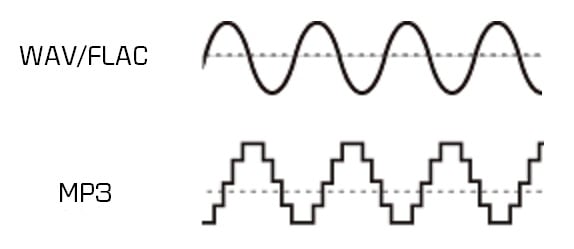
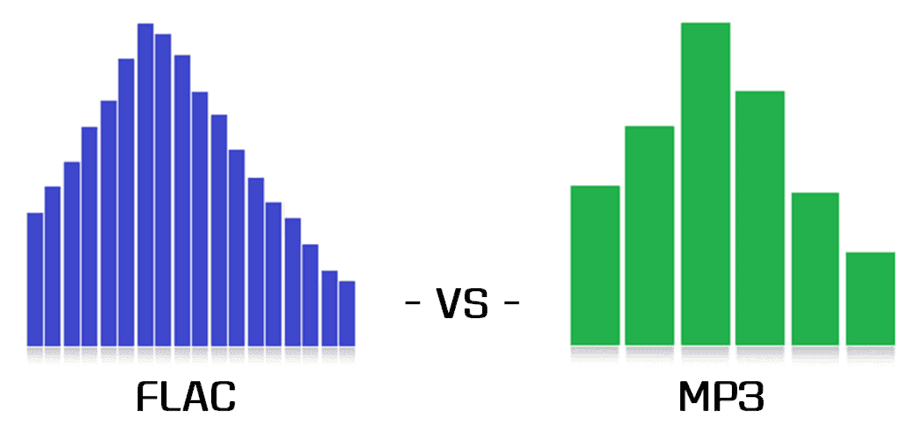
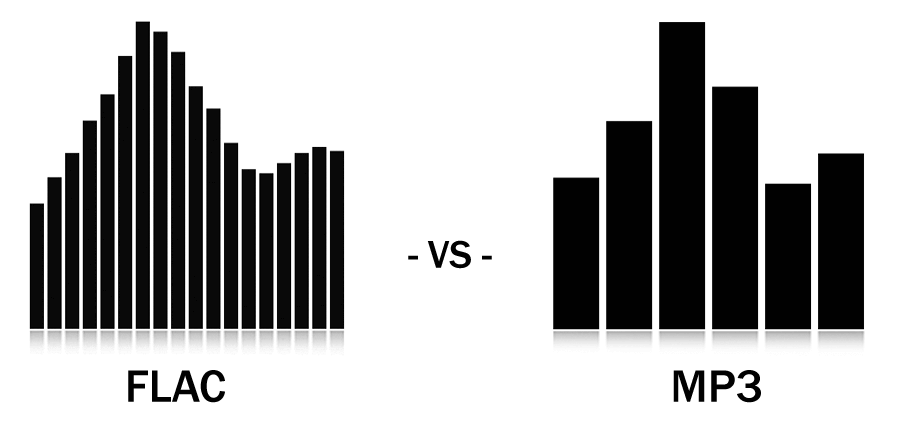
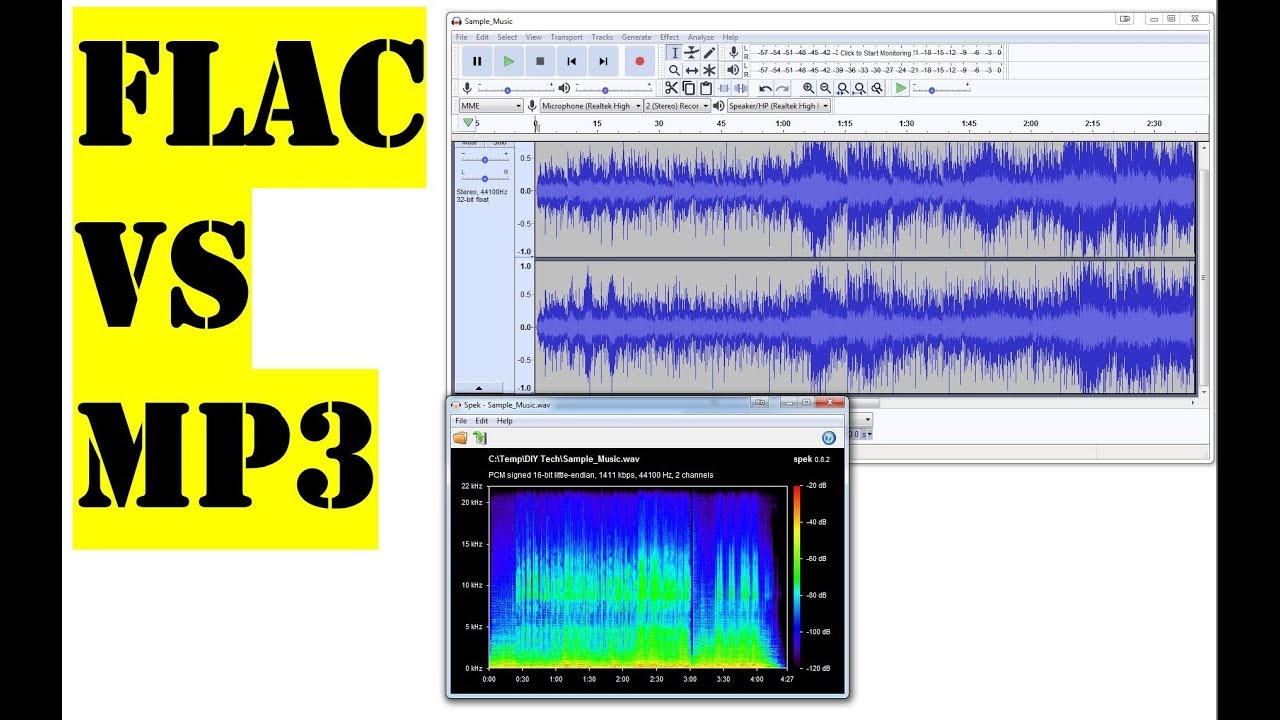
The MP3 format, short for “MPEG Audio Layer III,” revolutionized the way music was consumed and shared since its introduction in the 1990s. Its main advantage lies in its ability to significantly reduce the file size of audio tracks without compromising audio quality too severely. This compression is achieved by discarding some audio information that the human ear may not easily perceive. As a result, MP3 files are much smaller compared to the original CD-quality audio, making them easy to store and share.
However, this level of compression does come at a cost. Audiophiles and music purists argue that the removal of some audio data can result in a loss of sound fidelity, leading to a phenomenon known as “lossy” compression. While the difference in quality might not be noticeable to the average listener, those with a keen ear or listening on high-end audio equipment might discern a slight reduction in audio clarity.

FLAC: Uncompromising Audio Quality for Audiophiles

FLAC, short for “Free Lossless Audio Codec,” is the go-to format for audiophiles and music professionals seeking the highest level of audio quality. Unlike MP3, FLAC uses “lossless” compression, which retains all the original audio data during encoding. This means that no audio information is discarded, resulting in bit-for-bit identical sound quality to the source material, typically CD-quality audio.

The advantage of FLAC lies in its ability to offer pristine audio quality while maintaining a much smaller file size compared to uncompressed audio formats like WAV. This makes it an ideal choice for audiophiles who demand top-notch sound reproduction and a preference for archival purposes. However, due to the lack of audio data removal, FLAC files are considerably larger than MP3s, which can be a drawback for those with limited storage space or slower internet connections.

As J.R.R. Tolkien once said in “The Lord of the Rings,” “Not all those who wander are lost.” Similarly, in the realm of digital audio formats, not all users have the same requirements. Deciding between MP3 and FLAC ultimately depends on your individual needs, preferences, and listening habits. If you prioritize convenience, easy sharing, and reasonable audio quality, MP3 might suit your needs. On the other hand, if you’re an audiophile who values uncompromising sound fidelity and doesn’t mind the larger file sizes, FLAC could be the perfect fit.

In conclusion, the choice between MP3 and FLAC boils down to a trade-off between file size and audio quality. MP3 offers convenience and reasonable audio quality, making it an excellent choice for casual listeners, while FLAC delivers unparalleled sound fidelity for the most discerning ears. Regardless of your choice, both formats have significantly shaped the way we enjoy and consume music in the digital era. So, whether you’re on a road trip, at the gym, or relaxing at home, the right audio format will ensure you have a memorable musical experience.


Free Download Mp4Gain
picture


Mp4Gain Main Window
picture


Mp4Gain Features
picture


Free Download Mp4Gain
picture

What is the difference between MP3 and FLAC

What is the difference between MP3 and FLAC

Flac vs Mp3
Flac vs Mp3

Know what the different types of audio files offer

Flac vs Mp3
Flac vs Mp3

The recent launch of Pono’s music player and service aims to provide high-quality audio for music lovers who, more than looking for portability and practicality, are interested in enjoying compositions as the artist intended them to be heard. In order to deliver the highest level of digital audio, PonoPlayer will rely on FLAC type files.


But what is the problem with the popular MP3 or why is FLAC of better quality? Actually, in addition to these 2 formats, there are others with different specifications that differentiate them from each other.

In this article we will talk about the most important formats and their characteristics, so you can choose the one that suits you best.

What is bitrate?
The difference in file size is noticeable
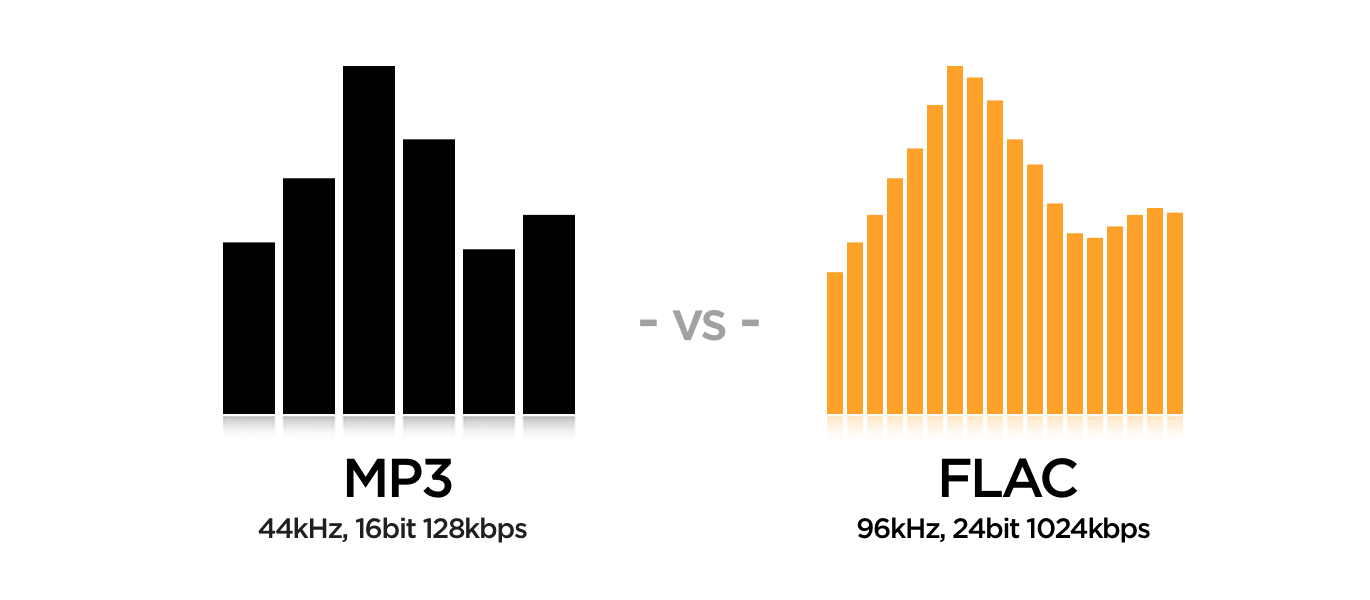
You’ve probably heard this term before, but in case you don’t remember it or don’t know what it refers to, I’ll explain it. The bitrate is translated as the speed of transmission of bits, that is, the number of bits or data that are processed in a unit of time. When referring to audio, we usually use the measure of kilobits per second (Kbps). For example, the music available on iTunes is usually 256 Kbps, which means that there are 256 kilobits of information stored in each second of the song.

The higher the bitrate of a file, the more space it takes up on your hard drive. A music CD usually uses a large amount of memory space, so back in the early 1990s, researcher Karlheinz Brandenburg developed the audio compression standard we now know as MP3. When an audio file is compressed, the space allocated for it is less, however, this means that it loses some of its sound quality. For that reason the different available audio formats are divided into 2 categories: lossy and lossless.

What is the difference between flac and mp3

What is the difference between flac and mp3

FLAC vs MP3
FLAC vs MP3

First, the sound quality is different.

FLAC vs MP3
FLAC vs MP3

1. flac: It will not destroy any original audio information, so you can restore the sound quality of music CD.

2, mp3: is designed to greatly reduce the amount of audio data. Using MPEG Audio Layer 3 technology, music can be compressed into a smaller capacity file with a compression ratio of 1:10 or even 1:12.

Second, the audio is different.

1. flac: After compressing the audio with FLAC encoding, no information will be lost. After restoring the FLAC file to a WAV file, the content of the WAV file before compression is the same.

2. mp3: The human ear is not sensitive to high-frequency sound signals. The time domain waveform signal is converted to a frequency domain signal and divided into multiple frequency bands. Different compression ratios are used for different frequency bands, and the high-frequency compression ratio increases (even ignoring the signal) uses a small compression ratio for low-frequency signals to ensure that the signal is not distorted.

Is FLAC better than Mp3? Expert opinion.

Is FLAC better than Mp3? Expert opinion.

FLAC vs. MP3
FLAC vs. MP3

Many wonder if FLAC is really better than mp3.

FLAC vs. MP3
FLAC vs. MP3


This is a question that we receive frequently and not only regarding FLAC, but also ogg, m4a, etc.

The answer is simple, but it retains its complexity.

Simple because in strictly mathematical, acoustic, digital terms, if FLAC is superior.

But the complexity is: can an ordinary person using a normal (not quite professional) hi-fi or ordinary equipment tell the difference?

The answer is: in 99% of cases, not even a music professional will tell the difference if more than 190 kbs and at least 44,100 samplerates are used in the mp3.

With that quality in the mp3, which is not unusual or very high quality, it is already enough that most people, including people with audio training, cannot tell the difference.

So, it is a purist claim to say as an absolute answer, that FLAC is superior to Mp3.

For the common user there will be no major difference and on the other hand they will have certain points against them, such as the fact that there are not so many teams that accept or handle FLAC well or that if they are going to listen to it, for example, in the car, it does not make much sense to put time, money and effort to use a format that will sound the same, the only advantage is to tell his friends that he uses a better format.