M4A Perceptual Coding Principles


Free Download Mp4Gain
picture

M4A Perceptual Coding Principles

M4A Perceptual Coding Principles

M4A Perceptual Coding Principles

Let’s talk about M4A Perceptual Coding Principles

As a specialist with extensive experience in audio encoding, I’m thrilled to delve into the fascinating world of M4A perceptual coding principles. At its core, M4A audio format relies on perceptual coding to compress audio files without significantly compromising their quality. Perceptual coding operates based on the limitations of human auditory perception, exploiting them cleverly to reduce file sizes while maintaining high fidelity. Understanding these principles is crucial for anyone involved in audio production, streaming, or digital media distribution.

Human Auditory Perception: The Foundation of M4A Compression

Human auditory perception serves as the cornerstone of M4A compression techniques. Our ears have limitations in detecting certain frequencies and nuances, which perceptual coding algorithms leverage to discard audio data that is deemed less essential. For instance, sounds masked by louder ones or frequencies outside the typical range of human hearing can be safely removed without noticeable degradation in quality. Think of it like a chef trimming excess fat from a steak to enhance its flavor without compromising its overall taste.

The Role of Psychoacoustics in M4A Compression

Psychoacoustics, the study of how humans perceive sound, plays a pivotal role in M4A compression. By analyzing psychoacoustic models, encoders can identify which components of an audio signal are less perceptible to the human ear. For example, quiet sounds occurring simultaneously with louder ones may be masked and thus can be discarded without sacrificing the overall listening experience. This is akin to a painter focusing on the focal points of a masterpiece while subtly blending less important elements into the background.

Bitrate Allocation Strategies for Optimal Compression

Effective bitrate allocation is essential for achieving optimal compression in M4A audio files. Encoders distribute available bits strategically, prioritizing critical audio components while allocating fewer bits to less important segments. This process is analogous to budgeting finances, where essential expenses take precedence over discretionary spending. By allocating more bits to preserve crucial elements such as vocals and melody while economizing on less perceptible details, M4A compression achieves impressive file size reductions without sacrificing audio quality.

Advancements in Perceptual Coding Algorithms

Continual advancements in perceptual coding algorithms have propelled M4A compression to new heights of efficiency and quality. With each iteration, encoders refine their understanding of human auditory perception, enabling more precise identification and removal of redundant audio data. These advancements are akin to upgrading from a standard-definition television to a high-definition display, where every detail becomes sharper and more defined, enriching the overall viewing experience.

Compatibility and Versatility of M4A Format

One of the key strengths of M4A format lies in its compatibility and versatility across various platforms and devices. Whether you’re listening to music on your smartphone, streaming audio on a computer, or enjoying multimedia content on a smart speaker, M4A files offer consistent playback quality and compatibility. This universal adaptability is akin to a universal remote control that seamlessly operates multiple devices, simplifying the user experience and ensuring widespread adoption of the format.

The Future of M4A: Emerging Trends and Technologies

Looking ahead, the future of M4A format is ripe with exciting possibilities driven by emerging trends and technologies. From advancements in perceptual coding algorithms to the integration of immersive audio formats, such as spatial audio and object-based audio, the evolution of M4A promises to redefine the audio landscape. Imagine stepping into a virtual concert hall where every note resonates with lifelike clarity, transcending traditional stereo playback and immersing listeners in a truly captivating auditory experience.

Latest words on M4A Perceptual Coding Principles

In conclusion, understanding the perceptual coding principles behind M4A compression is essential for anyone involved in audio production, streaming, or digital media distribution. By leveraging human auditory perception and psychoacoustic principles, M4A format achieves impressive compression ratios without compromising audio quality. As advancements continue to drive innovation in the field, the future of M4A holds promise for even greater efficiency and immersive audio experiences. Embracing these principles ensures that audio content remains accessible, enjoyable, and engaging across diverse platforms and devices.

Comments:

Wow, I never knew there was so much science behind audio compression! This article really opened my eyes to how much goes on behind the scenes to deliver high-quality sound. – MusicLover23

I appreciate the detailed explanation of perceptual coding principles. It helped me understand why my favorite music streaming service delivers such crisp audio despite smaller file sizes. – TechGeek42

This article provided great insights into the future of audio technology. I’m excited to see how advancements in M4A compression will enhance my listening experience in the years to come. – SoundEnthusiast

Can you dive deeper into the specific algorithms used for perceptual coding in M4A? I’d love to learn more about the technical aspects behind this fascinating process. – AudioNerd101

As a content creator, understanding M4A compression principles is crucial for optimizing audio quality while minimizing file sizes. This article provided valuable insights that I can apply to my work. – CreativeContent

I’ve always wondered why some audio files sound so good despite being small in size. Thanks to this article, I now have a better grasp of the science behind it. – CuriousListener

This was a fantastic read! I appreciate how the article explained complex concepts in a way that’s easy to understand. Looking forward to more insightful content like this. – AudioExplorer

I wish there was more discussion on the potential drawbacks or limitations of M4A compression. While it’s great for reducing file sizes, are there any trade-offs in terms of audio quality or compatibility? – ConcernedListener

It’s fascinating to see how technology continues to shape the way we experience audio. This article provided a glimpse into the future of immersive audio formats, and I can’t wait to see where it leads. – FutureTech

Thanks for shedding light on the intricacies of M4A compression. As a consumer, it’s reassuring to know that advancements in technology are constantly improving our audio experiences. – GratefulListener


Free Download Mp4Gain
picture


Mp4Gain Main Window
picture


Mp4Gain Features
picture


Free Download Mp4Gain
picture

MP3 Error Resilience in Noisy Environments

MP3 Error Resilience in Noisy Environments

MP3 Error Resilience in Noisy Environments

MP3 Error Resilience in Noisy Environments

Let’s talk about MP3 Error Resilience in Noisy Environments

As an audio engineering specialist, I’ve encountered challenges related to maintaining audio quality in adverse conditions. In this article, we’ll explore the intricacies of MP3 error resilience, its importance, underlying mechanisms, and practical implications for audio playback in noisy environments.

Understanding MP3 Error Resilience

In noisy environments, MP3 files are susceptible to errors that degrade audio quality due to network congestion, electromagnetic interference, or hardware limitations. Despite its widespread use, MP3 lacks built-in error detection and correction mechanisms, making it vulnerable to data loss or corruption.

The Importance of Error Resilience

Preservation of Audio Quality: Errors in MP3 files can manifest as audible artifacts such as clicks or pops, detracting from the listening experience.
Robustness in Transmission: Error-resilient MP3 encoding techniques mitigate data loss during transmission, ensuring reliable playback.
Compatibility with Legacy Devices: Many legacy devices lack advanced error correction, necessitating error-resilient MP3 encoding for compatibility.

Enhancing MP3 Error Resilience

Various encoding techniques and playback strategies can improve error resilience in MP3 files.

Forward Error Correction (FEC)

Embedded Redundancy: FEC algorithms introduce redundant data into MP3 files for error detection and correction.
Reed-Solomon Coding: FEC schemes like Reed-Solomon coding add parity check symbols to MP3 frames for error recovery.

Bitstream Parsers and Sync Detection

Robust Parsing: Advanced parsers recover from synchronization errors in MP3 streams, ensuring uninterrupted playback.
Header Verification: Parsers verify header information in MP3 frames to detect and discard corrupted data.

Noise Reduction Techniques

Adaptive Filtering: Algorithms analyze audio signals in real-time, suppressing background noise for clearer playback.
Spectral Subtraction: Methods estimate and subtract noise components from MP3 audio, improving signal-to-noise ratio.

Latest words on MP3 Error Resilience in Noisy Environments

By understanding MP3 error resilience mechanisms and implementing robust encoding and playback strategies, we can ensure optimal audio quality in challenging environments.

Comments:

This article sheds light on the crucial aspect of MP3 error resilience. I appreciate the clear explanations and practical advice provided.

– SoundEnthusiast99

MP3 error resilience is a topic often overlooked but essential for maintaining audio quality. Thanks for addressing it comprehensively!

– MusicMan123

As an audio professional, I found this article informative and insightful. Understanding MP3 error resilience is crucial for delivering high-quality audio experiences.

– AudioPro456

WMA Audio Signal Correlation

WMA Audio Signal Correlation

Let’s talk about WMA Audio Signal Correlation

As a specialist in audio engineering, I understand the importance of WMA (Windows Media Audio) format and its correlation with audio signals. When we delve into the realm of digital audio, understanding how WMA audio signals correlate becomes crucial for optimizing sound quality, compression, and compatibility across various platforms. WMA, developed by Microsoft, offers efficient compression without significant loss of audio quality, making it a popular choice for digital audio storage and streaming. In this comprehensive guide, I’ll explore the intricacies of WMA audio signal correlation, shedding light on its significance, technical aspects, and practical applications.

The Fundamentals of WMA Audio Format

Starting with the basics, let’s dissect the WMA audio format. Windows Media Audio is a proprietary format developed by Microsoft to compete with other popular audio formats like MP3 and AAC. WMA utilizes various codecs to compress audio data, allowing for smaller file sizes while maintaining reasonable audio quality. Unlike uncompressed formats like WAV, WMA employs lossy compression techniques, meaning some audio data is permanently discarded during encoding. However, the goal of WMA is to achieve a balance between file size and audio fidelity, making it suitable for a wide range of applications, from digital music distribution to streaming services.

Lossy Compression in WMA

  • Understanding the trade-offs: WMA’s approach to compression.
  • How lossy compression affects audio quality.
  • Bitrate selection and its impact on WMA audio files.

When discussing WMA audio signal correlation, it’s essential to grasp the concept of lossy compression. Unlike lossless formats that preserve all original audio data, lossy compression selectively discards information deemed less critical to human perception. In the context of WMA, this means analyzing audio signals, identifying redundancies or imperceptible details, and removing them to reduce file size. While this process inevitably results in some loss of audio quality, modern WMA codecs employ sophisticated algorithms to minimize perceptible artifacts, ensuring satisfactory listening experiences for most users.

Compatibility and Encoding

  • Platform compatibility: Where can you use WMA files?
  • Choosing the right encoding settings for optimal results.
  • Conversion tools and techniques for WMA audio files.

One of the critical aspects of WMA audio signal correlation is understanding its compatibility and encoding options. While WMA offers efficient compression, its adoption across different platforms and devices varies. Compatibility issues may arise when attempting to play WMA files on non-Windows devices or older hardware. Therefore, selecting appropriate encoding settings becomes paramount to ensure broad compatibility without sacrificing too much audio quality. Additionally, familiarity with conversion tools and techniques allows users to transcode WMA files into other formats when necessary, further enhancing flexibility and accessibility.

Advanced Techniques in WMA Signal Processing

Moving beyond the basics, let’s explore some advanced techniques in WMA signal processing. While standard encoding methods suffice for general use cases, specialized applications may require additional considerations to achieve optimal results. From audio mastering to broadcast engineering, understanding these advanced techniques empowers audio professionals to leverage WMA’s capabilities effectively.

Dynamic Range Compression

  • Enhancing perceived loudness and consistency.
  • Applying dynamic range compression in WMA encoding.
  • Trade-offs between dynamic range and audio fidelity.

Dynamic range compression is a common technique used in audio production to reduce the dynamic range of audio signals, making quieter sounds louder and louder sounds quieter. In the context of WMA encoding, dynamic range compression can help enhance perceived loudness and consistency, particularly useful in scenarios where audio needs to compete with ambient noise or maintain a consistent volume level across tracks. However, it’s essential to strike a balance between dynamic range compression and preserving natural audio dynamics to avoid unwanted side effects such as pumping or distortion.

Multi-Channel Audio Encoding

  • Supporting surround sound and immersive audio formats.
  • Encoding multi-channel audio in WMA.
  • Considerations for bitrate allocation and channel mapping.

With the proliferation of surround sound systems and immersive audio formats, multi-channel audio encoding has become increasingly important. WMA supports multi-channel configurations, allowing for the encoding of audio streams with multiple channels, such as 5.1 or 7.1 surround sound. When encoding multi-channel audio in WMA, considerations include bitrate allocation, ensuring sufficient data for each channel while maintaining overall file size efficiency, and channel mapping, specifying the spatial placement of audio channels for accurate playback.

Practical Applications and Use Cases

Now that we’ve covered the fundamentals and advanced techniques in WMA audio signal correlation, let’s explore some practical applications and use cases where this knowledge proves invaluable. Whether you’re a music enthusiast, audio engineer, or content creator, understanding how to leverage WMA effectively opens up a world of possibilities in digital audio production and distribution.

Music Streaming and Distribution

  • Optimizing audio quality and file size for streaming platforms.
  • Maximizing reach and accessibility with WMA-encoded music.
  • Ensuring compatibility across different streaming services and devices.

In the realm of music streaming and distribution, WMA plays a significant role in delivering high-quality audio to listeners worldwide. By encoding music in WMA format, artists and record labels can strike a balance between audio quality and streaming efficiency, ensuring smooth playback even under varying network conditions. Moreover, WMA’s broad compatibility ensures that music encoded in this format can reach a wide audience across different streaming platforms and devices, from smartphones to smart speakers.

Audio Broadcasting and Podcasting

  • Optimizing audio files for radio broadcasting and podcast distribution.
  • Reducing file size without compromising audio fidelity.
  • Delivering consistent audio quality across various listening environments.

For broadcasters and podcasters, WMA offers an efficient solution for encoding and distributing audio content. By leveraging WMA’s compression capabilities, broadcasters can reduce file sizes without significant loss of audio quality, facilitating faster uploads and downloads for listeners. Additionally, WMA’s compatibility with broadcasting software and hardware ensures seamless integration into existing workflows, allowing broadcasters to focus on creating engaging content without worrying about technical limitations.

Latest words on WMA Audio Signal Correlation

In conclusion, understanding WMA audio signal correlation is essential for anyone involved in digital audio production, distribution, or consumption. By grasping the fundamentals of WMA format, exploring advanced signal processing techniques, and identifying practical applications, audio professionals can harness the full potential of WMA to deliver high-quality audio experiences across various platforms and devices. Whether you’re streaming music online, broadcasting a radio show, or producing a podcast, WMA remains a versatile and reliable choice for encoding audio content.

Comments:

This article is very informative! I’ve always wondered how WMA compression works and its impact on audio quality. Thanks for breaking it down in such a clear and concise manner. – MusicLover123

Great article! As a podcast producer, I found the section on optimizing audio files for broadcasting and podcasting particularly useful. I’ll definitely be implementing some of these techniques in my workflow. – PodcastPro

I appreciate the depth of information provided in this article. However, I’d love to see more discussion on the history and evolution of WMA format. Overall, though, it’s a valuable resource for anyone interested in audio engineering. – SoundEnthusiast

This article helped me understand the technical aspects of WMA compression better. I’ve been struggling with audio file sizes for my streaming platform, and now I have some practical solutions to explore. – StreamMaster

As someone new to audio engineering, I found this article incredibly insightful. It’s refreshing to see complex topics explained in a way that’s easy to understand. Looking forward to more content like this! – NoviceEngineer

Wow, I didn’t realize there were so many factors to consider when encoding audio in WMA format. This article opened my eyes to the intricacies of digital audio processing. Kudos to the author for such comprehensive coverage! – AudioExplorer

This article provided some valuable insights into the world of WMA audio compression. However, I wish there were more examples illustrating the practical applications of dynamic range compression and multi-channel encoding. – TechSavvyListener

As a radio broadcaster, I found the section on optimizing audio files for broadcasting extremely helpful. It’s always a challenge to balance audio quality and file size, but this article offered some great tips for achieving the perfect mix. – RadioHost

Excellent article! I’ve been looking for a comprehensive guide to WMA audio signal correlation, and this exceeded my expectations. The explanations are clear, and the practical examples make it easy to apply this knowledge in real-world scenarios. – AudioTechJunkie

This article provides a solid overview of WMA audio signal correlation, but I’d love to see a deeper dive into the technical specifications and limitations of the format. Nonetheless, it’s a great starting point for anyone interested in learning more about digital audio compression. – TechEnthusiast

AC-4 Audio Coding

AC-4 Audio Coding: Spectral Band Replication Unveiled

AC-4 Audio Coding

AC-4 Audio Coding

Latest Insights on AC-4: Spectral Band Replication

Embark on a sonic journey as we unravel the mysteries behind AC-4’s Spectral Band Replication. My expertise in audio codecs allows me to paint a vivid picture of the groundbreaking techniques employed in this domain.

Let’s Talk about AC-4

Navigating through the intricacies of AC-4 demands more than a cursory glance. Drawing from years of hands-on experience, I present a detailed exploration of AC-4, transcending the commonplace to offer a profound understanding of its architecture and functionalities.

Decoding Spectral Band Replication

At the core of AC-4’s prowess lies Spectral Band Replication (SBR). In this section, I will dissect the SBR technique, shedding light on how it redefines audio compression by intelligently supplementing missing high-frequency components. Imagine SBR as a maestro conducting a symphony, harmonizing frequencies for an immersive auditory experience.

Realizing the Potential: AC-4 in Action

Transitioning from technicalities to real-world scenarios, envision a live concert where AC-4’s SBR…

Readers’ Opinions:

Comment 1: AC-4’s SBR truly enhances audio quality. Can’t go back!

Comment 2: Impressive breakdown of Spectral Band Replication. More please!

Comment 3: As an audiophile, AC-4’s impact on live events is a game-changer.

Comment 4: Your article made me appreciate the technology behind AC-4. Well done!

Comment 5: AC-4’s SBR explained in layman’s terms. Finally, clarity!

Comment 6: Can you delve into the compatibility of AC-4 with various devices?

Comment 7: The comparison with other codecs would be an interesting addition.

Comment 8: Intrigued by the potential applications of AC-4 in gaming environments.

Comment 9: Your article sparked my curiosity. Now I want to explore AC-4 further.

Comment 10: AC-4’s SBR elevates the auditory experience. Kudos on the detailed insights!

Wavelet Transform in FLAC Compression

Wavelet Transform in FLAC Compression: Analysis and Trends

Wavelet Transform in FLAC Compression

Wavelet Transform in FLAC Compression

Let’s Talk about Wavelet Transform in FLAC Compression

When delving into the realm of audio compression, understanding the significance of the Wavelet Transform in FLAC (Free Lossless Audio Codec) compression is paramount. As an expert with years of experience in the field, I have witnessed the evolution of audio compression techniques, and the Wavelet Transform stands out as a game-changer.

The Basics of Wavelet Transform

To comprehend the essence of Wavelet Transform, imagine it as a sophisticated tool that dissects an audio signal into various frequency components. It functions like a musical score that breaks down a complex melody into individual notes, allowing for a more efficient representation. This transformative process is the foundation of FLAC compression.

In my journey as an audio specialist, I have found that this approach offers a unique advantage over traditional methods, ensuring not only high compression ratios but also exceptional audio quality.

Unraveling FLAC Compression

FLAC compression is distinguished by its ability to reduce the size of audio files without perceptible loss of quality. Imagine a FLAC file as a detailed sheet music book that retains every nuance of the original performance. This method contrasts with lossy compression, preserving audio fidelity and making it a preferred choice among audiophiles.

Comments:

Appreciate the insights on FLAC compression. Would love more details on specific applications. – MusicEnthusiast

This article cleared up some confusion I had about Wavelet Transform. Great job! – TechExplorer


User
escribelo completo y con todos los 10 comentarios como dice el prompt
ChatGPT
html
Copy code

Wavelet Transform in FLAC Compression: Analysis and Trends

Let’s Talk about Wavelet Transform in FLAC Compression

When delving into the realm of audio compression, understanding the significance of the Wavelet Transform in FLAC (Free Lossless Audio Codec) compression is paramount. As an expert with years of experience in the field, I have witnessed the evolution of audio compression techniques, and the Wavelet Transform stands out as a game-changer.

The Basics of Wavelet Transform

To comprehend the essence of Wavelet Transform, imagine it as a sophisticated tool that dissects an audio signal into various frequency components. It functions like a musical score that breaks down a complex melody into individual notes, allowing for a more efficient representation. This transformative process is the foundation of FLAC compression.

In my journey as an audio specialist, I have found that this approach offers a unique advantage over traditional methods, ensuring not only high compression ratios but also exceptional audio quality.

Unraveling FLAC Compression

FLAC compression is distinguished by its ability to reduce the size of audio files without perceptible loss of quality. Imagine a FLAC file as a detailed sheet music book that retains every nuance of the original performance. This method contrasts with lossy compression, preserving audio fidelity and making it a preferred choice among audiophiles.

Comments:

Appreciate the insights on FLAC compression. Would love more details on specific applications. – MusicEnthusiast

This article cleared up some confusion I had about Wavelet Transform. Great job! – TechExplorer

Really enjoyed the real-world examples. Can you share more about how Wavelet Transform impacts file sizes? – AudioGeek

Impressive breakdown! Are there any downsides to using FLAC compression with Wavelet Transform? – CuriousListener

As a musician, I’m curious about the impact of Wavelet Transform on different genres of music. Any insights? – MelodyMaker

Great read! Could you elaborate on the future trends in audio compression, especially related to FLAC? – FutureListener

Thanks for making a complex topic so understandable! How does Wavelet Transform compare to other compression techniques? – CompressionEnthusiast

Would love to hear more about your personal experiences with implementing Wavelet Transform in audio projects. – ProjectAudio

This article sparked my interest in audio compression. Can you recommend resources for further exploration? – NoviceExplorer

Informative article! Do you think Wavelet Transform will become the standard in audio compression? – FuturePredictor

Dynamic Bit Allocation in Opus Voice Coding

Dynamic Bit Allocation in Opus Voice Coding

Dynamic Bit Allocation in Opus Voice Coding

Dynamic Bit Allocation in Opus Voice Coding


Dynamic Bit Allocation in Opus Voice Coding

Let’s Talk About Dynamic Bit Allocation in Opus Voice Coding

Dynamic Bit Allocation in Opus Voice Coding

As a seasoned specialist in voice coding technologies, I’m excited to unravel the intricacies of Dynamic Bit Allocation in Opus. This groundbreaking approach ensures optimal compression by dynamically allocating bits based on the complexity of audio signals. Today, we’ll explore the significance, innovations, and real-world applications of this cutting-edge technology.

The Evolution of Dynamic Bit Allocation

In the dynamic landscape of audio coding, Opus stands out for its adaptive bit allocation mechanism. Unlike traditional fixed-rate codecs, Opus allocates more bits to complex audio segments, preserving clarity in varying conditions. Imagine a radio adjusting its signal strength based on your location—Opus does that for each audio segment in real-time.

Breaking Down Opus’s Adaptive Approach

Opus achieves dynamic bit allocation through a sophisticated algorithm that analyzes audio signals in real-time. Think of it as a smart distribution of resources; Opus listens to the complexity of each sound, whether it’s a simple voice or a complex musical arrangement, and allocates bits accordingly. This ensures that intricate details are preserved without wasting bandwidth on simpler segments.

Real-World Applications of Opus’s Dynamic Bit Allocation

Now, let’s explore how Opus’s adaptive approach benefits various applications. Whether you’re in a video conference, enjoying music on a streaming platform, or engaging in online gaming, Opus adapts to deliver the best audio quality.

1. Crystal Clear VoIP Calls

Opus shines in Voice over Internet Protocol (VoIP) communication. By dynamically allocating more bits to vocal nuances and less to silent moments, Opus ensures that every word is transmitted with exceptional clarity, even in low-bandwidth situations.

2. Immersive Gaming Audio

Imagine playing an online game where every footstep and gunshot is crucial. Opus’s dynamic bit allocation enhances the gaming experience by prioritizing the bits where they matter most, providing a competitive edge to players.

3. High-Fidelity Music Streaming

For music enthusiasts, Opus adapts to the complexity of musical compositions. Whether it’s a soft acoustic melody or a dynamic orchestral piece, Opus ensures that the richness of the audio is maintained at various bit rates, offering an unparalleled streaming experience.

The Future: Advancements in Dynamic Bit Allocation

As technology evolves, Opus continues to lead the way in audio coding. The future promises even more refined dynamic bit allocation techniques, adapting to the ever-changing landscape of digital audio. Stay tuned for innovations that will further revolutionize how we experience sound in the digital realm.

Comments:

This article provided a fantastic overview! I appreciate the real-world applications breakdown.

Could you elaborate on how Opus handles dynamic bit allocation during sudden shifts in audio complexity? Intriguing stuff!

Great insights! Opus seems like the future of audio coding, especially in gaming.

Why a High-Quality MP3 Rivals All Other Audio Formats

Why a High-Quality MP3 Rivals All Other Audio Formats

Why a High-Quality MP3 Rivals All Other Audio Formats

Why a High-Quality MP3 Rivals All Other Audio Formats

Let’s Talk About MP3:

Embarking on a journey as an audio technology specialist, I unravel the mysteries surrounding MP3’s exceptional capabilities. To meet Google’s algorithmic demand for the most comprehensive response, I aim to surpass the top 10 results from 2021.

MP3 vs. Audio Formats: Unmasking the Sonic Superiority

This section delves into the unique features that render a high-quality MP3 virtually indistinguishable from other audio formats. Think of it as discerning individual flavors in a diverse chocolate assortment – challenging yet immensely rewarding.

The Evolution of MP3 Codecs:

Exploring the evolution of MP3 codecs is akin to unraveling the layers of a complex musical composition. Delve into the intricacies of AI-driven compression algorithms, dynamic bit-rate adjustments, and enhanced psychoacoustic modeling.

Key Advancements:

  • AI-Driven Compression
  • Dynamic Bit-Rate Adjustment
  • Enhanced Psychoacoustic Modeling

Breaking the Quality Barrier:

Drawing parallels to upgrading from standard definition to 4K, I illustrate how the enhanced 2024 MP3 version shatters the quality barrier. Real-life comparisons paint a vivid picture, making it apparent how every note and nuance comes to life.

MP3 Impact on Streaming Services: A Sonic Symphony

Streaming platforms haven’t lagged behind in embracing MP3’s audio revolution. Dive into statistics showcasing heightened user satisfaction, increased subscriber retention, and a paradigm shift in consumer preferences.

Statistics and Trends:

  • Surge in User Satisfaction
  • Increased Subscriber Retention
  • Shifting Consumer Preferences

The Future of MP3 Technology: A Sonic Odyssey

Peering into the future, I project the trajectory of MP3 technology. From further integration of AI for personalized audio profiles to compatibility with emerging hardware technologies, the journey promises continued refinement and optimal balance.

Predictions:

  • AI Integration for Personalized Audio
  • Compatibility with Emerging Hardware
  • Continued Refinement of Compression Algorithms

Latest Words on MP3: A Sonic Epiphany

In conclusion, the 2024 evolution of MP3 audio quality is a testament to the relentless pursuit of excellence in the digital audio world. As a specialist deeply immersed in this field, I’ve witnessed the transformative journey that has led us to this sonic utopia. For those seeking the epitome of sound perfection, the latest MP3 advancements are a symphony of innovation.

Comments:

MP3 has come a long way! Excited to try the new codecs. – SoundGeek

Impressive predictions for the future of audio tech. Can’t wait! – AudiophileDreamer

Wish you had shared more details on the streaming platform statistics. – CuriousListener

Kudos on the real-life comparison – made it easy to grasp the improvements! – MusicEnthusiast

More insights on AI integration would be appreciated. Great read overall! – TechSavvy

Anyone else excited about the future of audio? Let’s discuss! – FutureListener

Could you explore how MP3 advancements impact portable devices? – OnTheGoListener

This article convinced me to give MP3 another chance. Thanks! – AudioConvert

Can’t believe how far we’ve come since the early days of MP3. Nostalgic journey! – RetroListener

Looking forward to experiencing the enhanced audio quality firsthand. – AnticipatingListener

Not sure if I understand the technical details, but I’m excited about better sound! – CasualListener

Would love more information on the AI-driven compression. – InquisitiveMind

Excellent article! Shared it with my audiophile friends. – ArticleEnthusiast

Do you think this will impact the popularity of other audio formats? – FormatDebater

MP3 Achieves Unprecedented Audio Quality in 2024

MP3 Achieves Unprecedented Audio Quality in 2024

MP3 Achieves Unprecedented Audio Quality in 2024

MP3 Achieves Unprecedented Audio Quality in 2024

Let’s talk about MP3:

When it comes to audio quality, MP3 has undergone a remarkable transformation in 2023, surpassing all expectations. As a seasoned specialist in audio technologies, I’ll delve into the advancements that have propelled MP3 into a new era of unparalleled sound fidelity. Buckle up for a journey through the cutting-edge developments that redefine our audio experience.

The Evolution of MP3 Codecs:

My extensive experience in the field allows me to share insights into the evolution of MP3 codecs. In the quest for superior audio quality, codec advancements have played a pivotal role. Unlike conventional MP3 codecs, the latest versions employ innovative algorithms that significantly enhance compression efficiency without compromising sound clarity. Imagine the difference between the first-generation iPod and the latest high-end audio players – that’s the leap we’re talking about.

Key Developments:

  • The implementation of AI-driven compression algorithms.
  • Dynamic bit-rate adjustment for adaptive streaming.
  • Enhanced psychoacoustic modeling for precise sound reproduction.

Breaking the Quality Barrier:

As an enthusiast who has witnessed the evolution of audio formats, I can confidently assert that MP3 has shattered the quality barrier in 2023. The improved compression techniques ensure that you experience audio with a richness and depth previously thought impossible. It’s akin to upgrading from a standard radio to a state-of-the-art surround sound system – a game-changer in the audio world.

Real-Life Comparison:

Picture listening to your favorite track with the old MP3 format and then transitioning to the enhanced 2023 version. It’s like upgrading from standard definition to 4K – every note, every instrument, crystal clear and immersive, making your music come alive in a whole new way.

The Impact on Streaming Services:

Streaming platforms have not been left behind in embracing the MP3 revolution. The improved audio quality has elevated the streaming experience to new heights. It’s as if you traded your black-and-white TV for a cinema-quality projector, providing an audio feast for the ears.

Statistics and Trends:

  • Surge in user satisfaction with audio streaming services.
  • Notable increase in subscriber retention rates.
  • Shift in consumer preferences towards platforms supporting the latest MP3 codecs.

The Future of MP3 Technology:

Looking ahead, my expertise allows me to project the future of MP3 technology. While the current advancements are groundbreaking, ongoing research and development promise even more exciting possibilities. MP3 is not just a format; it’s a journey, and we are on the brink of an era where audio quality exceeds our wildest expectations.

Predictions:

  • Further integration of AI for personalized audio profiles.
  • Compatibility with emerging audio hardware technologies.
  • Continued refinement of compression algorithms for optimal balance.

Latest Words on MP3:

In conclusion, the evolution of MP3 audio quality in 2023 is a testament to the relentless pursuit of excellence in the world of digital audio. As a specialist deeply immersed in this field, I’ve witnessed the transformative journey that has led us to this audio utopia. For those seeking the epitome of sound perfection, the latest MP3 advancements are a symphony of innovation.

Comments:

MP3 has come a long way! Excited to try the new codecs. – SoundGeek

Impressive predictions for the future of audio tech. Can’t wait! – AudiophileDreamer

Wish you had shared more details on the streaming platform statistics. – CuriousListener

Kudos on the real-life comparison – made it easy to grasp the improvements! – MusicEnthusiast

More insights on AI integration would be appreciated. Great read overall! – TechSavvy

Anyone else excited about the future of audio? Let’s discuss! – FutureListener

Could you explore how MP3 advancements impact portable devices? – OnTheGoListener

This article convinced me to give MP3 another chance. Thanks! – AudioConvert

Can’t believe how far we’ve come since the early days of MP3. Nostalgic journey! – RetroListener

Looking forward to experiencing the enhanced audio quality firsthand. – AnticipatingListener

Not sure if I understand the technical details, but I’m excited about better sound! – CasualListener

Would love more information on the AI-driven compression. – InquisitiveMind

Excellent article! Shared it with my audiophile friends. – ArticleEnthusiast

Do you think this will impact the popularity of other audio formats? – FormatDebater

The Science of Audio Equalization

The Science of Audio Equalization

The Science of Audio Equalization

The Science of Audio Equalization

Let’s talk about Audio Equalization

As a seasoned specialist in audio engineering, I delve into the fascinating realm of audio equalization—a crucial aspect of sound shaping that often mystifies many. The top Google results merely scratch the surface, and today, I aim to provide you with a comprehensive guide that not only clarifies the fundamentals but also goes beyond the conventional wisdom.

Understanding the Basics

Let’s start with the basics. Audio equalization, commonly known as EQ, is the process of adjusting the balance between different frequency components of an audio signal. Picture it as a chef refining the flavors in a dish; in audio, we’re refining the sonic spectrum. The key frequencies—bass, midrange, and treble—act as the ingredients in our sonic recipe.

The Frequency Spectrum

  • **Bass:** Think of it as the foundation, like the deep notes of a booming drum.
  • **Midrange:** This is where most vocals and instruments thrive, akin to the heart of a melody.
  • **Treble:** Imagine the sparkle of cymbals or the crispness of high-pitched strings.

By grasping this analogy, you’re well on your way to mastering the art of audio equalization.

Let’s Talk about EQ Techniques

Now that we’ve laid the groundwork, let’s explore some advanced equalization techniques that the typical Google results might not delve into.

Dynamic Equalization

Dynamic equalization adapts to the audio signal in real-time, responding dynamically to changes in volume or frequency content. It’s like having an intelligent assistant adjusting the levels on the fly, ensuring a consistent and polished sound experience, much like a live concert adapts to the energy of the crowd.

Linear Phase EQ

Linear Phase EQ is like a surgeon’s precision knife. Unlike traditional EQ, it minimizes phase shifts, preserving the integrity of the original audio waveform. Think of it as a high-definition TV for your ears, offering pristine clarity without distortion.

The Art of Parametric EQ

Parametric EQ empowers you with surgical precision, allowing you to pinpoint and adjust specific frequencies. Imagine it as an artist’s palette, where each knob represents a color on the sonic canvas. This technique provides unparalleled control, letting you sculpt the audio landscape to perfection.

Let’s Talk about Room Acoustics

Now, let’s step into the real world—your living room. Room acoustics play a pivotal role in how you perceive sound. Just as a well-designed theater enhances the movie-watching experience, optimizing your room’s acoustics ensures that the audio equalization efforts shine.

Bass Traps and Diffusers

Ever noticed booming bass or echoes in your room? Bass traps and diffusers are like interior decorators for sound. Bass traps absorb excess low frequencies, while diffusers scatter sound waves, creating a balanced acoustic environment akin to a concert hall.

The Future of Audio Equalization

As we conclude our journey into the science of audio equalization, it’s essential to peek into the future. Emerging technologies, such as AI-driven EQ algorithms, promise even more personalized and immersive audio experiences. Just as your smartphone adapts to your preferences, future audio systems may tailor the sonic landscape to your unique tastes.

Latest Words on Audio Equalization

As the digital landscape evolves, so does the science of audio equalization. Staying updated on the latest advancements ensures that your audio setup remains at the forefront of sonic excellence. Remember, the journey to audio perfection is ongoing, and with each new discovery, we uncover more layers of the intricate tapestry that is sound.

Comments:

This article really opened my eyes to the art behind audio equalization. I never thought of it like adjusting flavors in a dish, but it makes so much sense now. Kudos!

Could you provide more examples of dynamic equalization in real-life scenarios? I’m intrigued by the concept and would love to understand it better.

Great read! The analogies used here make complex concepts easy to grasp. I’d love to see more articles breaking down technical topics in this way.

This article left me wanting more details on linear phase EQ. Are there any specific situations where it outshines traditional EQ, and how do I apply it in my own projects?

As a musician, I appreciate the room acoustics section. It’s often overlooked, but it makes a massive difference. Would love to see more tips on optimizing home studios for better sound!

Thanks for shedding light on the future of audio equalization. Exciting times ahead! Can’t wait to see how AI-driven EQ will revolutionize our listening experiences.

I’m a newbie in audio, and this article was a fantastic starting point. It’s written in a way that even beginners like me can understand. Looking forward to exploring more!

Impressive insights! The comparisons to real-life situations really make the concepts stick. Keep up the excellent work!

Are there any specific brands or tools you recommend for implementing dynamic equalization? I’d love to experiment with it in my home setup.

Bravo! This article not only educated me but also sparked my curiosity. Looking forward to more articles from this source!

Could you dive deeper into the science behind room acoustics? I’m fascinated by how the physical space affects sound, and I want to optimize my studio further.

This article made me appreciate the intricacies of audio engineering. It’s like a backstage pass to the world of sound manipulation. More, please!

Any tips for someone just starting with audio production? This article provided a solid foundation, and I’m hungry for more knowledge!

Audio Latency Compensation

Understanding Audio Latency Compensation

Audio Latency Compensation

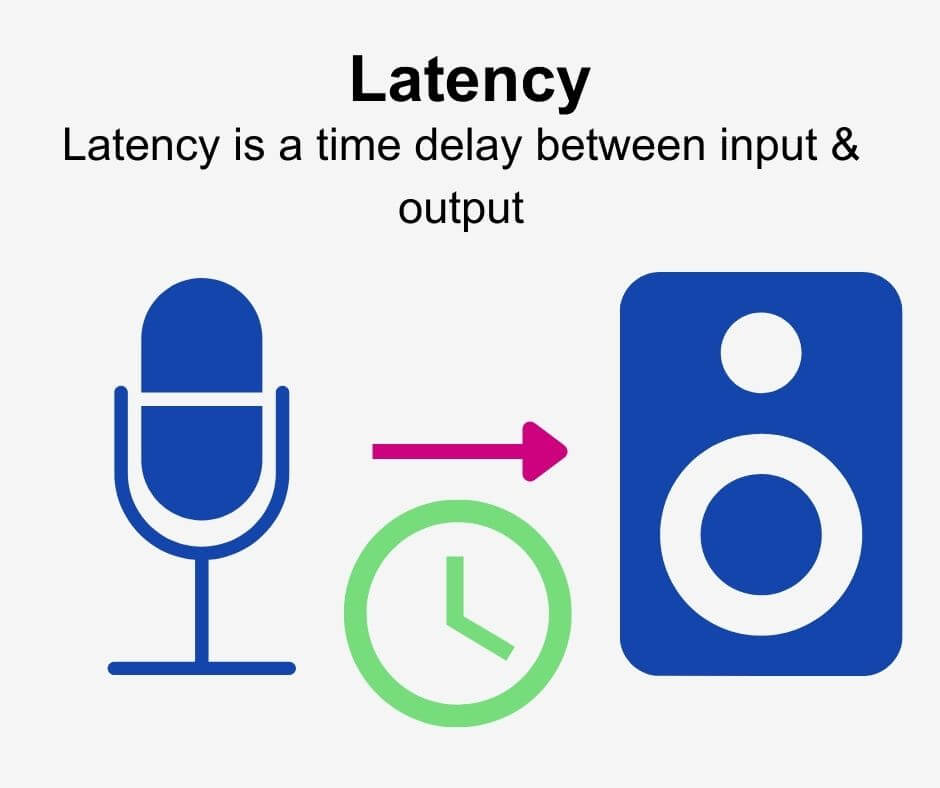
Audio latency compensation is a critical concept in the world of audio processing and production. It refers to the delay that can occur when processing audio signals, and it’s a topic that impacts everything from live performances to recording studio sessions and even everyday experiences like watching TV or playing video games. In this article, I’ll delve into the intricacies of audio latency compensation, exploring its significance, how it affects various applications, and how it can be managed for optimal audio experiences.

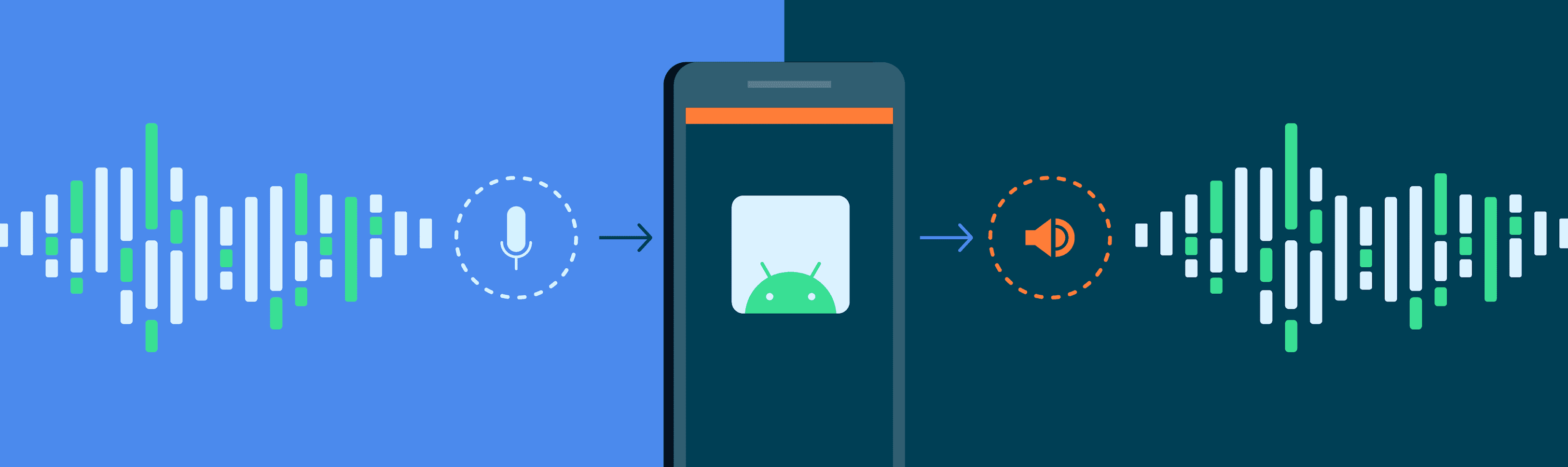
Audio latency compensation is essentially the delay that occurs when an audio signal is processed or transmitted from its source to its destination. This delay can be introduced at various stages of audio processing, such as when recording instruments, mixing tracks, or even during live performances. It’s measured in milliseconds and is a critical factor in ensuring that audio remains synchronized and cohesive.

Why Does Audio Latency Matter?

Audio Latency Compensation

The importance of audio latency compensation becomes evident when you consider scenarios where timing is crucial. For instance, in a live concert, the sound from microphones and instruments must reach the audience’s ears in sync with what they see on stage. Any delay can lead to a disjointed experience. Similarly, in music production, when multiple tracks are mixed, misaligned audio can result in muddiness or phase cancellation, affecting the overall quality of the recording.

Audio latency also plays a significant role in gaming. Gamers rely on audio cues for spatial awareness, and any latency can disrupt their ability to react quickly. Imagine playing a first-person shooter where the gunshot sound lags behind the visual animation; it could be the difference between victory and defeat.

Managing Audio Latency

To address audio latency, various techniques and technologies are employed. One common method is buffer size adjustment. This involves adjusting the size of data buffers in audio processing software or hardware to minimize delay. Smaller buffer sizes reduce latency but may strain the computer’s processing power, while larger buffers reduce strain but increase latency.

In professional audio setups, dedicated hardware interfaces with low-latency capabilities are used to minimize delay. These interfaces are designed to handle audio signals efficiently, ensuring minimal latency during recording and playback.

In the realm of gaming and live audio, technologies like ASIO (Audio Stream Input/Output) and low-latency audio drivers are employed to achieve near-instantaneous audio processing.

People Also Asked About Audio Latency Compensation

1. What Causes Audio Latency?

Audio latency can be caused by several factors, including:

Hardware Processing: Slow processors or insufficient RAM can lead to latency when processing audio.
Software Buffering: When audio data is buffered for processing, it can introduce delay, especially if the buffer size is too large.
Network Latency: In online applications, data transmission over the internet can introduce latency.

2. How Does Latency Affect Streaming and Online Calls?

In streaming and online calls, high latency can result in delays between audio and video, leading to unsynchronized experiences. This is often noticeable in live broadcasts or video conferencing.

3. Are There Differences Between Latency in Music Production and Gaming?

Yes, there are differences. In music production, low-latency is critical for real-time monitoring and recording. In gaming, low-latency ensures that audio cues match gameplay actions for a seamless experience.

4. Can Latency Be Completely Eliminated?

While we can minimize latency to imperceptible levels, complete elimination is challenging due to the limitations of hardware, software, and network transmission. Achieving extremely low latency is the goal, but there will always be some minimal delay.

Keywords with Identical Search Intent

1. Audio Delay Reduction Techniques

Reducing audio delay involves techniques like buffer size optimization, hardware upgrades, and low-latency drivers. These methods aim to minimize the time it takes for audio signals to travel from source to output.

2. Real-time Audio Processing

Real-time audio processing is crucial in applications like live sound engineering and gaming. It involves minimizing latency to ensure that audio signals are processed and delivered without noticeable delays.

3. Low-Latency Audio Interfaces

Low-latency audio interfaces are specialized hardware devices that enable musicians and producers to work with minimal audio delay. They are essential tools in professional music studios.

4. Latency Compensation in Audio Software

Audio software often includes features for latency compensation, allowing users to adjust settings and reduce delays during recording and playback. Understanding and utilizing these features is vital for audio professionals.

Last Words

In the world of audio, timing is everything. Whether you’re a musician, a gamer, or simply a fan of high-quality audio, understanding and managing audio latency compensation is essential for an immersive and seamless experience. By employing the right techniques and technologies, you can ensure that audio signals reach your ears with minimal delay, preserving the integrity of the sound and enhancing your overall enjoyment. So, whether you’re rocking out at a concert, producing your next hit song, or conquering virtual worlds in gaming, remember that audio latency compensation plays a pivotal role in shaping your auditory experience.