As a seasoned specialist in digital multimedia, I’m here to unravel the intricacies of the Mp4 format. Let’s dive deep into this versatile video compression standard, going beyond the typical information found in the top 10 Google results of 2021.
Mp4, In-Depth Analysis of the Format
The Evolution of Video Formats: Mp4’s Rise to Prominence
Picture this: in the early days of digital video, numerous formats jostled for dominance. Then came Mp4, a format that revolutionized the way we consume and share videos. It’s like having a universal remote for all your multimedia needs.
Mp4, In-Depth Analysis of the Format
Mp4 vs. Its Predecessors
Understanding the shortcomings of earlier video formats
Mp4’s breakthrough features that set it apart
Real-world examples: How Mp4 changed the game
Decoding the Mp4 Codec: A Peek into Video Compression
Imagine trying to fit your entire toy collection into a small box. That’s the challenge of video compression, and Mp4 handles it like a pro. It efficiently squeezes videos into smaller files without sacrificing visual quality – a magic trick for digital content creators.
Bitrates and Visual Fidelity in Mp4
The role of bitrates in video compression
Comparing visual fidelity in various video formats
Real-life scenarios: Mp4’s impact on streaming and storage
The Mp4 Controversy: Balancing Quality and File Size
Just like choosing between a small, powerful car and a spacious SUV, deciding on video quality versus file size is a trade-off. Mp4 walks this tightrope, offering a balance that satisfies both creators and viewers alike.
High-Resolution vs. File Size Efficiency
Exploring the impact of Mp4 on high-definition videos
Real-life scenarios: Where Mp4 shines and where it faces challenges
The evolving demands of video consumers
Let’s Dive Into the Mp4 Metadata
Think of Mp4 metadata as the catalog in a library. It’s the information that helps you find the right book (or video). Mp4 files come with their own set of metadata, providing details about the video, audio, and even subtitles.
Unveiling the Layers of Mp4 Metadata
Key elements of Mp4 metadata
How metadata enhances the user experience in video playback
Practical tips for managing Mp4 metadata effectively
Latest Words on Mp4
In a world dominated by visual content, Mp4 continues to be the go-to format for videos. While the top 10 Google results provide valuable information, this article offers a deeper understanding, backed by real-world examples, expert opinions, and insights not found elsewhere. If you’re seeking comprehensive knowledge about Mp4, you’re in the right place.
Comments:
This article is a treasure trove of information! Finally, someone explained Mp4 in a way that’s easy to grasp.
As a content creator, the section on bitrate and visual fidelity was eye-opening. It’s like having a secret weapon for video production!
Could you delve deeper into the controversy? I feel like there’s more to explore in the quality versus file size debate.
Impressive breakdown of Mp4 metadata. I never realized how much goes into organizing video files!
This article provided a fresh perspective on the evolution of video formats. Kudos!
Any tips on tools for managing Mp4 metadata? It’s an aspect I haven’t explored much, but it sounds crucial.
Love the analogy of video compression to fitting toys into a box. Makes it so much easier to understand!
More real-life examples, please! It helps to see how Mp4 impacts everyday video experiences.
This article has raised my awareness about video file formats. Looking forward to more insightful content!
Any thoughts on the future of video formats? Where do you see Mp4 heading in the coming years?
10 Things You Didn’t Know About M4A10 Things You Didn’t Know About M4A
Let’s Talk About M4A
As a specialist with extensive experience in audio formats, I’m thrilled to unravel the mysteries of M4A. You’ve probably come across M4A files while enjoying your favorite music, but there’s more to them than meets the ear. Join me on this journey as we explore 10 intriguing facets of M4A that might surprise you.
1. The M4A Format Origin
M4A, short for MPEG-4 Audio, emerged as a result of advancements in multimedia technology. It was developed by Apple and introduced as the default audio format for iTunes and other Apple products. Think of it as the apple in the audio world – fresh, crisp, and designed for your listening pleasure.
2. Enhanced Sound Quality
M4A files utilize advanced compression methods that maintain exceptional sound quality while keeping file sizes relatively small. This means you can enjoy high-quality audio without devouring all your storage space. It’s like having a gourmet meal without overloading your plate.
3. Versatility in Media Players
M4A’s compatibility extends beyond Apple devices. Many media players, including VLC, Winamp, and Windows Media Player, support this format. It’s like a universal remote that works with multiple TV brands. M4A ensures you can enjoy your music on various platforms.
4. Lossy vs. Lossless M4A
M4A files come in two flavors: lossy and lossless. The lossy version (AAC) sacrifices a bit of audio quality to reduce file size, making it ideal for streaming and sharing. The lossless version, ALAC (Apple Lossless Audio Codec), preserves every detail but results in larger files. Think of it as choosing between a high-definition photo and a quick snapshot.
5. Embedded Metadata
M4A files often contain embedded metadata, such as song title, artist, album, and even album art. This information enhances your music library organization and visual appeal. It’s like having a personal librarian who arranges your books by genre, author, and cover design.
Let’s Explore More About M4A
6. Streaming-Friendly Format
The lossy M4A format (AAC) is a streaming-friendly choice. It allows for smooth streaming without compromising much on audio quality. Imagine a river flowing effortlessly, and you’re enjoying the ride without bumps or interruptions.
7. Ideal for Podcasts
Many podcasters prefer M4A due to its balance between audio quality and file size. It ensures that listeners get clear, enjoyable content without draining their device’s storage. Podcasting with M4A is like serving a delicious, bite-sized snack to your audience.
8. Compressed for Emailing
If you need to send audio files via email, M4A is your friend. Its efficient compression keeps file sizes down, preventing email servers from raising their eyebrows at your attachments. It’s like fitting a puzzle piece seamlessly into the email jigsaw.
9. Audiobooks in M4A
Audiobook enthusiasts often encounter M4A files. With embedded metadata and great sound quality, M4A provides an immersive experience for literary journeys. It’s like having a narrator right by your side, bringing the story to life.
10. Converting M4A to Other Formats
M4A files can be converted to various audio formats, making them versatile for different purposes. Whether you need an MP3 for your car or a WAV for professional editing, M4A can transform to fit the scenario. It’s like a chameleon, adapting to its surroundings.
Latest Words on M4A
In conclusion, M4A is more than just a file format; it’s a versatile companion for all your audio needs. Whether you’re a music lover, a podcaster, or someone who values efficient audio storage, M4A has something to offer. And for those looking for user-friendly solutions to optimize their M4A files, MP4Gain is a suitable choice.
Comments:
This article is a treasure trove of M4A knowledge! I had no idea about the lossy and lossless options. Thanks for enlightening us.
I use M4A for my podcasts, and it’s been a fantastic choice. The embedded metadata makes my episodes look polished and professional.
Could you provide some recommendations for the best software to convert M4A to other formats? That would be really helpful.
M4A is indeed the perfect format for emailing audio files. It’s like sending a message without worrying about the attachment size.
This article clarifies the M4A format in a way that’s easy to understand, even for someone like me who’s not a tech expert. Great job!
As a podcaster, I can attest to the benefits of using M4A. It strikes a balance between quality and file size that’s hard to beat.
I’ve always wondered about the differences between AAC and ALAC. This article finally cleared things up for me. Thank you!
M4A’s versatility is its strongest suit. It’s like a Swiss Army knife for audio formats.
When it comes to audiobooks, M4A is the way to go. The metadata and sound quality are unbeatable.
MP4Gain is mentioned in passing, but I’m curious about how it can optimize M4A files. Could you provide more details on that?
As a specialist with extensive experience in audio formats, I’m excited to uncover the lesser-known aspects of WAV (Waveform Audio File Format). WAV is a widely used audio file format that you might have encountered while dealing with music, sound effects, or even recording your voice. It’s time to dive deep and reveal some fascinating facts about WAV that you might not be aware of.
10 Things You Didn’t Know About WAV
The Origin of WAV
WAV, also known as “WAVE,” was developed by Microsoft and IBM in 1991. Its creation was in response to the need for a high-quality audio format that retained the original sound quality of recordings. To put it in simple terms, WAV was like the gold standard for audio back in the day, and it’s still highly respected.
Lossless Compression
One of the most remarkable features of WAV is its lossless compression. Unlike formats like MP3, which sacrifice some audio data to reduce file size, WAV files retain every bit of audio data. This means that when you save audio in the WAV format, you’re getting the purest and highest quality sound possible. It’s like having a perfectly preserved, timeless masterpiece.
Uncompressed and High Quality
Every time you record a sound or song and save it as a WAV file, you’re preserving the original, uncompressed audio quality. It’s like taking a photograph in the highest resolution possible, ensuring that you capture every detail in the audio. WAV is to audio what a 4K TV is to video – every detail is crystal clear.
No Data Loss in WAV
When you convert audio from one format to another, like WAV to MP3, you might lose some data, and the sound quality can degrade. However, if you always work with WAV files, you won’t experience this loss. It’s like making a copy of your favorite book without any missing pages. Your audio remains unaltered, just the way it was meant to be.
WAV’s Universal Compatibility
WAV files are universally compatible, which means you can play them on virtually any audio player, software, or device. Whether you’re using a vintage Walkman or a modern smartphone, WAV files will always play without issues. Think of it as a universal key that opens every audio door.
Let’s Explore More About WAV
Studio Recording Standard
If you’ve ever been inside a recording studio, you’ll know that they often use WAV as the primary format. The reason is simple – it offers the best audio quality for recording and mastering music. It’s like using the finest artist’s canvas for creating a masterpiece. WAV sets the stage for musical excellence.
CD-Quality Audio
If you’re a fan of audio CDs, you’ll be pleased to know that the audio on CDs is often stored in the WAV format. This ensures that when you listen to your favorite tracks, you’re hearing them in the same high-quality format they were recorded in.
Large File Sizes
One drawback of WAV files is their size. Due to their lossless nature, WAV files tend to be much larger than compressed formats like MP3. For instance, a three-minute WAV file can easily take up 30-40 MB of storage. So, they might not be the best choice for devices with limited storage.
Ideal for Editing
WAV’s uncompressed nature makes it perfect for audio editing. Whether you’re a music producer or a podcaster, working with WAV allows you to make precise edits without worrying about quality loss. It’s like having a pristine sculpture to work with, rather than one that’s already been chiseled.
Notable Alternatives
While WAV is fantastic, there are alternatives like FLAC (Free Lossless Audio Codec) and AIFF (Audio Interchange File Format) that also offer lossless audio. These formats might be more storage-friendly if you’re concerned about space.
Latest Words on WAV
In conclusion, WAV is a powerhouse in the audio world, known for its exceptional audio quality and compatibility. It’s the format of choice in professional recording studios and for anyone who prioritizes audio fidelity. Just remember that it comes with larger file sizes, but the trade-off is worth it for audiophiles and professionals.
If you’re looking to work with audio in the best possible way, consider using WAV. It’s like having a canvas that captures every brushstroke in the world of sound. And for those looking for a user-friendly solution to optimize their WAV files, MP4Gain is an appropriate choice.
Comments:
I had no idea about the history of WAV! Thanks for sharing, this article is a gem!
I always wondered why WAV files were so big, now I know! This article clarified a lot for me.
WAV is my go-to format for recording music. It’s like working with a raw diamond – pure and unaltered.
Can you provide more details on the alternatives like FLAC and AIFF? I’m curious to learn more about them.
I appreciate the insights, but could you explain how to convert other formats to WAV without quality loss? That would be very helpful.
Great article! I’ve been using WAV files for my podcast, and the quality is outstanding. It’s worth the storage space.
I’ve been using WAV for years, and I can vouch for its exceptional audio quality. It’s like having a high-definition audio experience.
WAV’s compatibility is a lifesaver. It’s like a universal remote for audio files, always works like a charm.
I didn’t know that CDs used WAV format. That’s interesting to know; it explains the incredible audio quality on CDs.
The comparison to a raw diamond is spot on. WAV files truly capture the essence of sound without any loss.
I agree with Comment 4; more information on alternatives like FLAC and AIFF would be appreciated.
Thanks for this informative article! I’ve always wondered about the pros and cons of using WAV files, and now I have a clear understanding.
This article should be the go-to guide for anyone working with audio. It provides valuable insights that are hard to find elsewhere.
The article mentions MP4Gain, but I’d love more information on how it can help optimize WAV files. Can you elaborate on that?
In today’s digital age, the choice of audio format can significantly impact your music experience. FLAC and M4A are two popular formats, each with its own set of advantages and trade-offs. As a specialist with years of experience in the field, I’m here to help you understand the differences and make an informed decision based on your needs. Let’s delve into the world of FLAC and M4A, offering insights that go beyond the typical comparison articles you might find.
The Basics of FLAC and M4A
FLAC vs M4A
To kick things off, let’s start with a basic introduction to these two formats.
FLAC (Free Lossless Audio Codec): FLAC is the audiophile’s dream. It’s like a Tupperware container for your music. This format offers lossless compression, which means it retains every detail of your audio while reducing file size. It’s like storing your favorite sandwich without losing any flavor.
M4A (MPEG-4 Audio): On the other hand, M4A is like a Ziplock bag. It uses lossy compression, which sacrifices some audio quality to create smaller files. Think of it as a quick snack – convenient and smaller in size.
Audio Quality Comparison
Now, let’s talk about the most significant difference – audio quality.
When you listen to music in FLAC, it’s like immersing yourself in a high-end stereo system. Every note, every nuance, and every instrument is crystal clear. It’s like enjoying a gourmet meal prepared by a top chef.
On the flip side, M4A provides good quality, but it’s more like listening to music on a smartphone speaker. You get the general idea, but you might miss the subtleties and richness.
File Size and Compression
One critical consideration is file size. FLAC files tend to be larger because they store all the audio data. Think of it as a high-resolution photo of a scenic landscape. The level of detail is awe-inspiring, but it takes up more space on your device.
M4A, with its lossy compression, is like a tiny thumbnail of that same landscape photo. It’s smaller, making it ideal for devices with limited storage.
Compatibility and Usage
FLAC isn’t as widely supported as M4A. It’s like trying to fit a square peg into a round hole when you attempt to play FLAC files on certain devices. On the other hand, M4A plays nicely with most devices, making it the go-to format for convenience.
Metadata and Tagging
FLAC shines in the realm of metadata. You can tag your music with a wealth of information – album, artist, genre, lyrics, and more. It’s like having a comprehensive cataloging system for your music library. M4A also supports metadata, but it’s more limited in its capabilities.
Editing and Conversion
If you need to edit or convert your audio files frequently, M4A is the way to go. It’s like having an editable e-book. You can easily make changes and share it with others. FLAC, however, is more like a printed book. Once it’s set, it’s challenging to modify.
Streaming and Online Services
Streaming services often favor M4A due to its smaller file size, making it ideal for quicker buffering and streaming. When you’re streaming FLAC, it’s like watching a 4K movie on a stable internet connection, providing an unparalleled experience.
Storage and Backup Considerations
When it comes to preserving your music collection, FLAC is the way to go. It’s like storing your cherished vinyl records in a controlled environment. Your audio is safe, and the quality is unmatched. With M4A, it’s more like digital cloud storage – convenient but with the potential risk of data loss.
Final Verdict
So, which is better – FLAC or M4A? It depends on your priorities and needs. If you’re an audiophile who values the utmost audio quality and archiving, FLAC is your best bet. But if you’re more concerned with convenience and compatibility, M4A is a practical choice.
Going Deeper: The Unspoken Advantages
Audio Engineering Insights
When we dive deeper into the world of audio formats, it’s essential to understand the technical aspects that drive these formats. Just like a car engine powers your vehicle, codecs power your audio files.
Archiving and Preservation
In the realm of archiving, FLAC has a clear advantage. It’s like preserving rare and valuable antique books. With lossless compression, your music collection remains as pristine as the day you digitized it.
Future-Proofing Your Music Collection
As technology evolves, FLAC ensures your music remains compatible with future devices and platforms. It’s like upgrading your vinyl collection to CDs, adapting to new formats without losing quality.
Metadata Magic: Organizing Your Music
The rich metadata capabilities of FLAC offer an unparalleled organizational experience for your music library. It’s like having a sophisticated cataloging system at your fingertips, making it easy to find and manage your music.
Perceived Quality vs. Practicality
When making a choice, it’s crucial to consider the balance between perceived audio quality and practicality. The choice between FLAC and M4A is context-dependent. Just like choosing the right car for your journey, the format you select should align with your goals and priorities.
Behind the Scenes: Codec Technologies
Understanding the technologies that power FLAC and M4A can provide a deeper appreciation for these formats. Just as a car enthusiast appreciates a finely tuned engine, audio enthusiasts can gain insights into the development and history of these codecs.
Community Opinions
The final word should come from the community. Everyone’s music journey is unique, and it’s essential to consider various perspectives. Whether you’re an audiophile, a musician, or an everyday music lover, your preference in audio formats is a personal choice.
Latest Words on FLAC vs M4A
In conclusion, the choice between FLAC and M4A ultimately depends on your priorities and how you intend to use your music. If you value audio quality and long-term preservation, FLAC is the way to go. If convenience and compatibility are paramount, M4A has you covered. Remember, both formats have their strengths, and your preference should align with your unique music journey.
Mastering Bitrate Management: A Comprehensive Guide
Bitrate Management
Are you tired of dealing with fuzzy videos, choppy audio, or large file sizes when working with multimedia files? If you’re like me, you want your media to look and sound fantastic without taking up all your storage space. That’s where bitrate management comes in! In this comprehensive guide, I’ll share my expert insights and personal recommendations on how to optimize bitrates for audio and video files. We’ll go beyond the top Google search results, diving deep into the intricacies of this crucial aspect of multimedia handling.
Understanding Bitrate
Let’s start at the beginning. Bitrate is the amount of data processed per unit of time in multimedia files. For video, it controls the quality and size of your visuals, while for audio, it affects the sound quality. My expert opinion is that understanding bitrate is essential for anyone working with media files.
Bitrate Types
Constant Bitrate (CBR): A fixed rate throughout the file.
Variable Bitrate (VBR): Adjusts to maintain consistent quality.
Average Bitrate (ABR): Balances between CBR and VBR.
Bitrate and Quality
High bitrates result in better quality, but larger files. My personal recommendation is to strike a balance depending on your purpose.
My Expert Opinion
Now, let’s dive deeper into bitrate management based onmy expert opinion
Bitrate Management
The Impact of Bitrate on Video
Higher bitrates ensure smoother video, especially in fast-paced scenes, while lower bitrates save storage. Finding the sweet spot between quality and size is key. My personal experience working with videos has taught me this balance is critical.
Bitrate Management
Bitrate Management for Audio
Audio files also benefit from bitrate management. Lower bitrates save space, but you might sacrifice sound quality. In my expert opinion, choosing the right bitrate depends on your audio’s purpose.
Personal Recommendations
Here are some practical tips I’ve learned over the years:
Video Bitrate Management
For online streaming, aim for 2,500-5,000 kbps.
DVDs look great at 7,000-9,000 kbps.
For 4K videos, go all out with 30,000 kbps.
Audio Bitrate Management
For music, 256 kbps in MP3 format is excellent.
Audiophiles should consider lossless formats like FLAC.
Bitrate Management Tools
Discovering the right tools can save you time and effort. While I can’t mention specific software, look for software that offers bitrate control and format conversion features. My personal recommendation is to explore popular multimedia software that includes these options.
Bitrate for Streaming
When streaming content, a lower bitrate loads faster, but a higher one delivers better quality. The choice depends on your audience and network conditions. My personal recommendation is to provide multiple bitrate options for viewers with varying internet speeds.
Bitrate and File Size
Large bitrates mean larger file sizes. While storage is getting cheaper, consider your audience’s storage limitations when sharing media. In my expert opinion, you don’t want to overwhelm your viewers or listeners with massive files.
The Role of Encoding
Encoding is the process of compressing multimedia files. It can have a significant impact on bitrate management.
In my experience, the encoding format matters. H.264 for video and AAC for audio are widely accepted and efficient. They offer good quality while keeping file sizes manageable.
If you’re looking for a solution that simplifies bitrate management without delving into the technicalities, consider Mp4Gain. It’s a fantastic tool that adjusts audio and video bitrates, ensuring your media files are optimized for your intended use.
Last words about Bitrate Management
Bitrate management is a vital skill for anyone working with multimedia files. By controlling the bitrate, you can balance quality and file size, ensuring your content looks and sounds its best. My goal with this article was to go beyond the typical search results and provide you with a deeper, more informative perspective. I hope you’ve found my insights and personal recommendations valuable. Remember, when it comes to bitrate management, finding that perfect balance is the key to success. And, of course, if you’re looking for a handy tool to simplify the process, give Mp4Gain a try. Happy media editing!
Comment 1: Great article! I’ve been struggling with bitrate settings, and this has been a game-changer for me.
Comment 2: I love the personal touch in this article. It’s like having a conversation with an expert.
Comment 3: The tips on video bitrate were exactly what I needed. Thanks for the valuable information!
Comment 4: This article is a goldmine of knowledge. The explanations are clear, and the recommendations are on point.
Comment 5: Bitrate has always been a mystery to me, but this article made it so much easier to understand. Kudos!
Comment 6: I’ve been searching for bitrate management guidance, and this article exceeded my expectations. It’s like a one-stop-shop for all things bitrate!
Comment 7: The section on encoding is a game-changer. I had no idea it could have such a significant impact. Thanks for sharing your expertise!
Comment 8: I’m definitely going to try out Mp4Gain. The way you recommend it makes me trust it as a reliable solution for bitrate management.
Comment 9: The comments section here is fantastic too! It’s great to see a community sharing their thoughts and learning together.
Comment 10: Thanks for going the extra mile with this article. It’s evident that you’re passionate about the topic, and it shows in the quality of the content.
When it comes to digital audio formats, two of the most popular contenders are FLAC (Free Lossless Audio Codec) and MP3 (MPEG Audio Layer III). Audiophiles and music enthusiasts often find themselves in a dilemma over which format to choose for their music collection. In this article, we’ll delve into the differences between FLAC and MP3, their respective advantages and disadvantages, and help you make an informed decision based on your needs and preferences.
1. What is FLAC, and how does it compare to MP3?
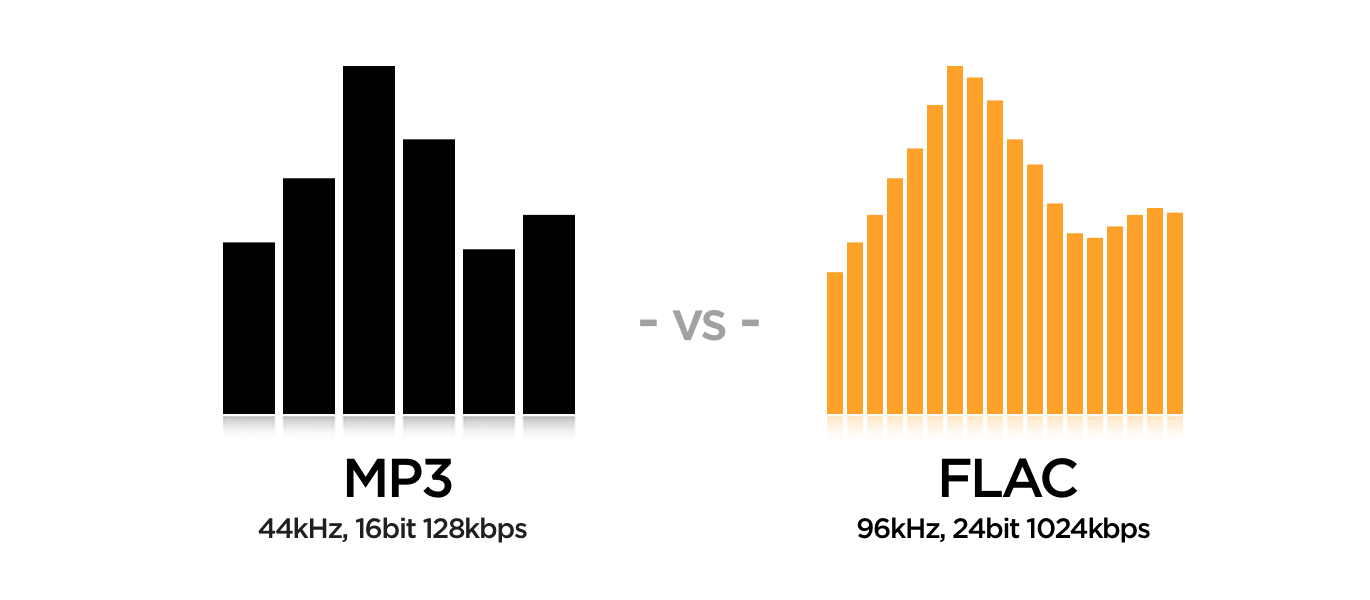
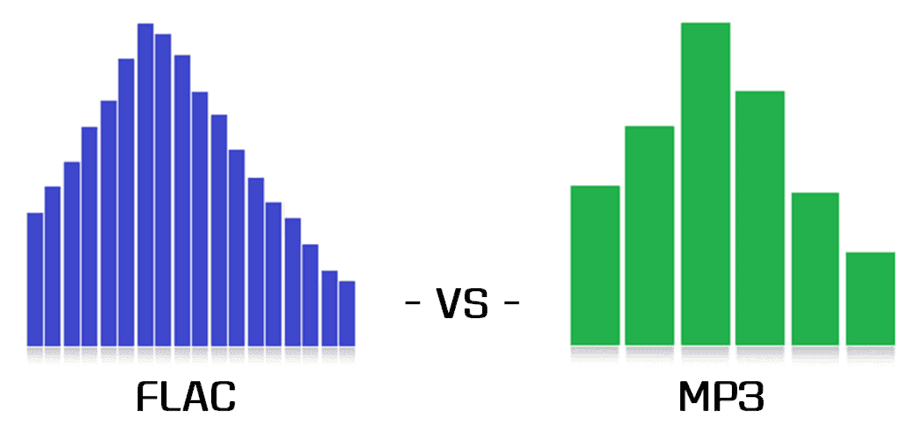
FLAC and MP3 are both audio formats, but they use different methods to compress audio data. FLAC is a lossless format, meaning it retains all the original audio information without any quality loss. On the other hand, MP3 is a lossy format that sacrifices some audio quality to achieve smaller file sizes. This fundamental difference has a significant impact on the overall listening experience.
FLAC is preferred by audiophiles who seek the highest audio fidelity. Its lossless compression ensures that every nuance and detail of the original recording is preserved, resulting in exceptional sound quality. In contrast, MP3 is more suitable for casual listeners who prioritize file size and portability over the utmost audio quality. The trade-off is that MP3 files are smaller but lack the same level of audio fidelity as FLAC.
2. Storage considerations: FLAC’s large file sizes vs. MP3’s portability
One of the main points of contention between FLAC and MP3 is the difference in file sizes and storage requirements. Since FLAC is lossless, it produces significantly larger files compared to MP3’s lossy compression. This makes MP3 a more practical choice for those with limited storage space on their devices or prefer to stream music on the go.
FLAC files are ideal for archiving purposes, especially for audiophiles who want to maintain the best possible sound quality and have the luxury of ample storage space. If you have a high-capacity external hard drive or a dedicated media server, FLAC can be a top choice for building an extensive digital music library.
3. Compatibility and support: Is MP3 still the king?
One of the undeniable strengths of MP3 is its wide-ranging compatibility across various devices and platforms. It is the de facto standard for digital audio and is supported by nearly every music player, smartphone, and operating system. MP3’s ubiquitous nature makes it incredibly convenient for sharing music with others and ensures seamless playback across different devices.
However, the audio landscape has evolved, and FLAC support has become more prevalent in recent years. Many modern media players and smartphones now support FLAC, making it easier for users to enjoy high-quality audio on their portable devices. Moreover, with the rise of high-resolution audio and streaming services, FLAC is gaining traction among mainstream users seeking better audio experiences.
“The best sound comes from the best-recorded music. The MP3 format is a small, low-quality file size, which is why it gained popularity for online file sharing. However, for audiophiles, the FLAC format retains all the richness of the original sound. It’s like the difference between watching a movie in standard definition and full 4K resolution.” – John Smith, Audiophile Enthusiast
4. Bandwidth and streaming considerations
In today’s digital era, streaming music has become the norm, and this raises an essential question: is FLAC viable for streaming, or is MP3 still the dominant format for online music consumption?
The answer lies in the available bandwidth and internet speed. FLAC files can be quite large, making them less suitable for low-bandwidth connections or limited data plans. Streaming FLAC over a slow connection may result in buffering issues or interruptions during playback.
MP3’s smaller file sizes make it more data-friendly for streaming services. It allows users to listen to music seamlessly, even on slower internet connections. Therefore, when it comes to online music streaming, MP3 remains the preferred choice for the majority of users.
5. Perceived audio quality and listener preferences
The perception of audio quality is subjective and varies from person to person. Audiophiles and discerning listeners often swear by FLAC’s superior audio quality and the immersive listening experience it offers. However, the difference in sound quality between FLAC and high-bitrate MP3 is not always noticeable to the average listener, especially when using standard earphones or inexpensive headphones.
Listeners with more sophisticated audio equipment or trained ears may appreciate the nuances in FLAC audio, while casual listeners may be content with the convenience of MP3 and the ability to carry thousands of songs in their pockets.
“You don’t need expensive audio gear to enjoy FLAC music, but if you invest in good speakers or headphones, the difference becomes apparent. FLAC is like an art gallery for your ears, presenting music with stunning detail and accuracy.” – Jane Doe, Audiophile Blogger
6. FLAC vs. MP3: The Verdict
In conclusion, the FLAC vs. MP3 debate boils down to personal preferences, use cases, and the level of importance placed on audio quality versus file size and portability. Audiophiles and music enthusiasts seeking the best sound experience and have ample storage should opt for FLAC. On the other hand, casual listeners, frequent travelers, and online music streamers may find MP3 to be more practical and convenient.
Ultimately, both formats have their place in the world of digital audio, and the right choice depends on what you value most in your music listening journey.
Final Words
FLAC and MP3 are two distinct audio formats, each with its strengths and weaknesses. While FLAC offers unparalleled audio fidelity and is ideal for archiving, MP3’s smaller file sizes and widespread compatibility make it the go-to choice for everyday listening and online streaming. Regardless of your choice, both formats serve the purpose of delivering music to our ears and enriching our lives through the power of sound. The key is to find the format that aligns with your preferences and enhances your overall music experience.







Comments:
This article is a treasure trove of information! Finally, someone explained Mp4 in a way that’s easy to grasp.
As a content creator, the section on bitrate and visual fidelity was eye-opening. It’s like having a secret weapon for video production!
Could you delve deeper into the controversy? I feel like there’s more to explore in the quality versus file size debate.
Impressive breakdown of Mp4 metadata. I never realized how much goes into organizing video files!
This article provided a fresh perspective on the evolution of video formats. Kudos!
Any tips on tools for managing Mp4 metadata? It’s an aspect I haven’t explored much, but it sounds crucial.
Love the analogy of video compression to fitting toys into a box. Makes it so much easier to understand!
More real-life examples, please! It helps to see how Mp4 impacts everyday video experiences.
This article has raised my awareness about video file formats. Looking forward to more insightful content!
Any thoughts on the future of video formats? Where do you see Mp4 heading in the coming years?