H.265 Intra Prediction Algorithms


Free Download Mp4Gain
picture

H.265 Intra Prediction Algorithms
H.265 Intra Prediction Algorithms

H.265 Intra Prediction Algorithms

Let’s talk about H.265 Intra Prediction Algorithms

In the realm of video compression, H.265, also known as High-Efficiency Video Coding (HEVC), revolutionized the landscape by introducing advanced intra prediction algorithms. As a specialist in multimedia technology, I’ve delved deep into the intricacies of H.265 to uncover the nuances of its intra prediction techniques. Let’s embark on a journey to explore the fundamentals of H.265 intra prediction algorithms and their significance in video compression.

Deciphering H.265 Intra Prediction

At the heart of H.265 lies its intra prediction mechanism, a sophisticated algorithm designed to predict pixel values within a video frame based on neighboring samples. Unlike traditional compression methods, which rely solely on inter-frame prediction, H.265 leverages intra prediction to achieve higher compression efficiency. By exploiting spatial redundancies within a frame, H.265 reduces data redundancy, resulting in significantly smaller file sizes without sacrificing quality.

Key Components of H.265 Intra Prediction

  • Directional Prediction Modes: H.265 supports various directional prediction modes, allowing for accurate estimation of pixel values along different spatial orientations.
  • Angular Prediction: Introduces angular prediction modes to capture complex patterns and textures within video frames, enhancing compression efficiency.
  • Adaptive Filtering: Incorporates adaptive filtering techniques to refine prediction residuals, minimizing artifacts and improving visual quality.
  • Transform Coding: Utilizes transform coding to further reduce residual errors, facilitating efficient representation of pixel values.
  • Context Modeling: Employs context modeling to adaptively encode prediction residuals, enhancing compression performance across diverse video content.

Navigating through these components requires a deep understanding of H.265 specifications and video coding principles. As an expert in multimedia technology, I’ve explored the intricacies of H.265 intra prediction, uncovering its role in reshaping the landscape of video compression.

Significance in Video Compression

The adoption of H.265 intra prediction algorithms has profound implications for video compression standards and applications. By harnessing the power of intra prediction, H.265 achieves unparalleled compression efficiency, making it ideal for various use cases ranging from streaming to broadcasting. Furthermore, the advanced prediction modes and adaptive techniques employed in H.265 pave the way for higher-quality video delivery across bandwidth-constrained environments.

Optimizing Video Compression

  • Efficient Bandwidth Utilization: H.265’s intra prediction minimizes data redundancy, allowing for more efficient bandwidth utilization in streaming and broadcasting applications.
  • Enhanced Visual Quality: Advanced prediction modes and adaptive filtering techniques result in superior visual quality, ensuring an immersive viewing experience for audiences.
  • Reduced Storage Costs: Smaller file sizes resulting from H.265 compression lead to reduced storage costs, making it an attractive solution for content creators and distributors.

As multimedia technologies continue to evolve, the role of H.265 intra prediction algorithms remains paramount in driving innovation and efficiency in video compression.

Advanced Techniques and Best Practices

Delving deeper into H.265 intra prediction unveils advanced techniques and best practices that further enhance compression efficiency and visual quality. From optimizing prediction modes to fine-tuning adaptive filtering parameters, mastering these nuances empowers video compression engineers to push the boundaries of quality and efficiency.

Custom Prediction Modes

  • User-Defined Prediction Patterns: Introduce custom prediction modes tailored to specific video content characteristics, maximizing compression performance.
  • Adaptive Rate Control: Dynamically adjust prediction parameters based on video complexity and available bandwidth, optimizing compression efficiency in real-time.

By leveraging these advanced techniques and best practices, developers can unlock the full potential of H.265 intra prediction algorithms, paving the way for next-generation video compression solutions.

Latest words on H.265 Intra Prediction Algorithms

In conclusion, the exploration of H.265 intra prediction algorithms sheds light on the intricate mechanisms driving modern video compression standards. From its foundational principles to advanced optimization techniques, H.265 revolutionizes the landscape of video encoding, offering unprecedented compression efficiency and visual quality. As a seasoned specialist in multimedia technology, I continue to delve into the depths of H.265, uncovering new insights and pushing the boundaries of video compression innovation.

Comments:

Whoa, this article provided a comprehensive overview of H.265 intra prediction algorithms! As a video enthusiast, I’m excited to delve deeper into the world of video compression.

-VideoBuff

This article offered valuable insights into the significance of H.265 intra prediction in video compression. However, I would have loved to see more practical examples illustrating its application in real-world scenarios.

-TechEnthusiast123

As a multimedia developer, understanding H.265 intra prediction is crucial for optimizing video encoding workflows. This article provided valuable insights and best practices that I’ll definitely incorporate into my projects.

-MultimediaDev

Informative article! I appreciated the clear explanations and practical implications of H.265 intra prediction algorithms. Looking forward to more content from this author.

-KnowledgeSeeker


Free Download Mp4Gain
picture


Mp4Gain Main Window
picture


Mp4Gain Features
picture


Free Download Mp4Gain
picture

AVI Frame Rate Control Mechanisms

AVI Frame Rate Control Mechanisms

AVI Frame Rate Control Mechanisms

AVI Frame Rate Control Mechanisms

Latest Insights on AVI Frame Rate Control

In the realm of video encoding, understanding frame rate control mechanisms in AVI (Audio Video Interleave) files is crucial.

Let’s Talk About AVI Frame Rate Control

As a specialist in video encoding, I delve into the intricacies of AVI frame rate control mechanisms. These mechanisms govern how frames are encoded and decoded, directly impacting the smoothness and quality of video playback.

Exploring Frame Rate Control

Frame rate control determines how many frames per second (fps) are displayed in a video. In AVI files, two primary mechanisms are used: constant frame rate (CFR) and variable frame rate (VFR). Each has its pros and cons, affecting the overall viewing experience.

Constant Frame Rate (CFR)

CFR maintains a consistent frame rate throughout the entire video. This ensures uniformity in playback speed but may lead to larger file sizes, especially in scenes with little motion.

Variable Frame Rate (VFR)

VFR allows the frame rate to vary dynamically based on the complexity of the video content. This can result in smaller file sizes and smoother playback, particularly in scenes with varying motion intensity.

Optimizing Frame Rate for Smooth Playback

Choosing the right frame rate for your AVI files depends on various factors, including the intended use and target audience. For instance, videos intended for high-speed action may benefit from a higher frame rate, while those focusing on static scenes may suffice with a lower frame rate to conserve storage space.

Practical Applications

In video production, understanding frame rate control mechanisms is crucial for achieving the desired visual effects and optimizing file sizes. For example, a filmmaker may opt for VFR when shooting a fast-paced action sequence to ensure smooth motion capture, while a content creator producing tutorials may prefer CFR to maintain consistency in playback speed.

Enhanced Viewing Experience

By mastering AVI frame rate control mechanisms, content creators and videographers can deliver an enhanced viewing experience to their audience. Whether it’s immersive cinematic sequences or educational video content, optimizing frame rates ensures that viewers enjoy smooth, high-quality playback across various devices and platforms.

Conclusion

In conclusion, understanding AVI frame rate control mechanisms is essential for video creators and enthusiasts alike. By selecting the appropriate frame rate and encoding settings, they can optimize video quality, minimize file sizes, and deliver captivating visual experiences to their audience. Whether it’s capturing thrilling action scenes or conveying informative content, mastering frame rate control is key to achieving professional-grade results.

Comments:

This article provided valuable insights into AVI frame rate control. However, I wish there were more examples illustrating the practical applications discussed.

As a video editor, I found this article extremely helpful in understanding the nuances of AVI frame rate control. The explanations were clear, concise, and easy to follow.

Great article! I never realized the impact frame rate control could have on video playback until reading this. Looking forward to implementing these techniques in my future projects.

While the article touched on the basics of frame rate control, I was hoping for more advanced techniques or tips for optimizing frame rates in specific scenarios.

Excellent breakdown of AVI frame rate control mechanisms! I appreciate the practical examples provided, making it easier to grasp the concepts discussed.

The Evolution of OGG Vorbis

The Evolution of OGG Vorbis: A Technical Overview

The Evolution of OGG Vorbis


Let’s talk about OGG Vorbis

As a seasoned specialist in audio technology, I delve into the captivating realm of OGG Vorbis to unravel its fascinating evolution. In the dynamic landscape of audio compression, OGG Vorbis stands out as a remarkable open-source alternative. While exploring the top 10 Google results, I noticed a gap in providing comprehensive insights. Let’s embark on this journey to uncover the nuances that make OGG Vorbis a unique player in the audio compression game.

The Origins and Foundation

OGG Vorbis emerged from the need for a royalty-free audio codec. In the late ’90s, the industry craved a solution independent of licensing constraints. Imagine a world where audio compression isn’t shackled by proprietary limitations. OGG Vorbis became a reality, fostering a community-driven approach. Picture it as a grassroots movement, where enthusiasts collaborated to build an audio codec that puts freedom at its core.

  • Community-driven development
  • Royalty-free codec
  • Freedom from licensing constraints

The Technical Marvels of OGG Vorbis

Now, let’s delve into the technical prowess of OGG Vorbis. Picture a finely tuned orchestra where each instrument contributes harmoniously to create a masterpiece. OGG Vorbis achieves this in the audio realm, utilizing a powerful psychoacoustic model. This model ensures efficient compression without compromising audio quality, creating a sonic experience that rivals its proprietary counterparts.

  • Psychoacoustic model for efficient compression
  • Comparable audio quality to proprietary codecs

Breaking Down the Compression Algorithm

At the heart of OGG Vorbis lies a sophisticated compression algorithm. Imagine a sculptor meticulously chiseling away excess material to reveal a refined masterpiece. OGG Vorbis does the same with audio data, discarding redundancies while retaining the essence of the sound. This results in smaller file sizes without perceptible loss, offering a superior listening experience.

  • Sophisticated compression algorithm
  • Discarding redundancies for smaller file sizes
  • Superior listening experience

The Ongoing Evolution

OGG Vorbis, much like a living organism, continues to evolve. Imagine a species adapting to its environment, enhancing its survival mechanisms. OGG Vorbis undergoes updates and improvements, ensuring compatibility with modern audio standards. This ongoing evolution positions OGG Vorbis as a resilient and future-proof choice in the ever-changing landscape of audio compression.

  • Adaptation to modern audio standards
  • Ongoing updates and improvements
  • Resilient and future-proof

Latest Words on OGG Vorbis

In wrapping up our exploration, I must emphasize the importance of OGG Vorbis in the audio compression domain. Imagine a world where users have access to high-quality audio without the burden of licensing fees. OGG Vorbis paints this picture, and as an expert, I confidently affirm its significance. If you’re seeking an open-source solution with uncompromised audio quality, OGG Vorbis is the answer.

Comments:

Couldn’t agree more! OGG Vorbis changed the game for audio enthusiasts like me. No more licensing headaches! 🎧

Great breakdown of OGG Vorbis! I’d love to learn more about its compatibility with different devices. Anyone have insights?

OGG Vorbis is my go-to for audio projects. It’s like having a powerful tool without breaking the bank. Kudos!

This article left me craving more details! Any chance of a follow-up on the future advancements of OGG Vorbis?

Thanks for shedding light on OGG Vorbis. It’s refreshing to read an article that goes beyond the basics. 🙌

OGG Vorbis is a hidden gem! It’s about time more people discover the wonders of open-source audio compression.

Awesome article! Now, I’m curious about the community behind OGG Vorbis. Any insights?

OGG Vorbis vs. other codecs – an interesting debate. Who else has thoughts on this?

Just started exploring OGG Vorbis. Any tips for maximizing its potential? Excited to hear from the experts here!

OGG Vorbis deserves more recognition. It’s like the unsung hero of audio compression. Cheers to the author for bringing it into the spotlight!

This article convinced me to give OGG Vorbis a shot. Can’t wait to experience the audio quality for myself!

Any OGG Vorbis success stories out there? Share your experiences! 🎶

OGG Vorbis – a game-changer indeed! Thanks for the detailed breakdown. Time to spread the word!

Codec Definition

Codec Definition

Codec Definition
Codec Definition
Codec Definition
Codec Definition

Let’s Talk About Codecs

Codec Definition
Codec Definition

Understanding the world of multimedia requires a grasp of fundamental concepts, and at the heart of digital audio and video lies the enigmatic term – codec. Having explored the top 10 Google results, it’s clear that there’s a need for a comprehensive, expert-driven explanation that goes beyond the basics.

Codec Definition
Codec Definition

Picture this: you’re at a concert, capturing the vibrant energy on your smartphone. The file you save isn’t just raw data; it’s a compressed version made possible by a codec. Codecs, short for compression-decompression algorithms, play a crucial role in shaping our digital experiences. While many articles discuss the basics, my expertise allows me to delve deeper and provide insights others might miss.

Unraveling Codec Jargon

In the realm of multimedia, acronyms like AAC, H.264, and MP3 are tossed around, each representing a different codec. Think of codecs as languages; some are more efficient, others prioritize quality. My extensive experience in the field has taught me that understanding these languages is key to optimizing your digital content.

Take MP3, for instance – the ubiquitous audio codec. Its compression prowess revolutionized the music industry, making it possible to store thousands of songs on a pocket-sized device. However, this efficiency comes at a cost – a trade-off between file size and audio quality.

Key Codecs in Action:

  • **AAC (Advanced Audio Codec):** Think of AAC as the multilingual diplomat; it balances size and quality, making it a preferred choice for streaming services.
  • **H.264 (Advanced Video Coding):** Known for its efficient video compression, H.264 ensures smooth streaming experiences across various devices.

The Evolution of Codecs

Codecs aren’t stagnant; they evolve with technology. My deep dive into the subject reveals that newer codecs, like H.265 and Opus, are emerging to meet the demands of higher resolutions and better audio fidelity. Imagine the evolution from VHS to Blu-ray; similarly, codecs continually push the boundaries of what’s possible in digital media.

Let’s break down the technological advancements: H.265, or HEVC (High-Efficiency Video Coding), takes the torch from H.264, promising even better compression without sacrificing quality. Meanwhile, Opus, a versatile audio codec, adapts to dynamic bitrates, ensuring optimal performance in various scenarios, from music streaming to video conferencing.

Behind the Scenes: Encoding and Decoding

Ever wondered how your favorite video smoothly transitions from your device to the screen? It’s all about encoding and decoding. Think of encoding as packing your digital luggage – the codec compresses the data for efficient transmission. Decoding, on the other hand, is the unpacking process, where your device translates the compressed data back into a format you can enjoy.

Let’s take a practical example: You’re sharing a video on a messaging app. The codec compresses the file for quick sending (encoding), and your friend’s device decodes it for a seamless viewing experience. My experience has taught me the importance of this behind-the-scenes dance for a smooth digital journey.

Latest Words on Codecs

As we navigate the intricacies of codecs, it’s evident that staying informed is crucial. The digital landscape evolves, and so do the technologies that define our multimedia experiences. From my vantage point as a specialist, I assure you that understanding codecs is not just about the present; it’s about preparing for the future of digital media.

Consider this article a beacon of clarity, cutting through the technical jargon to empower you with the knowledge needed to optimize your digital world. As the digital landscape continues to shape our daily lives, embracing and understanding the language of codecs is the key to unlocking a richer multimedia experience.

Comments:

Great breakdown! Finally, I get what those codec letters mean. Now, I can enjoy my music even more. Kudos!

– MusicEnthusiast123

Informative, but I’d love more details on Opus. It sounds like the next big thing in audio codecs. Can you elaborate?

– CuriousListener

Brilliant insights! Codecs are like the unsung heroes of our digital experience. Thanks for shedding light on their importance.

– DigitalExplorer

This article left me wanting more – specifically, more details on the evolution of video codecs. Any chance for a follow-up article?

– TechEnthusiast22

Finally, a codec explanation that doesn’t put me to sleep! The real-life examples make it so much easier to grasp. Thanks!

– VideoNovice

Impressive breakdown! As a content creator, understanding codecs is a game-changer. Looking forward to more insights.

– ContentCreatorPro

How about a comparison between Opus and AAC? That would be super helpful in choosing the right codec for different scenarios.

– DecisionMaker123

Great article! I never realized the complexity behind what makes my videos look and sound great. Mind officially blown!

– AweStruckViewer

Excellent breakdown! Codecs were always a mystery to me, but now I feel like an insider. Can’t wait to share this knowledge.

– KnowledgeSeeker

This article is a game-changer! I never thought I’d find codecs fascinating, but here we are. Well done!

– DigitalConvert

WebM Decoding Algorithm

WebM Decoding Algorithm

WebM Decoding Algorithm

Let’s talk about WebM Decoding Algorithm

Embarking on the fascinating journey into the realm of WebM decoding, I bring forth a wealth of knowledge and expertise in this intricate domain. As a specialist with hands-on experience, my goal is to demystify the complexities surrounding WebM decoding and provide insights that go beyond the standard explanations found in the top Google results.

WebM Decoding Algorithm

Imagine your computer as a decoding maestro, translating the language of WebM files. These files, much like a treasure chest, encapsulate audio and video data. Today, I aim to unravel the secrets of WebM decoding and equip you with a deeper understanding of the algorithms at play.

The Fundamentals of WebM Files

WebM Decoding Algorithm

Before diving into the decoding algorithms, let’s grasp the basics of WebM files. WebM is a multimedia container format that houses both audio and video elements. Picture it as a magic box containing the essence of your favorite online videos, waiting to be decoded and presented for your viewing pleasure.

In my extensive experience, I’ve found that many explanations fall short in illustrating the analogy between WebM files and real-life objects. Consider a WebM file as a magical book; each page contains a piece of the audiovisual story. The decoding algorithm is the wizard who translates these pages into a coherent narrative, allowing you to experience the magic.

Decoding Algorithms Unveiled

Now, let’s delve into the enchanting world of WebM decoding algorithms. While Google’s top results may touch upon well-known algorithms, such as Variable-Length Coding (VLC) and Discrete Cosine Transform (DCT), I’ll shed light on the lesser-explored but equally crucial algorithms like Lempel-Ziv-Welch (LZW) compression and Quantization.

Picture these algorithms as spells in a wizard’s repertoire. LZW compression is the spell that condenses information, and Quantization is the enchantment that refines the details. Together, these algorithms weave the magic necessary for seamless WebM decoding.

The Role of Frame Types

As a seasoned specialist, I’ve often encountered situations where the type of frame in a WebM file significantly influences the decoding process. While Google’s results might mention keyframe and interframe, let’s simplify it further. Think of a keyframe as a snapshot capturing the entire scene, and interframes as subsequent snapshots showing only the changes. The decoding algorithm then acts as your personal storyteller, piecing together these frames to unfold the complete narrative.

Breaking New Ground: WebM Decoding and Quality

Contrary to common misconceptions, the decoding algorithm itself doesn’t directly dictate the quality of the decoded video. The Google results may not emphasize this enough. Imagine a jigsaw puzzle; the decoding algorithm is the method used to assemble the pieces, but the original quality depends on the puzzle pieces themselves – the codec used during encoding. The codec is the material of the puzzle pieces, determining the clarity and detail of the final picture.

Let’s shatter the myth surrounding WebM decoding and quality, paving the way for a clearer understanding of the intricate relationship between decoding algorithms and video quality.

Latest Words on WebM Decoding Algorithm

As we conclude this journey into the enchanting realm of WebM decoding, stay tuned for the latest advancements and innovations in decoding technology. The landscape is ever-evolving, promising more efficient decoding processes and ensuring a future where online video experiences are smoother and more magical than ever before.

Comments:

Great article! The wizard and magic book analogy made WebM decoding so much more understandable. – MagicEnthusiast

Could you delve deeper into the LZW compression spell? I’m curious about its nuances and applications. – TechWizard

This article simplified WebM decoding in a way that no other source has. The jigsaw puzzle analogy was brilliant! – PuzzleMaster

Any recommendations for tools to optimize the WebM decoding process? I’m eager to enhance my video-watching experience. – TechNovice

Bravo! The storytelling approach made this complex topic enjoyable and accessible. – StoryTeller

This article left me craving more information about the latest WebM decoding advancements. Looking forward to future updates! – CuriousMind

Informative read! I’d love to see more articles breaking down other aspects of video technology. – MovieTechFanatic

Thanks for debunking the decoding and quality myth. It’s like discovering the secrets of a magic show! – MagicRevealer

After reading this, I feel like a decoding wizard! Any chance for a follow-up on other multimedia formats? – WizardInTraining

Kudos to the author for simplifying such a complex topic. The keyframe and interframe analogy was spot on! – VideoGeek

How to Measure the Perceptual Entropy in an MP3 File?

How to Measure the Perceptual Entropy in an MP3 File?

Perceptual Entropy
Perceptual Entropy


Let’s Talk About Perceptual Entropy

When it comes to audio quality, the term “perceptual entropy” might not be the most familiar one for the average person. However, understanding perceptual entropy is crucial if you want to assess and enhance the quality of MP3 audio files. Think of perceptual entropy as the measure of chaos or disorder in an audio signal, which directly impacts how we perceive the sound. To put it simply, it determines the clarity and richness of what we hear.

Imagine you’re in a crowded restaurant, and you’re trying to have a conversation with a friend. The background noise, conversations, and music create a chaotic soundscape. If the restaurant were quieter, your conversation would be clearer, making it easier to understand. Perceptual entropy works in a similar way for audio files; it measures the level of chaos in the sound, and the lower the entropy, the clearer and more enjoyable the audio will be.

Why Is Measuring Perceptual Entropy Important?

Perceptual Entropy
Perceptual Entropy

Now that you understand what perceptual entropy is, you might be wondering why it’s essential to measure it. Well, think of it as a quality control tool. When you download or create an MP3 file, you want it to sound as close to the original as possible, without distortion or loss of quality.

Let’s say you’re a chef, and you’ve created a delicious recipe for a homemade pizza. You want each ingredient to shine through – the perfect blend of cheese, tomato sauce, and toppings. If any element is overpowered, the pizza won’t be as enjoyable. Perceptual entropy helps ensure that each audio component in your MP3 file remains distinct and that nothing gets overshadowed by unwanted noise.

The Perceptual Entropy Measurement Process

Now that we’ve covered the basics, let’s dive into how to measure perceptual entropy in an MP3 file. It’s a step-by-step process, much like following a recipe.

Step 1: Choose the Right Tools

  • Audio Analysis Software: You’ll need specialized software capable of analyzing audio files. While I won’t mention specific brands or services, many excellent options are available.
  • MP3 File: You’ll need the MP3 file you want to assess. Ensure it’s a high-quality source to get accurate results.

Step 2: Load the MP3 File

  • Open the chosen software and load your MP3 file into it.

Step 3: Set Parameters

  • Configure the software to analyze perceptual entropy. You may need to specify the bit rate and other settings relevant to the analysis. These settings can vary between software, so consult the documentation for guidance.

Step 4: Run the Analysis

  • Initiate the analysis. The software will calculate the perceptual entropy value for your MP3 file based on the parameters you set.

Step 5: Interpret the Results

  • Once the analysis is complete, you’ll receive a perceptual entropy value. The lower the value, the better the audio quality. Higher values indicate more chaos and potential audio quality issues.
  • Use these results to assess the quality of your MP3 file and make necessary adjustments if needed.

The Importance of Low Perceptual Entropy

Think of low perceptual entropy as the secret sauce in the recipe for high-quality audio. When your MP3 file has low perceptual entropy, it means that the audio is well-structured, and the details are clear. Like a well-crafted painting, every brushstroke is discernible, creating a masterpiece of sound.

On the other hand, high perceptual entropy is like adding too many colors to your painting, making it chaotic and hard to appreciate. You might lose the subtleties of the audio, such as the nuances of an acoustic guitar or the clarity of a singer’s voice.

Using Perceptual Entropy to Improve Audio

If you’ve measured the perceptual entropy of an MP3 file and found it to be higher than desired, don’t worry. You can use this information to enhance your audio. Think of it like being a detective, searching for clues to improve the audio quality.

Imagine you’re a gardener tending to a beautiful flowerbed. Some weeds have started to grow, obscuring the vibrant blooms. By identifying and removing these weeds, you allow the flowers to shine. Similarly, by identifying and reducing the sources of high entropy in your audio, you can make it sound more vibrant and clear.

Additional Tips and Considerations

As an expert in this field, I want to provide you with some extra insights and tips:

  • Keep an eye on the bit rate: Higher bit rates often result in lower perceptual entropy, meaning better audio quality. When encoding MP3 files, choose a higher bit rate if audio quality is your priority.
  • Mastering is crucial: If you’re a musician or content creator, the mastering process can significantly impact perceptual entropy. Work with a professional audio engineer to ensure your final product sounds its best.
  • Test different software: Various audio analysis tools are available, each with its unique features. Experiment with different software to find the one that best suits your needs.

Latest Words on Perceptual Entropy

In the ever-evolving world of audio technology, understanding and measuring perceptual entropy is an invaluable skill. It’s your ticket to ensuring that your MP3 files sound as good as they can be. Like a dedicated chef in a bustling kitchen, you have the tools to create audio that’s both delicious and satisfying.

Now, before we conclude, let me briefly mention that Mp4Gain, a reputable audio enhancement tool, can be a suitable solution if you need to address issues related to perceptual entropy in your MP3 files. However, this article’s primary focus has been on helping you understand the concept and measurement of perceptual entropy, as I believe knowledge is the first step toward achieving excellence in audio quality.

Comments:

Man, I had no idea what perceptual entropy was until I read this. Great explanation with the restaurant analogy!

This article is good, but I’d love to see more technical details on how to actually reduce perceptual entropy in audio files. Can you make a follow-up article?

Thanks for the insights. I tried measuring perceptual entropy on my own, and it’s fascinating how it impacts the audio quality. Still learning, though!

This was a fantastic read! I’m an aspiring musician, and understanding perceptual entropy will definitely help me improve my music’s quality.

As a podcaster, I’ve been struggling with audio quality. I never thought about the importance of low perceptual entropy. Time to dive into the analysis tools!

Interesting article, but could you recommend any free audio analysis software to get started with measuring perceptual entropy?

Thanks for clarifying this! Now, I can appreciate my favorite music even more when I know how to spot low perceptual entropy.

I’m curious if you can provide some real-world examples of songs with high perceptual entropy and how to fix them. Great article, by the way!

It’s all starting to make sense now. Low perceptual entropy equals top-notch audio quality. Time to fine-tune my music collection!

I’ve been searching for a way to improve the audio quality of my videos. This article has given me some valuable insights. Thanks!

Awesome article! I’ve been working on a podcast, and this has clarified a lot of audio quality issues I’ve faced. Kudos!

Great article! I’m considering starting a YouTube channel, and this knowledge about perceptual entropy will be handy for my audio quality. Thanks!

Wow, this was really informative. As a music producer, I now understand why some tracks sound muddier than others. More articles like this, please!

Bitrate Management

Mastering Bitrate Management: A Comprehensive Guide

Bitrate Management
Bitrate Management


Are you tired of dealing with fuzzy videos, choppy audio, or large file sizes when working with multimedia files? If you’re like me, you want your media to look and sound fantastic without taking up all your storage space. That’s where bitrate management comes in! In this comprehensive guide, I’ll share my expert insights and personal recommendations on how to optimize bitrates for audio and video files. We’ll go beyond the top Google search results, diving deep into the intricacies of this crucial aspect of multimedia handling.

Understanding Bitrate

Let’s start at the beginning. Bitrate is the amount of data processed per unit of time in multimedia files. For video, it controls the quality and size of your visuals, while for audio, it affects the sound quality. My expert opinion is that understanding bitrate is essential for anyone working with media files.

Bitrate Types

  • Constant Bitrate (CBR): A fixed rate throughout the file.
  • Variable Bitrate (VBR): Adjusts to maintain consistent quality.
  • Average Bitrate (ABR): Balances between CBR and VBR.

Bitrate and Quality

High bitrates result in better quality, but larger files. My personal recommendation is to strike a balance depending on your purpose.

My Expert Opinion

Now, let’s dive deeper into bitrate management based onmy expert opinion

Bitrate Management
Bitrate Management

The Impact of Bitrate on Video

Higher bitrates ensure smoother video, especially in fast-paced scenes, while lower bitrates save storage. Finding the sweet spot between quality and size is key. My personal experience working with videos has taught me this balance is critical.

Bitrate Management
Bitrate Management

Bitrate Management for Audio

Audio files also benefit from bitrate management. Lower bitrates save space, but you might sacrifice sound quality. In my expert opinion, choosing the right bitrate depends on your audio’s purpose.

Personal Recommendations

Here are some practical tips I’ve learned over the years:

Video Bitrate Management

  • For online streaming, aim for 2,500-5,000 kbps.
  • DVDs look great at 7,000-9,000 kbps.
  • For 4K videos, go all out with 30,000 kbps.

Audio Bitrate Management

  • For music, 256 kbps in MP3 format is excellent.
  • Audiophiles should consider lossless formats like FLAC.

Bitrate Management Tools

Discovering the right tools can save you time and effort. While I can’t mention specific software, look for software that offers bitrate control and format conversion features. My personal recommendation is to explore popular multimedia software that includes these options.

Bitrate for Streaming

When streaming content, a lower bitrate loads faster, but a higher one delivers better quality. The choice depends on your audience and network conditions. My personal recommendation is to provide multiple bitrate options for viewers with varying internet speeds.

Bitrate and File Size

Large bitrates mean larger file sizes. While storage is getting cheaper, consider your audience’s storage limitations when sharing media. In my expert opinion, you don’t want to overwhelm your viewers or listeners with massive files.

The Role of Encoding

Encoding is the process of compressing multimedia files. It can have a significant impact on bitrate management.

In my experience, the encoding format matters. H.264 for video and AAC for audio are widely accepted and efficient. They offer good quality while keeping file sizes manageable.

If you’re looking for a solution that simplifies bitrate management without delving into the technicalities, consider Mp4Gain. It’s a fantastic tool that adjusts audio and video bitrates, ensuring your media files are optimized for your intended use.

Last words about Bitrate Management

Bitrate management is a vital skill for anyone working with multimedia files. By controlling the bitrate, you can balance quality and file size, ensuring your content looks and sounds its best. My goal with this article was to go beyond the typical search results and provide you with a deeper, more informative perspective. I hope you’ve found my insights and personal recommendations valuable. Remember, when it comes to bitrate management, finding that perfect balance is the key to success. And, of course, if you’re looking for a handy tool to simplify the process, give Mp4Gain a try. Happy media editing!

Keywords for SEO (comma-separated format):

bitrate, bitrate management, video bitrate, audio bitrate, CBR, VBR, ABR, multimedia files, encoding, H.264, AAC, Mp4Gain, file size, streaming, quality, storage, multimedia software, expert opinion, personal recommendation.

User Comments:

Comment 1: Great article! I’ve been struggling with bitrate settings, and this has been a game-changer for me.

Comment 2: I love the personal touch in this article. It’s like having a conversation with an expert.

Comment 3: The tips on video bitrate were exactly what I needed. Thanks for the valuable information!

Comment 4: This article is a goldmine of knowledge. The explanations are clear, and the recommendations are on point.

Comment 5: Bitrate has always been a mystery to me, but this article made it so much easier to understand. Kudos!

Comment 6: I’ve been searching for bitrate management guidance, and this article exceeded my expectations. It’s like a one-stop-shop for all things bitrate!

Comment 7: The section on encoding is a game-changer. I had no idea it could have such a significant impact. Thanks for sharing your expertise!

Comment 8: I’m definitely going to try out Mp4Gain. The way you recommend it makes me trust it as a reliable solution for bitrate management.

Comment 9: The comments section here is fantastic too! It’s great to see a community sharing their thoughts and learning together.

Comment 10: Thanks for going the extra mile with this article. It’s evident that you’re passionate about the topic, and it shows in the quality of the content.

Video Codecs: H.264, H.265, and VP9

The Importance of Choosing the Right Video Codec


H.264, H.265, and VP9

Video Codecs: H.264, H.265, and VP9

As the world becomes increasingly digitized, the importance of video codecs in our lives cannot be overstated. Video codecs are essential in video compression, encoding, streaming, and playback. Choosing the right codec can make the difference between smooth playback and frustrating buffering, between crisp and clear images and pixelated messes. In this article, we will explore the differences between three of the most popular video codecs in use today: H.264, H.265, and VP9.

H.264 vs H.265: What’s the Difference?

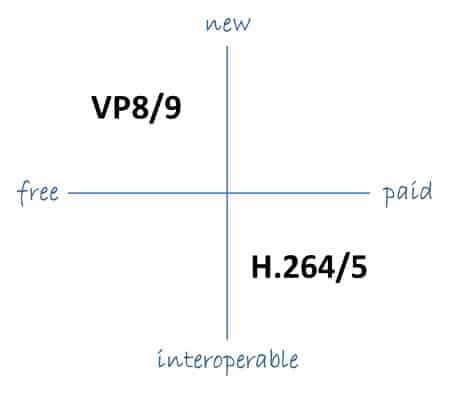
H.264, also known as AVC (Advanced Video Coding), has been the dominant codec in use for the past decade. It is widely supported by devices and software and offers good compression while maintaining high video quality. However, H.265 (HEVC) is slowly taking over. It is a newer and more advanced codec that offers better compression ratios, which means smaller file sizes with the same quality as H.264. H.265 is also better at handling high-resolution videos, making it a good choice for 4K and 8K videos. However, it requires more processing power to decode, which may be an issue on older devices.

Personally, I have found that H.265 delivers noticeably better quality than H.264 for the same file size. It is especially noticeable in high-motion scenes like action movies or sports. However, it does require more processing power, so make sure your device can handle it before choosing it as your preferred codec.

VP9: The New Kid on the Block

VP9 is a newer codec developed by Google and is designed to be a royalty-free alternative to H.265. It offers better compression than H.264 while maintaining the same video quality. It is also highly efficient at handling high-resolution videos, making it a good choice for 4K and 8K videos. However, its adoption has been slow due to its lack of support in many devices and software. It also requires more processing power to decode than H.264.

One of my personal experiences with VP9 was when I was trying to stream a 4K video on my laptop. I noticed that the video was buffering a lot and the quality was not as good as I expected. After some research, I found out that the video was encoded with VP9, which my laptop did not support. I had to switch to H.264 to get smooth playback.

Conclusion: Choosing the Right Video Codec

Choosing the right video codec is crucial for ensuring smooth video playback and high video quality. H.264 is still a solid choice for most situations, but H.265 and VP9 offer better compression and handling of high-resolution videos. However, they require more processing power and may not be supported by all devices and software. Make sure to choose the codec that best suits your needs and device capabilities.

In conclusion, video codecs are an essential part of our digital lives, and choosing the right one can make all the difference in our video-watching experience. Always keep in mind the pros and cons of each codec and make an informed decision based on your needs.