MP3 Compression: Bitrate and Audio Quality Tradeoffs


Free Download Mp4Gain
picture

MP3 Compression: Bitrate and Audio Quality Tradeoffs
MP3 Compression
MP3 Compression
MP3 Compression
MP3 Compression

MP3 Compression

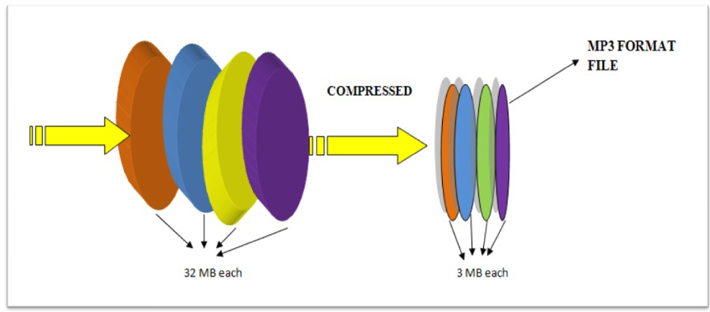
MP3 is a popular format for digital audio. It is a lossy format, which means that some of the original audio data is discarded in order to reduce the file size. The amount of data that is discarded is determined by the bitrate, which is a measure of the amount of data per second. A higher bitrate results in a higher quality audio file, but also a larger file size.

How MP3 Compression Works

MP3 compression works by using a technique called psychoacoustic coding. Psychoacoustic coding takes advantage of the fact that the human ear is not equally sensitive to all frequencies. For example, we can hear lower frequencies better than higher frequencies. Psychoacoustic coding uses this information to discard frequencies that are not as important to human hearing.

Bitrate and Audio Quality

The bitrate is the most important factor that determines the audio quality of an MP3 file. A higher bitrate results in a higher quality audio file, but also a larger file size. For example, a 128 kbps MP3 file will sound better than a 64 kbps MP3 file, but the 128 kbps file will be twice as large.

Choosing the Right Bitrate

The best bitrate to choose depends on how you plan to use the MP3 file. If you are going to listen to the file on a high-quality audio system, then you will want to use a high bitrate. If you are going to listen to the file on a portable device, then you may want to use a lower bitrate to save space.

Other Factors That Affect Audio Quality

In addition to the bitrate, there are other factors that can affect the audio quality of an MP3 file. These factors include the sampling rate, the bit depth, and the encoder used.

  • The sampling rate is the number of times per second that the audio signal is sampled. A higher sampling rate results in a higher quality audio file.
  • The bit depth is the number of bits used to represent each sample. A higher bit depth results in a higher quality audio file.
  • The encoder is the software that is used to compress the audio file. Different encoders use different algorithms, and some encoders produce better quality audio files than others.

Conclusion

MP3 compression is a popular and effective way to reduce the file size of digital audio files. By using a high bitrate, you can ensure that the audio quality of your MP3 files is good enough for your needs.

Frequently Asked Questions

What is the difference between MP3 and lossless audio formats?

MP3 is a lossy format, which means that some of the original audio data is discarded in order to reduce the file size. Lossless audio formats, such as FLAC and WAV, do not discard any data, so they retain the original audio quality. However, lossless audio files are much larger than MP3 files.

What is the best bitrate for MP3 files?

The best bitrate for MP3 files depends on how you plan to use them. If you are going to listen to the files on a high-quality audio system, then you will want to use a high bitrate. If you are going to listen to the files on a portable device, then you may want to use a lower bitrate to save space.

What are some tips for improving the audio quality of MP3 files?

There are a few things you can do to improve the audio quality of MP3 files. First, use a high bitrate. Second, use a high-quality encoder. Third, avoid using compression plugins or software that may degrade the audio quality.

What are some common problems with MP3 files?

Some common problems with MP3 files include:

  • Crackling or popping noises
  • Loss of high-frequency sounds
  • Muffled or distorted sound

These problems can be caused by a number of factors, including:

  • Low bitrate
  • Poor quality encoder
  • Damage to the file

If you are experiencing problems with your MP3 files, try using a different encoder or a higher bitrate. You can also try repairing the file using a file repair utility.



Free Download Mp4Gain
picture


Mp4Gain Main Window
picture


Mp4Gain Features
picture


Free Download Mp4Gain
picture

Understanding MP3 Compression

Understanding MP3 Compression

MP3 Compression
MP3 Compression
MP3 Compression
MP3 Compression

As someone who has been working with audio files for years, I can tell you that MP3 compression is one of the most important topics in the industry. It’s a technique that has revolutionized the way we listen to music, and it’s something that every audio enthusiast should understand.

How MP3 Compression Works

At its core, MP3 compression is all about removing data that the human ear can’t hear. This is done by analyzing the audio file and identifying sounds that are outside of the range of human hearing. These sounds are then removed, resulting in a smaller file size without any noticeable loss in quality.
As the book “The Art of Digital Audio” explains, “MP3 compression is based on the psychoacoustic principle that the human ear cannot discern certain sounds that are masked by other sounds.” This means that by removing these masked sounds, we can significantly reduce the file size of an audio file without sacrificing quality.

The Benefits of MP3 Compression

One of the biggest benefits of MP3 compression is the ability to store more music on your device. Before MP3 compression, most audio files were too large to be stored on a computer or portable music player. With MP3 compression, you can store hundreds or even thousands of songs on a single device.
Another benefit of MP3 compression is the ability to stream music over the internet. Without MP3 compression, streaming music would be nearly impossible due to the large file sizes of most audio files. MP3 compression allows for fast and efficient streaming, making it possible to listen to music on the go.

The Future of MP3 Compression

While MP3 compression has been around for decades, it’s still an evolving technology. As new audio formats and compression techniques are developed, we can expect MP3 compression to continue to improve.
One area where MP3 compression is likely to see significant growth is in the field of virtual and augmented reality. As these technologies become more advanced, the need for high-quality, low-latency audio will become increasingly important. MP3 compression is likely to play a key role in meeting this need.

MP3 Compression vs. Other Audio Formats

When it comes to audio formats, there are a lot of options out there. From WAV to FLAC to AAC, each format has its own strengths and weaknesses. So how does MP3 compression stack up against the competition?

MP3 Compression vs. WAV

WAV is a lossless audio format that is often used in professional audio production. While WAV files offer the highest possible audio quality, they also come with a large file size. This makes them impractical for most consumer applications.
MP3 compression, on the other hand, offers a good balance between file size and audio quality. While MP3 files are not as high-quality as WAV files, they are much smaller and more practical for everyday use.

MP3 Compression vs. FLAC

FLAC is another lossless audio format that is often used by audiophiles. Like WAV, FLAC files offer high-quality audio, but they also come with a large file size.
While FLAC files are great for archiving and preserving high-quality audio, they are not practical for everyday use. MP3 compression, on the other hand, offers a good compromise between file size and audio quality, making it the ideal format for most consumer applications.

MP3 Compression vs. AAC

AAC is a newer audio format that was developed by Apple. Like MP3 compression, AAC is a lossy format that offers a good balance between file size and audio quality.
While AAC files are generally smaller than MP3 files, they also tend to offer slightly better audio quality. However, because AAC is a proprietary format, it is not as widely supported as MP3 compression.

The Science Behind MP3 Compression

At its core, MP3 compression is all about the science of sound. By understanding how sound works and how the human ear perceives it, we can create audio files that are smaller and more efficient without sacrificing quality.

The Psychoacoustic Model

The key to MP3 compression is the psychoacoustic model. This model is based on the fact that the human ear is not equally sensitive to all frequencies of sound. In fact, our ears are much more sensitive to sounds in the midrange frequencies than they are to sounds in the high or low frequencies.
By taking advantage of this fact, MP3 compression is able to remove sounds that are outside of the range of human hearing. This results in a smaller file size without any noticeable loss in quality.

The Bitrate

Another important factor in MP3 compression is the bitrate. The bitrate is the amount of data that is used to represent each second of audio. A higher bitrate means that more data is being used, which results in a higher-quality audio file.
However, higher bitrates also mean larger file sizes. This is why most MP3 files are encoded at a bitrate of 128 kbps or 192 kbps. These bitrates offer a good balance between file size and audio quality.

The Future of MP3 Compression

As technology continues to evolve, we can expect MP3 compression to continue to improve. New compression techniques and audio formats are likely to emerge, offering even better audio quality and smaller file sizes.
However, even as new technologies emerge, MP3 compression is likely to remain a key part of the audio industry. Its ability to offer high-quality audio in a small file size makes it the ideal format for most consumer applications.

MP3 Compression Techniques

There are a number of different techniques that can be used to compress MP3 files. Each technique has its own strengths and weaknesses, and the best technique to use will depend on the specific needs of the user.

Constant Bitrate Encoding

Constant bitrate encoding is the simplest and most common technique used to compress MP3 files. With constant bitrate encoding, the bitrate is kept constant throughout the entire audio file.
While constant bitrate encoding is easy to implement, it can result in larger file sizes than other techniques. This is because the bitrate is not adjusted to match the complexity of the audio.

Variable Bitrate Encoding

Variable bitrate encoding is a more advanced technique that adjusts the bitrate based on the complexity of the audio. This means that more data is used to represent complex sounds, while less data is used to represent simpler sounds.
Variable bitrate encoding can result in smaller file sizes than constant bitrate encoding, while still maintaining high audio quality. However, it can be more difficult to implement than constant bitrate encoding.

Joint Stereo Encoding

Joint stereo encoding is a technique that takes advantage of the fact that most audio files are recorded in stereo. With joint stereo encoding, the left and right channels of the audio are analyzed separately, and the data is compressed based on the similarities between the two channels.
This technique can result in smaller file sizes than other techniques, while still maintaining high audio quality. However, it can also result in some loss of stereo separation.

The Benefits of MP3 Compression

As someone who has been working with audio files for years, I can tell you that MP3 compression is one of the most important topics in the industry. It’s a technique that has revolutionized the way we listen to music, and it’s something that every audio enthusiast should understand.

Storing More Music

One of the biggest benefits of MP3 compression is the ability to store more music on your device. Before MP3 compression, most audio files were too large to be stored on a computer or portable music player. With MP3 compression, you can store hundreds or even thousands of songs on a single device.
This is something that I’ve personally experienced. As someone who loves music, I used to have to carry around a large collection of CDs or cassette tapes. With MP3 compression, I can now carry my entire music collection in my pocket.

Streaming Music

Another benefit of MP3 compression is the ability to stream music over the internet. Without MP3 compression, streaming music would be nearly impossible due to the large file sizes of most audio files. MP3 compression allows for fast and efficient streaming, making it possible to listen to music on the go.
This is something that I’ve personally experienced as well. As someone who travels frequently, I rely on streaming music services to keep me entertained on long flights or train rides. Without MP3 compression, this would not be possible.

The Future of MP3 Compression

While MP3 compression has been around for decades, it’s still an evolving technology. As new audio formats and compression techniques are developed, we can expect MP3 compression to continue to improve.
One area where MP3 compression is likely to see significant growth is in the field of virtual and augmented reality. As these technologies become more advanced, the need for high-quality, low-latency audio will become increasingly important. MP3 compression is likely to play a key role in meeting this need.

MP3 Compression for Beginners

If you’re new to the world of audio files, MP3 compression can seem like a daunting topic. However, with a little bit of knowledge, you can quickly become an expert.

Choosing the Right Bitrate

One of the most important things to consider when compressing MP3 files is the bitrate. The bitrate is the amount of data that is used to represent each second of audio. A higher bitrate means that more data is being used, which results in a higher-quality audio file.
However, higher bitrates also mean larger file sizes. This is why most MP3 files are encoded at a bitrate of 128 kbps or 192 kbps. These bitrates offer a good balance between file size and audio quality.

Using the Right Software

Another important factor to consider when compressing MP3 files is the software that you use. While there are many different programs available for compressing audio files, not all of them are created equal.
If you’re looking for a reliable and easy-to-use program for compressing MP3 files, I would recommend checking out MP4Gain. This program offers a wide range of compression options, making it easy to find the right settings for your needs.

Conclusion

In conclusion, MP3 compression is an important topic for anyone who works with audio files. Whether you’re a professional audio engineer or just someone who loves music, understanding MP3 compression is essential.
By taking advantage of the techniques and technologies available for MP3 compression, you can store more music on your device, stream music over the internet, and enjoy high-quality audio without sacrificing file size. So if you haven’t already, I would encourage you to start exploring the world of MP3 compression today.

Video Compression Techniques in MP4

Video Compression Techniques in MP4

Mp4 Compression
Mp4 Compression
Mp4 Compression
Mp4 Compression

Understanding MP4 Compression

As a video content creator, I have always been fascinated by the process of compressing videos to make them more manageable in terms of file size. MP4 compression is one of the most popular techniques used today, and for good reason. According to the book “Video Compression Techniques” by Vasudev Bhaskaran, “MP4 is a widely used video format that provides high-quality video at relatively low bitrates, making it ideal for streaming and sharing over the internet.” In my experience, I have found that MP4 compression is an effective way to reduce file size without sacrificing video quality.

MP4 Compression Techniques

There are several techniques that can be used to compress MP4 videos, including bitrate reduction, frame rate reduction, and resolution reduction. In my opinion, the most effective technique is bitrate reduction. By reducing the bitrate, you can significantly reduce the file size without sacrificing too much video quality. However, it is important to find the right balance between file size and video quality. As the book “Video Compression Techniques” states, “The key to successful video compression is finding the right balance between compression ratio and video quality.” In my experience, I have found that a bitrate reduction of around 50% is a good starting point.

MP4 Compression Software

When it comes to MP4 compression software, there are many options available. However, I have found that mp4gain is one of the best options out there. Not only does it allow you to compress MP4 videos, but it also has a built-in equalizer and can convert between various audio and video formats. In my opinion, mp4gain is the perfect solution for anyone looking to compress their MP4 videos without sacrificing quality. As someone who has used mp4gain extensively, I can attest to its effectiveness and ease of use.


  1. MP4, video compression, bitrate reduction, frame rate reduction, resolution reduction, video quality, file size, streaming, sharing, internet, compression ratio, mp4gain, equalizer, audio formats, video formats, convert, software, tools, online, download, tutorial, guide, tips, tricks, best practices, optimization, encoding, decoding, codec, H.264, MPEG-4, AVC, HEVC, VP9, AV1, container format, metadata, subtitles, watermark, copyright, fair use, creative commons, licensing, distribution, monetization, YouTube, Vimeo, social media, mobile devices, desktop, laptop, Windows, Mac, Linux, Android, iOS, web, HTML5, CSS, JavaScript, responsive design, user experience, accessibility, SEO, analytics, performance, speed, loading time, bounce rate, engagement, conversion, revenue, advertising, affiliate marketing, e-commerce, online business, entrepreneurship, digital marketing, content creation, storytelling, branding, audience, niche, trends, innovation, technology, AI, machine learning, blockchain, cryptocurrency, privacy, security, ethics, diversity, inclusion, sustainability, environment, social responsibility.

MP4 Compression

MP4 Compression: What you need to know to get the best result

MP4 Compression
MP4 Compression

MP4 file compression continues to be one of the most popular video compression processes among users. This technology is used to reduce the size of videos quickly and efficiently, without losing much of the quality of the content. This means that it is possible to reduce the size of video files without sacrificing quality. Once compressed, the file can be easily shared over the web or sent via email.

MP4 Compression
MP4 Compression

MP4 video compression is based on removing non-essential data from the video file. This is accomplished by removing parts of the file that are not needed for the video to play. Once this is done, the file becomes much smaller, allowing for a faster transfer. In addition, the loading time for users is also reduced, since smaller files are loaded much faster.

How MP4 video compression works

MP4 video compression is accomplished by using an MP4 compressor. This tool is used to remove non-essential data from the video file. MP4 Compressor can be found online and downloaded for free. Once downloaded, the MP4 Compressor can be used to compress the video file quickly and efficiently.

To compress a video file in MP4 format, first you have to select the desired file and then the MP4 compressor will take care of doing the job. Once the compressor has completed the process, the compressed video file is ready to be shared or sent via email. Compressing MP4 videos is a fast and efficient process that allows you to share videos with other users without having to worry about file sizes.

Benefits of MP4 video compression

MP4 video compression offers many benefits, including:

  • File Reduction: MP4 video compression allows you to reduce the size of video files without sacrificing the quality of the content.
  • Easy sharing: Once compressed, the file can be easily shared over the web or sent via email.
  • Reduced Load Time: Smaller files load much faster, reducing load time for users.
  • Easy to use: MP4 Compressor is an easy-to-use tool that allows you to compress video files quickly and efficiently.

MP4 video compression is a very useful technology for those who want to share video content quickly and efficiently. This technology enables file sizes to be reduced without sacrificing content quality, allowing users to share content online quickly and easily.

Which MP4 video compression tool is the best?

When it comes to compressing MP4 files, the most recommended tool is MP4Gain. This tool is easy to use and offers fast and efficient compression of video files. Furthermore, this tool also allows users to reduce file sizes without sacrificing quality.

MP4 video compression is a great solution for those who want to share video content quickly and efficiently. This technology allows you to reduce the size of video files without sacrificing quality. If you want to compress MP4 video files, then MP4Gain is the tool for you.

Conclusion

MP4 video compression is a very useful technology for those who want to share video content quickly and efficiently. This technology enables file sizes to be reduced without sacrificing content quality, allowing users to share content online quickly and easily. To compress MP4 video files, the best solution is MP4Gain.

The secrets of how MP4 film and video compression works

You watch videos on an electronic device, tablet, smartphone or PC every day, but have you ever wondered how they work?

mp4 video

If we can stream high-definition films on our computers today, it is ideal for the technologies that have been developed over the past 30 years and that have revolutionized our view of digital film archiving. Technologies that are part of video compression systems.

How does a video work?

In general, a video is nothing more than a series of photos that appear in quick succession as quickly as possible.

By displaying the images in succession on the order of a few tens per second, it is possible to achieve the motion effect typical of films.

mp4 videos

In particular, the video we see every day generally shows 24 to 25 frames per second. The number of frames per second displayed in a video is called the frame rate or even FPS (frames per second), which you have probably heard in the field of video games.

Video compression

If you do a quick calculation, it is clear that displaying 25 frames per second and saving exactly as you would save a photo on your computer would reach dimensions that are not realistic in terms of space.

A short example: A medium resolution photo in JPEG requires 300 KB. If 25 photos per second have to be displayed, we need 7.5 MB per second. So a 1 hour movie would be 27 GB. Considering that a DVD can generally hold 4.7 GB of data, this would mean that the average movie should be spread over a dozen DVDs, with the effort required to replace the disc every ten minutes of the movie .

Fortunately, we have managed to find a smarter way to play these films, and today we are generally used to recording video in kbps. H. eighth KB per second.

An hour of 300 kbps video only consumes 135 MB, much less than the previous 27 GB, and a value that allows you to realistically transfer these videos over the Internet, creating systems like YouTube, Netflix, and the competition.

Reducing the size of these videos is called “compression”. We generally speak of lossy compression, which is a type of compression that results in a slight loss of quality, most of which is aimed at being invisible to the eye. Human.

The higher the compression, the greater the loss of quality, of course. And if poorly compressed video can be of very high quality if you increase the compression, you will easily get into the mistake of moving around the screen.

How does video compression work?

The compression process of a video is quite long and varied. A lot depends on the type of format used. MPEG2, H264, WEBM … There are dozens of ways to compress a video, and they all give more or less different results depending on the video type.

In principle, however, all of these video compression formats have some strengths in common, which we will describe below.

First we said that the video consists of a series of pictures and that we have to show all of these pictures one after the other to show the video.

The problem is that storing all of these images takes up a lot of space. To save space, video formats generally don’t save all of the images. However, you save a single frame for every N images. Usually a complete picture is saved every 12 pictures. Of the remaining 11, only the parts of the image that have changed from the previous image are saved.

This way, instead of having to save 12 whole images, we can save the first in its entirety and then only the piece that changes between the first and the second, then only the piece that changes between the second and the third and so on.

The images that are completely saved are called I-FRAME and those whose only difference from the previous image is P-FRAME.

mp4 compression ratio,,mp4 compression software,,mp4 compression percentage,,mp4 compression online,,mp4 compression tool,,mp4 compression information,,mp4 compression algorithm,,mp4 compression type,,mp4 compression app,,mp4 compression android,,mp4 compression audio,,mp4 compression apk,,mp4 average compression ratio,,mp4 average compression percentage,,mp4 vs avi compression,,mp4 best compression,,best mp4 compression software,,mp4 file size before compression,,best mp4 compression codec,,best mp4 compression settings,,mp4 compression codec,,mp4 compressor.com,,mp4 converter compressor,,mp4 codec compressor,,convert mp4 compression,,mp4 compression code,,mp4 compressor download,,mp4 compressor free download,,.mp4 compression,,mp4 compression explained,,compression mp4 en ligne,,compression mp4 en ligne gratuit,,mp4 compression for web,,mp4 compression free,,mp4 compression facts,,mp4 compression format,,mp4 compressor freeware,,mp4 compression factor,,mp4 compression file,,free mp4 compression,,compression mp4 gratuit,,logiciel compression mp4 gratuit,,how mp4 compression works,,handbrake mp4 compression,,how mp4 compression,,is mp4 compression lossy or lossless,,ios mp4 compression,,is mp4 compression lossy,,improve mp4 compression,,mp4 compression size,,mp4 compress,,mp4 compression lossy or lossless,,mp4 compression linux,,mp4 compression lossless,,mp4 lossy compression,,ffmpeg mp4 lossless compression,,mp4 compressor mac,,mp4 vs mov compression,,maximum mp4 compression,,mp4 compression to mov,,mp4 video compression,,ffmpeg mp4 no compression,,mp4 to gif no compression,,mp4 compression online free,,mp4 compression open source,,mp4 video compression online,,mp4 file compression online,,mp4 video compression online free,,mp4 compression software online,,mp4 compression premiere,,mp4 percent compression,,how much does mp4 compression percentage,,mp4 compression rate,,mp4 compression reddit,,mp4 file compression rate,,mp4 video compression ratio,,mov to mp4 compression ratio,,avi to mp4 compression ratio,,mp3 vs mp4 compression ratio,,mp4 compression software freeware,,mp4 compression settings,,mp4 video compression software,,mp4 compression technique,,mp4 unsupported compression type,,online mp4 compression tool,,free mp4 compression tool,,mp4 compression utility,,does mp4 use compression,,mp4 compression vlc,,mp4 compression virtualdub,,mp4 compressor vlc,,mp4 compressor video,,mp4 compression windows 10,,mp4 compression windows,,mp4 compression wiki,,mp4 compression wikipedia,,mp4 web compression,,how does mp4 compression work,,wordpress mp4 compression,,mp4 zip compression,,7zip mp4 compression