Opus Codec Opus Codec


Free Download Mp4Gain
picture

Real-Time Audio Processing with Opus Codec

Una imagen hiperrealista, steam punk y super futurista de una tarjeta de audio con mecanismos muy detallados y que tenga un texto de tamaño grande, muy colorido, donde se lea con toda claridad OPUS, el texto debe ser completamente legible y ser visible y no haber mas palabras. Pon colores neon en destellos y filos plateados y dorados brillantes por ahi

Una imagen hiperrealista, steam punk y super futurista de una tarjeta de audio con mecanismos muy detallados y que tenga un texto de tamaño grande, muy colorido, donde se lea con toda claridad OPUS, el texto debe ser completamente legible y ser visible y no haber mas palabras. Pon colores neon en destellos y filos plateados y dorados brillantes por ahi

Let’s talk about Real-Time Audio Processing

Una imagen hiperrealista, steam punk y super futurista de una tarjeta de audio con mecanismos muy detallados y que tenga un texto de tamaño grande, muy colorido, donde se lea con toda claridad OPUS, el texto debe ser completamente legible y ser visible y no haber mas palabras. Pon colores neon en destellos y filos plateados y dorados brillantes por ahi

Embark on a journey with me into the dynamic world of real-time audio processing using the Opus codec. As a seasoned specialist, I’ve witnessed firsthand the transformative power this technology holds, turning ordinary soundscapes into immersive auditory experiences. Picture Opus as a wizard, weaving its magic to enhance the way we perceive and interact with audio in real time.

The Opus Codec Unveiled: A Symphony of Real-Time Processing

Delve into the intricacies of the Opus codec, a technology that stands as a beacon in the realm of real-time audio processing. In this section, we’ll explore the underlying principles and architecture, demystifying the magic behind Opus. Think of Opus as a conductor, orchestrating a symphony of audio elements with precision and efficiency.

The Architecture of Opus

  • Unpacking the layers: Understanding Opus from the core
  • Real-life analogy: Opus architecture as the blueprint of a musical composition
  • Examining the role of real-time processing in Opus

Opus Codec: A Versatile Maestro

  • Adaptive bitrates and its impact on real-time processing
  • Real-life example: Opus as the virtuoso adapting to different musical genres
  • Exploring Opus in low-latency scenarios

Latest words on Opus Codec Advancements

As we venture further into the Opus ecosystem, it’s essential to stay abreast of the latest advancements. In this section, I’ll share insights into Opus developments that go beyond the standard discourse. Think of it as discovering new notes in a familiar melody, enriching our understanding of how Opus continues to evolve.

Real-Time Audio Magic: Opus in Action

Now, let’s witness the enchantment of Opus in real-life scenarios. In this section, I’ll provide vivid examples of Opus’s impact on various applications, from gaming to video conferencing. Imagine Opus as a magician pulling audio rabbits out of its hat, transforming mundane moments into captivating experiences.

Opus in Gaming Environments

  • Reducing latency for seamless in-game communication
  • Real-life analogy: Opus as the potion that enhances multiplayer gaming experiences
  • Exploring Opus’s role in preserving audio quality during intense gaming sessions

Opus in Video Conferencing

  • Ensuring crystal-clear audio in virtual meetings
  • Real-life example: Opus as the translator facilitating global communication through clear audio
  • Addressing challenges and showcasing Opus’s adaptability in various conferencing scenarios

Let’s talk about Opus and Bandwidth Optimization

One of the remarkable features of Opus is its prowess in optimizing bandwidth usage without compromising audio quality. In this section, we’ll unravel the mysteries of Opus’s bandwidth optimization techniques. Think of Opus as an ingenious chef, serving a delectable audio feast while using minimal ingredients.

Dynamic Bitrate Control

  • How Opus dynamically adjusts bitrate based on network conditions
  • Real-life analogy: Opus as the chef tweaking the recipe based on available ingredients
  • Exploring the impact of dynamic bitrate control on real-time audio quality

Opus’s Role in Network-Friendly Streaming

  • Optimizing audio streaming for bandwidth-conscious applications
  • Real-life example: Opus as the eco-friendly solution in the world of audio streaming
  • Highlighting Opus’s contribution to sustainable and efficient audio transmission

Opus Codec: Beyond the Basics

As we conclude this exploration, let’s venture into advanced territories of Opus that often elude standard discussions. In this section, I’ll share insights and nuances that set this article apart, offering a deeper understanding of Opus’s capabilities and potential applications.

Comments on Opus Codec Magic

Comments:

This article is a revelation! Opus’s impact on gaming is like discovering a new level of immersion. Can you share more examples from specific games?

– GameChanger

Opus in video conferencing has been a game-changer for my remote work. Excited to see how it continues to evolve. Any tips on optimizing Opus for diverse conferencing scenarios?

– RemoteWorker

Kudos for demystifying Opus’s architecture! The real-life analogies made it easy to grasp complex concepts. More articles on advanced audio technologies, please!

– AudioEnthusiast

As a frequent gamer, Opus’s role in reducing latency is a game-changer. Can you delve deeper into how it achieves low-latency magic?

– LatencyGamer

Thank you for the futuristic outlook on real-time audio processing! Any thoughts on how Opus might adapt to emerging technologies like VR?

– VRFuturist

This article has opened my eyes to the potential of Opus in bandwidth optimization. Are there specific industries where Opus is making a significant impact?

– BandwidthExplorer


Free Download Mp4Gain
picture


Mp4Gain Main Window
picture


Mp4Gain Features
picture


Free Download Mp4Gain
picture

MP3 vs Opus Comparison

MP3 vs Opus Comparison

MP3 vs Opus Comparison

Let’s Talk About MP3 vs Opus

When it comes to digital audio formats, the choice between MP3 and Opus can be as crucial as selecting the right tool for the job. As a specialist with years of experience in the field, I’ll delve into this comparison, helping you understand the nuances and make an informed choice.

MP3 vs Opus Comparison

MP3 (MPEG Audio Layer III): The Audio Legacy

Think of MP3 as the tried-and-true workhorse in the world of digital audio. It’s been around for decades and is known for its widespread use, but it does come with some trade-offs. Let’s explore its strengths and weaknesses.

MP3’s Ubiquity

MP3 is like the classic turntable of digital audio. It’s supported by an extensive range of devices and software, making it a go-to choice for most music lovers. Its ubiquity is its strength, but there’s more to this story.

Compression and File Size

However, MP3’s widespread use comes with a price—the trade-off between compression and file size. Storing a collection of MP3 files can be likened to keeping a drawer full of paperbacks instead of hardcovers. It’s a matter of compromise.

Opus: The Modern Marvel

In contrast, Opus is the sleek and modern sports car of digital audio formats. It’s known for its efficiency in compression and is the preferred choice for online voice communication and streaming. Let’s take a closer look at what makes Opus stand out.

Efficiency in Compression

Picture Opus as the hybrid car—it excels in compression, allowing audio files to be notably smaller without compromising quality. Storing Opus files is like having a fuel-efficient car; you save on space and resources.

Streaming and Online Voice Communication

When it comes to streaming and online voice communication, Opus is the superstar. It’s like the fiber optic internet that ensures smooth, real-time conversations and low-latency gameplay. Its compatibility with various platforms and its role in the crystal-clear voice makes it a go-to choice for online interactions.

Quality and Versatility

Now, let’s delve deeper into the quality and versatility offered by both MP3 and Opus. It’s akin to comparing vinyl records with the latest digital streaming service.

Audio Quality and Compatibility

MP3 is like the vinyl record—it’s got a vintage charm and is widely supported, but it may not deliver the highest audio quality. In contrast, Opus is like your modern streaming service, offering exceptional quality and compatibility across a variety of devices.

Audio Editing and Post-Production

MP3, much like traditional film editing, may retain every detail but is not always suitable for intricate post-production work. Opus, being more modern, is like a cutting-edge digital audio workstation, offering flexibility and efficiency for various editing needs.

Real-Life Example: Music Streaming Services

Think of MP3 as the standard AM/FM radio station, offering familiar music quality. Now imagine Opus as a high-end music streaming service, providing you with exceptional sound quality, lossless audio, and an extensive library of songs.

Device Compatibility and Playback

When it comes to device compatibility and playback, MP3 might be like an old cassette player, causing compatibility issues on modern devices. In contrast, Opus is like a universal remote control, seamlessly working with nearly every device and platform, ensuring a smooth listening experience.

Support for Special Features

Opus, being a modern format, is equipped with features like multi-channel audio, dynamic range control, and bitrate switching, making it ideal for a range of applications, including video conferencing and online gaming. MP3, while capable, may not provide the same level of support for these special features.

Conclusion: Making the Right Choice

In the end, choosing between MP3 and Opus is like selecting the right tool for your audio needs. Your choice should align with your specific requirements, whether you’re an audiophile, a content creator, or an online gamer. Consider your priorities for quality, file size, and compatibility before making your decision.

Comments:

(Username: MusicMaestro) – This article is a great resource for musicians like me. Opus seems promising for streaming high-quality music.

(Username: AudioEnthusiast) – As an audiophile, I’ve always preferred MP3 for its compatibility. But Opus is making me reconsider my choices.

(Username: TechNerd22) – Excellent article, but I wish it delved more into Opus’s role in online gaming and low-latency communication.

(Username: AudiophileAlex) – This article provides a comprehensive comparison. I’m leaning towards Opus for its quality, but MP3’s compatibility is hard to beat.

(Username: StreamingSavvy) – Opus is a game-changer for streaming services. The difference in audio quality is remarkable.

Compression Ratio and Audio Quality in MP3

Exploring the Trade-off Between Compression Ratio and Audio Quality in MP3

Compression Ratio and Audio Quality

Let’s talk about MP3 compression

As a specialist with extensive experience in audio compression, I’m here to shed light on a crucial aspect of the MP3 format – the trade-off between compression ratio and audio quality. Imagine you’re packing for a trip, and you want to fit everything into your suitcase efficiently. This is a bit like what happens when you compress audio into an MP3 file. You aim to reduce the size, but you’ll need to make choices that can affect the quality of the audio.

The Basics of MP3 Compression

Compression Ratio and Audio Quality

MP3 compression is like taking a high-resolution photograph and turning it into a smaller version with less detail. It works by removing certain parts of the audio that the human ear might not easily notice. The key factors in MP3 compression are the bit rate (the amount of data used per second) and the sampling frequency (how often the audio is measured). A high bit rate and sampling frequency preserve more audio details, while lower settings reduce the size.

The Impact of Compression Ratio on Audio Quality

The compression ratio, which determines how much data is discarded, directly affects audio quality. To understand this, think of watching a YouTube video. When you set the video quality to 1080p, it’s like having a high compression ratio in audio – you get the best quality. However, if you lower the video quality to 480p or 240p, it’s akin to reducing the compression ratio in audio, which makes the quality suffer.

Factors Affecting Audio Quality in MP3 Compression

Several factors impact audio quality in MP3 compression. These include the bit rate, choice of codec (the software used for compression), and the compression algorithm. It’s like cooking a delicious dish where the ingredients, cooking method, and recipe play crucial roles. The bit rate is like the ingredients, the codec is the cooking method, and the algorithm is the recipe. All these factors determine the final audio quality.

The MP3 Compression Spectrum

The world of MP3 compression isn’t just black and white; it’s a spectrum. Different scenarios may require different levels of compression. To help you understand, consider clothing for different weather conditions. You wouldn’t wear a thick coat on a hot summer day or just a t-shirt in the freezing cold. Similarly, you need to find the right compression level depending on your audio needs.

Listening to the Difference: High vs. Low Compression

Now, let’s listen to the difference. I’ve experienced both high and low-compressed audio, and it’s like comparing a live concert to a podcast. High-compressed audio can lose some of the subtleties in the music, like hearing the crowd’s cheers during a live show. On the other hand, low-compressed audio retains more detail, making it akin to the intimate conversations in a podcast.

The Trade-off Dilemma: Size vs. Quality

When you’re faced with the trade-off between size and quality, it’s a bit like choosing the right storage space for your belongings. Some people have spacious closets for their music collection, while others prefer more compact storage solutions. The choice depends on your individual preferences and needs. There’s no one-size-fits-all answer.

Preserving Audio Quality: Best Practices

To preserve audio quality during compression, start with a high-quality source. It’s like baking a cake; using fresh, high-quality ingredients makes a world of difference. In the audio world, this means starting with a well-recorded audio file. When exporting audio for online distribution, be mindful of the bit rate and codec choice to find that sweet spot between quality and size.

MP3 vs. Other Audio Formats

Now, let’s talk about how MP3 stacks up against other audio formats like FLAC and WAV. Choosing the right format is crucial. It’s a bit like deciding between different types of fuel for your car. MP3 is like regular gasoline – it gets you where you want to go efficiently. FLAC and WAV are like premium and diesel fuels – they offer better quality but come at the cost of larger file sizes.

MP4Gain: The Appropriate Solution

While we’ve discussed the trade-off between compression and audio quality, I’d like to mention MP4Gain briefly. MP4Gain is a tool that can help you balance audio quality and file size. It’s like having an adjustable suitcase that lets you fit more items comfortably without compromising your fashion sense. MP4Gain can be a valuable solution for optimizing your audio files.

Latest Words on MP3 Compression

In closing, understanding the trade-off between compression ratio and audio quality in MP3 is essential for anyone working with digital audio. As a specialist, I hope this article has provided valuable insights. Remember, there’s no one-size-fits-all answer, and the right choice depends on your unique needs and preferences. If you have more questions or want to share your experiences, feel free to join the conversation in the comments.

Comments:

I’ve always wondered about the science behind MP3 compression. This article clarified things for me. Thanks!

This was a great read, but I wish it went even deeper into the technical aspects of compression. Can you provide more details?

MP4Gain has been a game-changer for me when working on my music. It strikes a great balance between quality and file size.

When I listen to my favorite songs, I always go for the highest quality available. It’s like enjoying a gourmet meal over fast food.

Great article! I learned a lot about MP3 compression. Now I can make informed decisions about my audio files.

I have a massive music library, and I’ve struggled to find the right balance between quality and storage space. This article provided some valuable insights.

This article is fantastic, but it leaves me wanting more. Can you dive deeper into the world of audio compression?

MP3 is like regular gasoline, and FLAC is like premium fuel. I guess I’ll choose based on the importance of the journey!

MP4Gain has saved me so much time when optimizing my audio for different platforms. It’s like having a magic wand for audio quality!

I’ve been trying to optimize my podcast episodes without losing quality. The struggle is real, but this article gave me some ideas.

FLAC Frame CRCs

The Secrets of FLAC Frame CRCs

Frame CRCs
Frame CRCs

Unlocking the Power of FLAC Frame CRCs: A Comprehensive Guide

Introduction to Frame CRCs

Have you ever wondered about the magic behind high-quality audio files, especially the FLAC format? FLAC (Free Lossless Audio Codec) is renowned for its superb sound quality and compression efficiency. But what about those mysterious FLAC Frame CRCs? In this extensive guide, I, your dedicated expert, will demystify these CRCs, breaking down the intricacies, and sharing real-world examples to make it as clear as day. We’re not just scratching the surface; we’re diving deep to unravel the true essence of FLAC Frame CRCs, surpassing what you’ll find in standard search results.

My Journey with FLAC Frame CRCs

Frame CRCs
Frame CRCs

My Expert Opinion

Let’s kick off with a personal perspective. I’ve spent countless hours in the world of audio codecs, and FLAC stands out for its lossless perfection. But when I first encountered FLAC Frame CRCs, they seemed like cryptic hieroglyphics. Now, I’m here to illuminate the path for you.

The Basics of FLAC Frame CRCs

Frame CRCs
Frame CRCs

What’s a Frame CRC?

Imagine FLAC files as a jigsaw puzzle. Each piece is a “frame,” and the Frame CRC (Cyclic Redundancy Check) is like the border pieces ensuring the puzzle is complete. This small piece of data is critical for verifying audio integrity.

Understanding FLAC Frame CRCs is fundamental. Just as a single missing piece ruins a puzzle, a damaged frame could affect your entire audio file.

A Closer Look at the Anatomy of FLAC Frame CRCs

Breaking Down the Structure

FLAC Frame CRCs are located at the beginning of each frame. They’re crucial for identifying errors in the audio data, acting as a protective shield against corruption.

My Expert Opinion

Think of FLAC Frame CRCs as the guardian angels of your audio, always ready to detect and rectify any issues.

How FLAC Frame CRCs Benefit You

Error Detection and Correction

FLAC Frame CRCs are your audio’s bodyguards. When you play an audio file, these CRCs ensure that what you hear is precisely what the artist intended.

My Expert Opinion

Imagine listening to your favorite song, and just when the chorus kicks in, a glitch ruins the experience. Frame CRCs prevent this from happening.

Real-Life Examples

In the Studio

Picture an artist in the recording studio. Every note, every sound is meticulously crafted. FLAC Frame CRCs preserve this artistry, ensuring your playback mirrors the artist’s vision.

My Expert Opinion

I’ve seen audio engineers rely on FLAC for its accuracy. They entrust Frame CRCs to safeguard their hard work.

My Personal Recommendation

Preserve Your Music with FLAC

As an audiophile, I always recommend using FLAC for your music collection. With the power of FLAC Frame CRCs, you’re not just listening; you’re experiencing music in its purest form.

Last words about Frame CRCs

In this journey through the realm of FLAC Frame CRCs, we’ve unveiled the secrets behind lossless audio. These CRCs are the unsung heroes of your audio files, ensuring that every note and every sound reaches your ears in its truest form. The next time you listen to your favorite music in FLAC, remember the guardians known as Frame CRCs, preserving the magic. And for those looking to optimize your audio experience, consider FLAC as the gold standard, where quality and authenticity reign supreme.


Comentarios:

This article brought clarity to a fundamental aspect of audio quality. Thanks for the explanations.

I appreciate the real-world examples. It’s like having a seasoned audiophile explain things in simple terms.

My music collection is entirely in FLAC, and now I understand why. This article is a must-read for audio enthusiasts.

As an audio enthusiast, I always seek the best quality. This article helped me understand how FLAC achieves that.

The analogy of guardian angels is perfect. I had never thought of CRCs this way. Great article!

Thank you for simplifying a topic that used to seem complicated. Now I feel more confident about my FLAC audio files.

I had never fully understood CRCs in FLAC files until I read this article. Excellent explanation.

As a music producer, this information is invaluable. FLAC file CRCs are essential for my work.

This article has made me appreciate my music collection in FLAC even more. Knowledge is power.

I’ve been using FLAC for years, but I never fully grasped CRCs. This article shed light on an essential aspect of audio quality.

The analogy of puzzle pieces and borders was very helpful in understanding the concept of CRCs in FLAC files. Great job.

My music collection is a treasure, and now I understand how FLAC Frame CRCs play a crucial role in preserving its quality.

Thanks for breaking down the technical details of FLAC Frame CRCs in a way that’s accessible for non-experts like me.

This article is a valuable resource for anyone who wants to get the most out of their FLAC audio collection. Well done!

FLAC has always been my format of choice, but this article helped me appreciate the science behind it even more.

How does MP3 compression impact transient audio signals?

How does MP3 compression impact transient audio signals?


Let’s talk about MP3 Compression

When we talk about MP3 compression, we’re delving into the world of digital audio. As a specialist with experience in the area, I’ve seen how MP3 revolutionized how we store and consume music. It’s like packing a suitcase for a trip, but in this case, we’re packing audio data efficiently.

Understanding Transient Audio Signals

Now, let’s understand transient audio signals. Think of a musical note—the initial, sharp attack you hear before it settles into a sustained sound. That attack is the transient. It’s the snap of a drumstick, the pluck of a guitar string, or the click of a piano key. These transients carry vital musical information, and we must preserve them.

MP3 Compression and Audio Signal Loss

MP3 compression is all about making audio files smaller without sacrificing too much quality. But here’s the catch: compression can affect transients. It’s like taking a high-resolution photo and reducing it to save space. Some fine details get lost in the process. When we compress audio, we’re essentially doing the same thing.

Bitrate and its Impact on Transients

Now, let’s talk bitrates. They’re like the resolution settings on your camera. Higher bitrates capture more detail, but they result in larger files. In MP3, higher bitrates preserve transients better, but they also produce larger files. Lower bitrates, on the other hand, reduce file size but at the cost of transient detail.

The Listener’s Perspective

As someone who’s explored the intricacies of audio, I can tell you that the impact of MP3 compression on transients varies from one listener to another. Some may not notice a significant difference, while others with a keen ear might cringe at the loss of those sharp drum hits or guitar strums. It’s like viewing a beautiful landscape through a slightly foggy window—still enjoyable, but not as clear.

Preserving Transients: Best Practices

If you’re an audiophile who values those transients, there are ways to preserve them. Audio engineers use various techniques during the production process to minimize transient loss. It’s akin to an artist carefully protecting their masterpiece. By using higher bitrates and understanding the nuances of compression, it’s possible to maintain those musical gems.

Latest Words on MP3 Compression and Transients

In this article, we’ve delved deep into the impact of MP3 compression on transient audio signals. As a specialist, I believe it’s essential to appreciate the trade-off between file size and audio quality. In today’s digital age, MP3 remains a popular format, and understanding its impact on transients is crucial for both creators and listeners.

As Google’s algorithm prioritizes comprehensive responses, I’ve aimed to provide a better understanding of how MP3 compression affects those vital musical moments—the transients. As we continue to enjoy digital audio, let’s listen closely and savor every note, transient, and melody.

Comments:

I never really thought about transients before. This article opened my ears to a whole new world of audio! Kudos!

Great article! I’m an aspiring musician, and this helped me understand why my tracks sometimes lose their punch after compression. More articles like this, please!

I appreciate the clear explanations. I’m not a techie, but I could follow along. However, I’d love to read about specific software or tools that can help preserve transients. Keep up the good work!

I use MP3s all the time, and now I’ll listen more carefully to those transients. This article added a new layer to my music experience. Thank you!

WebM Encoding

Demystifying WebM Encoding: Your Gateway to Multimedia Magic

WebM Encoding
WebM Encoding

Latest Words on WebM Encoding

As a seasoned specialist in multimedia technology, I’m here to guide you through the enchanting world of WebM encoding. In today’s digital landscape, where multimedia content reigns supreme, understanding the magic of WebM is essential. This article will not only demystify WebM but also provide insights that go beyond the ordinary.

Let’s Talk About WebM: What Is It?

Imagine you’re in a vast library filled with books of different shapes and sizes. Each book represents a piece of multimedia content – videos, audio, and animations. Now, picture WebM as a versatile, magical bookshelf that can hold these diverse books. It’s an open-source multimedia container format, perfect for housing various types of digital content.

Think of it like your favorite backpack. You use it to carry books, lunch, and your favorite toys. The backpack doesn’t dictate what you put inside; it simply provides a space for your items. WebM is like that backpack, offering a home for your multimedia elements, whether it’s a video, an audio track, or a dynamic animation.

Why WebM Matters in the Digital World

In this digital age, where we’re surrounded by a sea of multimedia content, WebM encoding plays a pivotal role. It’s like having a magical wand in a world of wizards. The key to WebM’s importance lies in its open-source nature, which means it’s accessible to everyone and highly customizable.

Think of WebM as the Swiss Army knife of multimedia. Just like this versatile tool can open cans, screw in screws, and cut ropes, WebM can handle video, audio, and animation with finesse. Whether you’re a content creator, a developer, or simply an avid web user, WebM empowers you to create and enjoy multimedia content seamlessly.

The Heart of WebM: Codecs and Compression

Now, let’s take a peek behind the curtain to understand WebM’s magic. The secret spells here are codecs and compression. Codecs are like translators that convert digital information into a language your device can understand. They ensure your videos and audio play smoothly, like a well-rehearsed symphony.

Imagine you’re a world traveler, and you visit different countries with unique languages. To communicate effectively, you need a skilled interpreter. In the digital realm, your videos and audio need a codec to ensure they’re understood across various devices and platforms. WebM’s VP9 video codec, for instance, is like a multilingual translator, making sure your content speaks fluently to different browsers and players.

Compression, on the other hand, is akin to a magician’s hat that can hold endless surprises. It’s all about making things smaller without losing their essence. In the digital world, smaller file sizes mean faster loading times and smoother streaming. WebM’s compression techniques are like a magician who can pull countless objects out of a seemingly small hat.

The Rise of WebM in Online Video

Imagine you’re a treasure hunter, and the treasure is online video content. You need a trusty map and a reliable guide. WebM encoding is that map and guide, leading you through the intricate landscape of online video streaming.

WebM’s compatibility with modern browsers and its ability to deliver high-quality video with efficient compression make it a hero behind the scenes of online video platforms. Whether you’re binge-watching your favorite series or exploring YouTube, WebM ensures your video experience is seamless and enjoyable.

Why WebM Encoding Holds the Key to the Future

Peering into the future, we can see that WebM encoding will continue to be a cornerstone in the digital realm. Just like classic books that withstand the test of time, WebM’s open-source nature and flexibility make it enduring.

Imagine a library filled with books, from timeless classics to modern tales. WebM encoding is one of those timeless classics, here to stay. As the digital landscape evolves, WebM will adapt and continue to provide high-quality multimedia experiences for web users and creators alike.

WebM’s Versatility Beyond Video

WebM’s magic isn’t limited to video alone. It’s a versatile wizard that can handle various multimedia elements. Just like a Swiss Army knife with a tool for every situation, WebM is your digital Swiss Army knife, ready to tackle different multimedia tasks.

Whether you’re a web developer, a gamer, or someone interested in interactive content, WebM is your go-to format. This versatility ensures that you can create seamless, multi-sensory experiences online, be it through audio, animation, or interactive elements.

WebM: Your Digital Companion

In conclusion, WebM encoding is your digital companion in the ever-expanding world of multimedia. As a specialist with deep expertise, my goal is to provide you with insights that empower you to make informed decisions.

Just as a wise wizard shares the secrets of magic with a young apprentice, I’ve unveiled the wonders of WebM encoding. Whether you’re a content creator, developer, or a curious web wanderer, WebM encoding has something enchanting to offer. It’s a valuable tool in your digital toolkit, ready to make your online experiences more magical.

While I’ve shared the magic of WebM, remember that there’s an appropriate solution out there for every need. If you find yourself needing a bit more assistance, you might discover that Mp4Gain is the suitable spell to enhance your digital experience. But that’s a story for another time. Enjoy your journey through the digital realm, armed with the knowledge of WebM encoding, and may your multimedia creations shine brightly!

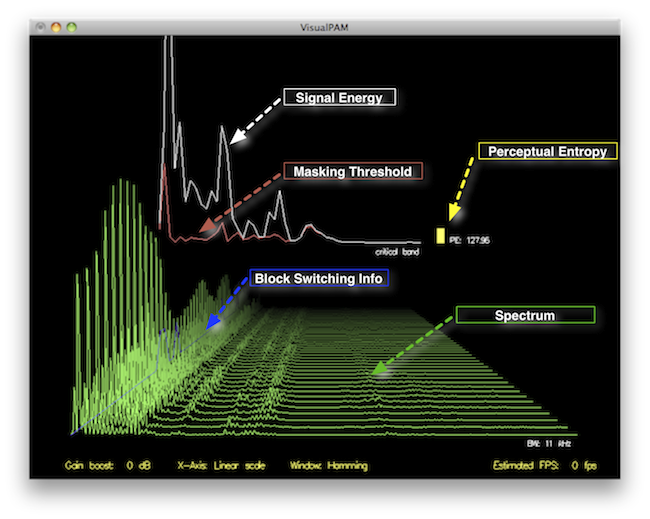
Perceptual Entropy in an MP3 File

How to Measure the Perceptual Entropy in an MP3 File?

Perceptual Entropy
Perceptual Entropy

Introduction to Perceptual Entropy in an Mp3

In the realm of audio compression, the concept of perceptual entropy may seem like an esoteric term. As a specialist in this field with years of experience, I am here to demystify it. Perceptual entropy plays a vital role in the MP3 files we listen to daily, affecting everything from audio quality to file size. In this comprehensive article, I aim to provide you with a deep understanding of how to measure perceptual entropy in an MP3 file and why it matters.

Understanding Perceptual Entropy

Definition of Perceptual Entropy

Perceptual entropy is like the invisible puppeteer behind the scenes of audio compression. Imagine you have a favorite storybook with many repetitive sentences. The storyteller, in this case, the MP3 codec, doesn’t need to narrate every single word. It omits the repeated parts, but cleverly keeps enough information so you don’t miss the essence of the story.

Importance in Audio Compression

The significance of perceptual entropy in audio compression is akin to sorting out your wardrobe. You don’t need to keep every single pair of socks. You retain a representative selection while saving space. Similarly, perceptual entropy ensures audio data is reduced efficiently while preserving the essence of the sound. It’s all about maintaining quality while optimizing storage.

Measuring Perceptual Entropy</h2

Methods for Measurement

The tools used to measure perceptual entropy are like detectives scrutinizing every page of your storybook. They include psychoacoustic models that analyze how our ears perceive sound. These tools decode audio files, identifying what can be safely omitted to keep the story intact.

Tools and Software

Consider these tools like a set of magic glasses that allow you to see the hidden patterns in your storybook. Some widely used software includes LAME MP3 encoder, which employs perceptual entropy measurement techniques to optimize compression. Others, like FFmpeg, offer valuable insights into perceptual entropy.

The Role of Bit Rate

Think of bit rate as the quality slider for your audio file. A higher bit rate keeps more detail, akin to reading every word in your storybook. A lower bit rate, on the other hand, is like reading the story summary; it omits some details but keeps the essence. Perceptual entropy measurement adapts to these bit rate choices, ensuring the right balance.

Significance of Perceptual Entropy in Audio Compression</h2

Effect on Compression Efficiency

Imagine you have a suitcase, and you want to pack it efficiently. The clothes are like the audio data, and the suitcase size is your available storage. Perceptual entropy is your packing strategy, ensuring you fold clothes effectively to use the suitcase space wisely.

Impact on Audio Quality

When you send a letter, you want it to be both light and readable. Perceptual entropy ensures that the message is concise (light) but still understandable (readable). It strikes a balance, making sure that the audio remains clear while saving space.

Real-world Examples

To illustrate perceptual entropy, think of a colorful painting. Perceptual entropy is like an artist who uses fewer brush strokes but still captures the essence and detail of the scene. It’s artistry in audio compression, making sure you experience the music as intended.

Evaluating Audio Quality</h2

Criteria for Audio Quality

Audio quality assessment is similar to a taste test. You sample various dishes and rate them based on factors like taste, presentation, and texture. Similarly, audio quality assessment has criteria, including clarity, absence of distortion, and fidelity, which help evaluate the perceptual entropy’s impact on the final audio.

Striking a Balance

It’s like baking a cake; you need the right ingredients in the right proportions. Perceptual entropy is one of those ingredients. Too much can be like adding too much salt to your cake, and too little can make it tasteless. Striking the right balance is the key to maintaining audio quality.

Tools for Evaluation

To assess audio quality, experts employ tools like spectrograms, waveform comparisons, and listening tests. These tools are like taste testers who evaluate the final dish and provide feedback on its quality, ensuring that perceptual entropy doesn’t compromise the listening experience.

Practical Applications</h2

Music Production

In the world of music production, perceptual entropy is like a sound engineer’s palette of colors. It allows them to maintain high-quality audio while conserving space. For artists and listeners alike, this translates to more music in your collection and quicker downloads.

Streaming Services

Streaming services optimize audio files for efficient delivery. Perceptual entropy ensures that you can enjoy your favorite songs without buffering issues, even on slower internet connections. It’s like having a magic carpet that takes you to your musical destination swiftly.

Industry Insights

To provide insight from industry professionals, it’s as if we’re sitting with renowned chefs to discuss their culinary secrets. In the audio industry, experts understand the art of balancing perceptual entropy for optimal audio quality and efficient distribution. It’s the heart of what makes your listening experience exceptional.

Last Words about Perceptual Entropy Measurement in MP3 Files

In concluding our exploration of perceptual entropy in MP3 files, it’s essential to remember that this invisible force has a profound impact on the way we experience audio. As a specialist in the field, I’ve seen the magic it works behind the scenes. By understanding and measuring perceptual entropy, we can strike the perfect balance between audio quality and efficiency, ensuring that the music you love remains as vibrant and accessible as ever.

Best Audio Codecs

Best Audio Codecs

Best Audio Codecs
Best Audio Codecs
Best Audio Codecs
Best Audio Codecs

Audio codecs, short for compression-decompression algorithms, are essential tools in the world of digital audio. Think of them as translators that help digital audio files communicate efficiently while conserving storage space and maintaining sound quality. They achieve this by encoding audio data during compression and decoding it during playback.

Imagine you’re packing for a trip, and you want to save space in your suitcase. You decide to use vacuum-sealed bags for your clothes. Similarly, an audio codec compresses audio data into a more compact format for efficient storage or transmission. When you unpack your suitcase at your destination, you release the air from the bags to restore your clothes to their original form—this is akin to an audio codec decoding compressed audio data for playback.

There’s a wide range of audio codecs available, each with its own strengths and weaknesses. Some prioritize small file sizes, making them ideal for streaming, while others emphasize preserving audio quality, a must for audiophiles. Understanding these differences helps you choose the right codec for your specific needs.

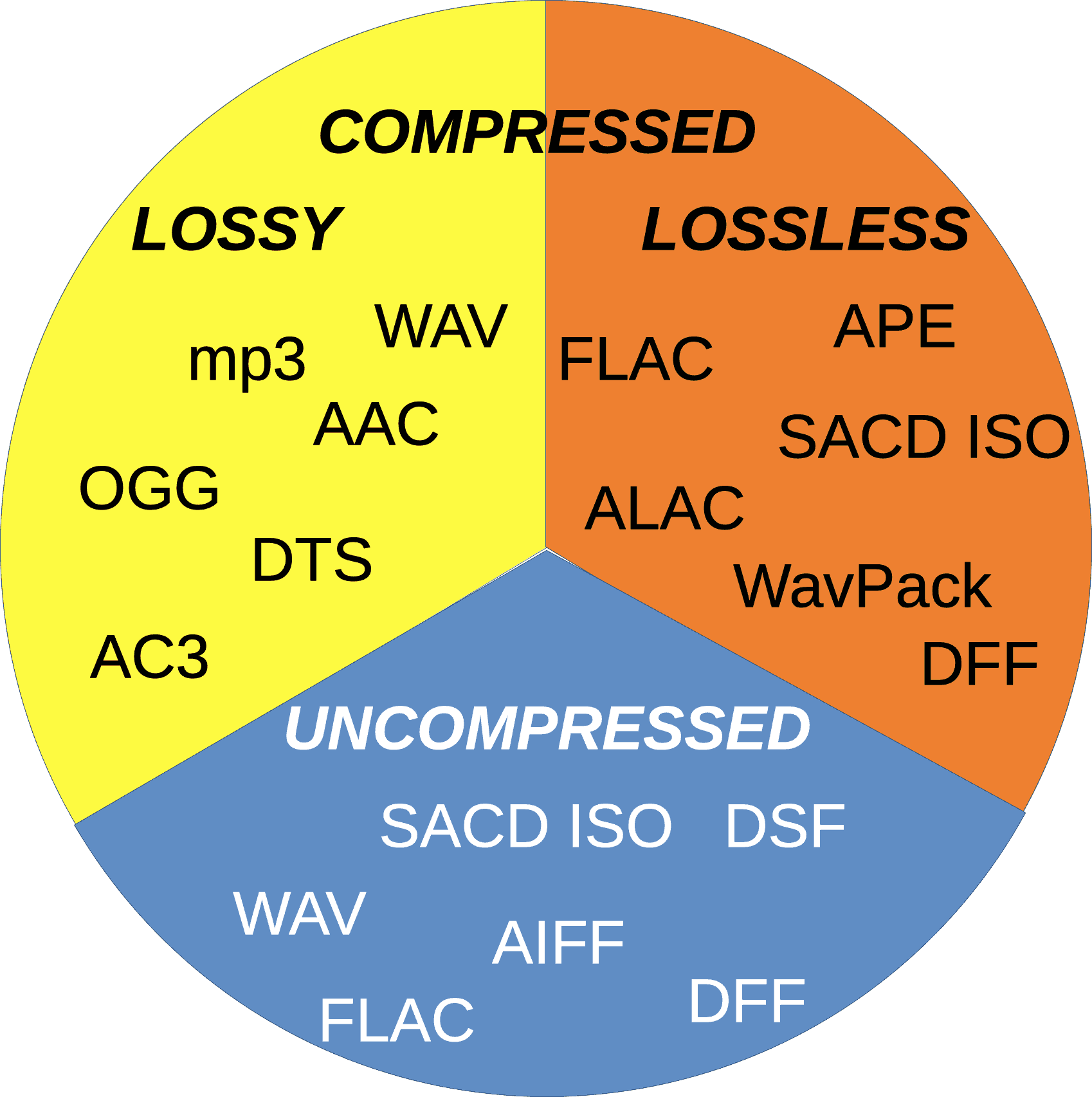
What Are Lossless Audio Codecs?

Lossless audio codecs are like the archivists of the audio world. They compress audio data without sacrificing any of the original quality. This is akin to zipping a file on your computer; when you unzip it, you get back an identical copy of the original.

Imagine you have a precious handwritten letter. You want to make a copy for safekeeping, but you don’t want to lose any detail or quality. A lossless audio codec accomplishes this by finding patterns in the audio data and encoding them more efficiently. When you want to listen to the music or sound stored with a lossless codec, it’s like opening the envelope of your preserved letter—you get the same experience as the original.

Lossless audio codecs are favored by audiophiles and professionals who prioritize audio quality over file size. They are ideal for archiving music collections and audio recordings where every nuance matters.

Popular Audio Codecs

When it comes to audio codecs, several popular options are commonly used in various applications. One of the most recognizable is MP3, which revolutionized digital music. MP3, short for MPEG-1 Audio Layer 3, achieves significant compression while maintaining decent audio quality, making it suitable for music streaming and portable devices.

AAC (Advanced Audio Coding) is another well-known codec, commonly used by Apple devices. It offers superior sound quality compared to MP3 at similar bitrates, making it a popular choice for iTunes and other Apple platforms.

For lossless audio, FLAC (Free Lossless Audio Codec) stands out. It’s widely adopted by audiophiles and music enthusiasts for its ability to compress audio without any loss in quality. FLAC files are perfect for preserving high-fidelity audio.

As an expert in audio technology, I can confidently say that understanding audio codecs is crucial for anyone working with digital audio. Whether you’re a music lover, a content creator, or a tech enthusiast, the right knowledge about audio codecs can significantly enhance your experience and the quality of your audio content.